Why You Should Grow Passionflower Vine Along Your Arizona Fence For Butterflies All Season
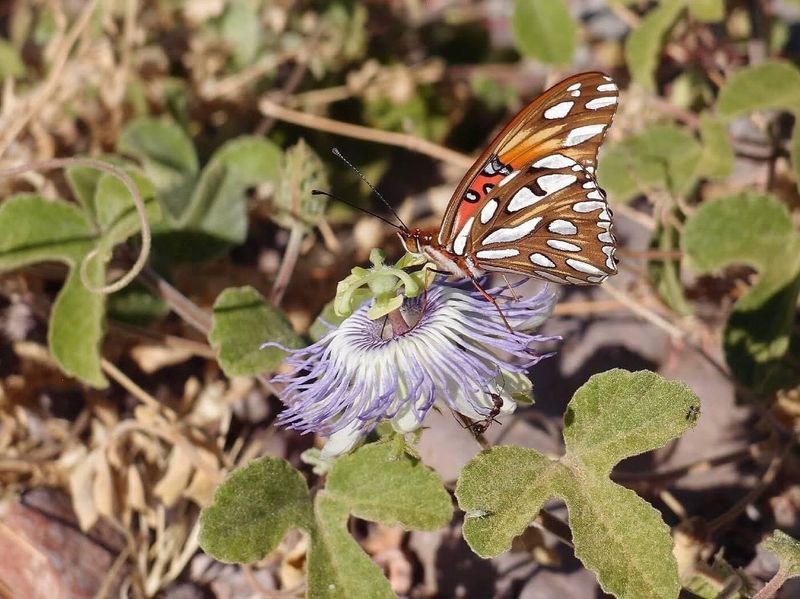
A single vine growing along a bare block wall can quietly become one of the most productive wildlife spots in your yard. Passion vines are the primary larval food source for Gulf fritillary butterflies, a bright orange species that shows up regularly across Phoenix and Tucson through much of the warm season.
Getting the right species, the right spot, and a realistic watering plan makes the difference between a thriving habitat and a stressed plant that never delivers. This guide walks through exactly what low-desert homeowners need to know before planting.
A passion vine can turn a bare fence into Gulf fritillary habitat
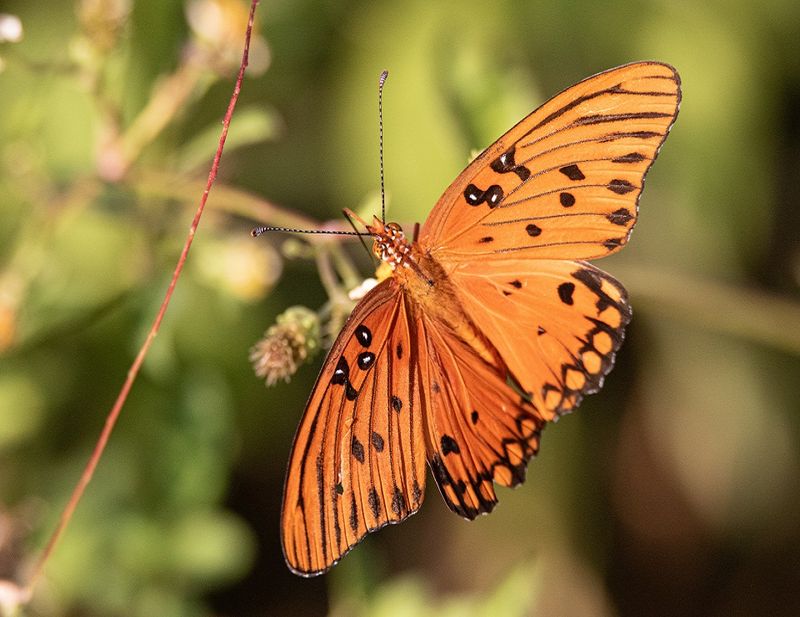
Gulf fritillary caterpillars cannot complete their development without a Passiflora host plant to feed on. That single fact makes a passion vine one of the most direct investments a low-desert homeowner can make toward supporting butterfly life cycles along a fence line.
Sonoran Institute pollinator documentation identifies Gulf fritillaries as year-round Sonoran Desert residents most commonly observed from May through October and specifically connects their presence in Tucson landscapes to passion vine plantings.
Understanding the vine’s primary role matters before you plant. The vine feeds caterpillars, which is the core breeding function.
Adult Gulf fritillaries also need nectar from flowering plants, and passion vine alone does not provide that reliably enough to attract constant adult visitation. Think of the vine as breeding infrastructure, not a butterfly magnet in the decorative sense.
The realistic payoff, when the species, site, and care align, is useful breeding habitat through much of the warm season rather than wall-to-wall butterfly activity every day. Some weeks will show heavy caterpillar presence and chewed foliage.
Others may look quiet. That variability is normal for a host plant, and it reflects real habitat function rather than a planting failure.
Choose a documented species instead of buying any plant labeled passionflower
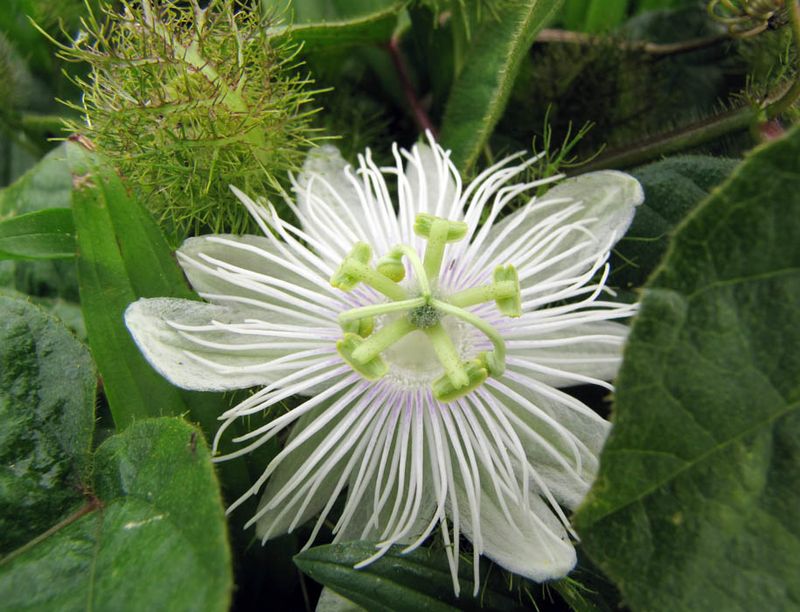
Nursery tags that simply read “passionflower” cover a wide range of species with very different water needs, cold tolerance, growth rates, and host-plant value for butterflies. Not all of them function equally as Gulf fritillary larval hosts, and a California native-plant guide specifically cautions that host-plant effectiveness varies by species and cultivar.
Verifying the botanical name before purchasing is the most important step in this entire process.
For Phoenix- and Tucson-area yards, Passiflora foetida is one practical low-desert option worth considering. Arizona’s Phoenix Active Management Area low-water-use plant list includes P. foetida as a vine suited to the region’s conditions.
That listing reflects landscape suitability and water efficiency, not a ranking that places it above every other passion vine or a promise of butterfly activity.
Passiflora arizonica is a documented Arizona-native passionflower worth knowing about, but native status alone does not automatically establish equivalent Gulf fritillary host performance or confirm that it is equally straightforward to cultivate in a low-desert fence-line setting. Treat it as a regional example to research further rather than a plug-and-play substitute.
Whatever species you choose, confirm the botanical name, ask your nursery about its documented host-plant status, and avoid assuming that one Passiflora performs identically to another.
Your Arizona Garden Changes Every Week. Your Plan Should Too.
Gardening in Arizona changes quickly throughout the season. Every Friday you’ll receive a simple weekly plan showing exactly what to plant, prune, fertilize, harvest, and protect so you never miss the right timing.
Balance flowering sun with the fence line’s heat load
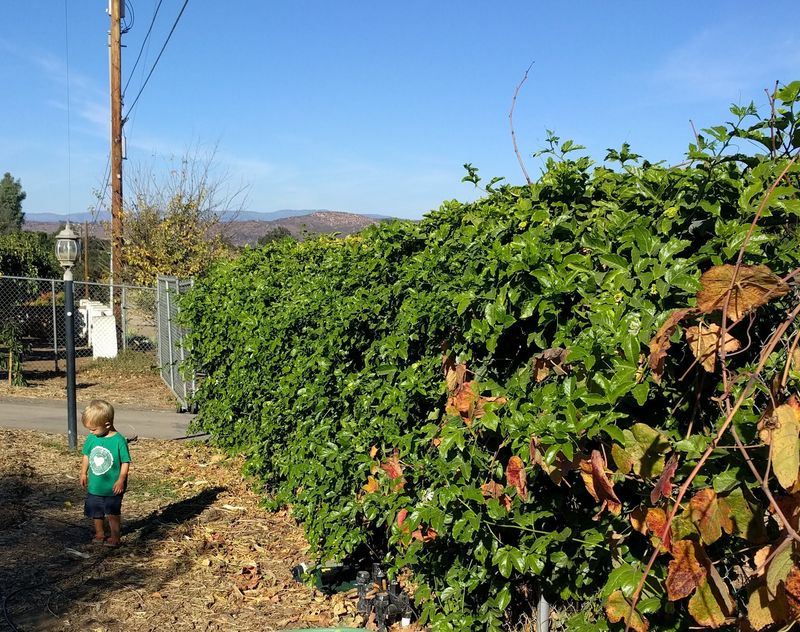
Passion vine generally flowers most reliably in full sun, and a fence line that gets good light through the morning and midday hours is a reasonable starting point. The complication in low-desert Arizona is that full sun does not mean the same thing everywhere.
A south- or west-facing block wall, a metal fence panel, or a stucco surface in a Phoenix yard can radiate intense stored heat well into the evening, pushing soil temperatures and air temperatures near the root zone far beyond what a young vine can handle during establishment.
Choosing a slightly protected position, such as an east-facing fence section or a spot that receives afternoon shade from a nearby tree or structure, can reduce that stress during the first season without sacrificing enough light to hurt flowering. UA Extension guidance on drought and extreme heat notes that radiant heat from walls and paving compounds plant stress beyond what air temperature alone would suggest.
Beyond exposure, passion vine is a vigorous grower that can reach 30 feet or more under favorable conditions. A fence, trellis, or other sturdy support is not optional; the vine needs something to climb from the start.
Plan for regular training sessions and periodic pruning to keep the growth within the intended area, and give the planting enough room so that spread into adjacent beds does not become a recurring problem.
Prepare the root zone before planting into Arizona soil
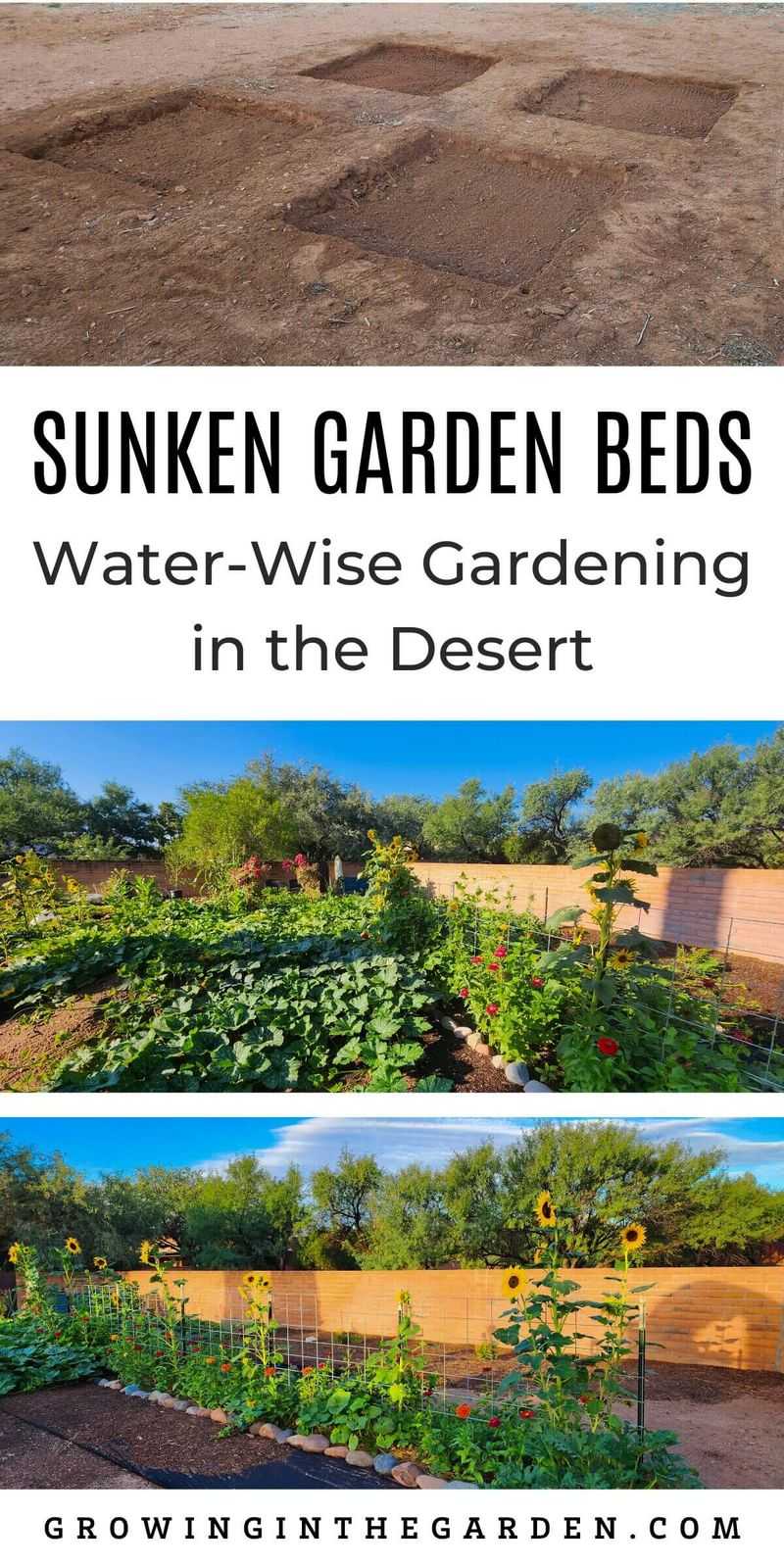
Before a single plant goes in the ground, pour water into the planting hole and watch what happens. If it drains slowly or pools for more than an hour, caliche may be restricting drainage below the surface.
Caliche is a hardened calcium carbonate layer common in low-desert soils, and UA Extension’s caliche quick guide explains that it can limit root penetration, reduce aeration, trap water around the root zone, and contribute to salt accumulation over time.
When you hit a caliche layer, you have a few practical options. Breaking through it with a tile spade or rebar creates a drainage channel that lets excess water escape downward.
Removing the layer entirely and backfilling with amended soil works well when the layer is shallow. If neither approach is practical, planting on a raised mound keeps roots above the drainage problem and reduces the risk of waterlogging after heavy irrigation or monsoon rain.
Timing the planting also matters. Fall and early spring are generally lower-stress windows for establishing landscape plants in the Phoenix and Tucson areas, since the vine avoids the worst summer heat during its most vulnerable weeks.
That said, the right window depends on your elevation, your specific site’s freeze exposure, and the cold tolerance of the Passiflora species you have chosen. A plant that handles a Tucson winter reasonably well may need more protection at higher elevations, so check species-specific guidance before committing to a planting date.
Water a low-water-use vine while its roots establish
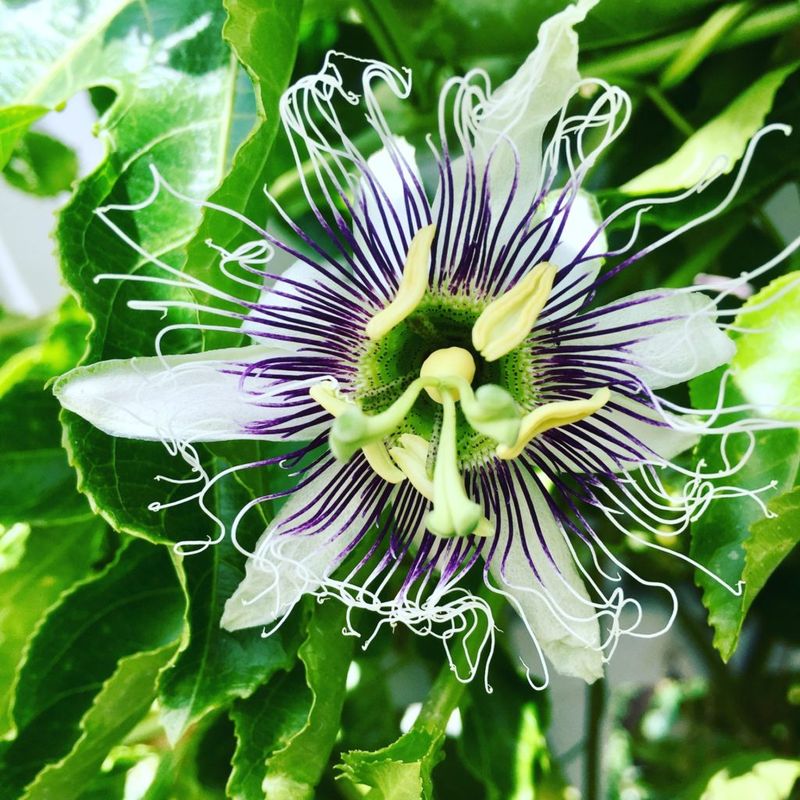
Low-water-use is not the same as no water needed. Passiflora foetida appears on Arizona’s low-water-use plant list, and that designation reflects its efficiency once it is established with a functioning root system.
Getting to that point requires consistent irrigation, and UA Extension’s passion-vine guidance is direct on this: the plant requires regular watering, particularly during establishment and during stretches of extreme heat.
The general Arizona pattern for newly planted landscape plants calls for irrigation every one to two days during the first couple of weeks in summer, with intervals gradually lengthening as roots spread and the plant stabilizes. UA Extension’s guidance on watering schedules for newly planted desert-adapted plants supports this approach as a starting framework.
Treat it as a starting point rather than a fixed calendar, because sandy soil drains faster than clay, a west-facing site dries out faster than a shaded one, and a monsoon week changes the math entirely.
Watch the vine rather than the calendar. Wilting in the early morning, before temperatures climb, is a sign that the root zone dried out overnight and the schedule needs adjustment.
Wilting only in the afternoon heat is more normal and less urgent. Once the vine shows steady new growth and has been in the ground through at least one full summer, you can begin stretching irrigation intervals toward a mature low-water-use schedule.
Rushing that transition during the establishment phase is one of the most common reasons passion vines fail in Arizona yards.
Accept caterpillar feeding as part of the planting’s purpose
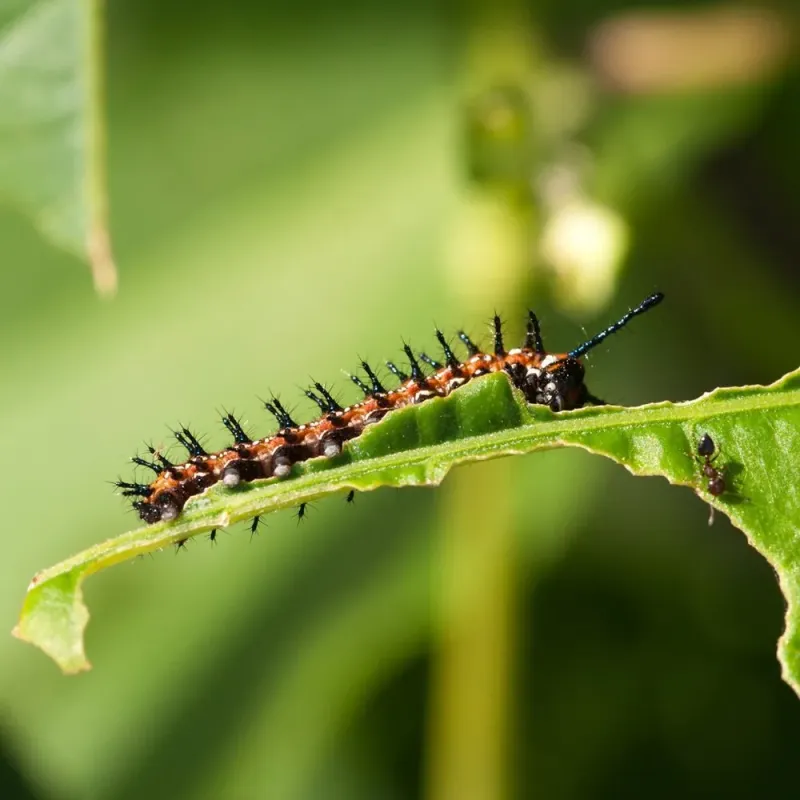
A passion vine that is doing its job will get eaten. Gulf fritillary caterpillars are efficient feeders, and a healthy population of larvae can strip a vine down to bare stems in a matter of days.
UC ANR’s host-plant documentation makes the point plainly: the host plant is there to be consumed, and heavy leaf loss is evidence of success, not a sign that something went wrong with the plant or the planting.
Before reaching for any spray, look closely at the chewed areas. If you see the distinctive orange, spiny caterpillars of the Gulf fritillary, the damage is exactly what you planted for.
Treating that damage with a broad-spectrum insecticide kills the larvae you were trying to support. UA Extension’s butterfly gardening guide specifically warns that Bacillus thuringiensis (Bt) products, which are marketed as organic caterpillar controls, will kill butterfly larvae along with pest caterpillars.
Bt is not safe to use on a vine you are maintaining as a host plant.
Pruning has a different and legitimate role here. Cutting back overgrown sections, redirecting growth along the fence, and removing dead stems are all reasonable maintenance tasks that keep the vine manageable without harming the caterpillars feeding on remaining foliage.
Think of the vine as a working habitat plant with a job to do, not an ornamental that needs to look pristine through the season.
Add nectar plants to support adult butterflies
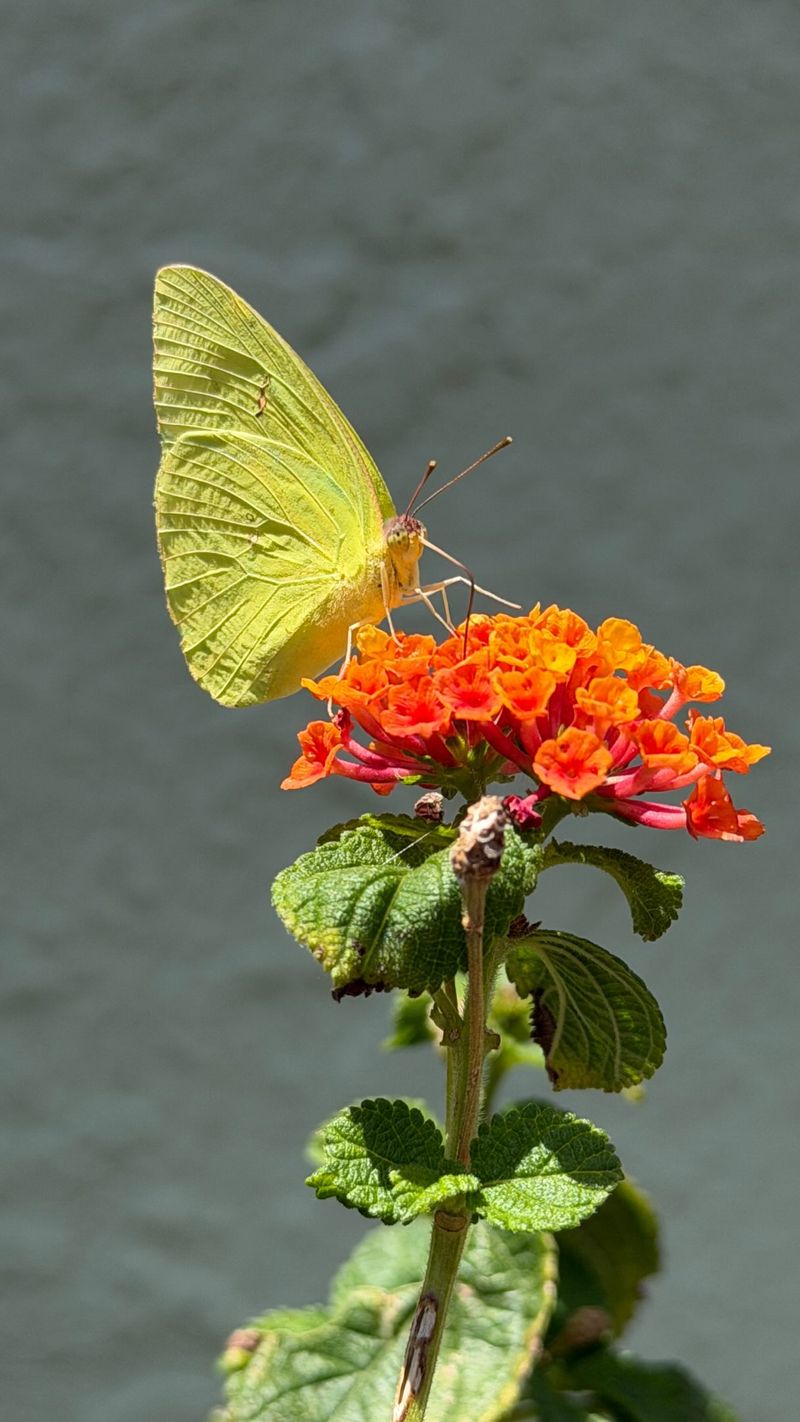
Adult Gulf fritillaries feed on nectar, and passion vine does not supply enough of it consistently to keep adults visiting through the season. The vine handles the larval side of the life cycle; nectar plants handle the adult side.
Leaving that second piece out means caterpillars may develop successfully on your fence while the adult butterflies spend most of their time in a neighbor’s yard with better nectar sources.
Several flowering plants work well alongside a low-desert passion vine. Lantana is a reliable warm-season nectar source that handles Phoenix and Tucson heat without complaint.
Desert milkweed (Asclepias subulata) blooms across a long season and supports multiple pollinator species at once. Salvia species adapted to the low desert, including Salvia greggii, extend nectar availability into cooler months.
Staggering bloom periods across multiple plants keeps something flowering from early spring through late fall in most low-desert yards, which is the window when Gulf fritillary adults are most active in favorable sites.
Butterfly presence still varies from year to year and yard to yard. Regional population levels, weather patterns, elevation, and the overall quality of the surrounding landscape all influence how many adults show up and how often they linger.
Describing the outcome as spring-through-fall butterfly support in a favorable low-desert site is accurate; promising constant activity is not. A well-planted combination of host vine and nectar plants gives the butterflies a reason to stay when they do arrive, and that is the realistic goal of this kind of habitat planting.
Decide whether the vine fits your fence and maintenance tolerance
Passion vine is a genuinely useful habitat plant for low-desert Arizona fence lines when the conditions match what it needs. The homeowners most likely to get good results are those who can offer a well-supported, well-drained planting site, consistent irrigation through at least one full establishment season, some protection from the worst radiant heat during that first summer, and a cluster of nectar plants nearby to complete the habitat.
The vine’s documented role is as a larval host for Gulf fritillaries, and that role comes with visible tradeoffs. Foliage will get eaten.
The vine may grow beyond the fence section you intended to cover. Pruning and occasional training are recurring tasks, not one-time jobs.
Expecting the planting to stay attractive all season, deter pests, or produce reliable butterfly activity without any supporting nectar plants sets up a disappointment that has nothing to do with the vine’s actual strengths.
Choosing a documented host species such as Passiflora foetida, confirmed by botanical name at the nursery, and pairing it with staggered-bloom nectar plants gives the habitat plan its best foundation. No single vine guarantees butterflies in every yard every season, but the combination of a verified host plant, thoughtful placement, and honest maintenance expectations is what turns a bare fence into something genuinely worth having.
The butterflies that do show up tend to stay longer when they have both a place to lay eggs and a reliable meal nearby.