Why You Should Never Ignore Whiteflies On Your Arizona Hibiscus
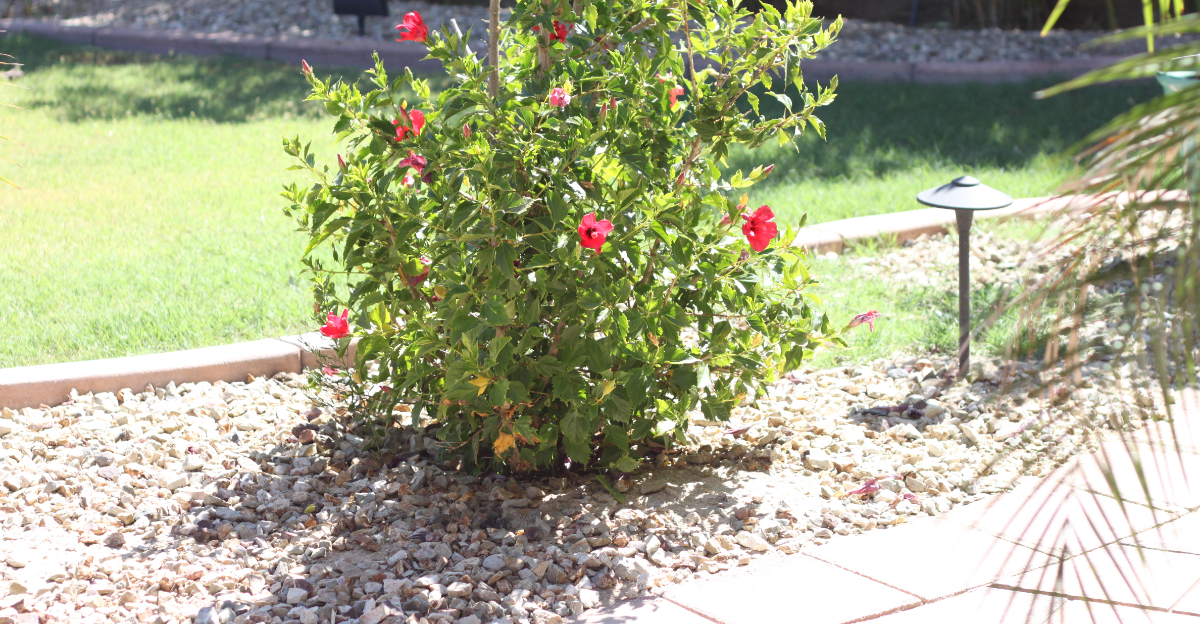
Tiny white insects may not seem like much at first. They flutter away when the leaves are disturbed, then quickly settle back down as if nothing happened.
It is easy to brush them off and assume the plant will recover on its own.
That is rarely how a whitefly problem ends. These pests multiply fast, feed on sap, and leave behind sticky honeydew that attracts sooty mold.
Before long, healthy leaves can begin looking weak, faded, and stressed.
Many Arizona hibiscus plants become more vulnerable during extreme summer heat, making whiteflies even harder to ignore once their numbers increase.
Catching the problem early gives you far more options than waiting until the damage spreads. A few minutes of attention now can protect your hibiscus and help it keep producing the colorful blooms you planted it for.
1. Whiteflies Multiply Faster Than You Think
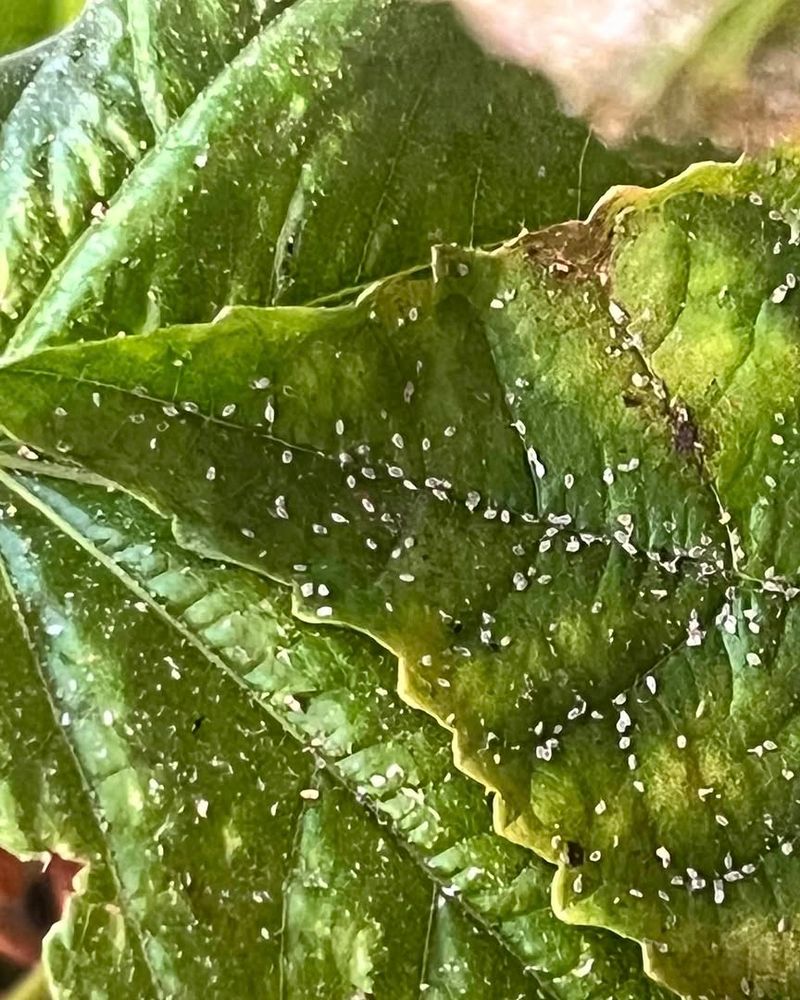
A handful of whiteflies today can become thousands within weeks. Whiteflies lay eggs in clusters on the undersides of leaves.
Each female can lay dozens of eggs at a time, and those eggs hatch fast, especially in warm weather.
Arizona summers give whiteflies near-perfect conditions to reproduce. Heat speeds up their life cycle significantly.
What takes weeks in cooler climates can happen in days during a hot Arizona summer.
Generations overlap quickly. You end up with eggs, nymphs, and adults all present on the same plant at the same time.
Controlling them becomes much harder once multiple life stages are active together.
Catching an infestation early is far easier than managing one that has exploded. Check the undersides of your hibiscus leaves at least once a week.
Look for tiny white specks or a powdery white coating, which are early warning signs.
Ignoring even a small group gives them time to spread. Nearby plants can become infested too, since adult whiteflies fly short distances easily.
Stopping them while numbers are low protects your entire garden, not just one plant.
Regular monitoring keeps small whitefly problems from turning into widespread infestations that are much harder to control.
2. Sticky Leaves Signal A Growing Infestation
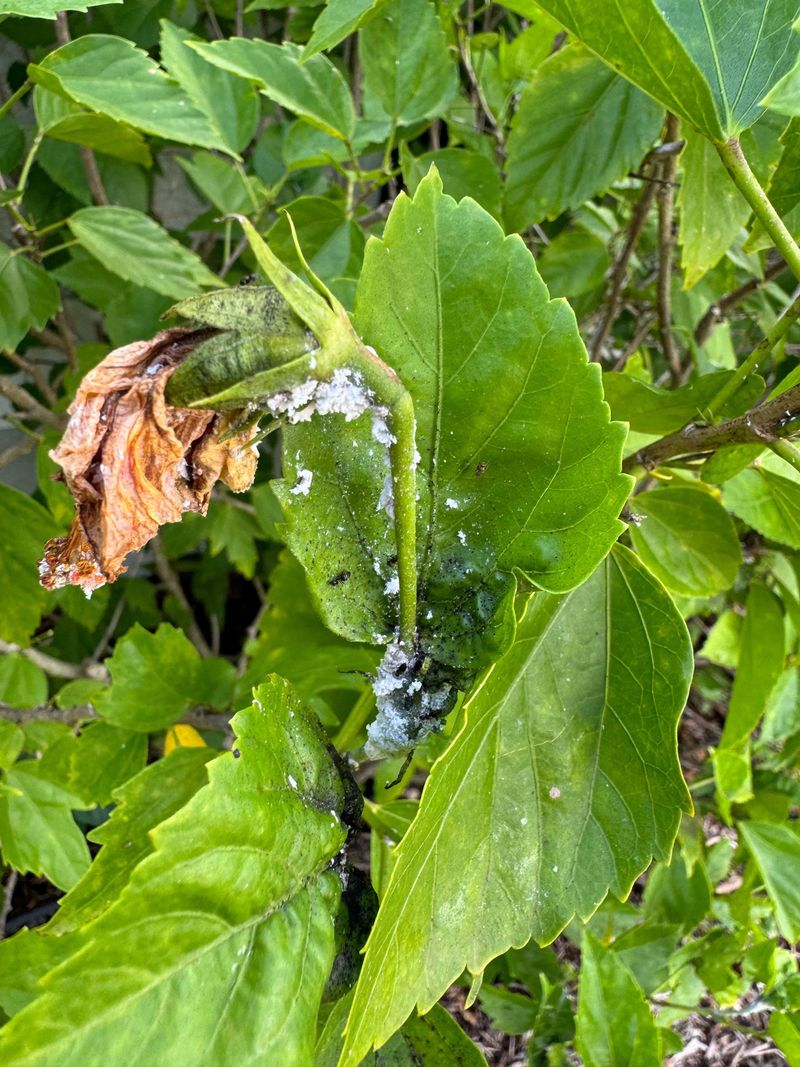
Sticky leaves are not just an annoyance. Whiteflies produce a sugary waste called honeydew as they feed.
That stickiness coats leaves, stems, and sometimes the soil beneath the plant.
Touching a leaf and feeling that tacky residue is a clear signal. Whitefly populations have likely been active for a while by the time honeydew becomes noticeable.
Early feeding does not always produce obvious stickiness right away.
Honeydew attracts ants. Ants actually protect whiteflies from predators in exchange for access to that sweet substance.
So if you notice ants crawling up your hibiscus stems, that could be a connected sign worth investigating.
Sticky residue also makes leaves harder to clean and can interfere with normal plant functions. Dust and debris stick to the honeydew layer, making leaves look dull and unhealthy.
Over time, the plant looks rough even before other damage becomes obvious.
Wiping leaves with a damp cloth helps temporarily but does not solve the root problem. Reducing the whitefly population is the only way to stop new honeydew from forming.
Your Arizona Garden Changes Every Week. Your Plan Should Too.
Gardening in Arizona changes quickly throughout the season. Every Friday you’ll receive a simple weekly plan showing exactly what to plant, prune, fertilize, harvest, and protect so you never miss the right timing.
Check the plant thoroughly before deciding on a treatment approach.
3. Sooty Mold Blocks Sunlight From Reaching Leaves
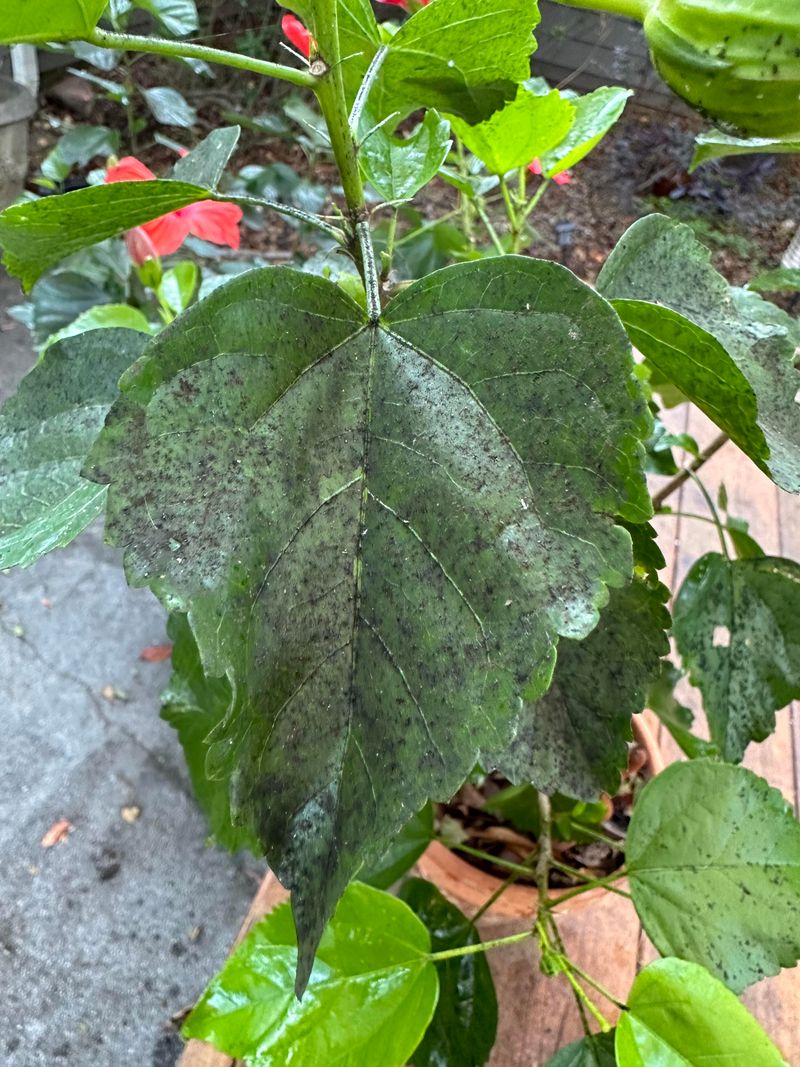
Black sooty mold is one of the most visible signs that whiteflies have been feeding for a while. Sooty mold is a fungus that grows on top of honeydew left behind by whiteflies.
It does not infect the plant tissue directly, but it causes real harm.
Leaves covered in sooty mold cannot absorb sunlight properly. Photosynthesis slows down when that black layer blocks the leaf surface.
A plant that cannot photosynthesize efficiently starts to weaken over time.
Hibiscus plants need strong sun exposure to thrive, especially in hot climates. Blocking that sunlight, even partially, affects flower production and overall vigor.
Blooms may become smaller or less frequent as the plant struggles.
Sooty mold spreads quickly once honeydew coats multiple leaves. Removing the mold without addressing the whitefly problem will not help long-term.
New honeydew will keep forming, and the mold will return.
Gently washing leaves with water removes some sooty mold, but the real fix is reducing whitefly numbers. Once the insects are managed, new leaf growth comes in clean.
Existing affected leaves may not fully recover, but the plant can redirect energy toward healthy new growth going forward.
4. New Growth Suffers The Most Damage
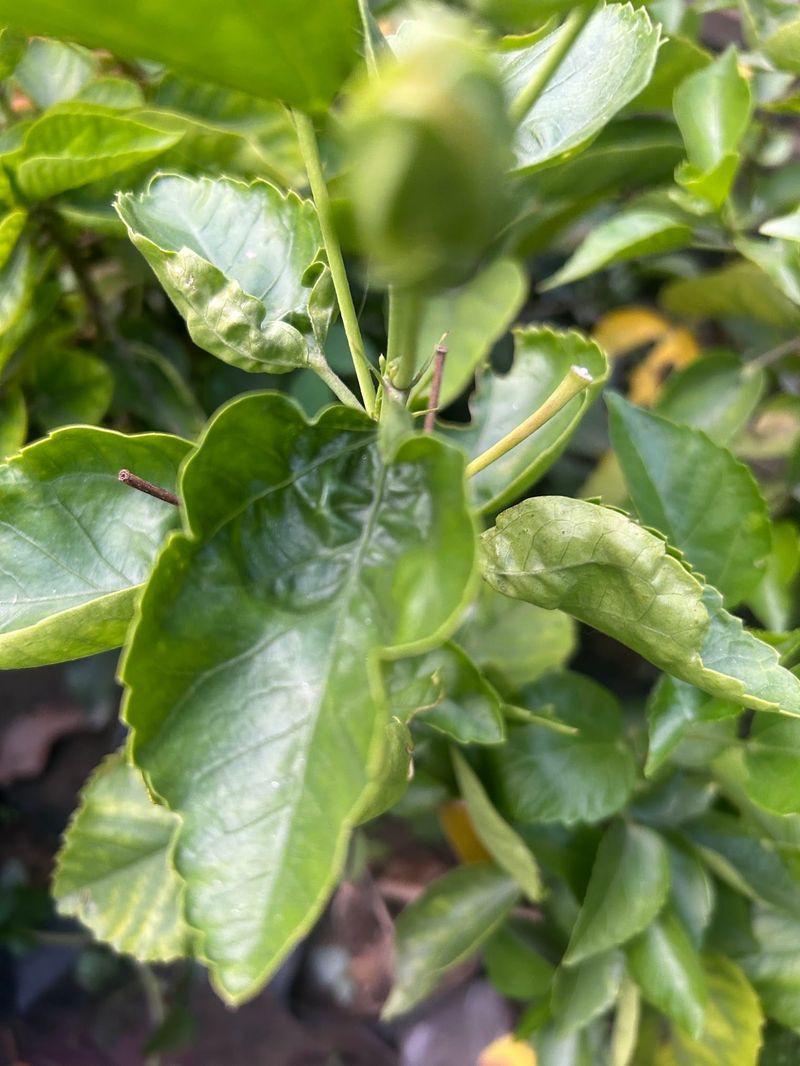
Soft, new growth is the first target. Whiteflies prefer young, tender leaves over older, tougher ones.
Fresh shoots on a hibiscus plant are especially vulnerable because the leaf tissue is not yet fully developed.
Feeding on new growth causes leaves to curl, yellow, or become distorted. A hibiscus that keeps pushing out curled or stunted new leaves likely has an active whitefly problem.
Healthy new growth should be firm, bright green, and flat.
When new growth is constantly damaged, the plant cannot build energy reserves efficiently. Flower buds that form on damaged shoots may drop before fully opening.
Reduced blooming is often one of the first practical signs that something is wrong.
Repeated damage to new growth stresses the plant over the entire growing season. A stressed hibiscus becomes more vulnerable to other issues like root stress or fungal problems.
Whiteflies rarely cause the only problem; they often open the door to secondary ones.
Protecting new growth means acting before damage becomes severe. Inspect fresh shoots closely each week.
Catching whiteflies on new growth early gives treatments the best chance of working before feeding damage becomes too extensive to recover from quickly.
5. Beneficial Insects Help Keep Numbers Down
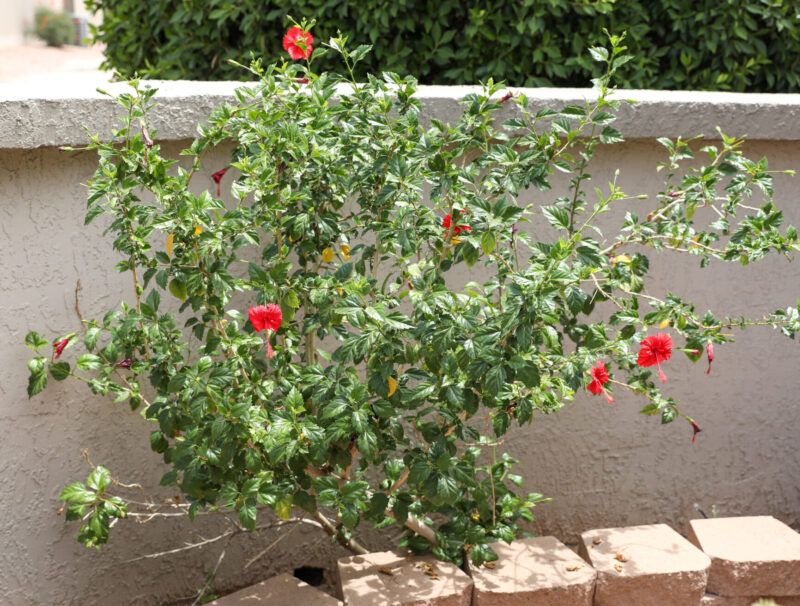
Nature has its own pest control system. Certain insects naturally feed on or parasitize whiteflies, helping keep populations from getting out of hand.
Ladybugs, lacewings, and tiny parasitic wasps are among the most helpful ones.
Parasitic wasps lay eggs inside whitefly nymphs. The nymphs turn black and stop developing, which is a sign the wasps are active in your garden.
Seeing those blackened nymphs on your hibiscus leaves is actually a good sign.
Broad-spectrum pesticides can wipe out beneficial insects along with whiteflies. Using harsh chemical sprays may solve one problem while creating a bigger one.
Without natural predators, whitefly populations can rebound faster after treatment.
Planting flowers like marigolds, dill, or yarrow near your hibiscus can attract beneficial insects. Keeping a diverse garden encourages a natural balance that makes infestations less likely to spiral out of control.
It is a low-effort strategy with real payoff over time.
Avoiding unnecessary pesticide use is one of the most practical steps a gardener can take. Let beneficial insects do some of the work when populations are still manageable.
Reaching for a spray should usually come after other options have been tried first.
6. Strong Water Sprays Knock Whiteflies Off Plants
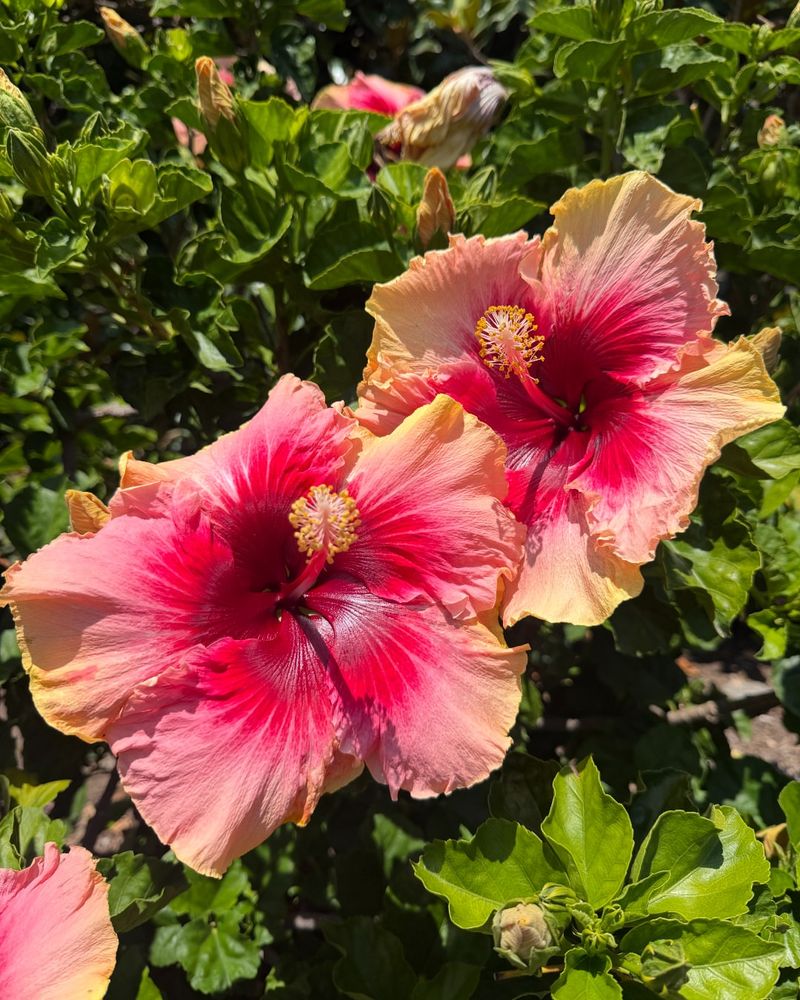
A strong spray of water is one of the simplest tools available to a gardener dealing with whiteflies. Directing a firm stream at the undersides of leaves physically dislodges adults, nymphs, and eggs.
It requires no chemicals and costs almost nothing.
Consistency matters more than intensity. Spraying once rarely solves the problem.
Repeating the process every two to three days over a couple of weeks disrupts the whitefly life cycle and prevents new generations from getting established.
Morning is the best time to spray. Leaves dry out faster during the day, which reduces the risk of fungal issues that can develop on wet foliage.
Wet leaves sitting overnight in humid conditions can invite other problems.
Water sprays work best when whitefly numbers are still relatively low. Large infestations may need additional methods alongside water treatment.
Combining sprays with other approaches tends to produce better results than relying on any single method alone.
Spraying also rinses off some honeydew, which slows sooty mold development. Clean leaves absorb sunlight more effectively and look healthier overall.
Regularly inspecting the plant after each spray helps track whether the population is dropping or holding steady over time.
7. Early Treatment Keeps Plants Healthier
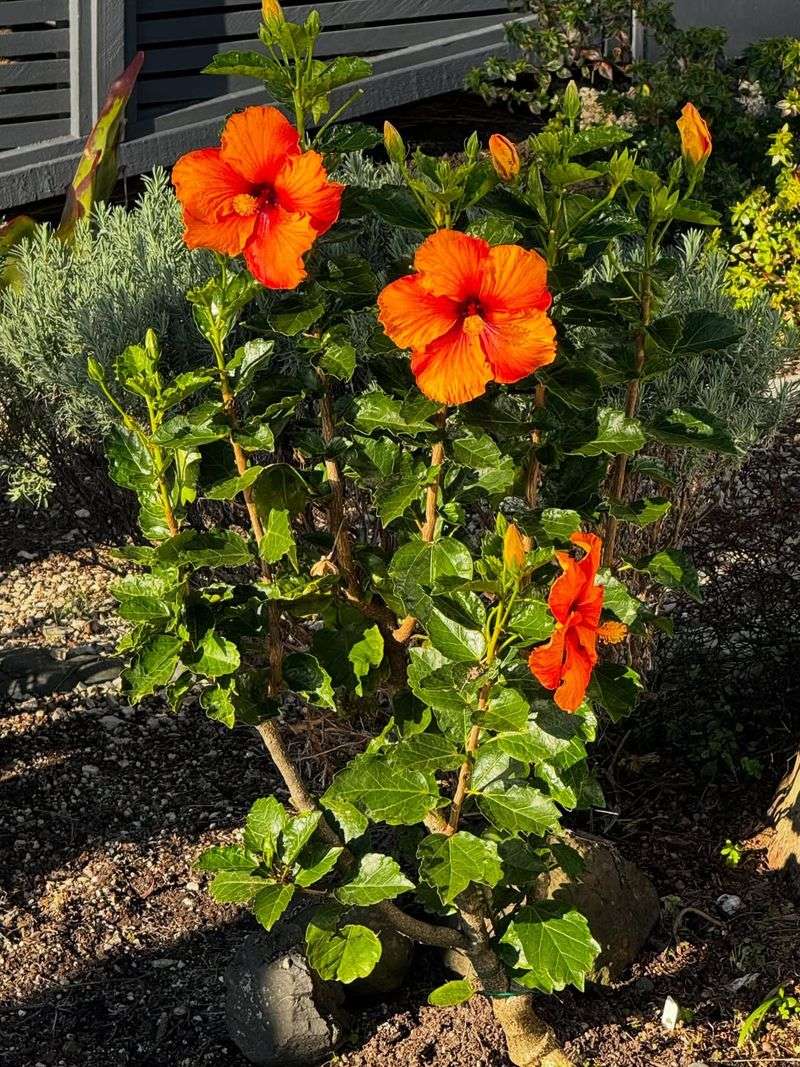
Spotting whiteflies early and responding quickly makes a measurable difference. A small infestation is far easier to manage than one that has spread across the entire plant.
Early action protects the plant before stress accumulates.
Neem oil is a widely used option for early-stage whitefly management. It works by disrupting the insect’s ability to feed and reproduce.
Applying it to the undersides of leaves, where whiteflies spend most of their time, improves effectiveness.
Insecticidal soap sprays are another commonly used approach. They work on contact with soft-bodied insects like whitefly nymphs.
Coverage needs to be thorough since the spray must actually reach the insects to have any effect.
No single treatment works perfectly in every situation. Plant health, infestation size, and environmental conditions all affect results.
Rotating between methods can help prevent whiteflies from adapting to any one approach over time.
Keeping your hibiscus well-watered and properly fertilized also plays a role. Healthy plants tend to handle pest pressure better than stressed ones.
In Arizona, where heat and dry conditions already push plants hard, consistent care throughout the season makes early treatment significantly more effective.