Why You Should Never Move A Wild Desert Tortoise In Arizona
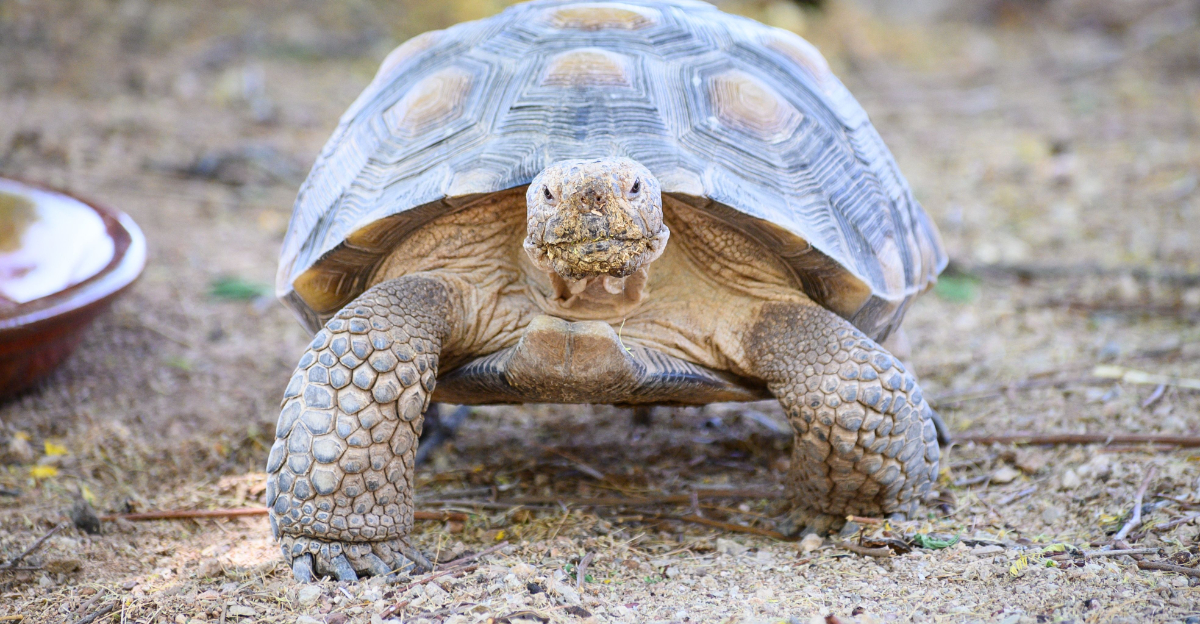
Most people would stop if they spotted a wild desert tortoise crossing a road or wandering through a neighborhood.
Helping it reach safety sounds like the obvious thing to do.
That first instinct comes from a good place, but it is not always the right one. What seems like a simple act of kindness can have consequences you never expected.
Wild desert tortoises have spent their lives learning where to find food, shelter, and protection. They depend on that familiar landscape far more than most people realize.
There is a good reason these remarkable reptiles receive special protection in Arizona. Their survival depends on more than simply avoiding danger for one afternoon.
The next time you see one, you may pause for a different reason. Sometimes the best choice is not the one that seems most obvious at first.
1. Desert Tortoises Depend On Familiar Burrows For Survival
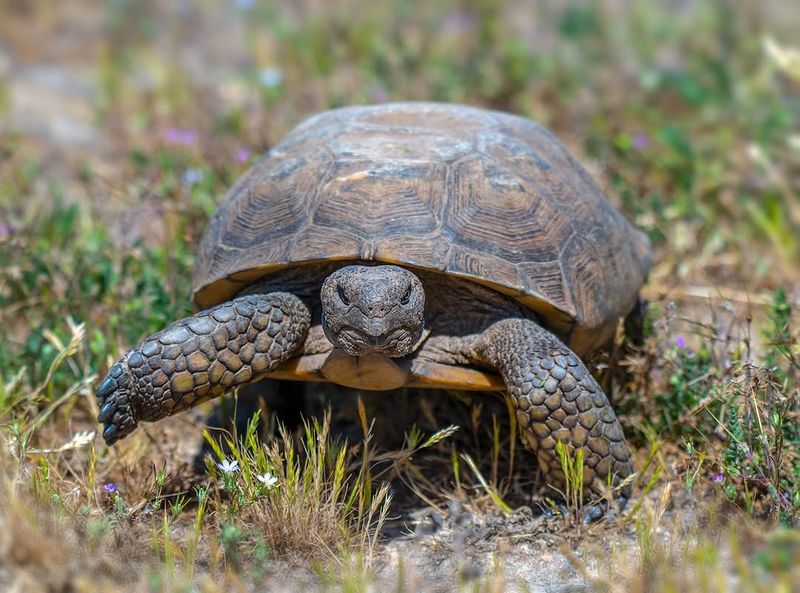
A tortoise knows its home territory like most people know their own neighborhood. Each burrow is carefully chosen over many years, offering protection from extreme heat, cold nights, and predators.
Relocating a tortoise strips away that hard-earned knowledge instantly.
Wild tortoises in Arizona use multiple burrows throughout the year. They shift between them based on season, temperature, and breeding patterns.
Losing access to those specific spots puts real stress on the animal.
Tortoises have a strong homing instinct. When moved, they often attempt to return to their original territory, crossing roads, fences, and unfamiliar land in the process.
That journey exposes them to serious risks they would not normally face.
Burrows also serve as shelter during brumation, which is a period of winter dormancy similar to hibernation. Without the right burrow, a tortoise may not survive a cold desert winter safely.
Younger tortoises are especially vulnerable. Their burrows are shallower and easier to lose track of after displacement.
Even a short move of a few hundred feet can leave them disoriented for weeks.
Respecting a tortoise’s territory means leaving it exactly where you found it.
If it appears to be in immediate danger from construction or traffic, contact Arizona Game and Fish for proper guidance before touching it.
2. Relocation Makes It Harder To Find Food And Water
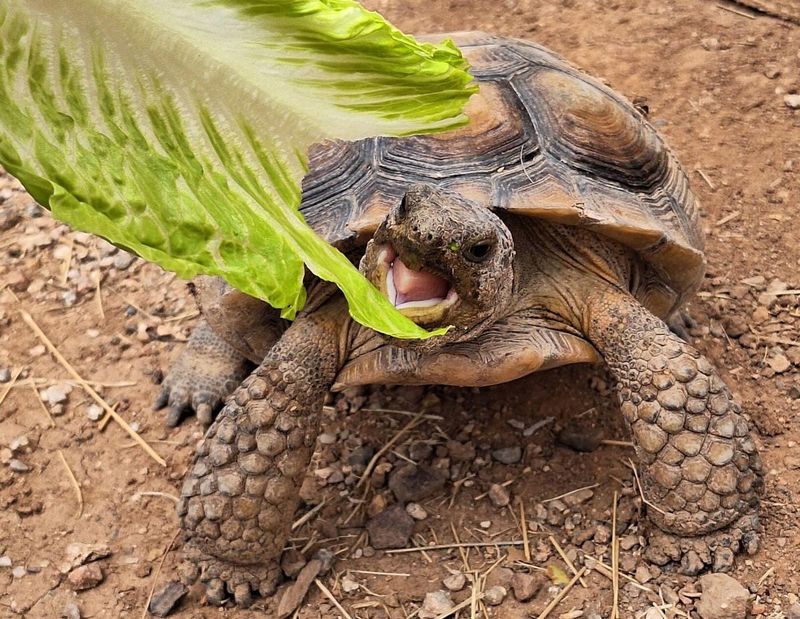
Food and water in the desert are not just scarce, they are location-specific. A tortoise learns over years exactly where reliable food plants grow within its home range.
Move it somewhere new, and that knowledge becomes worthless.
Wild tortoises eat a variety of native plants including grasses, wildflowers, and cacti. These plants do not grow evenly across the desert.
A tortoise placed in unfamiliar territory may find nothing edible nearby for days or even weeks.
Water is even harder to come by. Tortoises get most of their moisture from the plants they eat, especially during spring blooms.
They also drink from shallow puddles after rain, and they remember where those low spots collect water.
In a new location, a tortoise has no mental map of water sources. During Arizona’s brutal summer heat, that gap in knowledge can lead to dangerous dehydration very quickly.
Your Arizona Garden Changes Every Week. Your Plan Should Too.
Gardening in Arizona changes quickly throughout the season. Every Friday you’ll receive a simple weekly plan showing exactly what to plant, prune, fertilize, harvest, and protect so you never miss the right timing.
Body condition matters too. Tortoises store fat and water in their bladders and tissues to survive dry seasons.
A stressed tortoise burns through those reserves faster than a calm, settled one.
Disrupting a tortoise’s feeding routine also affects its ability to build up fat reserves before winter. Without enough stored energy, surviving brumation becomes much harder.
3. Moving Wild Tortoises Can Spread Serious Diseases
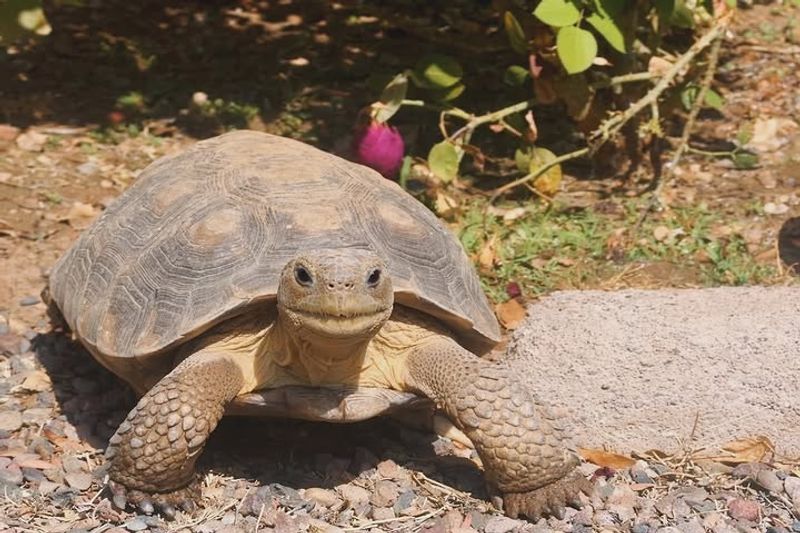
Tortoises carry pathogens that stay in balance within their own home territory. Moving one into a new area can introduce those pathogens to a population that has no resistance to them at all.
Upper respiratory tract disease is one of the most well-documented health concerns in wild tortoise populations across the Southwest. It spreads through direct contact and through shared water sources.
A relocated tortoise can expose healthy individuals to it without showing obvious symptoms itself.
Mycoplasmosis is a bacterial infection linked to this respiratory illness. Tortoises can carry it without appearing sick.
Placing a carrier into a new group of tortoises can trigger an outbreak that spreads through an entire local population.
Wild tortoises that have lived in one area tend to share similar immune histories. Introducing an outsider disrupts that balance.
Even a healthy-looking tortoise can bring in something the local population has never encountered before.
Captive tortoises face a different but related risk. Releasing a pet tortoise into the wild can transfer diseases from captivity into wild populations.
Arizona law prohibits this specifically because of the disease risk involved.
Handling a tortoise also causes it to empty its bladder as a stress response. That fluid loss can be hard to recover from in dry conditions.
4. Give Wild Tortoises Plenty Of Space
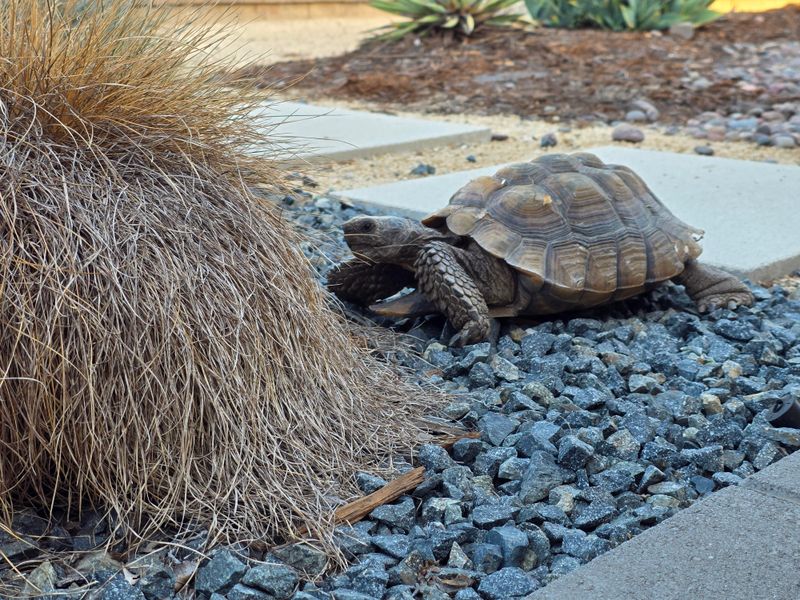
Watching a wild tortoise is a genuinely cool experience. Standing back and observing quietly is the right way to enjoy it.
Getting too close creates stress that affects the animal long after you walk away.
Tortoises are sensitive to perceived threats. A person looming over one triggers a fear response.
The tortoise may retract into its shell, release stored water, or attempt to flee over rough terrain where it could get injured.
Stress hormones in reptiles take time to clear. A tortoise that feels threatened stays on high alert for a while after the threat is gone.
Repeated disturbances from curious hikers or campers can wear down a tortoise’s overall condition over time.
Nesting females are especially sensitive to disturbance. A female that feels unsafe may abandon a nesting site she has used for years.
Finding a new site takes energy she needs for other things, and a rushed choice can lead to poor nesting outcomes.
Keeping a respectful distance also protects you. Wild tortoises are protected under both state and federal law.
Harassing, handling, or harming one can result in significant fines.
A good rule of thumb is to stay at least ten feet away. Use binoculars or a zoom lens to get a closer look without crowding the animal.
5. Keep Dogs Away From Desert Tortoises
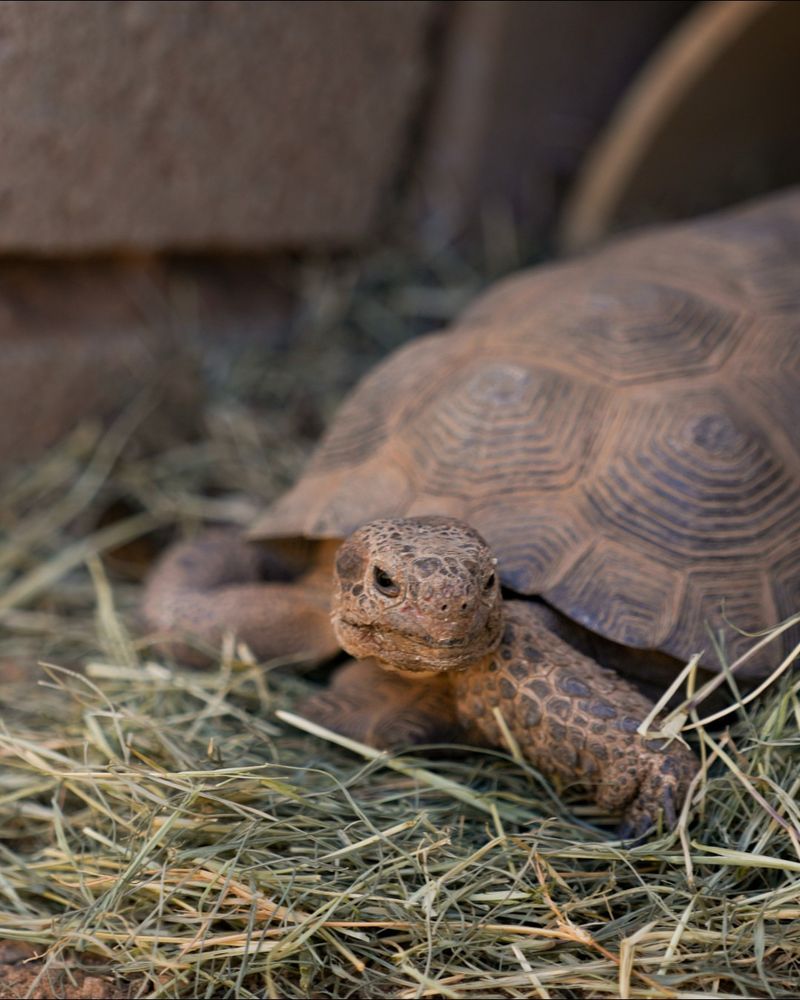
Dogs and tortoises do not mix well in the wild. Even a curious, friendly dog can seriously injure a tortoise without meaning any harm.
A single bite or heavy paw can crack a shell that took decades to grow.
Tortoise shells look tough, but they are living bone connected to the animal’s spine and ribcage. Damage to the shell is not just cosmetic.
It can expose the tortoise to infection and interfere with its ability to breathe and move normally.
Even without physical contact, a dog’s presence causes intense stress. The tortoise may retreat into its shell for hours afterward, missing critical feeding or movement time during an already short active season.
On popular desert trails in Arizona, off-leash dogs are a real problem for local wildlife. Tortoises that live near trail corridors face repeated encounters with dogs throughout hiking season.
That repeated stress takes a toll.
If your dog spots a tortoise, redirect its attention calmly and move away from the area. Do not let your dog sniff, paw at, or circle the tortoise.
Keeping your dog leashed on desert trails is both a legal requirement in many areas and a simple act of wildlife respect.
Teaching dogs to ignore wildlife on the trail takes some practice, but it is worth the effort.
6. Avoid Feeding Wild Tortoises
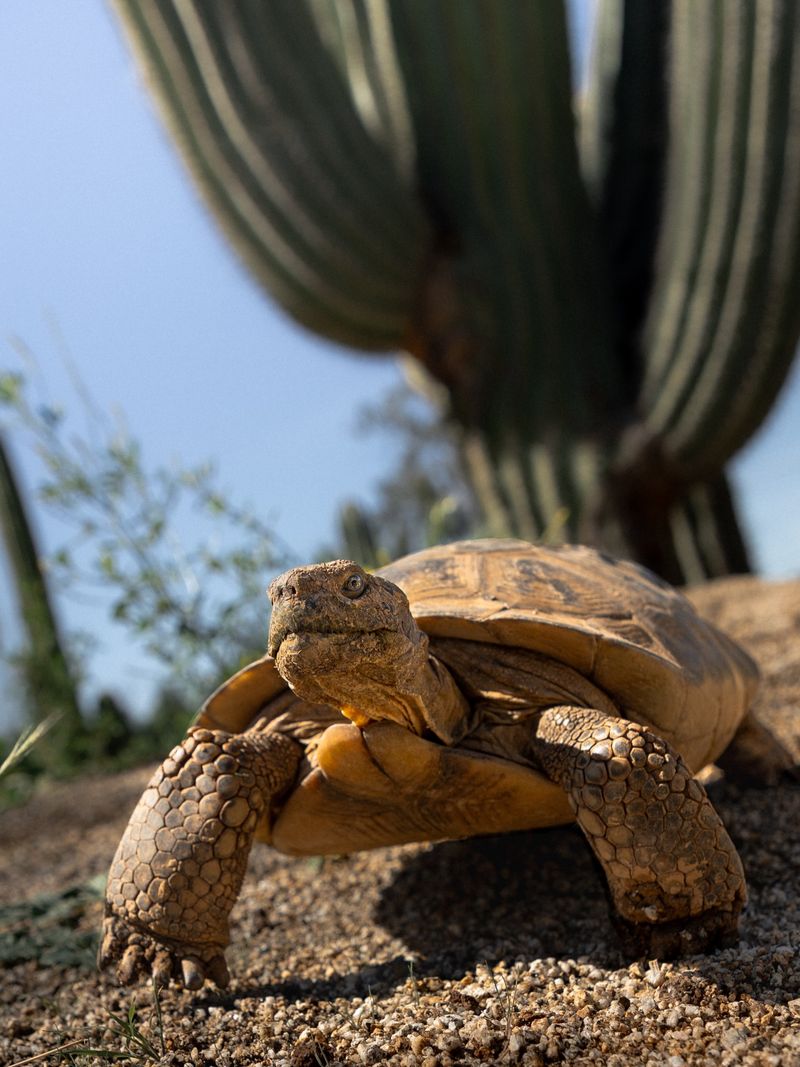
Feeding a wild tortoise feels kind, but it often causes more problems than it solves. Wild tortoises have specific dietary needs tied directly to native desert plants.
Offering the wrong food can upset the balance their digestive system depends on.
Many common fruits and vegetables that seem harmless can be problematic for wild tortoises. High-sugar foods disrupt gut bacteria.
Watery produce can cause loose stools and dehydration in certain conditions. Leafy greens from grocery stores often lack the fiber and mineral balance of native desert plants.
Feeding also changes behavior in ways that put tortoises at risk. A tortoise that associates humans with food starts approaching people and roads more often.
That behavioral shift increases the chance of vehicle encounters and human-related injury.
Wild tortoises are well-adapted to finding their own food. They have spent thousands of years evolving alongside the plants in their environment.
Supplemental feeding is not something they need and can actually interfere with their natural foraging instincts.
Leaving food scraps or water containers near tortoise habitat also attracts other animals. Ravens, coyotes, and other predators follow food sources.
A well-meaning feeding station can inadvertently draw predators to an area where tortoises are vulnerable.
Respecting a tortoise’s natural diet means trusting that it knows what it needs.
7. Leave Nearby Burrows Undisturbed
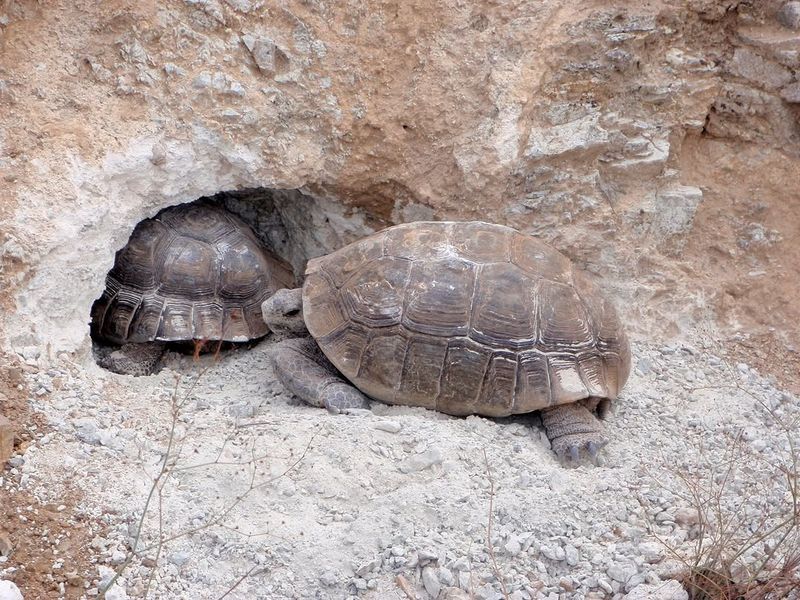
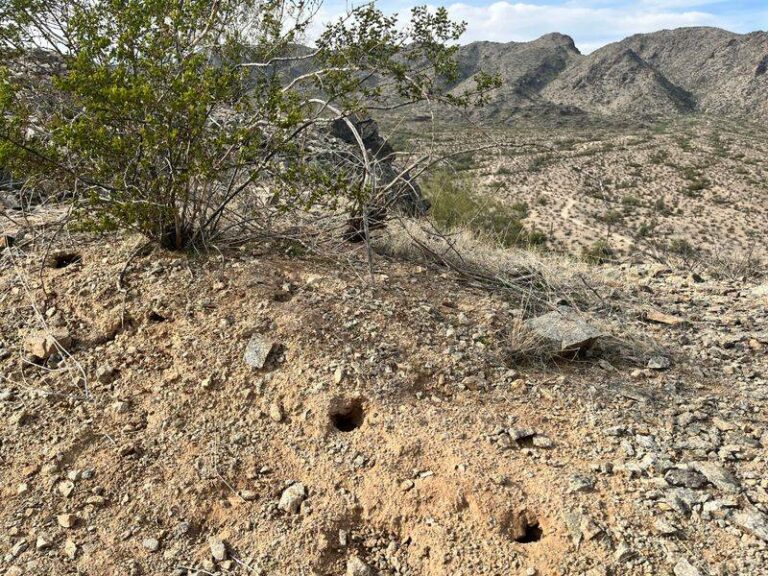
A burrow entrance might look like a small hole in the ground, but it represents years of careful work by a tortoise. Disturbing the entrance, blocking it, or digging near it can have serious consequences for the animal sheltering inside.
Tortoises use their burrows year-round. During summer, they retreat underground during the hottest part of the day to avoid overheating.
In winter, they brumate inside for months at a time. A blocked or collapsed burrow during those periods puts the tortoise in a dangerous situation.
Burrow areas are protected under Arizona wildlife law. Intentionally destroying a tortoise burrow is a violation, even if you do not see a tortoise present.
Tortoises are not always visible at the entrance when they are resting inside.
Landscaping, off-road vehicles, and foot traffic near burrows can cause collapse without anyone realizing it. If you spot a burrow on your property or near a trail, mark the area mentally and give it a wide berth.
Other wildlife also uses empty tortoise burrows. Burrowing owls, Gila monsters, and various snakes take shelter in abandoned ones.
Preserving those structures benefits a whole community of desert animals, not just tortoises.
When in doubt, treat any hole in desert terrain as a potential burrow.