Why Your California Gardenia Has Yellow Leaves Even Though You Keep Fertilizing It
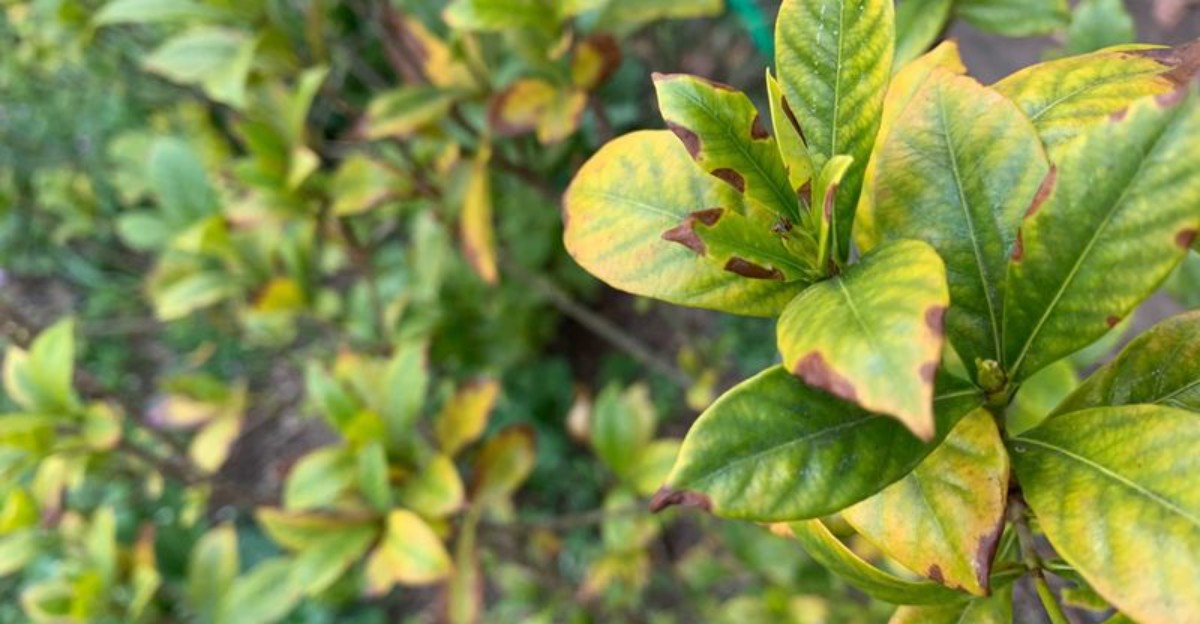
Few garden frustrations match a gardenia that keeps fading no matter how much care it receives. Pale leaves spread, fertilizer bags empty, and the glossy green foliage that makes the shrub so appealing seems to slip further away.
The surprising part is that hunger rarely explains the problem.
In many California yards, the real cause hides in the soil, the water, or the weather, working quietly against a plant with very particular tastes.
Several different issues can produce nearly identical symptoms, which makes guessing an expensive habit.
A few telltale clues, though, point clearly toward each one.
Matching the clue to the cause turns frustration into a plan, and with patience, those dark leaves and fragrant white blooms can return.
1. High Soil pH Locks Up Iron
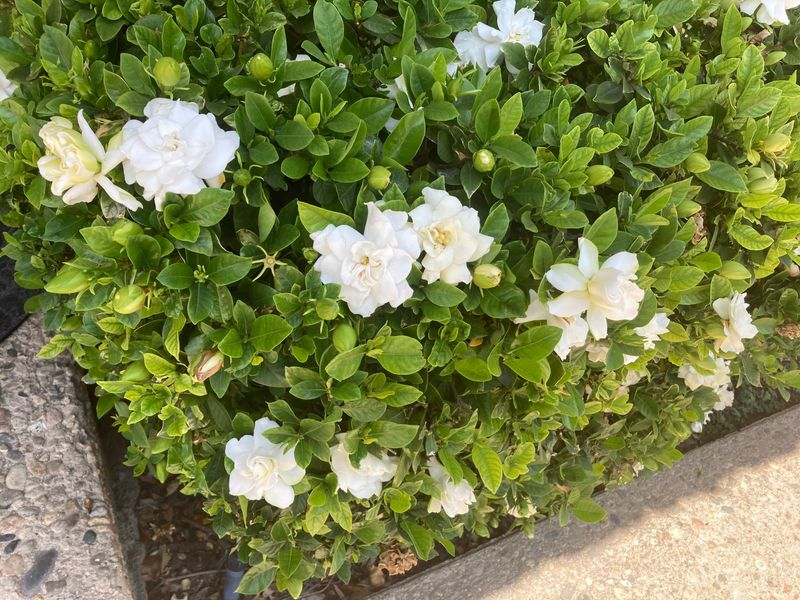
A vault full of gold without a key describes the situation well. In alkaline soil, iron sits right there in the dirt, yet gardenia roots can’t unlock it.
Gardenias are acid-loving plants, and UC ANR guidance places them happiest in soil with a pH of about 5.0 to 6.5.
Many California soils run well above 7, especially in inland valleys and southern regions. At that higher pH, iron shifts into forms that don’t dissolve in water.
Roots can absorb only nutrients that dissolve, so the iron becomes useless to the plant.
Hard irrigation water worsens the problem over time. California tap water often carries calcium carbonate, the same material behind white crust on faucets, and each watering nudges pH higher.
A gardenia planted in decent soil can slowly slide into trouble over a few years.
Planting near concrete foundations or walkways can also raise pH, since lime leaches out of cement. Gardenias planted against stucco walls often show this problem first.
Lowering pH gradually offers the key. Soil sulfur worked into the root zone at label rates helps acidify the ground over several months.
Acidic organic mulch, such as pine needles, shredded bark, or composted leaves, supports the effort as it breaks down.
In stubborn spots, containers filled with an acid potting mix provide far more control. Patience matters, since soil chemistry shifts slowly rather than overnight.
2. Fertilizer Cannot Fix Unavailable Iron
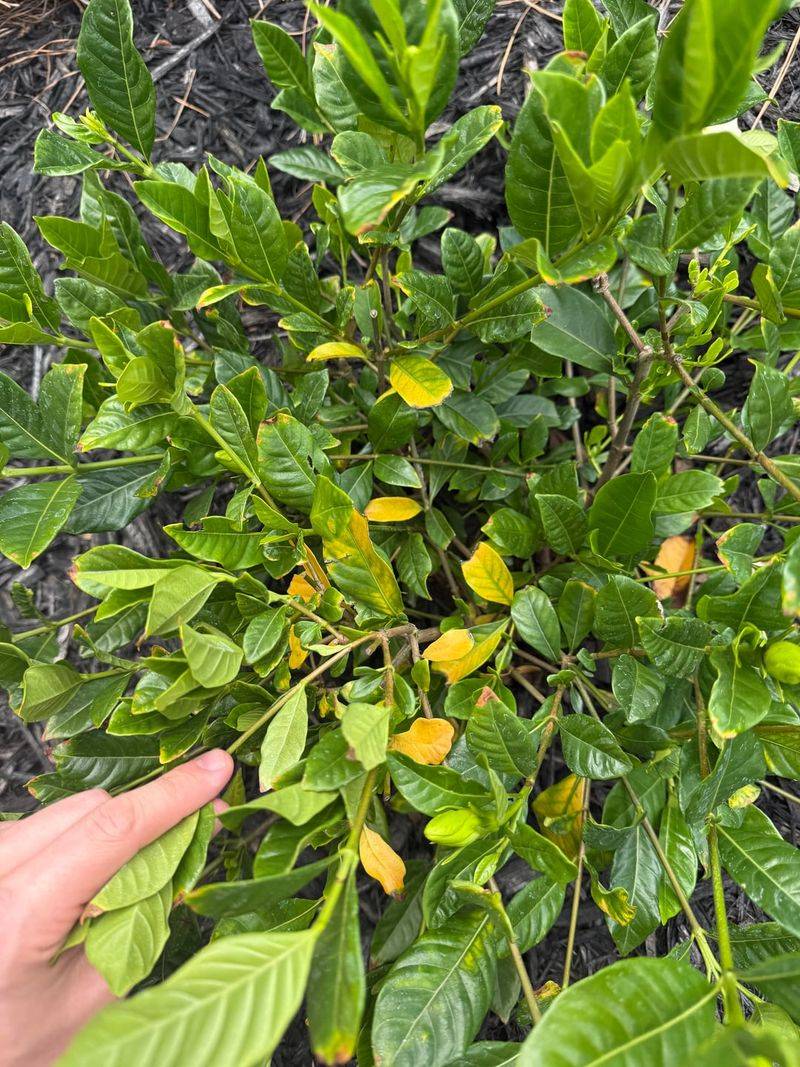
More food, more yellow. Plenty of gardeners fall into this loop, scooping extra fertilizer around a pale shrub and hoping for a turnaround.
Piling on plant food in this situation resembles offering a meal to someone who can’t swallow.
Most general fertilizers focus on nitrogen, phosphorus, and potassium. Those nutrients matter, yet they do nothing to make locked iron available.
When soil pH runs too high, any iron in the fertilizer usually gets tied up just like the iron already in the ground.
Overfeeding can even backfire. Extra fertilizer adds salts to the root zone, and salts burn tender gardenia roots, so burned roots absorb even less and yellowing spreads faster.
Some fertilizers, especially those high in phosphorus, can also interfere with iron uptake, so money spent can make the problem worse.
A smarter approach starts with pausing heavy feeding while the real cause gets sorted out. Fall and winter feeding is best skipped, since roots slow down as temperatures drop.
Your California Garden Changes Every Week. Your Plan Should Too.
Gardening in California changes quickly throughout the season. Every Friday you’ll receive a simple weekly plan showing exactly what to plant, prune, fertilize, harvest, and protect so you never miss the right timing.
When feeding resumes, a product labeled for acid-loving plants such as azaleas, camellias, and gardenias makes the best choice.
Those formulas often contain ammonium-based nitrogen, which has a mild acidifying effect, along with useful micronutrients.
Light feeding during the spring and summer growing season works best, with deep watering before and after each application.
Fertilizer plays a supporting role in this rescue rather than the starring one.
3. Yellow Leaves With Green Veins Signal Iron Chlorosis
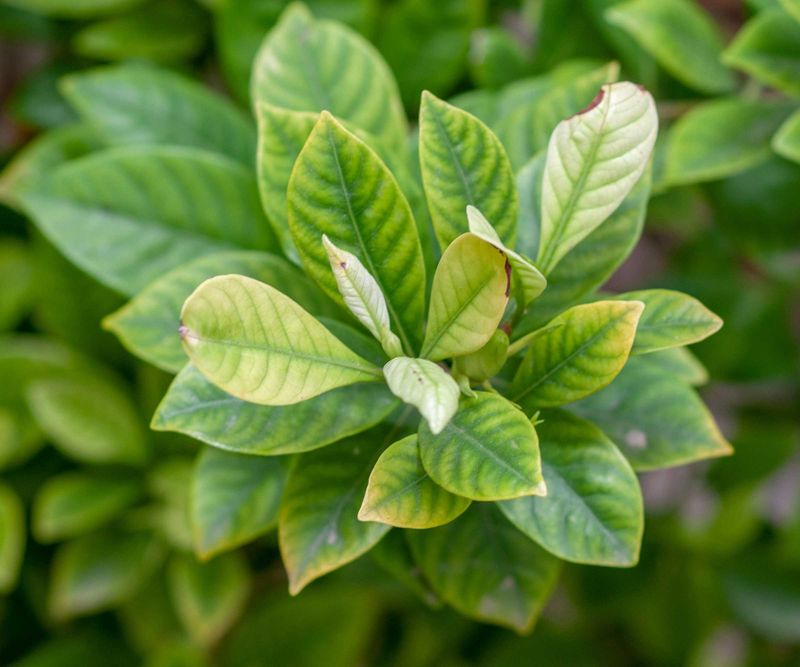
A leaf held up to the light can reveal a yellow background crisscrossed by sharp green lines, almost like a road map.
That pattern serves as the classic calling card of iron chlorosis.
Horticulturists call this look interveinal chlorosis, meaning yellowing between the veins.
Iron helps plants make chlorophyll, the green pigment that captures sunlight. Without enough usable iron, leaf tissue loses color while veins stay green longer.
UC IPM notes that the newest leaves at branch tips usually show it first, an important clue, since iron moves poorly from old leaves to new ones.
Other types of yellowing look different. A nitrogen shortage tends to yellow older, lower leaves evenly, veins and all.
Natural aging also turns a few old inner leaves yellow, and gardenias shed them, especially in spring. A handful of yellow leaves deep inside the shrub is normal housekeeping.
Bright yellow tips with green veins tell a different story.
Severe cases grow dramatic. Leaves may fade almost to white, develop brown edges, and stay small, while flower buds may drop before opening.
Growth slows considerably as well. Fall’s cooler weather can make symptoms look worse temporarily, a point covered further below.
Catching the pattern early makes recovery much easier. A weekly photo of affected leaves helps track whether fixes are working.
Green new growth signals progress, even if older yellow leaves rarely regain their full color.
4. Soggy Roots Cannot Absorb Nutrients
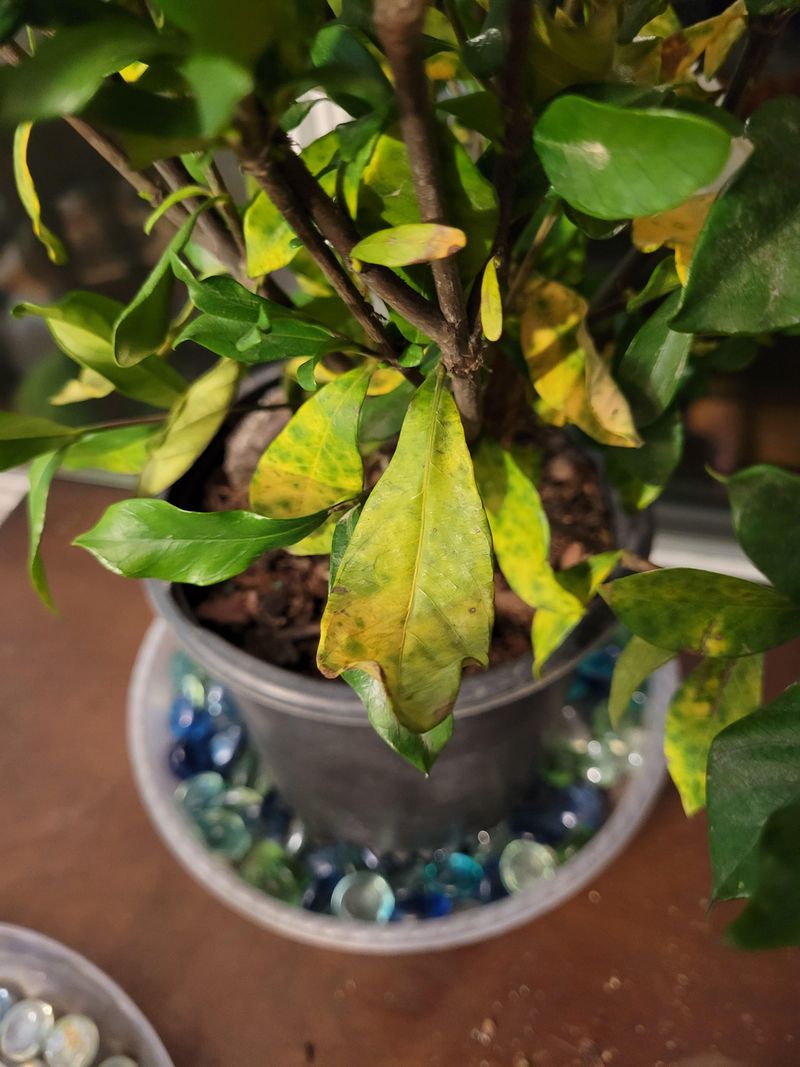
Squish, squish. Soil around a gardenia that still feels like a wet sponge days after watering suggests roots are struggling, since waterlogged soil pushes out the air they need.
Healthy roots absorb nutrients using energy that depends on oxygen. In soggy ground, roots weaken and stop pulling in iron and other minerals.
Leaves then yellow even when the soil holds plenty of nutrients.
Constant moisture also invites root rot fungi, which UC IPM lists as a serious problem for gardenias in poorly drained soil.
Rotting roots look brown and mushy rather than firm and pale.
Heavy clay soil, common across much of California, drains slowly. Sprinkler systems set on the same schedule as the lawn can easily overwater a gardenia.
Pots without drainage holes create the same trap on a smaller scale.
The fix starts with a simple finger test. Pushed two inches into the soil, a finger reveals whether that layer feels slightly dry and ready for water.
Watering then soaks deeply so moisture reaches the whole root zone, since gardenias prefer steady, even moisture rather than a swamp.
In clay beds, replanting slightly high in a raised mound or bed mixed with organic matter helps. Mulch kept a few inches from the trunk prevents trouble.
Container plants benefit from emptied saucers and open drainage holes.
A drip line on its own zone gives gardenias the steady moisture they prefer without soaking surrounding beds.
5. Salty Irrigation Water Stresses Roots
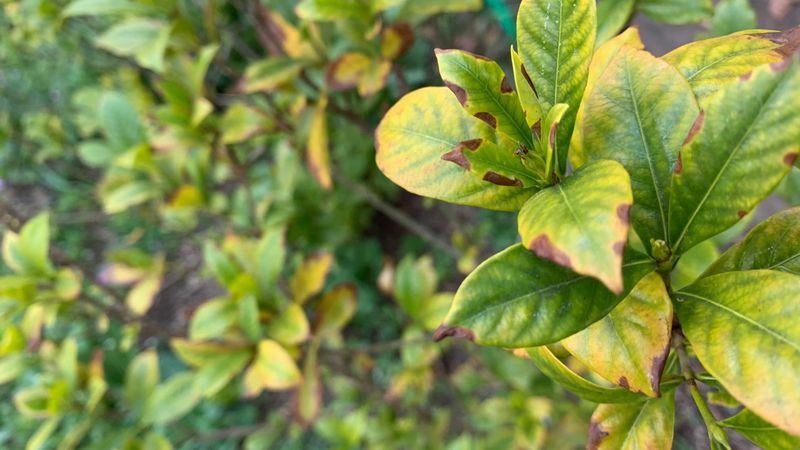
A white crust on the rim of a clay pot or atop the soil serves as a warning sign. Salt has been building up, and gardenias are especially sensitive to it.
Water from the Colorado River and many California wells carries dissolved salts. With each watering, some salt stays behind as moisture evaporates, and fertilizer adds even more.
Over time, salty soil makes it harder for roots to pull in water, much like drinking through a clogged straw, so the plant feels thirsty even in damp soil.
Salt damage often shows up as yellowing plus brown, crispy leaf tips and edges, with older leaves scorching first.
Gardenias in containers suffer most, since salt has nowhere to go. Plants given light, frequent sprinkles also struggle, because shallow watering rarely flushes salt away.
Leaching offers the best tool. A few times a year, slow, deep watering that lets plenty of water run through the root zone carries salts downward.
For pots, about twice the container volume poured through, then fully drained, does the job.
Winter rain helps flush outdoor beds naturally, which makes the long dry summer the time salts tend to pile up.
Cutting back on fertilizer when crusting appears helps as well. Very hard tap water makes collected rainwater a worthwhile option for container gardenias.
A little extra water now saves a lot of leaves later.
6. Cold Nights Cause Leaf Yellowing
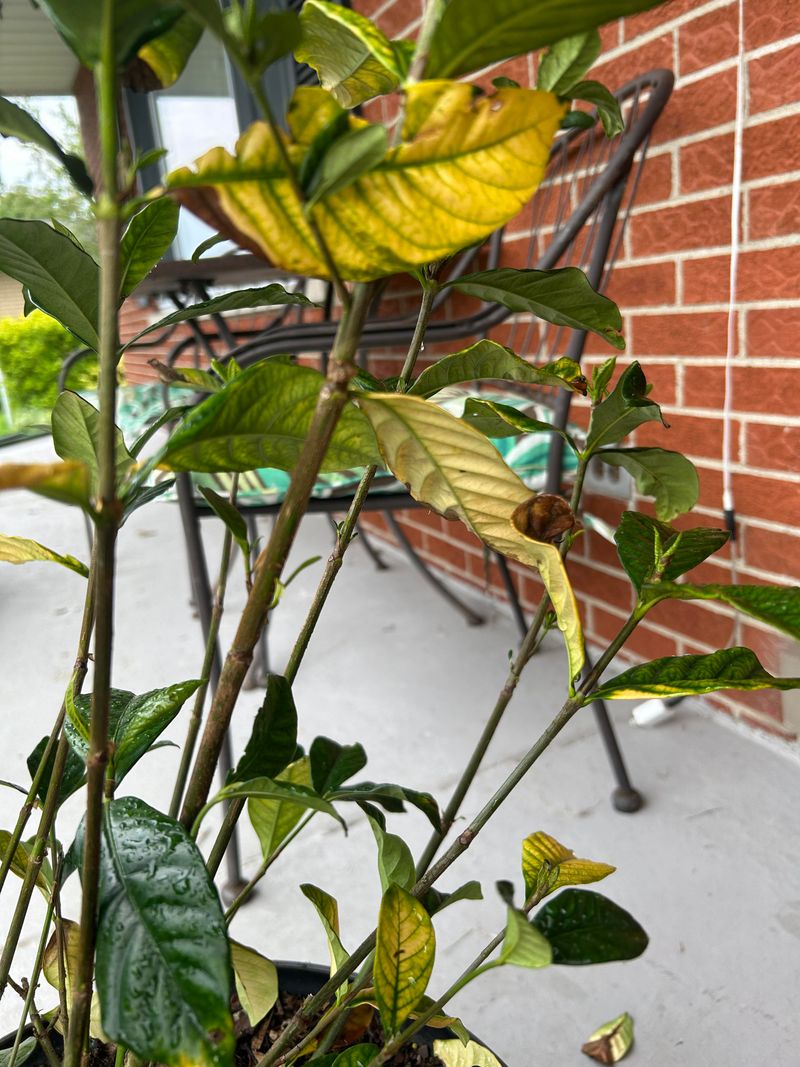
Autumn arrives, days still feel warm, and leaves start fading anyway. Many California gardeners notice gardenias yellowing as nights drop into the 40s, and the chill may be the culprit.
Gardenias come from warm, subtropical regions and dislike cold. Low soil temperatures slow root activity, so roots absorb less iron and nitrogen.
Leaves can turn a general pale yellow or take on bronze and purplish tints.
Inland valleys, foothill gardens, and foggy coastal spots with cool nights all see this pattern, and a sudden cold snap can trigger bud drop overnight.
Fortunately, cold yellowing often fades once spring warms the ground, with new growth usually emerging green as soil temperatures climb.
Heavy winter fertilizing is best avoided, since roots can’t use it and salts build up. Feeding waits for spring.
Placement helps considerably. A spot near a south- or east-facing wall stores heat that softens chilly nights, while morning sun and afternoon shade suit hot inland areas.
Two to three inches of organic mulch keeps soil warmer and moisture steady. Within five feet of the house, Zone 0 rules in designated fire areas limit combustible mulch.
When frost appears in the forecast, frost cloth draped overnight and removed in the morning protects plants.
Potted gardenias can roll into a sheltered corner or garage for the coldest stretch, then return outdoors once nights warm again.
7. Whiteflies Drain The Leaves
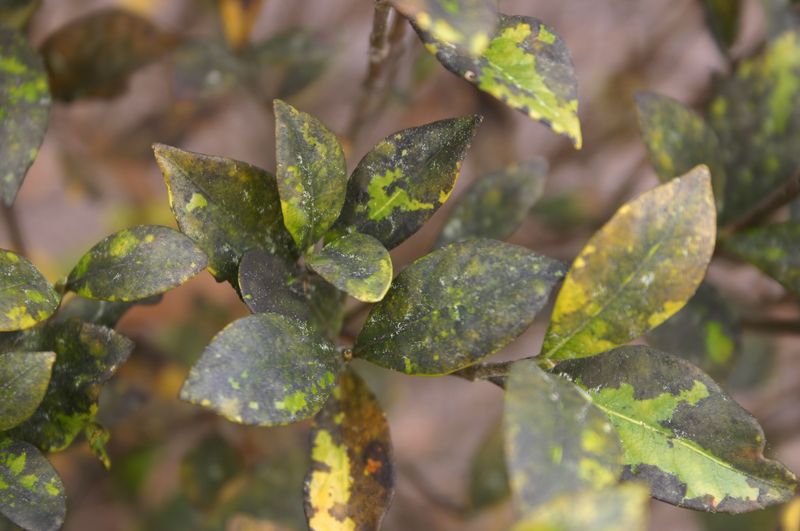
A gentle shake of the shrub can send up a small cloud of tiny white insects, a sign of whiteflies, among the most common gardenia pests in California.
Whiteflies cluster on leaf undersides and feed on sap, draining energy until leaves turn yellow, mottled, or limp.
As they feed, they release sticky, sugary honeydew. Leaves feel tacky, ants often arrive to collect it, and black sooty mold soon grows on top, blocking sunlight.
UC IPM recommends starting gently rather than reaching for harsh sprays.
Broad-spectrum insecticides sharply reduce the lady beetles, lacewings, and tiny parasitic wasps that naturally keep whiteflies in check, often leading to bigger outbreaks later.
A strong spray of water on leaf undersides every few days knocks off eggs and young insects. Yellow sticky cards hung nearby help monitor adult numbers.
Heavier infestations respond to insecticidal soap or horticultural oil, coating leaf undersides thoroughly and following label directions closely.
Spraying in hot afternoon sun is best avoided, since it can burn leaves. Early morning applications on cool days work best.
Ant control matters too, since ants protect whiteflies from predators. Moderate nitrogen feeding helps as well, because soft, lush growth attracts more sap feeders.
Once whiteflies decline, sooty mold slowly weathers away, and new leaves emerge cleaner.
New plants deserve a close look before purchase, since whiteflies often arrive on nursery stock.
8. Test Soil And Add Chelated Iron
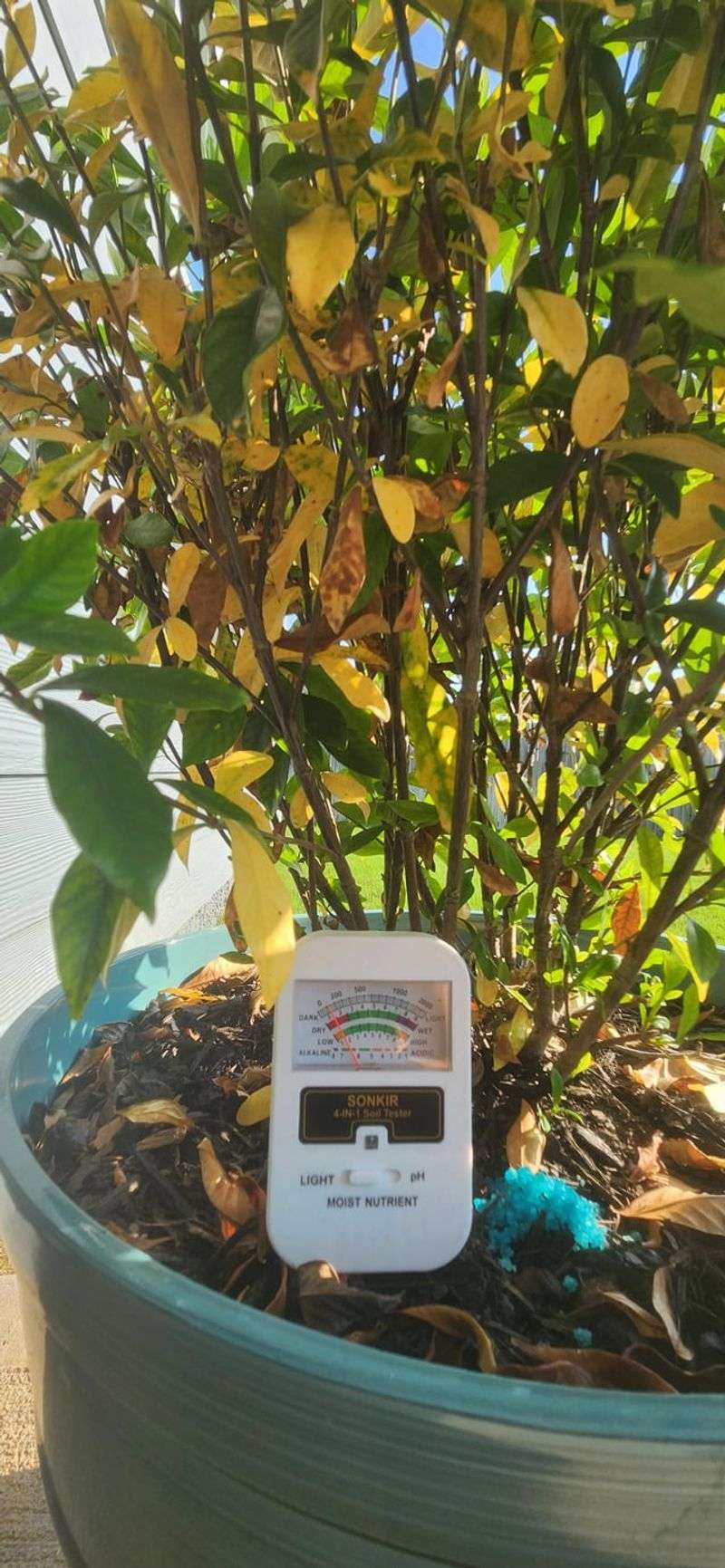
Guessing gets expensive. A simple soil test turns a gardenia mystery into a clear answer, often for less than the cost of a few bags of fertilizer.
A home pH kit or meter offers a quick reading, while a soil lab provides a fuller picture.
Samples taken from several spots around the root zone, about four to six inches deep, give the most accurate results.
A reading above 6.5 suggests high pH is blocking iron. Testing tap water can also reveal whether hardness or salt plays a role.
Chelated iron comes next. A chelate wraps iron in a protective molecule, keeping it dissolved and usable even in less acidic soil.
Products labeled for alkaline soils often contain a form called EDDHA, which holds up best at high pH.
Application to moist soil or as a foliar spray, following label directions exactly, delivers the best results. Extra rarely helps, and iron can stain patios and walkways.
Chelated iron works like a quick bandage, with new leaves often greening up within a few weeks.
Pairing it with long-term fixes, such as soil sulfur, acidic mulch, deep watering, and good drainage, keeps the improvement lasting.
An annual retest shows how soil chemistry is shifting. Spring and early summer applications work best, since roots are most active then.
With the right chemistry in place, a gardenia can return to its glossy green form and fill the patio with fragrance again.