Why Your Dieffenbachia Is Drying In Pennsylvania (And How To Save It)
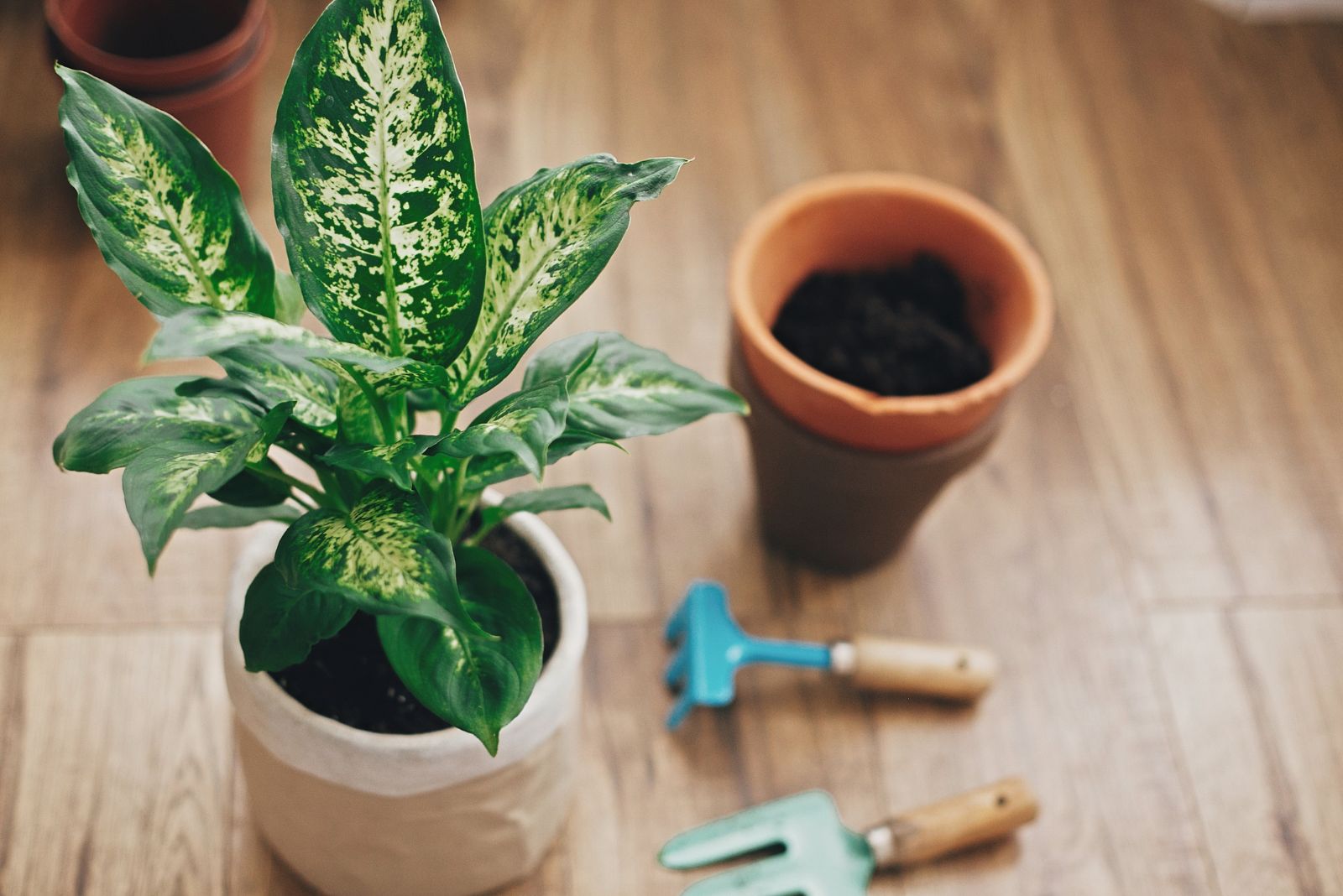
Dieffenbachia has built its entire reputation on being forgiving. It’s the plant people buy when they want something lush and tropical-looking without the high-maintenance commitment, and for the most part it delivers on that promise.
Bold leaves, impressive size, tolerates lower light – on paper it checks every box for an easy Pennsylvania houseplant. So when it starts declining, the confusion is real.
You haven’t changed anything, you’re watering roughly the same as always, and yet something is clearly going wrong with a plant that was specifically chosen because it wasn’t supposed to be difficult. The issue is almost never neglect.
In Pennsylvania homes, Dieffenbachia runs into a very specific set of seasonal challenges that catch most owners completely off guard.
Winter heating systems, fluctuating humidity levels, drafty windows, and light changes through the seasons create conditions that quietly stress this plant in ways that aren’t obvious until the damage is already showing.
Getting it back on track is very doable once you know what you’re actually dealing with.
1. Not Enough Light Indoors
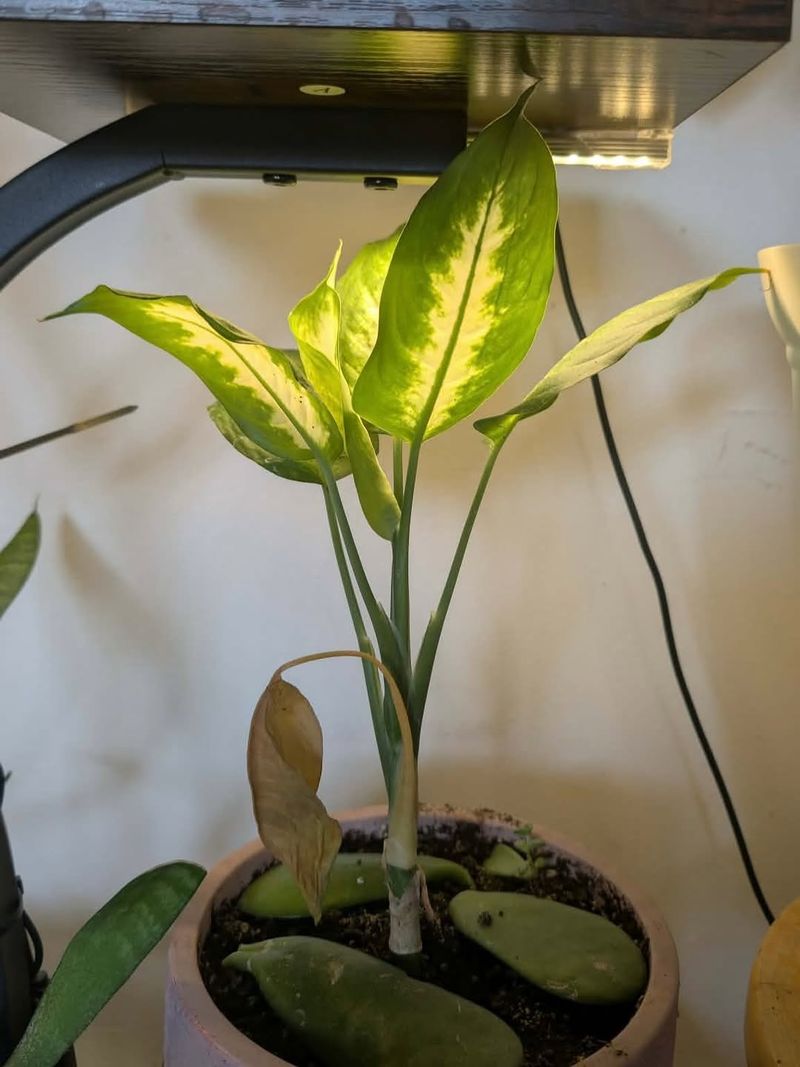
Walk around most Pennsylvania homes in the middle of winter and you will notice one thing fast: the rooms feel darker than you might expect. Shorter days and overcast skies are common here, and your Dieffenbachia is not a fan of that at all.
Low light is one of the sneakiest reasons this plant starts to struggle indoors. When a Dieffenbachia does not get enough light, it cannot make enough energy through photosynthesis. The leaves start to look pale, almost washed out.
New growth comes in small and weak, and the whole plant just seems to lose its spark. It might even lean toward whatever small light source it can find, which makes it look lopsided and sad.
The fix is simpler than you think. Move your plant closer to a bright window, but make sure it is not sitting in direct sunlight.
Direct sun can actually scorch those beautiful leaves. An east or west-facing window works really well in Pennsylvania homes because the light is bright but not too harsh.
If your home does not have a great window spot, a grow light can work wonders. You can find affordable ones online or at garden centers.
Set it on a timer for about 12 hours a day. Within a few weeks, you should notice the plant perking up, with deeper green color and stronger new leaves pushing out. Light really does make all the difference for this tropical beauty.
2. Overwatering In Cooler Conditions
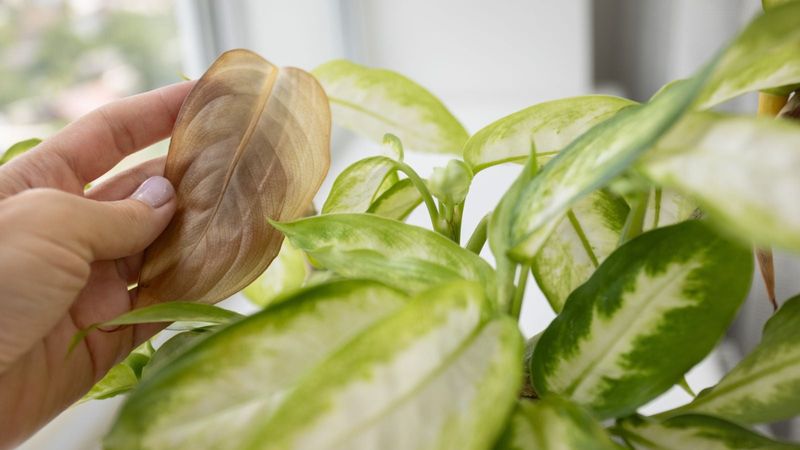
Here is something a lot of plant owners do not realize: the way you water your plant in summer should not be the same way you water it in fall and winter. In Pennsylvania, indoor temperatures drop, heating systems kick in, and plant growth slows way down.
All of this means your Dieffenbachia is using far less water than it did during warmer months.
When you keep watering on the same schedule year-round, the soil stays wet for way too long. Roots sitting in soggy soil start to rot, and once root rot sets in, the plant has a really hard time absorbing nutrients and water properly.
Your Pennsylvania Garden Changes Every Week. Your Plan Should Too.
Gardening in Pennsylvania changes quickly throughout the season. Every Friday you’ll receive a simple weekly plan showing exactly what to plant, prune, fertilize, harvest, and protect so you never miss the right timing.
You might notice yellowing leaves, mushy stems near the base, or even a sour smell coming from the soil. These are all red flags.
Cut back on watering during the cooler months. A good rule is to stick your finger about two inches into the soil.
If it still feels damp, wait a few more days before watering again. Always make sure your pot has drainage holes so extra water can escape freely.
If you think root rot has already started, take the plant out of its pot and check the roots. Healthy roots look white or light tan.
Rotted roots look brown or black and feel mushy. Trim away any damaged roots with clean scissors, let the plant air out for a bit, then repot it in fresh soil. Your Dieffenbachia can bounce back with the right care.
3. Cold Drafts From Windows Or Doors
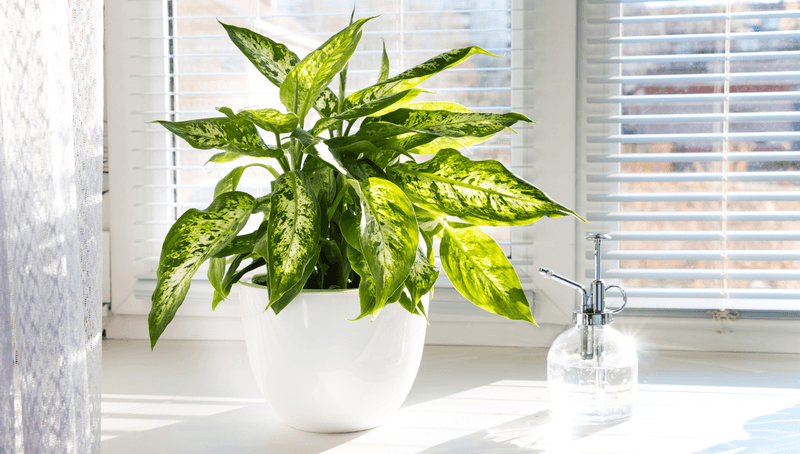
Pennsylvania winters are no joke. Temperatures can drop well below freezing, and even inside your home, cold air has a way of sneaking in through old windows, sliding glass doors, and entryways.
Your Dieffenbachia is a tropical plant at heart, and it is not built to handle those chilly surprises.
When cold air hits the leaves repeatedly, the plant goes into a kind of stress response. Leaves start to droop, curl, or drop off entirely.
You might notice brown patches appearing almost overnight, especially on leaves closest to the window or door. The plant is basically telling you it is freezing and needs to move.
Feel around your windows on a cold Pennsylvania night. If you can feel cool air coming through, your plant definitely can too.
Single-pane windows are especially bad for this. Even sitting too close to cold glass without actual airflow can chill the leaves enough to cause damage.
The solution is straightforward: move your Dieffenbachia away from any drafty spots. Keep it at least a few feet from exterior walls and windows during the colder months.
A spot in the middle of a room or near an interior wall is much safer. If you love the look of a plant near your window, just make sure there are no gaps or leaks letting cold air in.
Adding weatherstripping to drafty doors and windows is a win for both your plant and your heating bill in Pennsylvania.
4. Low Humidity During Winter
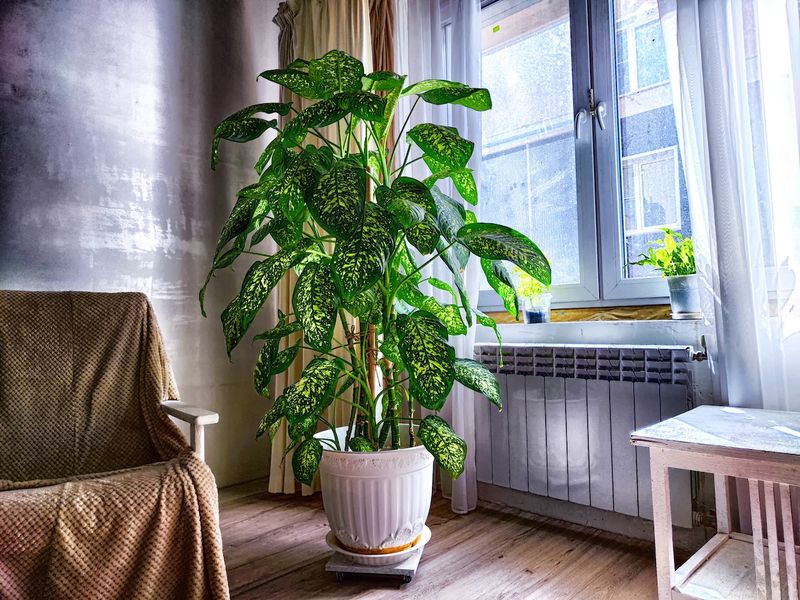
Did you know that the air inside most Pennsylvania homes during winter can be drier than a desert? It sounds extreme, but it is true.
When heating systems run nonstop to fight off the cold, they pull moisture right out of the air. Dieffenbachia plants are native to tropical rainforests, where humidity is high pretty much all year long.
Dry indoor air is a real problem for them. Low humidity shows up in some pretty obvious ways. The leaf tips start turning brown and crispy.
Edges curl inward like the plant is trying to protect itself. Older leaves may start to look dull and lifeless.
If your home feels dry to you, imagine how your plant feels sitting next to a blasting heating vent all day.
Raising the humidity around your Dieffenbachia does not have to be complicated or expensive. One easy method is a pebble tray.
Fill a shallow tray with small pebbles, pour in a little water, and set your plant pot on top. As the water evaporates, it creates a small pocket of moisture right around the plant. Just make sure the pot is not sitting directly in the water.
A small humidifier placed nearby is another great option, especially during the harshest Pennsylvania winter months.
You can also group your houseplants together since plants naturally release moisture through their leaves, creating a slightly more humid environment for each other. Aim for humidity levels around 50 to 60 percent for a happy Dieffenbachia.
5. Sudden Temperature Changes
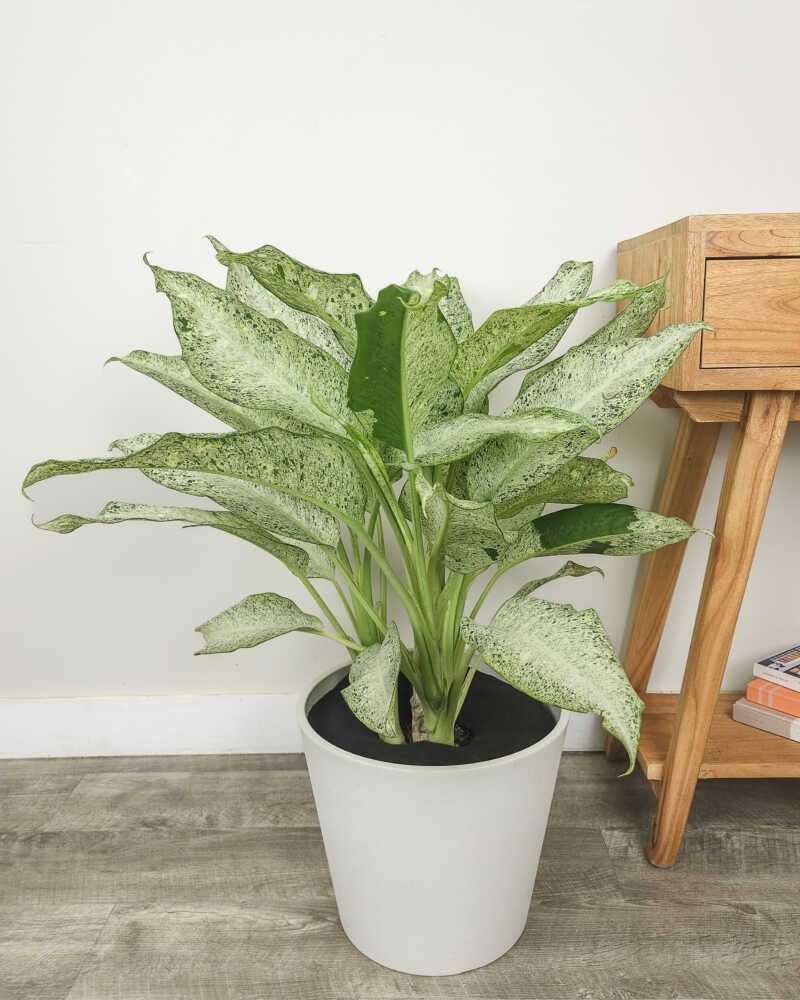
Stability is something your Dieffenbachia absolutely craves. Think about where this plant comes from: warm, steady tropical climates where temperatures barely budge from one day to the next.
Pennsylvania is basically the opposite of that during the colder months, and even inside your home, temperatures can swing more than you realize.
Heating vents blasting hot air one moment, a cold draft sneaking in the next, or a thermostat dropping overnight to save energy can all stress your plant out. When temperatures shift quickly, the plant’s growth slows noticeably.
Leaves may yellow, droop, or start looking generally unhappy without any obvious single cause. It is the kind of slow decline that can be confusing if you do not know what to look for.
Dieffenbachia does best when kept between 65 and 75 degrees Fahrenheit consistently. Anything below 60 degrees puts it at real risk.
Check where your plant is sitting in your Pennsylvania home. Is it near a heating vent that blasts hot air every time the furnace kicks on?
Is it close to an exterior door that gets opened and closed on cold days? Both of those spots are bad news.
Moving your plant to a more central, stable spot in your home makes a big difference. Interior rooms tend to hold more consistent temperatures.
Avoid placing it directly above or below any vents. If you use a programmable thermostat, try not to let overnight temperatures dip too low.
A steady environment keeps your Dieffenbachia growing strong and looking its best all year.
6. Old Or Poor-Draining Soil
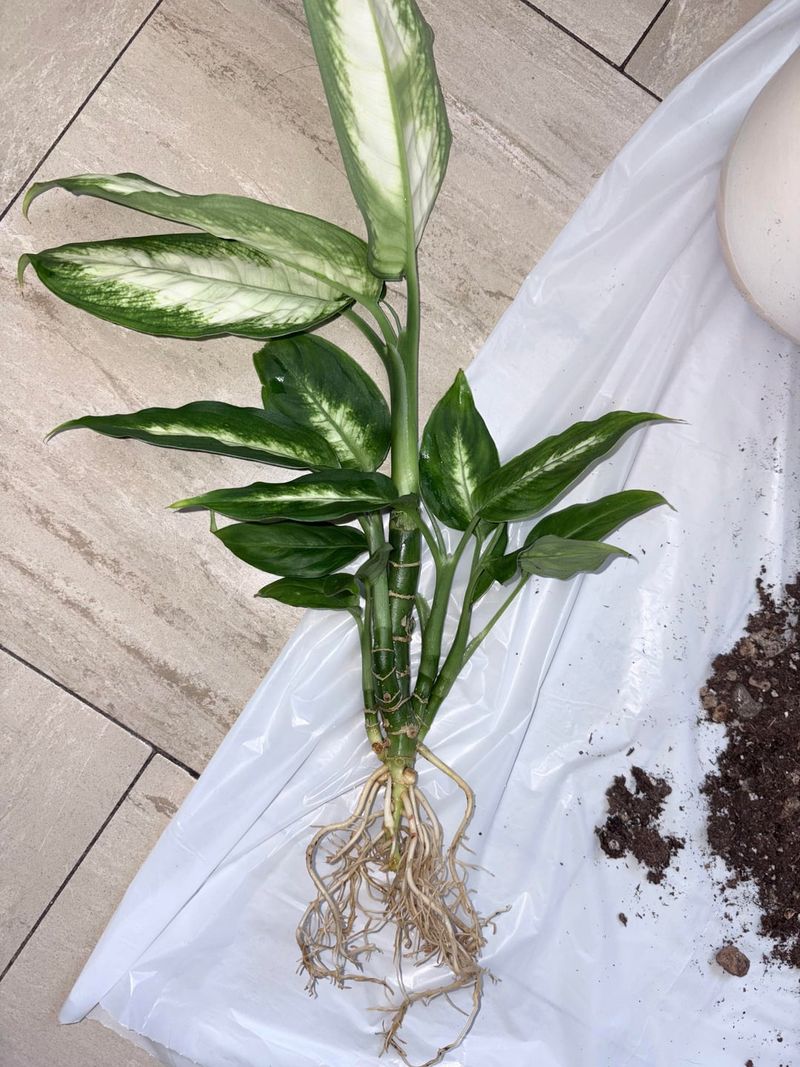
Soil might not be the first thing you think about when your Dieffenbachia starts looking rough, but it could easily be the root of the problem. Pun intended.
Over time, potting soil breaks down and becomes compacted. What was once light and fluffy turns dense and heavy, and that makes it really hard for roots to breathe and grow properly.
Compacted soil also tends to hold water much longer than fresh soil does. In a Pennsylvania home where indoor conditions during winter already make overwatering a risk, poor-draining soil just makes things worse.
Roots get suffocated, nutrients become harder to absorb, and the plant starts showing the strain through yellowing leaves, slow growth, and an overall tired appearance.
A good rule of thumb is to repot your Dieffenbachia every one to two years. When you take it out of its current pot, look at the roots.
If they are circling around the bottom or poking out of the drainage holes, the plant is definitely ready for more space. Choose a pot that is just one size larger than the current one.
Use a well-draining potting mix when you repot. A mix designed for tropical houseplants works great, or you can add perlite to a standard potting mix to improve drainage.
Spring is usually the best time to repot, right as the plant starts growing again after the slow Pennsylvania winter months. Fresh soil gives your Dieffenbachia the nutrients and breathing room it needs to thrive all over again.