Why Your Florida St. Augustine Lawn Is Thinning Even Though The Grass Is Still Green
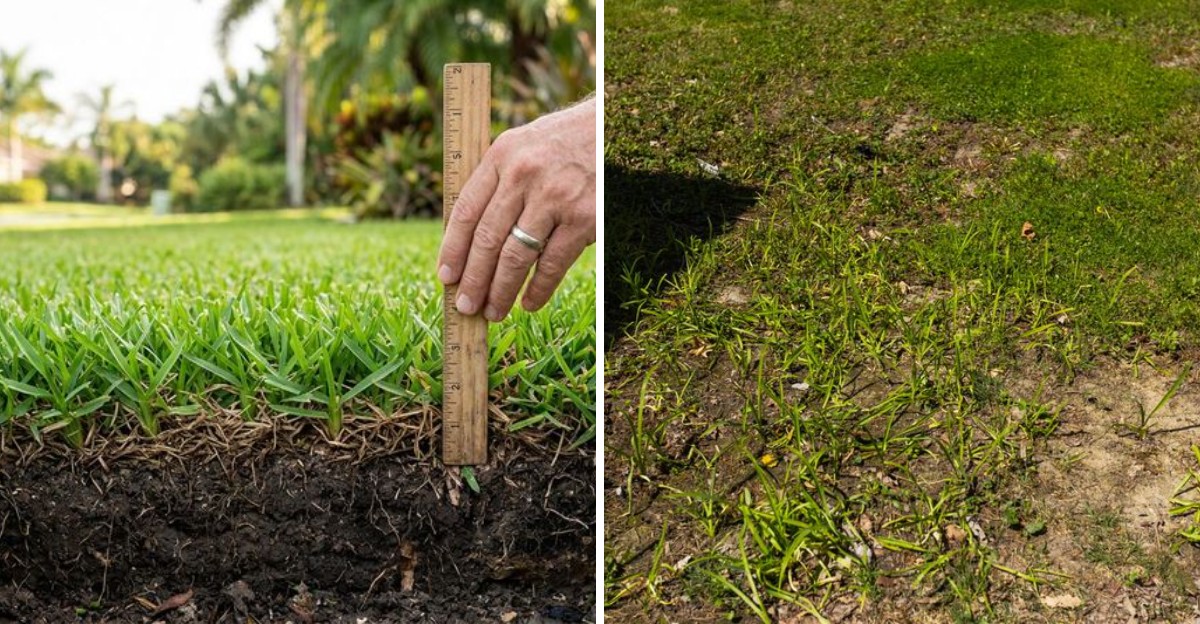
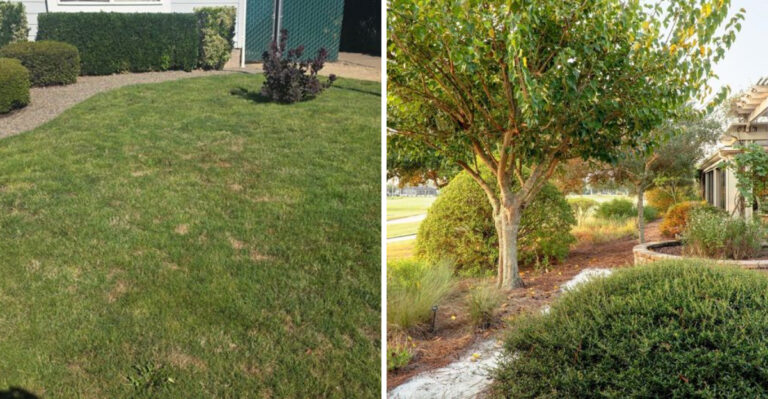
The lawn still looks green from the street. Up close, it’s thinner than it was a month ago.
Bare soil showing through in spots that used to be solid, blades spaced further apart than they should be.
Green doesn’t always mean healthy. St. Augustine can hold its color while the roots underneath are already struggling with something that hasn’t caught up to the blades yet.
By the time thinning shows up on a walk across the yard, whatever caused it has usually had weeks to work.
Florida’s late summer conditions hit roots first and color last, which is exactly why this problem hides so well. The color holds on long after the roots have already started losing ground.
1. That Deep Green Color Can Be Hiding A Shade Problem
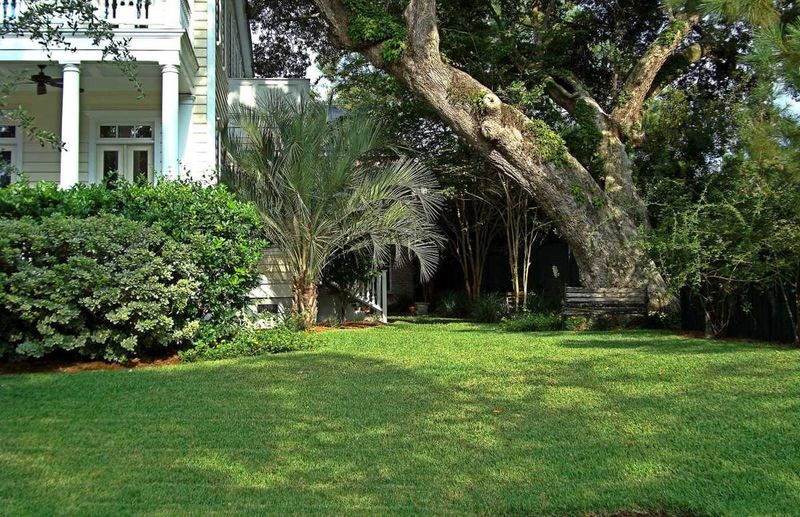
Grass under a big live oak often looks the darkest green in the whole yard. That rich color fools people, because shaded blades stretch and load up on chlorophyll while the plant slowly runs out of fuel.
St. Augustine handles partial shade better than many warm-season grasses, but it still needs enough direct light to maintain a dense stand. Deep or persistent shade can gradually thin the turf.
Without that energy, the lawn stops spreading sideways. Blades keep their color, yet the stand gets thinner and thinner until soil shows between the stolons.
One practical fix costs nothing but a mower adjustment. Raise your cutting height to about 4 to 4.5 inches in shaded zones so each blade has more surface area to soak up whatever light filters through.
Thinning tree limbs helps too. Removing a few lower branches or selectively lifting the canopy can push sunlight onto the turf during the middle of the day.
Also ease off on water and nitrogen in those areas, since shaded turf uses less of both. If a spot stays stubbornly bare after a season of adjustments, that corner may be better suited to mulch, shade-tolerant groundcover, or a simple bed of ferns.
2. Low Mowing Can Quietly Strip Away Lawn Density
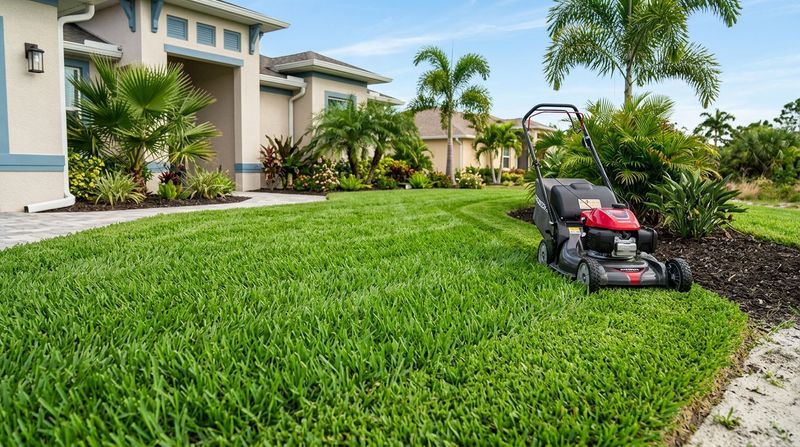
Cutting short feels tidy, like a fresh haircut for the yard. St. Augustine sees it differently, because its growth points ride along thick surface runners that need shade from the blades above them.
Florida turf specialists generally recommend a mowing height of 3.5 to 4 inches. Drop below 3 inches and those stolons get baked by direct sun, which leads to brown streaks and a stressed, patchy look.
Repeated low mowing also discourages deep rooting. Shallow roots mean less drought toughness, weaker recovery, and an easier target for chinch bugs and fungal trouble.
Scalping sneaks in when mowing gets postponed. A rainy week pushes growth up fast, then one pass at the old setting removes far too much leaf at once and leaves stubble showing.
Try raising your deck one notch and sticking to the one-third rule, removing no more than a third of the blade height per cut. Tall blades shade the soil, hold moisture longer, and make the turf look noticeably fuller without a single bag of fertilizer.
Your Florida Garden Changes Every Week. Your Plan Should Too.
Gardening in Florida changes quickly throughout the season. Every Friday you’ll receive a simple weekly plan showing exactly what to plant, prune, fertilize, harvest, and protect so you never miss the right timing.
Sharp mower blades matter as well. Dull edges shred the leaf tips, leaving frayed, whitish ends that invite disease and make a healthy lawn look tired even when it is growing fine.
3. Heavy Foot Traffic Can Open Gaps St. Augustine Struggles To Refill
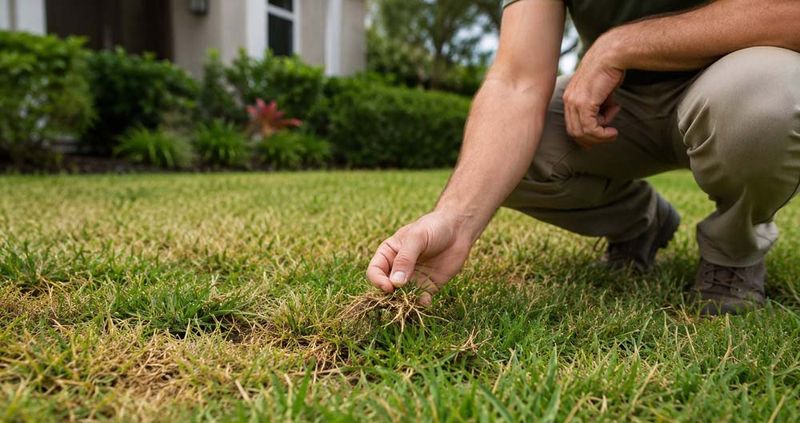
Every yard has that one shortcut. Kids cut the same corner to the gate, the trash cans roll the same line every week, and eventually a thin trail appears right through otherwise green turf.
Wear tolerance is one of St. Augustine’s weak points. Its coarse blades and surface runners bruise easily, and repeated stepping presses soil particles together until air pockets disappear.
Compacted ground blocks water and nutrients from reaching roots. Roots stay shallow, the plant gets touchy about heat and pests, and weeds move into the openings because bare soil rarely stays empty for long.
Runners can heal moderate wear surprisingly fast when conditions are decent. Constant daily pounding, though, removes growing tips faster than the grass can replace them.
A few easy moves help a lot. Install stepping stones or a mulch path along the natural walking route, move pet play areas around the yard, and keep vehicles and trailers off the turf entirely.
For trails already worn in, core aeration loosens the packed layer so runners can root again. Follow that with light topdressing and steady watering, and most Florida lawns will knit the gap shut during the warm growing months.
4. Too Much Water Can Build A Thatch Problem From The Top Down
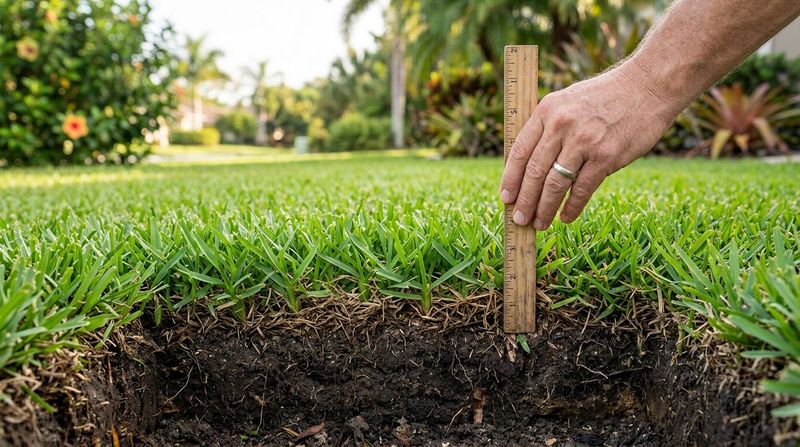
Walk across some lawns and the ground feels bouncy, almost like stepping on a mattress. That springy feel is often thatch, a mat of stems, runners, and old plant material packed between the green blades and the soil.
A thin layer under half an inch actually helps, cushioning the crown and holding moisture. Once it passes an inch, it works like a sponge that intercepts water, air, and nutrients before they ever reach the root zone.
Excessive irrigation can contribute to thatch problems, especially when it encourages rapid, soft growth that accumulates faster than it breaks down.
Roots then start growing inside the thatch instead of the soil. They dry out fast between rains, and the stand gradually thins even while the canopy stays a convincing green.
Thick thatch also gives insects and fungal spores a cozy hideout, and it can keep pest control products from reaching their target.
Shift to deeper, less frequent irrigation, roughly half to three quarters of an inch when the grass shows thirst. Ease up on quick-release nitrogen, and if the layer is already heavy, verticutting or light topdressing with sand can help break it down over time.
5. Take-All Root Rot Can Start Belowground Before The Lawn Looks Terrible
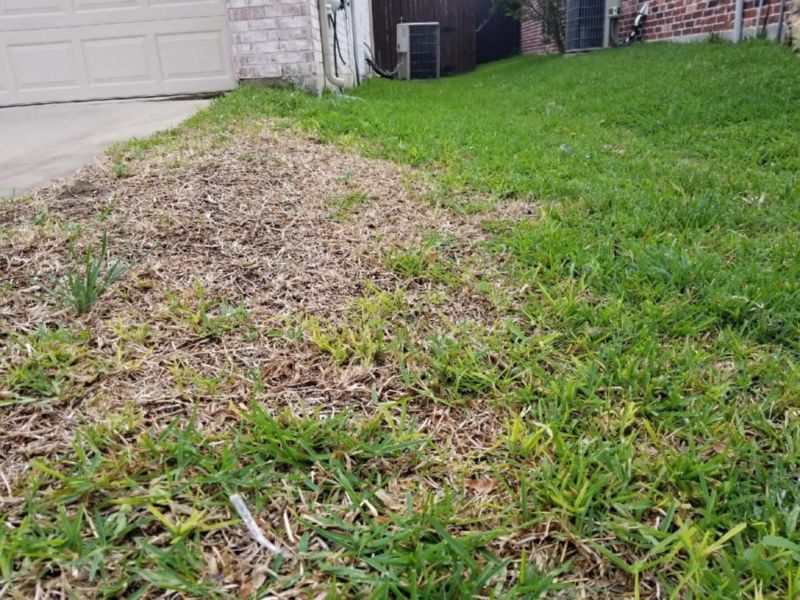
Here is a sneaky one. Take-all root rot is a soil-borne fungus that goes after roots and stolons long before the top of the lawn raises any alarm.
Early signs are easy to brush off. You might see a faint yellow-green cast across part of the yard, a little leaf folding, or slower recovery after mowing.
Then thinning shows up in circular or ragged patches. Tug on the grass and it lifts with almost no resistance, because the roots underneath are dark brown to black, short, and brittle.
Warm, soggy weather sets the stage. Late spring through early fall is prime time in Florida, especially after long rainy stretches or in low spots that stay damp.
Since damaged roots cannot absorb much, piling on fertilizer rarely turns things around. Focus instead on reducing stress: improve drainage, water less often but deeper, mow high, and use light, slow-release nutrition rather than heavy nitrogen pushes.
Before treating for take-all root rot, confirm the problem through a soil and root evaluation, then focus on improving drainage, irrigation, mowing height, and overall turf stress.
Fungicide treatments work best as prevention, so a soil and root check through your county UF/IFAS Extension office is money well spent before guessing.
6. Gray Leaf Spot Can Thin New Growth During Florida’s Humid Stretch
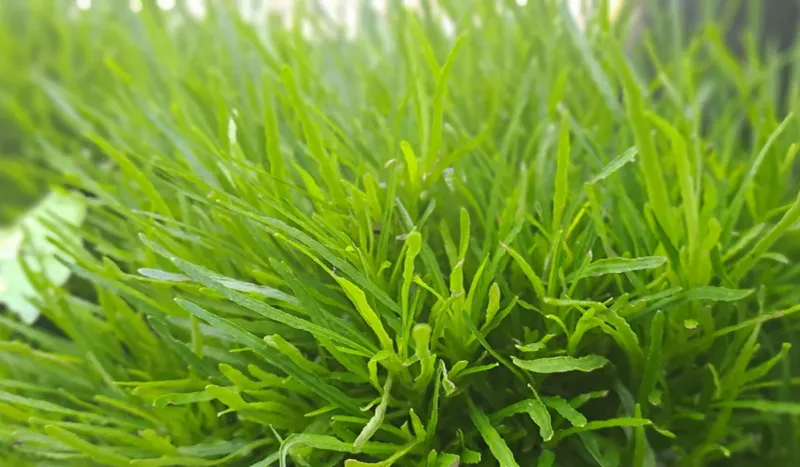
Grab a handful of blades from a thinning area and hold them up to the light. If you spot oblong lesions that look ash-gray in the middle with dark brown edges, gray leaf spot is likely at work.
The fungus behind it, Pyricularia grisea, loves exactly what Florida serves up from late spring through early fall: heat, humidity, and afternoon downpours. Under very humid conditions those spots can take on a fuzzy gray look from all the spores forming.
Damage hits new growth hardest. Tender runners and young blades get chewed up by the infection, so the lawn struggles to fill gaps and the stand slowly looks thinner even though older leaves stay green.
Fresh sod and recently patched areas are especially vulnerable, which frustrates homeowners trying to repair bare spots in July.
Quick-release nitrogen makes everything worse, so hold off on heavy feeding during humid months. Compacted soil raises severity too, which is one more reason aeration pays off.
Water early in the morning so blades dry quickly, and avoid evening irrigation that leaves leaves wet overnight. Improving air movement by trimming nearby shrubs helps, and a labeled fungicide can protect new growth while conditions stay favorable for the disease.
7. Late-Summer Nematodes Can Weaken The Roots Without An Obvious Surface Clue
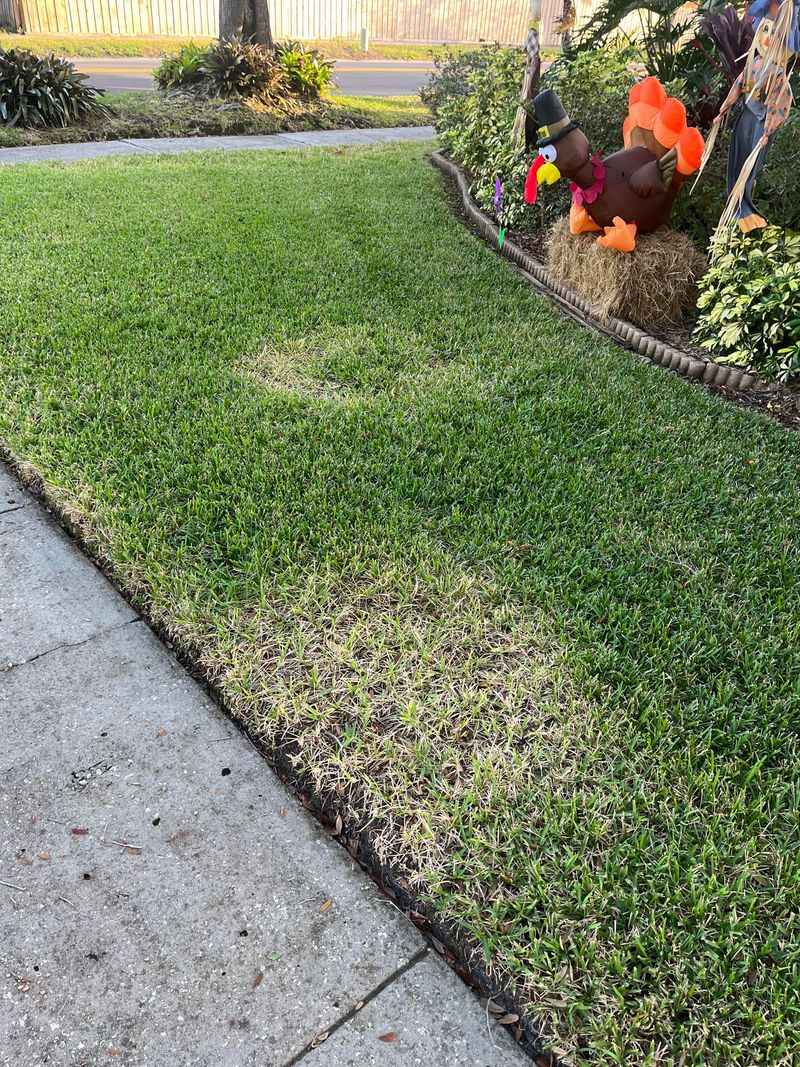
Some troublemakers are too small to see without a microscope. Nematodes are tiny roundworms living in Florida’s sandy soil, and certain species feed directly on St. Augustine roots.
Feeding damage trims the root system back. Shorter, stubby roots cannot pull water from deeper soil, so the lawn wilts fast on hot afternoons and perks back up after every sprinkler cycle.
By late summer the effects add up. Turf thins gradually, growth slows, and recovery from mowing or foot traffic drags, all while the blades keep a passable green color.
What makes nematodes tricky is the lack of a signature symptom. There are no spots on leaves, no fungal rings, and no visible insects crawling through the canopy.
The only reliable answer comes from a lab. Your county UF/IFAS Extension office can walk you through collecting soil and root samples from the edges of thin areas, then send them for an assay that counts species and populations.
Management leans on making the plant tougher rather than eliminating the pests. Raise mowing height, irrigate deeply, add organic matter, and keep other stresses low so the shortened roots can still support a reasonably dense lawn while it recovers.
8. Compacted Soil Can Leave Green Grass Running On Shallow Roots
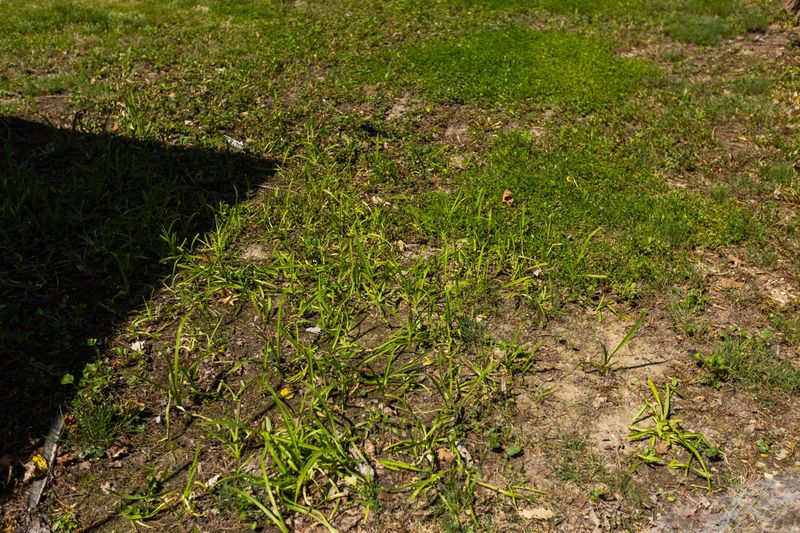
Push a screwdriver into several areas of the lawn. If the soil is consistently difficult to penetrate, especially in the thinnest spots, compaction may be contributing to the problem.
Squeezed soil loses the pore spaces that hold air and move water. Roots then stay parked near the surface, where they heat up, dry out, and run short on oxygen.
The odd part is how normal the top can look. Blades stay green thanks to frequent watering, yet the plant is living hand to mouth with almost no reserves.
Over a season that catches up. Patchy thin areas spread, color turns uneven, and puddles or runoff appear after rain instead of water soaking in.
Florida yards get compacted for plenty of reasons: construction fill, clay-heavy pockets, mower wheels tracking the same lines, and years of kids and pets playing in the same spots.
Core aeration is the standard remedy, pulling small plugs and opening channels for roots, water, and nutrients. Late spring through summer works well here, while St. Augustine is actively growing and can knit over the holes quickly.
Follow aeration with a thin layer of compost or quality topdressing. Adding organic matter improves structure, feeds soil life, and gives roots a reason to chase moisture downward.
9. Check The Cause Before Trying To Fertilize Your Way Back To A Thick Lawn
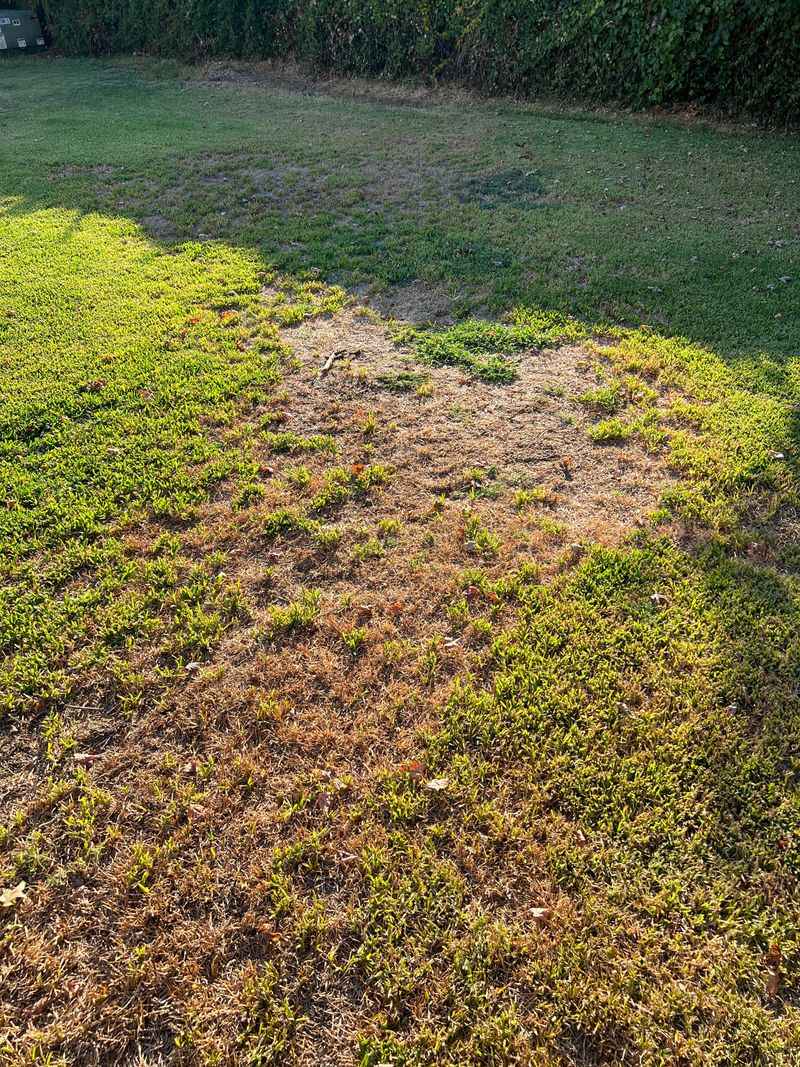
Reaching for the spreader is the instinct almost everyone has. Thinning looks like hunger, so more food seems like the obvious answer.
Trouble is, thinning, yellowing, and bare patches all look similar no matter what caused them. Shade, scalping, thatch, disease, nematodes, and compaction can each produce the same tired appearance.
Extra nitrogen can actively backfire. It raises gray leaf spot severity, speeds thatch buildup, and pushes soft growth that pests find delicious.
With take-all root rot, fertilizer barely registers, because roots too damaged to absorb nutrients cannot use what you apply. The lawn stays thin while the extra fertilizer does little to address the underlying problem and can contribute to nutrient runoff.
Start with observation instead. Note where the thin spots sit, how much sun they get, whether the ground feels spongy or rock hard, and whether roots hold firm when you tug the turf.
Then confirm with data. A soil test shows pH and nutrient levels, and a nematode assay or disease sample through UF/IFAS Extension answers questions guessing cannot.
Fix the cultural issues first: mowing height, irrigation schedule, drainage, compaction, and light. Once those are right, a modest, slow-release feeding during the growing season will do far more good than a heavy blind application ever could.