Your Bradford Pear Is Already Reseeding Across North Carolina, So Plant This Native That Stays Put
That row of white-flowering trees lining the highway in March looks almost pretty, until you find out what it is. Escaped Callery pears have spread into North Carolina roadsides, fields, and forest edges, and the Bradford pear in your yard may be part of that story. Understanding two separate problems with this tree, one structural and one ecological, puts you in a much better position to act. A native downy serviceberry can fill the same spot without the documented invasive behavior, and this article walks you through the whole picture.
Bradford Pears Face Two Separate Problems
Most people learned the name Bradford pear and assumed it described one distinct tree. Actually, Bradford is a cultivar, a named variety, of an Asian species called Callery pear, or Pyrus calleryana. Other cultivars from the same species include Chanticleer, Cleveland Select, Autumn Blaze, and Aristocrat. Drive any North Carolina suburb in spring and you will spot dozens of them, all wearing the same cloud of white flowers, all carrying the same underlying weaknesses.
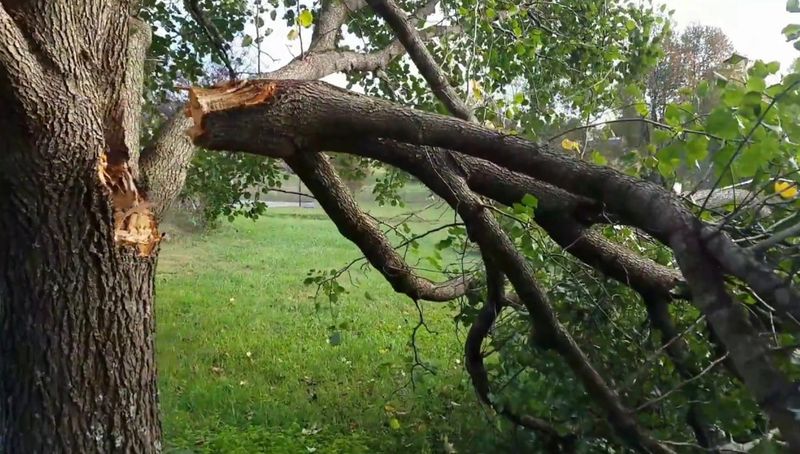
The first problem is structural. Bradford pears grow fast, which is part of why developers and municipalities planted so many of them. That fast growth comes with narrow branch angles and brittle wood, a combination that creates weak unions where major limbs meet the trunk. NC State Extension documents frequent branch and stem breakage during storms, with serious failures possible as trees mature.
A Piedmont homeowner who has watched a Bradford split down the middle after an ice storm already knows this firsthand.
The second problem is ecological, and it operates on a different timeline. Bradford trees were originally believed to be sterile when planted alone, because a single cultivar cannot pollinate itself. The trouble is that North Carolina neighborhoods now hold dozens of different Callery pear cultivars planted over several decades. When genetically different cultivars are within pollinating distance of each other, viable seed can result.
Those seeds travel by bird and animal, and escaped Callery pears have spread into roadsides, fields, wetlands, and forest edges across the state.
These two problems are worth keeping separate. A tree does not have to break before it spreads, and not every Bradford is actively producing seedlings right now. What the research supports is a documented regional concern, not a guarantee that every homeowner’s tree is currently reseeding. Knowing the difference helps you make a clear-eyed decision about what to do next.
How Callery Pears Produce Escaped Offspring
Here is where the biology gets genuinely interesting. When the Bradford cultivar was first introduced, nurseries marketed it as sterile, and in one narrow sense that was accurate. A Bradford tree cannot produce fertile seed by pollinating another Bradford, because the two trees are genetically identical and the species is self-incompatible. Alone in a field, one Bradford pear would never reseed.
The problem unfolded over time. Research published in BioScience traces how Callery pear’s invasive history began as nurseries introduced multiple cultivars into the same neighborhoods and landscapes. When pollen from a genetically different Callery cultivar, a rootstock sprout, or another compatible pear reaches a Bradford flower, the result can be fully viable seed. Birds eat the small fruit and carry those seeds far from the parent tree, sometimes miles away.
Your North Carolina Garden Changes Every Week. Your Plan Should Too.
Gardening in North Carolina changes quickly throughout the season. Every Friday you’ll receive a simple weekly plan showing exactly what to plant, prune, fertilize, harvest, and protect so you never miss the right timing.
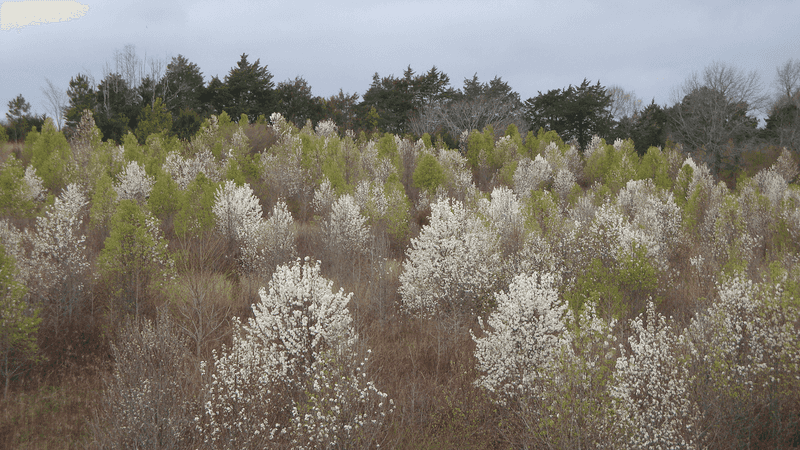
What germinates from that seed is not a tidy Bradford. The offspring are wild Callery pears, genetically variable and often more vigorous than either parent. They establish in roadsides, unmanaged lots, wetland edges, and forest margins, where they can form dense thickets over time. NC State Extension confirms that escaped Callery pears are spreading through North Carolina in exactly these habitat types.
When you are out walking or driving, watch for clusters of white-flowering trees in spots where nobody planted them, along fence lines, at the edge of a power-line cut, or pushing into a woodlot. Some of those may be wild Callery offspring. Keep in mind that other native and ornamental trees, including wild plum and some flowering cherries, also bloom white in early spring, so do not assume every roadside tree is a pear without a closer look. Checking for the small, round fruit later in summer is one reliable way to confirm the ID.
Wild Callery Trees Bring New Hazards
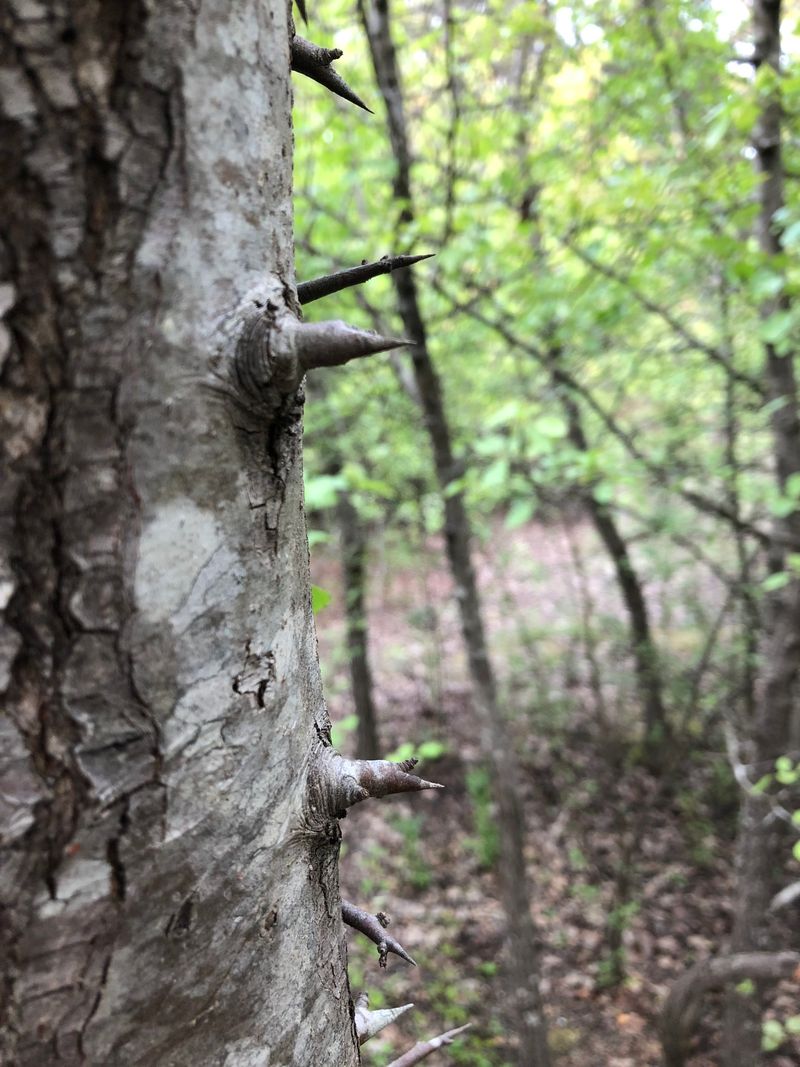
The Bradford tree in a front yard is usually thornless and tidy, at least when it is young. Its wild offspring are a different story. Once a Callery pear seed germinates in an unmanaged area and grows without the selection pressure of a nursery, the resulting plant can develop large, stiff thorns reaching up to about 4 inches. NC State Extension notes that these thorns create real hazards for people working in or near infested areas, for wildlife moving through dense thickets, for livestock in farm fields, and for vehicle tires and farm equipment operating along field edges.
That distinction matters when you are assessing your own property. The ornamental Bradford in your driveway island probably does not have those thorns. A cluster of volunteers growing along your back fence line or in a brushy corner of the yard may be a different situation entirely, especially if they appeared on their own in the last few years.
Beyond the physical hazard, dense wild Callery growth changes a landscape in ways that are hard to reverse quickly. A thicket can shade out native wildflowers, grasses, and shrubs that would otherwise feed and shelter insects, birds, and small mammals. In the Coastal Plain and Piedmont, where open field edges and forest margins support a lot of North Carolina’s wildlife diversity, that displacement adds up over time.
Spotting the difference between a planted ornamental and a wild volunteer early gives you more options. A small seedling pulled in spring is a ten-minute task. A thorny thicket that has been growing for five years is a much bigger project, and one that genuinely calls for a plan before you reach for tools.
Remove A Pear Without Taking An Unnecessary Risk
Size determines your first decision. Small seedlings, the pencil-thin volunteers sprouting along a fence or in a garden bed, can usually be hand-pulled when the soil is moist after a rain. Pull slowly and get as much of the root system as you can, because even a small fragment left behind can resprout. Drop those seedlings into a yard-waste bag rather than leaving them on the ground where they might re-root.
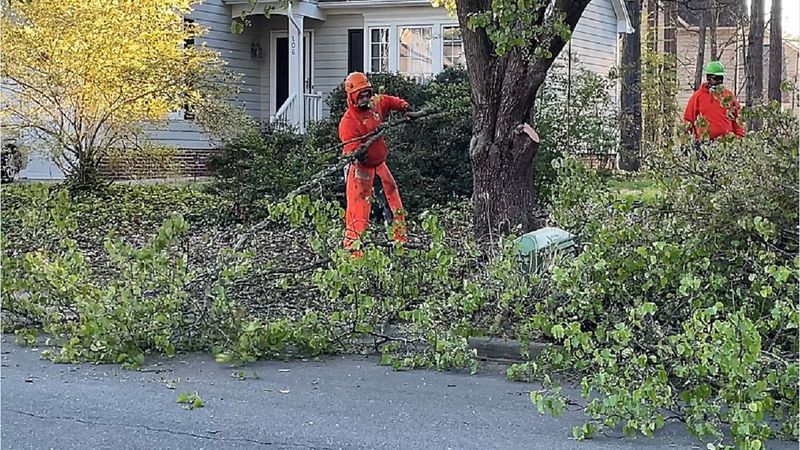
A mature Bradford pear near your house, driveway, road, or a utility line is a different situation. Felling a large tree in a confined space is genuinely dangerous work, and this is not a weekend project for a homeowner with a chainsaw and good intentions. NC State Extension recommends hiring a certified arborist for urban tree removal, and that recommendation applies especially when a falling limb or trunk could reach a structure, vehicle, or the road. Getting a few quotes from ISA-certified arborists is a reasonable starting point.
For medium-sized trees in open areas where falling risk is manageable, larger-tree management may involve cut-stump treatment, basal-bark treatment, foliar treatment, or hack-and-squirt methods. Any herbicide use must follow the exact product label, which is legally binding, and must comply with applicable local rules. Do not apply any product at a rate or in a manner the label does not authorize, and consider your proximity to water, neighboring properties, and desirable plants before choosing a method.
After any removal, plan to monitor the area for resprouting. Callery pear can push new growth from the stump or from roots left in the ground, sometimes for more than one season. Check the spot every few weeks during the growing season and address any new sprouts before they gain size.
For disposal, check your municipality’s yard-waste pickup schedule for woody material. If you are considering burning cut wood or brush, review current NC DEQ guidance and your local open-burning rules before doing anything. NC DEQ reminds residents that burning trash is against state law, and local rules add another layer of requirements. Do not burn any material unless it is clearly lawful and permitted under the rules that apply to your specific location.
Removing one tree is a meaningful step, but seedlings from nearby trees may already be present, so follow-up monitoring is part of the job.
Choose Downy Serviceberry For The Right Site
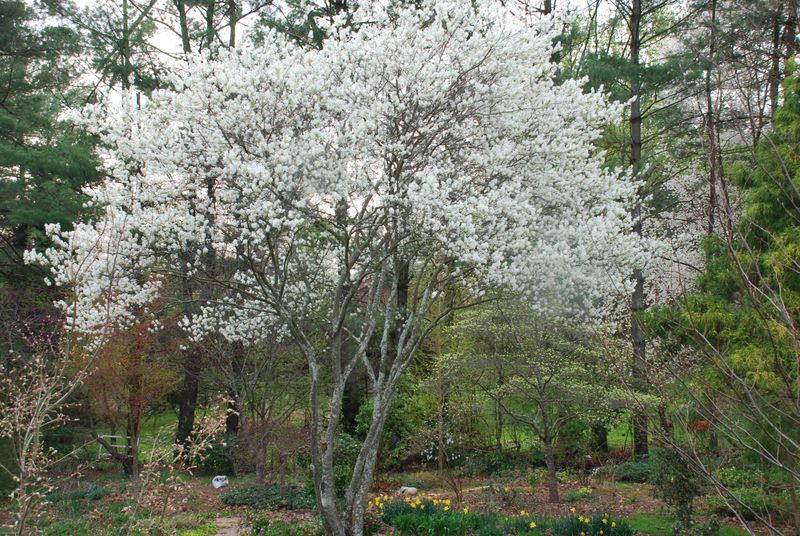
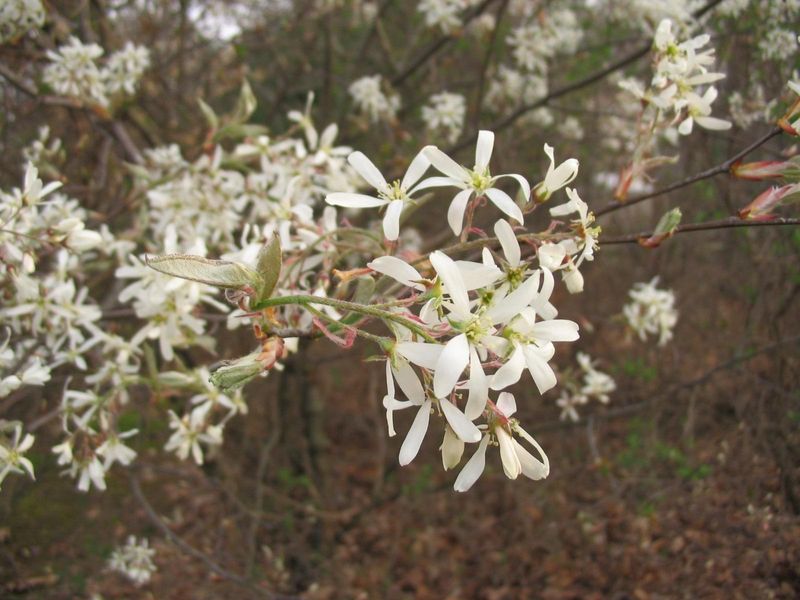
Downy serviceberry, Amelanchier arborea, blooms before most trees have even leafed out, which means those white flowers appear in late winter or very early spring while the landscape is still mostly bare. For a North Carolina yard that just lost a Bradford pear, that early color is one of the first things people miss, and serviceberry delivers it on a schedule that is actually a bit earlier than the pear.
The tree is native throughout North Carolina, from the mountains to the Piedmont to the Coastal Plain, so it is already adapted to the range of conditions the state throws at it. NC State’s plant database lists downy serviceberry as growing in full sun to partial shade and tolerating acidic to neutral soils across sandy, loamy, and clay textures, as long as drainage is reasonably good. That covers a lot of North Carolina yards, including the red clay of the Piedmont, though the tree does prefer consistent moisture and will struggle in spots that stay bone dry all summer.
Plan for a mature size of roughly 15 to 25 feet tall with a similar spread in a typical yard setting, though individuals in the wild can grow larger. Some serviceberries develop as multistemmed shrubs rather than single-trunk trees. NC State Extension’s native plants handbook notes the multistemmed habit as a natural characteristic, not a problem, but if you want a more tree-like form, early pruning to select a central leader will help. Either way, check the mature spread against any overhead utility lines before you dig, because a tree planted directly under a power line creates future problems for both the tree and the utility crew.
The fruit ripens to red and then deep purple in late spring to early summer, typically around May and June in much of the state. Birds find it before most homeowners do, which is actually the point. Serviceberry is a native plant without the documented Callery pear-style invasive behavior in North Carolina, and that distinction is what makes it a genuinely useful replacement rather than just a trade of one problem for another.
Plant And Water Serviceberry Correctly
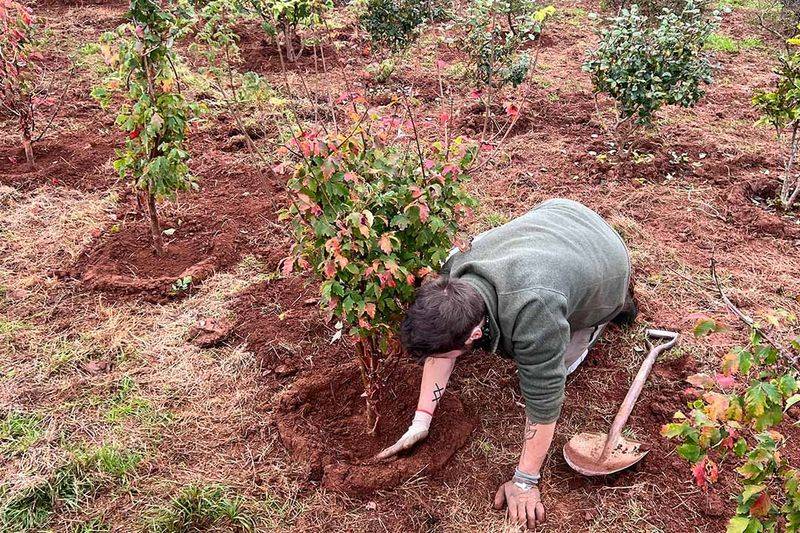
Fall is a good time to plant native trees in North Carolina. The worst of the summer heat is behind you, the soil is still warm enough to encourage root growth before dormancy, and the tree gets several months of mild weather to establish before facing its first hot season. Aim to get your serviceberry in the ground between mid-October and late November in most parts of the state, adjusting for your region since the mountains cool faster than the coast.
Dig the hole only as deep as the root ball, not deeper. A hole that is too deep causes the tree to settle and buries the root flare, which is the flared base where the trunk meets the roots. NC State Extension’s woody ornamentals handbook recommends a hole at least two to three times wider than the root ball, which allows loosened soil on the sides to encourage outward root growth. Set the tree so the root flare sits at or just slightly above the surrounding soil level, then backfill with the original soil.
Mulch matters more than most people think. Apply 2 to 3 inches of organic mulch over the root zone, but keep it at least 6 inches away from the trunk. Mulch piled against the bark traps moisture and invites rot and pests, so resist the urge to build what landscapers call a mulch volcano. A wide, flat ring of mulch is what the tree actually needs.
Extension guidance on watering newly planted trees suggests daily watering for the first one to two weeks, then every two to three days through about week twelve, then weekly until the tree is established, with adjustments for rainfall, soil type, and temperature. In a dry fall or on sandy Coastal Plain soil, you may need to water more often. NC State’s landscaping for wildlife guidance reinforces that even native plants need consistent moisture during their first growing season. Once established, serviceberry is considerably more self-sufficient, but that first year asks something of you in return.
Build Wildlife Value Beyond One Replacement Tree
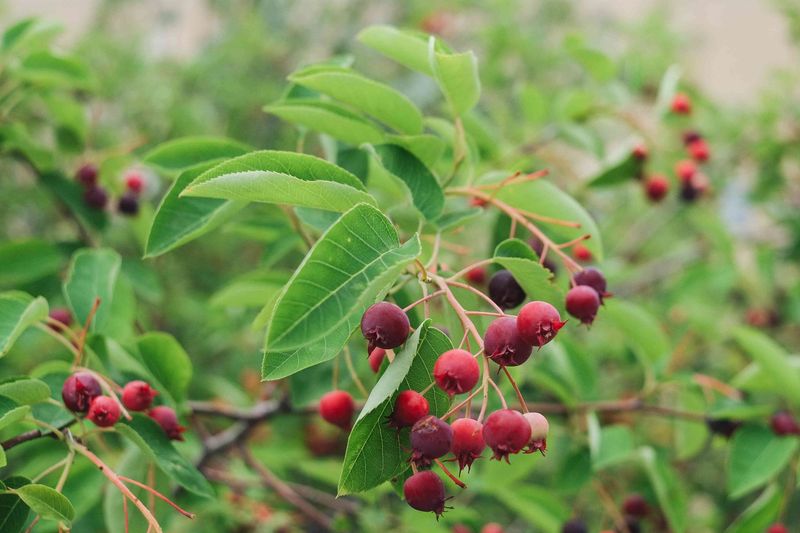
Serviceberry fruit ripens at a useful moment for wildlife. NC State’s bird-habitat guidance lists Amelanchier arborea as a soft-mast source available around May and June for multiple groups of songbirds, including thrushes, waxwings, and orioles. The USDA Forest Service reports that at least 40 bird species and several mammal species eat fruit from the Amelanchier genus, which puts it in genuinely useful company among native fruiting plants.
Worth saying plainly: birds that eat serviceberry fruit can carry those seeds elsewhere, so the tree is not literally incapable of spreading. The meaningful distinction is that downy serviceberry is a North Carolina native without the documented invasive behavior and ecological displacement that escaped Callery pears have shown across the state. That is a real and important difference, even if it is not quite as absolute as the phrase stays put implies.
One tree does a lot, but it does not do everything. NC State’s native landscaping guidance recommends thinking in layers: groundcovers, shrubs, understory trees, and canopy plants together create the nesting heights and food sources that different bird species actually need. A serviceberry in the understory layer pairs well with native shrubs like beautyberry or native viburnums below it and a larger canopy tree beside it.
After removing a Bradford pear, check the surrounding area for seedlings every spring for at least two to three years. Callery pear offspring can persist in the seed bank and germinate long after the parent tree is gone. Pulling them small keeps the problem from restarting. Plant your serviceberry, add a layer or two of supporting native plants over time, and you will have traded a regional problem for something the birds in your neighborhood will actually use.
That is a trade worth making.