Your Drooping Hydrangea Stems Are A Warning Sign You Shouldn’t Ignore
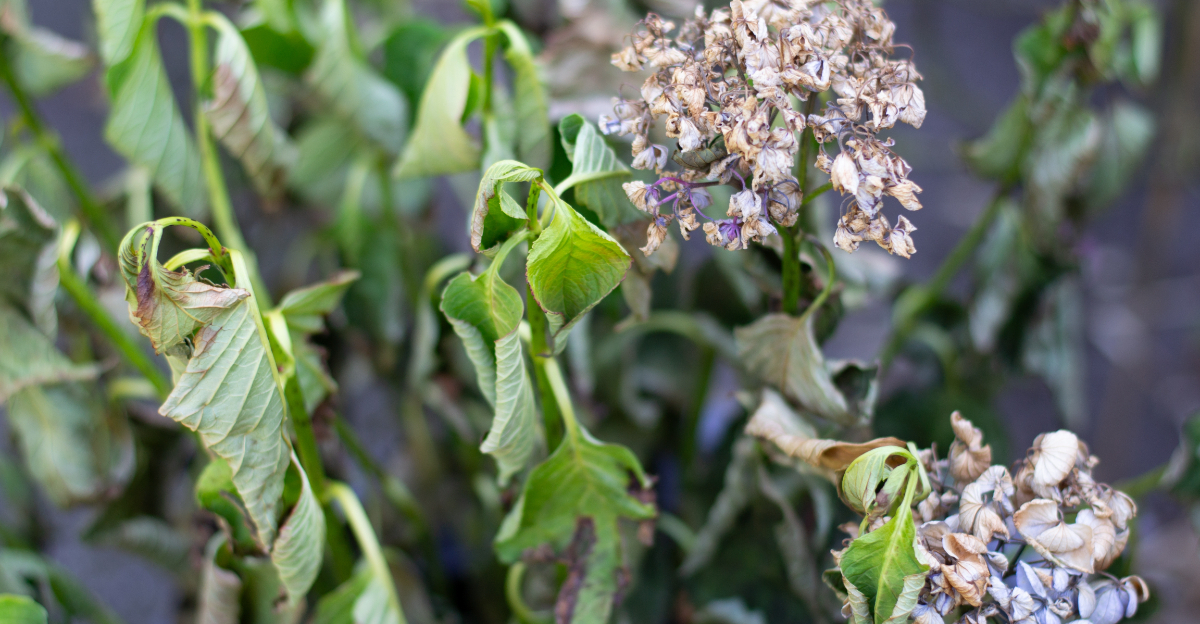
Your hydrangeas looked fine yesterday. This morning the stems bow toward the soil like they lost an argument with gravity, and the blooms hang heavy and limp.
Hydrangeas are theatrical plants. They slump for reasons that range from mildly inconvenient to seriously worrying, and the droop itself looks nearly identical either way.
One version corrects itself within hours of the right move. Another has been building quietly for weeks, somewhere you cannot see.
Telling them apart takes about a minute once you know what separates the two. The plant has already given you the answer, and it is easier to spot than most gardeners expect.
The Hidden Problem Growing Underground
Nobody talks about roots until something goes wrong. When your hydrangea stems start drooping, the problem may be hiding right below the soil surface.
Root stress happens when roots cannot absorb water or nutrients properly. Compacted soil, poor drainage, or damaged roots are common culprits that shut down the plant’s water supply.
Think of roots like drinking straws. If the straw is bent or blocked, nothing gets through, and the stems start to sag no matter how much you water from above.
Overwatering is a sneaky cause of root stress. Soggy soil can starve roots of oxygen, causing them to rot and lose their ability to function.
Check your soil by pressing a finger two inches deep. If it feels wet and dense, your drainage may be working against you rather than for you.
Roots also struggle in heavily compacted ground. Foot traffic, clay-heavy soil, or old root systems from nearby plants can squeeze out oxygen and stunt growth.
Aerating the soil around your hydrangea can help significantly. Use a garden fork to gently loosen the ground without disturbing the root ball itself.
Adding organic compost to the planting area improves both drainage and soil structure. Healthier soil leads to stronger roots, and stronger roots mean upright, confident stems.
Drooping hydrangea stems caused by root stress often look worse in the afternoon heat. If the wilting eases by morning, root stress combined with heat may be your answer.
The Midday Slump That Isn’t Actually An Emergency
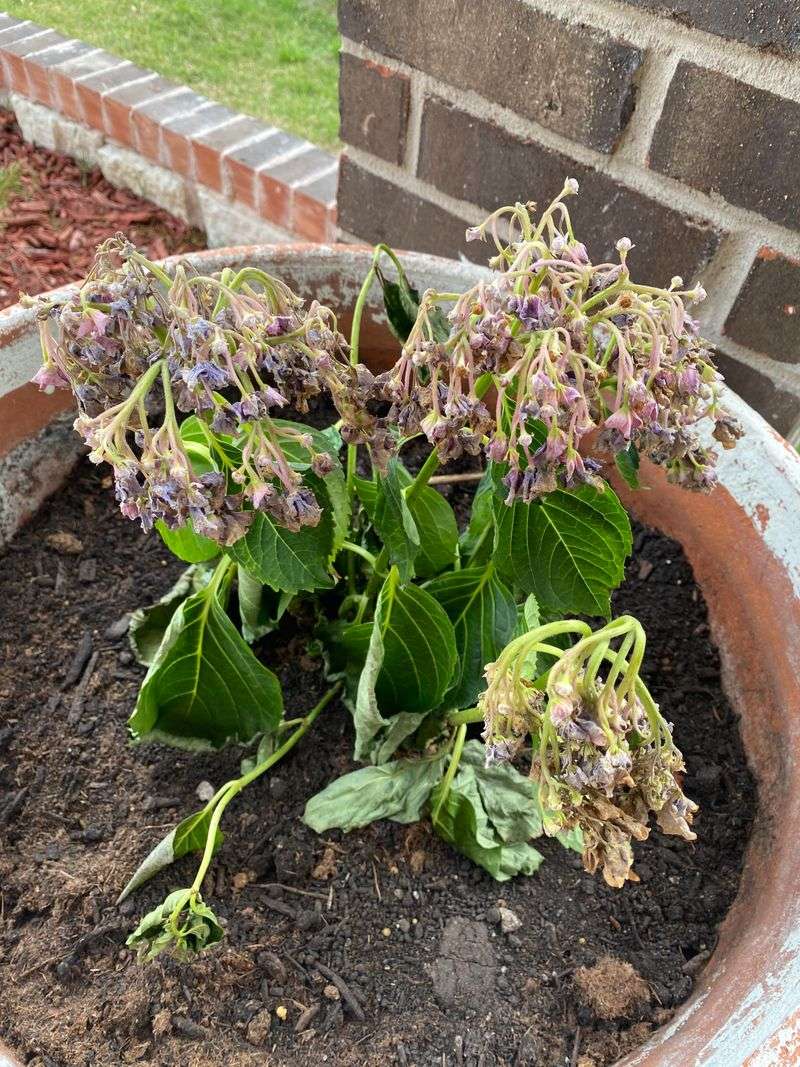
Step outside at noon in July and your hydrangeas may look genuinely miserable. Drooping hydrangea stems in the afternoon heat are one of the most common sights in American gardens.
Here is the reassuring part: this type of wilting is often temporary. The plant is simply losing water through its leaves faster than its roots can replace it.
Hydrangeas have large, broad leaves that release moisture quickly when temperatures climb. On hot days, that moisture loss outpaces water uptake, causing a midday slump that looks alarming but usually is not.
Watch your plant in the early morning and again in the evening. If it perks back up on its own, afternoon heat is likely the only villain here.
Mulching around the base of the plant helps keep soil moisture locked in. A two-to-three inch layer of wood chips or shredded bark makes a big difference on scorching days.
Planting hydrangeas where they get morning sun and afternoon shade is a smart long-term strategy. That light pattern gives them energy without the punishing midday exposure.
If your hydrangea sits in full afternoon sun all summer, consider adding a shade cloth temporarily. Even a few hours of filtered light can reduce wilting by a noticeable amount.
Watering deeply in the early morning sets the plant up for success before heat peaks. Shallow watering, by contrast, encourages shallow roots that buckle under pressure.
Strong stems start with smart watering habits and a little strategic shade planning.
A Thirsty Plant Cannot Hold Itself Up
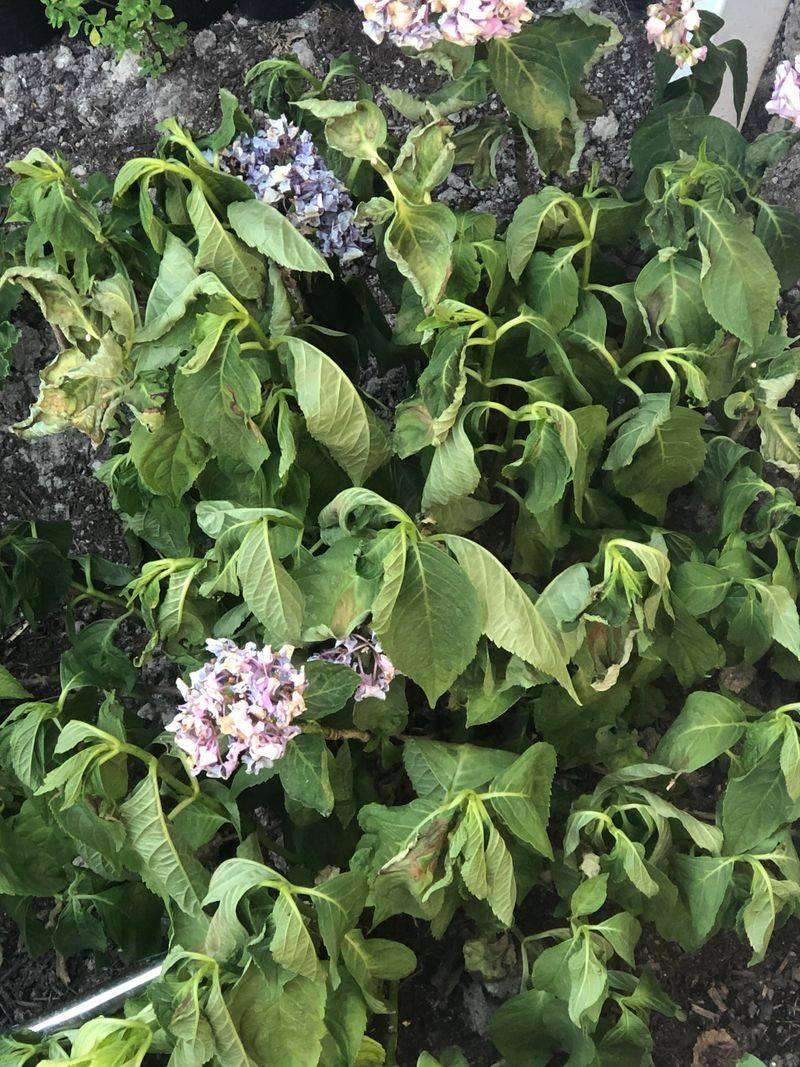
A thirsty hydrangea does not suffer quietly. It droops dramatically, and those limp stems are practically begging you to grab a watering can.
Hydrangeas need consistent moisture to maintain the internal water pressure that keeps stems firm and upright. Without enough water, that pressure drops fast.
Underwatering is one of the most direct causes of drooping hydrangea stems. The plant loses structural support the moment its cells cannot hold enough water.
Sandy or fast-draining soil makes this problem worse. Water passes right through before roots get a chance to absorb what the plant needs to function.
A simple test can confirm your suspicions. Stick your finger two inches into the soil near the base. Dry and crumbly soil means it is time to water deeply and consistently.
When watering, go slow and go deep. A slow trickle for several minutes allows moisture to reach the root zone rather than just wetting the surface.
Aim for about one inch of water per week, adjusting for hot or dry weather. During heat waves, your hydrangea may need more frequent attention than usual.
Avoid wetting the leaves when you water. Wet foliage can invite fungal problems, which create a second set of issues on top of the moisture stress.
Drip irrigation systems work beautifully for hydrangeas. They deliver water directly to the root zone, reducing waste and keeping the plant consistently hydrated throughout the growing season.
Consistent watering transforms sad, drooping stems into strong, upright plants almost overnight.
Something Invisible Has Been Spreading For Weeks
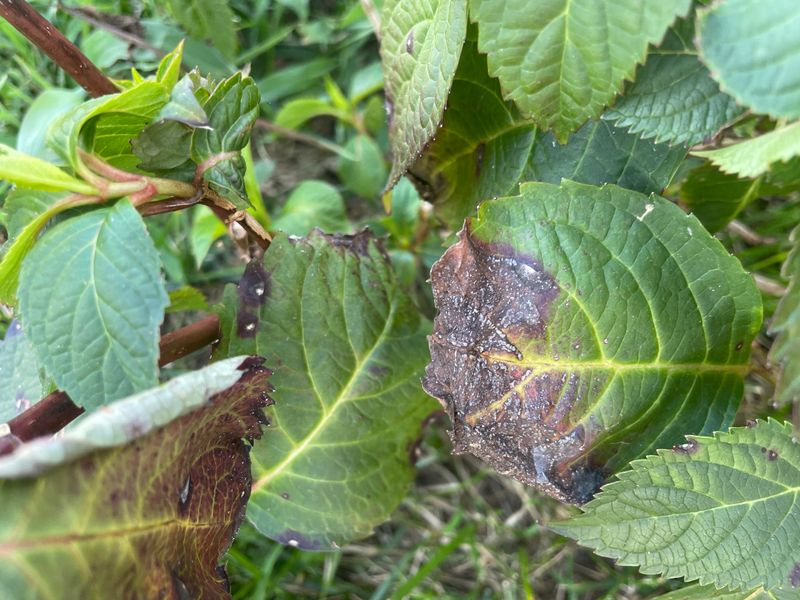
Not every drooping stem is about water. Sometimes the problem is microscopic, and it has been quietly working against your plant for weeks.
Fungal infections can damage the leaves and buds that keep a hydrangea fed. Once enough tissue is compromised, the plant has less energy available to hold its blooms upright.
Botrytis blight and powdery mildew are two common fungal issues that affect hydrangeas. Both thrive in humid, poorly ventilated conditions and can wear down a plant’s overall vigor over time.
Look for dark spots, gray fuzzy patches, or a white powdery coating on stems and leaves. These visual clues signal that something biological is working against the plant.
Overcrowded planting is a major risk factor. When hydrangeas grow too close together, air cannot circulate freely, and humidity gets trapped right where fungi love to breed.
Pruning for airflow is one of the best preventive steps you can take. Removing a few inner branches opens up the canopy and lets the plant breathe more effectively.
Avoid overhead watering whenever possible. Splashing water on foliage spreads fungal spores from leaf to leaf and from plant to plant across your garden.
Neem oil and copper-based fungicides are effective organic options for treating early-stage fungal problems. Apply according to label directions and repeat as needed for best results.
Catching fungal issues early saves the stems and saves the season. Drooping hydrangea stems tied to fungal stress will not recover without treatment, so act quickly when you spot the signs.
Recovering From A Move Takes Longer Than You’d Think
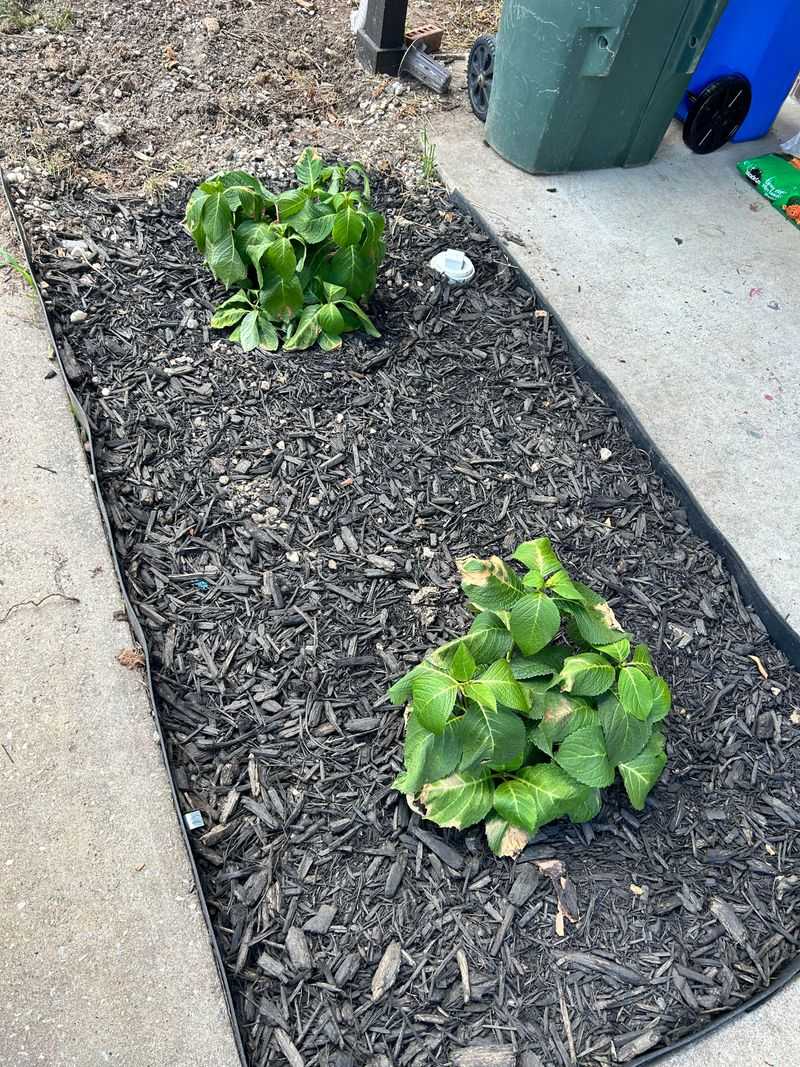
You moved your hydrangea to a sunnier spot, and now it looks worse than ever. That sudden slump is called transplant shock, and it is a normal part of the process.
When a plant gets moved, its roots go through serious disruption. The root system needs time to re-establish before it can support the weight of stems and blooms again.
Transplant shock can cause drooping that lasts anywhere from a few days to several weeks. The plant is not failing. It is adjusting, and your job is to make that adjustment easier.
Water deeply right after transplanting to help roots settle into their new environment. Consistent moisture in the first two weeks is the single most important thing you can do.
Avoid fertilizing a freshly transplanted hydrangea. Fertilizer pushes new growth, which puts extra demand on a root system that is already struggling to cope.
Shade the plant temporarily if it is in a sunny location. Even a piece of burlap or a lawn chair can reduce stress during those critical first days after the move.
Trim back a few of the larger blooms after transplanting. Fewer flowers mean less demand on the root system, giving it a better chance to recover and anchor itself properly.
Resist the urge to move the plant again if it keeps drooping. Give it a full growing season before making any decisions about relocating it a second time.
Patience is your most powerful tool when transplant shock hits. Drooping hydrangea stems after a move almost always bounce back with steady care and a little time.
Getting Those Stems Back On Their Feet
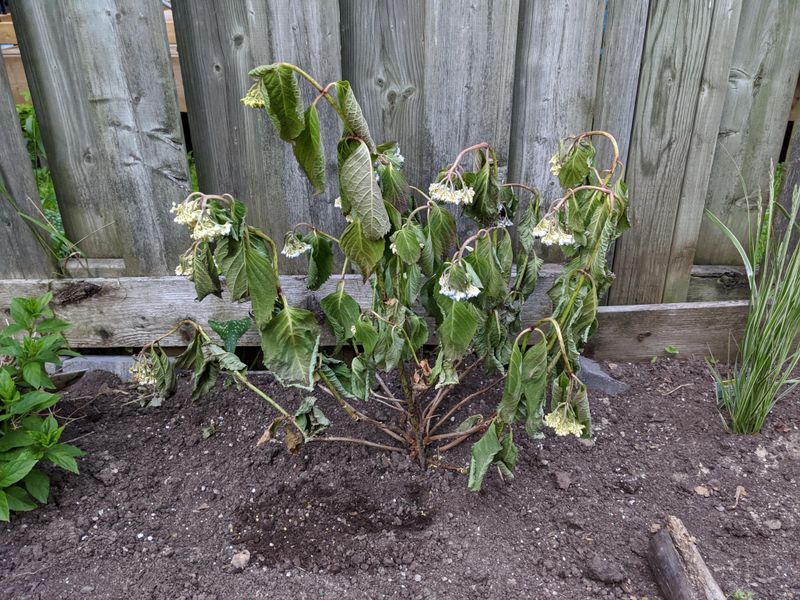
Most drooping hydrangea stems respond quickly to the right care. You do not need expensive products or professional help to turn things around.
Start by diagnosing the cause before reaching for any solution. Treating the wrong problem wastes time and can make things harder on the plant.
If the droop is from underwatering, a deep watering session can show results within hours. Watch for stems beginning to lift as internal water pressure rebuilds throughout the plant.
For heat-related wilting, strategic mulching and early morning watering are your best tools. These two habits alone can prevent most afternoon drooping during the hottest months.
Fungal issues need targeted treatment with neem oil or a copper-based spray. Remove and bag any affected leaves or stems to stop spores from spreading further in your garden.
Root stress benefits from soil amendment and gentle aeration. Adding compost and loosening compacted ground gives roots room to breathe and absorb what the plant needs most.
Transplant shock requires patience above all else. Steady watering, temporary shade, and a hands-off approach are the best combination for helping a moved plant regain its footing.
Staking is a short-term fix that can help while the plant recovers. Use soft garden ties and bamboo stakes to support stems without constricting them or causing damage.
Drooping hydrangea stems are a warning, but they are also an invitation to pay closer attention. A little observation and quick action keep your garden looking lush, strong, and full of life.