Your Ohio Privacy Hedge Could Be Feeding You, And These 7 Shrubs Prove It
Most people put up a privacy hedge and call it a day. It blocks the neighbors, it fills the space, and that’s pretty much where the thinking stops.
But here’s the thing about Ohio’s climate: it’s almost tailor-made for shrubs that work harder than that.
Food-producing hedges have been a staple of smart homesteaders and savvy gardeners for a long time, and right now they’re having a serious moment in Ohio backyards.
Privacy you can actually harvest. Sounds too good to be true, but it’s one of the easiest upgrades you can make to your property line.
The shrubs on this list grow dense enough to block the view and bold enough to produce berries, fruits, and edibles that keep coming back year after year. Your hedge has been underachieving, and it’s time to do something about that.
1. Serviceberry Gives Privacy With Sweet Early Summer Fruit
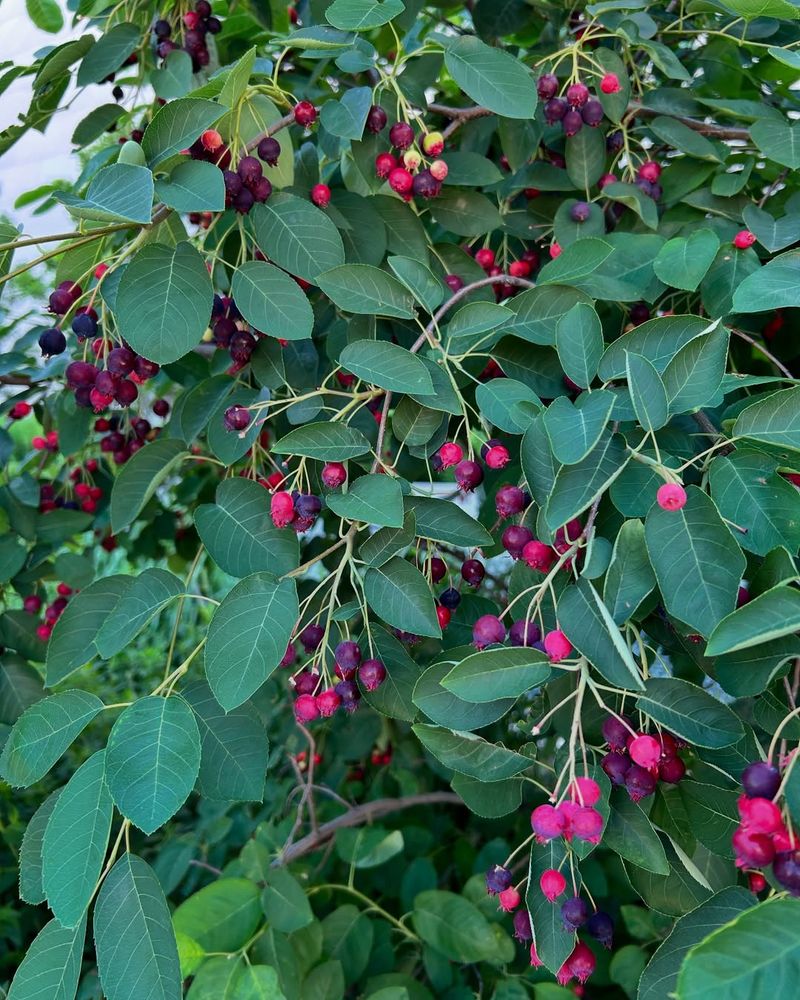
Few shrubs put on a show quite like serviceberry in spring. Before most trees have even leafed out, serviceberry bursts into clouds of white blossoms that light up the yard.
Those flowers fade into small, sweet berries by early summer, and the whole plant turns shades of orange and red come fall.
Serviceberry works beautifully as part of a loose, natural hedge or woodland-edge screen. It will not give you the tight, clipped wall that arborvitae would, but it creates a layered, multi-season border that is genuinely lovely.
Depending on the species, plants can reach anywhere from eight to twenty feet tall, so give them room and plant them in a staggered row for a more natural look.
In terms of site needs, serviceberry does best in full sun to part shade with moist, well-drained soil. It tolerates clay better than many fruiting shrubs, which is helpful since heavy clay soil is common across many parts of this state.
Native species like Amelanchier canadensis and Amelanchier arborea are well-suited to local growing conditions and support native wildlife.
Here is the honest truth about the harvest: birds are fast. Robins, cedar waxwings, and other birds zero in on serviceberries the moment they ripen.
If you want fruit for yourself, plan to harvest early or cover the plant with netting for a week or two around ripening time. The berries taste somewhat like blueberries with a hint of almond and are excellent fresh, in pancakes, jams, or baked into muffins.
For most gardeners, sharing with the birds is part of the deal.
2. Elderberry Turns A Loose Hedge Into A Harvest Spot
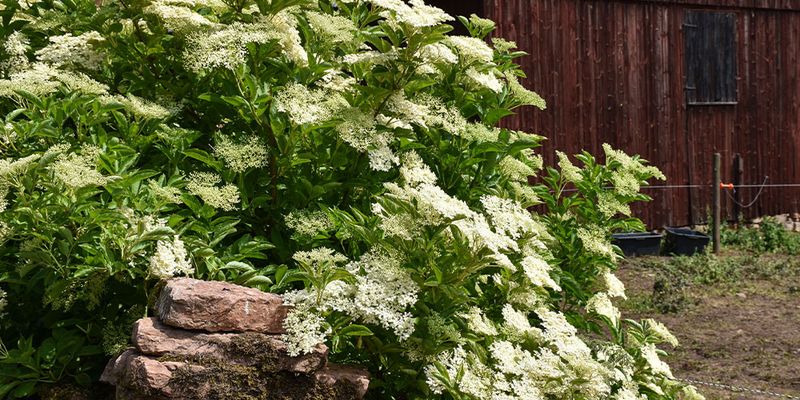
Walk past an elderberry in full bloom and you will notice it right away. The broad, flat-topped clusters of tiny white flowers smell faintly sweet and attract pollinators by the dozen.
By late summer, those flower heads become heavy with dark purple-black berries that droop on wine-red stems.
American elderberry, Sambucus canadensis, is a native shrub that can grow six to twelve feet tall and wide, sometimes even larger in good conditions. It spreads by suckering, which means it will slowly fill in a hedge line on its own over time.
Your Ohio Garden Changes Every Week. Your Plan Should Too.
Gardening in Ohio changes quickly throughout the season. Every Friday you’ll receive a simple weekly plan showing exactly what to plant, prune, fertilize, harvest, and protect so you never miss the right timing.
That suckering habit also means you need to give it space and be ready to manage its spread if your yard is smaller.
Elderberry thrives in full sun with consistent moisture. It handles wet, low-lying spots better than most fruiting shrubs, which makes it useful along drainage swales or moist areas near the back of a property.
Planting two or more compatible plants nearby generally improves fruit production, since cross-pollination helps set a better crop.
Now for the safety note, and this one truly matters. Raw elderberries, raw flowers in large amounts, and other parts of the plant contain compounds that can cause nausea and vomiting.
Always cook elderberries before eating them. Use them in syrups, jams, pies, or elderflower cordials made from properly prepared flowers.
Do not eat berries you have not positively identified as American elderberry. Proper identification and preparation are non-negotiable with this plant.
When handled correctly, though, elderberry is one of the most productive and useful shrubs you can grow in a natural hedge.
3. Aronia Adds Dark Berries And Strong Fall Color
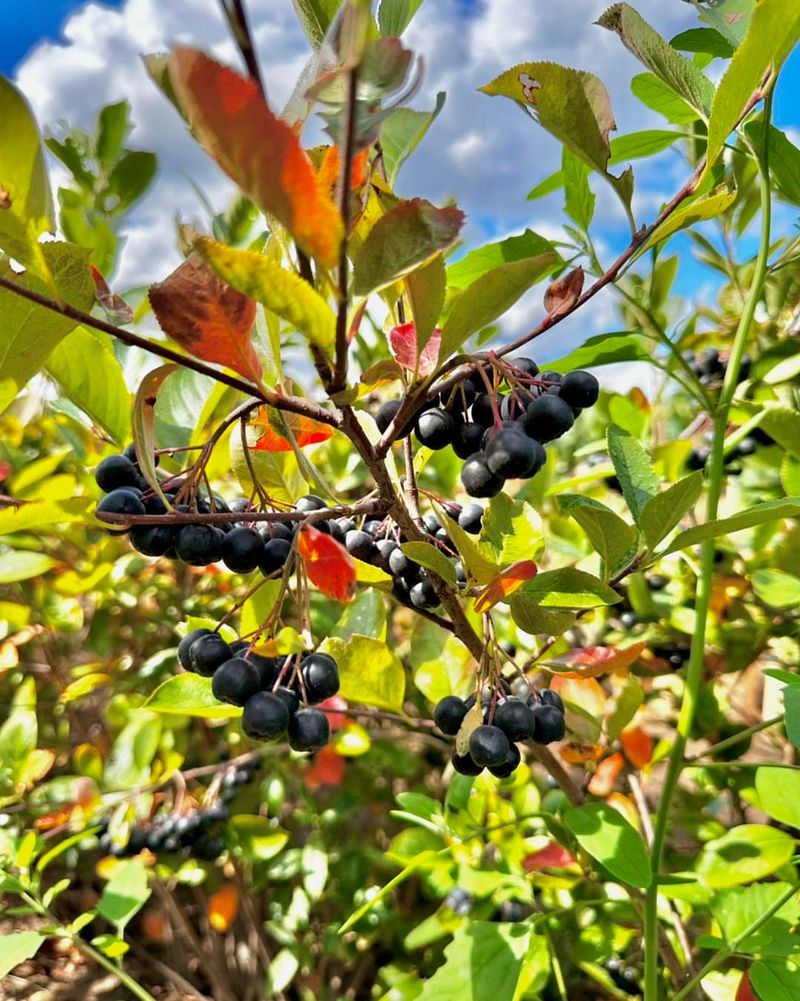
Tough, beautiful, and surprisingly underused, aronia is one of those shrubs that earns its place in a hedge four seasons out of four. Spring brings clusters of white flowers.
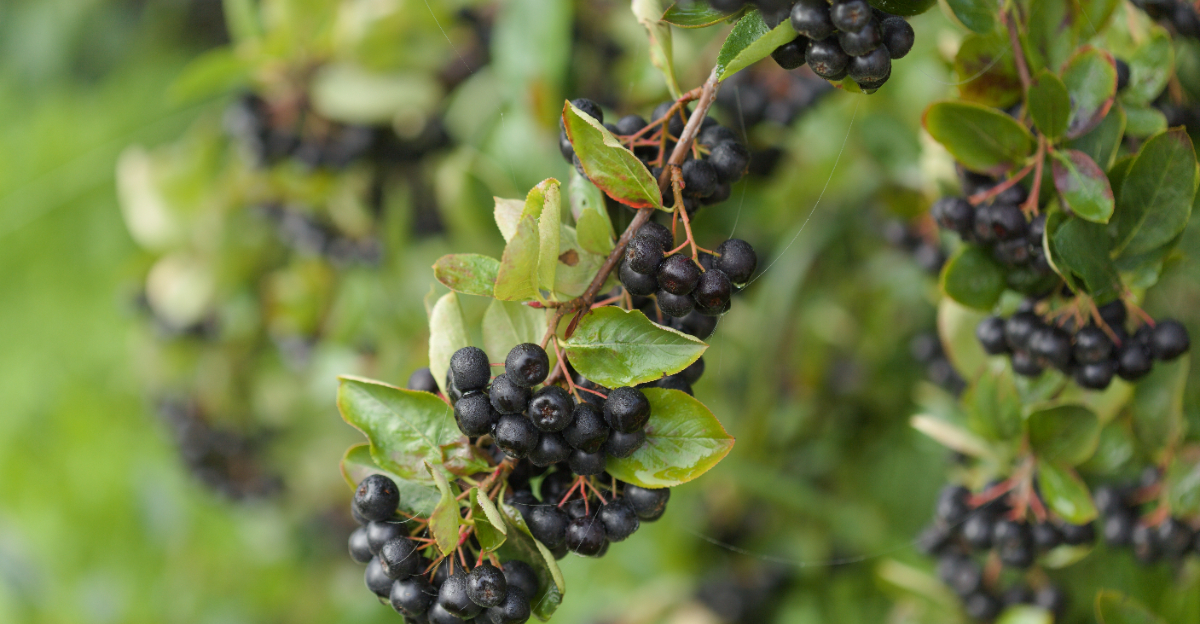
Summer brings glossy, dark green foliage. Late summer and fall bring heavy clusters of deep purple-black berries, and then the leaves turn a fiery red-orange that stops people in their tracks.
Aronia melanocarpa, commonly called black chokeberry, is native to eastern North America and grows well across a wide range of soil types. It tolerates clay, occasional wet feet, and even some drought once established.
That adaptability makes it a practical choice for many yards where other fruiting shrubs might struggle.
For a natural hedge, aronia works well planted in groups or staggered rows. It typically reaches four to eight feet tall depending on the variety, and some cultivars like Nero or Viking stay a bit more compact.
Full sun produces the best berry crops and the most vivid fall color, though aronia will grow in part shade with reduced fruiting.
About those berries: they are edible, but calling them pleasant fresh off the bush would be stretching the truth. Aronia berries are intensely tart and astringent, which is why they earned the common name chokeberry.
The astringency mellows significantly when the berries are cooked, sweetened, or blended with other fruits. They shine in jams, juices, syrups, smoothies, and baked goods.
Aronia berries are also packed with antioxidants, which has made them popular in health-focused recipes. If you can get past the pucker, this shrub is a genuine backyard asset.
4. American Hazelnut Brings Edible Nuts To A Natural Screen
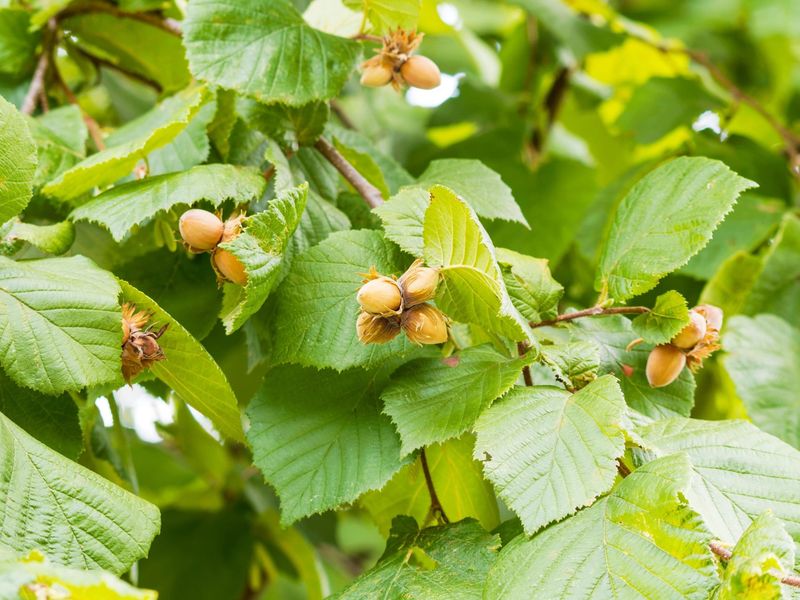
Squirrels know something most gardeners do not: American hazelnut is worth paying close attention to.
This native shrub produces small, round hazelnuts tucked inside papery husks, and both people and wildlife have been harvesting them for a very long time.
The nuts taste similar to commercial hazelnuts and can be eaten raw, roasted, or used in baking.
American hazelnut, Corylus americana, grows as a multi-stemmed, thicket-forming shrub that can reach six to twelve feet tall. That thicket habit is exactly what makes it useful as a naturalized border or woodland-edge screen.
It fills in over time through root suckers, creating a dense, wildlife-friendly mass planting. For a formal, tightly clipped hedge, it is not the right fit.
For an informal property-line screen or a back-of-yard naturalized border, it is excellent.
Site needs are straightforward. American hazelnut grows in full sun to part shade and tolerates a range of well-drained to moderately moist soils.
It is native to this region and adapted to local conditions, which means less fussing once it is established. Planting two or more shrubs from different sources improves nut production, since hazelnuts benefit from cross-pollination.
Now, a word of honesty about the harvest. Squirrels, chipmunks, deer, and birds are highly motivated hazelnut fans.
They often reach the nuts before the husks are fully dry and ready for picking. Harvesting a little early and finishing the drying indoors can help.
Net the plants if you want a serious yield. Even if wildlife takes most of the crop, the screening value, native habitat benefits, and early spring catkins make American hazelnut well worth planting.
5. Highbush Blueberry Works Where Soil Stays Acidic
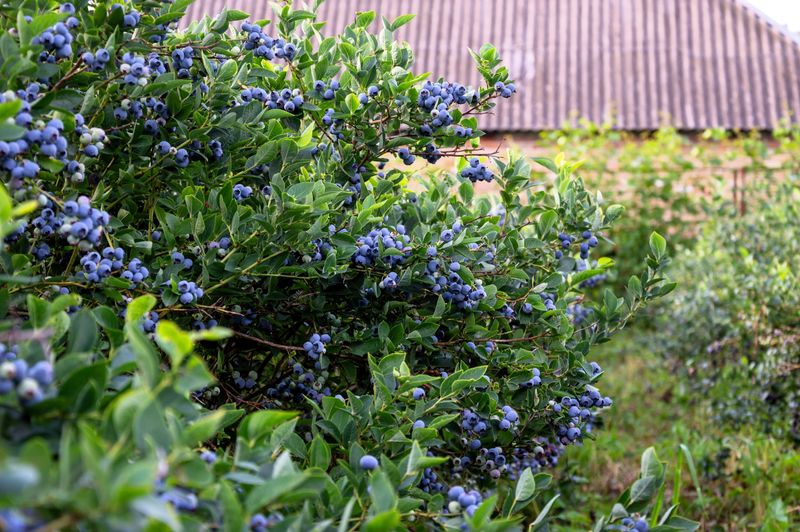
Blueberries growing along your property line sounds like a dream, and for some gardeners it absolutely can be.
Highbush blueberry is a beautiful shrub in every season: white bell-shaped flowers in spring, heavy berry clusters in summer, and blazing red-orange foliage in fall.
As a hedge plant, a row of mature highbush blueberries creates a soft, attractive screen that earns its space many times over.
The catch is soil. Blueberries are not flexible about this.
They need acidic, well-drained, organic-rich soil with a pH between 4.5 and 5.5. Most soils in this state sit closer to neutral or slightly acidic, and many are far too alkaline for blueberries without significant amendment.
Before planting a single bush, get a soil test. Your local Ohio State University Extension office can help you interpret results and guide any adjustments.
Lowering soil pH is possible but takes time, sulfur applications, and consistent organic matter additions. It is not a one-season fix.
Raised beds or large containers filled with amended, acidic growing mix are sometimes more practical than trying to change existing soil across a wide area. Either way, maintaining that low pH over the long term requires ongoing attention.
Blueberries also need steady moisture, full sun for best production, and at least two compatible varieties planted nearby for cross-pollination.
Popular highbush varieties like Bluecrop, Blueray, and Jersey have performed reliably in many parts of this state.
Space plants four to six feet apart for a hedge effect, and plan on three to five years before full production. The wait is absolutely worth it when the harvest comes in.
6. Black Currant Fits Smaller Edible Hedge Spaces
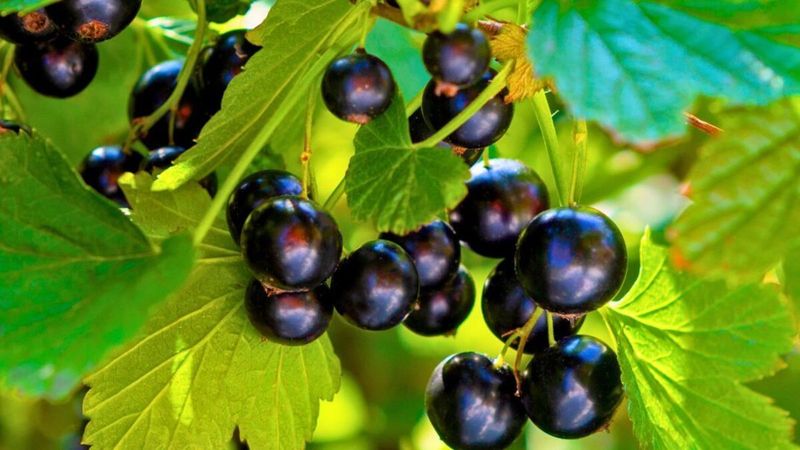
Not every yard has room for an elderberry thicket or a hazelnut mass planting. Black currant is the edible hedge option for gardeners working with tighter spaces who still want real fruit production.
A mature black currant bush typically reaches four to six feet tall and wide.
That makes it manageable in a mixed hedge, a property-line planting, or even a large foundation bed with enough sun.
The berries are intensely flavored, dark, and rich, with a deep tartness that is not for everyone fresh off the bush. Cooked down into jam, syrup, cordial, or baked into a crumble, though, black currants are extraordinary.
They have a long history in European gardens and are gaining more attention in American edible landscapes as interest in unusual fruits grows.
Here is something every gardener in this state should understand before planting.
Currants and gooseberries were historically restricted because they can serve as an alternate host for white pine blister rust.
That fungal disease affects white pines.
Ohio’s previous Ribes restrictions have been rescinded, and OSU Extension notes that currants and gooseberries currently have no planting restrictions in the state.
Even so, choosing disease-resistant varieties like Titania or Consort is still a smart move, especially if white pines grow nearby.
Black currant grows best in full sun to part shade with fertile, well-drained soil that stays consistently moist. It benefits from annual pruning to remove older wood and encourage new, productive canes.
Plant two or more bushes for better yields. With proper site selection and a little seasonal attention, black currant delivers serious flavor from a compact and attractive shrub.
7. Gooseberry Adds Fruit Where A Thorny Hedge Makes Sense
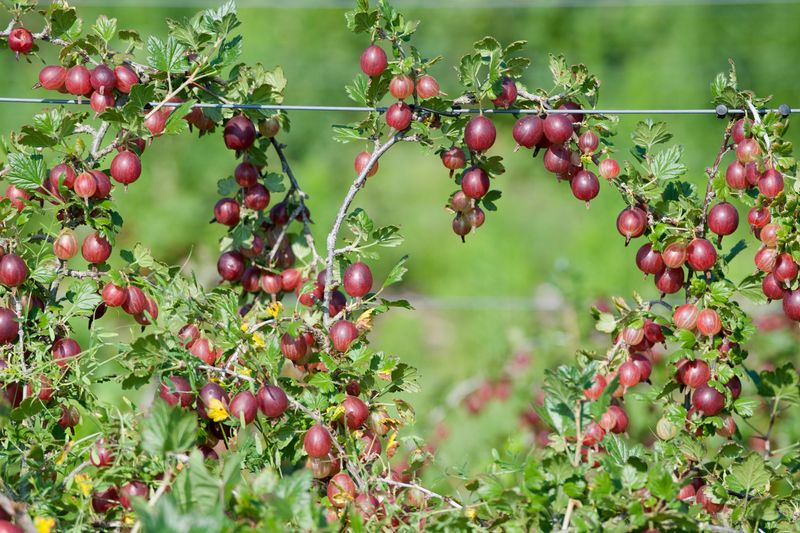
If you have ever wanted a hedge that genuinely discourages uninvited foot traffic, gooseberry might be your answer. The thorns on a well-established gooseberry hedge are serious, and anyone who has tried to push through one knows it immediately.
That thorny character is a real feature in the right location, creating a natural barrier that is also surprisingly productive.
Gooseberries produce round, marble-sized fruit in shades of green, yellow, red, or purple depending on the variety. Some varieties are sweet enough to eat fresh when fully ripe, while others are better suited to cooking.
Tart gooseberries make excellent jam, pie filling, crumbles, sauces, and preserves. European varieties tend to be larger and sweeter, while American varieties are smaller but often more disease-resistant, which matters in our humid growing season.
Gooseberries are in the same Ribes family as currants and share the historical white pine blister rust concern.
Ohio’s previous restrictions have been rescinded, so they are currently allowed, but disease-resistant varieties are still worth choosing where available.
Varieties like Hinnomaki Red, Pixwell, and Invicta have been used successfully in home gardens across the region.
Gooseberry grows best in full sun to part shade with well-drained, fertile soil. It handles partial shade better than many fruiting shrubs, which is useful in yards with some tree canopy nearby.
Space plants four to five feet apart for a hedge effect. One important placement note: keep gooseberry away from high-traffic paths, play areas, and anywhere children run.
The thorns are not decorative. Prune annually to keep plants open, productive, and manageable over the long term.