10 Desert Wildflower Seeds to Sow in Arizona Before November Ends
Fall is the secret planting season in the Arizona desert, and the clock is ticking. Seeds tossed onto bare ground before November ends can soak up winter rain and burst into color by spring.
Native wildflowers also feed bees, butterflies, and hummingbirds while sipping very little water. Here are ten easy picks that turn a dusty yard into a living, buzzing habitat.
1. Mexican Gold Poppy
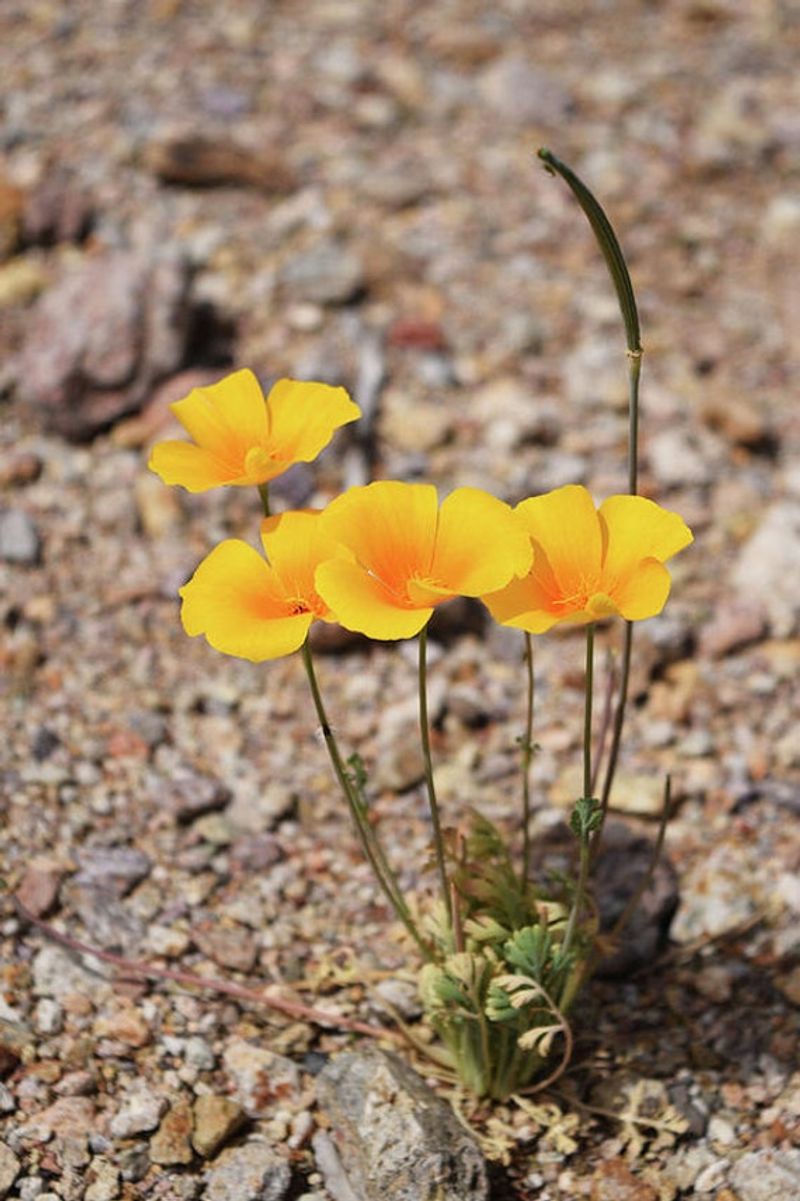
Picture a hillside outside Phoenix glowing like spilled sunshine in late February. That shimmer usually comes from Mexican gold poppies, one of the first native flowers to wake up after winter rain.
Eschscholzia mexicana is a true desert annual, built for our quirky seasons. Seeds sown in October or November sprout with the cool weather, grow lacy blue-green leaves through winter, and open cup-shaped golden blooms when days warm.
The petals close at night and on cloudy days, which is fun for kids to watch.
Early color matters for wildlife too. Native bees hunting for food in late winter find these poppies a welcome snack, and butterflies often stop by on sunny afternoons.
A patch near a patio can turn into a tiny pollinator diner.
Growing them is almost too easy. Scatter seeds over raked soil in full sun, press them in with your feet, and keep the area damp for a few weeks if rain is skimpy.
Caliche and rocky ground are no problem as long as water drains.
Once summer heat arrives, plants go to seed and fade away. Leave a few seed pods in place, and next year the show may plant itself.
2. Desert Marigold
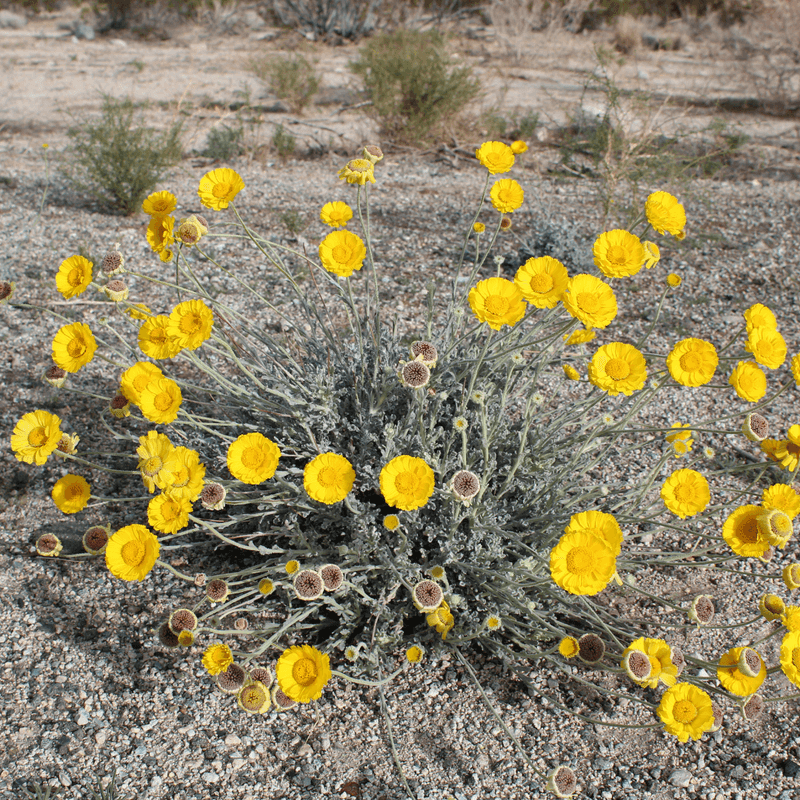
Some flowers take a break when June hits 110 degrees. Desert marigold mostly shrugs and keeps blooming.
Baileya multiradiata is the tough little neighbor you spot along Tucson roadsides, flashing lemon-yellow daisies above fuzzy, silvery leaves. That soft wool is not just pretty.
It reflects harsh sunlight and helps the plant hold onto moisture, so it needs very little watering once roots settle in.
Because it can flower from spring well into fall, desert marigold offers bees and butterflies a long-running nectar buffet. Small native bees especially seem to love it.
The hairy foliage also tends to be less tempting to rabbits and deer, which is a nice bonus in suburban edges near open desert.
Sow seeds in fall on bare, well-drained soil and barely cover them. Rich garden beds and heavy watering actually shorten its life, so skip the fertilizer and let it struggle a little.
Gravel yards and rocky spots suit it perfectly.
Technically a short-lived perennial, it often reseeds freely, so a few plants can slowly become a cheerful golden carpet. Deep roots may also help hold loose soil in place during monsoon downpours, which makes it handy on slopes and along driveways.
3. Desert Bluebells
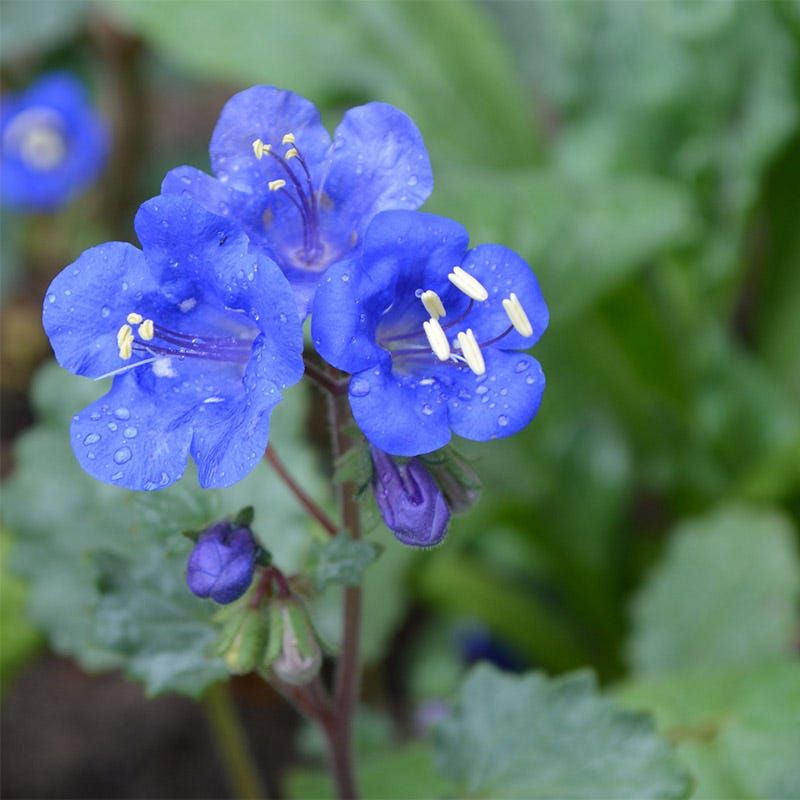
Blue is rare in the desert, which is exactly why desert bluebells stop people in their tracks. The color is so deep it almost looks painted on.
Phacelia campanularia grows wild in the Sonoran and Mojave deserts, popping up after good winter rains. Each plant forms a low mound of rounded, slightly sticky leaves topped with clusters of bell-shaped flowers.
Your Arizona Garden Changes Every Week. Your Plan Should Too.
Gardening in Arizona changes quickly throughout the season. Every Friday you’ll receive a simple weekly plan showing exactly what to plant, prune, fertilize, harvest, and protect so you never miss the right timing.
Up close, you can see pale throats and long stamens poking out.
Bumblebees and native bees are big fans. In early spring, when food is still scarce, a bed of bluebells can hum with visitors.
Planting them helps support the very pollinators your fruit trees and vegetable garden depend on later in the year.
Here’s a handy tip. These seeds like a bit of darkness to sprout, so rake them in lightly rather than leaving them exposed on top.
Sow before Thanksgiving, water gently until seedlings appear, then back off.
Bluebells look stunning mixed with golden poppies, a classic desert color pairing. Plants finish up as temperatures climb in late spring.
A word of caution: the leaves can irritate sensitive skin, so wear gloves when pulling spent plants or collecting seeds for next season.
4. Indian Blanket Flower
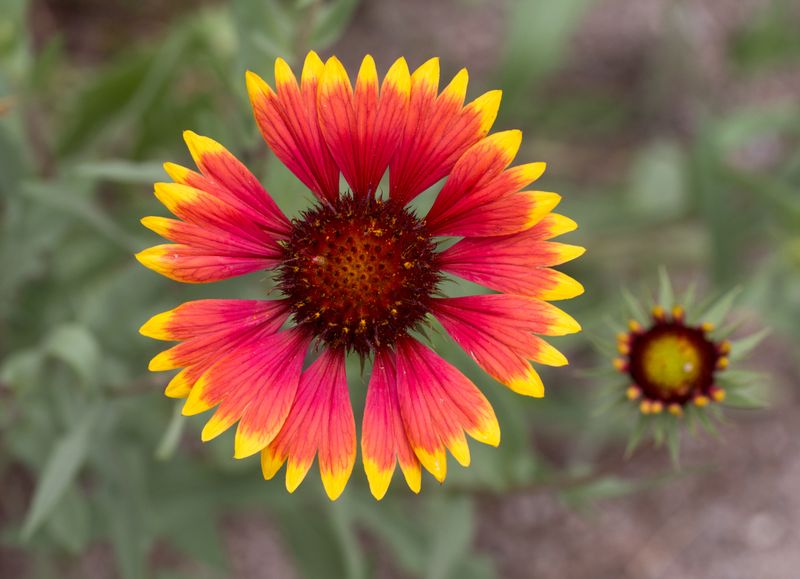
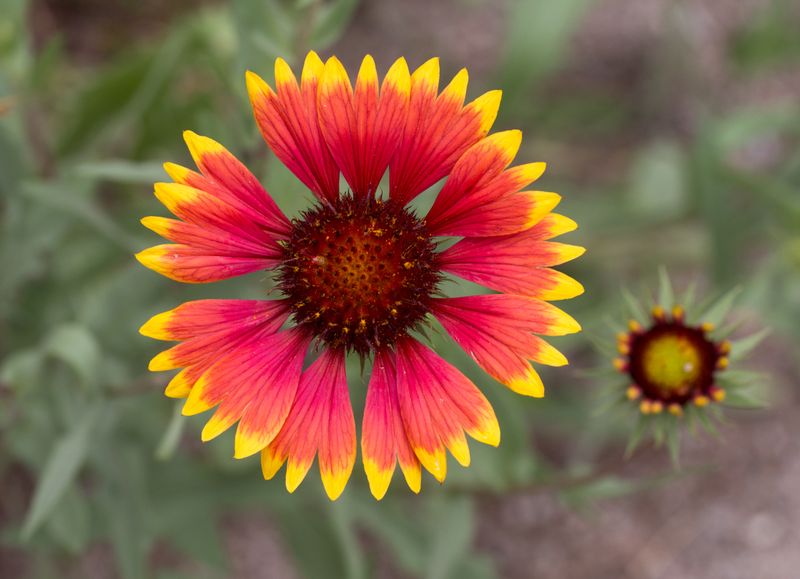
Legend says these flowers got their name because their colors matched woven blankets, red centers fading to golden tips. Whatever the story, Indian blanket flower brings serious fire to a desert yard.
Gaillardia pulchella handles heat better than many wildflowers on this list. While spring annuals call it quits in May, blanket flower often keeps blooming into summer and sometimes fall, especially with an occasional deep drink.
That long season makes it a wildlife workhorse. Bees, butterflies, and even beetles visit the daisy-like blooms for nectar and pollen.
When flowers fade, leave the round seed heads standing, because finches and other small birds may stop by to pick them clean.
Rabbits and deer generally pass it by, which is great news for yards near washes or open land. It thrives in poor, sandy soil and full sun, so there is no need to pamper it.
Sow seeds in fall right on the soil surface since they need light to germinate. Keep moist until sprouts appear, then water every couple of weeks if rain stays away.
Cutting a few spent flowers can encourage more blooms, though letting some go to seed keeps the patch going year after year.
5. Parry’s Penstemon
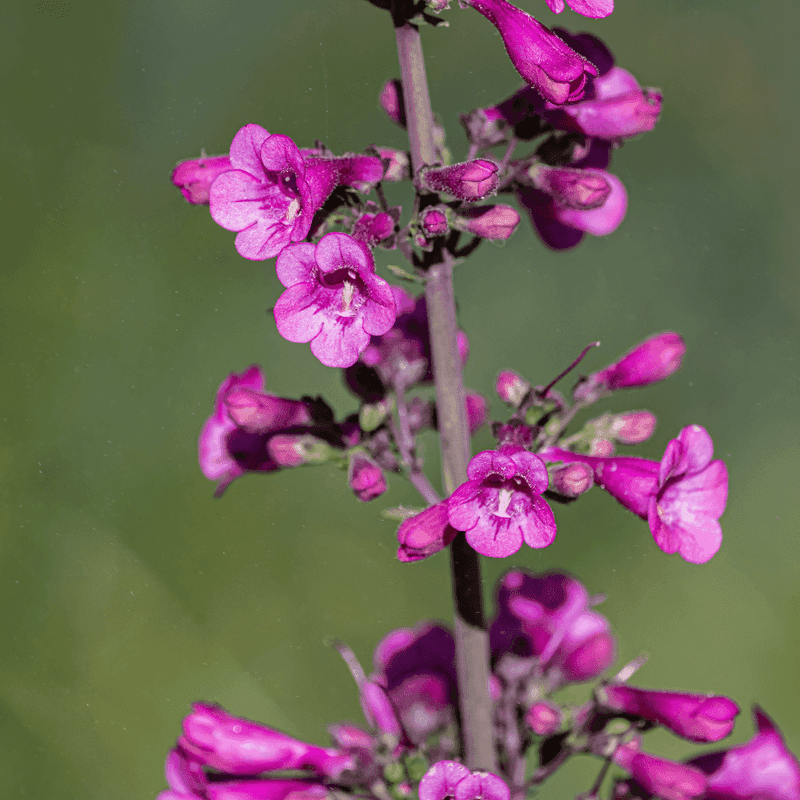
Want hummingbirds zipping past your kitchen window every March? Plant a few clumps of Parry’s penstemon and get ready for the show.
Penstemon parryi is a native perennial from southern Arizona, and it may be the most hummingbird-friendly flower you can grow here. Tall stems rise from a rosette of blue-gray leaves, crowded with bright rose-pink tubular blooms.
Those tube shapes fit a hummingbird beak perfectly, while bees squeeze inside for pollen too.
Unlike spring annuals, this one sticks around. Leaves stay through summer, and plants bloom again the next year.
It shrugs off triple-digit heat, alkaline soil, and long dry spells once established, and common garden pests rarely bother it.
Fall sowing works beautifully. Seeds benefit from a cool, damp winter period before sprouting, which our November-to-January weather provides naturally.
Scatter seeds in a sunny spot with good drainage and cover very lightly.
First-year plants may only form leaves, so be patient. By the second spring, expect flower spikes two to four feet tall.
After blooming, leave a few stalks to drop seed and new plants will often appear nearby. Pair them with desert willow or palo verde for a hummingbird hangout.
6. Globemallow
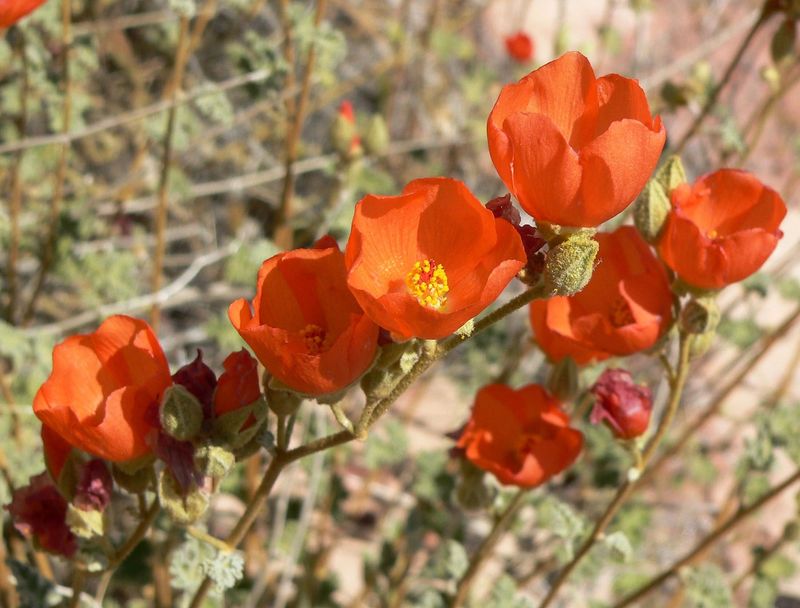
Few plants pack as much flower power on so little water as globemallow. One healthy shrub can be covered in hundreds of apricot-orange cups at once.
Sphaeralcea ambigua is a desert native that grows into a mounded, gray-green plant about three feet tall. Blooms appear mainly in spring, with extra rounds after rain.
You’ll also find pink, red, white, and lavender forms, though classic orange is the most common.
This plant is like a busy airport for pollinators. Native bees, honeybees, butterflies, moths, and even hummingbirds visit.
Some specialist bees depend on mallows, so planting globemallow supports wildlife you might not even notice at first glance.
Desert tortoises also nibble on the leaves, which makes it a thoughtful pick for tortoise-friendly backyards. Strong roots dig into tough ground and may help loosen compacted soil over time.
Seeds have a hard coat, so rough them up with sandpaper or soak them overnight before sowing in fall. Choose a sunny, well-drained spot and water lightly until sprouts emerge.
Mature plants need only occasional water. Trim them back by about a third in late summer to keep them tidy.
Fuzzy leaves can bother sensitive skin, so gloves help.
7. Arizona Lupine
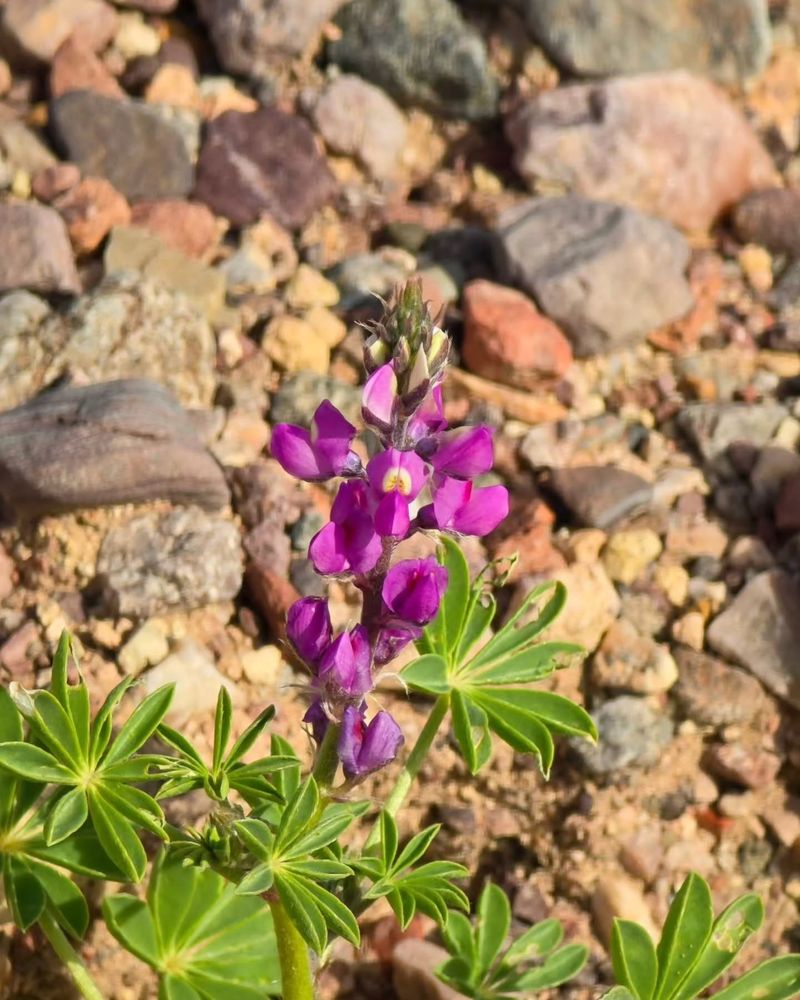
Think of Arizona lupine as a flower that gives back to the ground it grows in. Beneath the soil, its roots partner with helpful bacteria that may pull nitrogen from the air and enrich poor desert dirt.
Lupinus arizonicus is a winter annual native to the Sonoran and Mojave deserts. Its leaves look like little green hands, and by early spring it sends up spikes of pinkish-purple pea-shaped flowers.
After a wet winter, sandy washes can turn violet with them.
Bees love lupines, and some butterflies and moths use the plants as food for their caterpillars. That means you’re not just feeding adult insects, you’re helping raise the next generation too.
Like globemallow, lupine seeds have a tough shell. Nick them lightly or soak them in warm water overnight before planting.
Then sow in October or November, about a quarter inch deep, in sandy or gravelly soil with full sun.
Keep the seedbed moist for several weeks, then let rain do most of the work. Avoid fertilizer since lupines prefer lean ground.
Once seed pods dry and split in late spring, they pop open and fling seeds around, setting the stage for next year’s purple wave.
8. Firecracker Penstemon
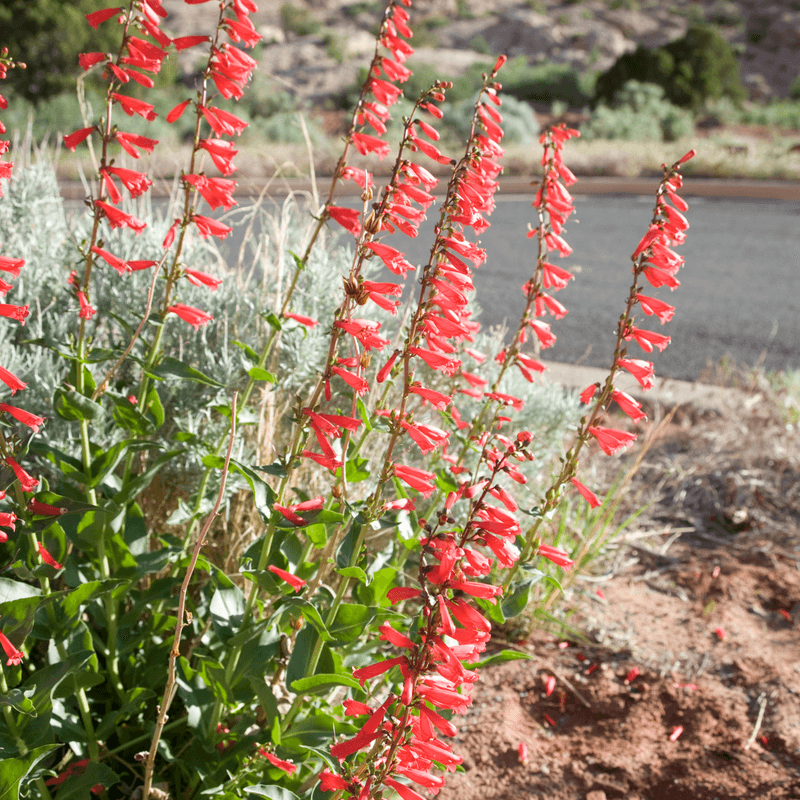
True to its name, firecracker penstemon lights up the garden in brilliant scarlet, often before most other perennials have even started. Hummingbirds treat it like a red neon sign that says open for business.
Penstemon eatonii is a native perennial with glossy green leaves and arching stems lined with narrow, tube-shaped red flowers. Blooms typically appear from late winter into spring, giving migrating and resident hummingbirds a welcome fuel stop.
What sets it apart from Parry’s penstemon? Timing and color.
Firecracker usually blooms a little earlier, and its pure red is a favorite hummingbird color. Growing both stretches your hummingbird season and adds a striking red-and-pink combo.
It also handles reflected heat from walls and driveways surprisingly well. Deer tend to leave it alone, and once settled, it needs water only every few weeks in summer.
Good drainage is a must, since soggy roots cause trouble.
Sow seeds in fall so winter chill can wake them up, covering them very lightly with fine soil. Expect leafy rosettes the first year and red fireworks the second.
Cut old stalks after seeds drop to keep things neat while still letting new volunteers appear.
9. Pale Evening Primrose
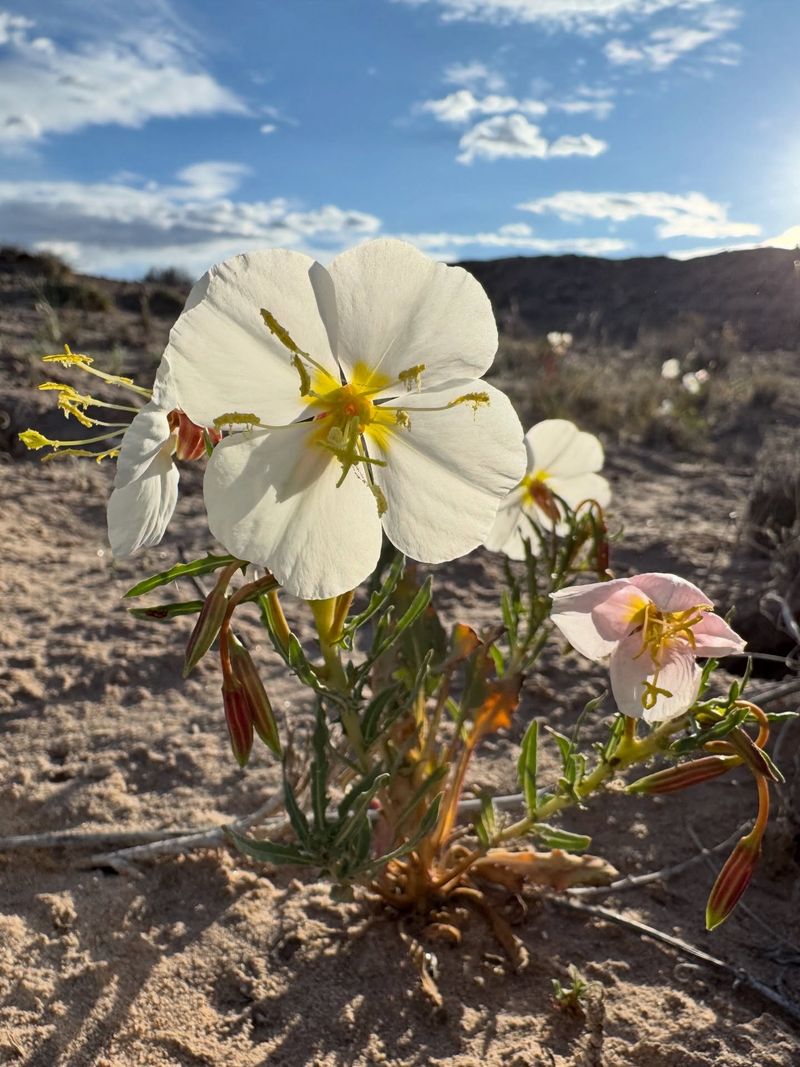
Step outside on a warm spring evening and you might catch pale evening primrose doing its magic trick. As the sun dips, papery white blooms slowly unfold, glowing softly in the twilight.
Oenothera pallida stands out on this list as the night-shift flower. Most wildflowers serve daytime bees, but evening primrose caters to moths, including big sphinx moths that hover like tiny hummingbirds.
Planting it adds a whole new layer of after-dark wildlife to your yard.
Flowers often blush pink as they age, and a sweet scent drifts on the cool air. It’s a lovely plant to grow near a patio where you sit after sunset, once the desert heat finally lets go.
This tough native loves sandy, fast-draining soil and full sun. It spreads gently by underground runners, which makes it useful for filling bare spots and helping hold loose ground.
Once established, it needs very little water.
Scatter seeds in fall and press them into the surface, keeping things moist until seedlings appear. Give plants room to roam a bit.
Pair them with white-flowering desert plants for a moon garden that comes alive when everyone else heads indoors.
10. California Poppy
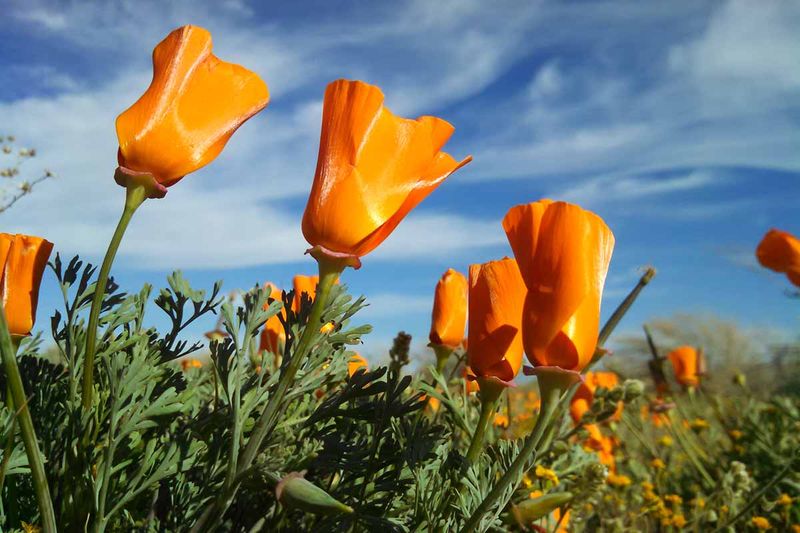
Don’t let the name fool you. California poppy grows happily across Arizona, and it’s one of the easiest wildflowers a beginner can try.
Eschscholzia californica is a close cousin of the Mexican gold poppy, but its blooms are usually a richer orange, and garden types come in cream, pink, and red. Plants grow a little larger and often bloom longer, especially with a splash of water in spring.
Feathery blue-green leaves look nice even before flowers open.
Bumblebees and other pollinators rely on the plentiful pollen these blooms offer. Mixing California and Mexican poppies creates a sunset-colored patch that keeps food on the table for bees across several weeks.
For success, sow seeds directly where you want them because poppies hate being transplanted. Rake soil lightly, scatter seeds before late November, and gently water.
Too much shade makes them leggy, so pick the sunniest corner you have.
When summer rolls around, plants dry up and drop seeds for next season. A small packet now can become a self-renewing meadow over a few years.
That’s a lot of color and habitat from one simple fall afternoon of planting.