11 Oregon Native Trees That Cut Summer Water Bills More Than Any Landscape Change
Every August, Oregon gardeners face the same choice: drag the hose out again or watch the yard turn crispy. The right native tree can change that, because a trees shade keeps soil cooler and beds wetter for longer.
These 11 trees already know how to handle our soggy winters and bone-dry summers, and many need little or no summer water once their roots settle in. Plant one, and you may save water while giving local birds and bees a real home.
1. Oregon White Oak
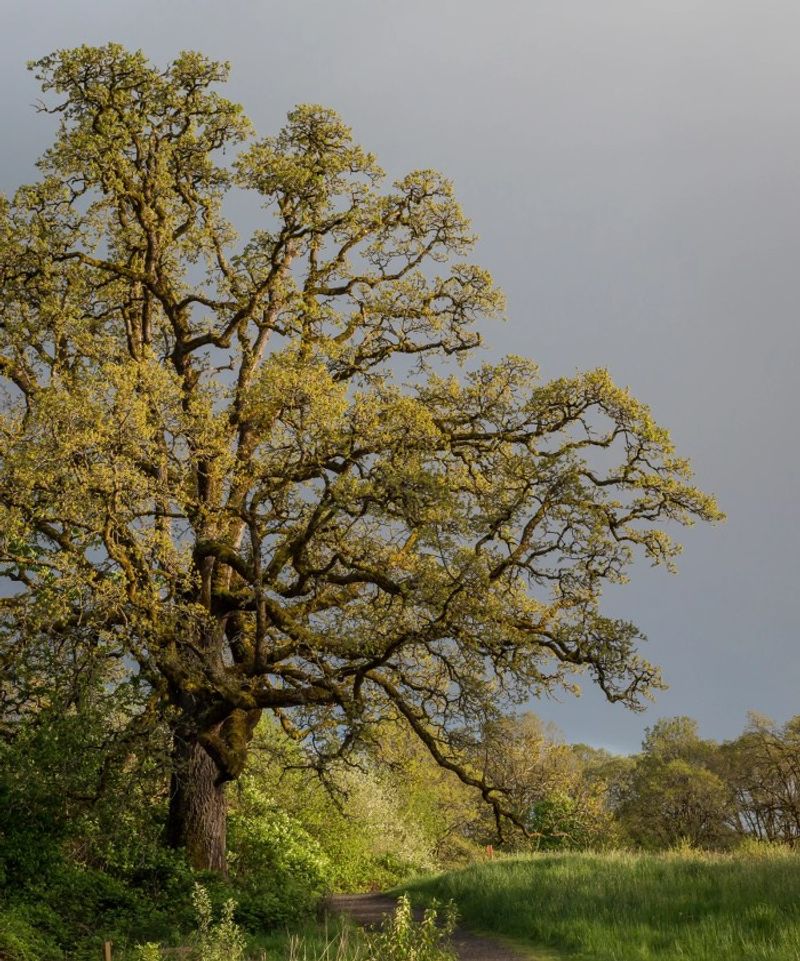
Picture a Willamette Valley hillside in late August, the grass gone gold and crunchy, and one wide oak throwing a pool of cool shade across it. That tree has probably never seen a sprinkler in its life.
The Oregon white oak, Quercus garryana, is the valleys original drought expert, and it can do the same work in your yard.
After two or three summers of slow, deep soakings, its taproot heads down and the tree asks for almost nothing. It shrugs off heavy clay, poor soil, and wind.
In fact, regular summer watering can do more harm than good, since mature white oaks can develop root problems when kept wet during warm months.
The water savings come from that big canopy. Shade across the west side of a house or a thirsty flower bed can slow how fast soil dries out, which may mean fewer trips with the hose in July.
The wildlife bonus is huge too, since these oaks support hundreds of insect species that feed nesting birds, while acorns fuel jays, woodpeckers, and squirrels.
Plant it where it has room to spread, because it can eventually reach 60 feet wide. Yes, it grows slowly.
Think of it as a gift to your future self and to every acorn woodpecker in the neighborhood.
2. Pacific Madrone
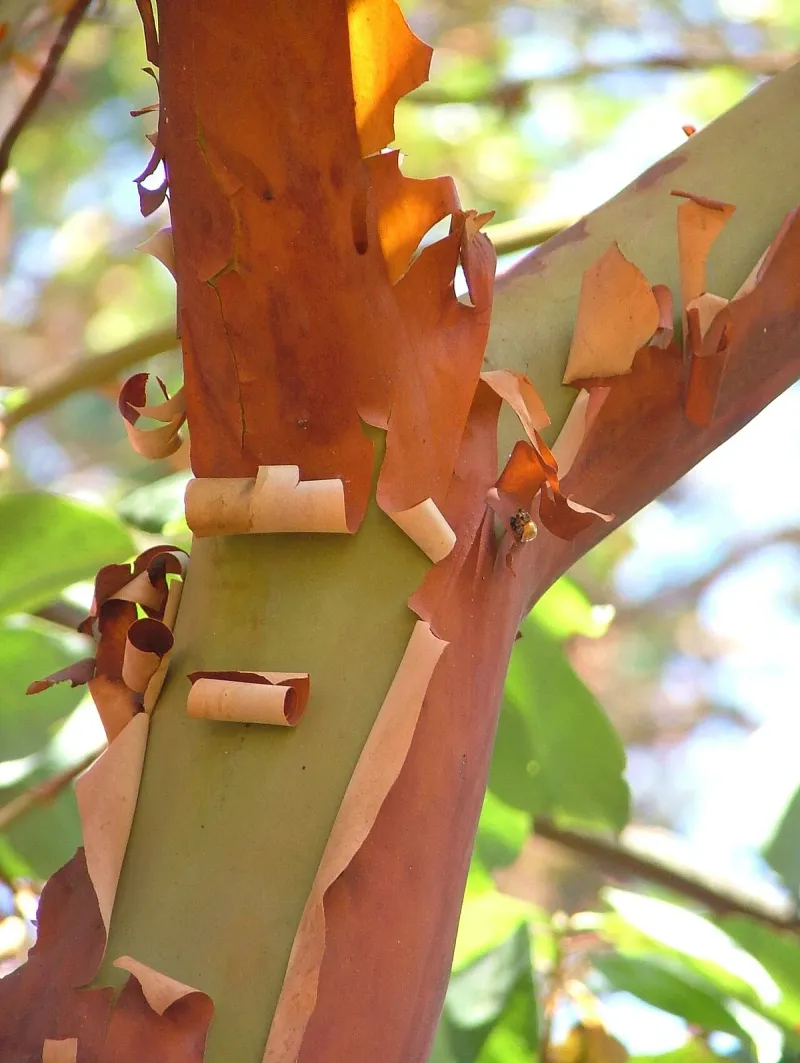
Every Oregon gardener has that one plant they fell for and then learned, the hard way, to leave alone. For many of us, it is the Pacific madrone.
With cinnamon-red bark that peels away to reveal smooth, lime-green wood underneath, it looks like something out of a fairy tale.
Madrone is famously fussy about one thing: water. Give it summer irrigation, rich soil, or a spot where water pools, and it may sulk or decline.
Put it on a sunny, well-drained slope, the kind you find around Portlands West Hills or the dry edges of the Coast Range, and then walk away.
That hands-off attitude is exactly what makes it a water-bill hero. A settled madrone typically wants zero summer water, and it stays evergreen, so its glossy leaves shade the ground all year.
Spring brings white, bell-shaped flowers that bees adore, and fall brings red-orange berries that robins, band-tailed pigeons, and cedar waxwings may flock to.
A tip from those of us who have lost a few: buy small. Young madrones in one-gallon pots tend to transplant far better than big nursery specimens.
Plant in fall once the rains return, water sparingly through the first summer, and then let the tree do what it has done in Oregon for thousands of years.
Your Oregon Garden Changes Every Week. Your Plan Should Too.
Gardening in Oregon changes quickly throughout the season. Every Friday you’ll receive a simple weekly plan showing exactly what to plant, prune, fertilize, harvest, and protect so you never miss the right timing.
3. Willamette Valley Ponderosa Pine
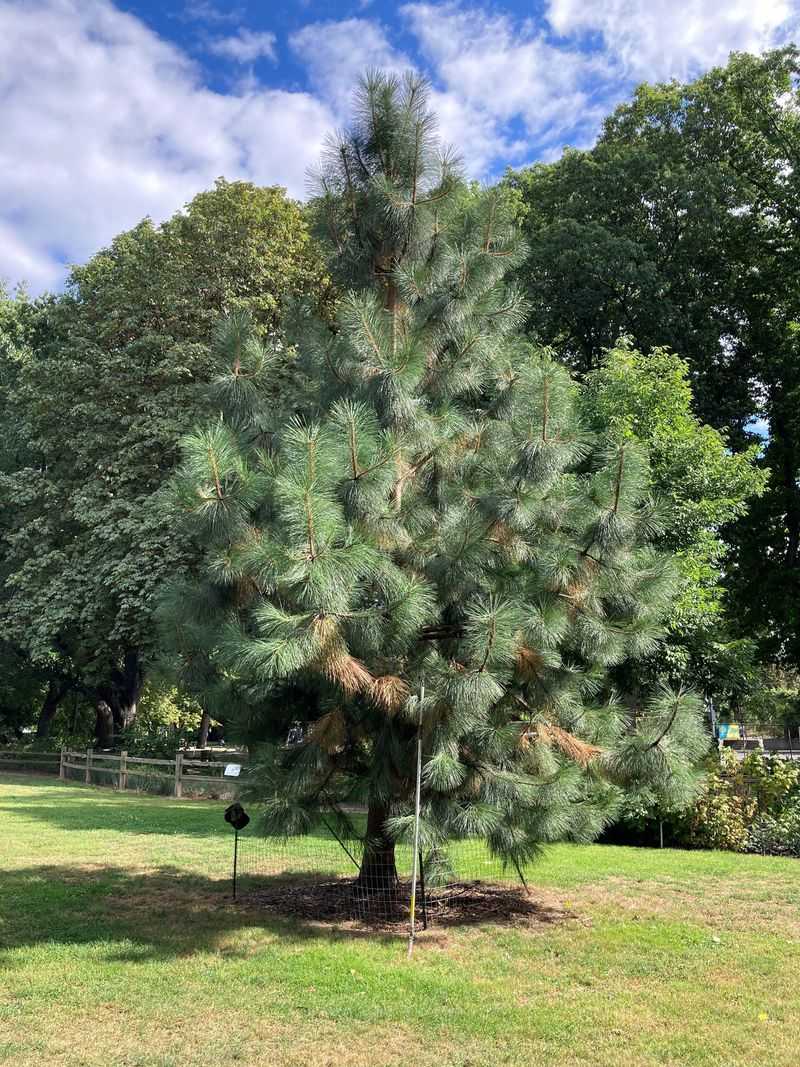
Did you know the Willamette Valley has its own ponderosa pine? Long before Portland and Eugene existed, these tall, orange-barked pines grew right on the valley floor.
Over time, they adapted to something the east-side pines rarely deal with: soggy winters followed by bone-dry summers.
That local adaptation matters for your yard. Valley ponderosa seedlings tend to handle heavy clay and winter saturation better than pines grown from high-desert seed, yet they still shrug off an August drought.
When shopping, ask your nursery specifically for Willamette Valley stock.
Stand close to an older trunk on a hot afternoon and take a sniff. Many people swear the puzzle-piece bark smells like vanilla or butterscotch.
It is a small joy, but gardeners who plant one tend to keep sniffing for years.
For water savings, ponderosa works best as a big shade anchor or windbreak on a larger lot. Its tall canopy filters light rather than blocking it completely, so plants beneath can stay a bit cooler without going dark.
Lewis’s woodpeckers and slender-billed nuthatches use these pines, and the seeds may feed chickadees and squirrels through fall.
Give it full sun and plenty of space, since it can top 100 feet over many decades.
4. Incense Cedar
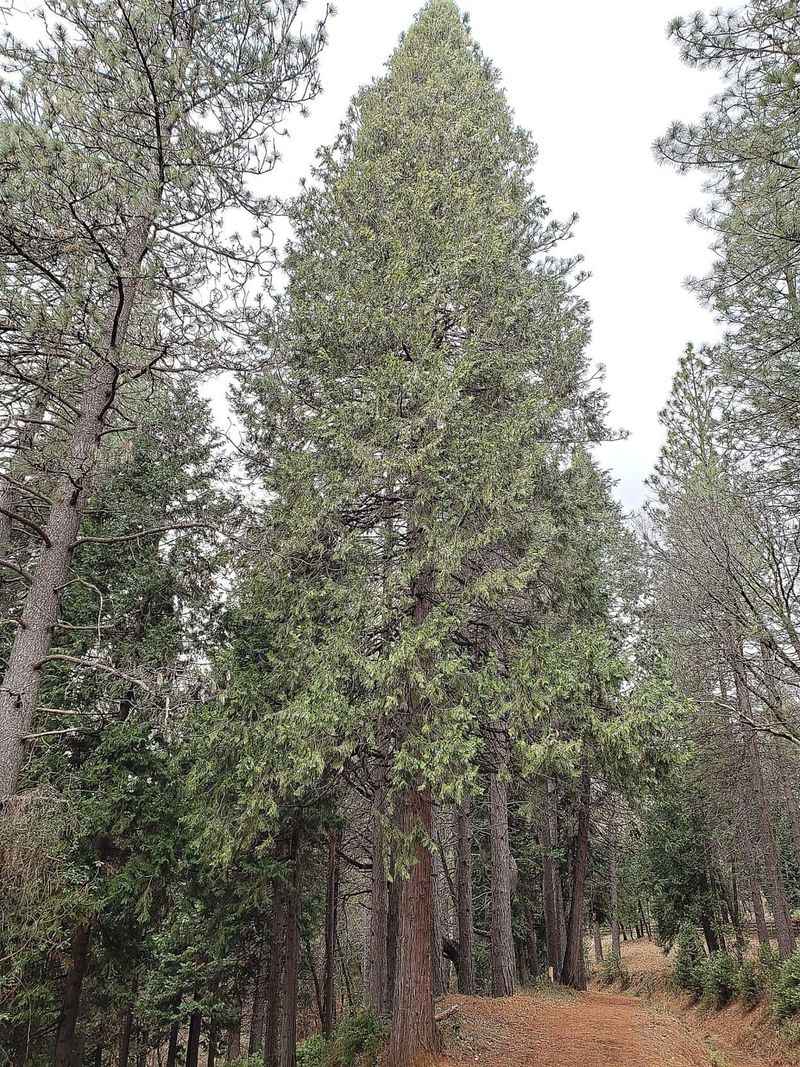
Walk past an incense cedar after a summer rain and you will understand the name right away. The foliage gives off a warm, spicy scent, and the wood is the same kind used for many classic pencils.
Southern and central Oregon hillsides are its home turf, where hot, dry summers are just part of life.
West of the Cascades, incense cedar has become a quiet favorite for gardeners who want privacy without a watering schedule. It grows into a tidy, narrow column of flat, lacy sprays, making it a smart swap for thirsty arborvitae hedges that often brown out in a Willamette Valley heat wave.
One or two along a property line can screen neighbors and block hot afternoon sun hitting a patio or bedroom window.
Drainage is the key. It prefers soil that does not stay waterlogged all winter, so a slight slope or raised planting area helps in heavy clay.
After two or three summers of deep watering, most trees can go without extra irrigation in a typical year.
Birds appreciate the dense branches for shelter and nesting, especially during winter storms. And there is something deeply satisfying about replacing a hedge you used to baby with one that simply smells nice and minds its own business.
5. Douglas-fir
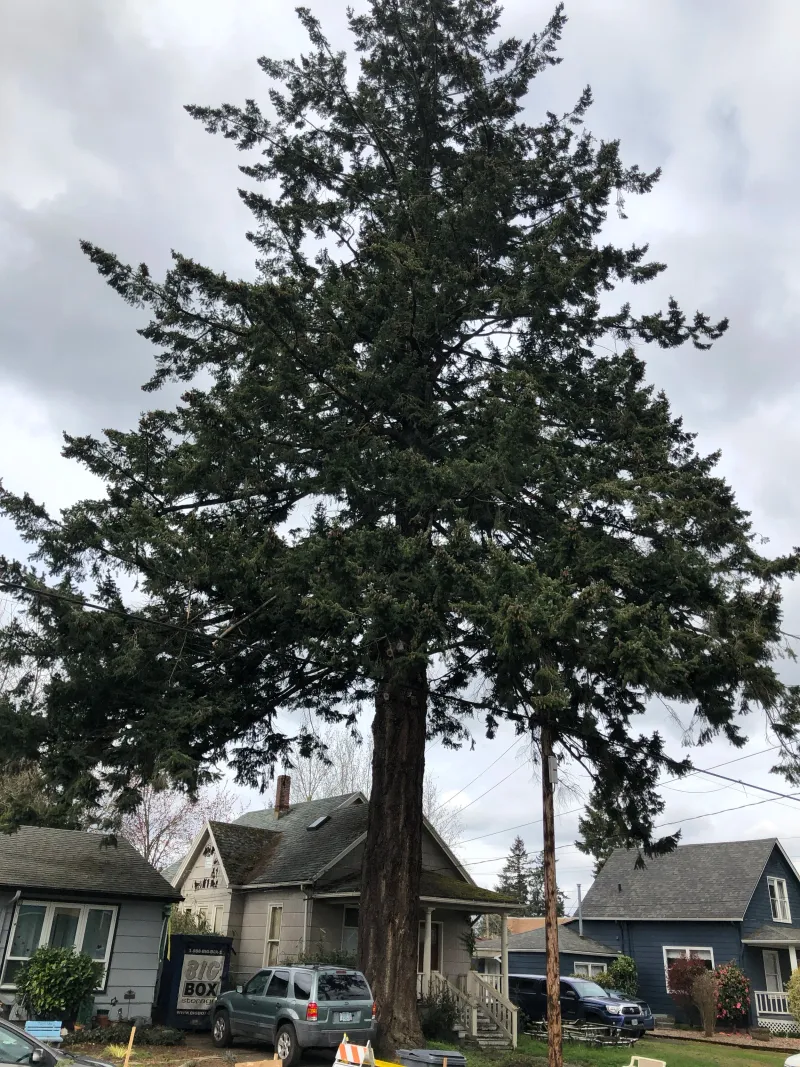
Some trees earn a spot on this list for being scrappy. Douglas-fir earns it for sheer muscle.
Oregons state tree can grow into a living umbrella that shades a whole corner of a yard, and on a 95-degree July day, that shade can feel like air conditioning you never pay for.
Big shade matters for your water bill because sun-baked lawns and beds lose moisture fast. Soil under a tall canopy tends to stay cooler, so nearby plants may need less frequent watering.
A well-placed fir on the south or west side of a home can also help keep indoor temperatures down.
Now for a bit of honesty. Douglas-fir prefers deeper, well-drained soils, and recent hot summers have stressed some trees in the Willamette Valley, especially on thin or rocky ground.
On good valley soil, though, a mature tree usually rides out the dry season without help.
If you have an open lot and room for something that could eventually tower over the house, this is a classic choice. Keep it well away from foundations and power lines.
Chickadees, Douglas squirrels, and owls will likely move in, and you will have planted the very tree that shaped Oregons identity.
6. Western Redbud
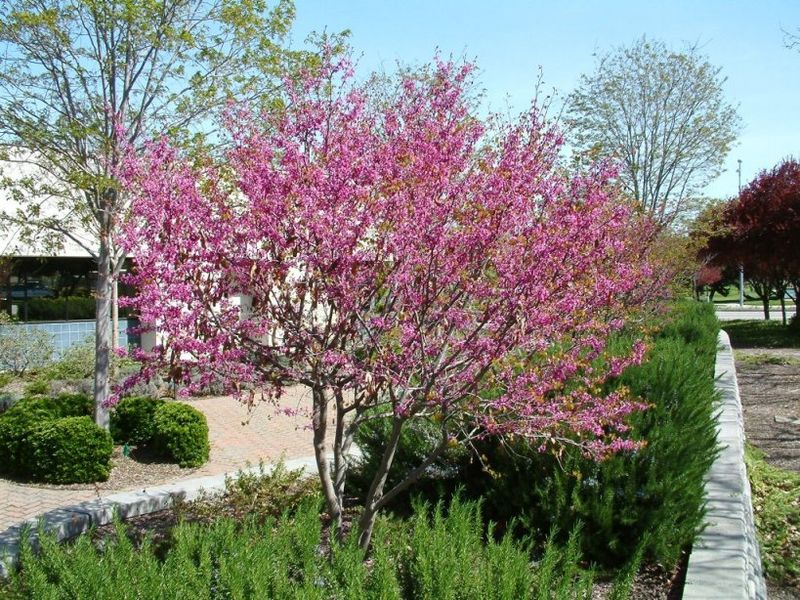
Okay, a small confession up front. Western redbuds true home range sits mostly south of the Oregon border, in California and the dry Southwest, so it is a West Coast native rather than an Oregon original.
It still earns a spot here because it handles our dry summers so gracefully, especially in southern Oregon and the warmer pockets of the Willamette Valley.
And oh, the spring show. Before a single leaf appears, bare branches erupt in bright magenta-pink blossoms that look almost electric against a gray March sky.
Then come round, heart-shaped, blue-green leaves, followed by flat purple seed pods that dangle into fall.
At roughly 10 to 18 feet tall and wide, redbud fits where a big oak or fir never could: next to a patio, beside a driveway, or shading a small bed. With roots settled, it typically needs only an occasional deep drink during long heat spells.
Soggy winter soil is its weakness, so give it full sun and excellent drainage.
Early bees can find the flowers useful when little else is blooming. If you have been craving a tiny tree with big personality and a light watering habit, this might be the plant that follows you home from the nursery.
We will not tell.
7. Vine Maple
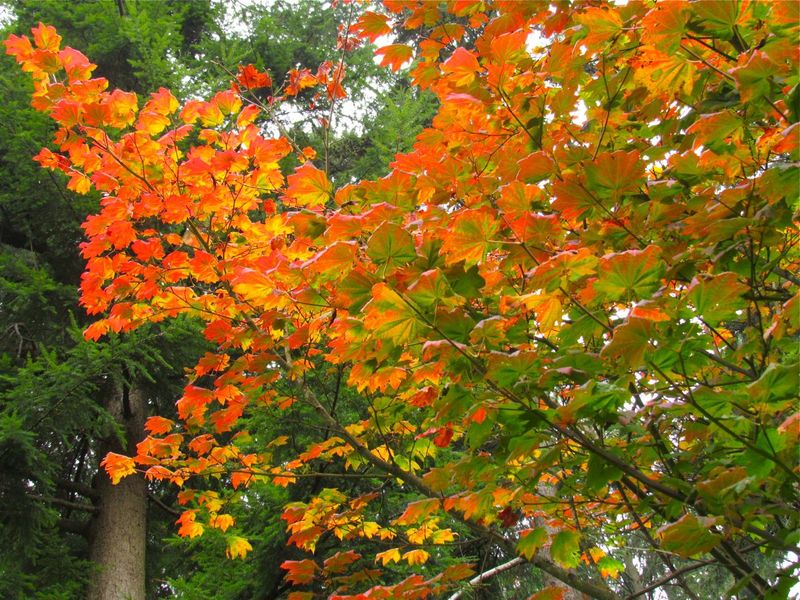
Tucked beneath towering firs along Columbia Gorge trails, vine maple has spent thousands of years figuring out Oregon summers. It knows exactly how to handle soggy winters followed by months with barely a sprinkle.
That makes it one of the easiest small trees you can invite into a home garden.
What sets vine maple apart from the rest of this list is its flexibility with light. In shade, it grows loose and sprawling, sometimes bending over to root where branches touch the ground, which is how it earned its name.
In more sun, it tightens into a multi-trunked tree around 15 to 25 feet tall.
Fall is the reward. Leaves shaped like little open hands turn gold, orange, and blazing scarlet, often all on the same tree.
Sun-grown plants tend to color up the brightest.
For water savings, vine maple makes a lovely understory layer beneath larger trees or on the north and east sides of a house. It shades the roots of sword ferns, oxalis, and other woodland natives, which may help soil hold moisture longer.
A thick layer of leaf mulch helps too, and birds nibble the winged seeds while the spring flowers draw early bees.
Small yard? This might be your tree.
8. Pacific Crabapple
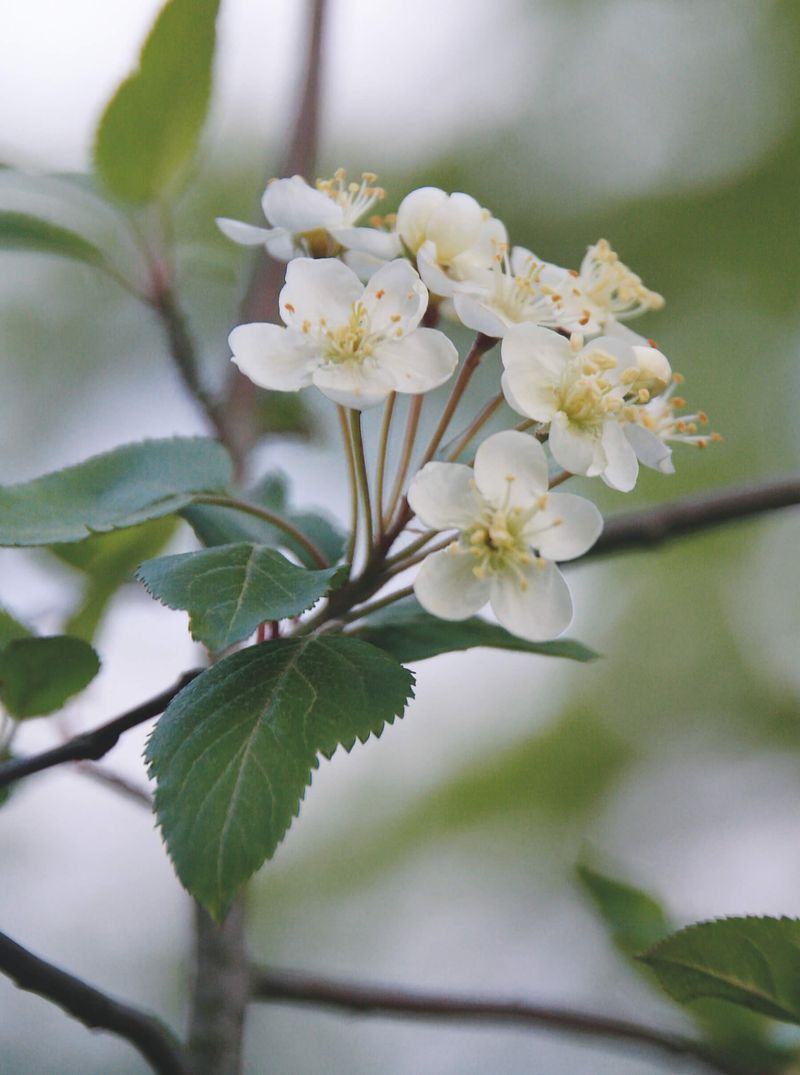
Here is a tree that does not mind wet feet in winter and dry soil in summer, which is basically the Oregon lowland experience in one sentence. Pacific crabapple grows wild along coastal marshes, stream edges, and valley wetlands.
Yet with a few years of growth behind it, it can typically skip summer irrigation in most years.
That dual personality makes it a natural pick for the edge of a rain garden, a low spot where water collects in January, or a tight side yard. It usually stays in the 20 to 30 foot range, often forming a thicket of trunks if left unpruned.
In April and May, fragrant white to pale-pink blossoms cover the branches, and native bees may buzz through in crowds. By late summer, clusters of tiny, oblong fruits ripen from green to yellow or red.
Those little apples are tart, but they have a long history as a food source for Indigenous peoples of the Northwest coast, often stored in water or softened by cooking. Waxwings, robins, and grosbeaks can strip a tree in days, and deer and small mammals nibble the fallen fruit.
If you have been feeling that familiar twinge about planting for wildlife instead of just for looks, this crabapple lets you do both without dragging out the hose.
9. Shore Pine
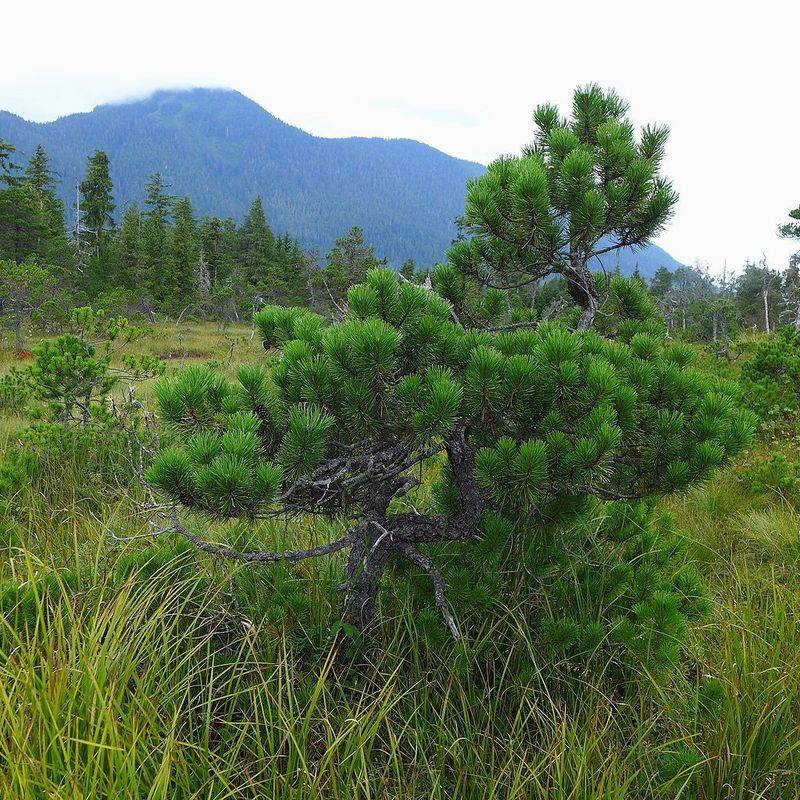
Wind whipping off the Pacific, salt spray on every needle, sandy soil that drains in seconds. Most trees would give up.
Shore pine just leans into the breeze and keeps going.
This coastal form of lodgepole pine grows naturally along the Oregon coast from Brookings to Astoria, often twisting into wonderfully gnarled, bonsai-like shapes. In a garden, it usually stays a manageable 20 to 35 feet, much smaller than many pines, with dense, dark green needles in pairs.
So why does a beach tree belong in a Willamette Valley yard? Shore pine is surprisingly adaptable, tolerating poor soils, occasional wet spells, and dry summers, and it rarely needs supplemental water after it settles in.
That makes it a strong candidate for a windbreak, a screen along a hot driveway, or a focal point in a gravel garden.
It also works beautifully for coastal homeowners who have watched pricier ornamentals burn from salt and wind. Small birds use the dense branches for cover, and nuthatches and chickadees may pick at the cones.
Give it sun and room to breathe. Pinch the new candles in spring if you want a compact form, or let it wander into its own quirky silhouette.
10. Bigleaf Maple
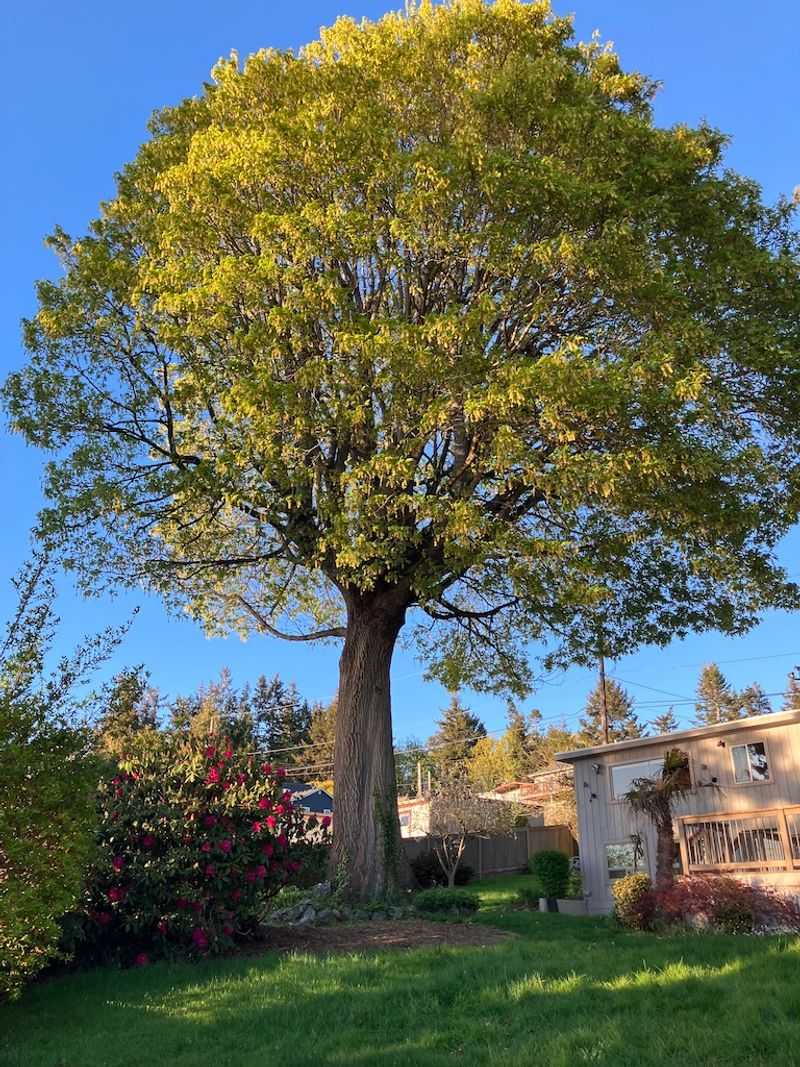
Leaves as big as dinner plates. Moss and licorice ferns draped along every branch.
If you have hiked anywhere west of the Cascades, you have walked beneath bigleaf maple, whether you knew its name or not.
A streamside giant on a water-saving list might seem odd. The trick is those deep roots, which can often find moisture well below the surface, so a mature tree typically needs no summer irrigation in most years.
Meanwhile, its canopy casts some of the densest shade of any Oregon native.
That shade is powerful. A mature tree can cool a whole backyard, shelter a patio, and slow evaporation from the soil underneath.
Just know it grows large, often 50 to 80 feet, so it suits bigger properties and should sit well away from foundations, sewer lines, and pavement.
Spring is a secret highlight. Long, drooping clusters of yellow-green flowers open early and can be one of the first big pollen and nectar sources for bees waking up after winter.
Autumn brings buttery yellow leaves that make excellent free mulch, and grosbeaks and squirrels go after the winged seeds.
Fun fact: you can tap a bigleaf maple for syrup, though the sap is thinner than eastern sugar maple sap, so expect a lot of boiling for one small jar.
11. Silk Tassel
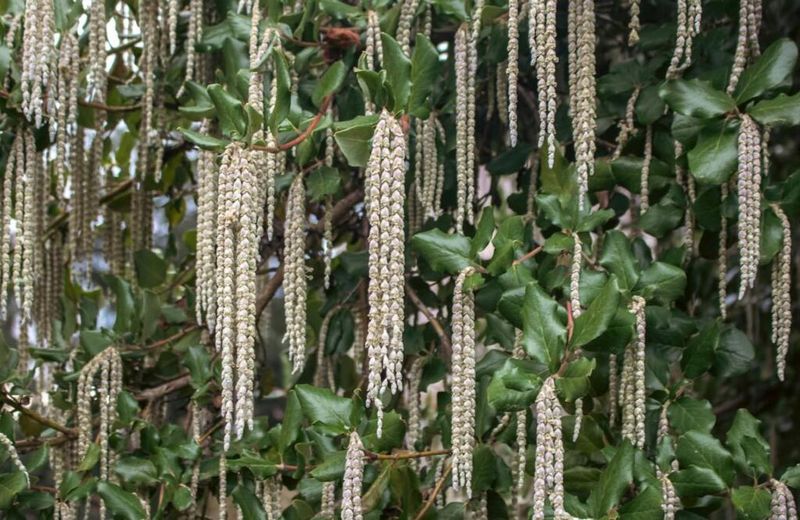
Most gardens look a little sad in January. Silk tassel did not get that memo.
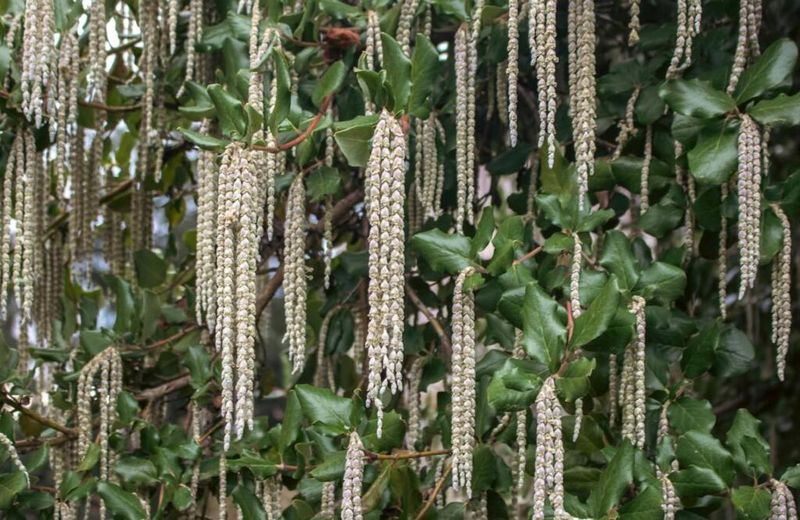
Right in the middle of winter, this evergreen drapes itself in long, silvery-gray catkins that can reach close to a foot long on some male plants, swaying like fringe on a vintage lampshade.
Coast silk tassel, Garrya elliptica, grows wild along the southern Oregon coast and into California, and it has become a favorite among Willamette Valley gardeners hunting for low-water evergreens. It often starts life as a large shrub, but with patient pruning of lower branches, it can be trained into a small multi-trunked tree around 10 to 20 feet tall.
Those leathery, wavy-edged leaves are built for dry summers. After a year or two of care, silk tassel typically needs little to no summer water, and it handles part shade surprisingly well.
Good drainage keeps it happy, while a cold, wet clay pocket may cause trouble.
Why end the list here? It covers the one season the other trees mostly skip, adding structure while perennials sleep.
The dense foliage offers birds shelter from winter storms, and female plants can produce purple berries that birds may enjoy. Look for named varieties like ‘James Roof’ if the longest tassels are your goal, plant in fall, and let it become the calm, silvery star of your winter garden.