5 Fig Pruning Cuts That Help Georgia Gardeners Get A Bigger Summer Harvest (And 3 To Avoid)
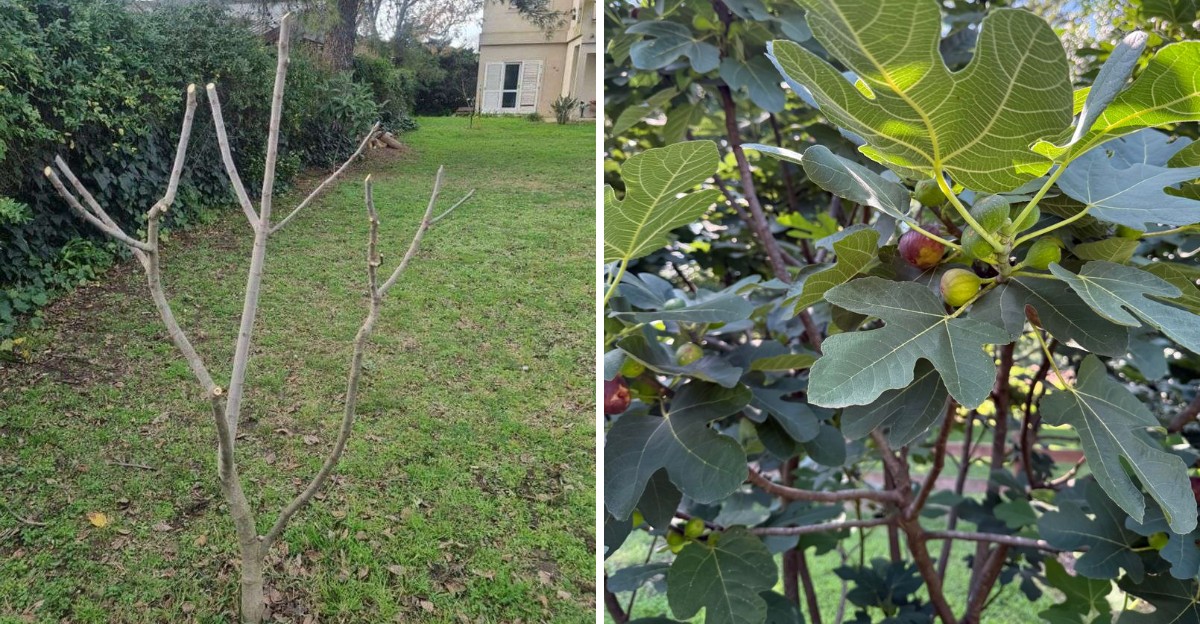
Every sweet fruit on this backyard tree is actually a hollow pouch packed with tiny flowers hidden inside. Even stranger, the common kinds grown across Georgia ripen without any help from a pollinating wasp at all.
Those hidden blossoms form on fresh green shoots, so the way you prune decides how many pouches appear. A few smart snips each winter can turn a shy, leafy shrub into a generous summer producer.
I have to admit, my first attempt left me with lots of leaves and a handful of fruit. You might notice the same thing in your own yard after a hasty cut in late winter.
Some cuts reward you with heavier branches by July, while others quietly erase an early crop before it starts.
Knowing which branches to trim and which to leave alone could make a real difference in your next summer harvest.
1. Thin Crowded Fig Branches So Sunlight Reaches The Fruit
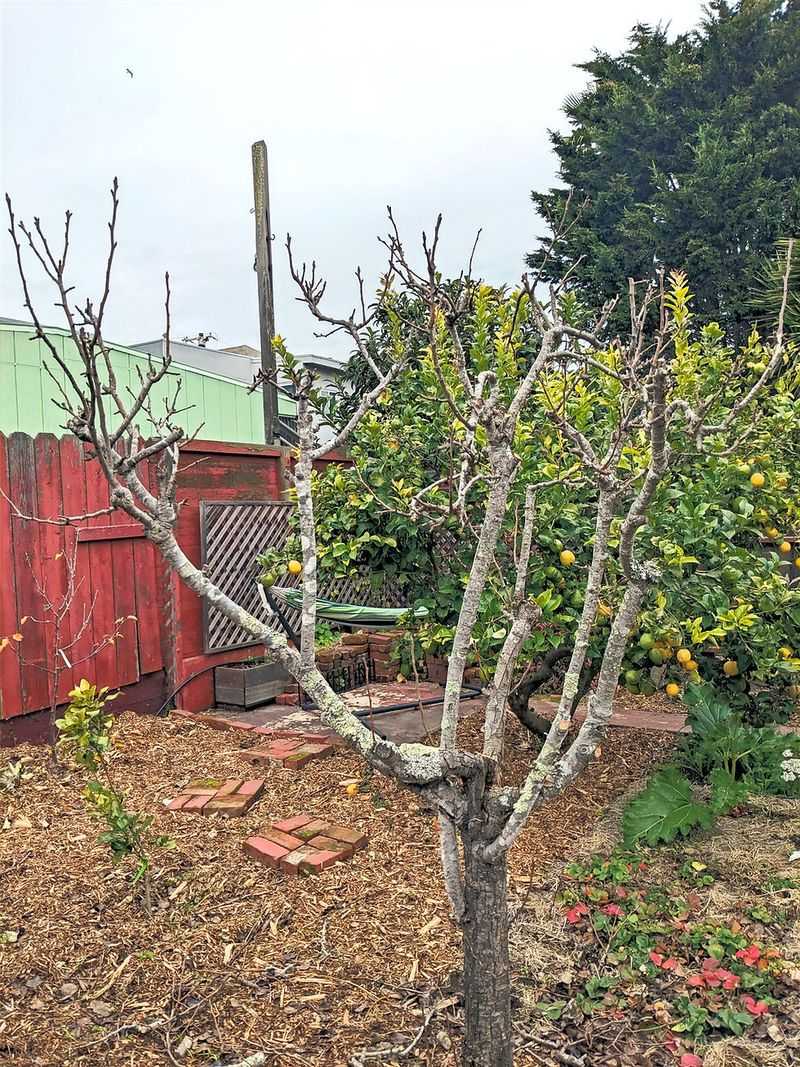
A fig tree left alone for a few years can turn into a leafy cave where fruit stays pale.
Shade inside that tangle slows ripening, and the figs tucked deep inside often taste flat and watery.
Thinning cuts fix this by removing a whole branch back to where it started on a larger limb. Unlike a simple trim, this cut opens space without triggering a burst of new leafy shoots.
Personally, I like to stand back first and look for branches that point straight into the center of the tree. Those inward growers rarely add much fruit, and they block light from reaching the better limbs nearby.
Late winter works well for this job in most of the state, since bare branches show the shape clearly. Many growers wait until hard freezes pass, because fresh wounds can leave tender wood sensitive to cold.
Better airflow is a quiet bonus that matters a lot during our sticky humid summer months. Fig rust, a common leaf disease in the Southeast, tends to spread faster when leaves stay damp and crowded.
Aim to remove only a few branches each year rather than stripping the canopy bare in one afternoon.
You want small gaps where sunbeams can slip through, rather than a bare frame that looks startled and lonely.
Wear gloves and long sleeves too, since the milky sap can irritate skin, especially on sunny days. That small precaution keeps the job pleasant, and your opened-up tree will thank you with sweeter fruit.
2. Snip Away Fig Suckers Popping Up Around The Trunk
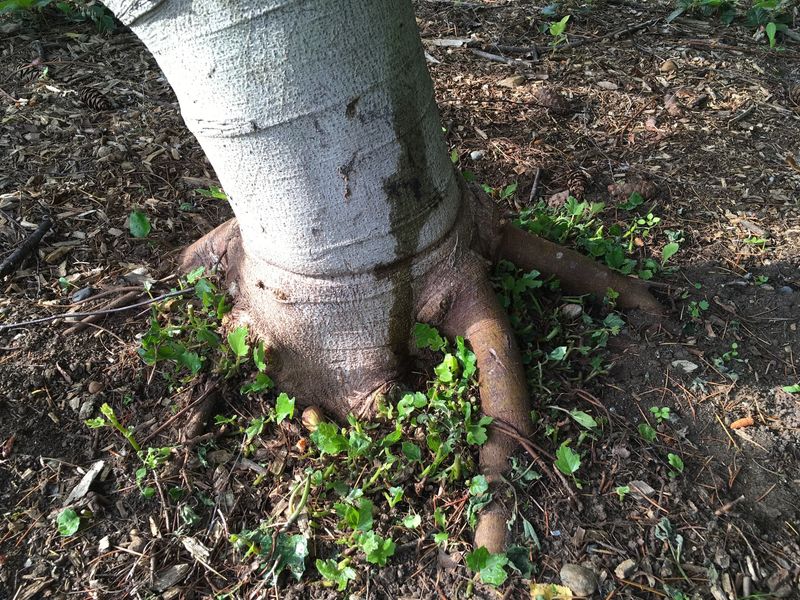
Those skinny green shoots popping up from the soil around your fig look innocent, but they are sneaky. Called suckers, they grow fast and pull water and nutrients toward leaves instead of toward ripening fruit.
Figs naturally want to grow as big multi-stemmed shrubs, so they send up suckers quite freely.
I find a quick weekly walk around the base keeps them small and easy to handle.
Cut each sucker as low as you can, even pulling back a little soil to reach the base. Leaving a stub often invites several new shoots, which means more work for you next month.
Unlike most fig pruning, this job can happen during the growing season whenever fresh suckers show up. Young green shoots snap off easily, while older woody ones need sharp hand pruners or loppers.
Not every sucker has to go, and that flexibility is one reason I love growing figs. In colder north Georgia spots, keeping one or two strong shoots gives you backup trunks after a harsh winter.
Bush-form figs grown in cooler areas often recover from the roots when freezes damage the upper stems.
Choose replacement shoots that grow outward at a nice angle, and remove the weaker ones crowding them.
Extra suckers can also be dug up with a bit of root and potted for friends. Sharing a free baby fig tree feels great, and your main tree keeps its energy for summer fruit.
3. Remove Cold Damaged Fig Limbs Once Spring Buds Swell
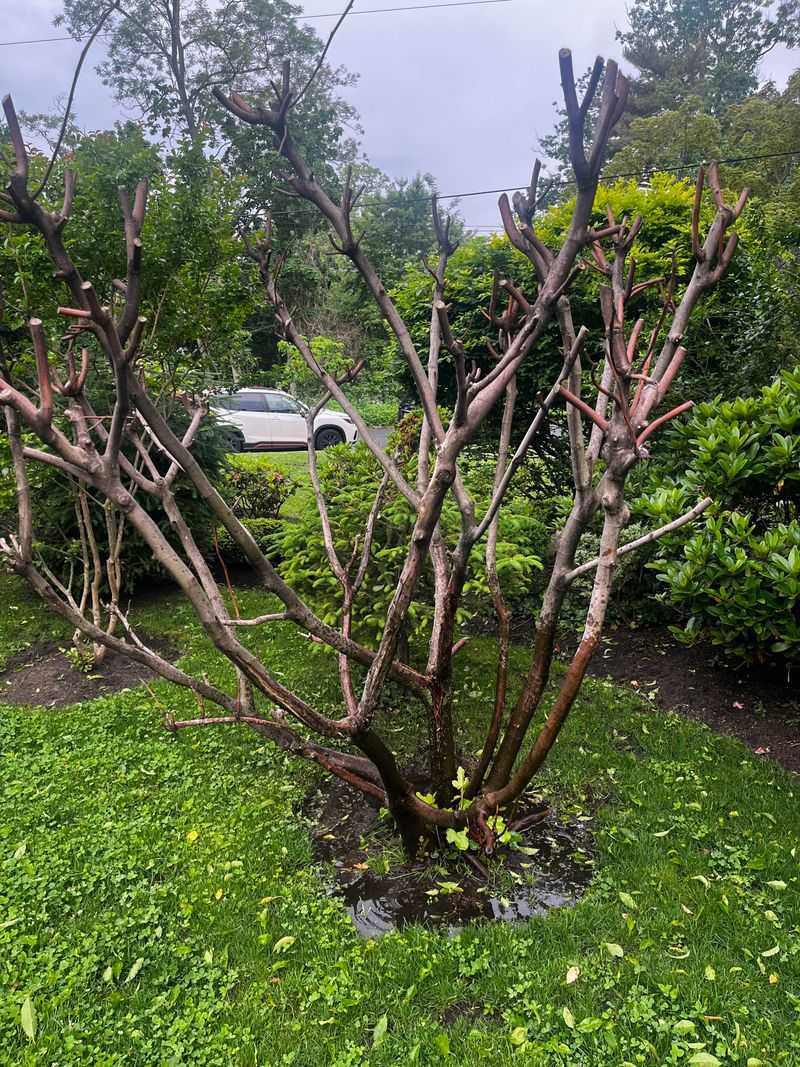
A hard freeze can leave fig branches looking fine in February, then refusing to leaf out by April. Figs handle cold reasonably well when dormant, yet temperatures in the low teens can still injure young wood.
Personally, I wait until buds start swelling before hunting for damage, because guessing too early wastes good wood.
Patience really pays off here, and the tree shows you exactly where the living tissue begins.
Try the scratch test by scraping a tiny patch of bark with your thumbnail or a pocketknife. Green underneath means the stem is alive, while brown and dry tissue means that section needs to go.
Cut each damaged branch back into healthy wood just above an outward-facing bud or a strong side branch. Clean cuts on living tissue heal faster and give fungi fewer chances to move into the wound.
What surprises me most is how fast figs bounce back once the lifeless tips are gone. Main-crop figs form on new growth, so a frost-nipped tree can still give you a solid summer harvest.
Varieties like Celeste and Brown Turkey are popular here partly because they recover well after chilly winters.
Those two show up in many southern backyards, and state extension experts often recommend them for home growers.
Toss the trimmed wood instead of piling it under the tree, where it can harbor pests and fungus. A tidy base also makes it easier to spot new suckers and fallen fruit later in summer.
4. Head Back Tall Fig Branches To A Strong Side Limb
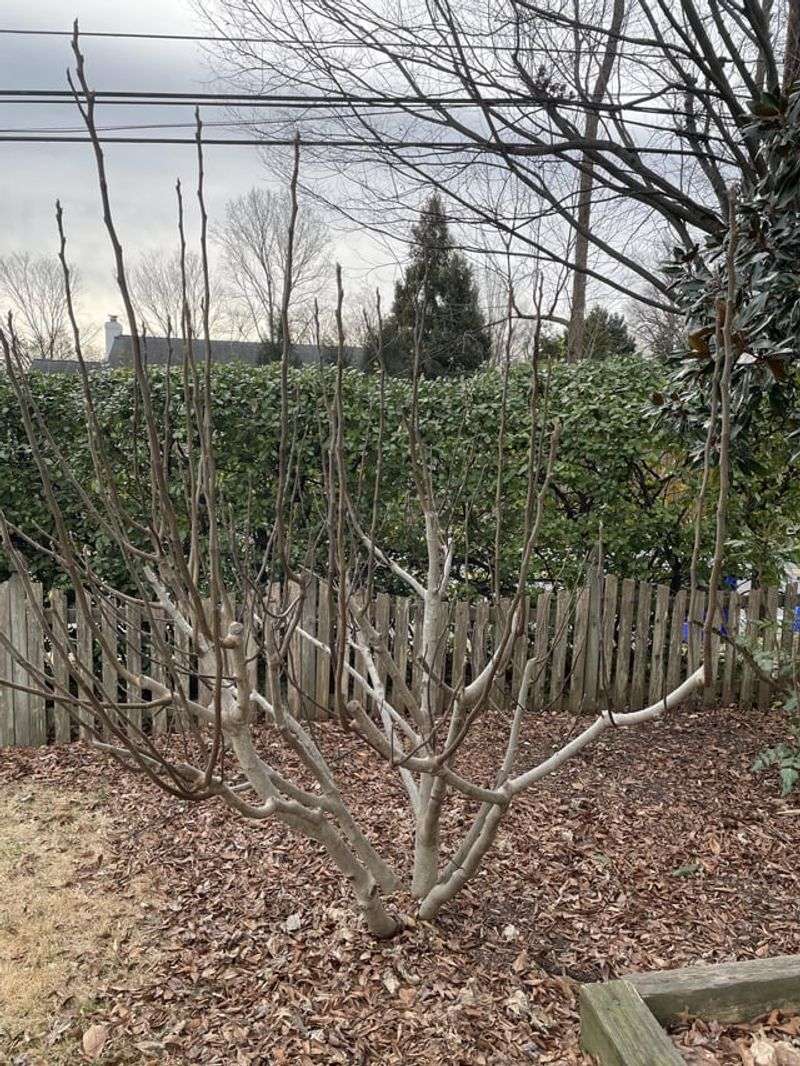
Ever stood on tiptoe while birds feast on the ripest figs at the very top of your tree?
Figs can easily reach fifteen feet or more in warm climates, putting the best fruit far out of reach.
Lowering the height is one of my favorite winter chores, because it makes summer picking so much easier. The trick is cutting tall branches back to a healthy side limb that points outward, not upward.
Arborists call this a reduction cut, and it guides energy into the side branch you chose to keep. That lower limb then becomes the new leader, filling with leaves and fruiting shoots at a friendly height.
Simply chopping the top off a long branch usually backfires, since a cluster of upright shoots sprouts below the cut. Those crowded shoots shade one another and leave you with more pruning work the following winter.
Many home growers in the Southeast keep their trees around eight to ten feet tall for easy harvesting.
You can drape bird netting over a shorter tree too, which helps protect those sugary late-summer figs.
Spread big height reductions over two or three winters if your tree has grown into a giant. Gradual changes keep the plant calm and help it keep producing figs while you reshape it.
I believe a shorter, wider fig is simply more fun, since every branch becomes a snack within reach. Your ladder can stay in the shed, and your morning harvest becomes a relaxed stroll with a bowl.
5. Cut Out Crossing Fig Branches That Rub Together
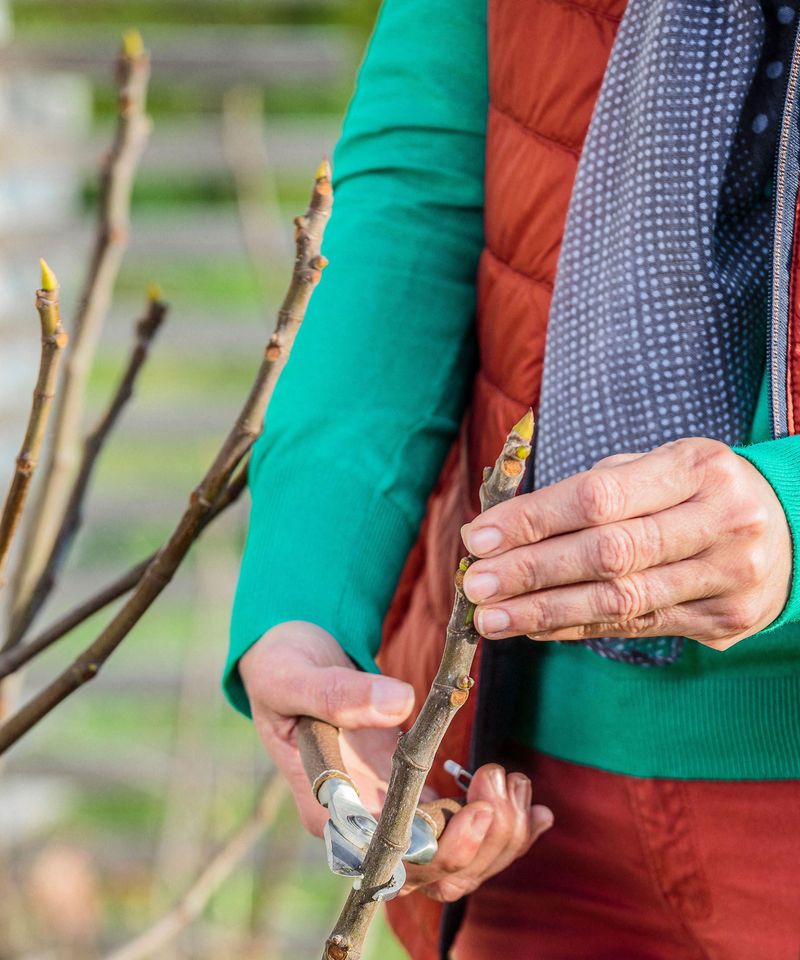
Two fig branches rubbing together in the wind sound harmless, yet they slowly sand away each other’s bark. Those raw spots open the door to decay, and fig bark is thin and easily bruised.
You might notice crossing limbs most easily in winter, when the smooth gray branches stand out against the sky.
Look for worn, shiny patches where two stems keep competing for the same small pocket of space.
Choose the weaker or more awkwardly placed branch, then remove it back to its point of origin. Keep the stronger limb that grows outward, since outward branches capture more light for ripening fruit.
Personally, I think of this cut as settling a quarrel between siblings who keep bumping elbows. One branch gets the room it needs, and the whole tree looks calmer and more balanced afterward.
Sharp clean bypass pruners make smoother cuts than dull blades, which can crush the soft fig wood. Wiping blades with a household disinfectant between trees helps reduce the spread of disease around your yard.
Crossing branches in the center also trap humid air, which Georgia gardeners know plenty about by July.
Fewer tangles mean leaves dry faster after summer storms, giving fig rust a harder time getting started.
Do this cut during the dormant season so you can see the structure without leaves in the way. Your reward arrives in summer, when unblemished branches carry figs that ripen evenly in the open air.
6. Skip The Flush Cut Against The Fig Trunk
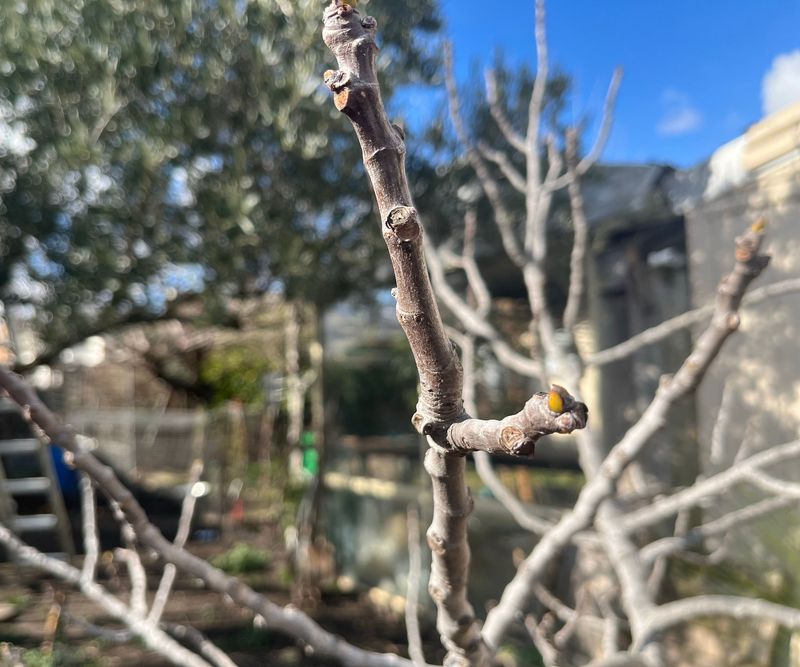
Cutting a branch perfectly flat against the trunk looks neat, but your fig tree quietly pays for it. That tidy-looking flush cut slices into the branch collar, the slightly swollen ring at the branch base.
Tree scientists learned that this collar holds special tissue that helps seal off wounds and slow decay.
Researcher Alex Shigo studied this process for decades, and his work changed how arborists prune today.
When the collar gets removed, the wound stays open longer and rot can creep into the main trunk. A weakened trunk spends energy resisting decay instead of pushing out healthy shoots loaded with summer figs.
Instead, look for the faint bump or wrinkled ridge where the branch joins the larger limb. Make your cut just outside that ridge, angled slightly away from the trunk, without leaving a long stub.
Heavy branches deserve the three-cut method, which stops the bark from tearing down the trunk as limbs fall.
An undercut and a second cut farther out remove the weight before your final clean cut at the collar.
I have to admit, I used to paint pruning wounds with sealer, thinking it acted like a bandage. Most extension experts now say wound dressings are unnecessary, because a proper cut lets the tree heal itself.
Figs grow fast, so a good cut usually forms a neat ring of new tissue within a season or two. Watching that donut-shaped callus close over the wound is oddly satisfying for any curious backyard gardener.
7. Avoid Chopping Your Fig Tree Down To Bare Stumps
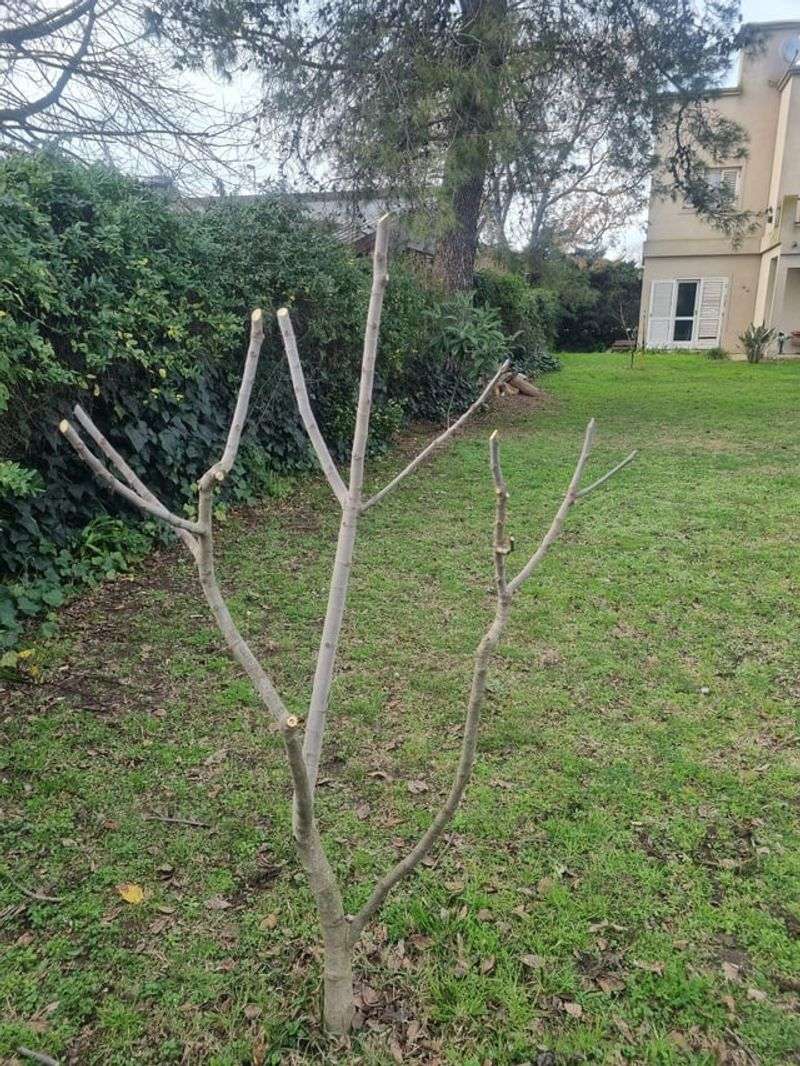
Few sights make a fig lover wince like a backyard tree sawed down to knee-high stumps in February.
The tree usually survives, yet that dramatic haircut often costs you most of the coming summer harvest.
Heavy pruning sends figs into a growth frenzy, pushing out long leafy shoots instead of fruit. Those shoots may bear some figs late in the season, but many will not ripen before autumn chills arrive.
Many fruit specialists suggest removing no more than about a quarter to a third of the canopy each year. That moderate approach keeps enough leaves to feed the roots and enough wood to carry fruit.
An overgrown tree can still be reshaped, just more slowly than an impatient gardener might like. Spread the work over three winters, taking out a few of the oldest or tallest trunks each time.
Personally, I treat this kind of renovation like a slow home makeover instead of a weekend demolition. You keep picking figs during the project, which makes the patient route far easier to stick with.
Severe cuts make sense mainly after a brutal freeze, when the tops are already badly damaged.
Even then, wait for spring buds to show where living wood ends before you reach for the saw.
A heavily cut fig can also lose the shade that protected its bark from strong afternoon sun. Gentle yearly trims keep that leafy umbrella in place while steering the tree toward steady harvests.
8. Avoid Stripping Away All Of Last Year’s Fig Wood
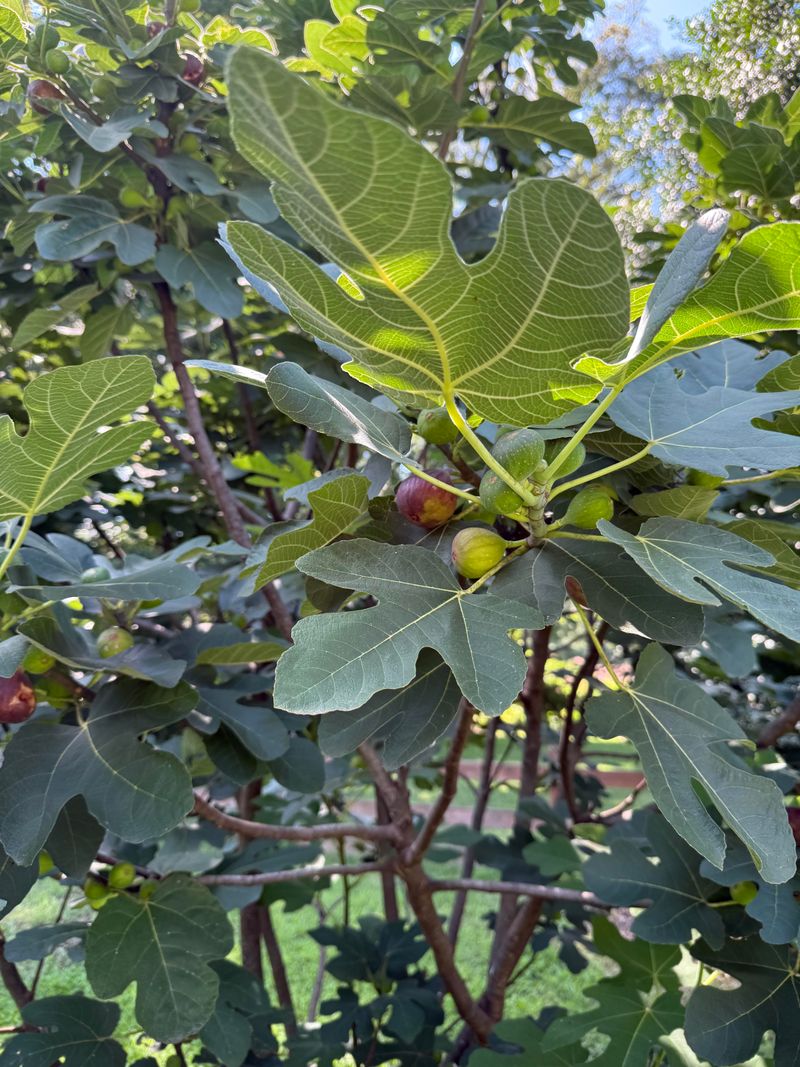
Some of the earliest figs of summer start forming on last year’s branches before winter even ends. Growers call this early crop breba, and it usually ripens in late spring or early summer.
Cut back every one of those older shoots, and you remove the whole early crop in one afternoon.
I can’t imagine waiting all spring for those first sweet bites, only to find bare branches instead.
Not every variety makes a big breba crop, so knowing your tree helps you prune with confidence. Celeste produces few brebas in most years, while Brown Turkey often sets a modest early crop.
Varieties known for strong breba crops include Desert King, which is grown more often in cooler regions. For those trees, heavy winter pruning trades early figs for leafy growth you could have skipped.
A balanced plan works best for most backyard trees across Georgia and the rest of the Southeast. Keep plenty of healthy one-year-old shoots, and thin or shorten only the ones that crowd the canopy.
Last year’s wood is easy to spot because it usually looks smoother and lighter than older bark. Small green buds near the shoot tips in late winter may become your first figs of the year.
Leaving those shoots also keeps the tree fuller, which means more leaves feeding the later main crop.
With a little restraint, you could happily enjoy fresh figs from early summer well into September.