Illegal Backyard Crops Illinois Gardeners Are Planting Without Knowing The Risk This Spring
A shrub that federal conservation agencies once promoted as a living fence is now illegal to plant in Illinois. Farmers set it along fields decades ago, and today crews spend weekends pulling it out of forests.
Our state keeps a written list of plants that nobody may sell or plant without a special permit. One more plant falls under drug laws, even when its flowers look sweet enough for grandma’s porch.
I am surprised how often these troublemakers show up at friendly plant swaps and neighborhood seed shares. You might notice one already growing near your fence, planted by a bird that snacked on berries.
Spring is when we fill carts and trade cuttings, so this is the perfect moment to check. How many of these sneaky plants are hiding in your Illinois yard right now, waiting for you to notice?
1. Tree of Heaven
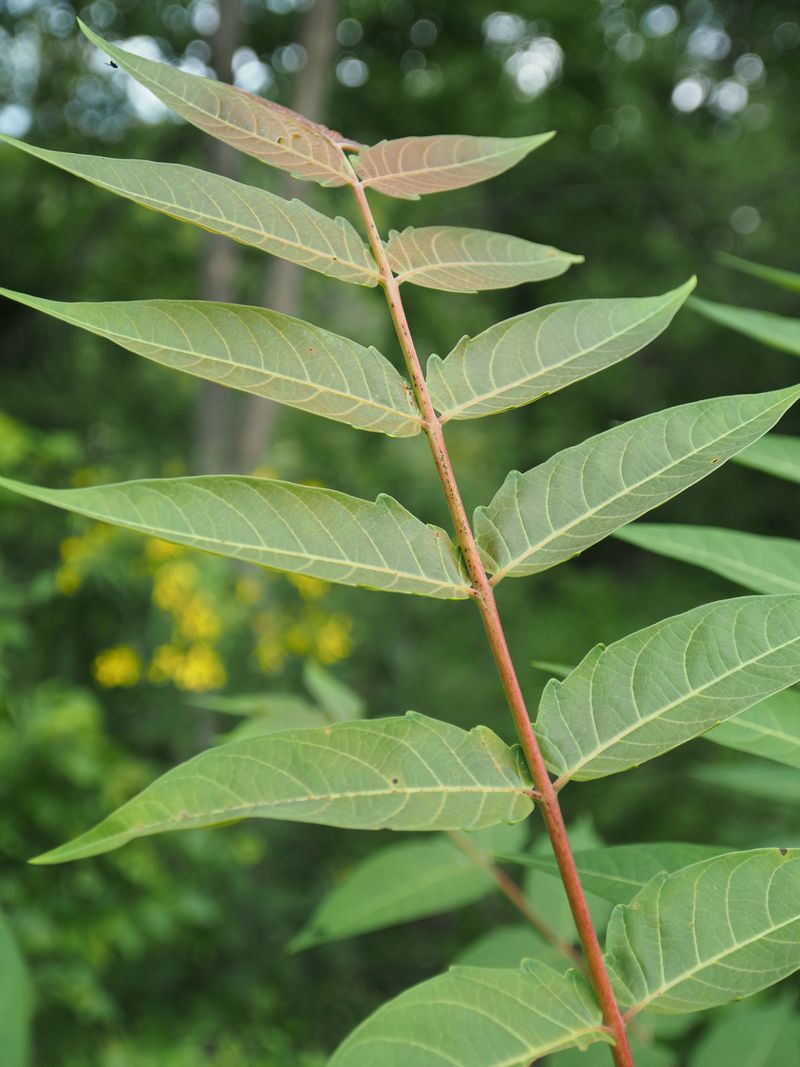
Crush a leaf from this tree and the smell hits you, somewhere between rancid peanut butter and burnt popcorn. That odd scent is a quick way to spot Tree of Heaven, a fast-growing import that Illinois now regulates.
Ailanthus altissima arrived from China in the 1700s as a hardy shade tree. Since October 2025 it has been on the Illinois Exotic Weeds Act list, so selling or planting it without a permit is unlawful.
Trees already standing do not have to come down, though the state would love to see them go.
I understand the appeal, because a seedling can shoot up several feet in one season. It also grows in cracked pavement and compacted soil where little else will.
That toughness is the problem. One female tree drops thousands of winged seeds, and its roots send up suckers that form dense thickets.
It is also a favorite host of the spotted lanternfly, an invasive insect that harms grapes and orchard trees.
Many people mistake it for sumac, but the leaves tell the story. Tree of Heaven leaflets have smooth edges with one or two small teeth near the base, while sumac leaflets are toothed all the way along.
Pulling a big tree backfires, since disturbed roots send up even more shoots. Seedlings pull easily in damp spring soil, but for thicker stems ask your extension office about cut-stump treatments.
For legal shade, try Kentucky coffeetree or hackberry. Staghorn sumac gives the same tropical look, with fuzzy red fruit that feeds winter birds.
2. Opium Poppy
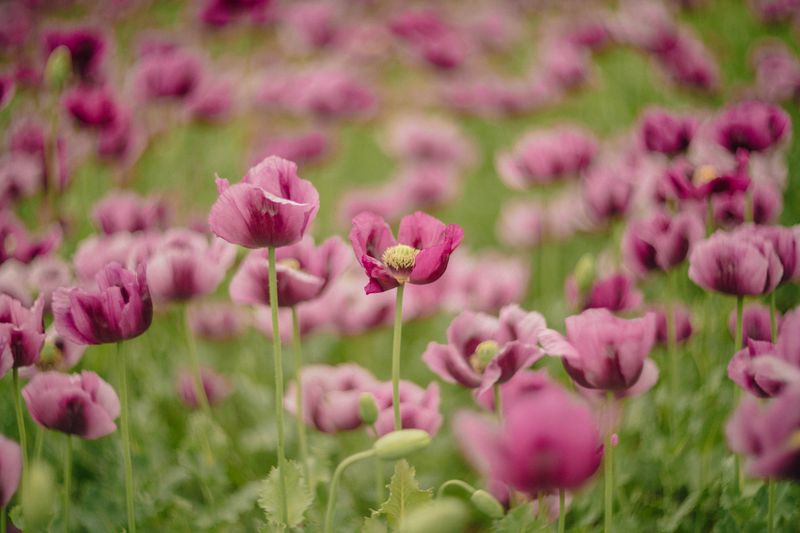
Silky petals the color of a ripe plum make the breadseed poppy one of the prettiest flowers in seed catalogs. Gardeners often buy it under friendly names like breadseed poppy, without guessing the complicated legal history behind it.
Its scientific name is Papaver somniferum, and federal law defines it as the opium poppy no matter the label. Selling the seeds is legal, since they turn up on bagels and lemon muffins in bakeries everywhere.
Growing the plant is prohibited under federal drug law, which treats the living plant as a controlled substance source. Prosecutions of ordinary flower gardeners are rare, yet the risk rises quickly if anyone scores or harvests the pods.
I love poppies, so I understand why a packet labeled heirloom or peony-flowered feels like harmless fun. Still, a showy patch near the sidewalk can draw unwanted attention, especially once those blue-green seed pods swell.
This hardy annual loves cool weather, and many growers sow it directly on bare soil in very early spring. Seedlings resent transplanting, which is why so many packets end up scattered across garden beds instead of pots.
If you want that papery poppy look without the worry, consider corn poppy or California poppy instead. Corn poppy, also called Flanders poppy, self-sows freely, so plant it where volunteers will not crowd your vegetables.
Native lovers can try wild columbine or prairie smoke, which bring nodding blooms and feed early pollinators nicely. You keep the charm of delicate spring flowers and skip the nagging question of what a passerby might think.
3. Kudzu
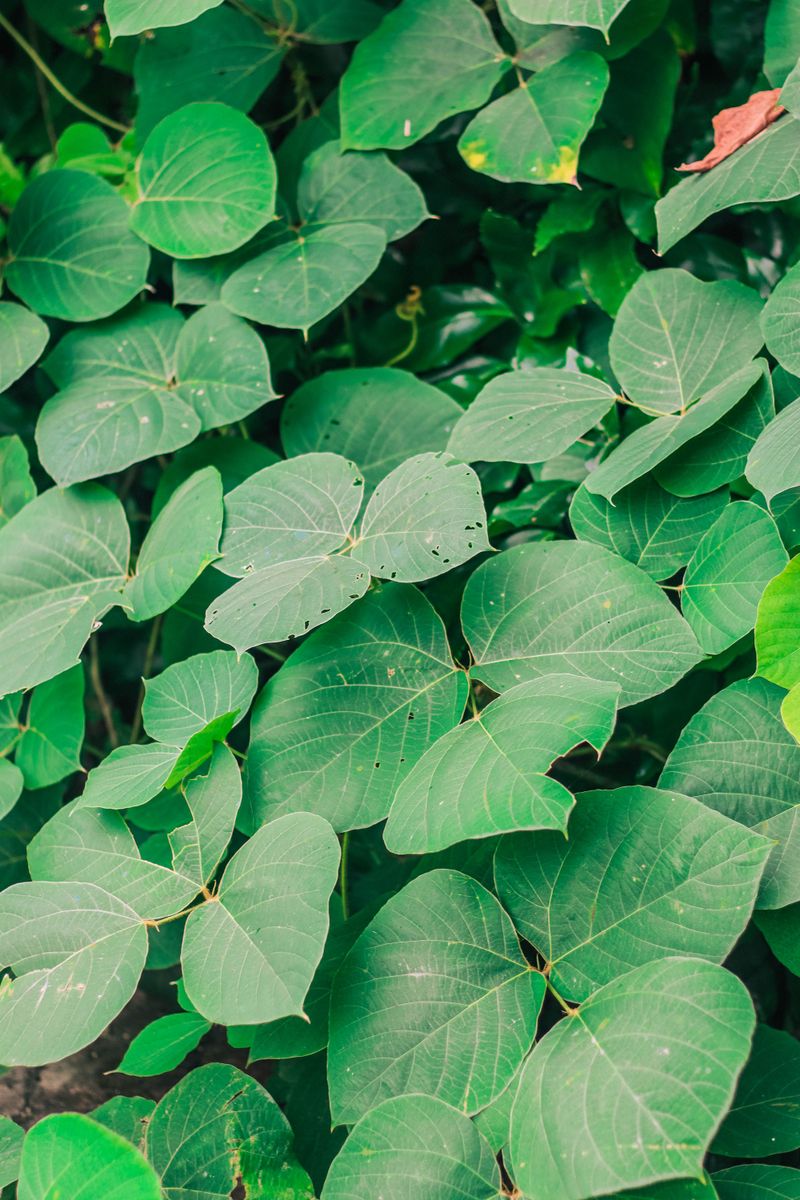
Southern folks joke that you should close your windows at night so kudzu cannot sneak inside. During peak summer heat, this vine can stretch close to a foot in a single day, which sounds unbelievable.
Kudzu, Pueraria montana, is listed under both the Illinois Exotic Weed Act and the state noxious weed law. Selling or planting it without a permit is unlawful, and landowners may be required to control existing patches.
So why would anyone plant it on purpose in a backyard full of tomatoes and zinnias? Some gardeners order seeds online hoping for fast shade over a pergola or a quick cover on bare slopes.
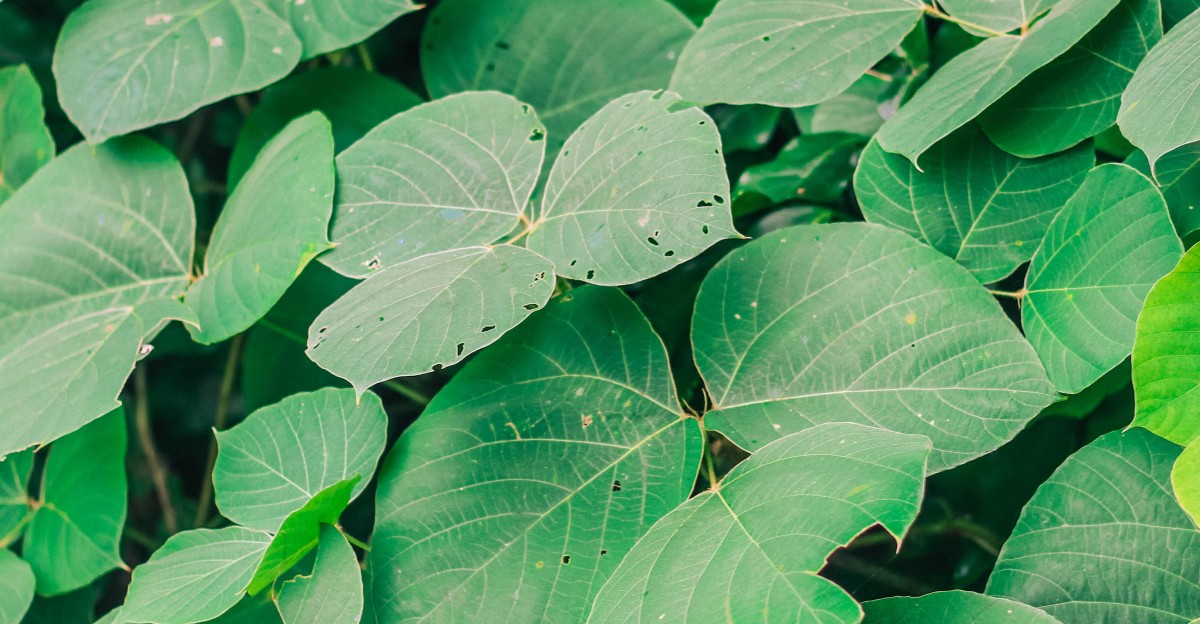
Kudzu climbs over trees and fences, smothering whatever sits underneath with thick layers of three-part leaves. Its purple flower clusters smell like grape soda in late summer, which honestly makes the vine seem friendly.
Patches already grow in southern counties, and agencies work hard to keep it from creeping farther north. Our colder northern winters slow it down somewhat, but its large starchy roots survive surprisingly well underground.
If you spot a mystery vine with hairy stems and leaflets the size of your hand, report it. Your county extension office can help confirm identification and suggest the safest control steps for your property.
For legal arbor shade, try native Virginia creeper or wild grape trained along sturdy wires. Either vine covers a pergola within a few seasons and gives birds plenty of berries to enjoy.
4. Purple Loosestrife
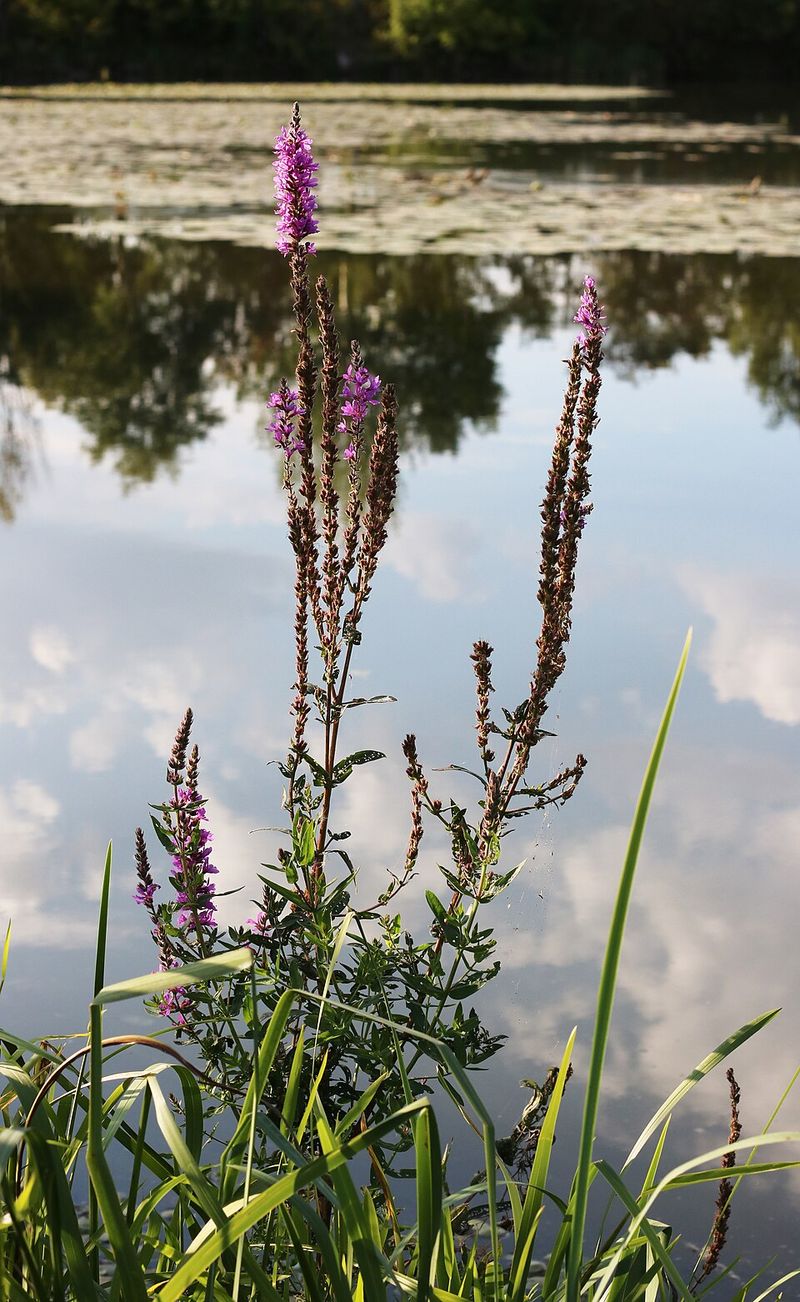
One mature purple loosestrife plant can release more than two million tiny seeds in a single season. That number made me look twice at every magenta spike I passed along roadside ditches last summer.
Lythrum salicaria arrived from Europe in the 1800s, partly as a garden flower and partly in ship ballast. It now crowds cattails and sedges out of wetlands, leaving ducks and muskrats with poorer food and shelter.
The plant appears on the Illinois Exotic Weed Act list. Nurseries once sold cultivars marketed as sterile, but research showed they can cross with wild plants and set seed.
You might find an old clump by a backyard pond, planted years ago by a previous homeowner. Square woody stems and tall spikes of pink-purple flowers with wrinkled petals help you confirm the identity.
Spring is a smart time to dig young plants, because the soil is soft and roots release easily. Bag every piece, including root crowns, since fragments can sprout again if left lying on wet ground.
Larger infestations often need help from professionals, and some areas use tiny leaf beetles approved for biological control. Those Galerucella beetles feed mostly on loosestrife, making them a careful and well-studied option for big wetlands.
To keep that purple glow by your pond, plant blue vervain or swamp milkweed instead this season. Both natives love moist soil and pull in butterflies, so your pond edge stays lively and lawful.
5. Multiflora Rose
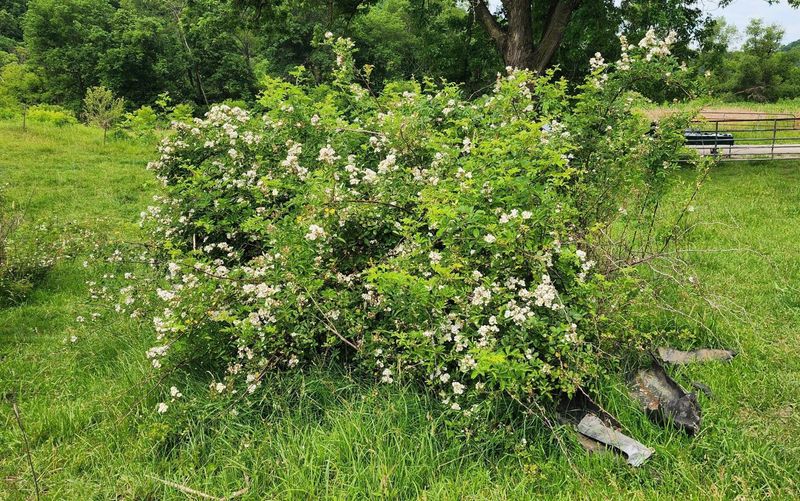
Back in the 1930s, the federal Soil Conservation Service encouraged farmers to plant multiflora rose as living fences. Cattle stayed put and soil stayed anchored, but nobody guessed the thorny hedge would march into forests and pastures.
Fast forward to today, and the shrub is listed under the Illinois Exotic Weed Act, banning unpermitted planting. A single plant can produce up to half a million seeds yearly, and birds carry them far and wide.
I find it sneaky because it looks so innocent in late spring, covered in clusters of small white blooms. The scent is sweet and the arching canes look romantic, which explains why people dig up wild ones.
To identify it, check the base of each leaf stalk for a feathery, fringed stipule that resembles tiny eyelashes. Most native roses have smooth or barely toothed stipules, so this little detail settles many backyard debates.
Removal takes patience and thick leather gloves, because the curved prickles grab your sleeves like stubborn fishhooks. Young plants pull out fairly easily after spring rains, while older thickets usually need cutting and repeated follow-up.
Keep watching the cleared spot for several years, since seeds stored in the soil can sprout long after removal. Mowing seedlings regularly helps weaken them, especially in open lawn edges where the shrub keeps trying to return.
For romantic roses with local roots, try prairie rose or Carolina rose along a sunny fence line. Pollinators adore the pink blossoms, and the red hips give winter birds a welcome snack after snowfall.
6. Common Buckthorn
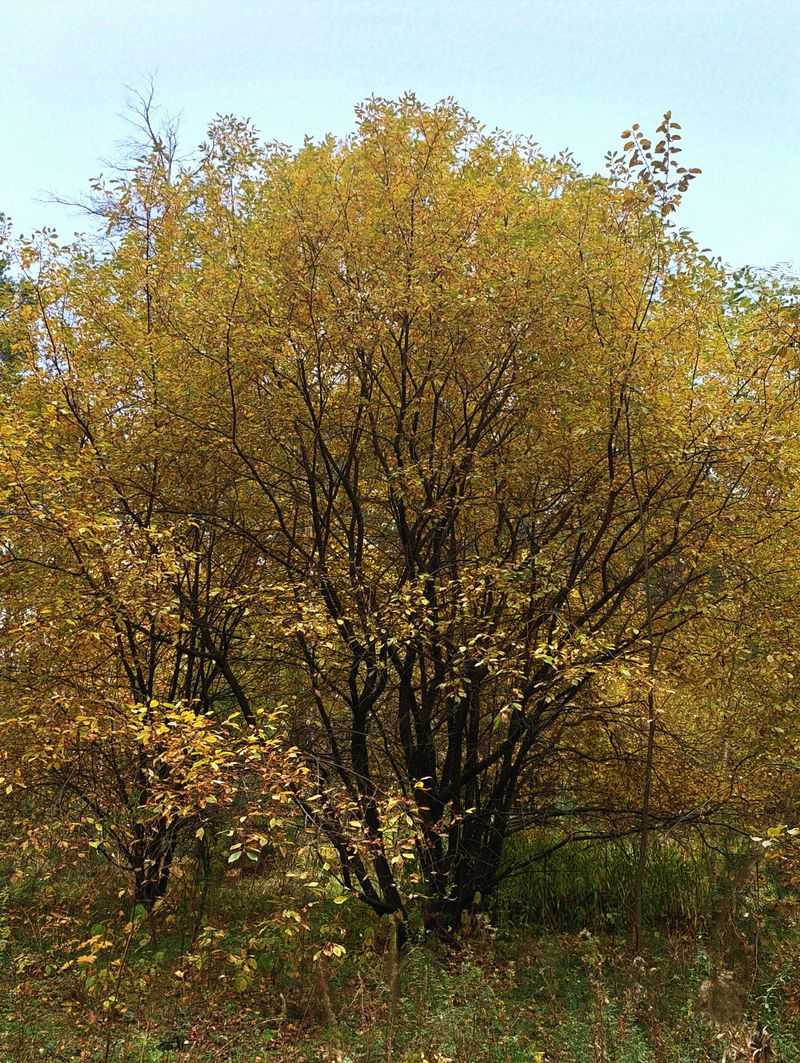
Scrape a buckthorn twig with your thumbnail and a bright orange inner bark peeks out like a hidden surprise. That quick test helps many homeowners discover the leafy hedge along their fence is not as innocent as it looks.
Common buckthorn, Rhamnus cathartica, came from Europe as a hedge plant and quickly escaped into woods and yards. It appears on the Illinois Exotic Weed Act list along with glossy buckthorn, so planting it requires a permit.
The shrub leafs out early and holds green leaves well into late fall, shading out wildflowers beneath it. Its black berries act as a laxative for birds, which spreads seeds quickly across neighborhoods and nature preserves.
I honestly wince when I see it sold at garage plant sales labeled simply as a privacy shrub. Look for a small thorn at the tip of many twigs and leaves with curved veins pointing forward.
Small seedlings pull out easily in spring when the ground is moist, so grab them while they are young. Bigger stems can be removed with a weed wrench, a tool that levers roots from the soil with little digging.
Cut stumps resprout eagerly, so land managers often treat them with herbicide or cover them with dark plastic bags. Follow product labels carefully, and ask your extension office which method suits your yard and your comfort level.
Gray dogwood and American hazelnut make lovely native replacements, giving you privacy and offering welcome food for local wildlife. Plant them soon after removal so bare ground fills with friendly roots before buckthorn seedlings move back in.
7. Amur Honeysuckle
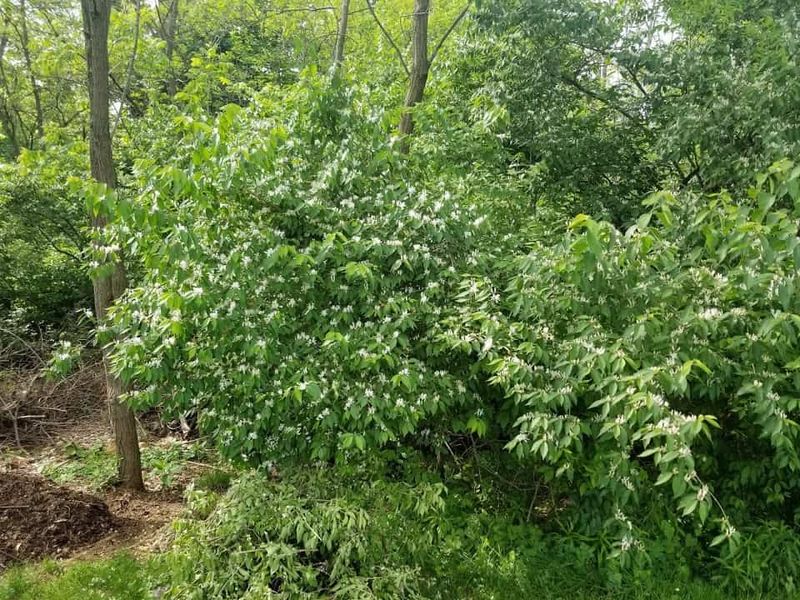
Walk through a woodland in early April and the first green haze you notice is often Amur honeysuckle leafing out. It beats native shrubs by weeks, which sounds charming until you learn what that head start costs the forest floor.
Lonicera maackii forms dense thickets up to about twenty feet tall, casting shade that starves spring wildflowers of light. Morrow’s and Tatarian honeysuckles share the same habits, and all of them appear on the state exotic weed list.
Many homeowners inherited these shrubs from older landscapes, when nurseries sold them for hedges and wildlife plantings. Those red berries look festive in autumn, yet they offer birds less fat than many native fruits.
The easiest identification trick involves snapping a small stem and peeking at the center of the cut branch. Invasive bush honeysuckles usually have a hollow center with tan pith, while native honeysuckles typically stay solid and white.
Spring makes spotting easy, because these shrubs glow green while most of the woods still look bare and brown. Pull small ones by hand, and use a weed wrench or saw for larger stems near your fence line.
Like buckthorn, cut stumps resprout readily, so plan on treating them or cutting new shoots several times each year. Keep cut branches with berries out of compost piles, since birds and squirrels can scatter those seeds again.
For a cheerful replacement, try ninebark or spicebush, both native shrubs that handle partial shade with ease. Spicebush even hosts the spicebush swallowtail caterpillar, a fun little critter with fake eyespots that kids adore.
8. Japanese Honeysuckle
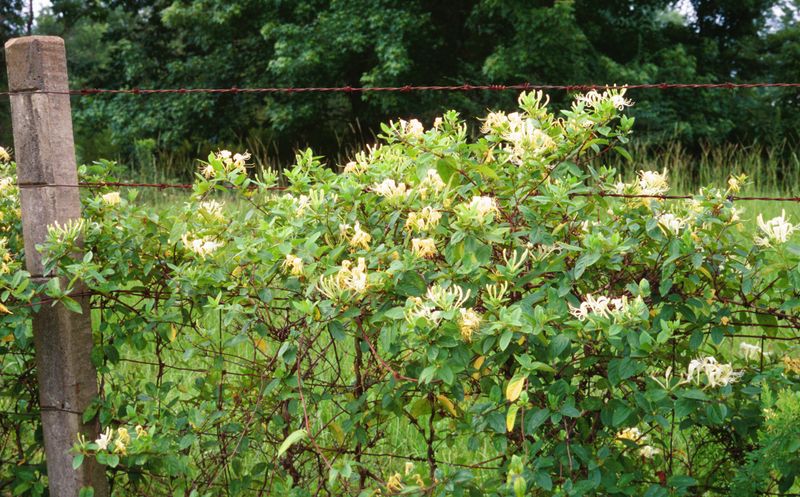
Few smells say early summer like honeysuckle blossoms, and plenty of us sipped nectar from them as kids. Unfortunately, the classic white-and-yellow vine many people remember is often Japanese honeysuckle, a regulated invasive species.
Lonicera japonica sits on the state exotic weed list, so planting it without a permit breaks the law. Some catalogs still ship it under fancy cultivar names, which makes it easy to order by accident.
The vine twines tightly around young trees and shrubs, sometimes girdling them as stems thicken over the years. It also holds leaves into winter in milder spots, giving it extra growing time that natives lack.
Flowers open white and fade to yellow, usually in pairs, and later turn into small glossy black berries. Birds eat those berries and drop seeds along woodland edges, where new vines root wherever stems touch soil.
I suggest checking fences and old arbors this spring, before the vines leaf out fully and hide everything. Pull runners gently when soil is damp, following each stem back to its rooted spots before tugging hard.
Bag the pulled vines or let them dry on pavement, since stem pieces resting on soil can reroot. Repeat checks through summer, because tiny missed runners often reappear surprisingly quickly after a few warm rains.
Trumpet honeysuckle, Lonicera sempervirens, is a native beauty with red tubular flowers that hummingbirds visit eagerly. It climbs politely on a trellis and gives you honeysuckle charm without any legal headaches attached.