7 Tropical Plants Floridians Lose to the First Cold Snap (and How to Protect Them This Winter)
Back in January 2010, a cold wave lasted nearly two weeks and browned gardens across South Florida’s usually mild neighborhoods. Even stunned iguanas dropped from trees that winter, which tells you how strange that weather felt for the tropics.
Many tropical plants start showing stress once nights slip below about fifty degrees, long before any frost appears. Leaves can turn black or mushy overnight, and the damage often shows up a day or two later.
I still remember walking outside after one chilly night and finding my favorite shrub drooping like wet laundry. You might be surprised how much a simple sheet and a little planning can change that sad morning scene.
Cold snaps here rarely last long, yet a single rough night can undo months of steady summer growth.
So which beloved Florida favorites are most likely to sulk, and what can you do before the forecast turns?
1. Tropical Hibiscus
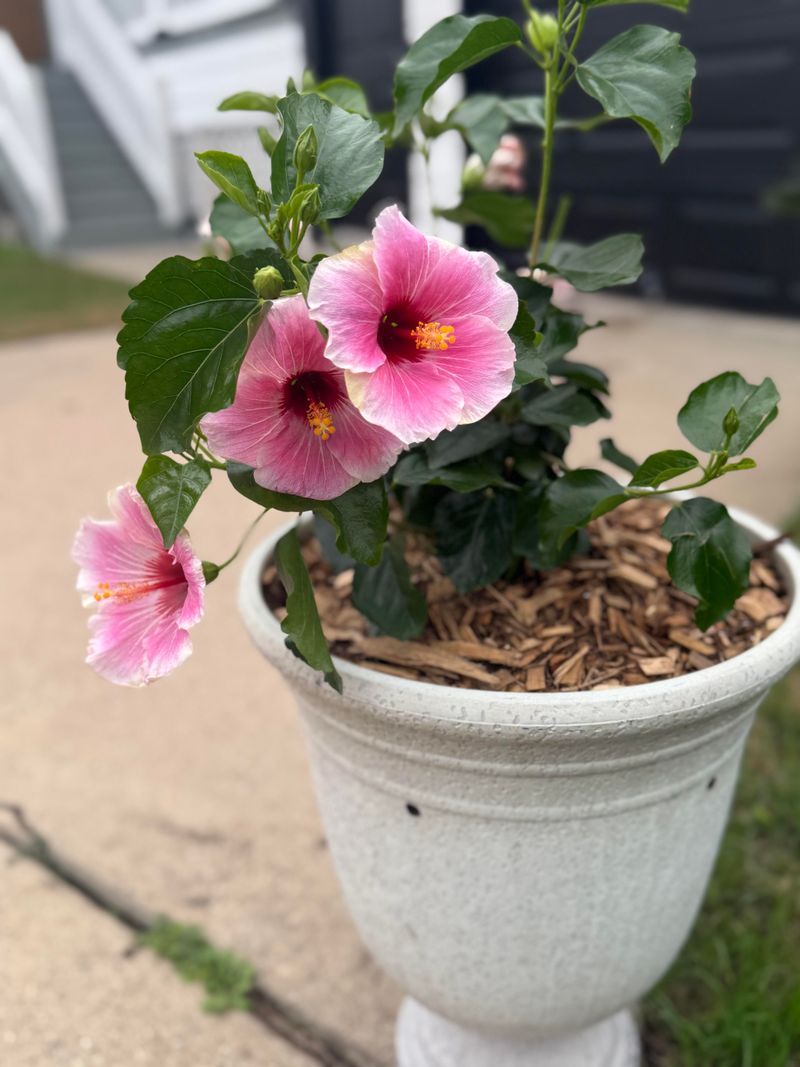
Those dinner-plate blooms on Hibiscus rosa-sinensis look ready for a luau, but the plant sulks at the first chill. Each flower usually lasts just one day, which makes a steady parade of buds feel extra precious in winter.
Growth slows once temperatures stay under fifty degrees, and a freeze can brown leaves along with tender stem tips. In my yard, yellow leaves dropping after a cool week usually signal stress rather than a serious problem.
Before a frost night, water the soil deeply because moist ground holds and releases more warmth than dry ground. Then drape frost cloth or an old bedsheet over the shrub, letting the fabric reach down to the soil.
That ground contact matters, since heat rises from the earth and gets trapped under the cover like a tent. Skip plastic touching the leaves, because it conducts cold straight through and can leave burned patches behind.
Pull the covers off the next morning once temperatures climb, or the plant may overheat under bright sunshine. Potted hibiscus have it easier, since you can roll them into a garage or onto a covered porch.
Hold off on fall pruning, because fresh shoots are softer and more likely to scorch in cold air. Go easy on fertilizer in late fall for the same reason, letting the shrub settle into a slower winter pace.
If damage happens anyway, wait until late winter to trim, so you can see which branches stayed green. Scratch the bark with a fingernail, and bright green tissue underneath means that stem still has plenty of life.
2. Plumeria
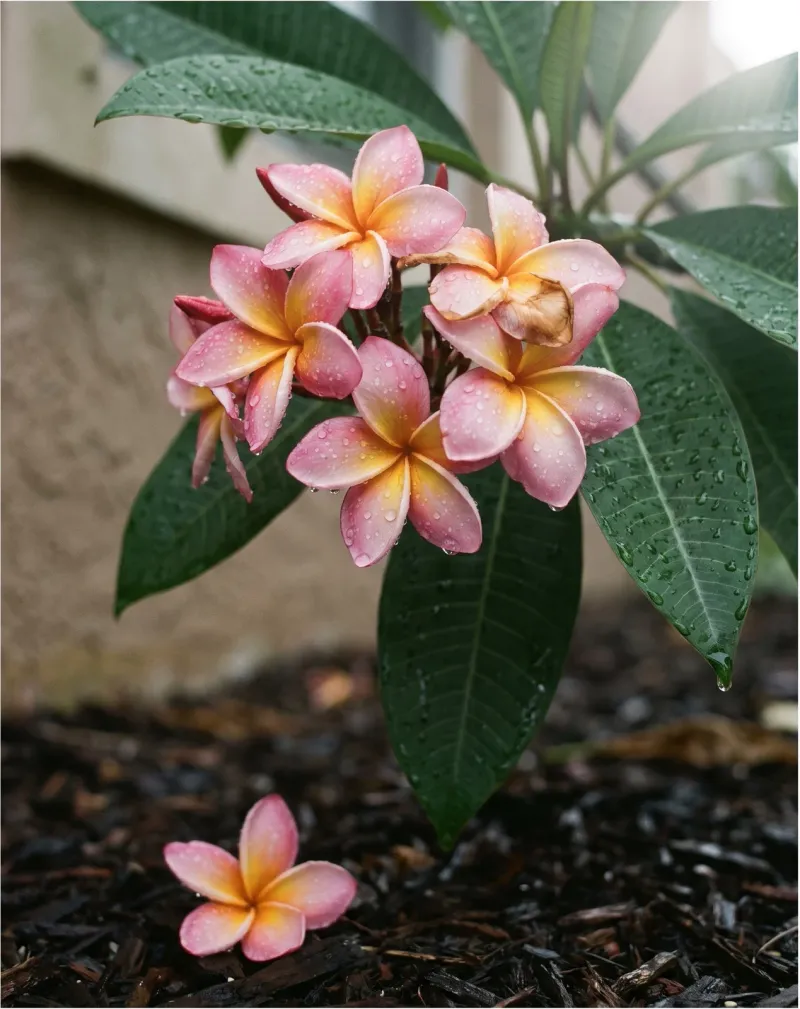
Those pinwheel flowers smell like a Hawaiian lei, and one warm evening whiff can make you forget winter. Plumeria, also called frangipani, has thick sausage-like branches that store water but offer very little frost protection.
Many plumerias drop their leaves and rest through the cooler months, so bare stems in winter are normal. Trouble starts when frost touches the branch tips, turning them soft and dark over the following days.
Wet soil combined with cold air is the real danger, since chilly, soggy roots invite rot fairly quickly. I stop watering my dormant plumerias once the leaves fall, and they handle the dry spell just fine.
Potted plants are the easiest to protect, because you can move them into a garage when nights hit forty. They need no light while dormant, so a dry corner beside the lawn mower works surprisingly well.
In-ground trees need a cover of frost cloth that reaches the soil when a freeze shows up in the forecast. Old-fashioned incandescent holiday lights strung under the fabric add gentle warmth, while newer LED strands give off very little heat.
Keep any bulbs or cords from touching the cloth directly, and use outdoor-rated cords for safety. Taller trees are tough to wrap, so focus your fabric on younger plants and the lower branches you can reach.
Wait for warm spring weather before trimming, then cut back mushy tips to firm, healthy wood with clean pruners. Fun fact: those healthy cuttings can root once they callus, so a cold snap might gift you new plants.
3. Bougainvillea
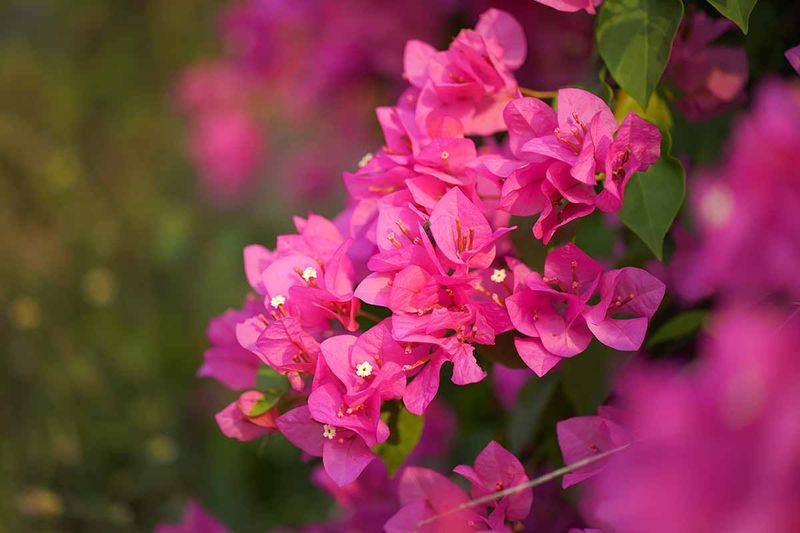
Those hot pink splashes on bougainvillea are not petals at all, but papery bracts hugging tiny white flowers inside. I love how this thorny show-off looks tough as nails, yet a hard freeze can knock it right back.
Bougainvillea grows best in USDA zones 9b through 11, so central and southern gardens see the fewest problems. Light frost usually scorches the leaves, while longer freezes can push damage down into the woody stems.
Losing leaves in winter does not mean the vine is finished, since well-established roots often send up new growth. That root system is your main concern, so a few inches of mulch around the base helps a lot.
Keep that mulch pulled back a couple of inches from the trunk, which helps prevent moisture-related rot. Water lightly before a cold night if the soil is dry, but avoid soaking a plant that prefers lean conditions.
Covering a sprawling vine takes some creativity, so stakes or a simple frame keep frost cloth off the thorns. Wear thick gloves while you work, because those hooked spines grab fabric and skin with equal enthusiasm.
Container plants are simpler, since you can wheel them into a bright garage or sunroom until the chill passes. Bring them back outside quickly once temperatures rebound, because bougainvillea craves strong sunshine to keep blooming.
Resist the urge to hack off brown growth right away, as it shields the stems underneath from later cold. Once spring warmth returns, prune back to green wood, and you will likely see fresh color by early summer.
4. Mandevilla
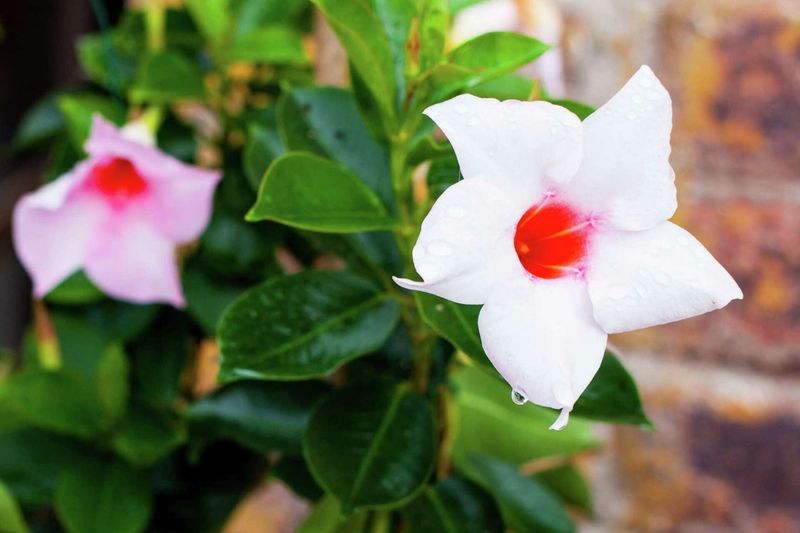
Hummingbirds treat mandevilla like a roadside snack stand, zipping between those glossy pink trumpets all summer long. Sadly, this Brazilian climber has a thin skin when it comes to cold, and chilly nights show it fast.
Mandevilla thrives outdoors year-round in zones 10 and 11, while cooler areas treat it as a seasonal vine. Growth stalls when nights drop into the forties, and frost quickly turns the leaves limp and brown.
North and central Florida gardeners often have better luck growing this beauty in a large pot. Before nights fall below fifty, slide the container indoors near a sunny window and cut back on watering.
Check the leaves for mealybugs and spider mites first, since you do not want hitchhikers moving onto your houseplants. Some yellowing indoors is normal, so do not panic if a few older leaves drop during the first week.
For vines already climbing a trellis, unclip a few stems and lay frost cloth over the whole framework. A thick layer of mulch around the base helps protect the roots, which matter most for spring recovery.
Watch out for the milky sap when trimming, because it can irritate sensitive skin on your hands and arms. A pair of garden gloves solves that problem, and long sleeves help if the vine is especially tangled.
If frost does reach your vine, leave the damaged growth in place until the threat of cold has passed. Then trim back to healthy stems, and new shoots will often scramble up the trellis once warm weather settles in.
5. Foxtail Palm

Run your hand along a foxtail frond and you will understand the name, since the leaflets bristle in every direction. This Australian native, Wodyetia bifurcata, was only described by scientists in 1983, which makes it fairly new to gardens.
It grows quickly to around twenty or thirty feet, with a smooth gray trunk and a tidy green crownshaft. Old fronds fall away on their own, which I appreciate every time I skip dragging out a ladder.
Foxtails are rated for zones 10 and 11, so they handle South Florida far better than northern counties. Temperatures near freezing can bronze the fronds, and readings in the upper twenties may cause serious harm.
The bud at the top is the palm’s one growing point, so protecting it matters more than saving leaves. Palms cannot sprout new trunks from below like shrubs can, which makes that single bud especially precious.
Young palms are easy to wrap, so cover them with frost cloth that reaches the ground on cold nights. Watering deeply a day ahead helps the soil hold warmth, giving roots a little extra comfort overnight.
Taller specimens are tricky, but wrapping the trunk and lower fronds with burlap or frost cloth still offers some help. For new plantings in borderline areas, a spot near a south-facing wall soaks up daytime heat nicely.
After a freeze, leave brown fronds attached until spring, since they shelter the bud from any later chill. Patience pays off here, because a palm with a healthy center can push out fresh green fronds by summer.
6. Croton
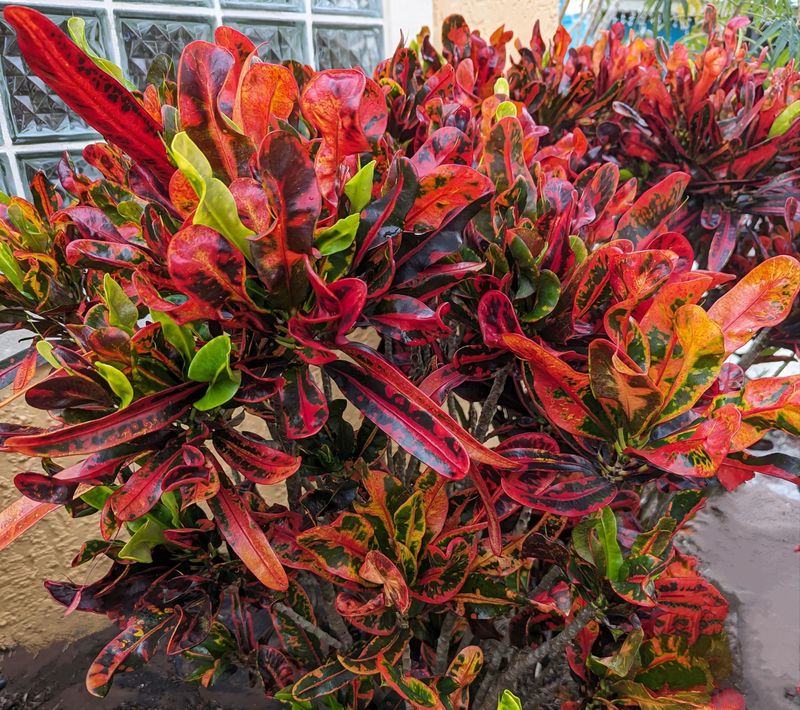
Crotons look like someone spilled a sunset across their leaves, with splashes of gold and fiery red. I find it funny that such bold, flashy foliage belongs to a shrub that pouts the moment nights get chilly.
Codiaeum variegatum comes from tropical islands in the western Pacific and Southeast Asia, where cold weather is rare. Leaves can drop or show cold injury once temperatures fall into the low forties, even without any frost.
Frost itself usually browns the foliage down to the woody stems, leaving a sad skeleton behind. Thankfully, crotons are tougher underneath than they look, and many sprout again from lower stems in spring.
Plant them near the house or under tree canopy, because overhead branches trap a surprising amount of warmth. Just make sure they still get several hours of sun, because shady crotons tend to lose their brightest colors.
When cold is forecast, toss a frost cloth or sheet over the shrub and let it touch the ground. Crotons in pots can simply ride out the chill indoors, where they make a striking temporary houseplant.
Handle them with gloves when trimming, because the milky sap can irritate skin and the plant is toxic if eaten. Keep curious pets and toddlers away from any cuttings you leave lying around after the cleanup.
Wait until new buds appear in spring before cutting back damaged growth, since early pruning invites more cold injury. A light feeding once the weather warms will help your croton bounce back with fresh, colorful leaves.
7. Desert Rose
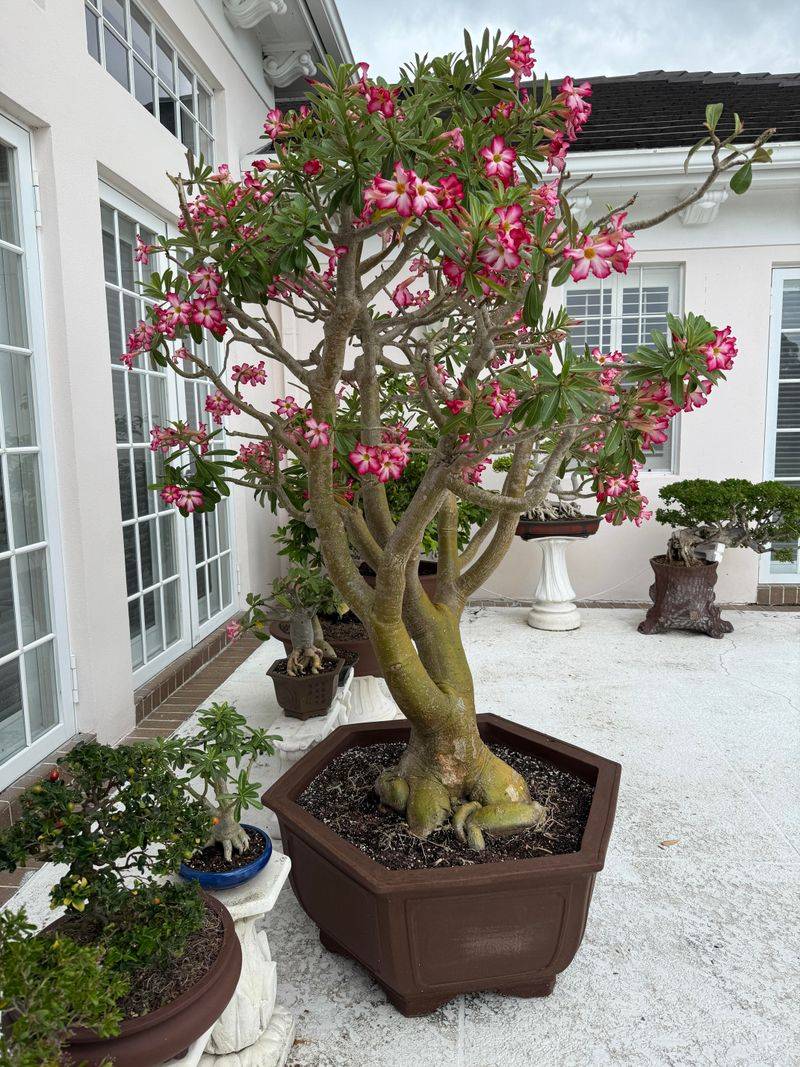
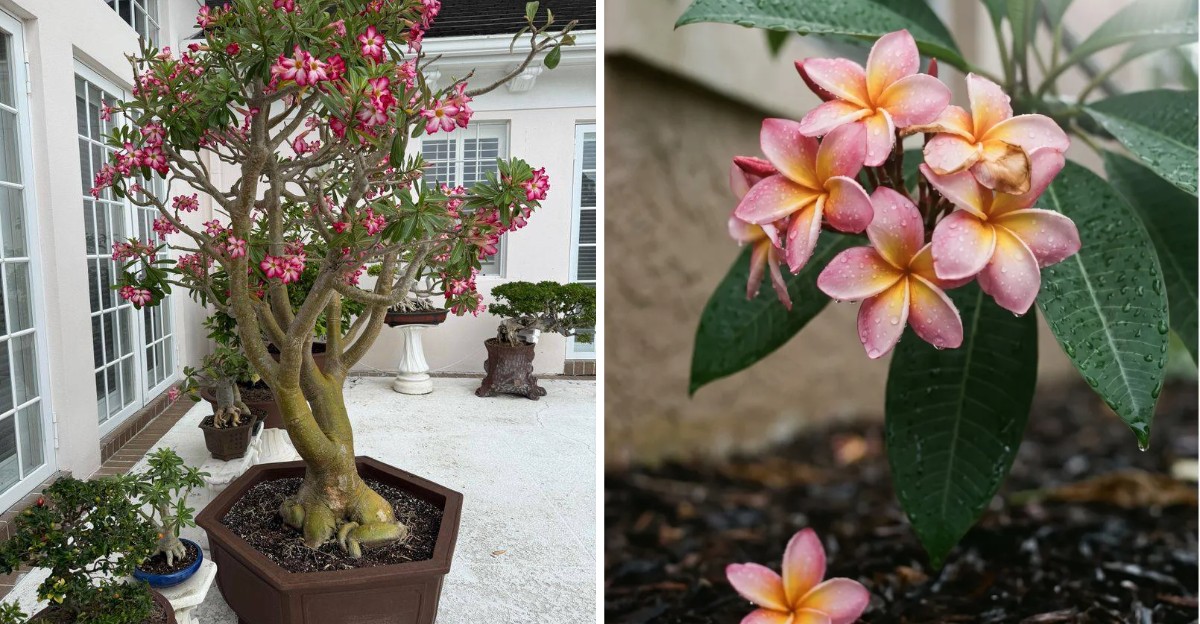
Desert rose looks like a bonsai that swallowed a balloon, thanks to its swollen trunk called a caudex. That chubby base stores water for dry spells, which explains why Adenium obesum handles drought far better than cold.
Native to dry regions of Africa and the Arabian Peninsula, this succulent loves heat and bright sun. Damage can begin once temperatures slip below fifty degrees, especially when the roots are sitting in damp soil.
Cool and wet together is the worst combination, because the caudex can turn soft and rot from within. I treat a squishy trunk as a warning sign, and I check mine carefully after every chilly rain.
Most gardeners outside the warmest coastal areas grow desert rose in pots, which makes winter moves much simpler. Bring containers inside before nights stay in the low fifties, and choose your sunniest window for the visit.
Leaves will likely yellow and fall as the plant slips into its winter rest, and that is perfectly normal. Water sparingly during dormancy, giving just a small drink if the caudex starts looking wrinkled or thin.
Fast-draining cactus mix and a pot with good holes make a huge difference during these cooler months. Keep the milky sap off your skin and away from pets, since every part of this plant is toxic.
Once spring nights stay comfortably warm, move the pot back outdoors gradually so the leaves avoid sunburn. Resume regular watering when new growth appears, and those bright trumpet blooms usually return before you know it.