Hardy Garden Mums Or Florist Mums And Which Ones Make It Through North Carolina Winters

Not all mums sold each fall are actually built to survive winter, and the confusion between two very different categories leaves plenty of North Carolina gardeners disappointed when their supposedly perennial mums fail to return the following spring.
Florist mums are typically bred purely for a spectacular, tightly packed bloom display meant to last one season, with little regard for cold tolerance or long-term garden performance.
Hardy garden mums, by contrast, are specifically bred and selected for perennial survival, developing stronger root systems capable of handling North Carolina’s winter conditions when given proper care.
Reading plant tags carefully, rather than assuming all mums behave the same way, makes the real difference between an autumn purchase and a plant that returns for years to come.
Knowing which category a particular mum falls into before planting saves gardeners from the frustrating and preventable disappointment of watching a supposedly hardy plant simply disappear by spring.
1. Florist Mums Are Bred For Indoor Display

That cheerful pot of mums wrapped in shiny foil at the grocery checkout has one main job. It is meant to look amazing on a table, a desk, or a hospital windowsill for a few weeks.
Florist mums are the showgirls of the chrysanthemum world, and they were never trained for life outdoors.
Growers raise these plants in warm greenhouses where light, water, and temperature stay just right.
The goal is big, showy blooms that open on schedule for holidays like Mother’s Day or Thanksgiving. Cold hardiness is simply not part of the plan, so most florist varieties cannot handle a real winter.
Roots tell the rest of the story. Many florist mums have weak, compact root systems that fit neatly in a small pot but struggle to spread into garden soil. Once frost arrives, those tender roots have little chance of holding on.
So how should you enjoy one? Keep it indoors or on a covered porch while it blooms, water it when the soil feels dry, and give it bright light. Think of it like a bouquet that lasts longer than cut flowers.
Some gardeners in mild coastal areas do get lucky. If you want to try, plant it in spring in a sheltered spot near a warm wall and treat any return as a bonus.
Across North Carolina, plenty of people plant holiday gift mums outside in December and feel let down when spring comes and nothing shows up. Knowing the difference from the start saves you that disappointment and a little heartache.
2. Garden Mums Are Hardy, But Not Guaranteed

Walk into any garden center in September and you will find a sea of round, tidy mums in every fall color.
Those plump cushions are garden mums, and they are built tougher than their florist cousins. Breeders developed them to live outside, handle chilly nights, and bloom in the open air.
Because of that background, garden mums have a real shot at coming back. Many of them return year after year when they are planted with care. Some gardeners have clumps that have bloomed along the same fence line for a decade.
Still, the word hardy can be a little misleading. A garden mum is not a promise, and plenty of fall mums never make it to spring. The biggest reason is simple: they get left sitting in their plastic pots on the steps all winter.
Timing and planting method matter just as much as the variety. A mum placed in the ground early, in a sunny, well-drained bed, stands a much better chance than one tucked in after Thanksgiving. Small choices add up to big results here.
Look at the label when you shop, too. Tags that say perennial, hardy, or list a USDA zone range that includes your area are a good sign. North Carolina runs from about Zone 6 in the Mountains to Zone 8 on the coast.
Garden mums rank among the most popular fall plants in the state, from Asheville porches to Wilmington front yards. A little planning helps all those colorful purchases pay you back for years to come.
3. Mums Bought In Full Bloom Have Small Root Systems

Blooms grab your eye first, but the real story sits under the soil. A garden mum covered in open flowers looks perfect on the sales rack. Underneath, though, it may be hiding a root system that is surprisingly tiny.
Plants only have so much energy to spend. Once a mum starts flowering, it pours nearly everything into those blossoms instead of new roots. By the time you bring it home in full color, root growth has pretty much stopped for the season.
Now add late planting to the mix. A mum set in the ground in October or November heads into winter with shallow roots that cannot grip the soil or pull in enough water. Cold snaps and frost heaving hit these plants the hardest.
Here is a smart shopping trick. Choose mums that are still mostly in bud, with just a hint of color peeking through. You still get a full show of flowers, and the plant has a little more time to build roots.
Get those plants in the ground as soon as you can. Water them regularly, about an inch a week, until cold weather settles in. Moist soil keeps roots active and growing longer into fall.
In North Carolina, the big mum-buying rush usually peaks in late September and October. That leaves only a few weeks for roots to settle before winter, so every early day you gain truly counts.
4. Plant Them In The Ground Early

A plastic pot on the front steps is a lonely place for a mum in January. Cold air hits it from every side, including the bottom. The soil inside freezes fast and dries out even faster.
Plants in the ground have a much cozier setup. The surrounding earth acts like a warm blanket, holding heat and keeping temperatures more steady around the roots. Early planting also gives the mum time to anchor itself firmly before the weather turns rough.
For most of North Carolina, aim to plant by late September or early October. Gardeners in the Mountains should move even sooner, often by early to mid September, since frost shows up earlier there. Coastal gardeners have a little more wiggle room.
Pick a spot that gets full sun, at least six hours a day. Dig a hole a bit wider than the pot, loosen any circling roots with your fingers, and set the plant at the same depth it was growing. Firm the soil gently and water well.
After that, water deeply once or twice a week. A long, slow soak is better than a quick sprinkle because it pushes roots to grow downward. Keep it up until the ground cools and the plant goes quiet for winter.
North Carolina falls are often mild and sunny, which is great news for mums. Planting early lets you use those golden weeks for root growth, setting your plants up to come back strong next year.
5. Drainage Matters More Than Cold

Surprisingly, freezing weather is not the biggest enemy of mums. Soggy soil often causes far more trouble. Many plants that fail to return in spring were not frozen at all, they simply rotted.
Mum crowns and roots hate sitting in cold, wet dirt. When water lingers around them for days or weeks, rot sets in and quietly ruins the plant from the base. By the time you notice in spring, the crown is mushy and brown.
Good drainage is your best defense. Plant mums in loose, well-drained soil, or build a raised bed a few inches above the ground. Even a slightly mounded planting spot helps water run away from the crown.
Heavy soil needs some help before you plant. Mix in a few inches of compost or aged pine bark to open up the soil and let water move through. Your mums will thank you with stronger roots.
Watch where puddles form after a big storm. Those low spots are poor homes for mums, so pick higher ground instead. And when you mulch later, keep it from packing tightly against the crown where it can trap moisture.
Piedmont gardeners know the struggle of red clay all too well. That sticky soil holds water like a sponge, and North Carolina winters bring plenty of rain. Fixing drainage may be the single most helpful step you take for your mums.
6. Leave The Stems Standing Until Spring
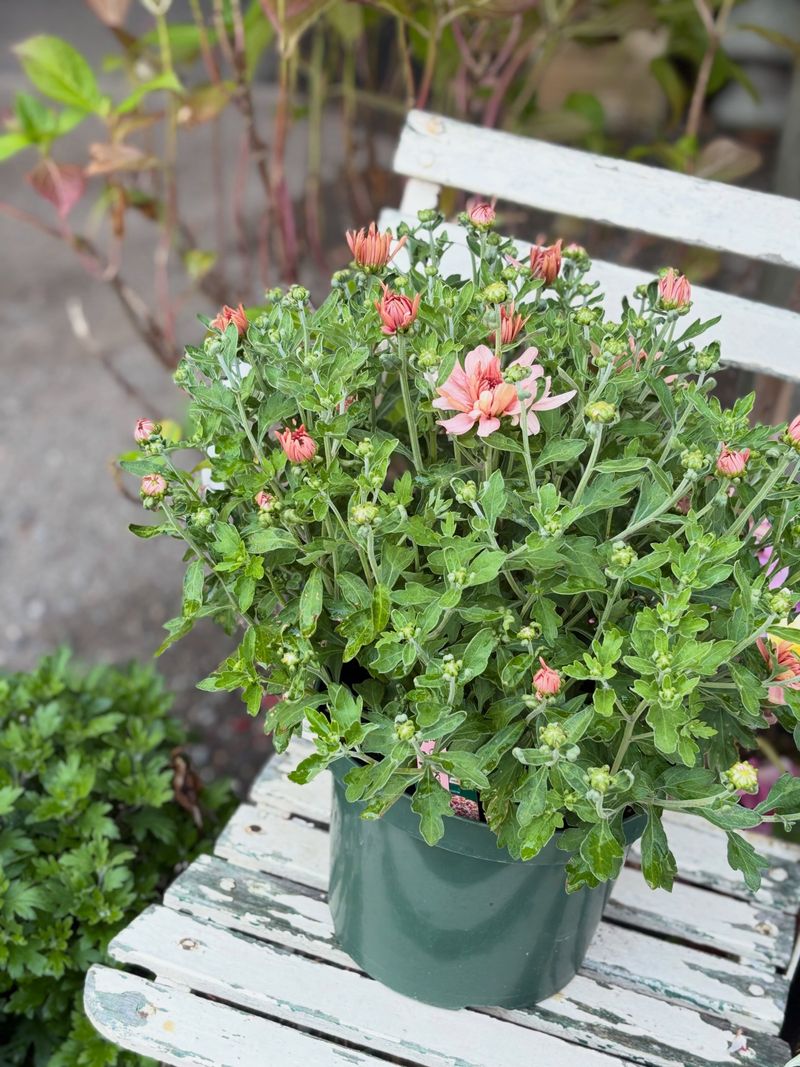
Grabbing the pruners right after your mums finish blooming feels natural. The flowers fade, the stems turn brown, and the whole plant starts to look tired. Hold off, though, because those old stems still have work to do.
Dried stems act like a little shelter over the crown. They help trap fallen leaves and mulch, which add an extra layer of warmth. They also keep water from pooling right in the center of the plant, where rot likes to start.
Plenty of experienced gardeners swear by this lazy approach. Extension experts agree that mums left standing over winter tend to come back better than those cut to the ground in fall. Sometimes doing less really is the smarter choice.
Want a neater look? Go ahead and snip off the faded flower heads. That tidies things up without removing the stems that protect the base.
Wait until early spring to do the real trimming. Look closely at the base of the plant for fresh green shoots poking up. Once you spot them, cut the old stems back to a few inches above the soil.
North Carolina winters love to play games. One night dips into the teens, and the next afternoon feels like April.
Those wild swings can stress an exposed crown, so leaving the stems in place gives your mums a steady bit of cover through the ups and downs.
7. Mulch After The Soil Cools

Ever seen a plant pushed right out of the ground in late winter, roots exposed to the air? That strange sight comes from frost heaving. Soil freezes and expands, then thaws and settles, and shallow-rooted mums get shoved upward bit by bit.
Mulch is a simple fix for this problem. A good layer keeps soil temperatures more even, so the ground does not freeze and thaw as often. Fewer swings mean less heaving and happier roots.
Timing makes a real difference. Wait until after the first hard freeze to spread mulch, since the goal is keeping the soil steadily cold, not warm. Mulching too early can trap heat and invite pests or rot.
Pine straw is a classic Southern choice, and it works beautifully here. Shredded leaves are another great option, and they cost nothing if you have trees in the yard. Spread 2 to 3 inches around the base of each plant.
Keep the mulch loose and light near the crown. Thick, packed material right against the stems can hold too much moisture. Think fluffy blanket, not heavy wet towel.
When spring arrives and new shoots appear, pull the mulch back so the soil can warm up. Freeze and thaw cycles happen all winter across much of North Carolina, especially in the Piedmont and Mountains.
A little mulch at the right moment helps your mums ride out every one of them.
8. Hardy Perennial Mums Return More Reliably

Grandma’s garden may hold the best mums of all. Old-fashioned varieties like Sheffield Pink and Clara Curtis have been passed between neighbors for generations. They show up every fall like a faithful friend, often with little help at all.
These heirloom types are tougher and longer-lived than many modern cushion mums. Instead of staying in a neat ball, they spread into wide, loose clumps over time. Their flowers look like cheerful daisies, with single petals around a golden center.
Sheffield Pink blooms in soft peachy pink, often lasting into November. Clara Curtis opens a little earlier with rosy pink blossoms that butterflies adore. Both bring color when most of the garden is winding down.
Getting them started is easy. Plant in spring or early fall in full sun and soil that drains well. Water regularly during the first season while roots settle in.
After a few years, clumps can get crowded in the middle. Dig them up in spring, split them into smaller pieces with a shovel, and replant. Dividing keeps them vigorous, and you get free plants to share.
Cottage gardeners across North Carolina love these tough bloomers. They return reliably in both the Piedmont and the Mountains, shrugging off cold that sends fussier mums packing. If you want a mum that truly sticks around, start here.
9. Spring Care Sets Up Next Fall’s Bloom
Congratulations, your mum made it through winter! Now comes the part many people skip. What you do in spring and summer decides how your plant looks when fall rolls around.
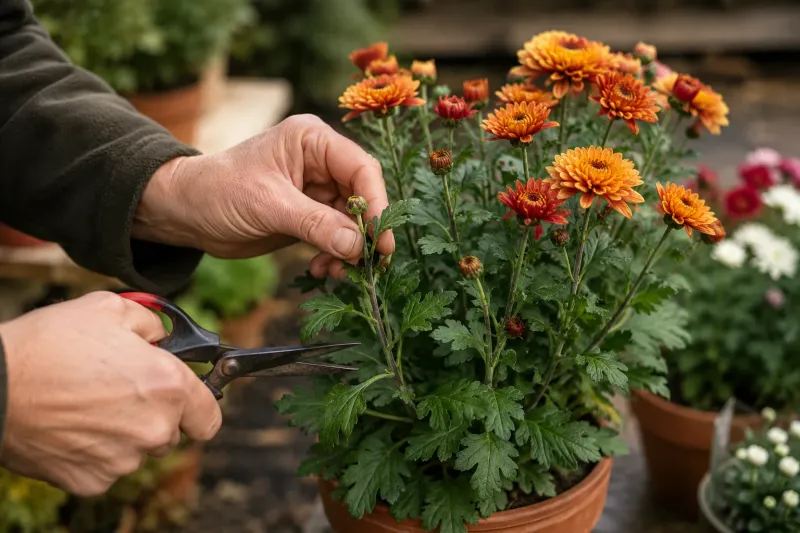
Left alone, a mum grows tall and floppy. It may even bloom in midsummer, then look scraggly by October. Regular pinching fixes both problems and keeps the plant bushy and packed with buds.
Start in early spring by cutting last year’s old stems down near the base. Every two to three years, dig up and divide the clump to keep it healthy. Replant the outer, younger sections and toss the woody center.
Once new shoots reach 4 to 6 inches tall, pinch off the top half with your fingers. Each pinched tip will branch into two or more new stems. Repeat every few weeks as the plant grows.
Mark your calendar, though. Stop pinching by early July, or around the Fourth of July, which makes it easy to remember. After that, the plant needs time to form the flower buds for fall.
North Carolina’s long growing season is a gift and a challenge. Mums have months of warm weather to stretch out and get leggy. A few minutes of pinching now and then turns that extra time into a thick mound of color, ready to shine when the leaves start to turn.