These Are The Florida Groundcovers That Help Keep Ticks Away From Your Yard
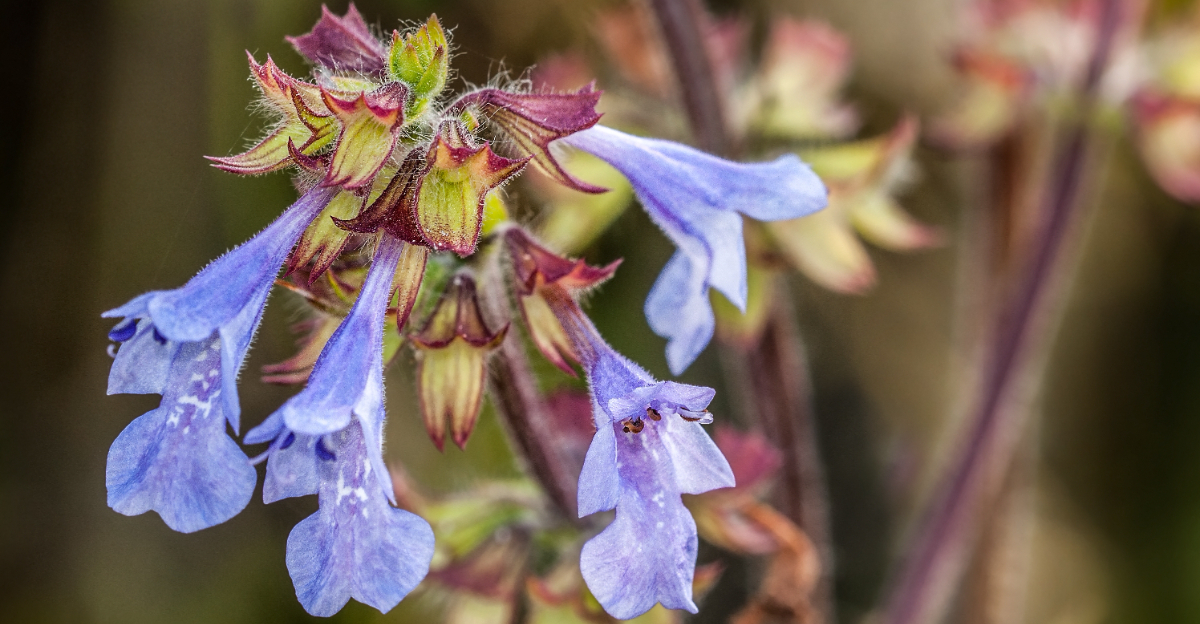
Ticks in Florida are not a seasonal problem. They are a year-round one.
Most homeowners focus on repellent and checking after time outdoors, which makes sense. But the yard itself rarely gets the same attention.
Certain groundcovers change the conditions at ground level in ways that make a yard less comfortable for ticks over time. Not a complete fix and not a replacement for other prevention habits.
Just a smarter way to think about what covers the bare soil in your landscape. Florida has specific groundcover options that perform well in the heat and humidity.
They also create ground-level conditions that ticks are less likely to move through and settle into. Some of them are native.
Most are low maintenance once established. And all of them do a better job covering our soil than the bare mulch and open ground that gives ticks exactly the shaded, moist environment they look for.
1. Plant Sunshine Mimosa To Cover Hot Bare Soil
Picture a hot, bare patch near your back gate where weeds seem to sprout overnight no matter how many times you pull them. That kind of open, unmanaged soil is exactly the type of spot that can become messy and brushy if left alone.
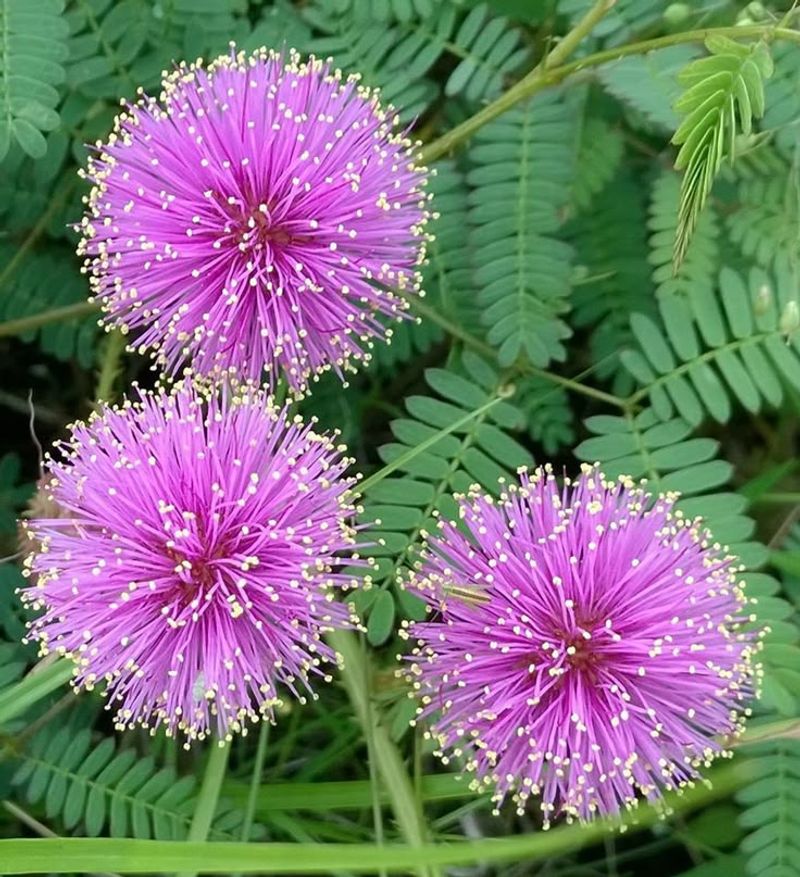
Sunshine mimosa, known scientifically as Mimosa strigillosa, is a native low-growing groundcover that UF/IFAS recommends for sunny areas with well-drained soil.
It spreads along the ground with feathery, fern-like leaves and produces small pink powderpuff flowers that pollinators visit regularly. According to UF/IFAS Gardening Solutions, sunshine mimosa works well as a turf alternative in informal, sunny spots.
Covering bare or weedy soil with a managed groundcover like this can help reduce the kind of neglected patches where brush and tall weeds tend to build up.
Keep in mind that sunshine mimosa does spread, so it fits relaxed, informal areas better than tight, formal beds. It does not repel ticks by scent or replace any real tick-prevention steps.
Mow it occasionally to keep it tidy, and avoid letting it grow into an unmanaged tangle. Pair it with regular yard checks and pet protection for the best results.
2. Use Frogfruit For A Low Mowable Native Groundcover
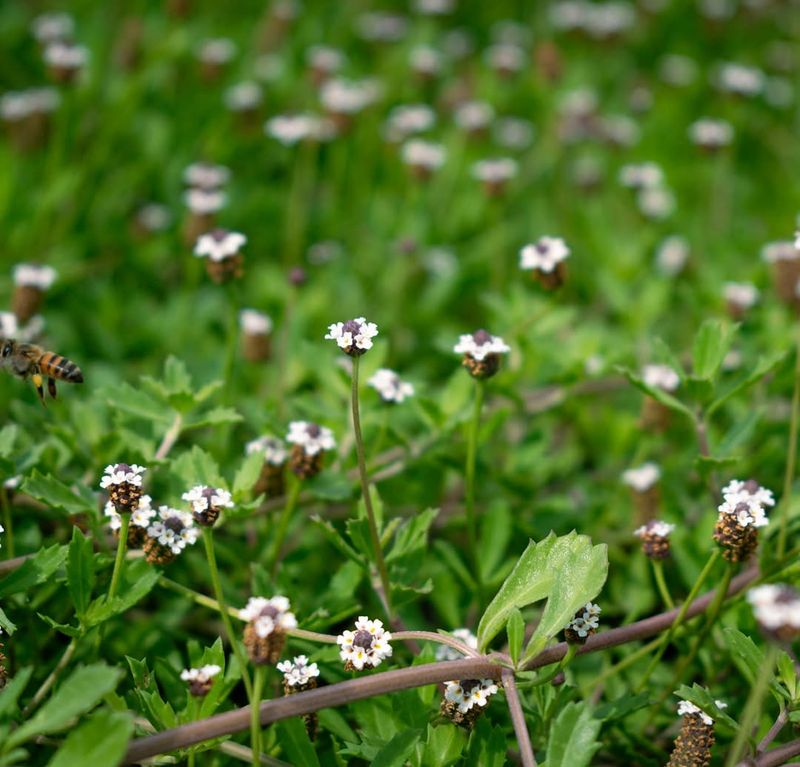
Imagine a path edge near your pet area where the grass keeps thinning out and weeds creep in along the border. A low, maintained groundcover in that spot is far easier to manage than patchy tall grass or brushy growth.
Frogfruit, also called Phyla nodiflora, is a native low-growing plant that UF/IFAS lists as a suitable groundcover for sunny to partly sunny spots in home landscapes.
It stays close to the ground, spreads to fill gaps, and produces small white to lavender flowers that attract native bees and butterflies. Because it grows low and can be mowed occasionally, it keeps that tidy, managed look that tall weeds never will.
UF/IFAS notes its value in pollinator lawns and as a turf alternative along informal path edges and open beds.
Frogfruit looks more natural than formal turf, so it fits relaxed settings better than structured formal gardens. Keeping it mowed and managed is the key to making it useful.
Your Florida Garden Changes Every Week. Your Plan Should Too.
Gardening in Florida changes quickly throughout the season. Every Friday you’ll receive a simple weekly plan showing exactly what to plant, prune, fertilize, harvest, and protect so you never miss the right timing.
A low, dense groundcover reduces the open weedy gaps that can make yard edges harder to maintain. Combine it with regular grass mowing nearby, leaf-litter removal, and routine tick checks for people and pets after outdoor time.
3. Choose Perennial Peanut Where Turf Keeps Thinning
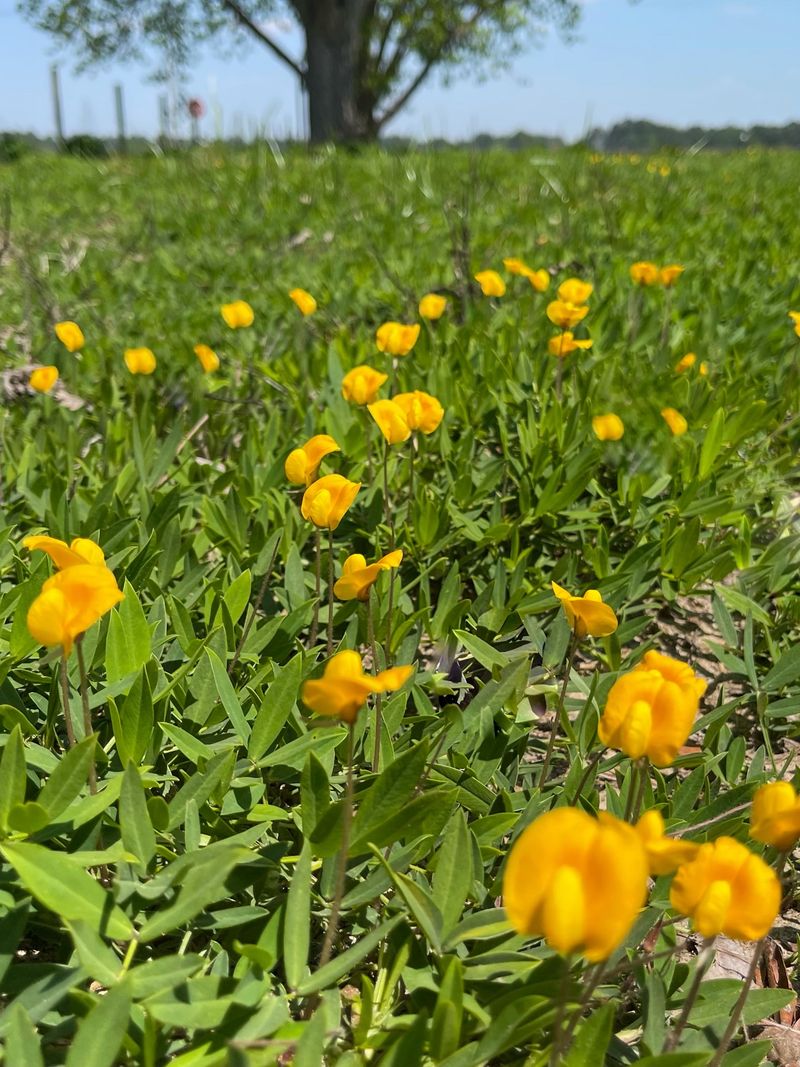
A patchy strip of grass along a sunny fence line can be one of the most frustrating spots in any yard. Weeds move in fast, the grass never fully recovers, and the whole edge starts looking rough and unmanaged within a season.
Perennial peanut, Arachis glabrata, is a warm-season groundcover. UF/IFAS recognizes it as a low-maintenance option for sunny, well-drained sites where turf struggles to stay thick.
It forms a dense, low mat with small bright yellow flowers and handles heat and drought reasonably well once established.
UF/IFAS notes it is often used as a turf alternative in difficult sunny strips, roadsides, and areas where regular mowing is a challenge.
A dense, established groundcover in those thin spots can reduce the weedy, brushy gaps that make yard edges harder to keep tidy.
Perennial peanut is not a native plant, and it does not fit every yard or every region equally well. It will not repel ticks or replace maintenance steps.
Keep nearby grass mowed, remove leaf litter from pet and play areas, and check everyone after time outdoors. Ask your local county Extension office whether perennial peanut suits your specific site before planting.
4. Plant Beach Sunflower In Sunny Sandy Beds
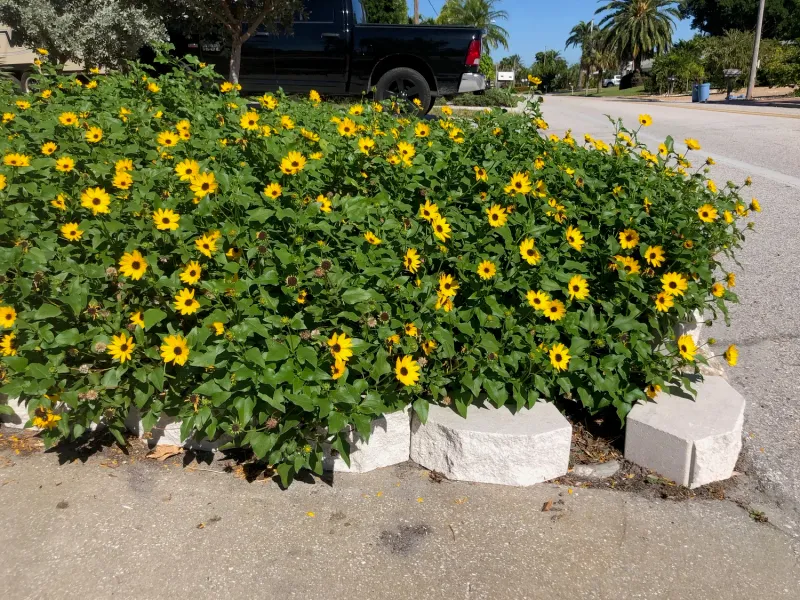
Weeds have a way of creeping into sunny sandy beds near fences and walkways almost before you notice them. One week the bed looks clean, and the next there are scraggly weeds filling every gap.
Beach sunflower, Helianthus debilis, is a native spreading plant that UF/IFAS recommends for sunny, sandy, coastal-style sites in home landscapes.
It produces cheerful yellow flowers, tolerates sandy and salty conditions, and spreads to cover open ground in the right setting.
According to UF/IFAS Gardening Solutions, beach sunflower works well in informal beds, along sandy paths, and in coastal yards where other plants struggle.
Covering open sandy soil with a managed native plant can reduce the weedy, unmanaged gaps that make beds harder to maintain through the season.
Beach sunflower tends to reseed and spread, so give it room in informal, relaxed beds rather than tight, structured borders. It does not repel ticks and will not replace any real prevention steps.
Keep nearby grass mowed short, clear heavy leaf litter from pet areas, and check people and pets after every outdoor session. A sandy bed filled with beach sunflower simply looks better and stays easier to manage than one taken over by weeds.
5. Use Gopher Apple For Dry Native Ground Coverage
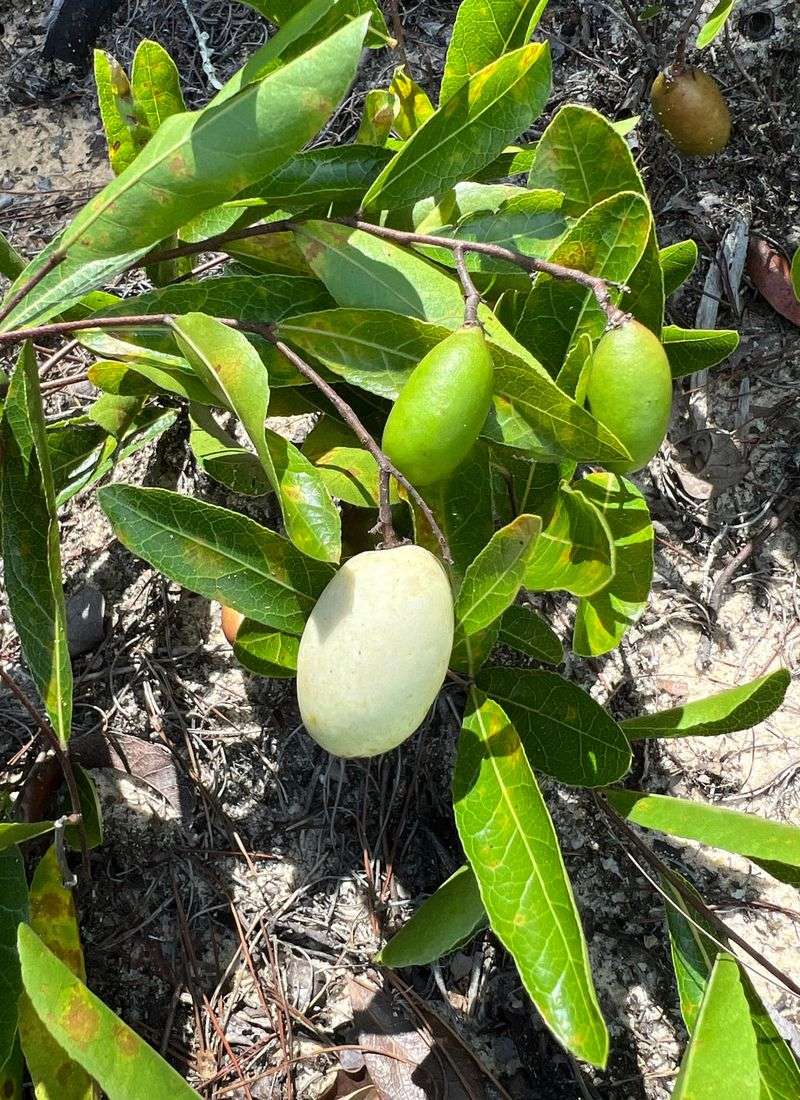
Dry sandy corners are some of the trickiest spots in any home landscape. Mulch never stays put, turf grass gives up quickly, and bare soil invites weeds and brush before long.
Gopher apple, Licania michauxii, is a native low-growing plant that UF/IFAS notes as well-suited to dry, sandy, well-drained sites across many parts of this state.
It forms a low, spreading mat of leathery leaves and produces small fruit that local wildlife, including gopher tortoises, are known to use. Because it is adapted to poor, dry, sandy conditions, it can fill those neglected corners where other plants repeatedly fail.
A matched groundcover in a dry, bare spot reduces the open weedy areas that can become brushy and unmanaged over time.
Gopher apple is site-specific. It does not belong in wet, heavily irrigated, or richly amended beds, and it will not perform well outside its preferred dry, sandy habitat.
It does not repel ticks or eliminate any pest risk on its own. Pair it with regular yard upkeep, including mowing turf areas nearby and removing leaf litter close to play and pet zones.
Check with your county Extension office to confirm gopher apple suits your specific yard conditions before planting.
6. Grow Lyreleaf Sage In Light Shade Instead Of Leaf Litter
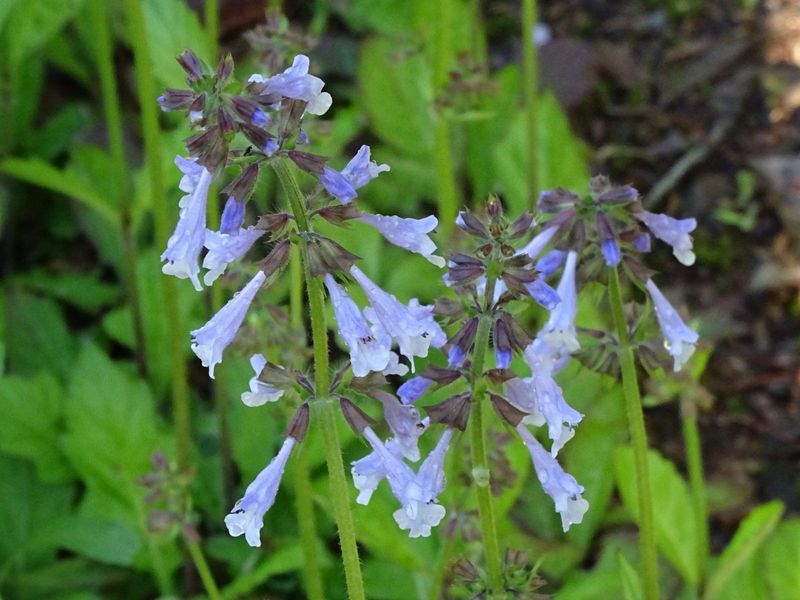
Under a cluster of oaks or along a shaded fence line, leaves tend to pile up fast. Before long, that shaded edge turns into a thick mat of unmanaged leaf litter and weeds that is difficult to keep tidy.
Lyreleaf sage, Salvia lyrata, is a native plant that UF/IFAS notes can spread in light shade to part shade. That makes it a practical option for those tricky, lightly shaded edges.
It grows in a low rosette with distinctive lobed leaves and sends up spikes of small blue-purple flowers in spring that Florida native bees and other pollinators visit.
Filling lightly shaded areas with a managed native plant can help reduce the unmanaged leaf litter and weed growth that tends to build up where nothing else is planted.
UF/IFAS recommends removing thick leaf litter near play and pet areas as part of a sound tick habitat management plan.
Lyreleaf sage does not replace leaf cleanup in every situation, especially where leaves pile deeply over the plants. Rake out heavy buildup, keep the planting managed, and avoid letting it grow into a tangled, unmanaged patch.
Combine it with regular checks of people and pets after outdoor time and veterinarian-approved tick prevention for any animals in your household.
7. Choose Coontie To Fill Gaps Under Shrubs
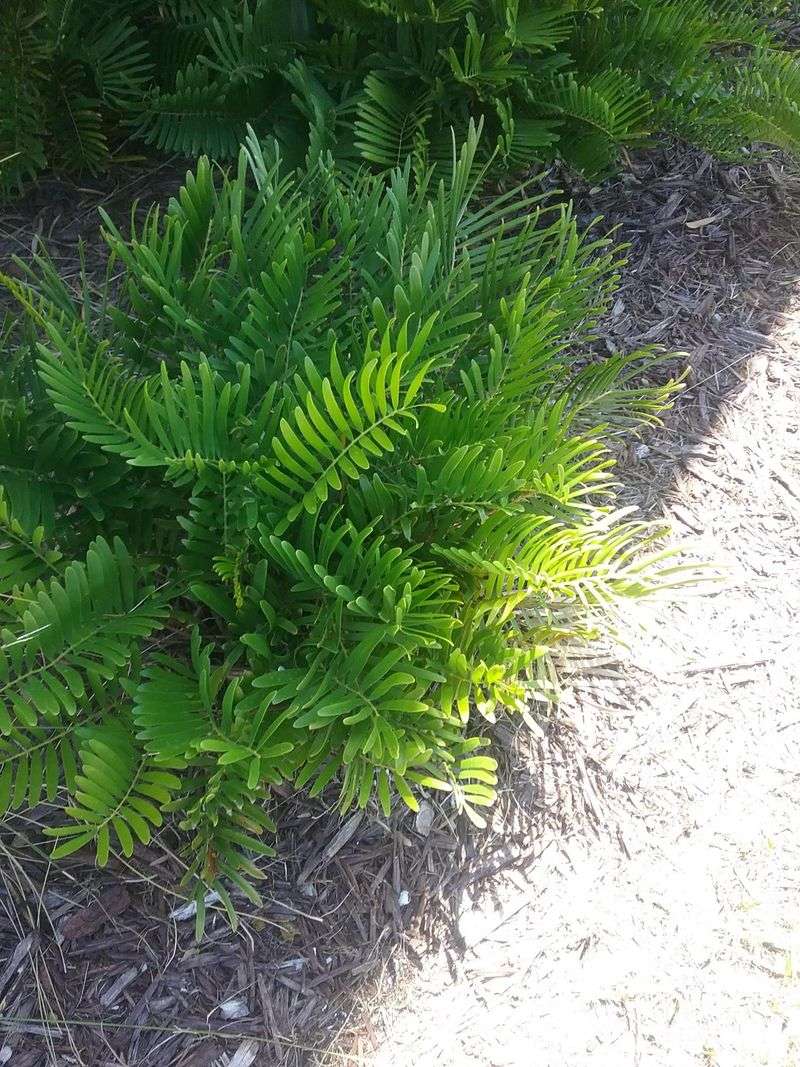
Bare spaces under shrubs and palms have a way of becoming weed traps almost every season. A little shade, some fallen leaves, and suddenly there is a brushy, weedy mess that is hard to clear without disturbing everything around it.
Coontie, Zamia integrifolia, is a native cycad. UF/IFAS describes it as a durable, low-maintenance groundcover suited to beds under shrubs, palms, and open landscape areas.
Once established, it tolerates drought well and provides dense, structured coverage that reduces open gaps where weeds can take hold. Coontie is also the only larval host plant for the atala butterfly.
UF/IFAS notes that this striking native species has made a comeback largely because of coontie plantings in home landscapes.
Filling gaps under shrubs with mature coontie clumps can help reduce the unmanaged, weedy pockets that make shaded beds difficult to maintain.
One important safety note. Coontie is toxic if eaten, including its seeds and all plant parts, so place it thoughtfully in yards where pets, children, or curious visitors spend time.
It is not a fast mat-forming plant and will not repel ticks. Keep surrounding areas mowed, remove deep leaf litter near play zones, and follow Extension guidance for tick protection for your whole household.
8. Use Railroad Vine Where Open Coastal Sand Needs Cover
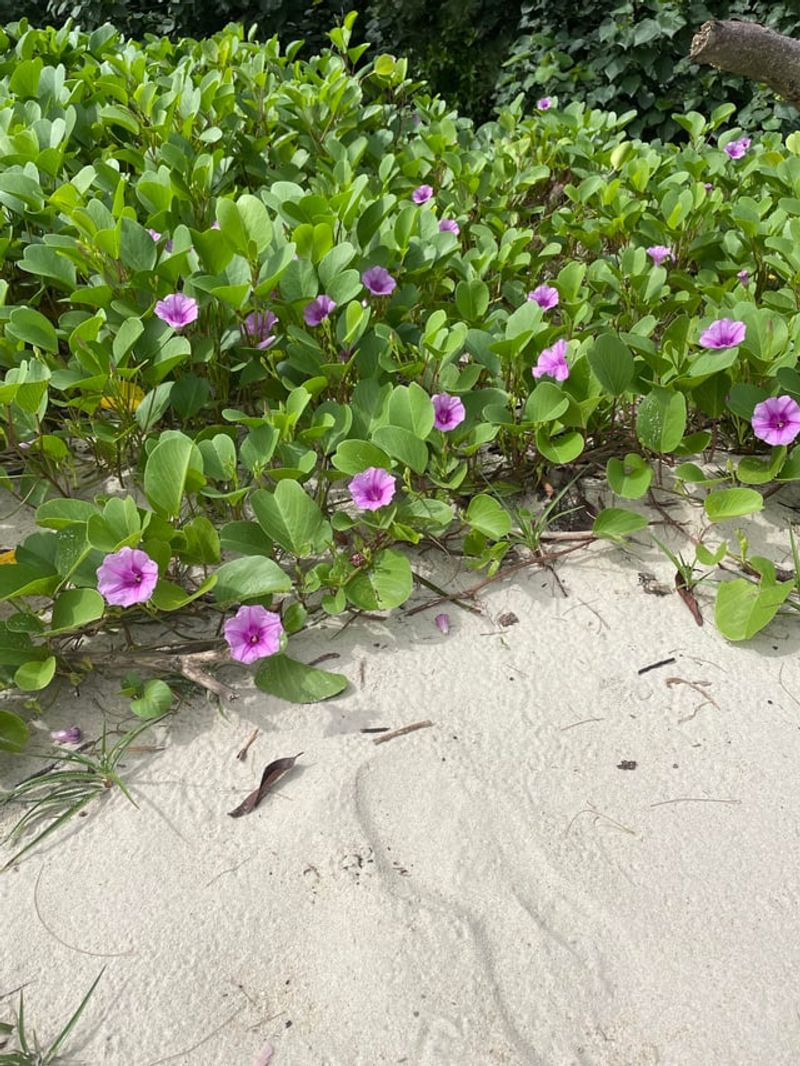
An open sandy strip along a coastal fence line can look bare and rough for most of the year. Without any groundcover holding things together, weeds move in, sand shifts, and the whole edge becomes an unmanaged mess that is hard to maintain.
Railroad vine, Ipomoea pes-caprae, is a native coastal plant that UF/IFAS recognizes for its ability to spread across open sunny sand with long, fast-moving runners.
It produces large, showy purple flowers that resemble morning glories and handles salt spray, heat, and sandy soil with ease.
Covering open coastal sand with a managed native vine can reduce the weedy, unmanaged strips that tend to develop along fence lines and open sandy edges in coastal yards.
UF/IFAS supports its use in appropriate coastal and sandy sites where other plants struggle to establish.
Railroad vine needs room to spread and does not belong in small, tight, formal beds or in wet, heavy soil. It works best in open, informal, coastal-style spaces with plenty of sun and sandy ground.
Like every plant on this list, it does not repel ticks or replace real prevention steps. Keep surrounding areas tidy, check everyone after time outside, and follow UF/IFAS and public-health guidance for tick protection all season long.