8 After-Dark Fragrant Plants Every California Patio Deserves
California patios have a secret second shift after sunset.
The sun drops, the walls exhale the heat they stored all day, and the whole space suddenly feels softer. Then the pale flowers start glowing like little garden lanterns, and the air changes.
That is when the fragrant plants take over.
Some blooms save their best work for evening, releasing scent when moths, hawkmoths, beetles, and night pollinators begin moving through the garden. On a California patio, that timing feels almost unfairly perfect.
Warm microclimates, long growing seasons, foggy balconies, sunny courtyards, and Central Valley evenings all create chances for after-dark perfume to shine.
So which plants turn a regular patio into the kind of place you keep wandering back to after dinner?
Start with flowers that glow, scents that travel, and containers placed close enough to make the night feel alive.
The best patio show may begin right when the day ends.
1. Star Jasmine Perfumes Warm Walls
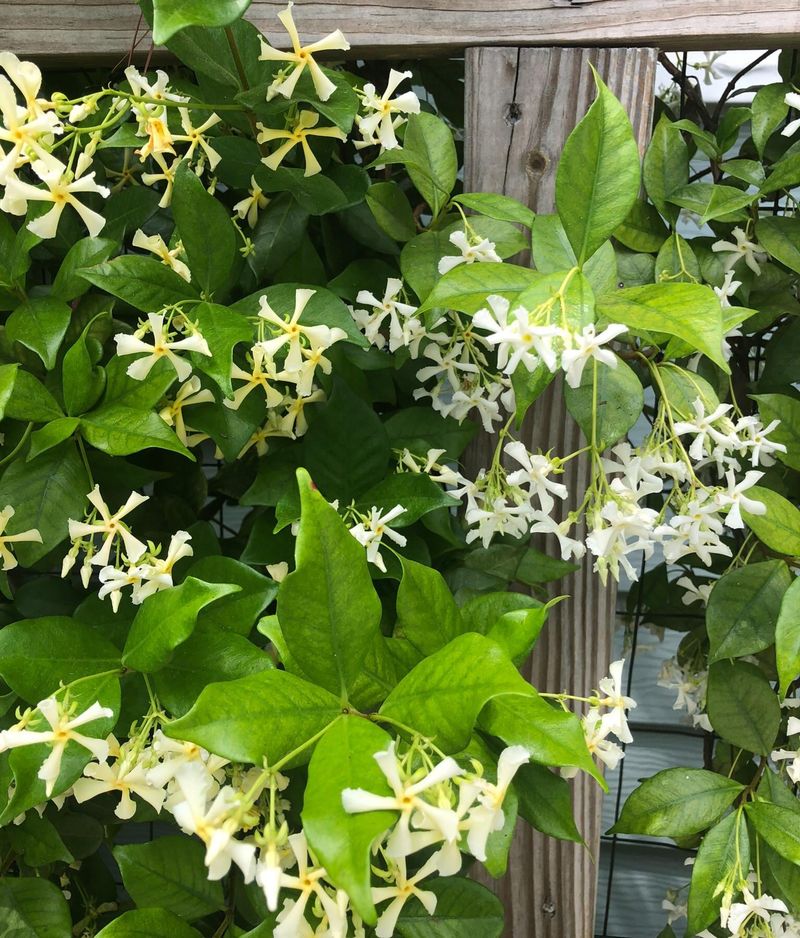
Your patio wall after a long sunny day, still radiating warmth as the sky fades to purple, is the exact moment star jasmine decides to turn up the volume on its famously sweet scent.
The fragrance is clean, creamy, and just a little honeyed, the kind that stops a conversation mid-sentence.
Star jasmine, known botanically as Trachelospermum jasminoides, is a woody vine that clings beautifully to trellises, fences, and pergola posts, making it a natural fit for vertical patio spaces.
In California, it thrives in USDA zones 8 through 11, which covers most of the state from the coast to the inland valleys.
You can also grow it in a large container, training it up a bamboo stake or letting it spill over the edges like a fragrant waterfall.
Give it full sun to partial shade and water it deeply but infrequently once established. It is drought-tolerant after its first year, a real bonus for California gardeners watching their water bills.
The small, pinwheel-shaped white flowers bloom heavily in spring and sometimes again in fall.
Plant it near a seating area or doorway so the evening breeze carries the scent straight to you.
Star jasmine is generally considered non-toxic to people and pets, making it a relaxed, worry-free choice for family patios.
2. Moonflower Opens After Sunset
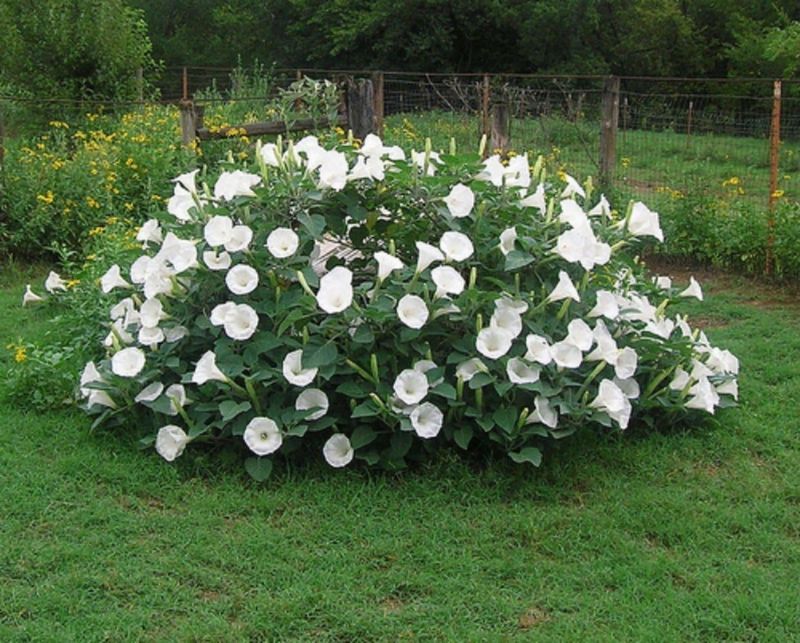
Just as the last light leaves the sky, a moonflower bud that has been tightly coiled all day begins to slowly spiral open.
Within minutes, a dinner-plate-sized white bloom unfurls completely, releasing a scent that is sweet, soft, and faintly spicy all at once.
Watching it happen in real time feels like a small miracle worth staying outside for.
Moonflower, Ipomoea alba, is a fast-growing tropical vine that can shoot up ten to fifteen feet in a single season in California’s warm zones.
It loves heat, so patios with south or west-facing walls are ideal. Give it a sturdy trellis, a fence, or a pergola beam to climb, and it will cover the structure generously by midsummer.
The blooms last only one night, closing again by mid-morning.
Your California Garden Changes Every Week. Your Plan Should Too.
Gardening in California changes quickly throughout the season. Every Friday you’ll receive a simple weekly plan showing exactly what to plant, prune, fertilize, harvest, and protect so you never miss the right timing.
But the plant produces so many buds that fresh flowers appear every evening from summer through early fall.
The fragrance is strongest in the first hours after opening, right when you are most likely to be sitting outside with a cool drink.
Important caution: every part of the moonflower plant is toxic if eaten, including the seeds, which are especially dangerous.
Keep it out of reach of children and pets, and wash your hands after handling the plant.
With that safety note in mind, moonflower remains one of the most dramatically beautiful and genuinely thrilling plants you can add to a California evening garden.
3. Evening Primrose Glows At Dusk
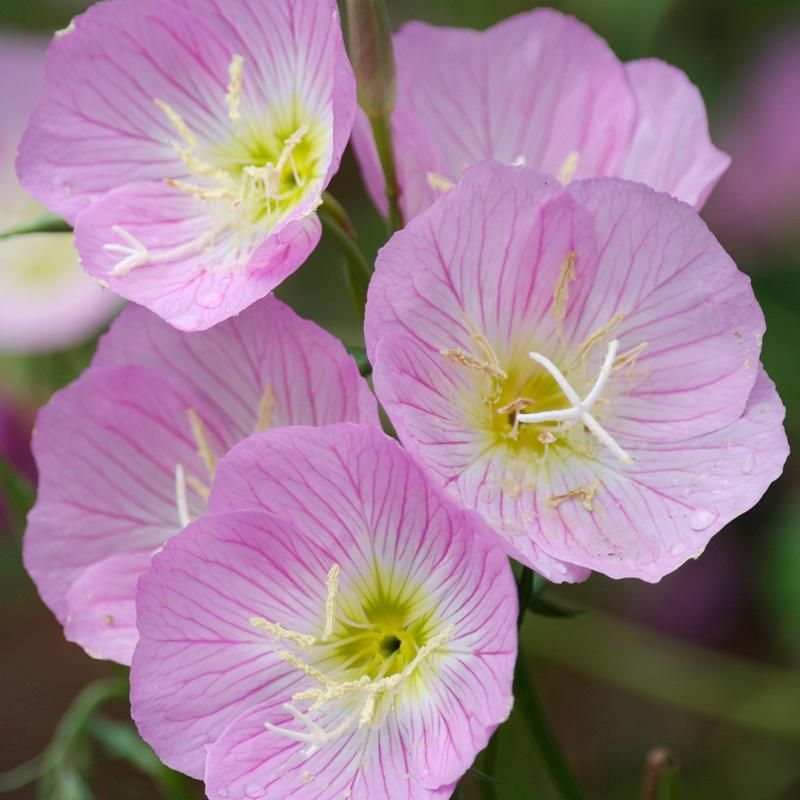
There is something quietly theatrical about a plant that waits until dusk to put on its show.
Evening primrose, Oenothera biennis and its relatives, does exactly that, with pale yellow or creamy white flowers that pop open as the light fades, almost as if someone flipped a switch.
The effect on a California patio is genuinely lovely, especially when a few plants are grouped together near a seating wall.
The scent is light and lemony-sweet, not overpowering, but just present enough to notice when the air is still.
It is the kind of fragrance that makes you take a slow, deliberate breath and feel glad you stayed outside.
Night-flying moths, particularly hawkmoths, are the primary pollinators and will visit your patio regularly once this plant is established.
Evening primrose grows well in California’s drier inland zones and coastal areas alike.
It tolerates poor, sandy soil and needs very little water once established, making it a genuinely low-maintenance choice.
The plants tend to reseed themselves generously, so you may find cheerful volunteers popping up in unexpected spots each spring.
Most varieties grow one to three feet tall, making them easy to tuck along patio edges, into gravel borders, or into medium-sized containers.
For pure evening ambiance paired with minimal fuss, evening primrose earns its spot on any California patio.
4. Four O’Clocks Wake Up Late
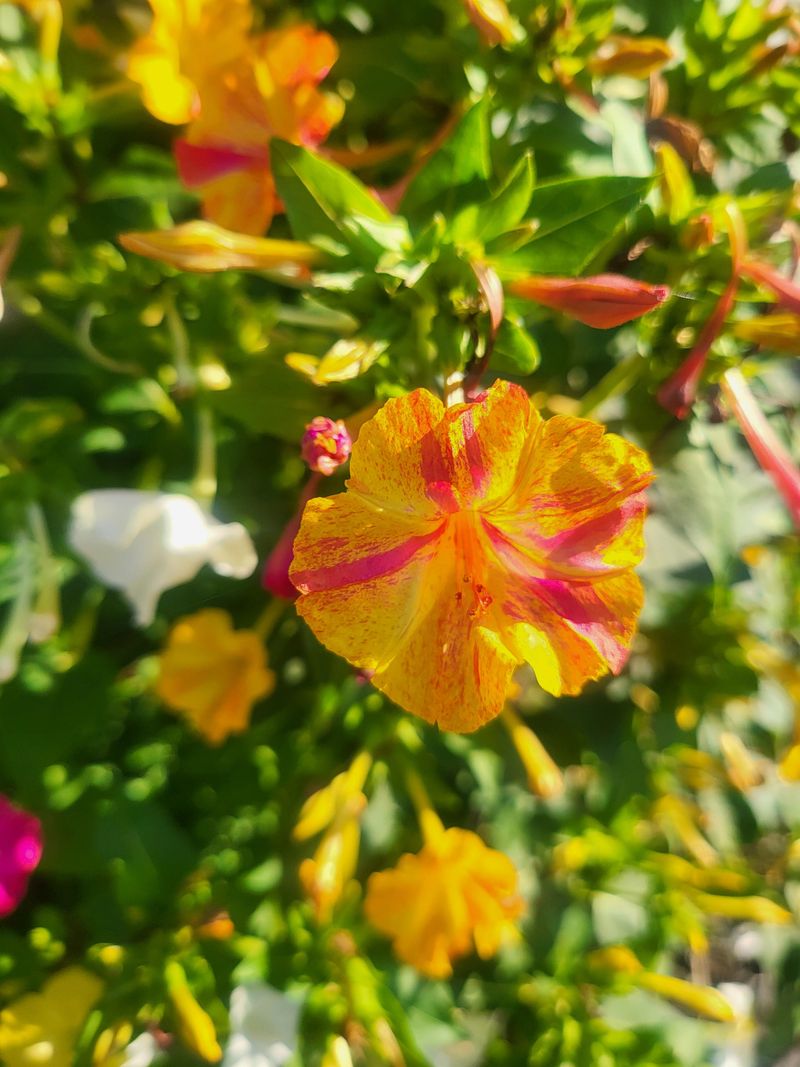
Reliable, cheerful, and completely unbothered by the heat of a California afternoon, four o’clocks earn their name the honest way: they simply refuse to open before their preferred hour.
Around four in the afternoon, sometimes a little later, the trumpet-shaped blooms burst open in shades of magenta, pink, yellow, white, and even striped bicolors.
By the time you sit down with dinner outside, they are fully awake and fragrant.
Mirabilis jalapa has a scent that is sweetly floral with a faint spicy edge, reminiscent of a warm vanilla and clove blend.
It is not as intense as jasmine or night-blooming jessamine, but it has a cozy, welcoming quality that suits casual patio evenings perfectly.
The fragrance tends to be strongest in the first hour or two after opening.
Four o’clocks are incredibly easy to grow in California’s warm zones.
They form tuberous roots that store energy and can survive mild winters in zones 9 through 11, often returning year after year without replanting.
They grow well in large containers, which is great news for renters or gardeners with small patios.
One caution: the seeds and roots are toxic if eaten, so keep them away from curious children and pets.
Plant them along the edges of your outdoor space for a colorful, fragrant border that practically takes care of itself.
5. Flowering Tobacco Sweetens The Patio
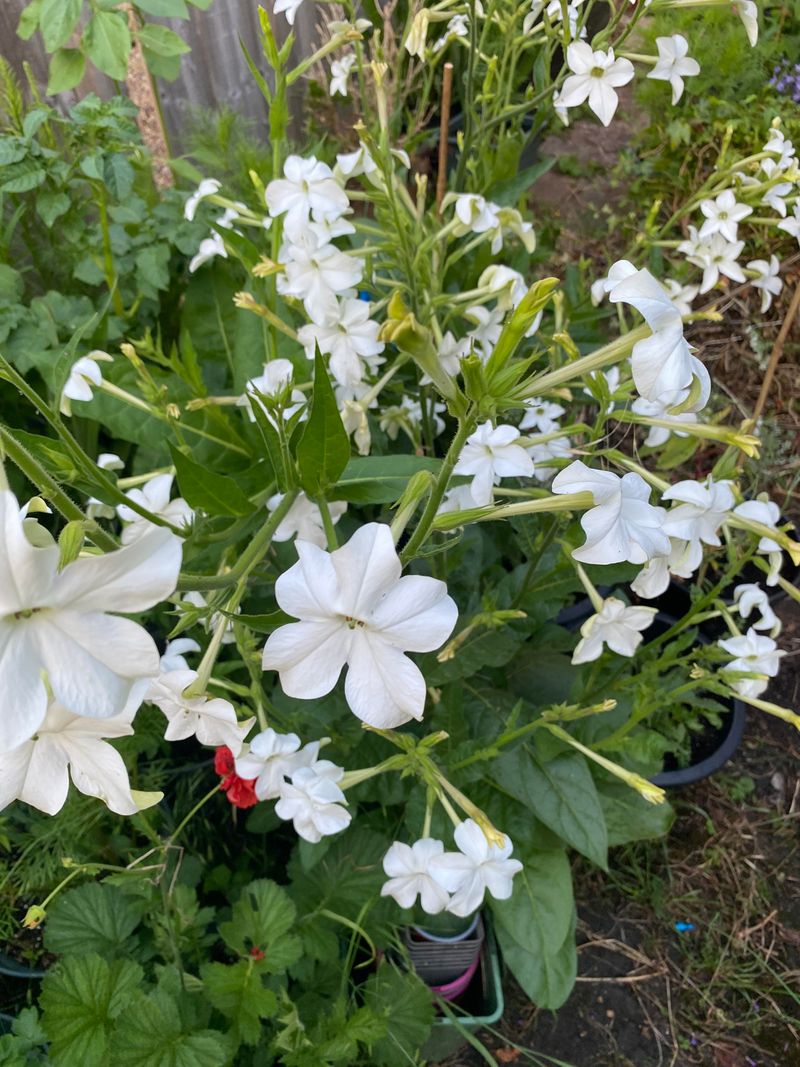
A warm evening on a California patio gets noticeably sweeter when flowering tobacco is nearby.
Nicotiana alata, the ornamental species grown for fragrance, releases a jasmine-like scent that intensifies after sunset, exactly when you want it most.
During the heat of the day, the flowers actually close or droop slightly, conserving energy for their evening performance.
The tubular flowers come in white, pale pink, and soft lime green, with white varieties generally producing the strongest fragrance.
They hang in loose clusters at the top of stems that can reach two to four feet tall, giving the plant an airy, elegant look that pairs well with other patio plants.
Hummingbirds visit during the day, and hawkmoths take over the night shift.
Flowering tobacco grows easily from seed or transplant and does well in containers, raised beds, or directly in the ground.
It prefers full sun to partial shade and regular moisture, though it tolerates short dry spells without much drama.
In California’s warm zones, it often self-seeds, returning on its own the following spring.
Place it within a few feet of your seating area to get the full benefit of the evening scent.
Important safety note: all parts of Nicotiana are toxic if ingested, so plant with care around children and pets.
6. Night Blooming Jessamine Carries Far
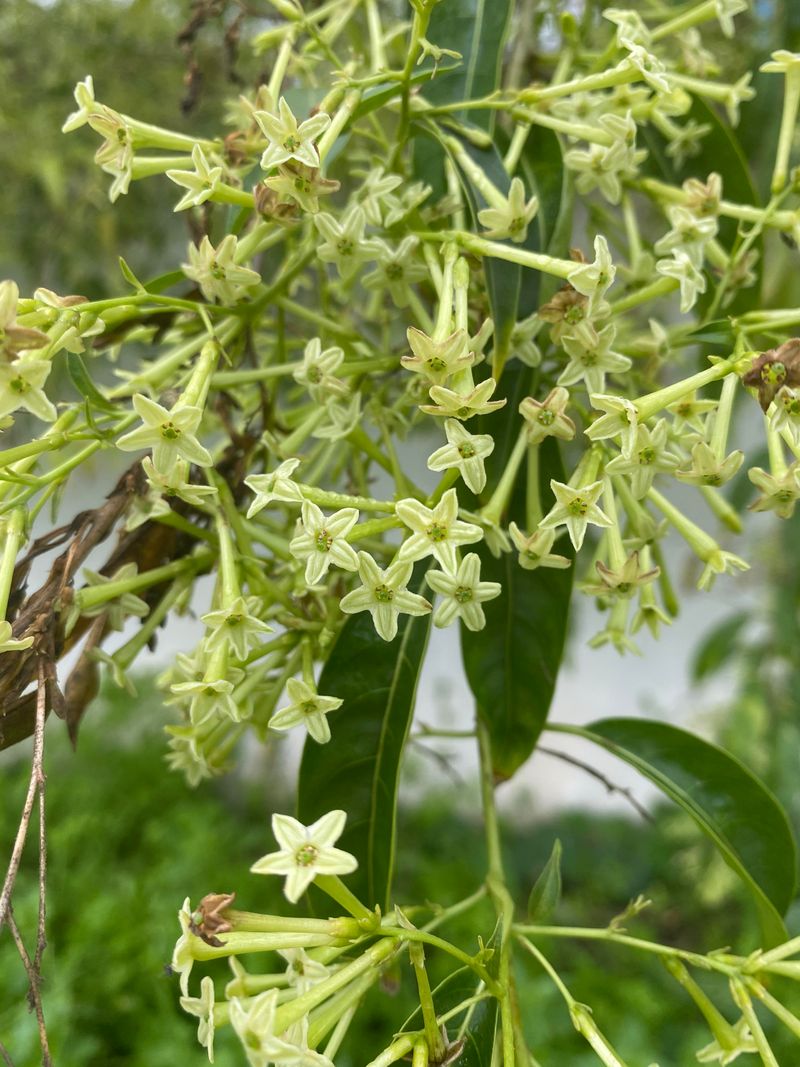
Some fragrances politely introduce themselves. Night blooming jessamine does not.
Cestrum nocturnum sends its scent out in waves that can travel fifty feet or more on a warm California evening, announcing itself well before you spot the plant.
If you have ever walked past a neighbor’s yard at night and stopped in your tracks wondering what that incredible smell was, there is a good chance it was this shrub.
The flowers themselves are small, tubular, and pale greenish-white, not flashy by day.
But after sunset, they release a perfume so rich and sweet that some people find it almost too intense at close range.
Planting it at the far end of a patio or against a back fence lets the breeze carry just the right amount of scent to your seating area without overwhelming the space.
In California, Cestrum nocturnum thrives in zones 9 through 11, loving heat and humidity.
It can grow into a large, bushy shrub six to ten feet tall if left unpruned, but it responds well to cutting back and can be maintained at a more manageable size for smaller patios.
Toxicity is a serious concern here. All parts of night blooming jessamine are toxic, especially the berries, which can be very harmful to children, pets, and wildlife.
Plant it thoughtfully, in a spot that is visible and accessible only to adults.
With proper placement and care, it is one of the most powerfully fragrant plants you can grow in California.
7. Evening Scented Stock Loves Cool Nights
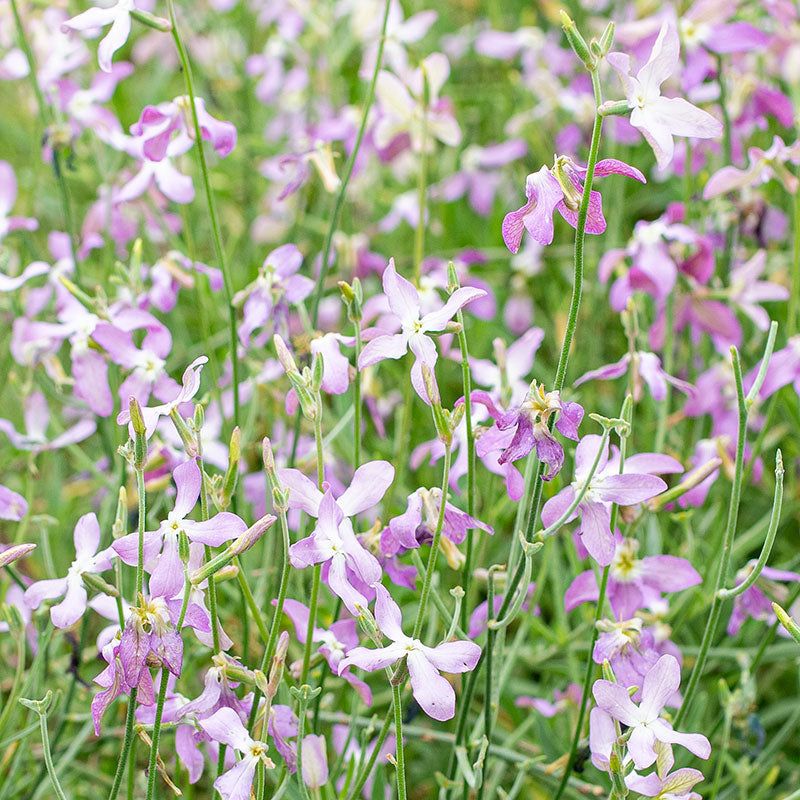
Along California’s coast, evenings arrive with a cool edge that many plants find challenging.
Evening scented stock, Matthiola longipetala, finds it absolutely ideal.
This unassuming annual opens its small, four-petaled flowers at dusk and fills cooler night air with a clove-and-vanilla fragrance that feels like a warm hug on a chilly Bay Area evening.
During the day, the flowers are a little limp and the plant looks almost forgettable among showier companions.
By nightfall, the blooms perk up and the scent is nothing short of extraordinary. This is a plant that rewards the evening gardener, the one who actually uses the patio after the workday ends.
Evening scented stock grows quickly from seed sown directly in the garden or in containers.
It prefers cool temperatures, making it perfect for California’s coastal zones, spring and fall planting in inland areas, and higher-elevation gardens.
Sow seeds in early spring or fall for the best results, and expect blooms within six to eight weeks.
Plants stay compact at about twelve to eighteen inches, making them excellent for window boxes, patio pots, and front-of-border planting.
Evening scented stock is not toxic, which makes it a genuinely relaxed choice for households with children or pets who share the patio space.
8. Angel’s Trumpet Brings Big Fragrance
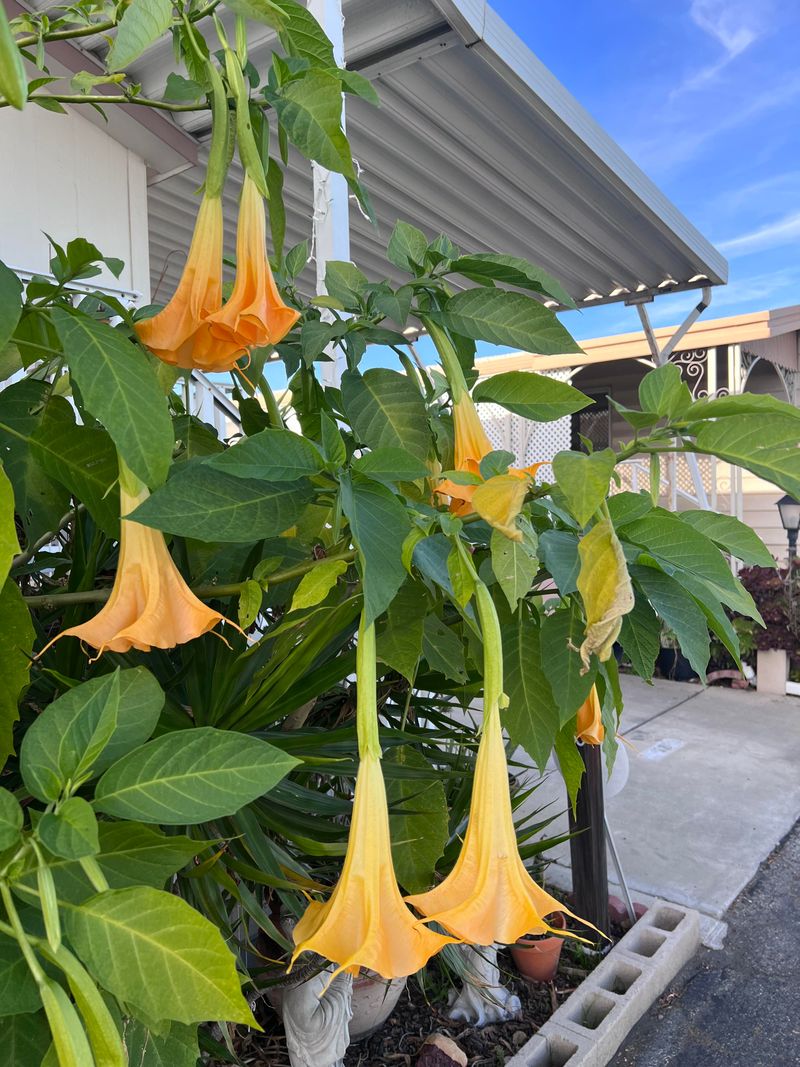
Few plants command attention on a patio like angel’s trumpet.
Brugmansia species produce enormous, pendulous blooms that hang like elegant bells from arching branches, sometimes reaching twelve inches long.
At sunset, those blooms release a fragrance that is rich, sweet, and deeply tropical, the kind of scent that makes a California patio feel like a private resort for one magical evening.
The flowers come in white, peach, yellow, and soft pink, with white and pale yellow varieties often releasing the strongest night fragrance.
A single mature plant in a large container can perfume a good-sized patio area on its own.
The scent is especially powerful in the first few hours after sunset and again just before dawn.
Angel’s trumpet grows vigorously in California’s warmer zones, particularly in Southern California and the Central Valley.
In containers, it can be moved indoors or to a sheltered spot during unusual cold snaps. Regular feeding with a balanced fertilizer during the growing season keeps the blooms coming from summer through fall.
Now for the critical safety information: every single part of Brugmansia is highly toxic, including the flowers, leaves, seeds, and roots.
Ingestion can cause serious harm to people, children, and animals.
This is a plant for adult gardeners who can place it responsibly, perhaps in a raised container on a deck railing or in a spot clearly out of reach.
Handled with care and respect, angel’s trumpet is one of the most breathtaking and fragrant plants California evenings have to offer.