8 Reasons Texas Cucumber Vines Suddenly Stop Producing
There are few things more exciting in a Texas garden than a cucumber vine that is genuinely taking off. Lush, green, producing fruit like it has somewhere important to be.
And then one day, without much warning, it just stops. No new cucumbers, leaves looking a little rough, and a general sense that something shifted when you weren’t paying close attention.
Sound familiar?
Texas summers are a lot to handle even for enthusiastic vegetable growers, and the combination of blistering heat, unpredictable rainfall, hungry insects, and shifting soil conditions can all pile on at the same time.
The tricky part is that a sudden slowdown rarely has just one cause, which means a quick fix rarely covers the whole situation.
Taking a close look at your vines, your watering routine, and recent growing conditions is always the right place to start.
1. Extreme Texas Heat Disrupts Flower And Fruit Development
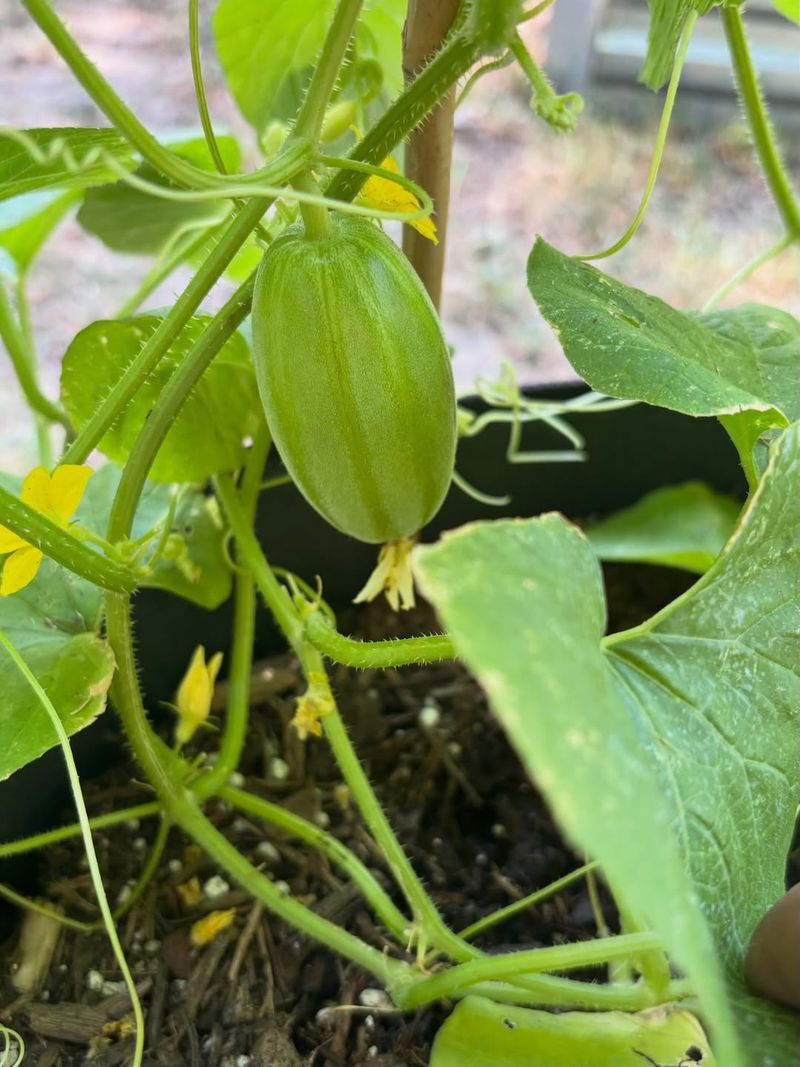
Summers in Texas push temperatures into the mid-to-upper 90s and beyond for weeks at a stretch, and cucumber vines feel every degree of that heat. Cucumbers are warm-season crops, but they have limits.
When sustained high temperatures settle in, the plant may drop flowers before they get the chance to develop, or small fruits may stop growing shortly after forming.
The problem tends to show up more noticeably during extended heat waves rather than a single hot afternoon. Male flowers often appear first and drop quickly even under normal conditions, but female flowers are more sensitive to heat stress.
When temperatures remain extreme day and night, the vine may redirect its energy away from reproduction and toward basic survival.
Young cucumbers that do begin forming may stall out, shrivel, or fall off the vine without reaching harvest size.
Gardeners sometimes mistake this for a pollination problem, and while both issues can look similar, heat stress tends to affect multiple fruits at once across the whole plant.
Providing afternoon shade with a cloth cover, keeping soil consistently moist, and mulching heavily can help buffer the root zone from the worst of the Texas summer heat.
Choosing heat-tolerant varieties suited to the Texas climate may also reduce the impact of extreme temperatures on flower and fruit development during the hottest months of the growing season.
2. Female Flowers Are Not Receiving Enough Pollination
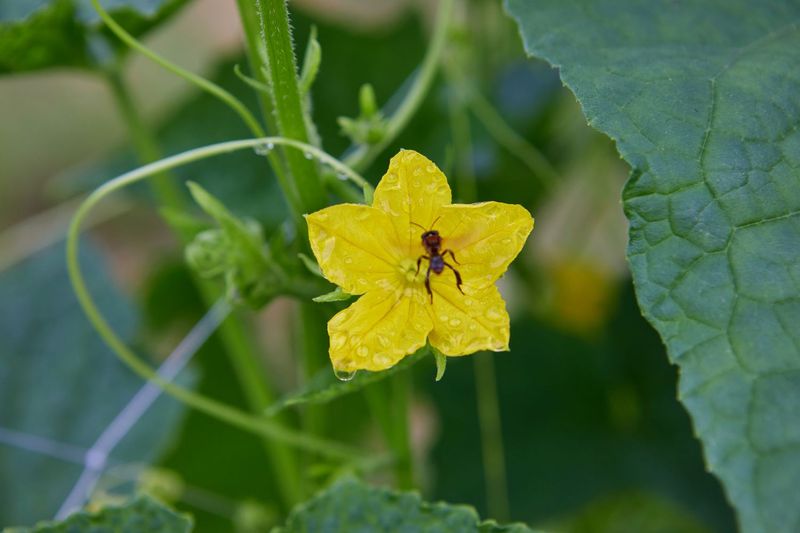
Spotting a cucumber flower that shrivels and drops before forming fruit is one of the more frustrating sights in a Texas vegetable garden.
Most traditional cucumber varieties produce separate male and female flowers on the same vine, and they depend entirely on bees and other insects to carry pollen from one to the other.
Without that transfer, the female flower cannot develop into a cucumber.
Female flowers are easy to identify once you know what to look for. They have a tiny, immature cucumber shape at the base of the bloom, while male flowers sit on a plain stem.
If female flowers are dropping without forming fruit, or if small cucumbers are forming but growing unevenly and stopping short, low pollinator activity may be contributing to the problem.
Your Texas Garden Changes Every Week. Your Plan Should Too.
Gardening in Texas changes quickly throughout the season. Every Friday you’ll receive a simple weekly plan showing exactly what to plant, prune, fertilize, harvest, and protect so you never miss the right timing.
Bee populations can fluctuate in Texas neighborhoods depending on pesticide use nearby, the availability of flowering plants, and the time of day. Bees are most active in the morning, so cucumber flowers, which tend to open early, benefit from that timing.
Gardeners can encourage pollinators by planting flowering herbs nearby and avoiding insecticide applications during bloom time. Hand pollination is also an option, using a small brush to transfer pollen from a male to a female flower.
Keep in mind that parthenocarpic cucumber varieties can set fruit without pollination, so knowing your variety matters before assuming bees are the issue.
3. The Vines Are Experiencing Drought Or Irregular Moisture
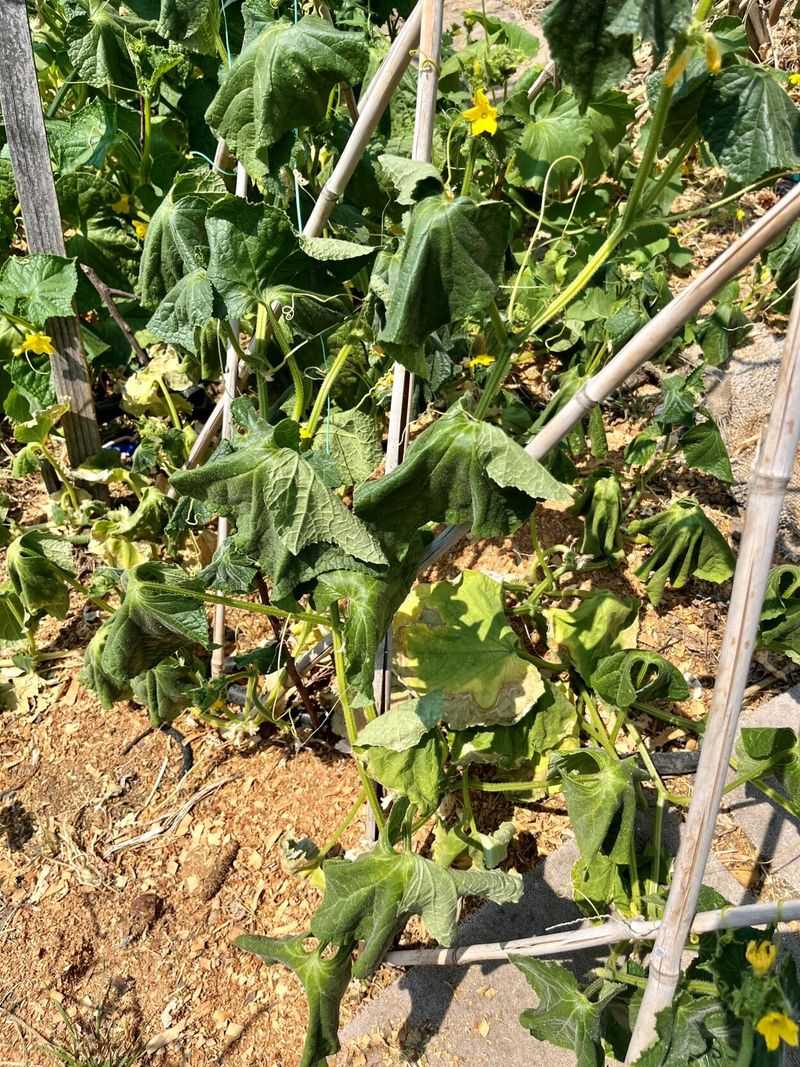
Cucumbers are made up of roughly 95 percent water, which tells you a lot about how sensitive they are to dry conditions. When a Texas garden goes through a stretch of low rainfall and irrigation does not keep pace, the plant responds quickly.
Leaves may wilt during the hottest part of the day, flowers can drop, and developing fruits may stall or grow misshapen.
Irregular moisture is often just as problematic as outright drought. When the soil swings between very dry and very wet, the plant struggles to maintain steady growth.
This kind of inconsistency can cause fruits to develop bitterness, crack, or stop sizing up properly. Gardeners sometimes water heavily after a dry spell thinking they are solving the problem, but that sudden shift can stress the plant further.
Texas heat speeds up soil moisture evaporation, meaning a garden that was watered two days ago may already be running dry by the next morning in peak summer conditions. Soil type matters too.
Sandy soils drain quickly and may need more frequent watering, while clay-heavy soils hold moisture longer but can become compacted and uneven.
Mulching around the base of the vine with straw or wood chips can slow evaporation and help keep soil temperature more stable.
Checking soil moisture a few inches below the surface before watering gives a more accurate picture of what the plant actually needs rather than guessing from the surface alone.
4. Excess Water Is Limiting Root Function
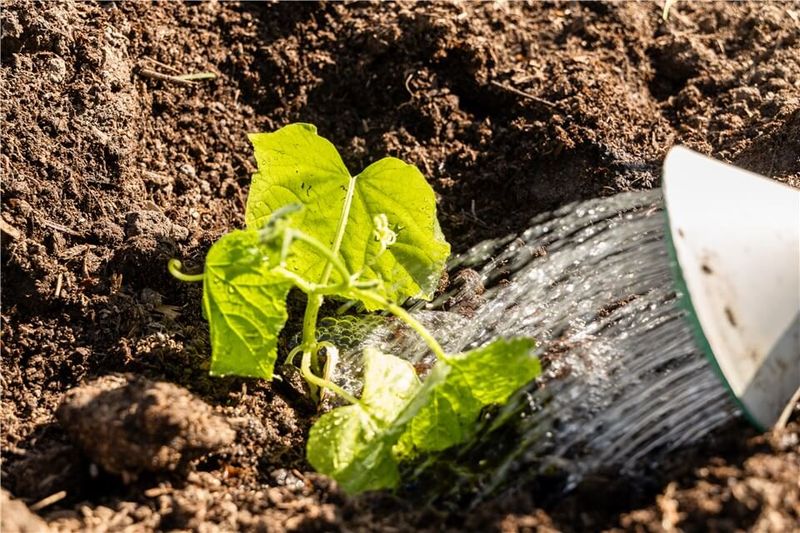
Heavy Texas rainfall can arrive fast and in large amounts, and low garden areas or poorly draining beds can hold that water longer than cucumber roots can tolerate.
Saturated soil pushes out the oxygen that roots need to function properly, and when roots cannot breathe, they struggle to take up both water and nutrients even though the soil is technically full of moisture.
The result can look confusing at first. A vine sitting in wet soil may show signs that look like drought stress, including yellowing leaves, wilting during the day, and slowed fruit development.
That happens because the roots are not working efficiently enough to supply the plant above ground. Overwatering from irrigation can cause the same issue, especially in raised beds or containers where drainage may be limited.
Frequent irrigation without checking soil moisture first is a common habit that can quietly limit production over time. Before adding water, push a finger or a simple moisture probe a few inches into the soil near the base of the vine.
If it still feels damp, the plant likely does not need more water yet. Improving drainage by amending heavy soil with compost, raising planting areas, or adding drainage holes to containers can help prevent saturation from becoming a recurring problem.
In Texas, where summer storms can drop several inches of rain in a short time, planning for drainage before planting is worth the extra preparation.
5. Too Much Nitrogen Is Encouraging Leaves Instead Of Fruit
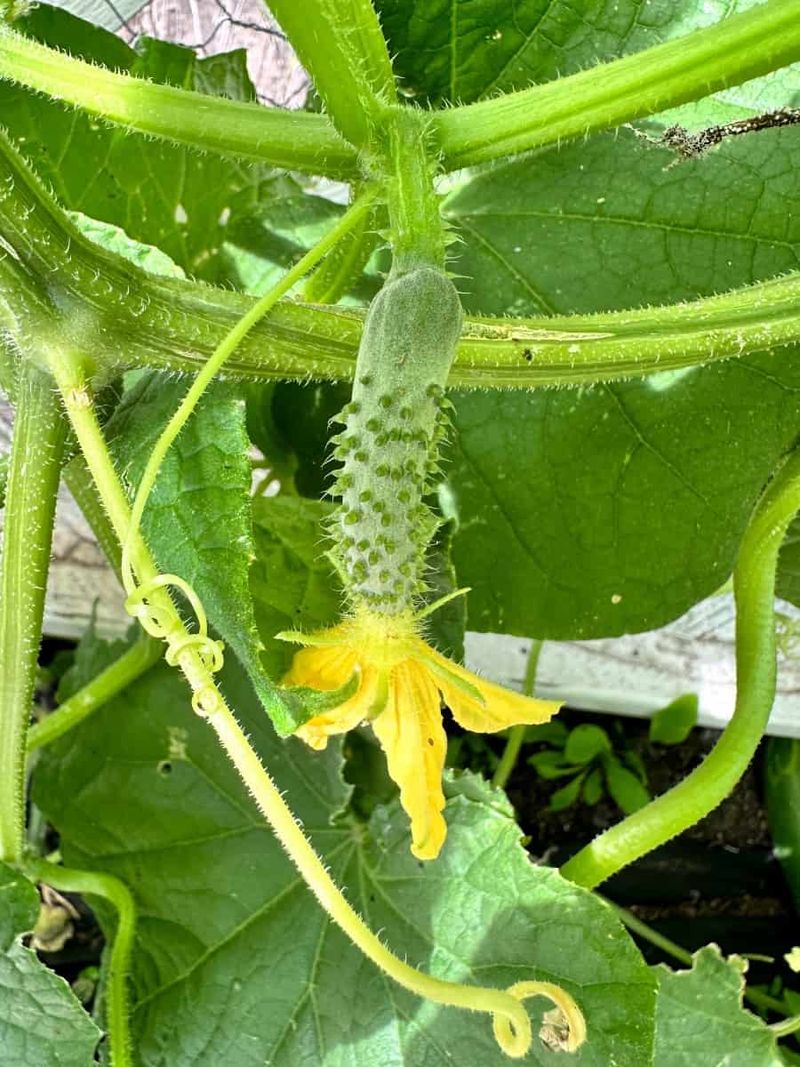
Walking out to find a cucumber vine so full and green that it looks almost too healthy can actually be a warning sign rather than a reason to celebrate.
Nitrogen is the nutrient most responsible for leafy, vigorous growth, and when it is present in excess, the plant often prioritizes stems and foliage over flowers and fruit.
The vine keeps growing outward and upward while production quietly stalls.
This situation can develop when gardeners apply fertilizer frequently hoping to push more cucumbers, or when a bed has been heavily amended with fresh manure or high-nitrogen compost.
It can also happen when a nitrogen-heavy general-purpose fertilizer is used repeatedly without testing the soil to see what is actually needed.
A large, leafy vine is not automatically a productive vine.
Once a cucumber vine is actively flowering and setting fruit, it benefits more from balanced nutrition, including phosphorus and potassium, than from additional nitrogen.
Using a fertilizer formulated for fruiting vegetables rather than one designed to green up a lawn can make a noticeable difference.
A soil test, available through many Texas county extension offices, takes the guesswork out of fertilizer decisions and helps gardeners apply what the plant actually needs.
Cutting back on nitrogen applications and waiting to see whether flowering improves is often a reasonable first step when the vine looks lush but production has clearly slowed down.
6. A Disease Is Damaging Leaves, Stems, Or Vascular Tissue
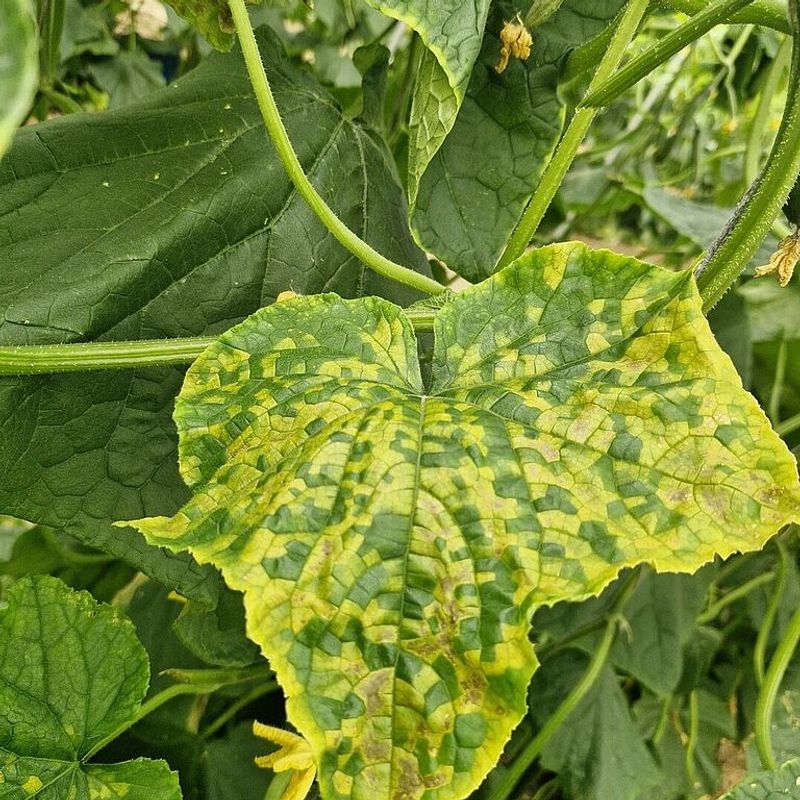
Some of the most damaging cucumber problems in Texas gardens start small and build gradually until production drops noticeably. Fungal and viral diseases can affect leaves, stems, and the internal tissue that moves water and nutrients through the plant.
Once that system is compromised, the vine may struggle to support the flowers and fruits it is trying to produce.
Powdery mildew appears as white or grayish patches on leaf surfaces and becomes more common as Texas summers progress. Downy mildew causes yellowing and browning, often with a grayish growth on the underside of leaves.
Gummy stem blight creates water-soaked lesions on stems and can spread quickly in warm, humid conditions. Fusarium wilt causes rapid wilting that does not recover with watering, and it is carried through the soil.
Cucumber mosaic virus and related virus complexes can cause mottled, distorted, or stunted leaves and reduced fruit production.
Symptoms from different diseases can overlap, so one visible sign on a leaf should not be used to confirm a specific cause without looking at the full picture of what the plant is showing. Inspecting stems, roots, and fruit alongside the leaves gives a clearer picture.
Removing affected plant material, improving air circulation by thinning crowded vines, and avoiding overhead watering can slow the spread of many diseases.
Rotating cucumbers to a different garden area each season also reduces the risk of soil-borne problems building up over time in Texas gardens.
7. Insects Are Damaging Flowers, Leaves, Or Growing Points
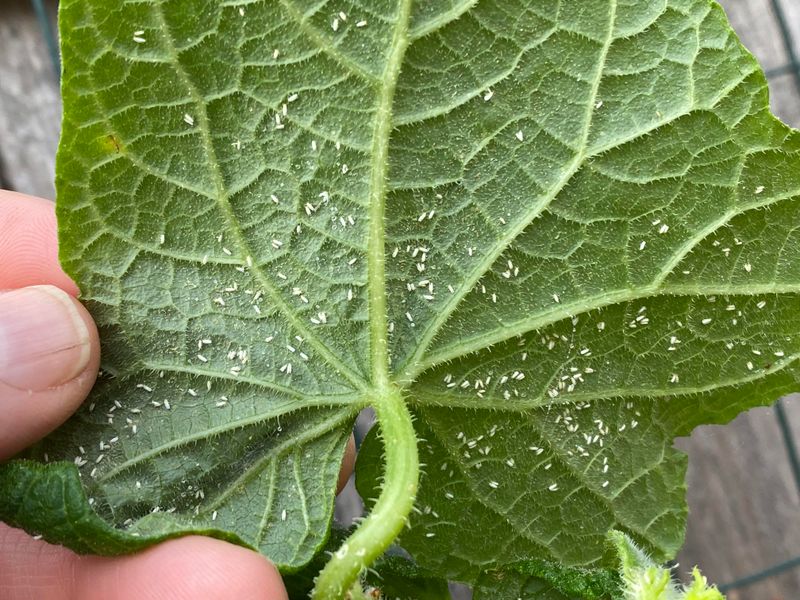
Finding a cucumber vine that looks off but cannot immediately explain why often leads a gardener to start flipping leaves over.
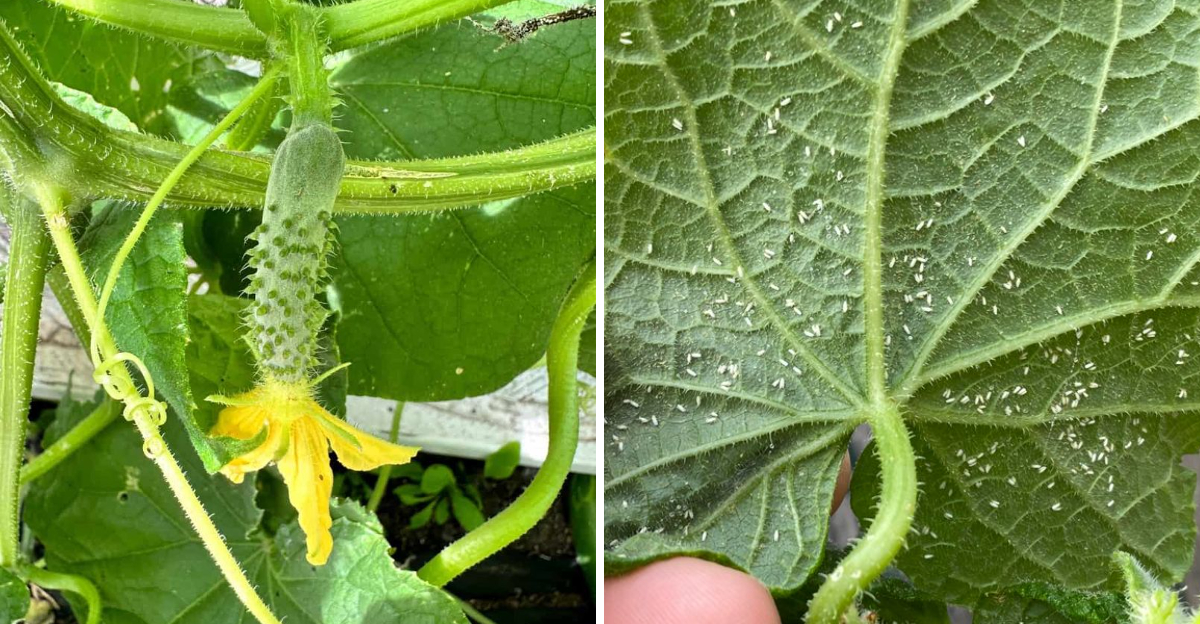
The underside of a cucumber leaf is one of the first places insects settle in, and by the time damage is visible from above, a population may already be well established.
Aphids, whiteflies, thrips, and leafhoppers are among the most common culprits in Texas cucumber gardens.
Aphids cluster along new growth and on leaf undersides, removing plant sap and causing leaves to curl or yellow. Thrips are tiny and fast-moving, and their feeding on flowers can interfere with fruit set.
Leafhoppers move quickly and spread plant viruses as they feed, which can cause symptoms that look more like a disease than an insect problem. Cucumber beetles feed on leaves, flowers, and stems and can also carry bacterial wilt.
Leaf miners create winding trails inside leaves that reduce the plant’s ability to photosynthesize effectively.
Before applying any treatment, identifying the specific pest makes a real difference in choosing the right response.
Broad pesticide applications can eliminate beneficial insects, including the bees that cucumbers depend on for pollination, creating a second problem while trying to solve the first.
Inspecting new growth, flower buds, and stem joints regularly helps catch infestations early.
In many Texas gardens, encouraging natural predators like lacewings and ladybugs by reducing unnecessary chemical use can help keep pest pressure from reaching the level where production is seriously affected.
8. Mature Cucumbers Are Being Left On The Vine Too Long
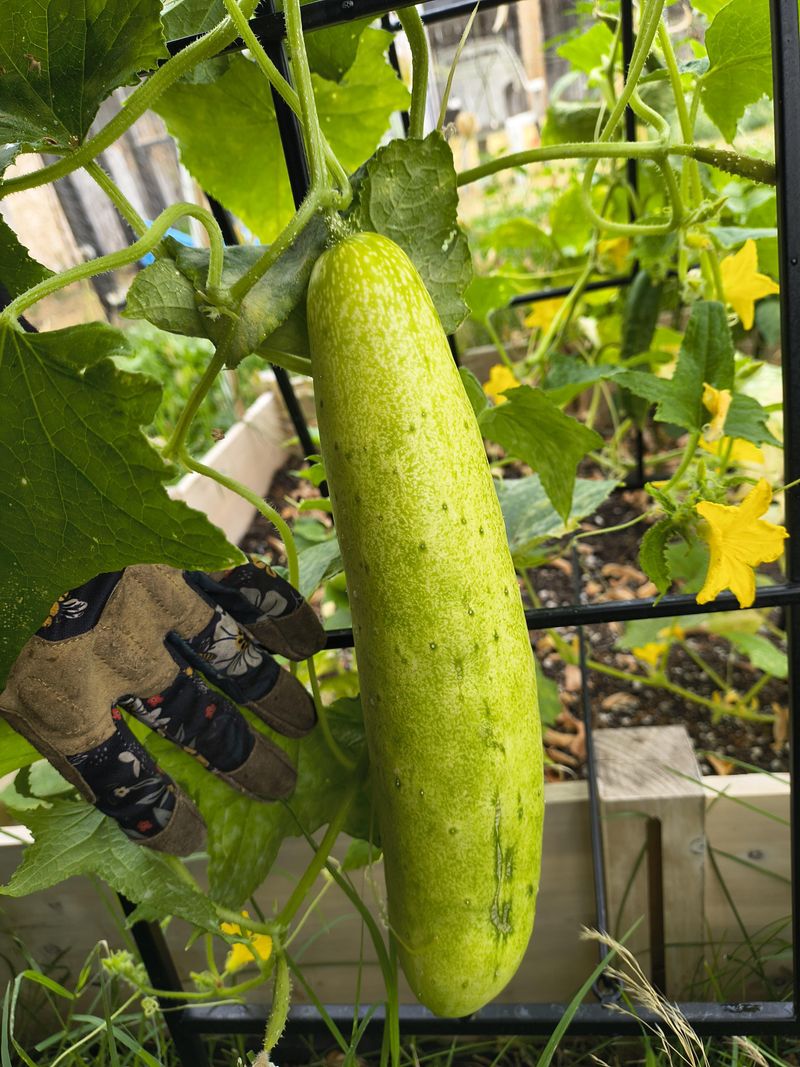
One of the most overlooked reasons a cucumber vine slows down is hiding right there in the garden, often tucked under a broad leaf where it went unnoticed for too long.
A cucumber that has grown past its ideal harvest size and begun to yellow or soften is no longer just a missed harvest.
It is actively pulling the plant’s resources toward seed development, which signals the vine to slow or stop producing new fruit.
Cucumbers are designed to reproduce, and once a fruit is allowed to mature fully, the plant interprets that as a sign that its reproductive mission is close to complete.
The result is fewer new flowers and a noticeable drop in production that can seem sudden even though the cause has been quietly building for days.
One oversized cucumber may not fully explain a complete stop, but several overlooked fruits can together create a significant slowdown.
Frequent harvesting, ideally every one to two days during peak production, keeps the vine focused on generating new flowers and fruits. It also makes hidden cucumbers easier to find before they grow too large.
Slicing varieties are generally ready when they reach six to eight inches, while pickling types are best harvested smaller and more frequently.
Leaving a ruler or a quick visual comparison in mind while checking the vines can help gardeners stay ahead of the curve.
In the Texas heat, cucumbers can size up faster than expected, so checking often pays off.