8 Signs Your Florida St. Augustine Grass Has a Fungus Problem
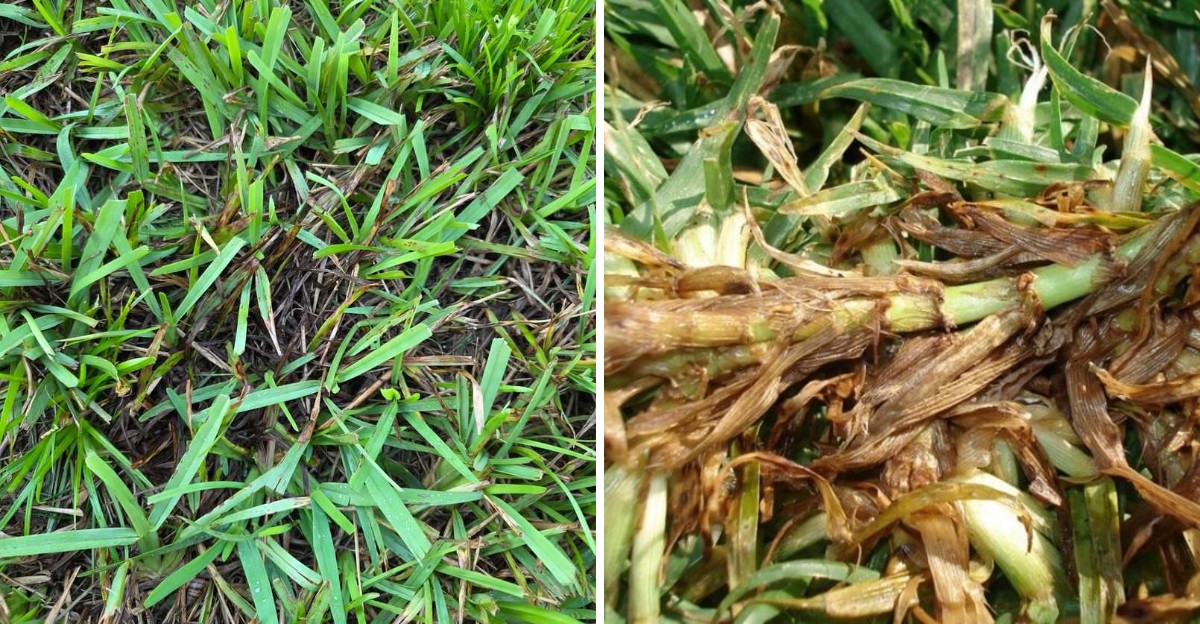
A single patch of sick turf can stretch more than twenty feet across before most homeowners notice anything strange. It often starts quietly when soil cools below seventy degrees and the sprinklers keep running like clockwork.
Florida lawns face this mischief more than most, thanks to steamy afternoons and dew that lingers past breakfast. Warm rain and damp blades give microscopic troublemakers the moist hideout they need to spread through your yard.
My first brown spot sent me racing for fertilizer, which, as it turns out, only fed the problem. You might notice clues long before the damage grows, if you know which colors and shapes to look for.
Spots, rings, fuzz, and mushrooms each tell a different story about what lives beneath your favorite Florida grass. Your own backyard might already be dropping a few of those hints, just waiting for someone to notice.
1. Gray Leaf Spot Leaves Diamond Shaped Lesions On Blades
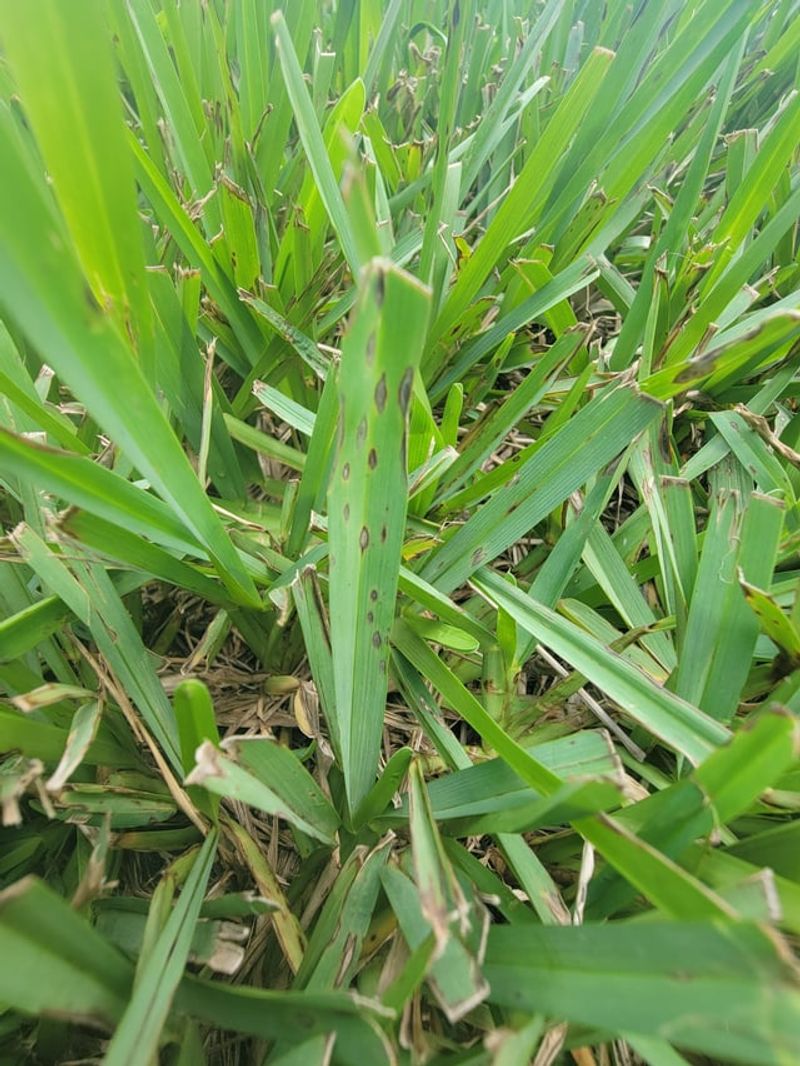
Grab a magnifying glass and a sunny morning, because gray leaf spot hides in plain sight on single blades. The lesions look like tiny gray diamonds with dark purple or brown frames around their edges.
University of Florida experts list this disease, caused by Pyricularia grisea, as one of the most common St. Augustine problems. It loves hot, rainy stretches of summer when nights stay warm and blades stay wet for hours.
Personally, I find the spots easiest to spot on newer blades near the edge of the lawn. On humid mornings, the centers can even show a faint gray fuzz that looks like soft felt.
As spots multiply, they can join together and turn whole blades brown and twisted at the tips. From a distance, an infected lawn looks thin and scorched, almost like it missed several weeks of rain.
Nitrogen fertilizer is a big trigger, so heavy summer feeding often makes gray leaf spot spread much faster. Newly laid sod and shady spots with poor airflow also seem to attract this blade-spotting troublemaker.
You can help by watering early in the morning, so blades dry quickly once the sun climbs higher. Avoid evening irrigation, since long overnight wetness gives the fungus a perfect window to spread spores.
Switching to slow-release fertilizer and skipping extra nitrogen during outbreaks often calms things down within weeks. If damage keeps spreading, ask your county extension office which labeled fungicide fits your situation best.
2. Smoky Brown Rings Point To Large Patch Disease
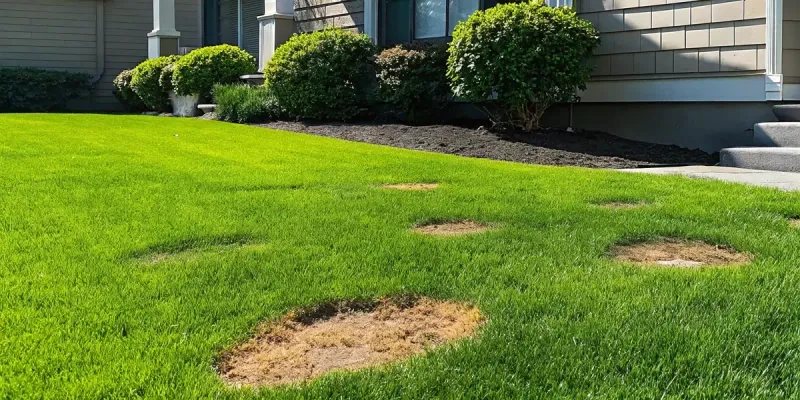
Few lawn mysteries look as dramatic as a giant tan circle that seems to appear after a few cool nights. Large patch, caused by Rhizoctonia solani, can create rings that stretch from a few feet to twenty feet wide.
The outer edge usually shows a darker, orange or smoky border where the fungus is actively moving outward. Inside that ring, the grass often fades to yellow, then straw brown, while new green sprigs may recover later.
What surprises me most is the simple tug test that helps confirm this disease without any fancy tools. Gently pull a yellow blade near the edge, and it often slides free from a dark, rotted base.
That mushy leaf sheath is a strong clue, since drought-stressed grass usually stays firmly attached to the runner. Look for the rot right where the blade meets the stolon, often stained brown or nearly black.
Large patch shows up mostly from fall through spring, when soil temperatures drop below roughly seventy degrees. Wet soil, heavy thatch, and late nitrogen feeding can all encourage these rings to grow wider each season.
You need to cut back on watering during cooler months, since the grass grows slower and needs less moisture. Fixing low spots where water pools can make a surprising difference in how often the patches return.
Preventive fungicides applied in fall can help lawns with a history of large patch, according to extension guidance. Avoid fertilizing with quick nitrogen late in the year, because tender growth gives the fungus an easy meal.
3. Yellow Patches With Black Roots Signal Take-All Root Rot
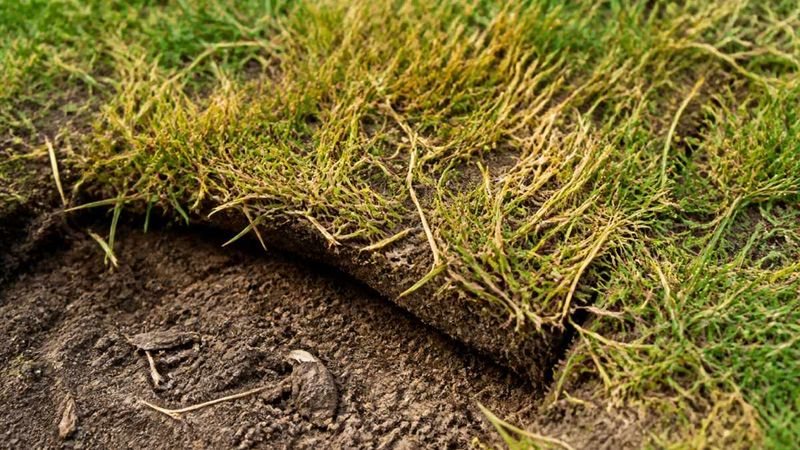
Sometimes the real drama happens underground, where take-all root rot quietly chews on roots you rarely see. Caused by Gaeumannomyces graminis var. graminis, this disease often shows up first as yellow, irregular patches.
The patches can range from a few inches to many feet across, and they often refuse to green up. More water and more fertilizer usually change nothing, which tends to frustrate homeowners who keep trying harder.
I believe the best detective move here is simply digging up a small handful of grass from the edge. Healthy roots look white and fairly long, while infected roots look short, brittle, and dark brown or black.
Runners may also show dark spots, and they often lift right out of the soil with very little effort. That loose, poorly anchored feeling is one of the clearest signs that root health has seriously declined.
University of Florida researchers note that this disease is most active during warm, rainy months from summer into fall. Stress from high pH soil, heavy rain, or herbicide use can make lawns much more vulnerable to it.
You can help roots recover by raising your mowing height and watering deeply but less often. Acidifying fertilizers containing manganese and ammonium sulfate are sometimes suggested by extension specialists to support affected turf.
Fungicides work best as prevention, so timing matters more than strength once symptoms become obvious. Patience helps too, since stolons may take months to regrow strong, healthy roots after a severe outbreak.
4. Purple Brown Specks Reveal Cercospora Leaf Spot
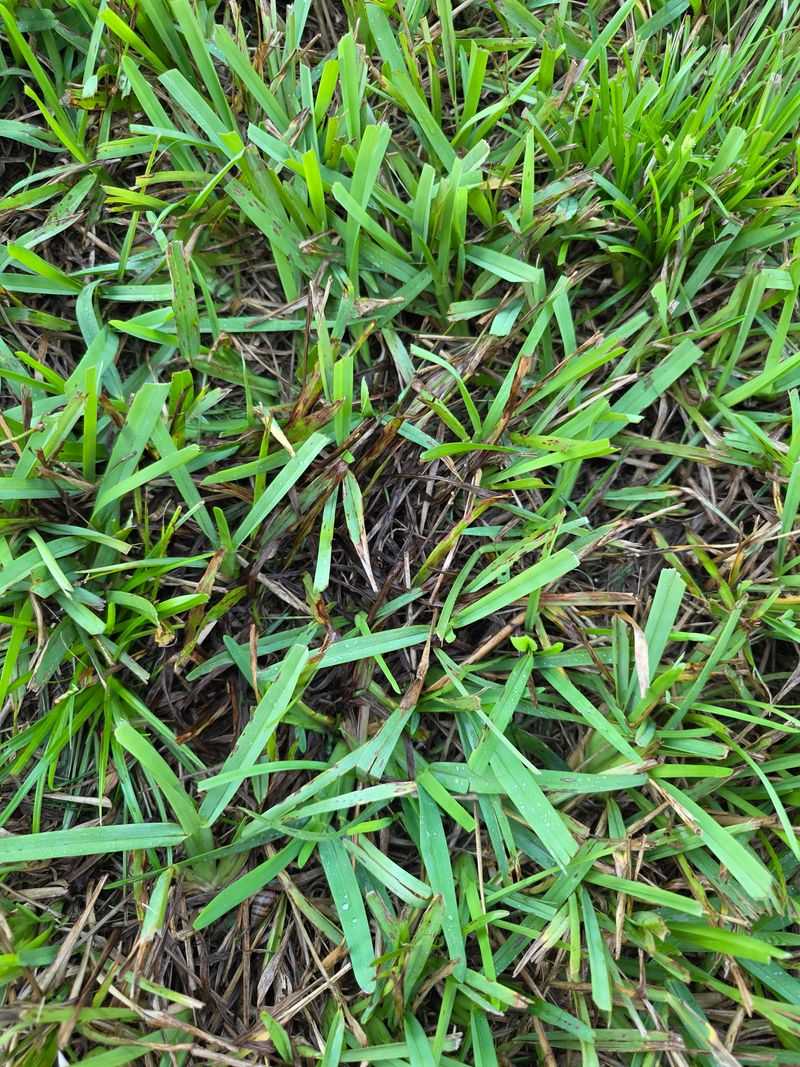
Tiny purple freckles on your grass might look harmless, but they can hint at Cercospora leaf spot. Caused by Cercospora fusimaculans, these small oval specks often start dark purple or brown along the blade.
Over time, the centers can fade to tan while the edges stay darker, creating a speckled, peppered appearance. Compared with gray leaf spot, these marks usually stay smaller and lack that soft gray fuzzy center.
I love how a quick side-by-side comparison of blades from sunny and shady areas can reveal the difference. Shaded corners and spots under big oak trees often show the heaviest speckling during warm, humid weather.
Extension sources describe this disease as less severe than many others, though heavy cases can thin the lawn. Infected blades may yellow and drop, leaving the turf looking tired and patchy rather than lush and thick.
Wet leaves for long stretches create the perfect setting, so watering habits play a big role here. Lawns watered at night or crowded by overhanging branches tend to stay damp much longer than open lawns.
You need to trim back low limbs when possible, letting more sunlight and breeze reach the grass below. Moderate, balanced fertilizer often helps the lawn outgrow mild leaf damage without needing much extra help.
Fungicide treatment is rarely needed for light cases, according to university guidance on warm-season turf diseases. Good mowing with sharp blades also helps, since ragged cuts leave wounds that hold moisture and invite trouble.
5. Mushroom Circles Mark A Fairy Ring In The Lawn
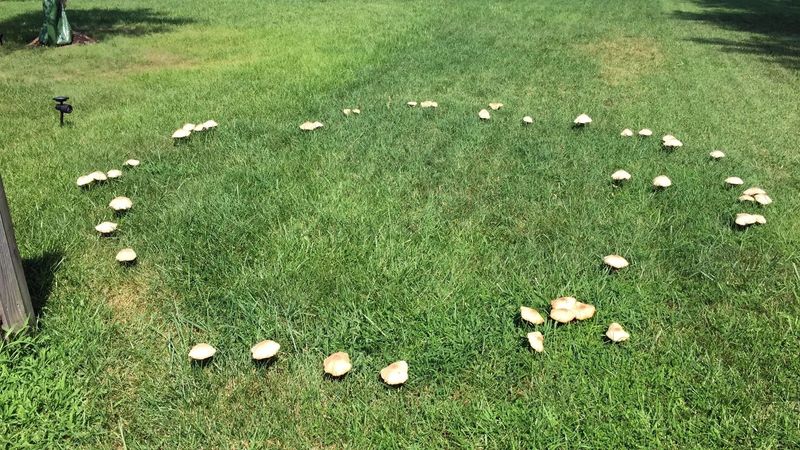
Folk tales once blamed dancing fairies for rings of mushrooms that suddenly popped up in grassy meadows. Today we know soil fungi cause these rings, and they show up in plenty of warm, rainy backyards.
A fairy ring may appear as a circle of mushrooms, a band of extra dark green grass, or both. Some rings also create a brown, struggling band where soil becomes so packed with fungus that water struggles to soak in.
Personally, I get a little thrill every time one appears after a summer storm, even if it means extra work. The mushrooms often show up for just a few days, then fade as the soil dries again.
Fairy rings usually form where buried organic matter, like old tree roots or stumps, slowly breaks down underground. The fungus grows outward from that food source, so the ring can widen a bit each year.
The dark green band happens because the fungus releases extra nitrogen as it breaks down organic material. Brown rings are the bigger concern, since that water-resistant soil can leave grass thirsty even after heavy rain.
You can poke holes in the ring with a garden fork, then water deeply to help moisture reach roots. Some extension experts suggest wetting agents that help water move into the stubborn soil beneath these rings.
Raking off mushrooms keeps the lawn tidy, especially if kids or pets roam the yard often. Wild mushrooms can be risky to eat, so removing them promptly is a smart, simple safety habit.
6. Gray Powdery Slime Mold Coats Grass Blades After Rain
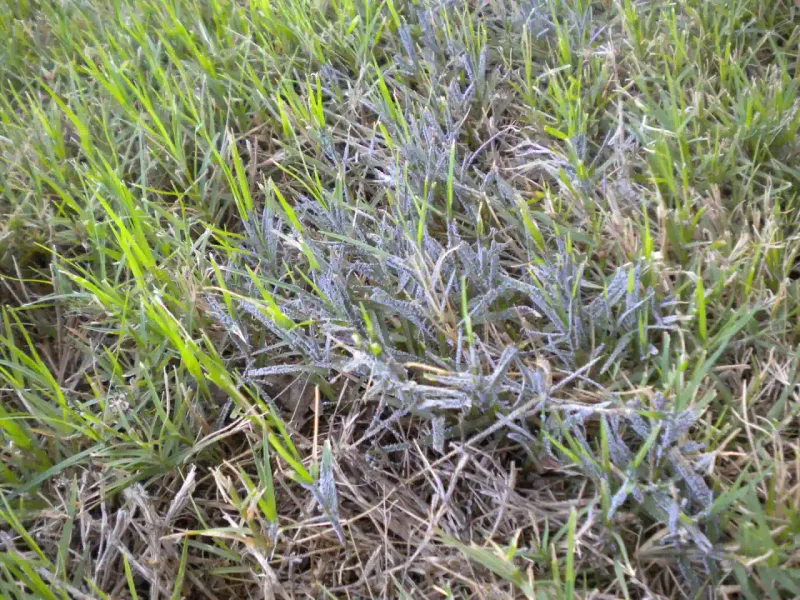
One humid morning, my lawn looked like someone had sprinkled ashes across a few patches of grass. That strange gray coating turned out to be slime mold, a curious organism that often fools homeowners.
Slime molds are not true fungi, but they act similarly and get lumped into lawn disease conversations quite often. They appear as gray, white, or yellowish crusts that sit on top of the blades rather than inside them.
Warm, wet weather after heavy rain is when these crusty patches usually appear, sometimes almost overnight. They feed on bacteria and decaying matter, so they use the grass mostly as a place to climb.
Run your finger across an affected blade, and the powder often rubs right off, leaving green tissue underneath. That simple test helps separate slime mold from true diseases that discolor the leaf from within.
University sources consider slime mold mostly a cosmetic issue, since it rarely causes lasting harm to healthy turf. Heavy coatings can briefly shade blades, making them look yellow until the powder washes away.
You can rinse the patches with a garden hose or simply mow, and the coating usually breaks apart. Brushing it with a broom works nicely too, and it costs nothing but a few minutes of effort.
Fungicides are rarely recommended because slime mold fades on its own once drier weather returns. Its sudden appearance mostly tells you the lawn has stayed damp for a while, so adjust watering accordingly.
7. Dark Leaf Spots From Helminthosporium Thin Out Turf
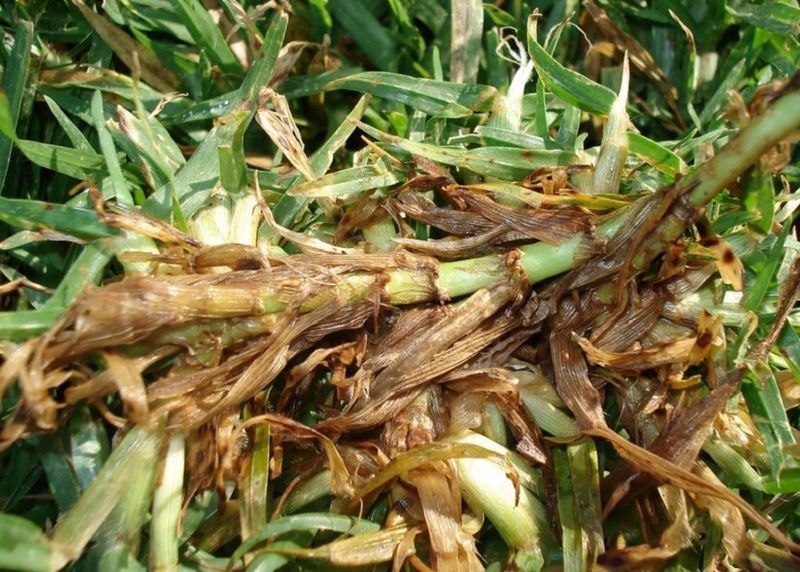
Small dark smudges on grass blades can come from a group of fungi once called Helminthosporium. Scientists now place many of them in genera like Bipolaris, though gardeners still use the older name.
The spots usually look dark brown to nearly black, sometimes with a faint yellow halo around the edge. On St. Augustine, they tend to show up during cool, cloudy, damp weather in late fall or early spring.
What surprises me most is how easily these marks get mistaken for simple mower damage or dirt. Hold a blade up to the light, and the spots look clearly rounded instead of torn or smeared.
When infection spreads to the crown and lower stems, the lawn may thin in irregular, scattered areas. Turf experts sometimes call this stage melting out, since the grass seems to slowly fade away in patches.
Overly lush growth from heavy nitrogen feeding can make lawns more vulnerable to these leaf spot fungi. Thick thatch layers also hold moisture near the blades, giving spores a cozy place to settle and spread.
You can reduce trouble by mowing at the recommended height, which is usually three and a half to four inches. Bagging clippings during an outbreak may help limit the amount of infected material left on the lawn.
Watering in early morning keeps leaves drier, and that small schedule change often slows these spots considerably. Persistent outbreaks deserve a lab diagnosis through your local extension office before reaching for any product.
8. Soggy Soil And Mushy Tan Roots Reveal Pythium Root Rot
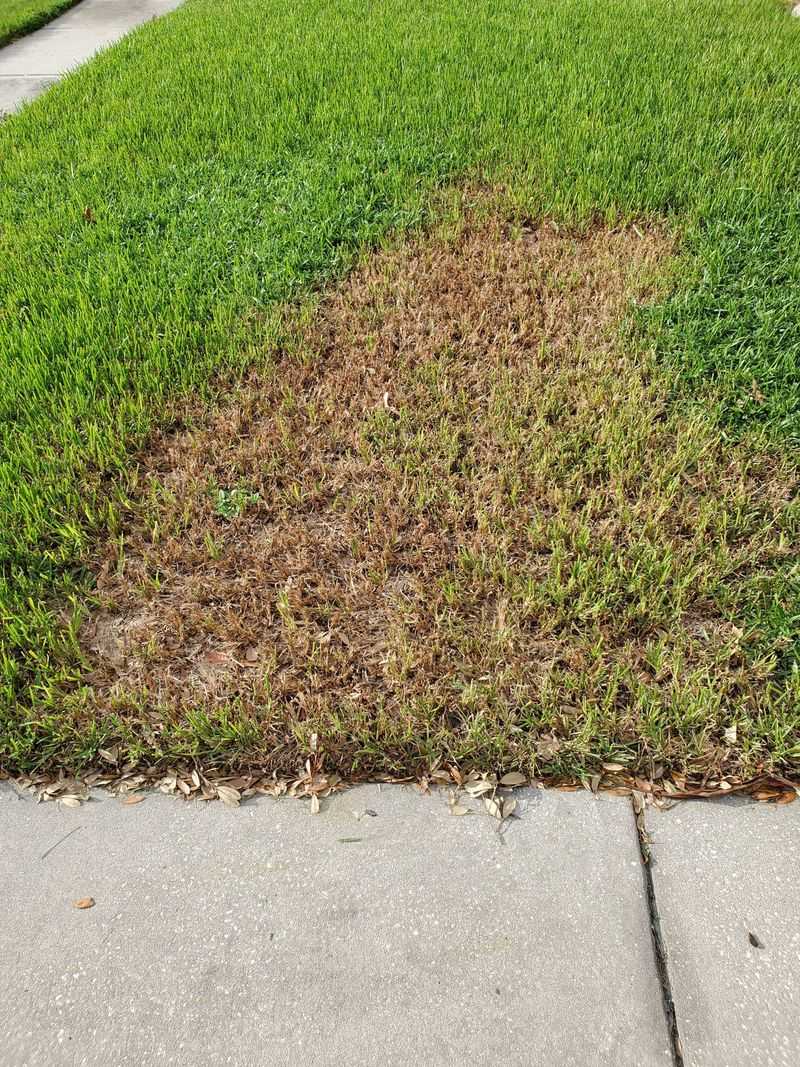
Waterlogged lawns can hide a sneaky organism called Pythium, a fungus-like water mold that loves soggy soil. In Florida yards with poor drainage, Pythium root rot can slowly weaken grass during long rainy stretches.
Above ground, the lawn may simply look thin, pale, and slow to grow, without clear rings or obvious spots. That vague appearance makes it easy to blame hunger, bugs, or heat rather than trouble down at the roots.
I have to admit, this one fooled me until I dug up a plug from the lowest corner of my yard. The roots looked tan or light brown, felt soft and mushy, and had very few fine root hairs.
Healthy St. Augustine roots should feel firm and look mostly white, especially during active summer growth. Comparing a plug from a dry, healthy area with one from a wet area makes the difference easy to see.
Extension specialists link this disease to overwatering, compacted soil, and areas where rain pools after storms. Irrigation systems running on fixed schedules during the rainy season often add water the lawn does not need.
You need to adjust sprinkler timers whenever summer rains arrive, since Florida law already limits many lawn watering days. A rain sensor or soil moisture sensor helps the system skip cycles when the ground is already soaked.
Aerating compacted soil and correcting drainage problems usually do more good than any single product. Fungicides labeled for Pythium exist, but fixing the soggy conditions gives roots their best chance to bounce back.