Why More Arizona Homes Are Placing Agave By The Front Door
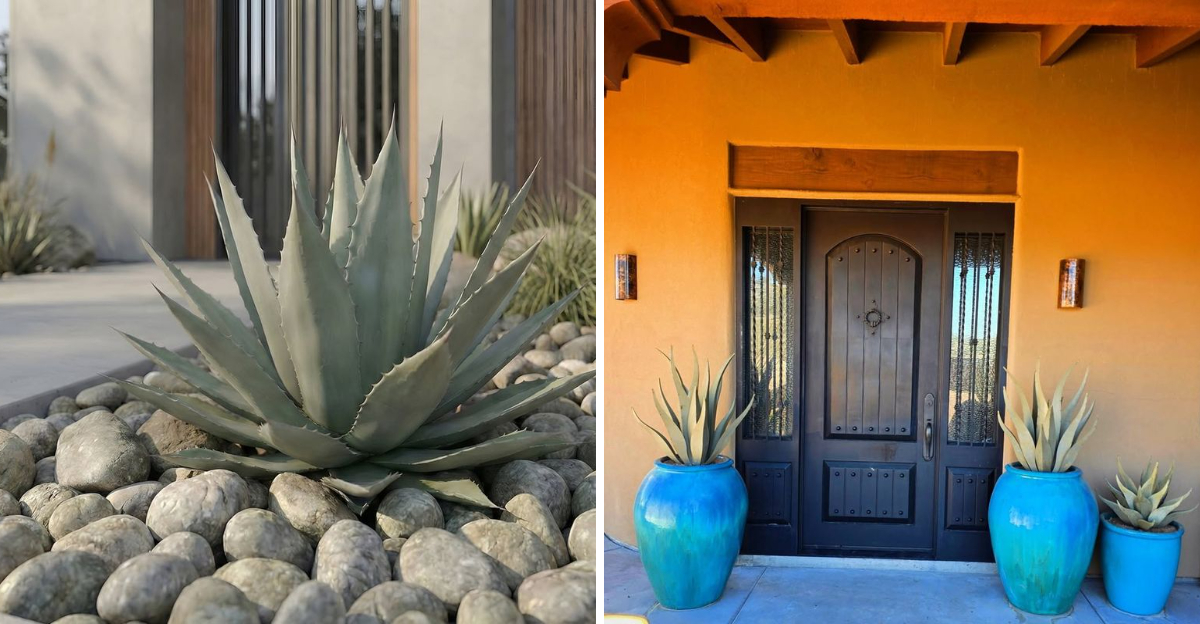
Your front door sets the tone for your entire Arizona home, and more homeowners are turning to agave plants to make that first impression bold and low-maintenance.
If you’ve ever wanted a striking entryway that works with the desert instead of against it, placing agave near the door is one of the smartest moves you can make.
These sculptural succulents bring architectural interest, year-round color, and minimal care, even under intense Arizona sun.
Agave thrives in bright light, handles Arizona heat like a pro, and needs far less water than traditional shrubs or flowering plants, making it perfect for front-door landscaping.
Their dramatic shapes create natural focal points that draw attention without overwhelming the space.
By framing your entry with agave, your Arizona home instantly feels intentional, stylish, and desert-ready. With the right placement, these plants combine beauty, resilience, and low-effort design to enhance every approach to your front door.
1. Agave’s Bold Rosette Shape Turns Any Front Door Into A Focal Point
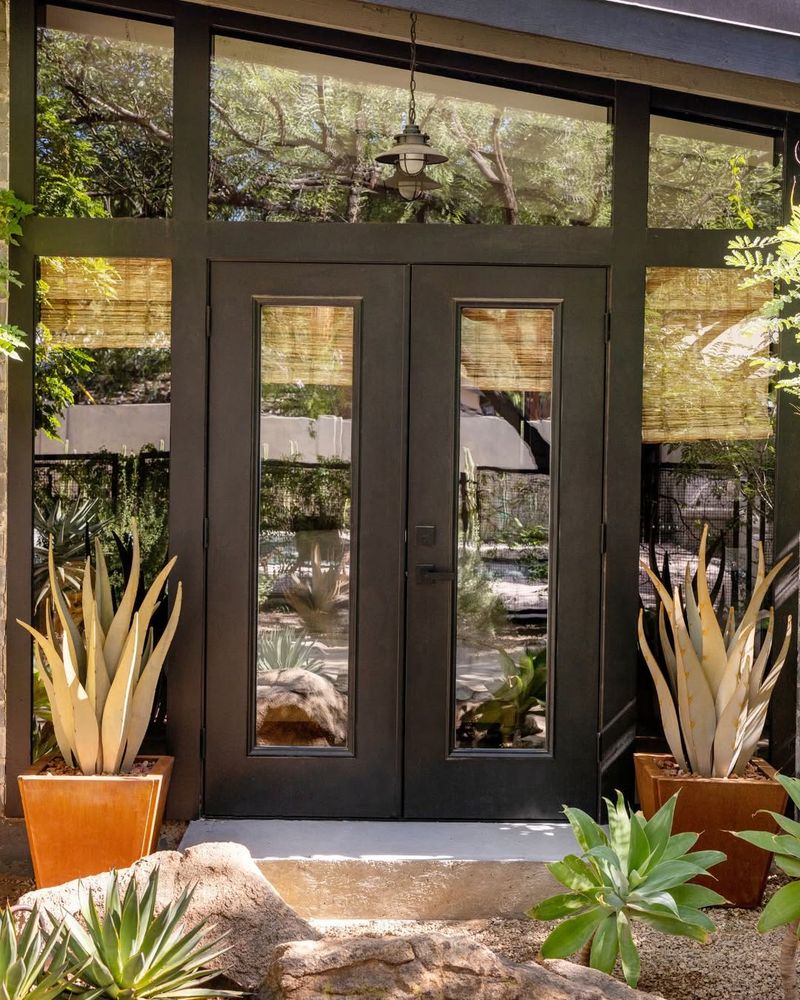
Walking up to a home should feel intentional, and agave delivers that experience without any extra effort. The plant grows in a perfect circular pattern, with thick leaves radiating outward from a central point like nature’s own architectural design.
This rosette formation catches the eye immediately, drawing visitors toward your entrance instead of letting their attention wander across the yard.
Size matters when you’re trying to make an impact, and agave varieties range from compact specimens perfect for narrow walkways to massive plants that command attention from the street.
A single mature agave can span three to five feet across, creating presence without requiring a whole garden bed.
The geometric precision of its form works like a natural sculpture, adding visual interest that changes throughout the day as sunlight shifts and creates shadows between the leaves.
Arizona homeowners appreciate how this shape contrasts with the horizontal lines of ranch-style homes and the vertical elements of two-story entries. The radial symmetry breaks up monotonous facades and adds dimension to flat walls.
Unlike rounded shrubs that blend into backgrounds, agave’s pointed leaves create sharp silhouettes that photograph beautifully and look intentional from every angle.
Placement becomes effortless because the plant’s natural form does the design work for you. You don’t need to arrange multiple plants or create complex layouts.
2. Desert Tough Leaves Handle Blazing Arizona Sun Without Fading
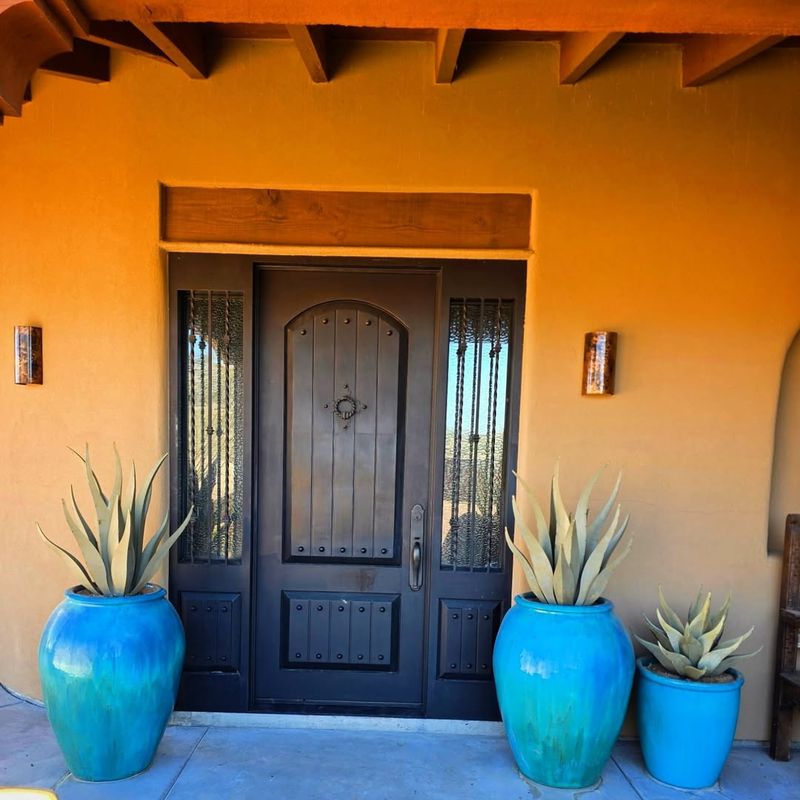
Summer in Phoenix means months of relentless sunshine that turns most plants into crispy shadows of their former selves. Agave thrives in these brutal conditions because its leaves evolved specifically to handle extreme heat and intense UV radiation.
The thick, waxy coating on each leaf reflects light and prevents moisture loss, keeping the plant looking fresh even when temperatures soar past 110 degrees.
Color stability matters more than most homeowners realize until they’ve replaced their third set of sun-scorched plants in a single season.
Traditional landscaping choices fade from vibrant greens to sad yellows and browns by mid-July, creating an unkempt appearance that undermines your home’s curb appeal.
Your Arizona Garden Changes Every Week. Your Plan Should Too.
Gardening in Arizona changes quickly throughout the season. Every Friday you’ll receive a simple weekly plan showing exactly what to plant, prune, fertilize, harvest, and protect so you never miss the right timing.
Agave maintains its striking blue-gray or green tones year-round, never losing the visual punch that makes your entryway stand out.
The structural integrity of those leaves handles wind, hail, and temperature swings that would shred softer plants. Monsoon season brings sudden storms with powerful gusts, yet agave’s rigid leaves bend slightly and spring back without tearing or breaking.
This resilience means your front door landscaping looks consistent whether it’s January or August, giving your home a reliable, well-maintained appearance.
Tucson and Scottsdale residents have learned that investing in sun-tolerant plants saves money and frustration over time.
3. Thick, Water-Storing Foliage Supports Drought-Friendly Landscaping
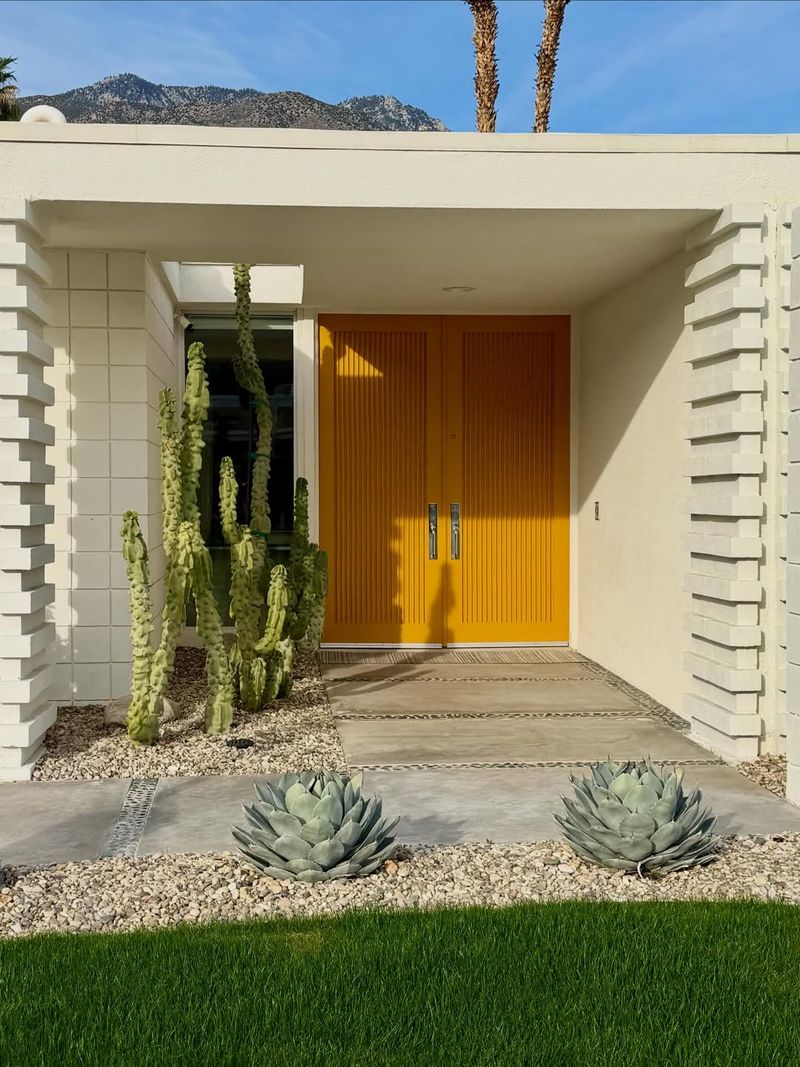
Water bills in Arizona can shock newcomers, especially during summer when outdoor irrigation costs skyrocket.
Agave solves this problem by storing moisture inside its thick leaves, allowing it to survive weeks or even months without supplemental watering once established.
Those chunky leaves aren’t just for show; they function as built-in water tanks that keep the plant hydrated through extended dry periods.
Drought restrictions have become increasingly common across Phoenix and surrounding communities as water conservation becomes a regional priority. Homeowners face pressure to reduce outdoor water use while still maintaining attractive properties.
Agave fits perfectly into xeriscaping plans that meet municipal guidelines without sacrificing visual appeal or creating barren, uninviting entryways.
The financial savings add up quickly when you compare agave to traditional landscaping that demands daily watering during hot months.
A front yard filled with thirsty plants might require hundreds of gallons weekly, while established agave needs only occasional deep watering.
Maintenance time drops dramatically when you’re not constantly monitoring soil moisture and adjusting irrigation schedules. Busy families appreciate plants that don’t punish them for forgetting to water or going on vacation.
Agave’s natural water storage means you can travel for weeks without worrying about returning to shriveled, damaged landscaping. The plant simply draws on its internal reserves, staying healthy and attractive while you’re away from your Arizona home.
4. Blue-Gray Tones Complement Stucco, Stone, And Southwestern Finishes
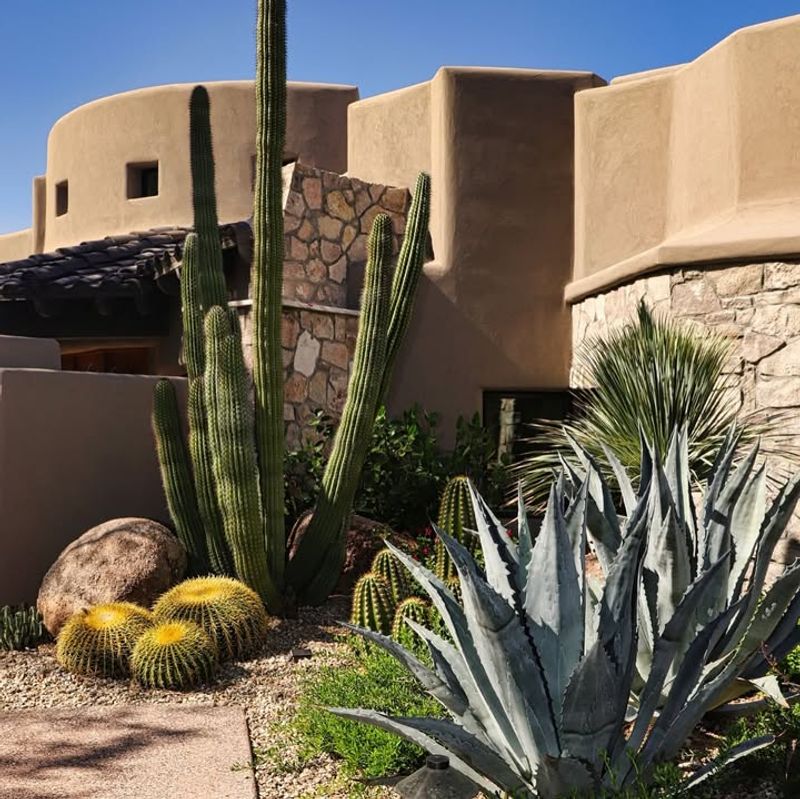
Color coordination between plants and architecture creates cohesion that elevates your entire property’s appearance. Agave’s natural blue-gray coloring pairs beautifully with the earth tones dominating Arizona residential design.
Tan stucco, warm beige stone, and terracotta accents all benefit from the cool contrast that agave provides, creating visual balance that feels both natural and sophisticated.
The muted tones of agave work like a neutral accent that enhances rather than clashes with your home’s existing colors.
Whether your exterior features modern gray finishes or traditional desert tones, agave’s coloring adapts and complements without demanding attention or creating discord.
Scottsdale homes with contemporary architecture particularly benefit from agave’s clean, sculptural presence. The plant’s silvery-blue leaves echo the metal and glass elements popular in modern design while maintaining an organic quality that softens hard edges.
This dual nature makes agave versatile enough to work with both cutting-edge and traditional Southwestern styles.
Seasonal color changes that plague other plants never disrupt your carefully planned aesthetic when you choose agave. The consistent coloring means your front entrance looks cohesive year-round, maintaining the design integrity you established.
You won’t face the common problem of spring blooms looking perfect while winter dormancy leaves your entry looking bare and mismatched against your home’s permanent finishes and architectural features throughout Arizona’s varied seasons.
5. Strong Symmetry Creates A Clean, Designed Look At The Entry
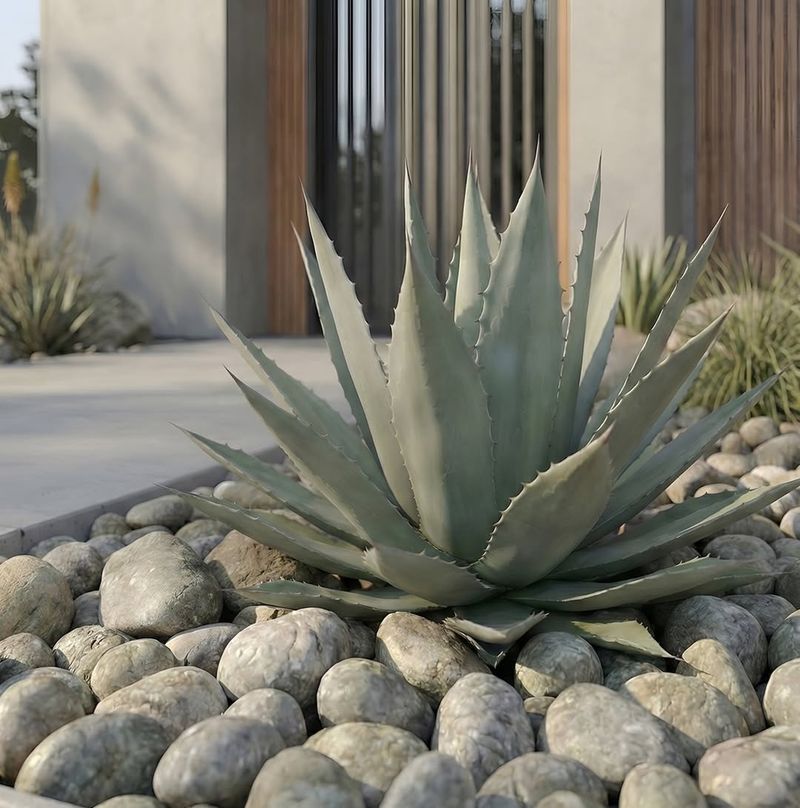
Professional landscaping costs thousands, but agave delivers that designer appearance naturally through its inherent symmetry.
Each leaf emerges at mathematically precise intervals, creating patterns that look intentionally arranged even though they’re entirely natural.
This built-in organization means your front entrance appears thoughtfully designed without requiring expensive consultations or complex installation plans.
Homeowners often struggle to create balanced, attractive entryways because most plants grow irregularly and require constant pruning to maintain shape. Agave eliminates this challenge by growing in predictable, symmetrical patterns that need no intervention.
The plant essentially landscapes itself, developing that coveted architectural quality that makes homes look more valuable and well-maintained.
Curb appeal directly impacts property values throughout Phoenix and Tucson, making smart landscaping choices a genuine investment rather than mere decoration.
Real estate professionals consistently note how homes with clean, symmetrical front landscaping photograph better and attract more buyer interest.
Agave provides this advantage at a fraction of the cost and effort required by traditional foundation plantings.
Humans naturally find balanced, orderly environments more appealing and trustworthy than chaotic arrangements.
Your front door represents the first impression visitors form about your entire home, and agave’s perfect geometry communicates care, attention, and good taste before anyone even rings the doorbell.
6. Slow Growth Keeps The Area Neat Without Constant Maintenance
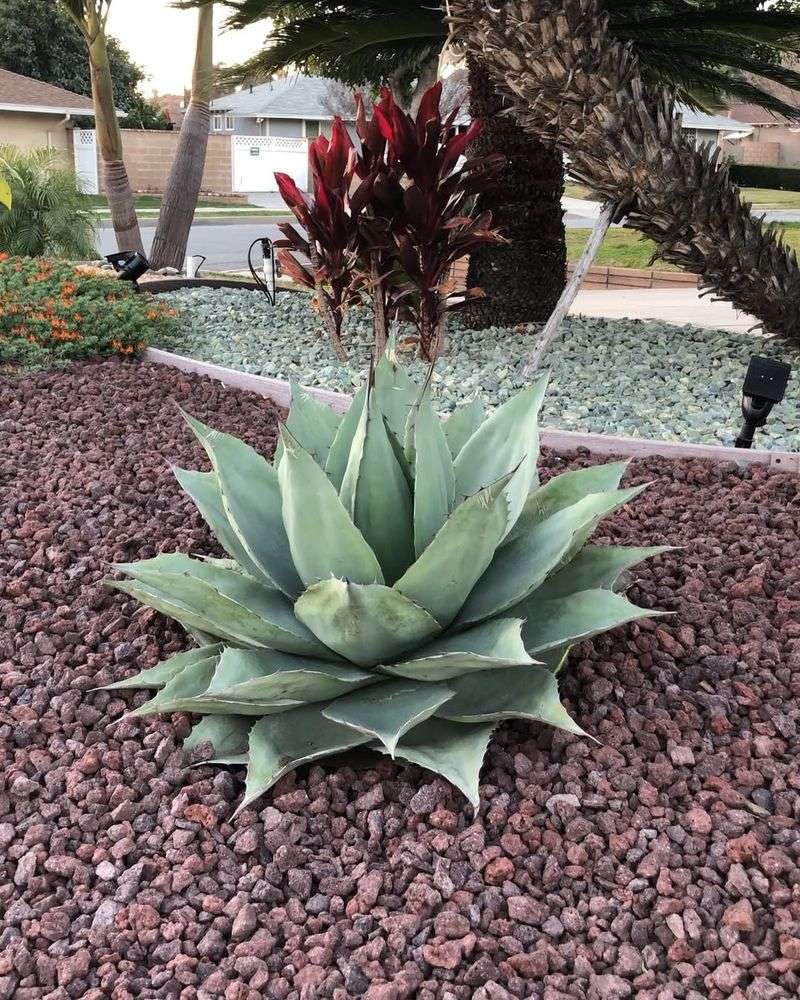
Fast-growing plants seem appealing until they engulf your walkway and require monthly trimming to stay presentable. Agave takes the opposite approach, growing slowly and deliberately over years rather than months.
This measured pace means the plant you install today will look essentially the same next year, maintaining its size and shape without threatening to overtake your entryway or block your door.
Maintenance schedules overwhelm homeowners who juggle work, family, and other responsibilities alongside property upkeep. Agave respects your time by requiring almost nothing beyond occasional removal of damaged lower leaves.
You won’t spend Saturday mornings trimming, shaping, or cutting back aggressive growth. The plant simply sits there looking perfect, freeing you to focus on activities you actually enjoy.
Professional landscaping services charge premium rates for regular maintenance visits, and those costs multiply quickly when plants need frequent attention.
Choosing slow-growing agave for your front door area eliminates or drastically reduces these recurring expenses.
Long-term planning becomes simpler when your landscaping won’t outgrow its space or create future problems.
Arizona homeowners appreciate knowing their front entrance will look appropriate and proportional for decades rather than requiring replacement or major renovation within a few years.
Agave’s slow growth rate provides stability and predictability, letting you design once and enjoy the results indefinitely without worrying about plants that quickly become too large for their location.
7. A Single Statement Plant Delivers Impact Without Cluttering The Walkway
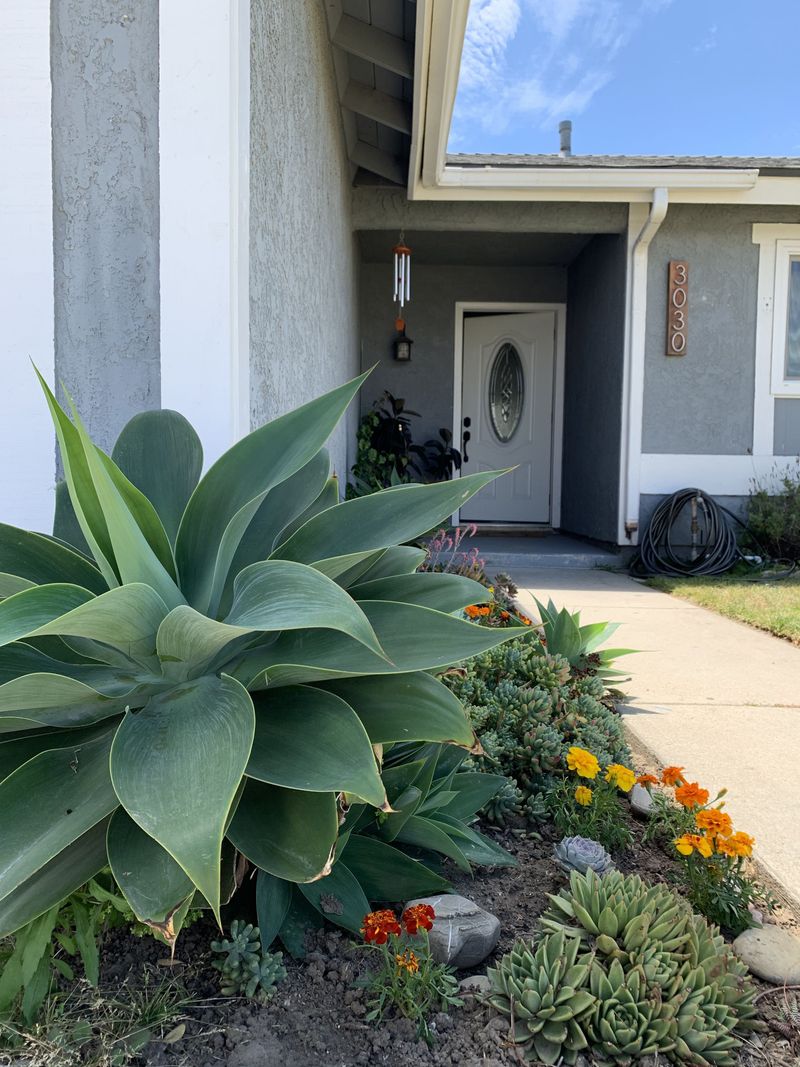
Minimalism has taken over modern design, and landscaping trends follow the same principle of achieving more with less. One impressive agave makes a stronger statement than a dozen smaller plants competing for attention.
The clean simplicity of a single specimen creates sophistication that busy, cluttered plantings can never match, giving your Arizona home a contemporary edge that feels both current and timeless.
Walkway safety becomes a real concern when plants encroach on paths and create tripping hazards or obstacles. Agave’s contained growth habit keeps pathways clear while still providing visual interest along the route to your door.
Guests can approach your entrance confidently without navigating around sprawling plants or worrying about brushing against foliage, creating a more welcoming and accessible experience.
Budget-conscious homeowners appreciate how one quality plant costs less than filling an area with multiple specimens.
The initial investment in a mature agave pays immediate dividends in visual impact while avoiding the expense of purchasing, planting, and maintaining numerous smaller plants.
This efficiency extends to installation labor and ongoing care, making single-plant designs financially smart beyond just the purchase price.
The uncluttered aesthetic also makes your entrance feel larger and more open rather than cramped and overgrown.
Small front yards throughout Phoenix and Scottsdale benefit tremendously from this approach, as strategic placement of one bold agave creates the illusion of more space.