These Drought-Tolerant Arizona Plants Help Reduce Weeds Once Established
Weeds always seem to find the smallest opening. Clear one patch, and another pops up somewhere else a few days later.
It can feel like an endless cycle, especially during the growing season when everything seems to grow faster than expected. Spending another weekend pulling weeds is not how most homeowners want to enjoy their yard.
Many landscaping decisions affect more than appearance. Plant spacing, ground coverage, and the way a garden fills in over time can all influence how much room weeds have to spread.
A fuller landscape often means fewer empty spaces where unwanted plants can take hold.
Some drought-tolerant plants become especially useful once they are well established.
In Arizona, they are valued not only because they handle the heat, but also because they can gradually cover bare soil and make it harder for many weeds to get started.
A thoughtful planting plan can reduce maintenance while keeping the landscape looking full and attractive.
1. Trailing Lantana Quickly Fills Bare Soil
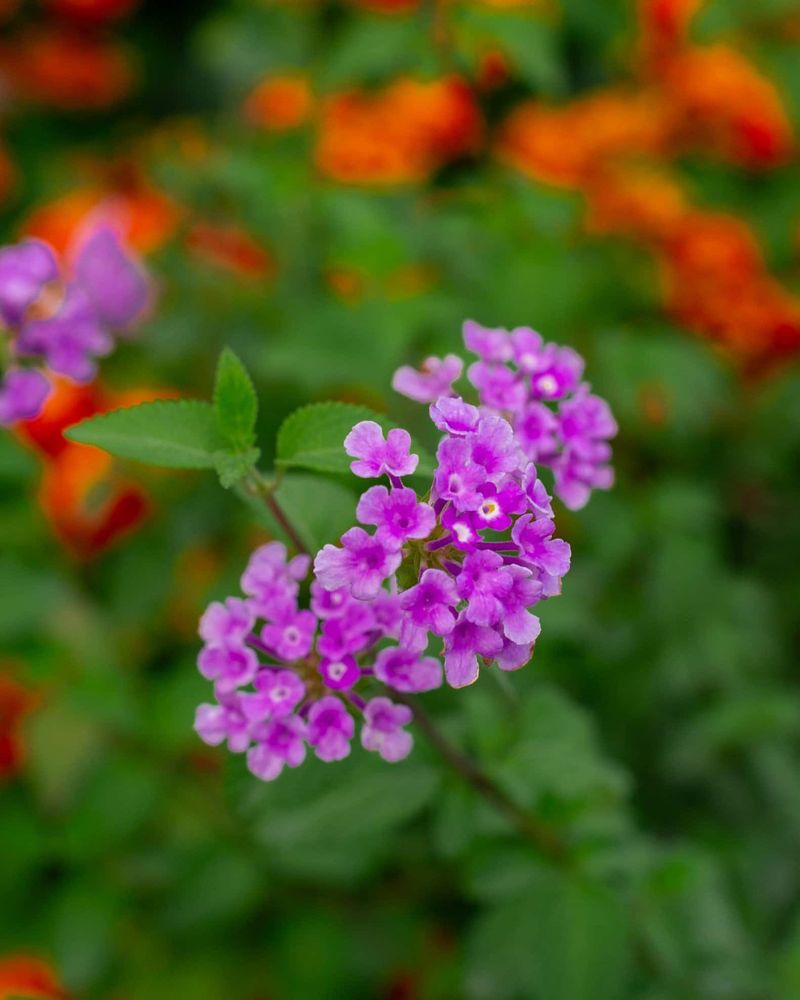
Few plants move as fast across bare ground as trailing lantana. Once it gets a foothold, it spreads aggressively, covering soil before weeds even get a chance to sprout.
Trailing lantana grows low to the ground but fans out wide. A single plant can spread several feet in one season.
That kind of coverage is exactly what a weed-prone bed needs.
Blooms show up in bright clusters of yellow, orange, and pink. Pollinators love them.
The flowers keep coming from spring through fall with almost no extra care from you.
Water it deeply a few times to get it started. After that, rainfall and occasional irrigation are usually enough in most desert garden settings.
Overwatering actually slows it down.
Plant it along slopes, borders, or anywhere bare soil keeps inviting trouble. It roots along the stems as it spreads, which makes the coverage even more effective over time.
Trailing lantana handles reflected heat well. Spots near walls or driveways that bake in summer are actually fine for this plant.
Most other ground covers struggle in those areas.
Trim it back hard once a year if it gets too aggressive. It bounces back quickly and comes in fuller than before.
Regular pruning keeps the shape tidy without slowing the spread much.
2. Damianita Creates Dense, Bushy Growth
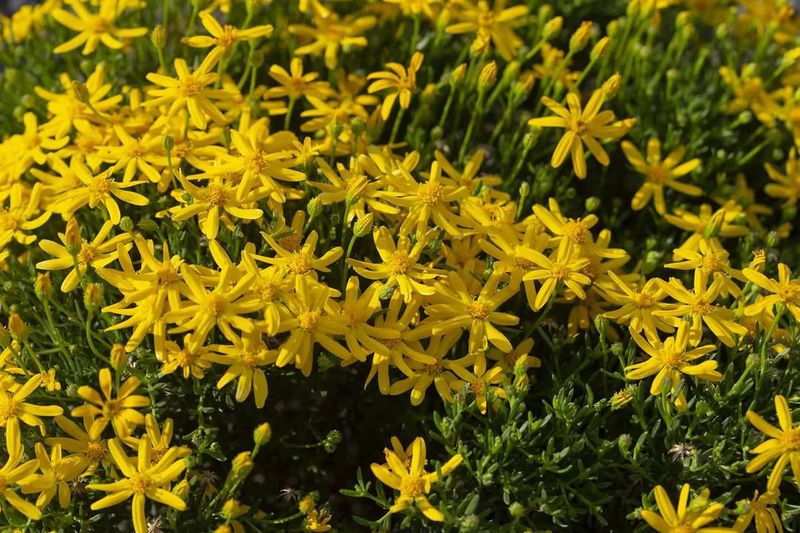
Damianita is one of those plants that quietly earns its place. It does not spread wildly, but it builds into such a dense mound that weeds simply cannot push through underneath it.
Native to the Chihuahuan Desert region, this small shrub thrives in rocky, well-draining soil. It asks for very little once established.
No fertilizer, minimal water, and almost no pruning needed.
The bright yellow flowers are cheerful and appear in spring. In good years with some moisture, a second flush shows up in fall.
Bees visit regularly during bloom time.
Growth is slow at first. Give it one full season to get settled before expecting much spread.
After that, it fills in steadily and holds its shape without much intervention from you.
Your Arizona Garden Changes Every Week. Your Plan Should Too.
Gardening in Arizona changes quickly throughout the season. Every Friday you’ll receive a simple weekly plan showing exactly what to plant, prune, fertilize, harvest, and protect so you never miss the right timing.
Damianita works well in mass plantings. Space plants about two to three feet apart, and they will eventually knit together into a solid, weed-blocking layer.
That spacing pays off within a couple of years.
It handles full sun and reflected heat without complaint. Hot south-facing beds that bake all afternoon are actually ideal conditions for this plant to perform at its best.
The foliage has a slight resinous scent, which some gardeners love and others find strong. Either way, deer tend to avoid it.
That is a real advantage in areas where deer browsing is a constant issue.
3. Trailing Dalea Spreads Across Dry Garden Beds
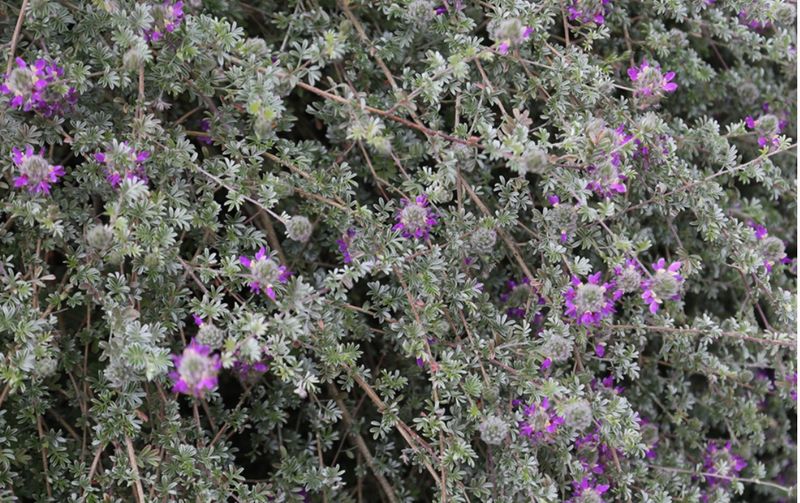
Trailing dalea is not flashy, but it is incredibly effective. Purple flower spikes appear in fall just when most other plants are winding down, which makes it stand out in the garden.
What makes it a weed fighter is its spreading habit. Stems grow outward along the soil surface, rooting as they go.
Over time, a single plant covers a surprisingly large area.
It thrives in full sun and sandy or gravelly soil. Good drainage is the main thing it needs.
Clay-heavy soil can cause problems, so amending the bed before planting makes a real difference.
Water it every week or two during the first summer. Once roots are established, deep irrigation every few weeks is plenty.
Cutting back on water after establishment actually encourages more vigorous spreading.
Trailing dalea pairs well with native bunch grasses and other low-water perennials. Mixing it into a planting bed gives you layered coverage that covers more soil and blocks more weed growth overall.
Butterflies and native bees are drawn to the flowers. Beyond looking beautiful, that pollinator activity supports the broader garden ecosystem.
It is a functional plant on multiple levels.
Cut it back in late winter to keep it tidy. New growth emerges quickly, and the plant fills back in before spring temperatures peak.
Skipping the cutback just makes it look a bit ragged going into the new season.
4. Prostrate Rosemary Grows Along The Ground
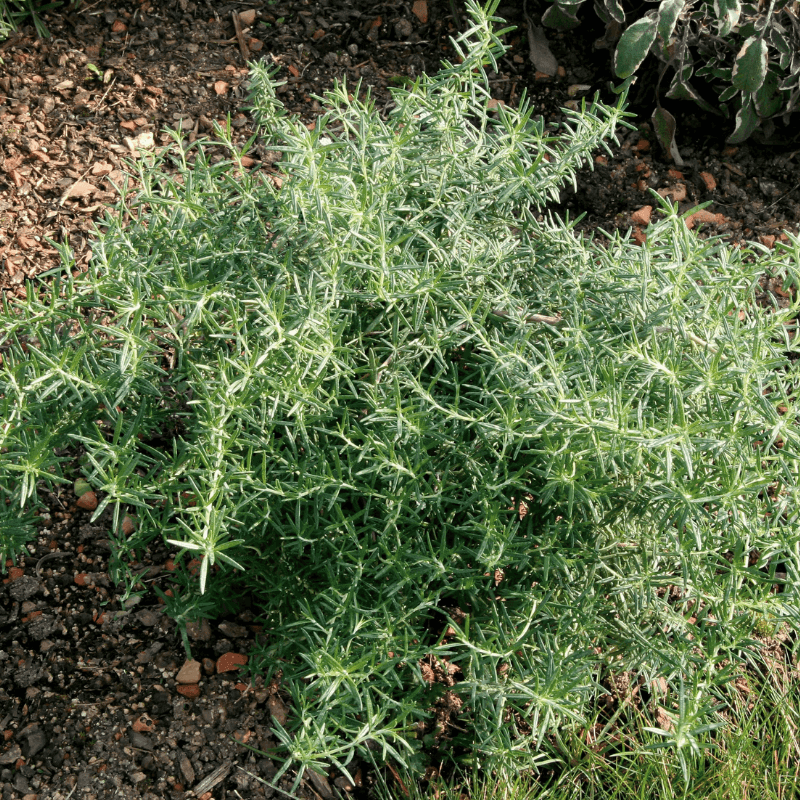
Rosemary that crawls instead of standing upright sounds unusual, but prostrate rosemary is genuinely one of the most practical low-water ground covers available for hot, dry gardens.
Stems spread outward and stay close to the ground, sometimes draping over walls or down slopes beautifully. The foliage is dense and fragrant, which makes working near it a surprisingly pleasant experience.
Tiny blue flowers appear in late winter and early spring. Bees go absolutely wild for them.
Bloom time can be brief, but the dense evergreen foliage earns its place in the garden year-round.
It needs excellent drainage above almost anything else. Wet roots are the main thing that causes problems.
Raised beds and slopes are ideal planting spots for this reason.
Once established, it can go several weeks between waterings during cooler months. Summer heat may require more frequent irrigation, especially in the low desert zones of the Southwest where temperatures push well past 110 degrees.
Space plants about three to four feet apart to allow room to spread. They fill in over two to three seasons and create a thick, weed-suppressing mat that is hard for anything to push through.
You can harvest the foliage for cooking just like upright rosemary. Fresh rosemary from your own garden bed is a bonus that most purely ornamental ground covers simply cannot offer.
That practical use is a nice extra.
5. Hardy Ice Plant Covers Bare Soil With Thick Growth
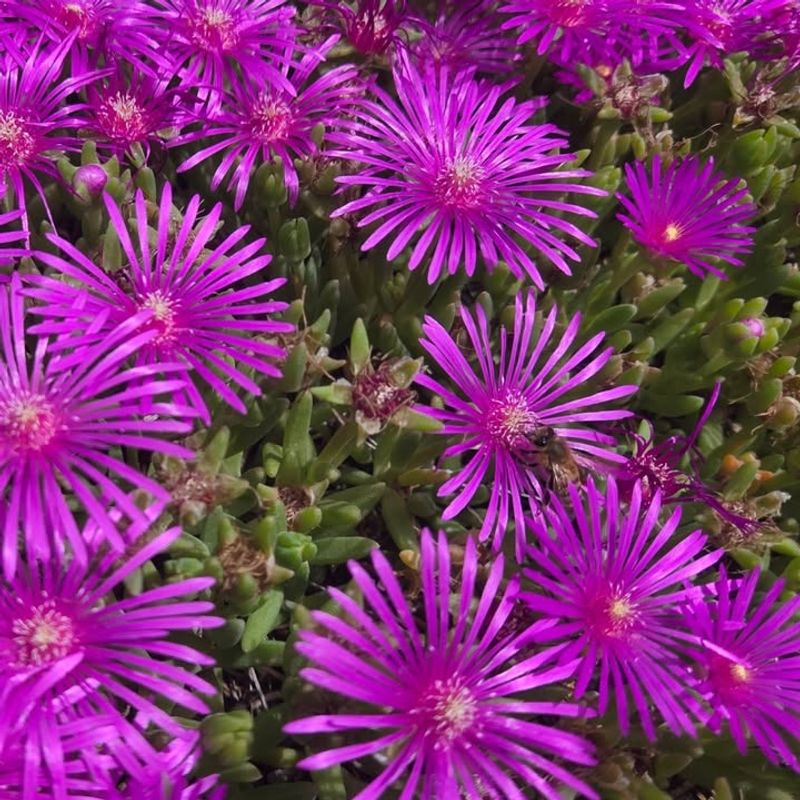
Bare soil in a hot, dry garden is basically an open invitation for weeds. Ice plant answers that invitation fast, spreading its thick, succulent stems across the ground before much else can move in.
The leaves store water, which helps the plant handle dry spells with ease. That water storage is also what gives the foliage its distinctive plump, glistening look in morning light.
Flowers are vivid and electric, usually in shades of magenta, pink, or yellow depending on the variety. They open in full sun and close at night, which gives the garden a lively, changing look throughout the day.
Growth is low, usually staying under six inches tall. Width is where it really performs.
Established plants spread several feet across and root along the stems, creating a dense mat that smothers weed seeds beneath it.
Water it deeply once a week during the first season. After that, cut back significantly.
Too much water causes root problems and can actually reduce the plant’s spreading ability over time.
Ice plant does best in full sun. Partial shade is tolerable, but the flowering slows down noticeably.
A south or west-facing bed with reflected heat is actually a strong spot for this plant to perform well.
In Arizona, it works especially well along walkways and sloped beds where erosion and weeds tend to be recurring problems. The root system holds soil firmly in place during monsoon rains.
6. Angelita Daisy Develops Into Compact Clumps
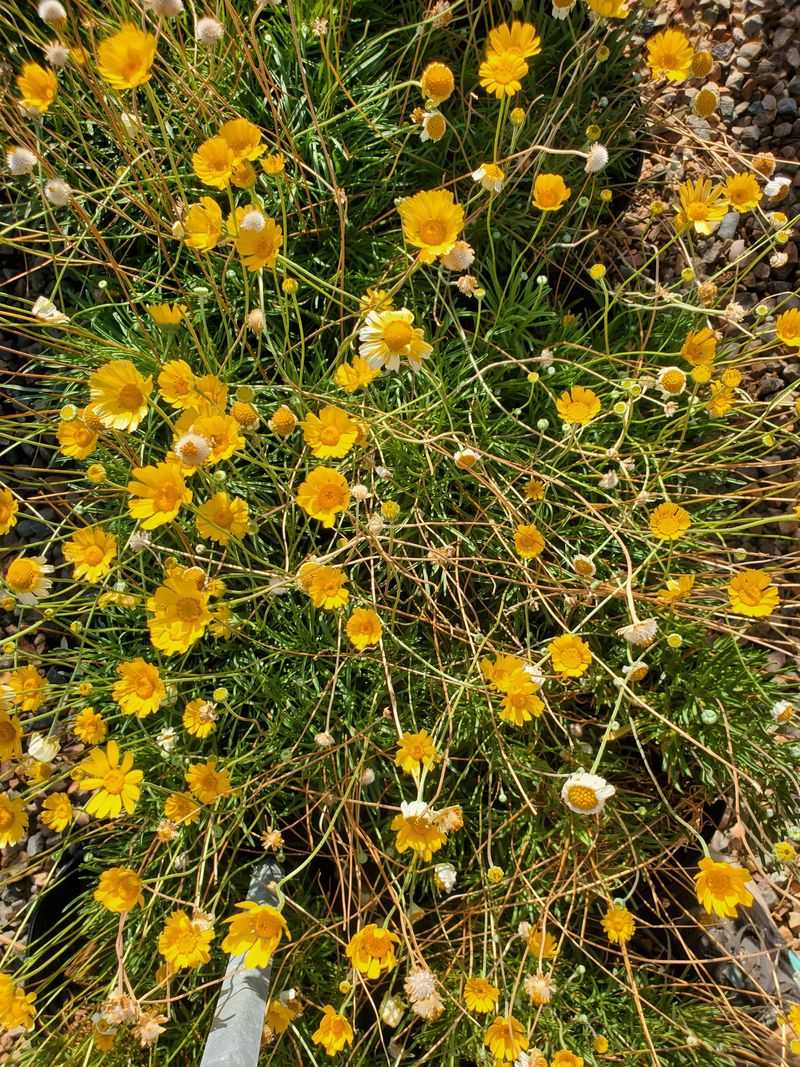
Bright yellow flowers on a plant that barely needs water sounds too good to be true. Angelita daisy delivers exactly that, blooming almost nonstop from spring through fall without much help from you.
Plants form tight, rounded clumps about a foot tall and wide. That compact habit makes them excellent for spacing closely together, which creates a solid, weed-blocking layer across a garden bed.
Plant them about eighteen inches apart in a new bed. Within one or two seasons, the clumps fill in enough to shade the soil between them.
That shade is what stops weed seeds from germinating.
Angelita daisy handles reflected heat well. Beds near walls, fences, or pavement that bake in afternoon sun are actually good spots for this plant.
Many other low-water perennials struggle in those conditions.
Water it once a week during the first summer. After that, deep irrigation every two to three weeks is usually enough.
Rainfall during the monsoon season often covers most of its needs without supplemental watering.
Deadheading is optional. Spent flowers drop on their own, and new buds appear quickly.
Skipping the cleanup does not hurt the plant or reduce flowering in any meaningful way.
It rarely needs fertilizer. Rich soil or heavy feeding can actually make it floppy and less compact.
Lean, well-draining soil with minimal amendments gives you the tight, tidy clumps that do the best weed-suppressing work.
7. Desert Zinnia Stays Low In Sunny Garden Beds
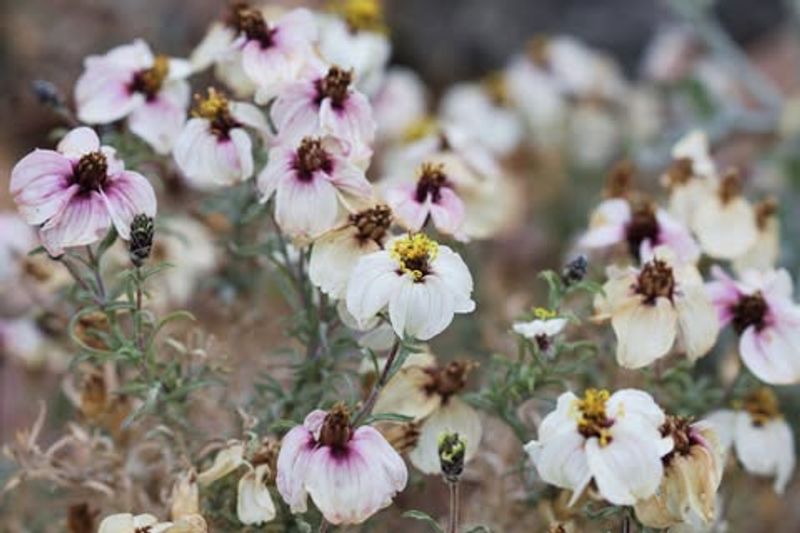
Most zinnias are tall and showy, but desert zinnia plays an entirely different role in the garden. It stays low, spreads outward, and covers bare soil with minimal fuss in sunny, dry conditions.
Native to the desert Southwest, it is completely at home in rocky, poor soil. No soil amendments required.
No fertilizer needed. Just good drainage and plenty of direct sun.
White flowers with yellow centers appear in spring and continue through early summer. A second wave sometimes shows up after monsoon rains arrive.
Pollinators visit regularly during bloom periods.
Plants spread to about two feet wide while staying under eight inches tall. That low profile means it works well under larger shrubs or along the front edges of mixed planting beds.
Water it once a week during establishment. After the first full season, natural rainfall during the monsoon is often enough to keep it going.
It is genuinely one of the lower-maintenance options on this list.
Spacing plants about two feet apart gives them room to spread naturally. They fill in without crowding each other, and the coverage between plants blocks enough light to slow weed growth considerably.
Desert zinnia does not handle clay soil well. If drainage is poor, roots stay stressed and spreading slows down.
Adding gravel or decomposed granite to the planting area before setting plants in the ground makes a noticeable difference in how quickly they establish and spread.
8. Creeping Germander Creates A Low Evergreen Carpet
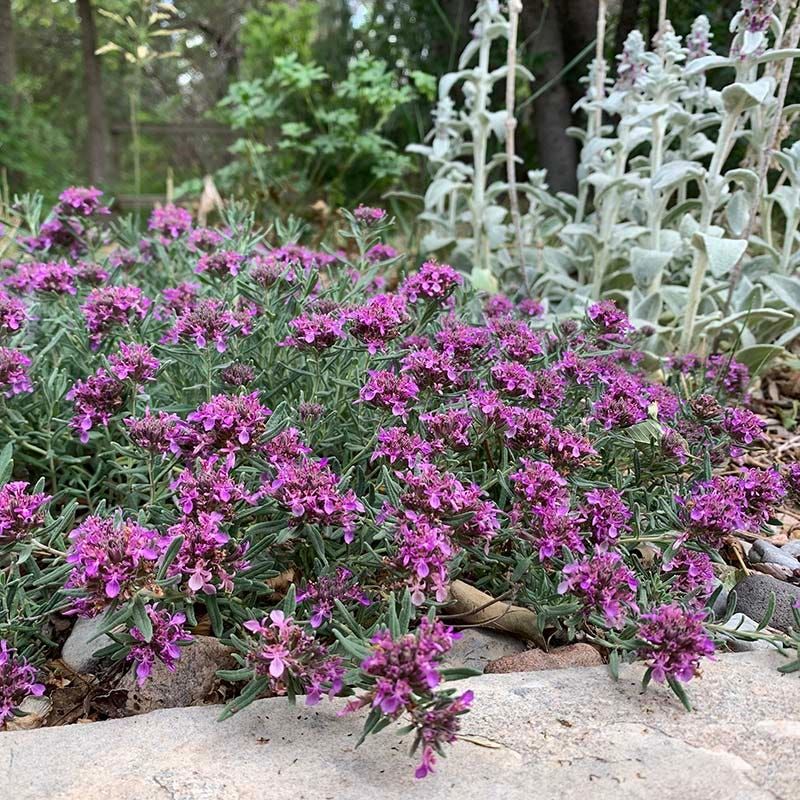
Not many ground covers stay green and dense through a brutal Southwest summer. Creeping germander does, and that evergreen staying power is exactly what makes it such a reliable weed suppressor year-round.
Stems spread low across the soil, rooting as they go and forming a tight mat that leaves almost no open ground for weeds to colonize. Once established, it is remarkably self-sufficient.
Small purple flowers appear in spring and attract bees and small butterflies. Bloom time is relatively short, but the dense, dark green foliage holds its appeal long after the flowers fade.
Plant it in full sun for the best growth and coverage. Partial shade is tolerable, but stems tend to get leggy and the mat becomes less dense.
A tighter mat is a more effective weed barrier.
Water deeply once a week during the first season. After that, cut back to every two or three weeks.
Established plants handle dry spells well, especially when planted in soil with good drainage.
Trim the edges once or twice a year to keep it contained. Without occasional trimming, it can creep into neighboring plants or paved areas.
A quick edge trim takes only a few minutes and keeps the bed looking clean.
Creeping germander works well as a border plant or as a filler between larger shrubs. In dry garden beds across the Southwest, it fills in gaps that would otherwise become prime weed territory season after season.