10 Best Hedges For Privacy In Florida Gardens
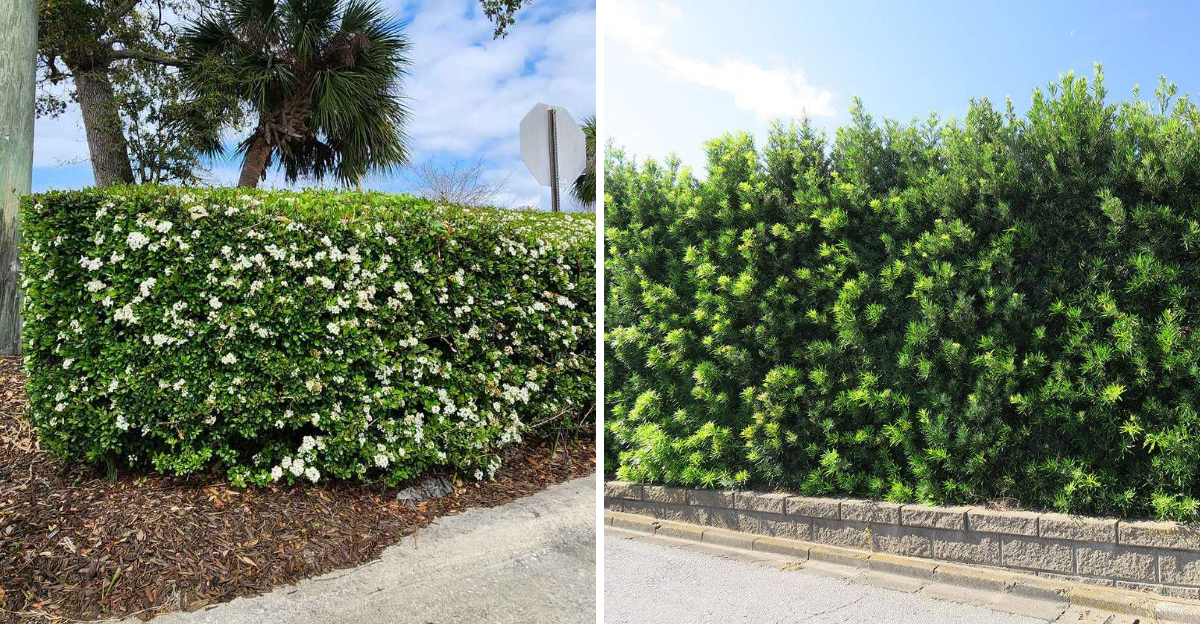
Privacy can feel almost impossible in many Florida neighborhoods. Houses sit close together, backyards face busy streets, and a simple fence rarely delivers the peaceful escape most homeowners want.
A lush hedge changes everything. Instead of a hard boundary, you get a living wall of greenery that blocks views, softens noise, and instantly makes the yard feel more secluded.
Florida’s warm sunshine and long growing season make privacy hedges especially powerful here. The right plants grow thick, tall, and vibrant, transforming ordinary property lines into beautiful green screens that look good year round.
Choose wisely and the effect can be dramatic. A once exposed yard suddenly feels calm, private, and surrounded by greenery.
In many landscapes, a well chosen hedge becomes the feature that pulls the entire garden together while giving you the quiet retreat every Florida home deserves.
1. Walter’s Viburnum Forms A Dense Native Evergreen Hedge
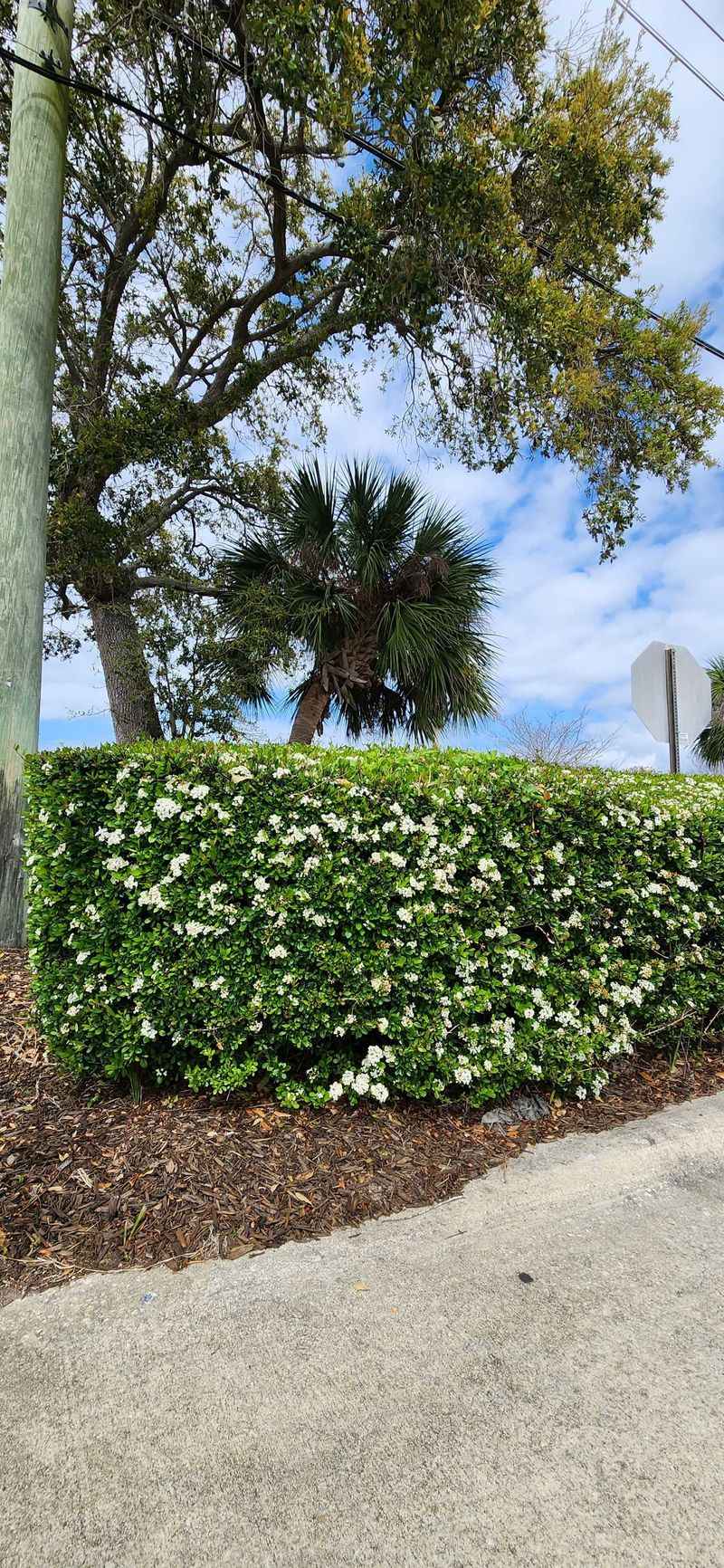
Imagine pulling into your driveway and seeing a solid, lush green wall of foliage that completely shields your backyard from the street.
That kind of full, reliable coverage is exactly what Walter’s Viburnum (Viburnum obovatum) delivers, and it does it beautifully in Florida landscapes year after year.
Native to Florida, this evergreen shrub produces small, dark green leaves packed tightly on dense, multi-branching stems that naturally form a thick hedge without much coaxing.
In late winter and early spring, clusters of tiny white flowers appear across the plant, adding a seasonal charm that few other privacy hedges can match.
The University of Florida IFAS Extension recognizes it as one of the most reliable native hedge plants for Florida gardens.
Walter’s Viburnum typically grows 6 to 12 feet tall and 6 to 8 feet wide, with a moderate growth rate that fills in privacy gaps within two to three seasons. Plant shrubs 4 to 6 feet apart for a solid screen.
It thrives in full sun to partial shade and tolerates Florida’s sandy soils, humidity, and occasional drought once established. Pruning once or twice a year keeps the hedge tidy and encourages even denser branching.
Birds are drawn to the small dark berries produced after flowering, making this a wonderful choice for wildlife-friendly Florida yards.
2. Simpson’s Stopper Creates A Fragrant Wildlife Friendly Privacy Screen
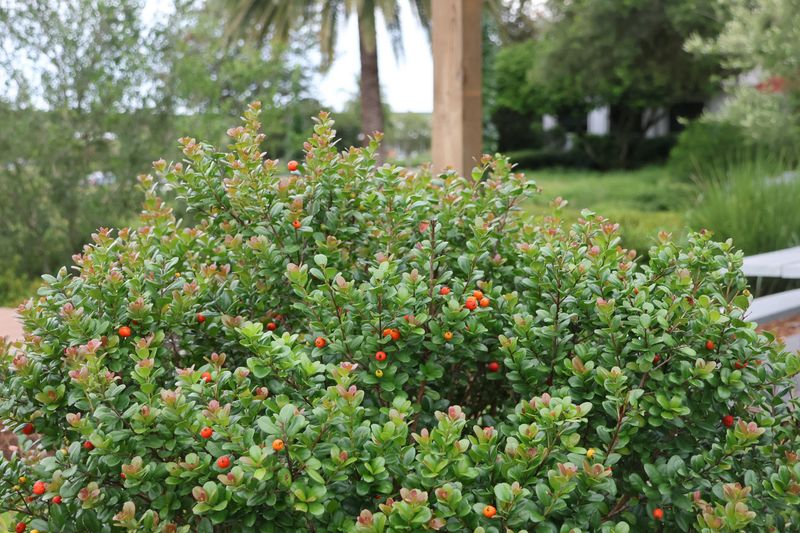
Walk past a Simpson’s Stopper hedge on a warm Florida morning and you will catch a sweet, subtle fragrance drifting through the air. That alone makes this plant stand out from the crowd.
Known botanically as Myrcianthes fragrans, Simpson’s Stopper is a Florida native that earns its place in any privacy planting with style and substance.
The plant features attractive smooth bark with cinnamon-colored patches that peel away over time, giving the hedge a polished, ornamental look even up close. Small, glossy dark green leaves pack tightly along the stems, and when the plant is regularly pruned, it forms an impressively dense screen.
Fragrant white flowers bloom multiple times a year, followed by small orange-red berries that mockingbirds, robins, and other Florida wildlife cannot resist.
Your Florida Garden Changes Every Week. Your Plan Should Too.
Gardening in Florida changes quickly throughout the season. Every Friday you’ll receive a simple weekly plan showing exactly what to plant, prune, fertilize, harvest, and protect so you never miss the right timing.
Simpson’s Stopper grows 12 to 25 feet tall in ideal conditions but is easily kept at 6 to 12 feet with light annual pruning. Space plants 4 to 6 feet apart for a full privacy screen.
It thrives in full sun to partial shade and adapts well to Florida’s sandy and rocky soils, coastal salt air, and humid conditions. The University of Florida IFAS Extension recommends it as a top-tier native hedge plant for South and Central Florida landscapes.
3. Podocarpus Builds A Tall Elegant Green Privacy Wall
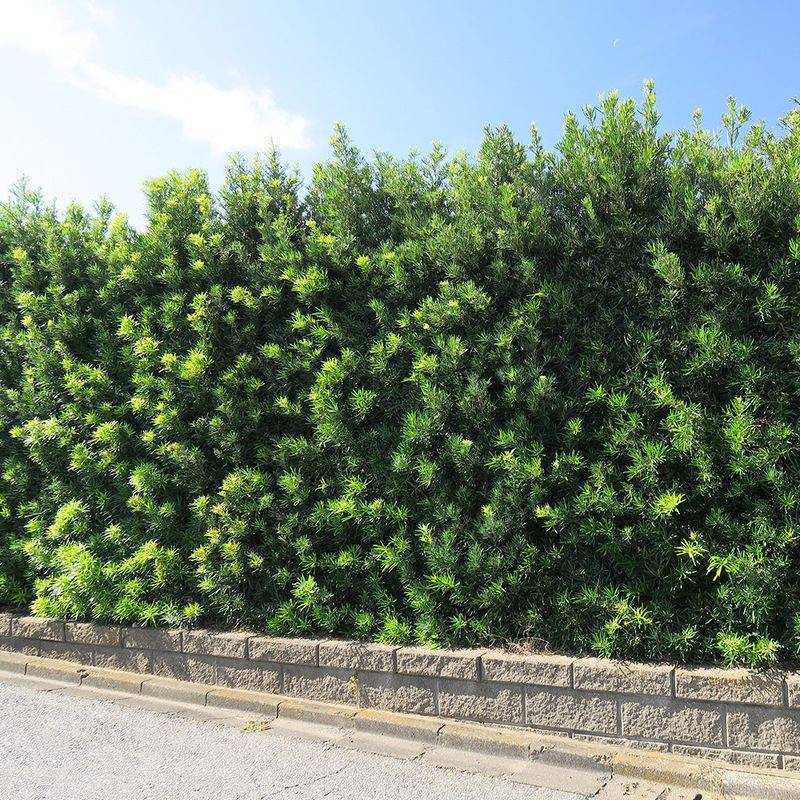
Few hedges in Florida look as clean, polished, and architecturally satisfying as a well-maintained Podocarpus screen.
Known by its botanical name Podocarpus macrophyllus, this plant has earned a loyal following among Florida homeowners and professional landscapers who want a tall, formal privacy wall that stays green and beautiful through every season.
The foliage is one of its strongest selling points. Long, narrow, dark green leaves grow in dense spirals along upright stems, giving the hedge a refined, almost sculptural quality.
Unlike many other hedge plants, Podocarpus naturally grows in an upright, columnar form, which means it fills vertical space quickly without spreading too wide. It can reach 20 to 40 feet tall at maturity but is easily maintained at 6 to 15 feet with regular trimming.
Growth rate is moderate, typically 1 to 2 feet per year under good conditions. Plant shrubs 3 to 5 feet apart for a tight, solid screen.
Podocarpus thrives in full sun to partial shade and handles Florida’s heat, humidity, and sandy soils with ease. It is also moderately salt-tolerant, which makes it a solid option for coastal Florida gardens.
Trim once or twice yearly to maintain a sharp, even hedge line and encourage dense interior branching that blocks views completely.
4. Cocoplum Produces A Thick Coastal Friendly Hedge

Coastal Florida gardeners face challenges that inland gardeners rarely think about, including salt spray, sandy soils with poor nutrients, and strong sea breezes that can batter less resilient plants. Cocoplum (Chrysobalanus icaco) handles all of those conditions without complaint, making it one of the most dependable hedge choices for beachside and coastal communities across the state.
The plant produces round, glossy leaves that are packed tightly along sturdy stems, creating a naturally thick wall of foliage that blocks views effectively without needing heavy shaping. Small white flowers appear seasonally, followed by clusters of purple or white fruits that are edible and attractive to birds and other wildlife.
The Florida Native Plant Society highlights Cocoplum as an excellent native hedge option for coastal and South Florida landscapes.
Cocoplum typically grows 10 to 20 feet tall and equally wide when left unpruned, but it responds well to regular trimming and can be maintained at almost any height. Space plants 4 to 6 feet apart for a solid privacy screen.
It performs best in full sun but tolerates light shade. Adaptable to Florida’s sandy, rocky, and even occasionally wet soils, Cocoplum is a workhorse hedge plant that requires minimal care once established, making it a favorite for low-maintenance Florida landscapes.
5. Clusia Creates A Tough Tropical Privacy Screen
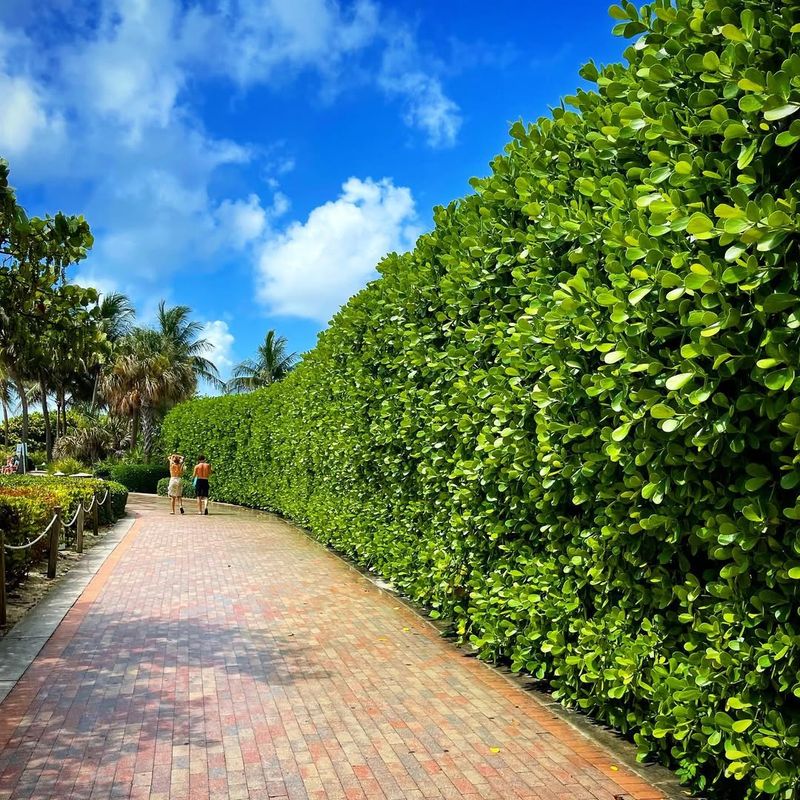
South Florida neighborhoods are filled with bold, tropical landscapes, and Clusia fits right into that aesthetic while delivering serious privacy performance.
Clusia guttifera, commonly called Small Leaf Clusia, and the larger Clusia rosea, known as Pitch Apple, are both widely planted across Florida as dense, wind-resistant privacy screens that look stunning year-round.
What makes Clusia stand out is the thickness of its leaves. Large, oval, and leathery dark green leaves overlap densely along stiff branches, creating a hedge so solid that even strong coastal winds barely penetrate it.
Once established, a Clusia hedge forms a nearly impenetrable wall of tropical foliage. Clusia rosea can grow up to 25 feet tall, while Clusia guttifera is more manageable at 6 to 10 feet, making the smaller variety popular for residential privacy hedges.
Growth rate is moderate, and the plants are notably drought-tolerant and salt-resistant, two qualities that matter enormously in Florida’s coastal and inland gardens. Plant shrubs 3 to 5 feet apart for a tight screen.
Full sun produces the densest growth, though Clusia tolerates partial shade. Pruning two to three times per year maintains a clean, formal appearance.
The University of Florida IFAS Extension notes Clusia as one of the most popular and reliable hedge plants for South and Central Florida landscapes.
6. Sweet Viburnum Grows Quickly Into A Solid Green Barrier
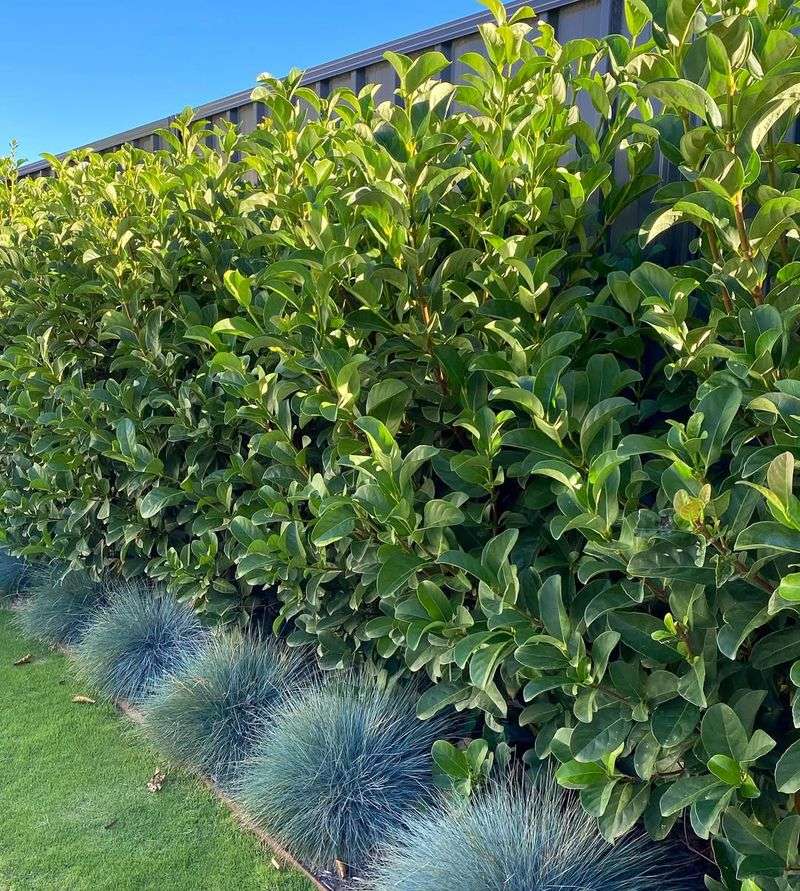
Speed matters when you want privacy fast, and Sweet Viburnum (Viburnum odoratissimum) is one of the fastest-growing hedge plants available to Florida gardeners.
Plant a row of these shrubs in spring, and by the following season you will already have a noticeably full, green barrier taking shape along your property line.
Large, glossy dark green leaves give Sweet Viburnum a bold, lush appearance that reads as tropical and full even when the plants are still young. In spring, large clusters of small white flowers open across the hedge, releasing a sweet fragrance that carries through the garden on warm Florida breezes.
Growth rates of 3 to 5 feet per year are common under Florida’s favorable growing conditions, and the plant can reach 10 to 20 feet tall at maturity.
For a privacy hedge, space plants 4 to 6 feet apart. Sweet Viburnum grows best in full sun to partial shade and adapts readily to Florida’s sandy soils and humid climate.
Regular pruning two to three times per year keeps the hedge at the desired height and encourages the dense, leafy branching needed to block views completely.
It is worth noting that while extremely popular, Sweet Viburnum is not native to Florida, so pairing it with native plants nearby supports local wildlife more effectively.
7. Wax Myrtle Forms A Fast Growing Native Privacy Hedge
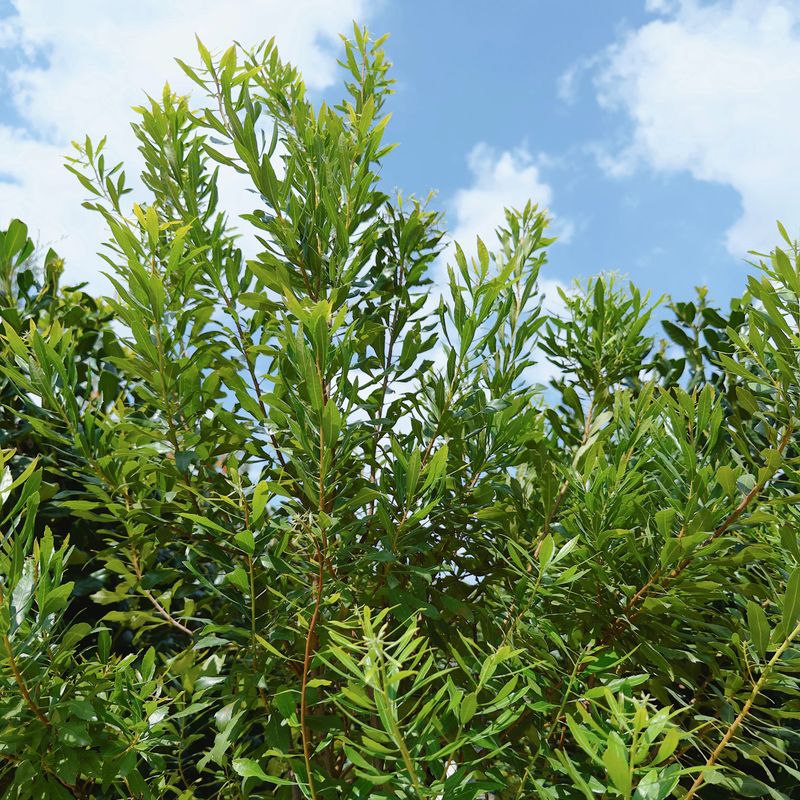
Florida’s native plant enthusiasts have long celebrated Wax Myrtle as one of the state’s most versatile and wildlife-friendly shrubs.
Botanically known as Morella cerifera, this fast-growing native forms a full, billowy privacy hedge that feels right at home in natural Florida landscapes, from coastal scrubs to suburban backyards.
Aromatic, narrow gray-green leaves release a pleasant scent when brushed, and the plant produces small waxy blue-gray berries that are a critical food source for yellow-rumped warblers and dozens of other bird species.
The Florida Native Plant Society considers Wax Myrtle one of the top native shrubs for wildlife-supporting landscapes.
Growth is impressively rapid, often reaching 3 to 5 feet per year, with mature plants hitting 10 to 15 feet tall or taller under ideal conditions.
For a privacy screen, space plants 5 to 8 feet apart and allow them to grow naturally for the fullest, most wildlife-friendly effect.
Wax Myrtle thrives in full sun and tolerates partial shade, wet soils, dry sandy conditions, and salt spray, covering nearly every challenging growing situation Florida throws at it.
Light pruning once or twice a year shapes the hedge without sacrificing the natural, airy quality that makes this plant so appealing. It is an outstanding choice for gardeners who want fast privacy with strong ecological value.
8. Dwarf Yaupon Holly Creates A Compact Evergreen Screen
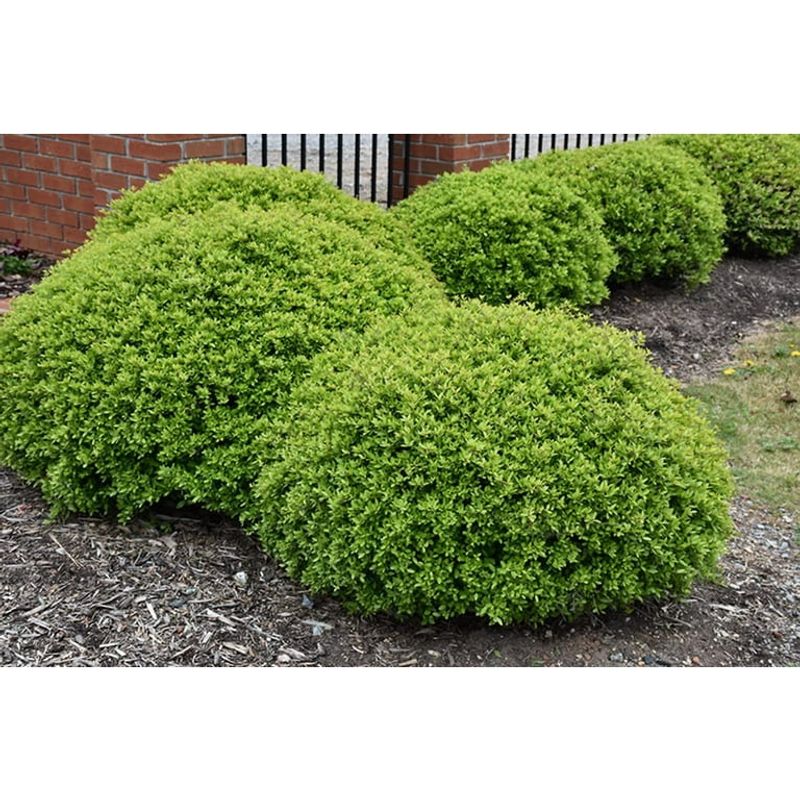
Not every privacy situation calls for a towering 15-foot wall of foliage. Sometimes what a Florida yard really needs is a tidy, compact evergreen hedge that defines space, blocks low-level views, and looks sharp without demanding constant attention.
Dwarf Yaupon Holly (Ilex vomitoria ‘Nana’) fits that role perfectly.
Small, rounded, dark green leaves grow in dense clusters along twiggy stems, creating a naturally compact form that rarely needs heavy pruning to stay neat. The plant is slow to moderate in growth rate, typically reaching 3 to 5 feet tall and equally wide at maturity, making it ideal for lower privacy screens, foundation plantings, and defined garden borders.
Unlike many compact shrubs, Dwarf Yaupon Holly is remarkably tough, handling Florida’s heat, humidity, sandy soils, and occasional drought without missing a beat.
Space plants 3 to 4 feet apart for a solid low hedge. Full sun produces the densest growth, though the plant tolerates partial shade well.
Light shearing two to three times per year keeps the hedge clean and uniform. The University of Florida IFAS Extension recommends Ilex vomitoria cultivars as reliable, low-maintenance hedge plants suited to a wide range of Florida landscapes.
While the dwarf form does not produce berries as heavily as the full-size species, it remains a solid, dependable evergreen screen for smaller Florida garden spaces.
9. Florida Anise Forms A Dense Shade Loving Privacy Hedge
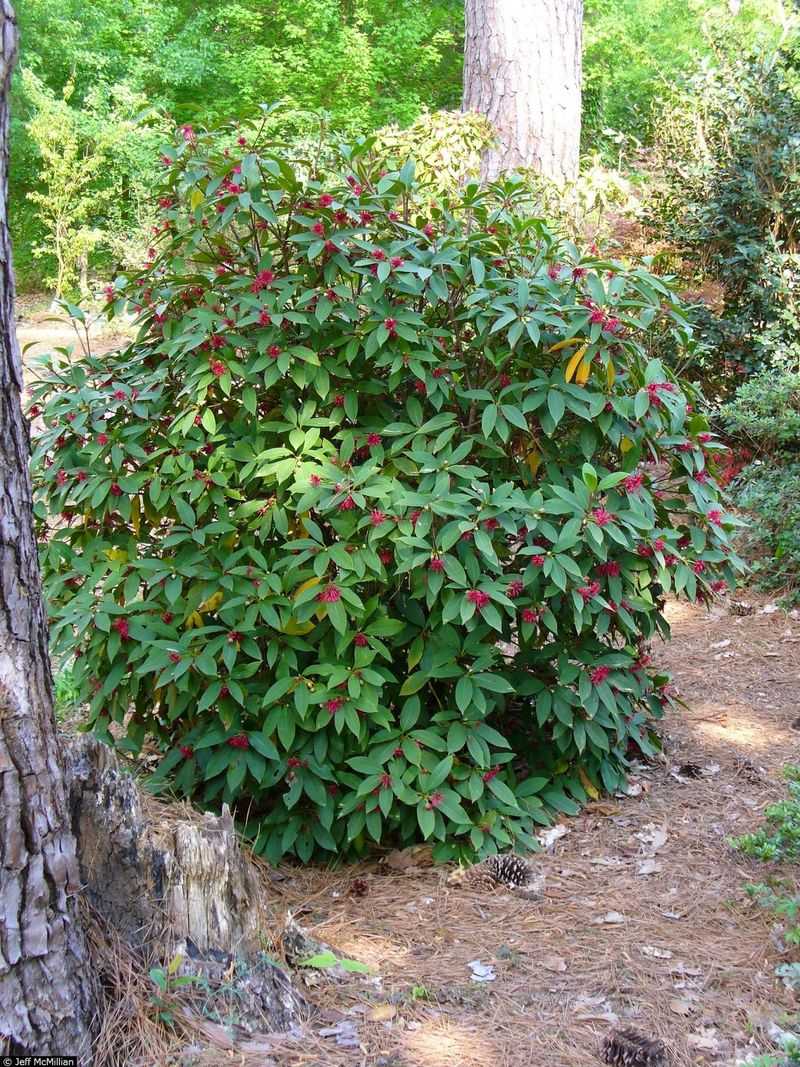
Shady Florida yards often leave gardeners scratching their heads when it comes to finding a hedge plant that actually thrives without full sun.
Most popular hedge choices want as much sunlight as possible, which makes Florida Anise (Illicium floridanum) a genuinely exciting find for gardeners working with heavily shaded spaces under tall oaks or pines.
Large, glossy, deep green leaves give Florida Anise a bold, tropical look that fills shaded garden corners beautifully. When leaves or stems are crushed, they release a strong anise-like fragrance that is distinctive and memorable.
In spring, unusual deep red, star-shaped flowers appear across the plant, adding a surprising pop of color to shaded garden areas where blooms are often hard to come by.
The Florida Native Plant Society recognizes it as a valuable native shrub for woodland and shade gardens.
Florida Anise typically grows 6 to 10 feet tall and 6 to 8 feet wide, with a moderate growth rate that fills in steadily over two to three seasons. Space plants 4 to 5 feet apart for a full privacy screen.
It performs best in partial to full shade with moist, organically rich soil, though it tolerates Florida’s humidity and occasional dry spells well once established. Minimal pruning is needed to maintain shape, making it one of the lowest-maintenance native hedge options available for shaded Florida landscapes.
10. Firebush Creates A Colorful Wildlife Friendly Privacy Hedge
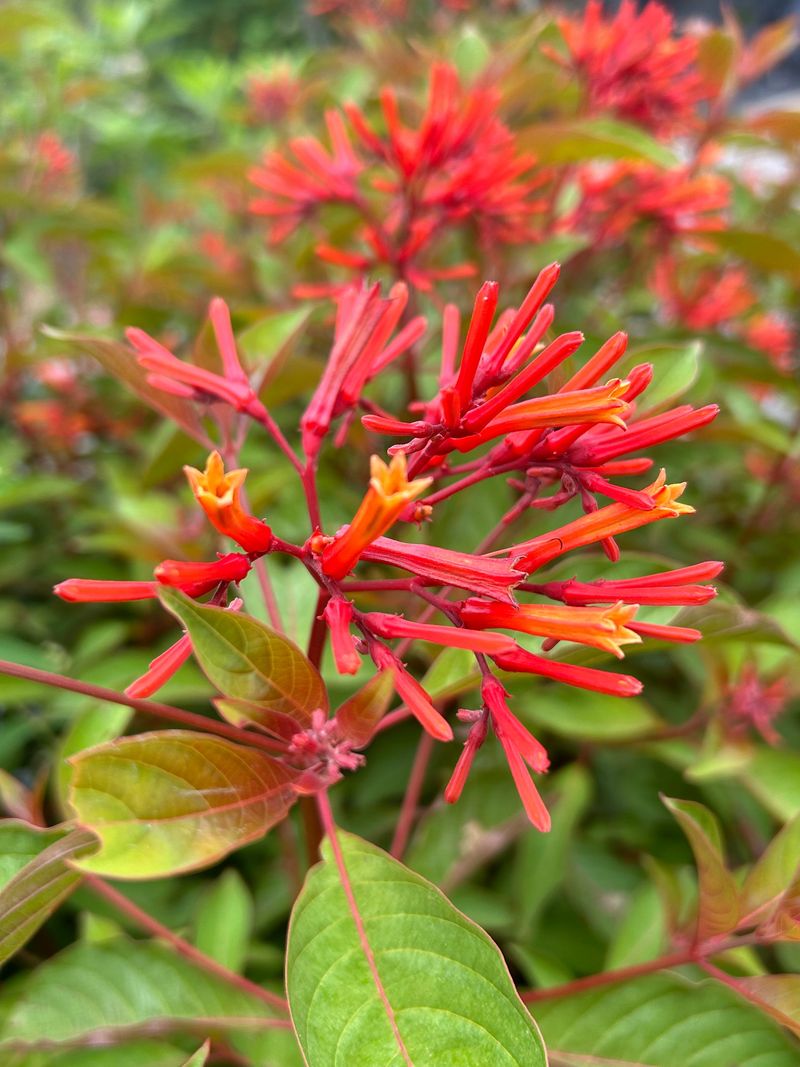
Picture a hedge that practically glows with color from spring through fall, buzzing with hummingbirds and butterflies on warm Florida afternoons.
That vivid, energetic scene is what Firebush (Hamelia patens var. patens) brings to Florida gardens, and it does so while providing genuine privacy screening when planted in mass groupings along property lines.
Clusters of long, tubular orange-red flowers bloom almost continuously throughout Florida’s warm months, drawing ruby-throated hummingbirds, painted buntings, and countless butterfly species.
Dark green leaves with reddish stems give the plant a lush, tropical appearance, and small dark berries follow the flowers, attracting even more birds to the garden.
As a Florida native, Firebush supports local pollinators and wildlife in ways that non-native hedge plants simply cannot match.
Firebush grows quickly, reaching 5 to 10 feet tall and wide in a single growing season under Florida’s generous warmth and sunshine. For a privacy screen, plant shrubs 4 to 6 feet apart and allow them to grow into a natural, informal hedge.
Full sun produces the most prolific flowering and the densest growth. It thrives in Florida’s sandy soils, tolerates heat and humidity with ease, and recovers rapidly after hard pruning.
The University of Florida IFAS Extension recommends the native variety, Hamelia patens var. patens, for Florida wildlife gardens as a top-performing native shrub.