These Are The 9 Best Drought-Tolerant Evergreens For Florida Gardens
Florida gardens can feel like a balancing act between too much rain and not enough. One stretch brings soaking downpours, the next turns dry and unforgiving under intense sun.
That is where the right evergreens quietly prove their value. Some hold their color year round, stand up to sandy soil, and stay strong through long dry spells without constant watering or pampering.
That kind of reliability matters in a landscape that never really gets a break from heat. The best drought tolerant evergreens for Florida do more than survive.
They create structure, privacy, and steady green backdrops that make everything else in the yard look better. Pick the right ones, and the garden starts to feel easier, more stable, and far less demanding day to day.
1. Coontie Handles Drought With Native Strength
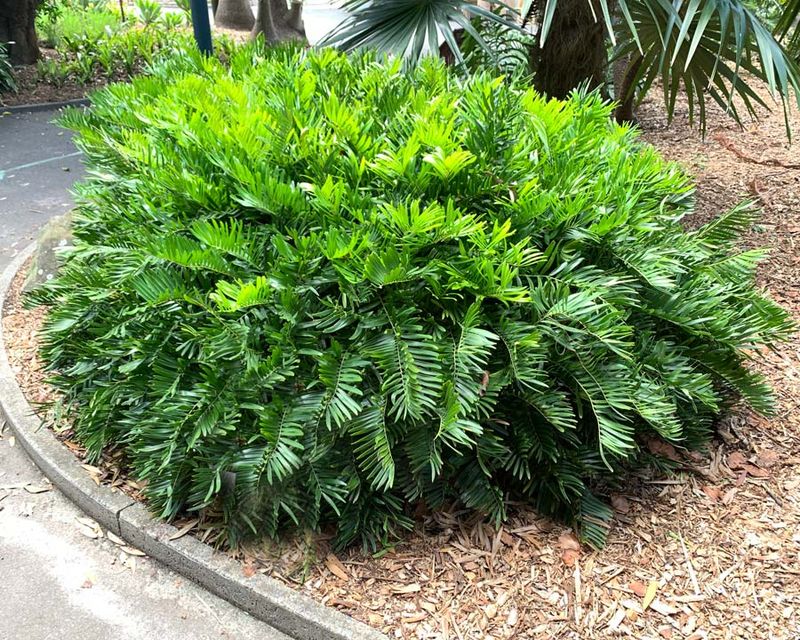
Few plants carry the kind of deep Florida roots that Zamia integrifolia does. Known commonly as Coontie, this low-growing cycad is one of the only cycads native to the continental United States, and it has been thriving in Florida long before landscaping was even a concept.
Once it gets established in the ground, it handles drought with impressive ease, drawing on deep roots that anchor it firmly in sandy soil.
Gardeners across South and Central Florida especially appreciate how little attention Coontie demands after the first growing season. It stays compact, typically reaching only two to three feet tall, which makes it a natural fit for borders, foundation plantings, and low-maintenance ground covers.
The dark, glossy fronds stay attractive even during dry spells when other plants start to look stressed.
Coontie also plays an important ecological role as the sole host plant for the rare Atala butterfly, a species that was once nearly gone from Florida. Planting Coontie in your yard actively supports local wildlife.
University of Florida IFAS Extension recommends it as an excellent Florida-Friendly plant for its adaptability, low water needs, and ability to thrive in poor, well-drained soils across most of the state.
2. Simpson’s Stopper Stays Glossy In Dry Spells
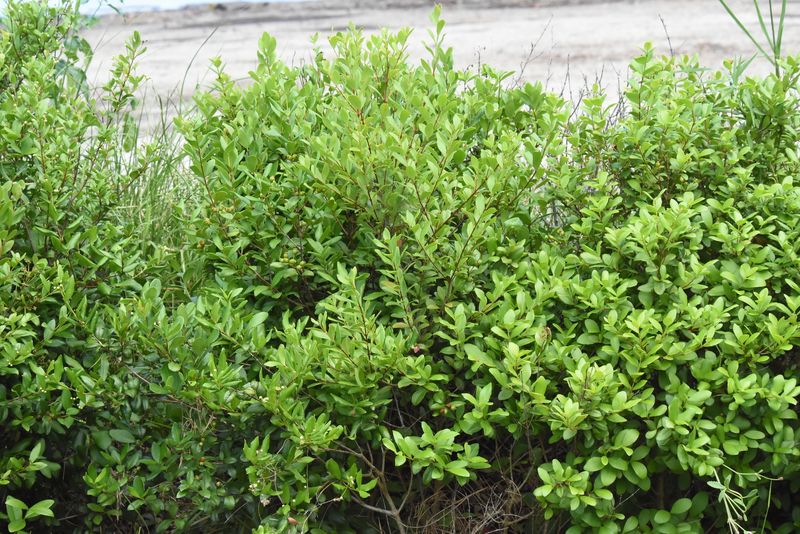
Walk through a South Florida hammock on a warm afternoon and you might catch a faint spicy scent drifting through the air. That fragrance often comes from Myrcianthes fragrans, commonly called Simpson’s Stopper.
This native Florida shrub has a quiet elegance about it, with small, glossy leaves that stay rich and green even when rainfall drops off for weeks at a time.
Once established in the landscape, Simpson’s Stopper handles dry periods with steady composure. It grows well in the sandy, well-drained soils common across South and Central Florida, and it responds well to pruning if you want to shape it into a formal hedge or let it grow naturally as a privacy screen.
The small white flowers it produces attract pollinators, and the orange-red berries that follow bring in birds, making it a genuinely wildlife-friendly choice.
Gardeners in North Florida should plant with some caution, as Simpson’s Stopper is sensitive to hard freezes and may struggle during colder winters in the northern part of the state. In frost-prone areas, a sheltered location near a south-facing wall can help.
Your Florida Garden Changes Every Week. Your Plan Should Too.
Gardening in Florida changes quickly throughout the season. Every Friday you’ll receive a simple weekly plan showing exactly what to plant, prune, fertilize, harvest, and protect so you never miss the right timing.
University of Florida IFAS Extension lists it as a reliable native for warm Florida landscapes where water conservation is a priority.
3. Wax Myrtle Thrives In Dry, Poor Soil
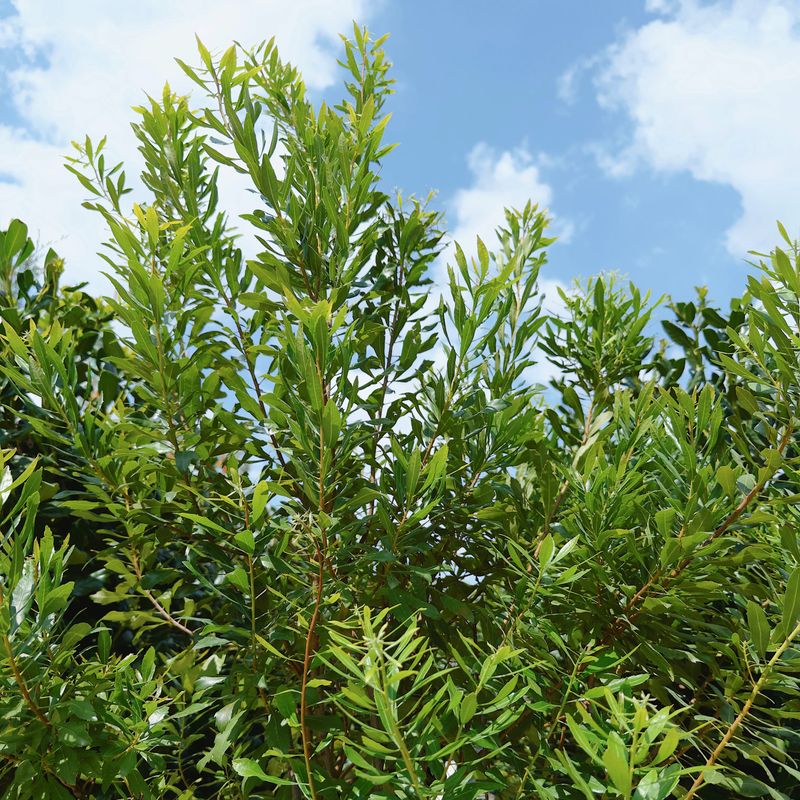
Some plants just seem to grow anywhere, and Wax Myrtle, known botanically as Morella cerifera, earns that reputation honestly. Across Florida, you see it along roadsides, in retention pond edges, in backyard hedges, and in naturalistic plantings where the soil is sandy, nutrient-poor, and far from ideal.
That adaptability is not accidental. Wax Myrtle has a remarkable ability to fix nitrogen from the atmosphere, which means it actually improves the soil it grows in over time.
During dry spells, established Wax Myrtle shrubs hold their aromatic, narrow leaves without much visible stress. They grow quickly, which is a real advantage for homeowners who want a fast privacy screen without waiting years for results.
Across North, Central, and South Florida, this shrub performs reliably, though growth rate and mature size can vary by region and soil conditions.
Wildlife benefit greatly from Wax Myrtle as well. The small, waxy blue-gray berries are a major food source for migratory birds, including Yellow-rumped Warblers that pass through Florida each fall and winter.
University of Florida IFAS Extension recognizes Wax Myrtle as a top Florida-Friendly native plant, praising its low water requirements, soil tolerance, and value to local ecosystems.
4. Dwarf Yaupon Holly Keeps Shape With Little Water
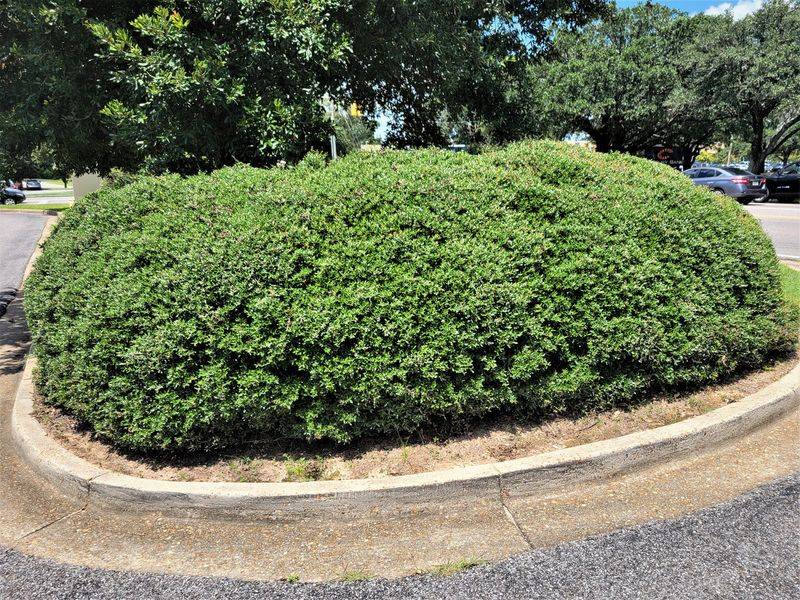
Landscapers in Florida have a saying: if you want a shrub that takes whatever the Florida climate throws at it and still looks polished, reach for Dwarf Yaupon Holly. The compact cultivars of Ilex vomitoria are some of the most forgiving evergreen shrubs available to Florida homeowners, handling drought, heat, wind, and even occasional salt spray without losing their tidy appearance.
Once established, these shrubs need very little supplemental water, even during prolonged dry periods. They respond beautifully to pruning, which makes them a popular choice for formal hedges, foundation plantings, and mass plantings along driveways or walkways.
Their small, rounded leaves stay a consistent dark green through all seasons, providing reliable year-round structure in the landscape.
Central and North Florida gardeners especially appreciate Dwarf Yaupon Holly because it handles cooler winter temperatures without any trouble. It also performs well in South Florida when planted in a spot with good air circulation.
University of Florida IFAS Extension recommends Ilex vomitoria cultivars widely across the state, noting their exceptional drought tolerance once established, minimal pest issues, and strong adaptability to Florida’s sandy, low-nutrient soils. For low-maintenance formal landscapes, few evergreen shrubs match its track record.
5. Podocarpus Forms Dense Screens With Low Water
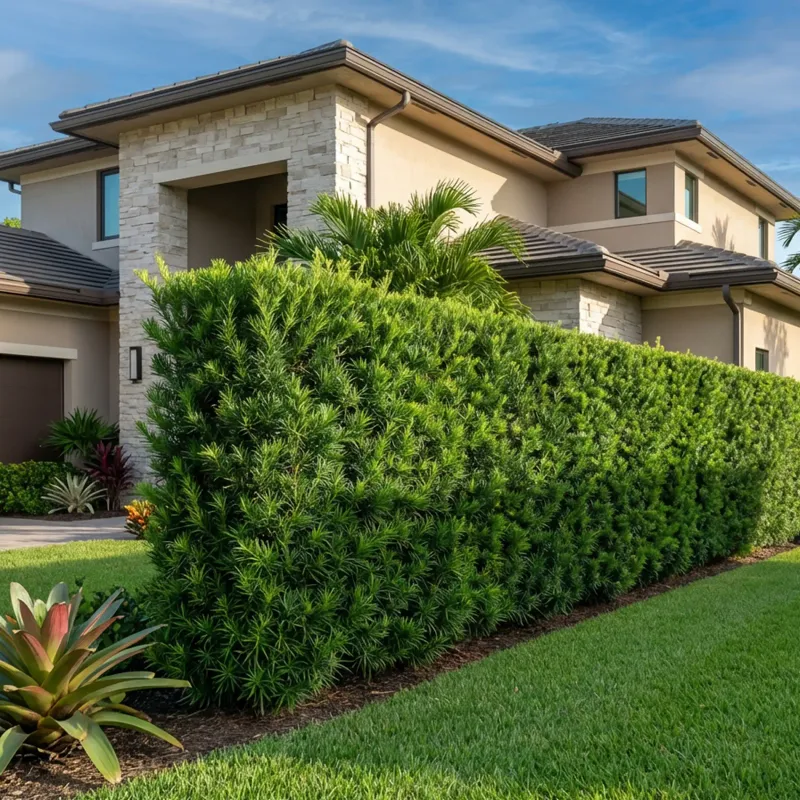
Privacy is something many Florida homeowners think about seriously, especially in neighborhoods where houses sit close together. Podocarpus macrophyllus, sometimes called Japanese Yew or Buddhist Pine, has become one of the most popular choices for creating tall, dense privacy screens in Central and South Florida landscapes.
Its narrow, dark green leaves give it a refined, clean appearance that holds up through heat and dry conditions alike.
Once established in well-drained Florida soil, Podocarpus shows solid drought tolerance. It grows at a moderate pace and responds well to shearing, allowing homeowners to maintain a precise, formal hedge or let it develop into a more natural columnar shape.
Either way, it delivers consistent, year-round screening without dropping its leaves or looking stressed during seasonal dry spells.
In North Florida, Podocarpus can be somewhat vulnerable to hard freezes, so gardeners in that region should plan for occasional cold protection or choose a sheltered planting site. South and Central Florida offer the most reliable conditions for this evergreen to thrive.
University of Florida IFAS Extension notes that Podocarpus macrophyllus performs well in Florida’s climate when planted in full sun to partial shade with good soil drainage and minimal supplemental irrigation after the establishment period.
6. Silver Buttonwood Excels In Coastal Dry Heat
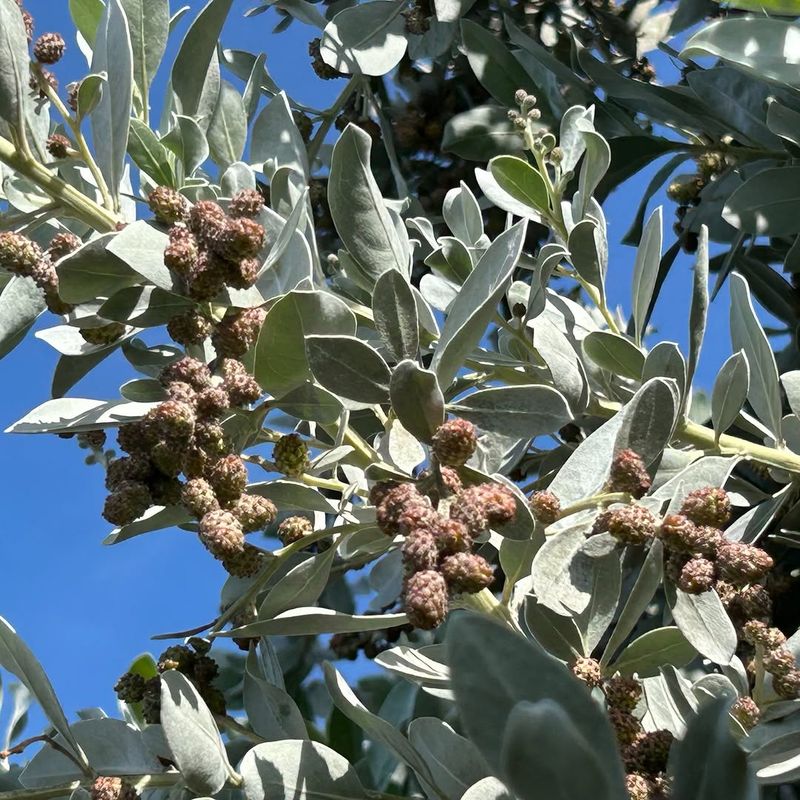
There is something almost metallic about the foliage of Silver Buttonwood on a bright Florida afternoon. The leaves of Conocarpus erectus var. sericeus catch the sunlight with a soft silver sheen that makes this plant stand out in coastal and tropical landscapes.
That silvery appearance is not just decorative, it reflects heat and helps the plant manage water loss during the intense dry periods common along Florida’s coastlines.
Silver Buttonwood is built for tough coastal conditions. It handles salt spray, sandy soils, and extended drought with genuine resilience, making it a reliable choice for beachfront properties, coastal hedges, and exposed garden beds in South Florida.
It can be grown as a small tree or kept as a large shrub with regular pruning, giving gardeners flexibility in how they use it in the landscape.
Inland North Florida gardeners will find Silver Buttonwood less suited to their conditions, as it prefers the warmth and humidity of coastal and southern environments. Freezing temperatures can cause significant damage.
For South Florida and coastal Central Florida properties, though, it is one of the most practical and visually interesting drought-tolerant evergreens available. University of Florida IFAS Extension supports its use in appropriate coastal Florida landscapes for its salt and drought tolerance.
7. Sandankwa Viburnum Holds Up In Warm, Dry Conditions
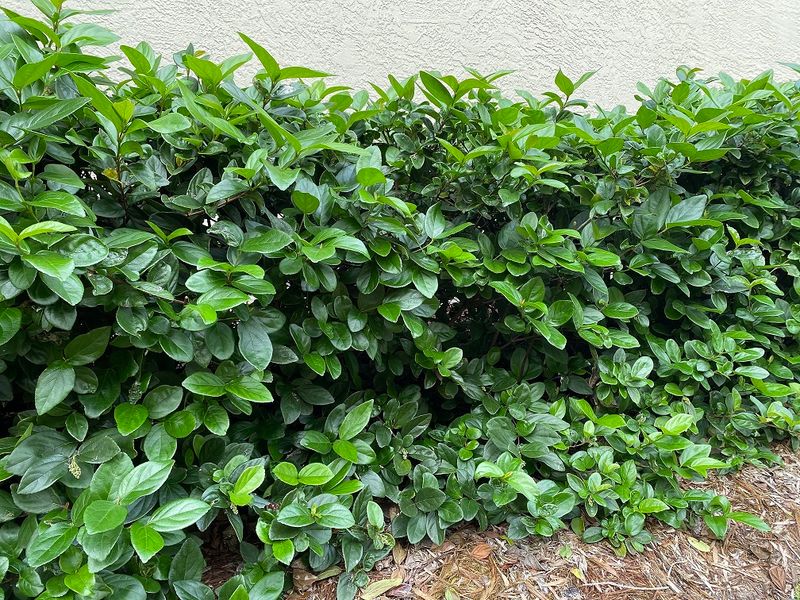
Hedges in Florida need to do more than just look good in spring. They need to hold their foliage through the heat of July, bounce back after a dry stretch in October, and still look presentable in December when guests are coming over for the holidays.
Viburnum suspensum, commonly called Sandankwa Viburnum, is one of the shrubs that consistently delivers on all of those expectations in Central and South Florida gardens.
The leathery, dark green leaves of Sandankwa Viburnum give it a substantial, full appearance that works well for privacy hedges, foundation plantings, and screening along property lines. Once the root system is established, it handles moderate drought without looking ragged, which is a genuine advantage in Florida’s unpredictable rainfall patterns.
It grows at a moderate rate and accepts pruning well, so keeping it at a desired height is straightforward.
Gardeners in North Florida should be aware that Sandankwa Viburnum is not especially cold-hardy. Prolonged freezes can cause significant damage, and recovery can be slow.
In Central and South Florida, however, it earns its place as a dependable, low-maintenance evergreen hedge plant. University of Florida IFAS Extension recommends it for warm Florida landscapes where reliable evergreen screening and moderate drought tolerance are priorities.
8. Natal Plum Stays Dense And Drought Tolerant
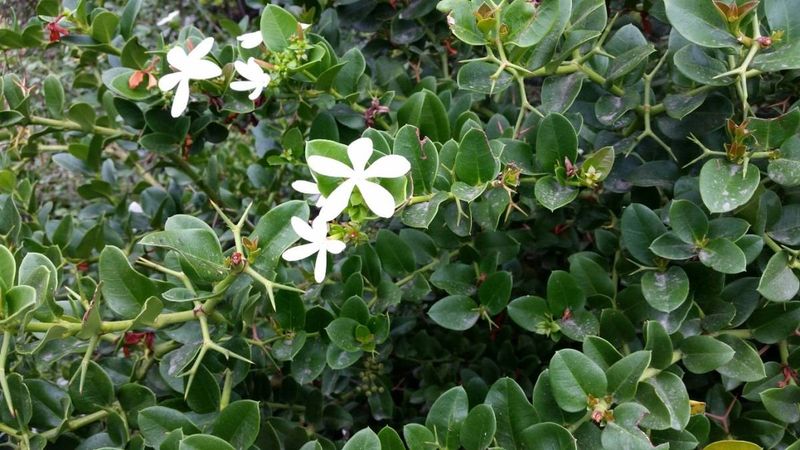
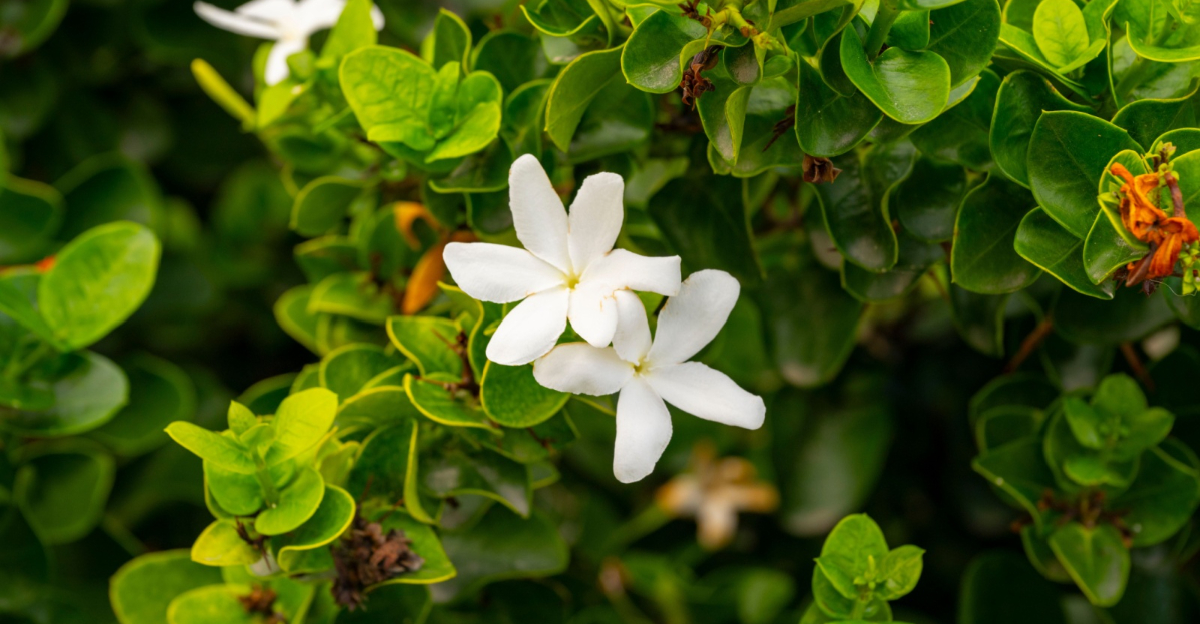
Gardeners who need a plant that combines beauty, toughness, and a serious deterrent to foot traffic will find Natal Plum genuinely useful. Carissa macrocarpa is a densely branching evergreen shrub armed with forked thorns that make it an effective barrier plant along property edges and fence lines.
Despite its formidable structure, it produces fragrant white star-shaped flowers and small red fruits that are actually edible, which adds an unexpected charm to its tough reputation.
In South Florida and coastal Central Florida, Natal Plum handles dry conditions and salt spray with consistent reliability. Once established in well-drained sandy soil, it requires very little supplemental irrigation, making it a practical choice for water-conscious landscaping.
It stays dense and green through extended dry periods, holding its glossy foliage without significant stress.
Freezing temperatures are Natal Plum’s main vulnerability. Hard frosts can cause serious damage, which is why it performs best in South Florida and protected coastal locations further north.
Inland North Florida is generally too cold for reliable long-term performance. University of Florida IFAS Extension recognizes Carissa macrocarpa as a useful landscape plant for warm Florida coastal areas, noting its salt tolerance, drought resistance once established, and value as a low-maintenance, wildlife-supporting evergreen shrub.
9. Florida Privet Keeps A Clean Look In Lean Soil
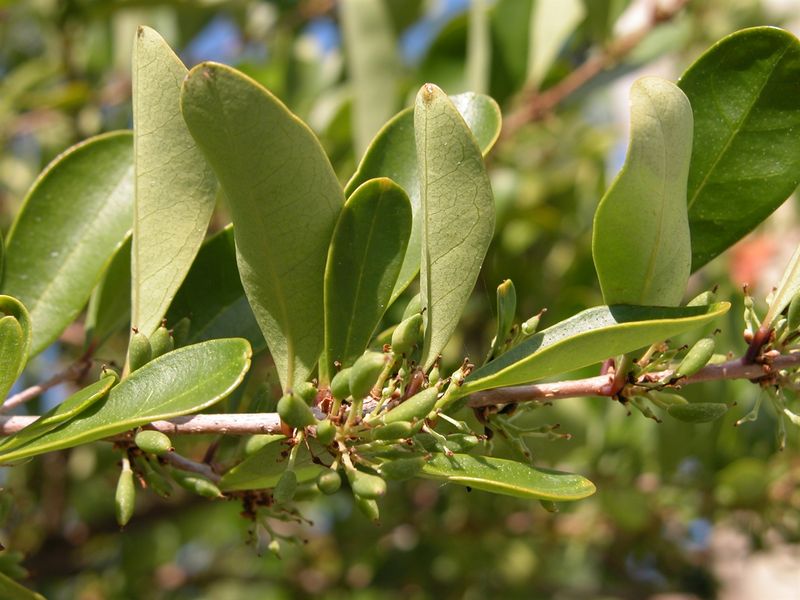
Not every plant that earns the name native gets treated like one, and Florida Privet is a good example of a genuinely useful native shrub that often gets overlooked in favor of more familiar alternatives. Forestiera segregata grows naturally across Florida in coastal scrub, hammock edges, and sandy uplands, which tells you immediately that it knows how to handle lean soil and irregular rainfall without any help from a garden hose.
In the landscape, Florida Privet works well as a clipped hedge, a naturalistic screen, or a filler shrub in mixed native plantings. The small, dark green leaves often stay on the plant year-round, giving it a clean, consistent appearance through all seasons.
It handles the kind of dry, nutrient-poor soils that frustrate gardeners trying to grow less adaptable plants, and it does so without demanding fertilizer or frequent irrigation once established.
Across most of Florida, including South and Central regions where drought cycles are most pronounced, Forestiera segregata performs with quiet reliability. Birds appreciate the small fruits it produces, adding wildlife value to its already practical list of qualities.
University of Florida IFAS Extension highlights Florida Privet as a recommended native plant for Florida-Friendly landscapes, praising its drought tolerance, adaptability, and low overall maintenance requirements in a wide range of Florida soil conditions.