7 Native Texas Shrubs To Plant Instead Of Nandina
Nandina has been a go-to shrub in Texas yards for a long time, but more gardeners are starting to question whether it really deserves the space. Sure, it is familiar, easy to spot at garden centers, and often sold as a simple landscape fix.
But familiar does not always mean best. In many cases, Texas gardeners can do much better with shrubs that are actually native to the region and better suited to the climate.
That switch comes with some real benefits. Native Texas shrubs are built for local weather, which means they usually handle heat, dry spells, and soil conditions with less fuss.
They also tend to do more for the landscape as a whole, offering food or shelter for birds, pollinators, and other wildlife that belong there.
On top of that, many of them bring just as much beauty, whether you want colorful blooms, evergreen structure, or berries that add seasonal interest.
If you are ready to move beyond the usual choice, there are plenty of native shrubs that can outshine nandina in a Texas yard.
1. American Beautyberry (Callicarpa Americana)
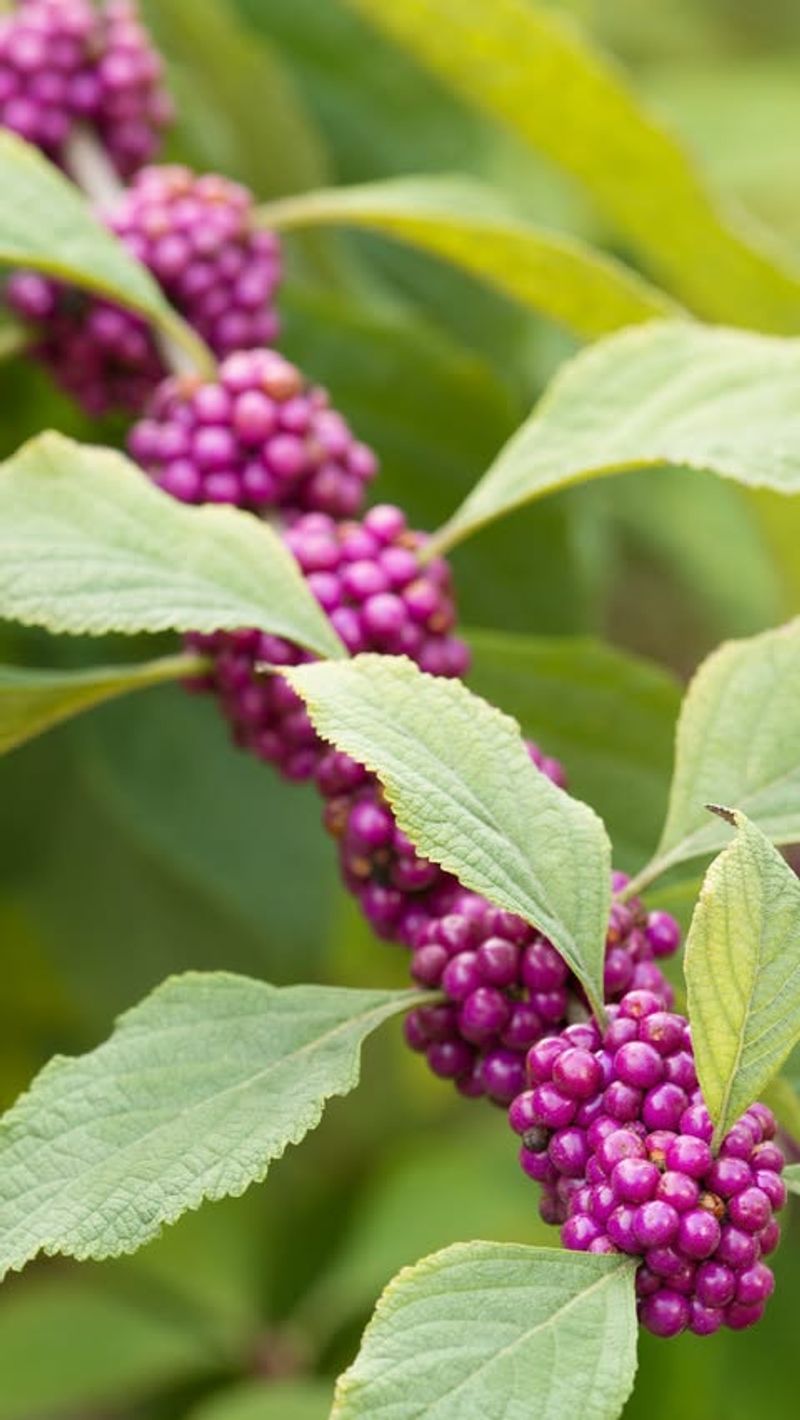
Picture a shrub so bold and colorful that neighbors stop their cars just to ask what it is. American Beautyberry earns that reaction every fall, when its stems become loaded with tight clusters of brilliant purple berries that practically glow in the garden.
Few plants in Texas can match that kind of visual punch.
Native to the southeastern United States, including much of Texas, this deciduous shrub grows quickly and can reach six to eight feet tall. It thrives in part shade to full sun, making it flexible enough to fit into many spots in your yard.
The large, soft-green leaves provide nice texture throughout spring and summer, so the plant earns its keep even before the berry show begins in late summer and fall.
Birds go absolutely wild for the berries. Species like mockingbirds, robins, catbirds, and brown thrashers flock to beautyberry shrubs throughout the fall season.
Unlike nandina berries, which are harmful to birds, beautyberry fruit is a safe and nutritious food source that supports local wildlife. That alone makes it a far better choice for Texas gardens.
Gardeners also love how easy it is to grow. American Beautyberry tolerates a range of soil types, handles Texas heat without much fuss, and needs very little supplemental watering once it is established.
You can cut it back hard in late winter to keep it compact, and it will bounce right back with fresh growth in spring. It is truly a low-effort, high-reward native plant.
2. Yaupon Holly (Ilex Vomitoria)
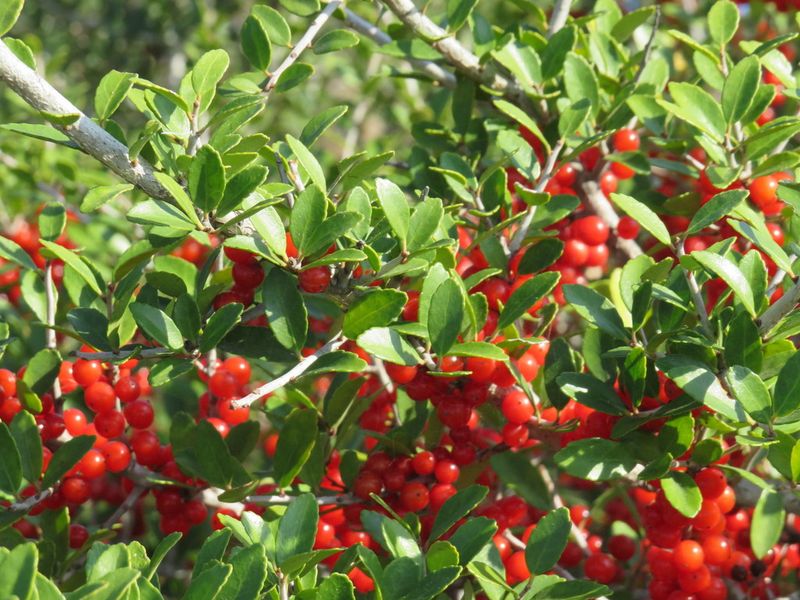
Yaupon Holly might just be the most underrated native shrub in all of Texas. It grows almost anywhere, tolerates drought, thrives in shade or full sun, and produces bright red berries that birds love all winter long.
Once established, it practically takes care of itself, which is a huge win for busy homeowners.
One fun fact most people do not know: Yaupon Holly is the only native North American plant that contains caffeine. Indigenous peoples brewed its leaves into a ceremonial tea for centuries.
Your Texas Garden Changes Every Week. Your Plan Should Too.
Gardening in Texas changes quickly throughout the season. Every Friday you’ll receive a simple weekly plan showing exactly what to plant, prune, fertilize, harvest, and protect so you never miss the right timing.
You probably will not be brewing tea from your yard, but it is a cool piece of history that makes this shrub even more interesting to grow.
As an evergreen, Yaupon Holly keeps your Texas landscape looking full and green even during the coldest months. It comes in many cultivated forms, from compact rounded shrubs to tall upright varieties that work well as privacy screens or hedges.
Weeping forms are also available and add a graceful, flowing look to garden beds. From a wildlife standpoint, Yaupon Holly is a superstar. The red berries feed dozens of bird species, and the dense branching provides excellent nesting cover.
Unlike nandina, which harms the birds that eat its berries, Yaupon Holly actively supports them. It is also highly resistant to pests and diseases, so you will not need to spray chemicals to keep it healthy.
For Texas gardeners wanting a reliable, beautiful, and wildlife-friendly evergreen, this shrub is hard to beat.
3. Possumhaw Holly (Ilex decidua)
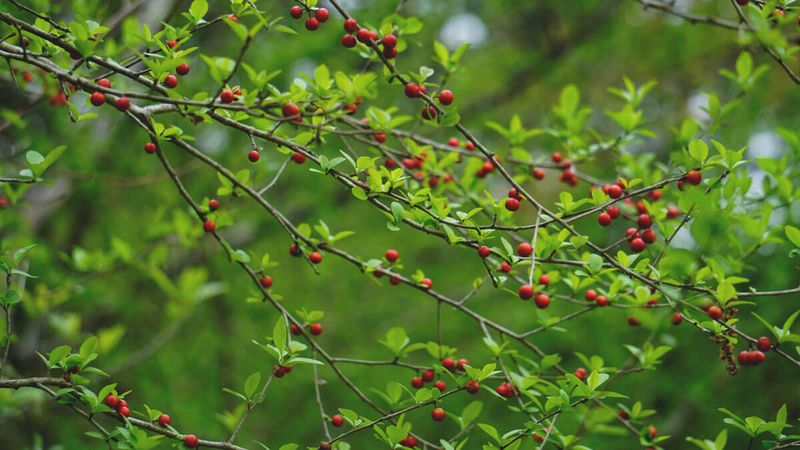
When winter strips the leaves from most plants and the garden starts to look bare, Possumhaw Holly steps up and steals the show.
This deciduous holly drops its leaves in fall, but what it reveals underneath is something special: stems absolutely packed with bright red or orange berries that cling to the branches all winter long.
It looks like nature decorated your yard for the holidays.
Possumhaw Holly is native to Texas and grows well across much of the state, from the eastern woodlands to the central Hill Country. It prefers full sun to part shade and can handle a range of soil conditions, including clay-heavy soils that many other shrubs struggle with.
In the wild, you often find it growing along creek banks and woodland edges, which tells you it can handle both wet and dry spells.
Birds are the biggest fans of this shrub. Cedar waxwings, bluebirds, and robins rely heavily on Possumhaw berries during the lean winter months when other food sources are scarce.
Planting one or two of these in your Texas yard essentially sets up a free bird feeder that refills itself every year without any effort from you.
Compared to nandina, Possumhaw Holly offers similar winter color but without the ecological risks. Its berries are safe for wildlife, it does not spread invasively, and it supports the native food web.
It can grow eight to ten feet tall, so give it some room to spread out and show off its stunning winter display.
4. Texas Sage (Leucophyllum Frutescens)
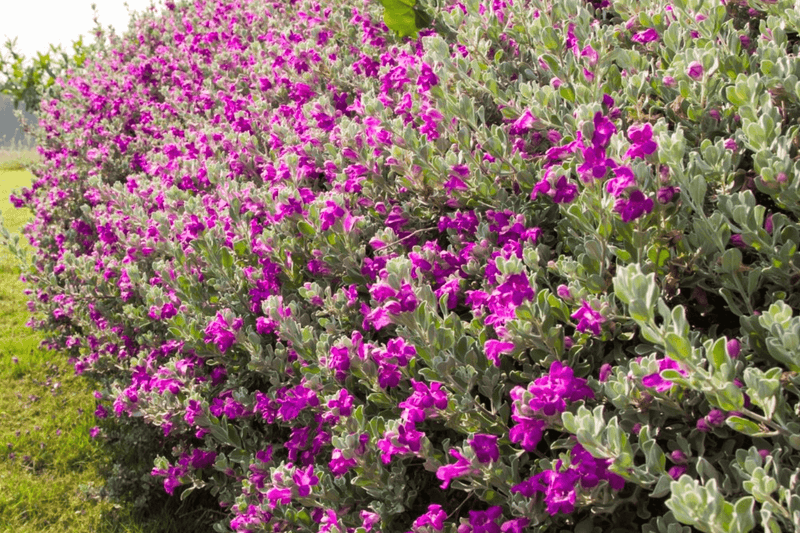
Walk through any neighborhood in San Antonio or Austin after a summer rainstorm and you will likely spot Texas Sage bursting into bloom along fences and driveways.
This shrub has a quirky talent: it seems to sense when rain or high humidity is on the way, and it responds by covering itself in purple flowers almost overnight. Locals call it the “barometer bush” because of this reliable weather-predicting habit.
Texas Sage is a true native of the Chihuahuan Desert region, meaning it was built for hot, dry, and tough conditions. It thrives in full sun and well-drained soils, including the rocky limestone soils that cover much of central and west Texas.
Once established, it needs almost no supplemental watering, making it one of the most drought-tolerant shrubs you can plant in a Texas landscape.
The silvery-gray foliage looks attractive even when the plant is not blooming, giving the garden a soft, dusty color that pairs well with bold flowers nearby.
The purple blooms that appear after rain events attract bees and butterflies, adding life and movement to your yard.
It typically grows four to eight feet tall and wide, making it a solid choice for low hedges or mass plantings along a sunny border.
Maintenance is refreshingly simple. Texas Sage does not like to be overwatered or over-fertilized, so the less you fuss with it, the better it looks.
Skip the nandina and plant this tough, beautiful Texan instead. Your water bill and your local pollinators will both thank you for it.
5. Agarita (Mahonia Trifoliolata)
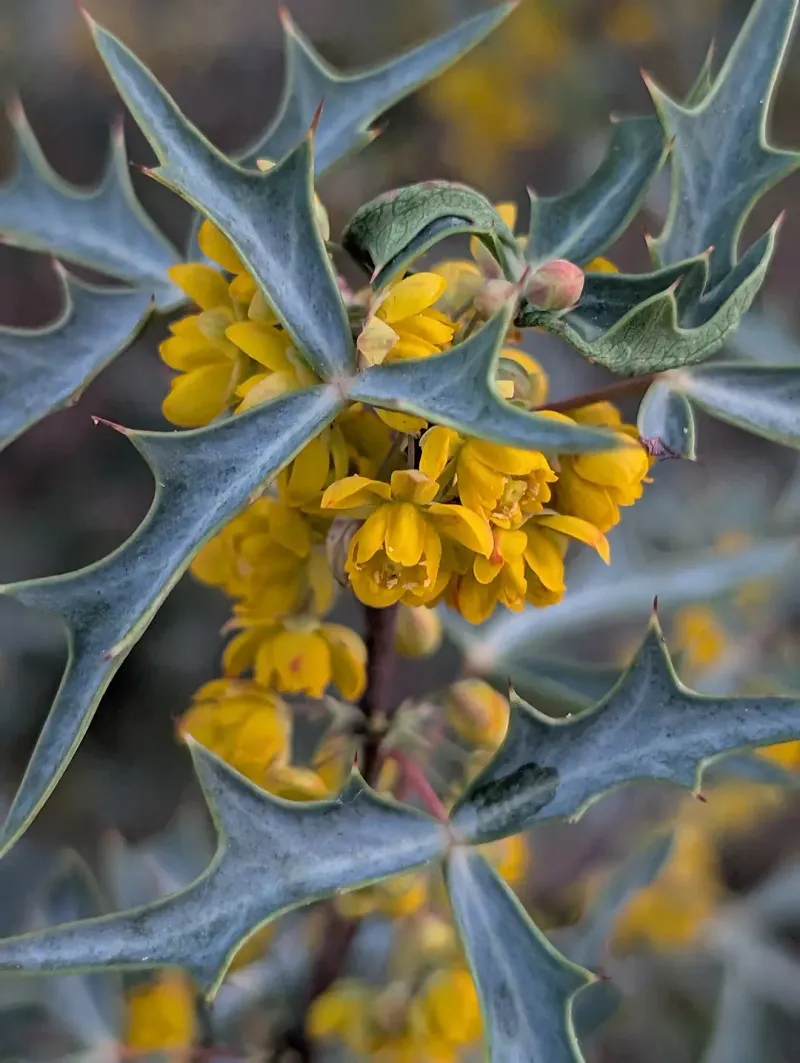
Tough, thorny, and wildly beautiful, Agarita is one of those native Texas plants that does not ask for much but gives back plenty.
This evergreen shrub has been growing in the Hill Country and Trans-Pecos regions for thousands of years, long before anyone thought about landscaping.
It knows how to handle Texas heat, thin rocky soil, and months without rain, and it does all of that while looking genuinely gorgeous.
In early spring, Agarita bursts into small yellow flowers with a sweet fragrance that drifts through the air on warm mornings. Those blooms are followed by small red berries that ripen by early summer.
The berries are edible for humans too, and people have long used them to make jellies and preserves. Wildlife, including deer, birds, and small mammals, rely on the berries as an important food source.
The spiky, blue-green leaves are similar to holly in texture and shape, which gives Agarita a bold, architectural look in the garden. That same spikiness makes it an excellent barrier plant.
Plant it under windows or along a property edge and you have a natural deterrent that looks far better than a chain-link fence.
Unlike nandina, Agarita does not spread aggressively or harm the animals that eat its fruit. It is a slow grower, reaching about three to six feet tall over time, so it rarely needs pruning.
For Texas gardeners who want a tough, low-maintenance, and ecologically valuable shrub, Agarita delivers on every front without any compromise.
6. Texas Lantana (Lantana Urticoides)
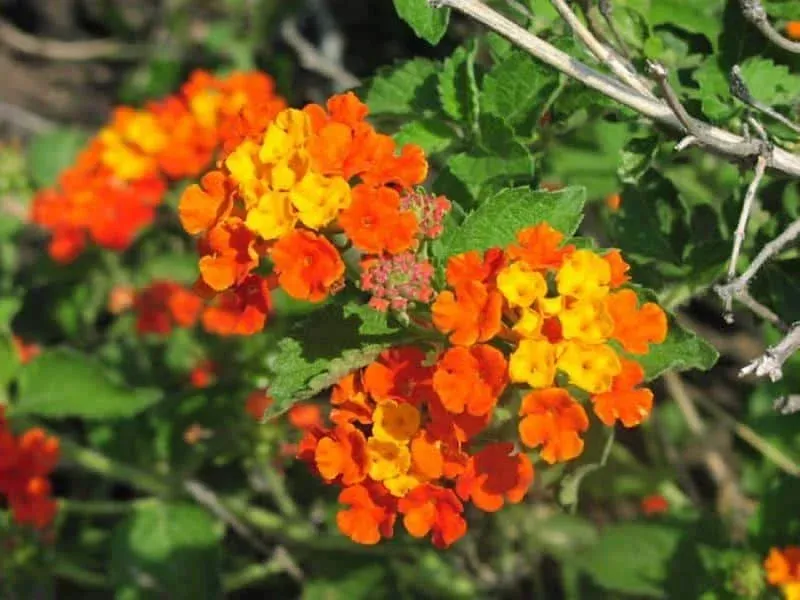
Few shrubs in Texas throw a better party for pollinators than Texas Lantana. From late spring all the way through the first frost, this colorful native keeps pumping out clusters of orange, yellow, and red flowers that butterflies simply cannot resist.
On a warm summer afternoon, a blooming Texas Lantana shrub can look like it is moving because so many wings are fluttering around it at once.
Unlike the common lantana sold at garden centers, which is often a non-native species that can become weedy, Texas Lantana is a true native of the Lone Star State.
It is found naturally in south and central Texas, and it is perfectly adapted to the heat, sun, and dry spells that come with living in this region.
It thrives in full sun and well-drained soil, and once it gets going, it needs very little water to keep blooming.
The plant grows three to four feet tall and spreads out into a mounding shape that works well as a border plant or a low hedge along a sunny walkway. The dark green leaves have a slightly rough texture and a distinctive herby scent when brushed.
Small dark berries follow the flowers and are eaten by birds, though they are not meant for human snacking.
Replacing nandina with Texas Lantana is a smart move for any sunny spot in a Texas yard. You trade an invasive, wildlife-harming shrub for one that actively feeds and shelters butterflies, bees, and birds throughout the growing season. That is a trade worth making every single time.
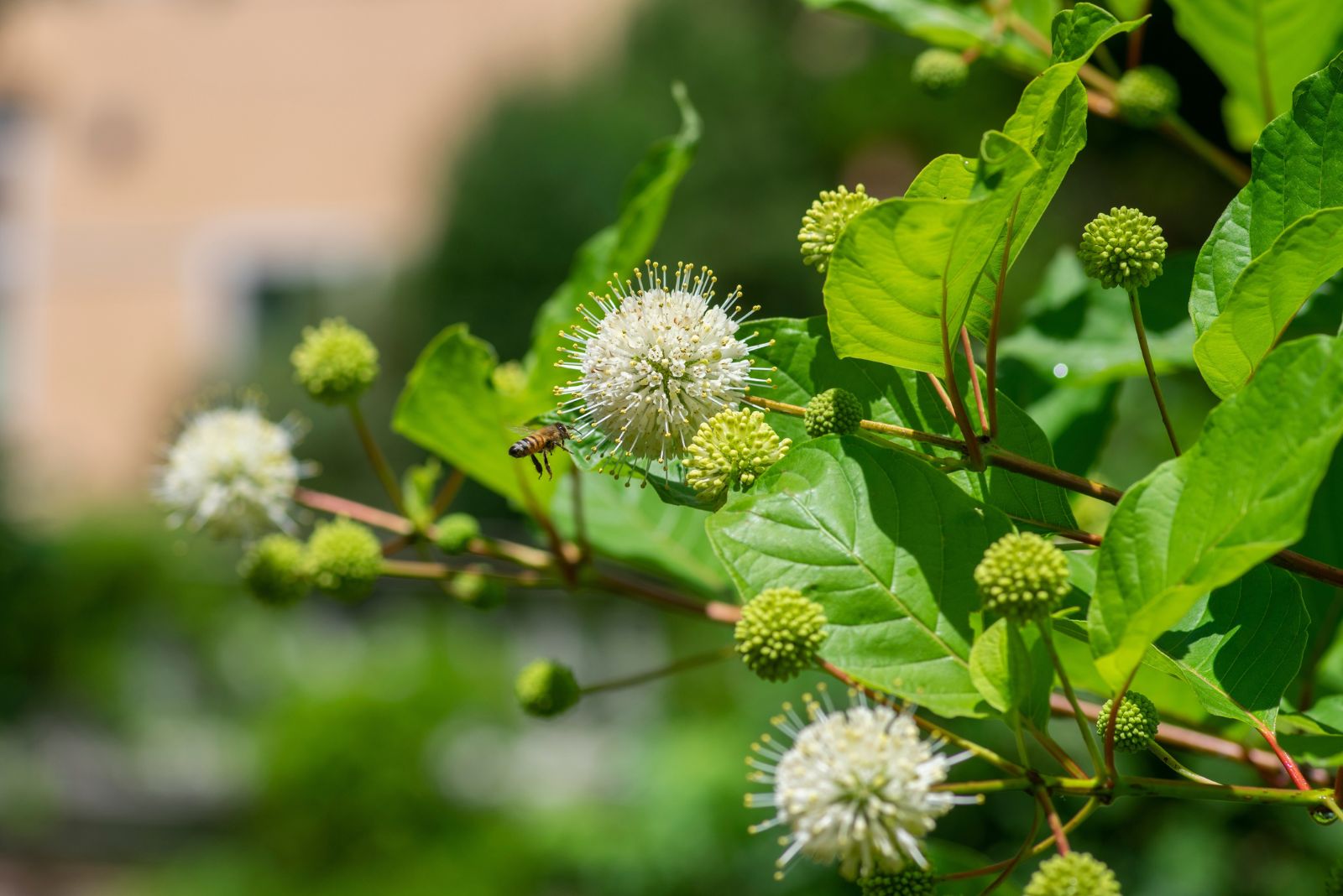
7. Buttonbush (Cephalanthus Occidentalis)
Not every yard is dry and sunny, and for those spots that stay moist or even flood occasionally, Buttonbush is a native Texas shrub that truly shines.
Growing naturally along streams, ponds, and river edges across much of Texas and the eastern United States, Buttonbush is one of the few native shrubs that actually loves wet feet.
If you have a low spot in your yard that holds water, this is the plant you have been looking for.
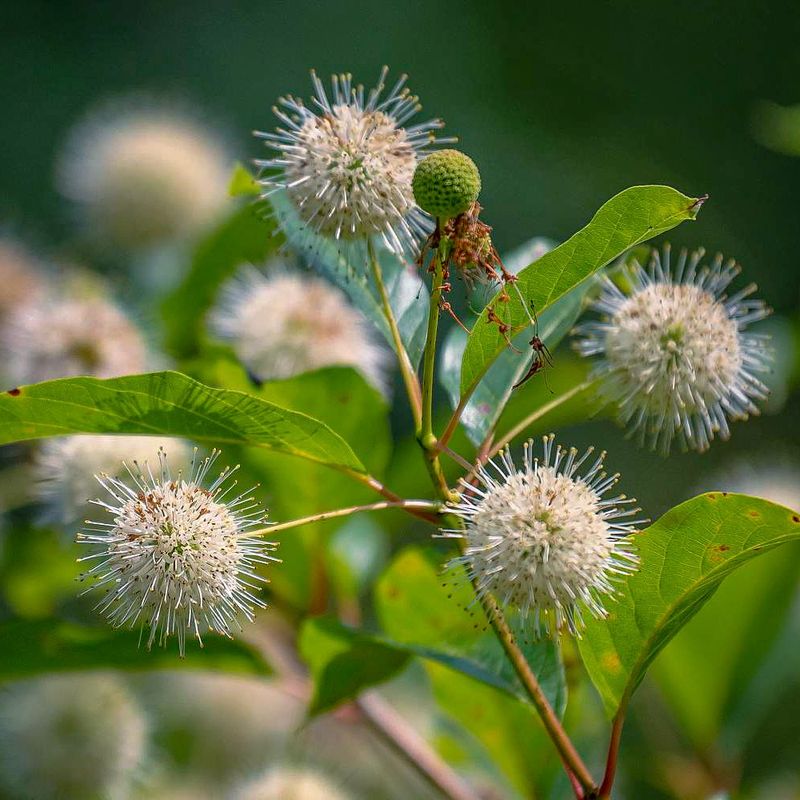
The flowers are unlike anything else in the native plant world. They are perfectly round, white, and spiky, resembling little pincushions or golf balls covered in tiny white pins.
They bloom in summer and have a sweet fragrance that draws in bees, butterflies, and hummingbirds by the dozens. After the flowers fade, round reddish-brown seed clusters remain on the plant and serve as food for ducks and shorebirds through fall and winter.
Buttonbush can grow six to twelve feet tall in ideal conditions, making it a solid choice for a naturalistic screen or a focal point near a water feature.
It is deciduous, so it drops its leaves in winter, but the interesting branching structure still adds visual interest to the landscape during colder months in Texas.
From an ecological standpoint, Buttonbush is exceptional. It supports an impressive variety of wildlife, from pollinators to waterfowl, and it helps filter runoff water near ponds and streams.
Swapping nandina for Buttonbush in a wet area of your Texas yard means turning a problem spot into a thriving mini-habitat that benefits your whole neighborhood.