7 Native Texas Plants To Grow Instead Of Oleander
Oleander may be popular in warm-climate landscapes, but that does not automatically make it the best choice for a Texas yard. Plenty of gardeners are starting to look past the familiar option and ask for something that feels more connected to the place they live.
That shift makes sense. A plant that already belongs in Texas usually has a much better shot at handling the heat, dry spells, and unpredictable weather without needing so much extra help.
There is also the bigger payoff of planting native. These plants do more than fill a flower bed or soften a fence line.
They support pollinators, birds, and other wildlife that actually depend on them, while often bringing just as much color, texture, and personality to the landscape. In many cases, they also ask for less water and less fuss once they are established.
If you like the idea of a yard that looks good and works with the Texas environment instead of against it, skipping oleander opens the door to some much smarter choices. Native plants can give you beauty with a stronger sense of place.
1. Yaupon Holly (Ilex Vomitoria)
Did you know that Yaupon Holly is the only caffeinated plant native to North America? That fun fact alone makes it one of the most interesting shrubs you can grow in Texas.
Beyond its history, this plant is a powerhouse for any yard that needs privacy, structure, or year-round greenery.
Yaupon Holly is an evergreen native shrub that can grow anywhere from a compact 5 feet to a towering 25 feet, depending on the variety you choose.
It works beautifully as a hedge, a screen between properties, or a foundation planting near your home. You can even train it into a small tree shape if you prefer a more polished look.
One of the biggest reasons Texas gardeners love Yaupon Holly is how little it asks of you. It tolerates poor soils, drought, shade, and full sun without skipping a beat. That kind of toughness is hard to find in any plant, native or otherwise.
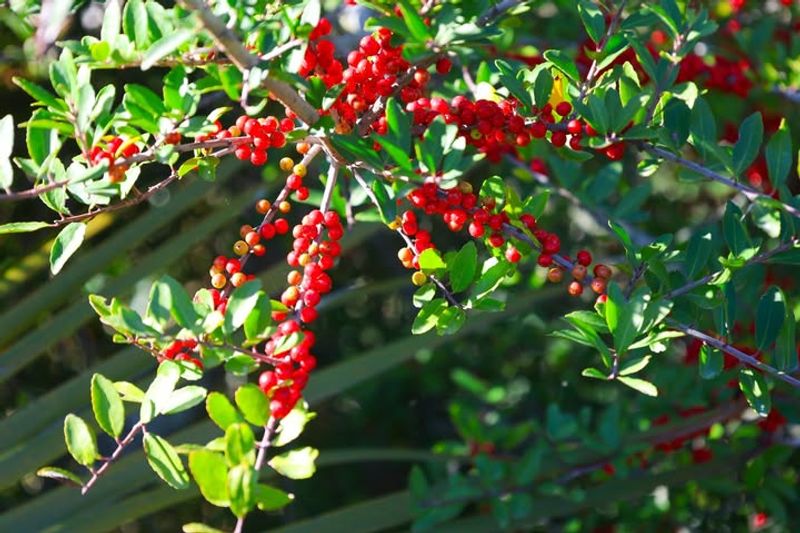
Female plants produce bright red berries in fall and winter, which birds absolutely love. Cardinals, mockingbirds, and cedar waxwings flock to Yaupon Holly when those berries ripen.
Planting one near a window gives you a front-row seat to some amazing Texas wildlife action.
Compared to oleander, Yaupon Holly is far safer around children and pets. It supports local pollinators in spring with small white flowers and feeds birds in winter with its berries. For a tough, beautiful, and wildlife-friendly shrub in Texas, it is hard to beat this native gem.
2. Wax Myrtle (Morella Cerifera)
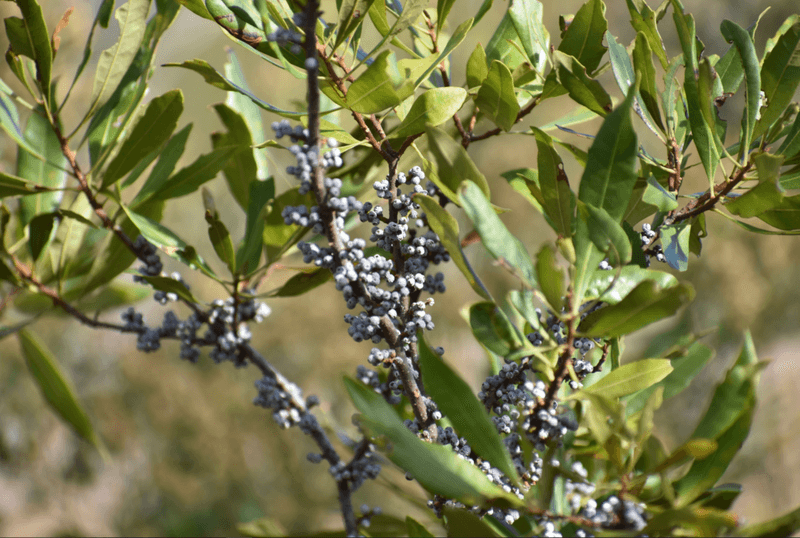
Walk past a Wax Myrtle on a warm Texas afternoon and you will catch a faint, spicy fragrance drifting from its leaves.
That aromatic quality is one of the many reasons this fast-growing native shrub has earned a loyal fan base among Texas gardeners. It brings beauty, function, and a sensory experience all at once.
Wax Myrtle typically grows between 6 and 12 feet tall, making it an ideal choice for creating a natural privacy screen or a soft, flowing hedge along a fence line.
Your Texas Garden Changes Every Week. Your Plan Should Too.
Gardening in Texas changes quickly throughout the season. Every Friday you’ll receive a simple weekly plan showing exactly what to plant, prune, fertilize, harvest, and protect so you never miss the right timing.
Unlike stiff, formal hedges, Wax Myrtle has a relaxed, feathery texture that feels right at home in Texas landscapes of all styles.
Speed is another thing this plant has going for it. Wax Myrtle grows quickly, so you will not be waiting years to get the screening effect you are looking for.
It fills in fast and stays evergreen through most Texas winters, keeping your yard looking full and lush even in the cooler months.
The small, waxy, gray-blue berries that appear on female plants are a favorite food source for yellow-rumped warblers and many other Texas birds.
Planting Wax Myrtle is basically setting out a welcome mat for local wildlife. It supports the broader ecosystem in a way that oleander simply cannot.
Wax Myrtle handles wet soils, dry soils, coastal conditions, and urban pollution with ease. Whether you live in Houston, Austin, or along the Texas Gulf Coast, this adaptable native is a smart and beautiful choice for your yard.
3. Texas Sage / Cenizo (Leucophyllum Frutescens)
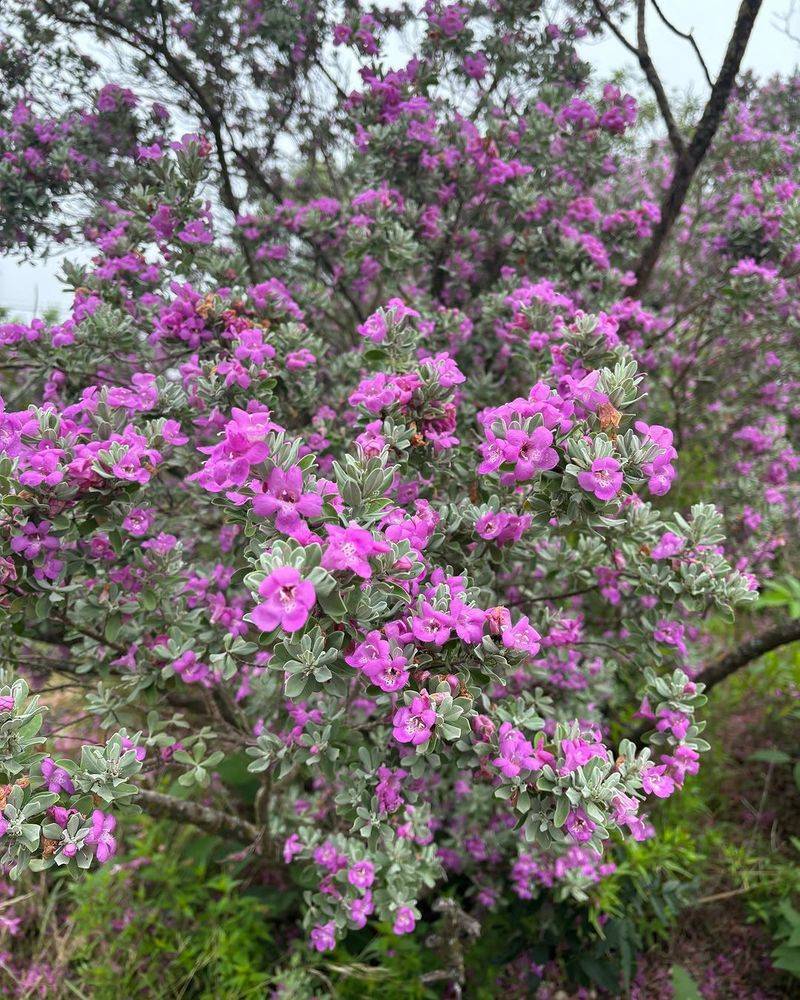
Ask any longtime Texas gardener which plant practically predicts rain, and they will smile and say cenizo.
Texas Sage, also called Cenizo or the barometer bush, is famous for bursting into a cloud of purple blooms right before or after rainfall. It is one of those plants that feels like it has a personality all its own.
This evergreen shrub usually grows between 2 and 5 feet tall, though some varieties can get larger over time. The silvery-gray foliage is soft and velvety to the touch, creating a beautiful contrast against the bright purple flowers.
It looks stunning planted along a driveway, a walkway, or mixed into a xeriscape garden bed. Heat and drought are no problem for Texas Sage. In fact, it thrives on neglect.
Overwatering is actually one of the few things that can cause problems for this plant, so once it is established, you can mostly leave it alone and let it do its thing. That makes it a perfect choice for busy homeowners across Texas.
Pollinators go wild for those purple blooms. Bees, butterflies, and even hummingbirds visit regularly when cenizo is in flower.
Because it can bloom multiple times a year after rain events, your garden gets repeated bursts of color and wildlife activity throughout the warmer months.
Replacing oleander with Texas Sage is a win on every level. You get stunning seasonal color, silvery texture year-round, zero toxicity concerns, and a plant that is perfectly at home in the Texas climate without any extra fuss.
4. Turk’s Cap (Malvaviscus Arboreus Var. Drummondii)
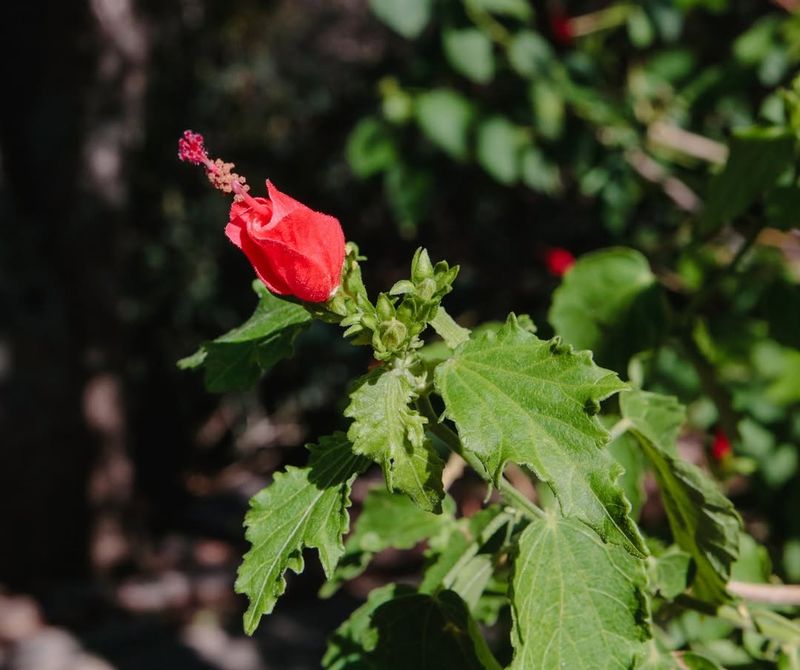
Bright red flowers that never fully open, a love of shade, and an almost magical ability to attract hummingbirds. That is Turk’s Cap in a nutshell, and once you plant one, you will wonder why you waited so long.
This Texas native has a quirky charm that sets it apart from just about everything else in the garden.
Turk’s Cap usually grows 2 to 3 feet tall, but in the right conditions it can stretch taller. The flowers look like little red turbans, which is exactly how the plant got its name.
They bloom from late spring all the way through fall, giving you months of reliable color and hummingbird visits right in your own backyard.
What makes this plant especially valuable in Texas is its shade tolerance. Most tough, drought-resistant plants want full sun, but Turk’s Cap is perfectly happy under the canopy of a large oak or along the shaded side of a house.
That fills a real gap for Texas gardeners working with tricky, low-light spots. Beyond hummingbirds, Turk’s Cap also draws in butterflies and bees. The small red fruit that follows the flowers is edible and attracts birds too.
You are essentially creating a mini wildlife habitat every time you plant one of these in your yard.
Care is refreshingly simple. Turk’s Cap handles drought, poor soil, and heat without complaint.
It may go dormant in winter in colder parts of Texas, but it comes back strong every spring, reliably filling your shaded garden corners with tropical-looking color all over again.
5. Texas Mountain Laurel (Dermatophyllum Secundiflorum)
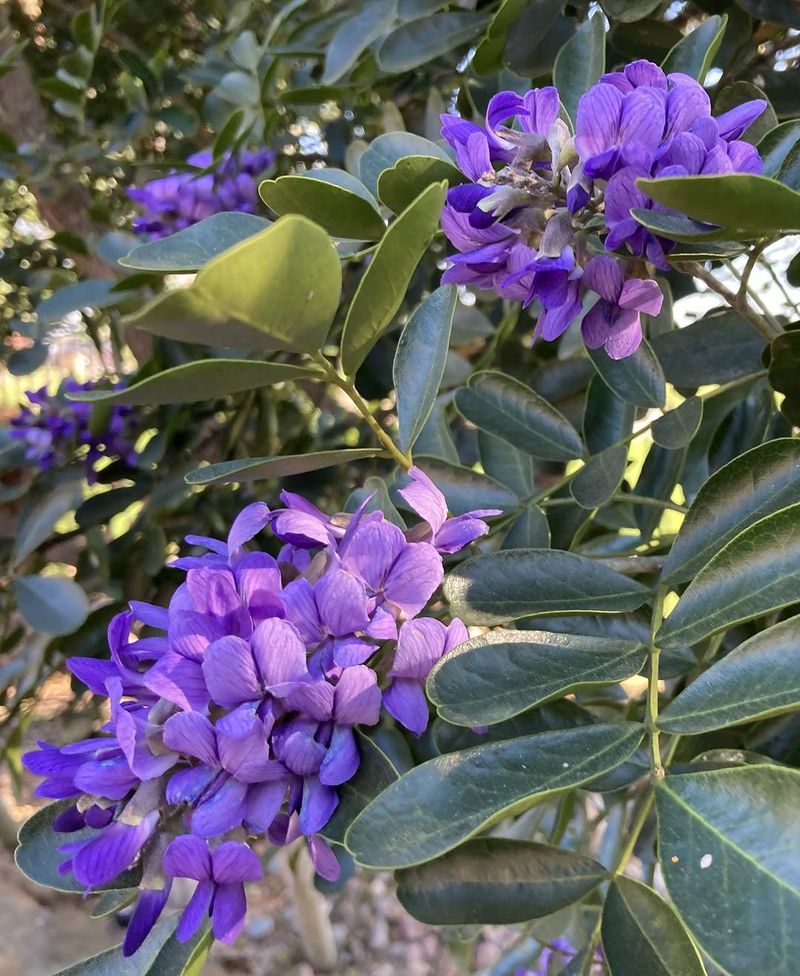
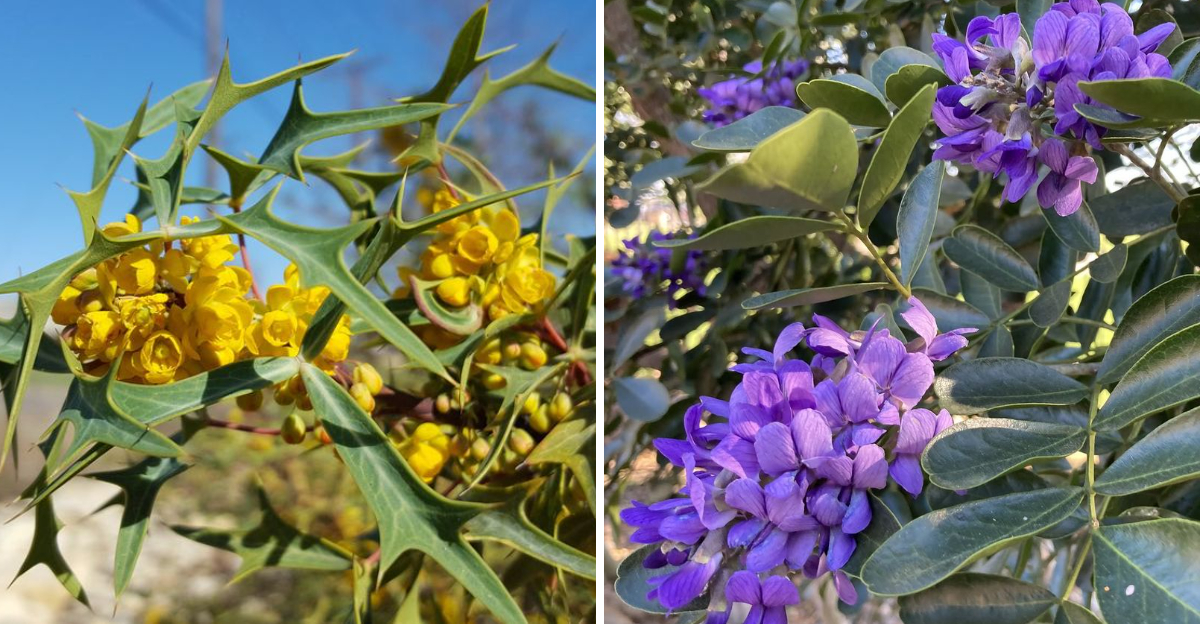
Every spring in the Texas Hill Country, a grape-scented perfume drifts through the air, and the source is one of the most beloved native plants in the state. Texas Mountain Laurel puts on a flower show in early spring that stops people in their tracks.
Clusters of deep purple blooms hang like bunches of grapes and smell unmistakably like grape soda.
This evergreen native shrub or small tree grows slowly but rewards your patience with a naturally sculptural, elegant shape. The dark, glossy leaves stay on the plant year-round, giving you a handsome, formal-looking specimen even when it is not in bloom.
It works beautifully as a focal point, a small patio tree, or a screening plant along a property line.
Texas Mountain Laurel is built for the Texas climate. It thrives in rocky, well-drained soils and handles drought and heat with complete ease.
Once established, it needs very little supplemental water, which makes it a smart choice for water-conscious homeowners throughout central and south Texas.
The flowers are a magnet for native bees and other pollinators in early spring, at a time when not many other plants are blooming yet. That early season support for pollinators is genuinely valuable for the local ecosystem.
After the flowers fade, decorative seed pods form and eventually open to reveal bright red seeds.
One note worth knowing: those red seeds are toxic if swallowed, so keep that in mind if young children or pets spend time in your yard. Overall, this is a breathtaking, low-maintenance native that brings serious beauty to any Texas landscape.
6. Flame Acanthus (Anisacanthus Quadrifidus Var. Wrightii)
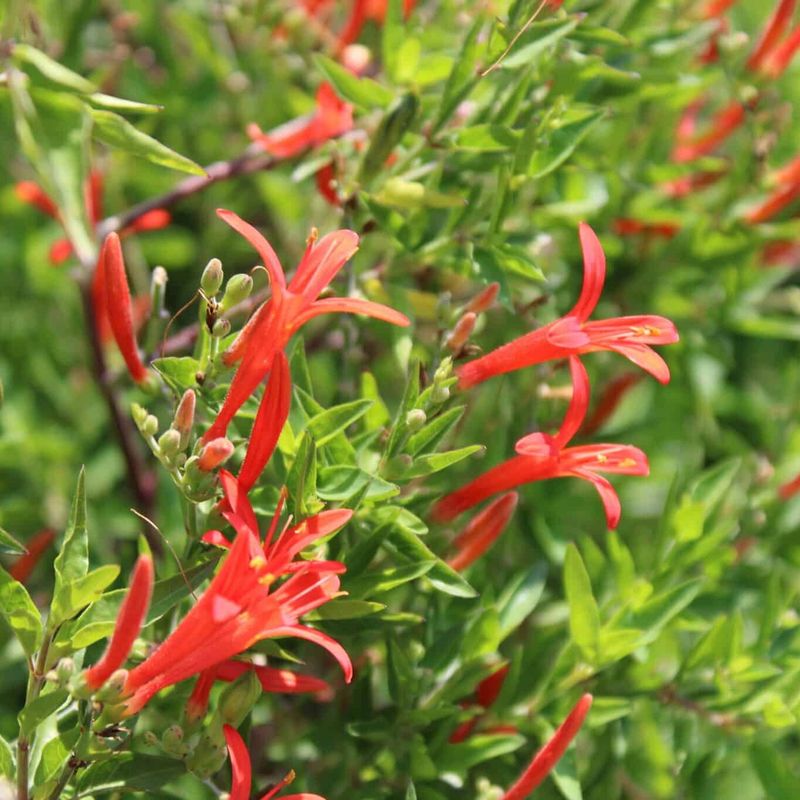
When August rolls around in Texas and most plants are wilting under the brutal heat, Flame Acanthus is just getting warmed up.
This tough little native shrub seems to love the hottest, driest stretch of summer, putting out a flush of fiery red-orange tubular flowers right when your garden needs color the most. It is the definition of a heat-season hero.
Flame Acanthus typically grows 3 to 5 feet tall and has a loose, open, airy structure. The slender tubular flowers are perfectly shaped for hummingbirds, and the birds know it.
Plant one near a patio or a window and you will have front-row seats to hummingbird activity all through late summer and fall. Butterflies and bees also visit regularly.
Being deciduous, Flame Acanthus loses its leaves in winter. That might sound like a downside, but it actually makes spring even more exciting when fresh new growth emerges and the plant fills back in quickly.
By early summer it looks full and lush, ready to dazzle again by midsummer. Drought tolerance is one of this plant’s strongest qualities. Once it is established in your Texas yard, it rarely needs supplemental watering.
It handles rocky soil, clay soil, and poor soil conditions without complaint. That kind of resilience makes it an excellent low-maintenance choice for gardeners who want results without constant upkeep.
Compared to oleander, Flame Acanthus is completely safe around people and pets, supports native pollinators, and thrives in the same hot, dry Texas conditions. It is a straightforward swap that delivers big rewards every single summer.
7. Agarita (Mahonia Trifoliolata)
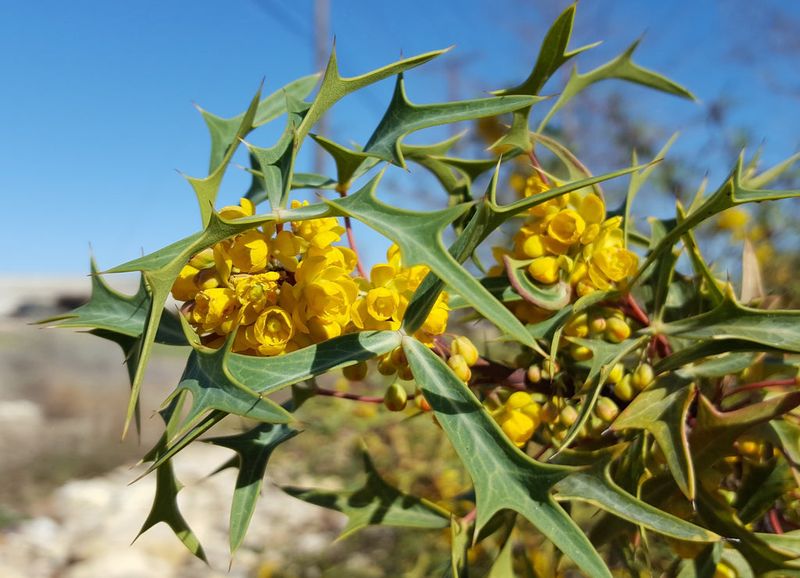
Tough, prickly, and wildly beautiful, Agarita is the kind of plant that earns respect. This rugged evergreen native shrub has been thriving across the Texas Hill Country and south Texas for centuries, long before anyone thought about landscaping trends.
It is a true survivor with a lot to offer the modern Texas garden. Agarita usually grows 3 to 6 feet tall and has stiff, spiny, holly-like leaves that make it an outstanding barrier plant.
Want to keep deer out of a garden bed or create a natural security hedge along a fence? Agarita is your answer. Nothing with legs wants to push through those sharp leaflets.
In late winter and early spring, Agarita surprises you with clusters of small, fragrant yellow flowers that bloom before most other plants even wake up. Those early blooms are a lifeline for native bees emerging from winter.
Then, by late spring, the flowers give way to tart red berries that birds love and that humans have traditionally used to make jelly and wine.
Drought tolerance is where Agarita truly shines. This plant is adapted to survive on rainfall alone across much of Texas once it is established.
It asks for well-drained soil and full sun to partial shade, and then it basically takes care of itself. Minimal pruning, minimal water, and minimal fuss.
Swapping oleander for Agarita means gaining a plant that feeds birds, supports early pollinators, acts as a natural barrier, and looks ruggedly beautiful year-round.
For wildlife-friendly, water-smart Texas landscaping, Agarita is an underused gem that deserves a spot in far more yards.