8 Fence-Line Plants South Florida Homeowners Regret After The First Real Heat Wave
That first real heat wave in South Florida has a way of exposing every weak plant choice along a fence line. What looked lush and promising in spring can suddenly wilt, scorch, or drop leaves almost overnight.
Many homeowners realize too late that some of the most popular fence-line plants simply cannot handle the intensity of full sun, reflected heat, and long dry stretches. Fence lines are especially tough spots.
They trap heat, limit airflow, and often sit in poor, fast-draining soil that dries out quickly. Plants that seem low effort at first can turn into constant problems once summer settles in.
The frustration builds when growth stalls, color fades, and gaps start showing right where privacy matters most.
These are the plants South Florida homeowners often regret planting once that first serious heat wave rolls through.
1. Air Potato Quickly Takes Over Fence Lines
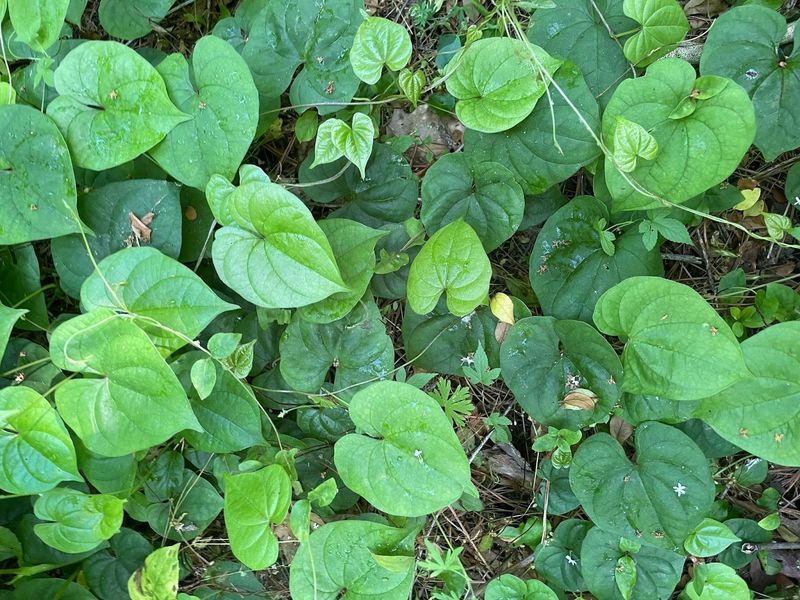
Few plants move as fast as this one once the summer heat arrives. Air potato, known scientifically as Dioscorea bulbifera, is listed as one of Florida’s most invasive exotic plants by the Florida Exotic Pest Plant Council.
It can grow up to eight inches in a single day under the right conditions, and South Florida’s warm, wet summers are absolutely the right conditions.
What makes it especially hard to manage are the bulbils, which are the small potato-like growths that form along the vines. These bulbils drop to the ground, roll into neighboring yards, and sprout into new plants with almost no effort.
Even after cutting the vine back, any bulbils left behind will continue the cycle. Removing every single one by hand is tedious and time-consuming work.
UF/IFAS Extension has flagged air potato as a serious concern across Florida, noting that mechanical removal alone is rarely enough to fully control it. A biological control using the air potato leaf beetle has shown some promise, but the plant can still outpace management efforts quickly.
If you spot it climbing your fence, act immediately before it establishes a foothold that becomes a full season project to undo.
2. Cat’s Claw Vine Becomes Hard To Control Fast
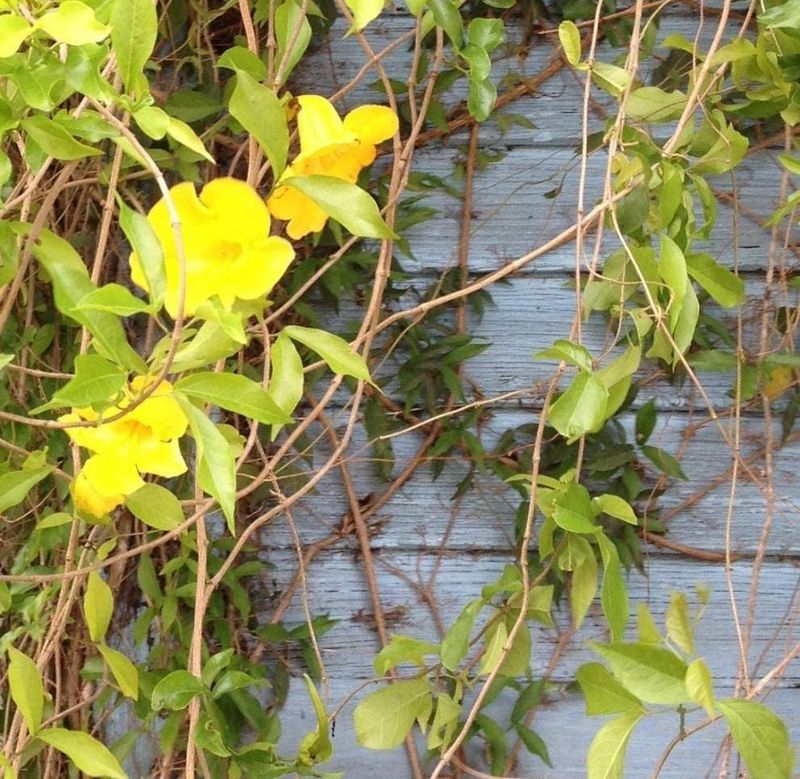
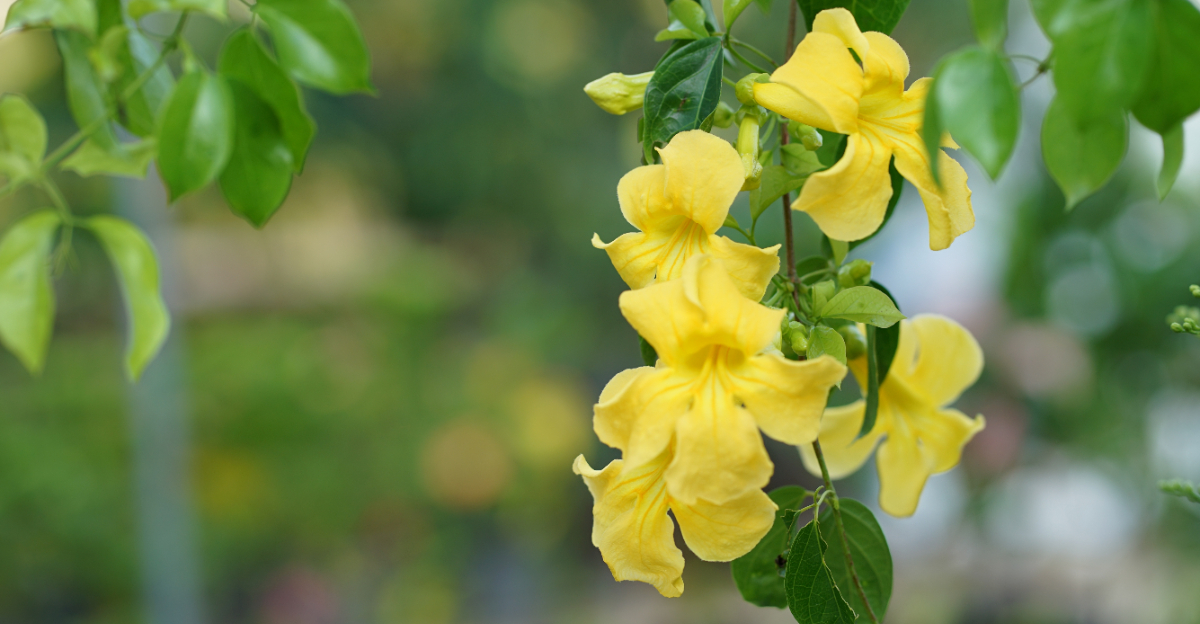
At first glance, the bright yellow flowers of cat’s claw vine look cheerful and tropical, which is exactly why so many homeowners plant it along fences. The charm fades quickly once you realize how aggressively it attaches to every surface it touches.
The vine uses tiny claw-shaped tendrils to grip wood, metal, masonry, and even tree bark, and those claws are surprisingly strong.
Cat’s claw vine, or Macfadyena unguis-cati, spreads both above and below ground. Underground tubers store energy and send up new shoots even when the surface growth has been removed.
This is what makes it so frustrating to manage. You can cut it back repeatedly and still find fresh growth pushing through a few weeks later, especially during the heat of summer when growth rates accelerate.
According to UF/IFAS, this vine is considered invasive in Florida and can overtake native vegetation along fence lines and into natural areas. Once it climbs into tree canopies, removal becomes significantly more difficult.
Your Florida Garden Changes Every Week. Your Plan Should Too.
Gardening in Florida changes quickly throughout the season. Every Friday you’ll receive a simple weekly plan showing exactly what to plant, prune, fertilize, harvest, and protect so you never miss the right timing.
Early intervention is critical. If you catch it while it is still young and small, removal is manageable.
Wait too long and you may be dealing with it for multiple growing seasons before it is fully under control.
3. Skunk Vine Spreads Quickly And Smells Strong
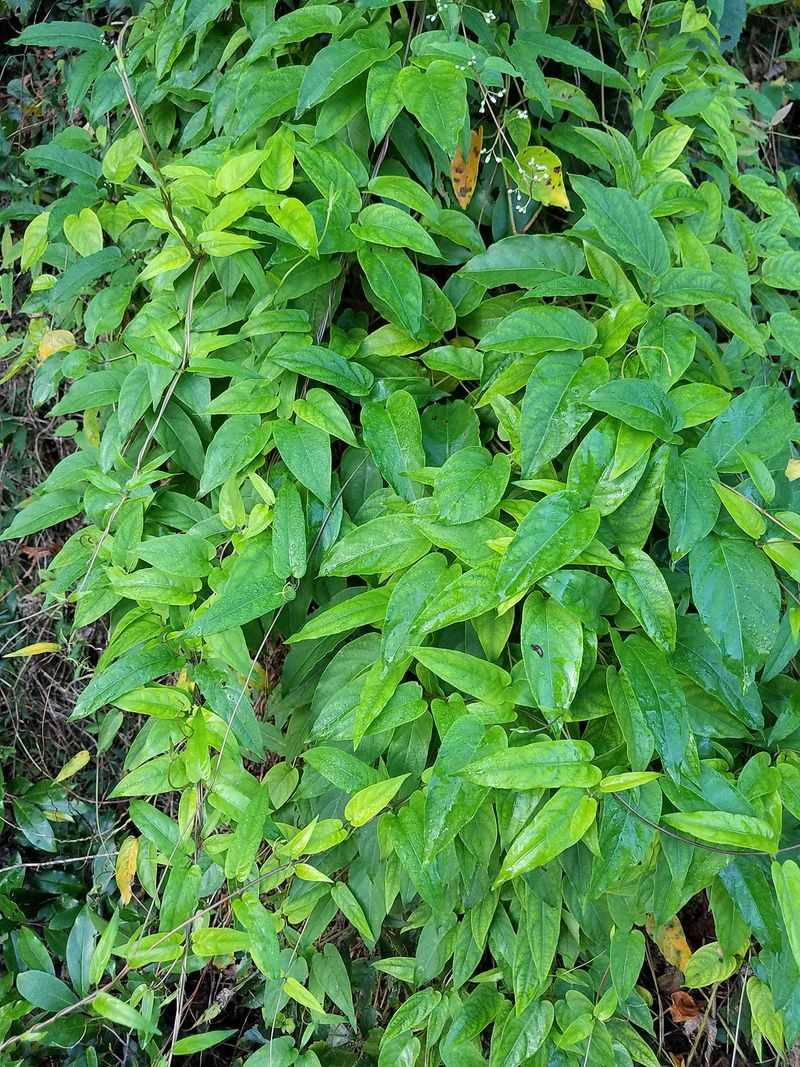
The name alone should be a warning. Skunk vine, or Paederia foetida, earns its reputation the moment you brush against it or try to pull it from a fence.
The smell is sharp, unpleasant, and lingers on your hands and clothing. It is not the kind of plant you want growing near an outdoor seating area or along a fence where neighbors pass by regularly.
Beyond the odor, skunk vine is a relentless grower. It twines around fences, shrubs, and trees, forming thick mats of vegetation that block sunlight from reaching the plants underneath.
In South Florida’s climate, it thrives year-round and spreads through both seeds and stem fragments. Even small pieces left behind during removal can root and start new growth.
The Florida Exotic Pest Plant Council lists skunk vine as a Category I invasive species, meaning it is actively altering native plant communities. UF/IFAS notes that once it establishes along a fence line, it can quickly spread into adjacent landscapes and natural areas.
Herbicide treatments combined with manual removal tend to be more effective than pulling alone, but follow-up is essential. Skunk vine is patient, and it will return if you give it the chance.
4. Coral Vine Takes Over Before You Notice
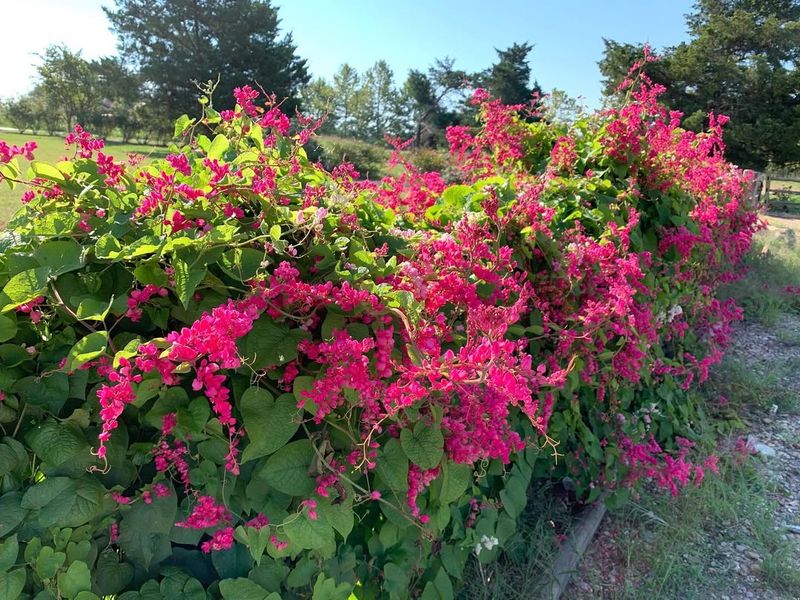
There is something genuinely beautiful about coral vine when it first starts blooming. The clusters of bright pink flowers are eye-catching, and in early growth it looks like the perfect tropical accent for a fence line.
That appealing appearance is part of the problem. Homeowners enjoy the flowers for a season or two before realizing the plant has quietly taken over far more space than intended.
Coral vine, or Antigonon leptopus, is a fast-growing perennial that produces underground tubers capable of storing large amounts of energy. This means that even after cutting the vine back hard, it rebounds quickly and with renewed vigor.
In South Florida’s heat, it can cover a long stretch of fence in a single growing season, and it does not stay politely on the fence either. It climbs into nearby trees and shrubs with ease.
While coral vine is not always listed as invasive at the state level, UF/IFAS has noted its potential to escape cultivation and naturalize in disturbed areas. The tubers make full removal a genuine challenge.
Digging them out thoroughly is the most reliable approach, but in established plants the tubers can grow quite deep. Regular monitoring after removal is necessary to catch any regrowth before it gains momentum again.
5. Mexican Flame Vine Smothers Everything Nearby
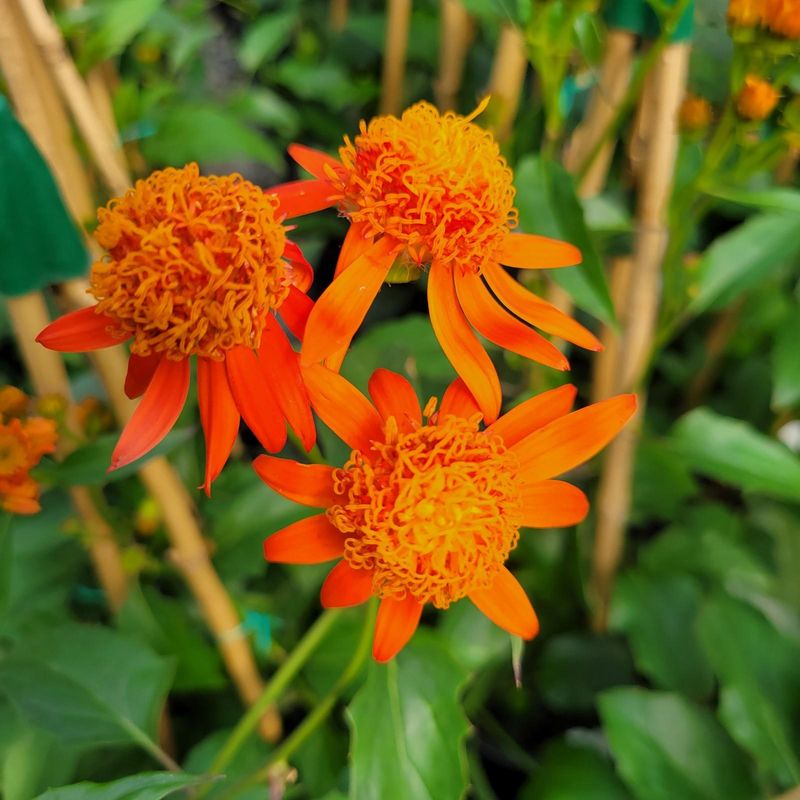
Watching Mexican flame vine bloom for the first time is genuinely exciting. The orange flowers are vivid and attract butterflies, which makes it a popular choice among gardeners looking to add color and wildlife activity to a fence line.
The excitement tends to wear off after the first full South Florida summer, when the vine reveals just how aggressively it grows in the heat.
Pseudogynoxys chenopodioides, commonly called Mexican flame vine, is a fast-climbing plant that can reach the top of a tall fence and keep going into nearby trees and overhead structures. It does not just grow upward either.
Side branches spread laterally and drape over neighboring plants, blocking light and creating heavy coverage that can stress or weaken whatever is growing underneath.
The warm, humid conditions of South Florida essentially act as a turbo boost for this plant. What might behave as a manageable grower in a cooler climate becomes a persistent challenge here.
Regular and aggressive pruning is required to keep it from overwhelming a fence line entirely. If you are committed to growing it, plan for consistent maintenance every few weeks during the growing season.
Without that attention, it will expand well beyond its original boundaries in a surprisingly short amount of time.
6. Bougainvillea Becomes Difficult In Tight Fence Spaces
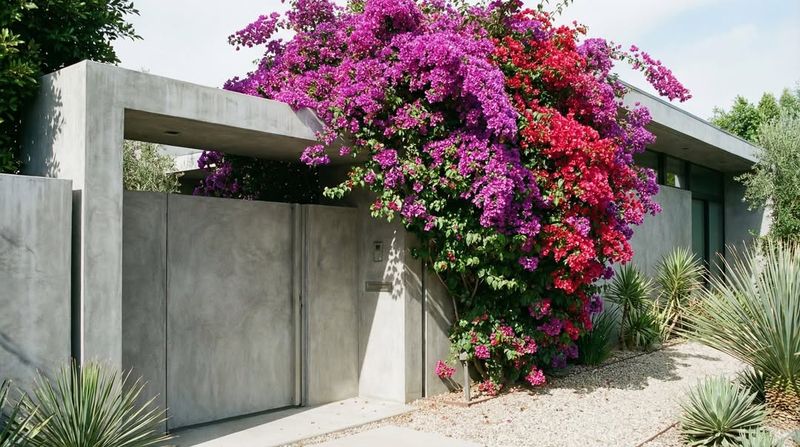
Bougainvillea is practically a symbol of South Florida landscaping, and for good reason. The colors are spectacular and the plant thrives in the heat.
However, planting it in a tight fence space is a decision many homeowners come to regret once it reaches full size and the maintenance demands become clear. This is not a plant that tolerates neglect gracefully in a confined area.
The thorns are the first issue. Bougainvillea produces long, sharp thorns that can cause real injury during pruning, and in a narrow fence corridor, reaching in to trim it safely is genuinely difficult.
Thick gloves, long sleeves, and careful positioning are necessary every single time. The plant also grows vigorously, meaning pruning is not a once-a-year task but something that needs to happen multiple times throughout the growing season.
In tight spaces between fences and structures, heat builds up significantly, and while bougainvillea tolerates heat well, the surrounding conditions can make working near it unpleasant and potentially unsafe during South Florida summers. UF/IFAS recommends giving bougainvillea ample room to spread and regular shaping to prevent it from becoming unmanageable.
Without proper spacing and consistent care, what started as a colorful accent plant can become a thorny, sprawling obstacle that is difficult to prune back safely.
7. Trumpet Vine Sends Shoots Everywhere
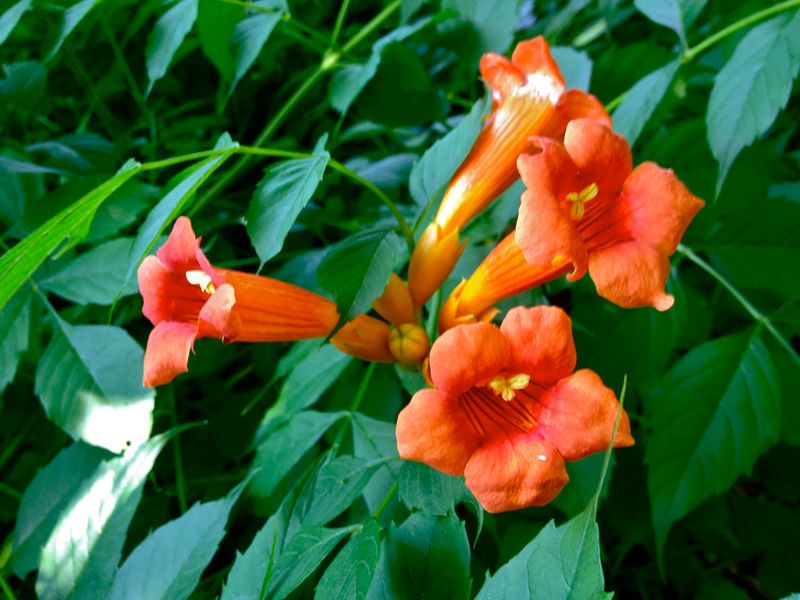
Campsis radicans, known as trumpet vine, has a well-earned reputation for being one of the most aggressive spreading vines in warm climates. The tubular orange or red flowers are undeniably attractive and bring in hummingbirds, which makes it tempting to plant near a fence.
What the garden center display does not show you is what happens underground and along the soil surface once this plant gets comfortable.
Trumpet vine spreads through an extensive root system that sends up new shoots, called suckers, at a considerable distance from the main plant. These suckers can emerge in the middle of a lawn, along a driveway edge, or even through cracks in pavement.
In South Florida’s warm soil, root activity continues for much of the year, meaning the spread does not slow down the way it might in a colder climate with a true dormant season.
Removing established trumpet vine is a multi-step process that involves cutting back surface growth and then tracking down and removing root suckers repeatedly over time. Missing even a few suckers means the plant continues spreading.
UF/IFAS advises using physical barriers or consistent herbicide treatments alongside manual removal for more effective long-term control. If you have a small yard with limited fence space, this vine can quickly consume more ground than you ever intended to give it.
8. English Ivy Traps Heat And Creates Problems
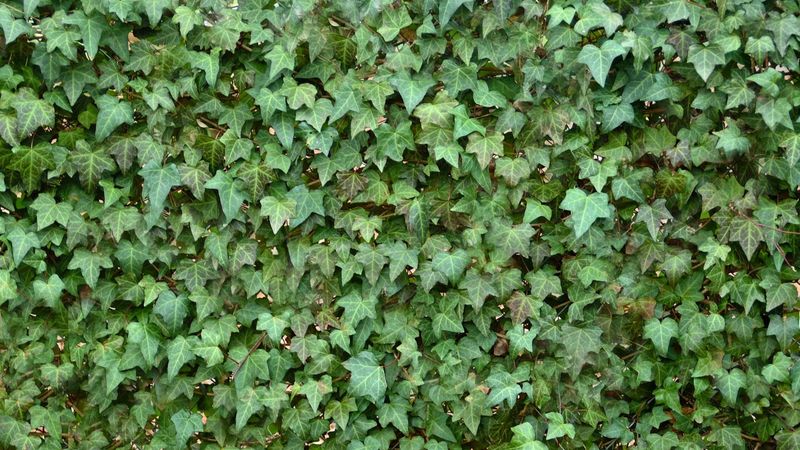
English ivy might look elegant in photos from cooler climates, but in South Florida it behaves very differently than most people expect. Rather than forming the tidy, classic ground cover or wall covering seen in northern gardens, it tends to struggle with the intense heat while simultaneously creating conditions that cause other problems to develop.
It is an odd combination of stress and aggression at the same time.
One of the main issues is heat retention. Dense ivy growth traps warm, moist air against fences and structures, creating a humid microclimate that encourages fungal growth, rot, and pest infestations.
Spider mites, scale insects, and other pests tend to thrive in the sheltered environment that thick ivy creates. Once pests establish themselves inside a dense mat of ivy, reaching them with treatments is genuinely difficult.
UF/IFAS has noted that English ivy is not well-suited to South Florida’s climate and tends to perform poorly compared to better-adapted alternatives. The plant may look acceptable during cooler months but often declines rapidly when heat and humidity peak in summer.
Rather than removing it and replanting repeatedly, most experienced South Florida landscapers recommend skipping English ivy entirely and choosing native or climate-adapted ground covers that handle the heat without creating additional headaches along the fence line.