Magical Plants North Carolina Gardeners Should Plant For A Fairy Garden Vibe
There’s a certain kind of garden that makes people slow down without even realizing it. Maybe it’s the soft textures, the way plants spill over edges, or how light filters through layered greenery on a warm North Carolina afternoon.
It doesn’t take a big yard or elaborate design to create that feeling.
The right plant choices can turn even a small corner into something that feels a little more playful and inviting.
With North Carolina’s long growing season and humid summers, many of these plants settle in easily and fill out quickly.
It often starts with just a few additions that change the mood of the space. The plants coming up are known for that gentle, almost storybook look and can help bring that fairy garden vibe into focus.
1. Foamflower Creating Soft Woodland Charm
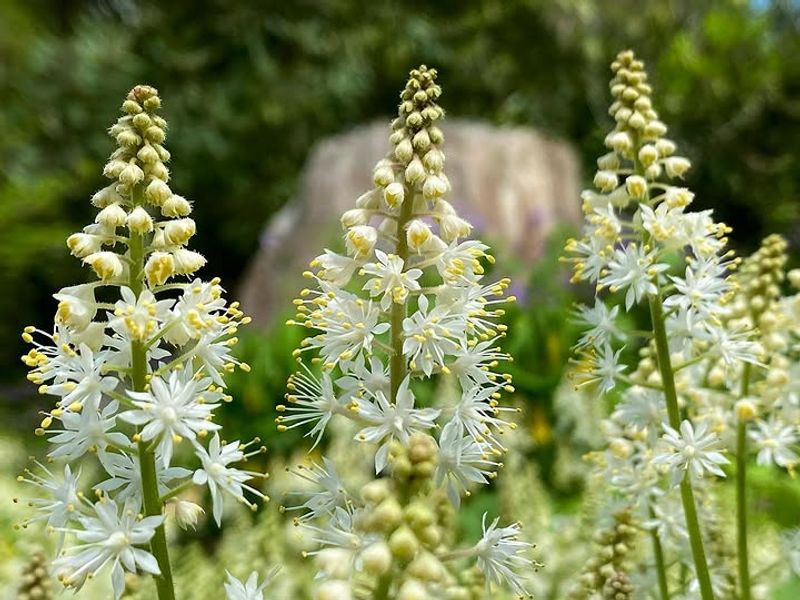
Picture a plant so delicate it looks like tiny clouds of foam hovering just above the ground. That is exactly what Foamflower brings to a North Carolina fairy garden.
Known botanically as Tiarella, this charming native perennial produces clusters of soft, feathery white or pale pink blossoms in spring that seem to float above its beautifully patterned leaves.
Foamflower thrives in shaded or partially shaded spots, making it a wonderful choice for those tricky areas under trees or along the north side of a fence. It loves moist, well-drained soil rich in organic matter, which is easy to achieve in many North Carolina gardens with a little compost mixed in.
The leaves themselves are a showstopper even when the plant is not blooming, often displaying deep green color with striking dark veining or reddish markings.
One of the best things about Foamflower is how low-maintenance it is once established. It spreads slowly by runners, gradually filling in bare spots and creating a lush, carpet-like ground cover that looks like a fairy meadow.
North Carolina gardeners in areas like Asheville or Chapel Hill especially love it for shaded woodland gardens. Pair it with ferns and hostas for a layered, enchanted look.
Fun fact: Foamflower is a native plant to eastern North America, which means it supports local pollinators and wildlife naturally, making your fairy garden not just beautiful but ecologically friendly too.
2. Coral Bells Showing Off Colorful, Textured Leaves
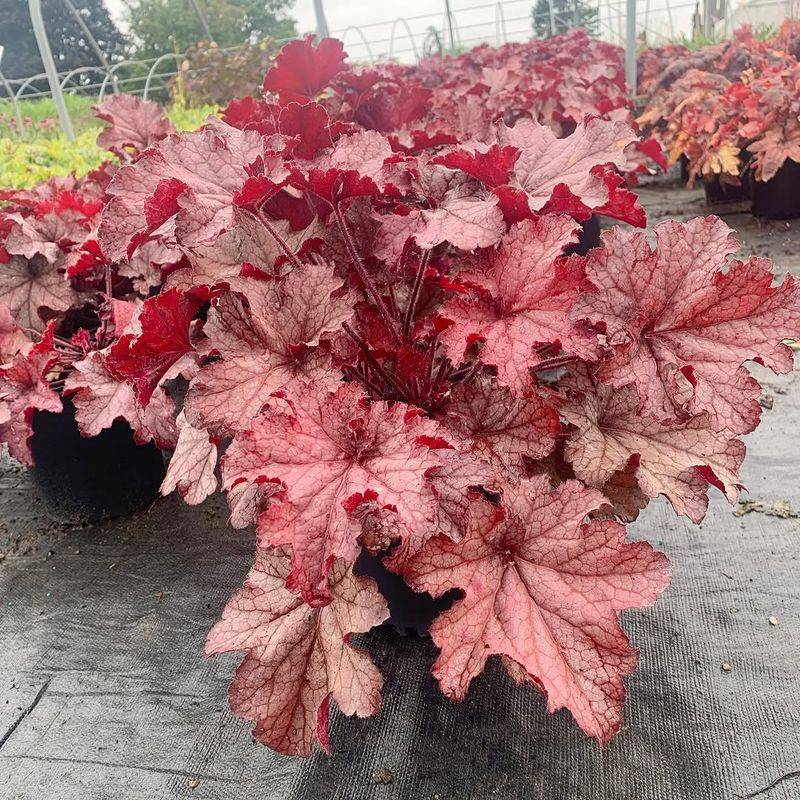
Few plants can match the drama and color variety that Coral Bells brings to a fairy garden. With foliage ranging from deep burgundy and rich purple to lime green and silvery bronze, Heuchera is basically a living palette of color that keeps your garden looking stunning even when nothing is in bloom.
North Carolina gardeners absolutely love this perennial for its year-round visual interest.
Coral Bells grow best in partial shade, though some varieties can handle more sun if given enough moisture. They prefer well-drained soil and do not like to sit in soggy ground, so planting them on a slight slope or in a raised bed works beautifully.
In North Carolina’s warm climate, giving them some afternoon shade helps keep the foliage looking its best through the hotter months of summer.
Your North Carolina Garden Changes Every Week. Your Plan Should Too.
Gardening in North Carolina changes quickly throughout the season. Every Friday you’ll receive a simple weekly plan showing exactly what to plant, prune, fertilize, harvest, and protect so you never miss the right timing.
In late spring to early summer, slender stalks rise above the foliage and produce tiny bell-shaped flowers in shades of red, coral, pink, or white. These blooms are like little fairy chimes swaying in the breeze.
Hummingbirds and pollinators cannot resist them, which adds even more life and movement to your magical garden space. Because there are hundreds of Heuchera varieties available, you can mix and match colors to create a truly unique fairy landscape.
Try pairing deep purple varieties with chartreuse ones for a striking contrast that looks almost otherworldly in a North Carolina shade garden setting.
3. Hosta Filling Shade With Lush, Layered Foliage
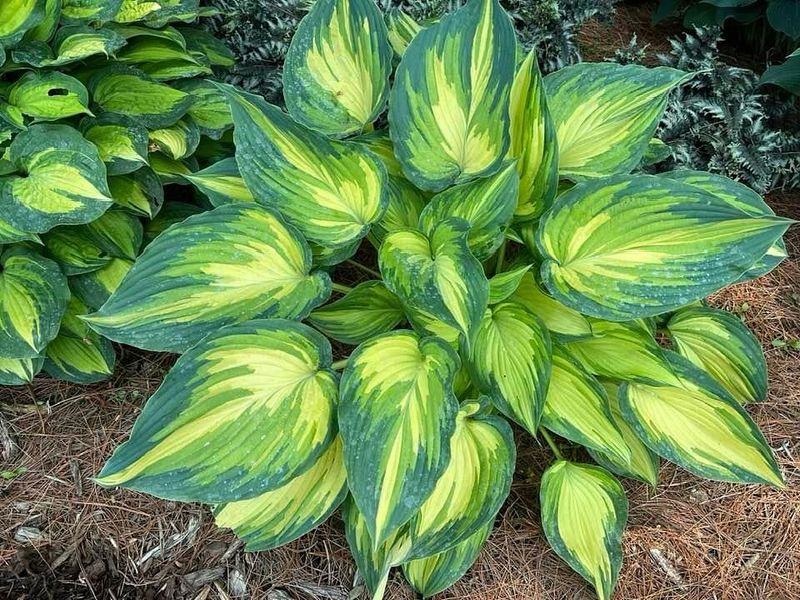
Ask any experienced North Carolina gardener what plant they rely on most for shady spots, and chances are Hosta will be at the top of the list. These bold, leafy perennials are practically legendary in the gardening world for their ability to transform dark, difficult corners into lush, layered green retreats that feel like the floor of an enchanted forest.
Hostas come in an enormous range of sizes, from tiny miniature varieties just a few inches across to massive clumping types that can span several feet wide. For a fairy garden, smaller varieties like Hosta ‘Blue Mouse Ears’ or ‘Tiny Tears’ are especially charming, giving the space a sense of scale that makes it feel like a true miniature world.
Their thick, textured leaves in shades of green, blue-green, gold, and creamy white add depth and contrast to any planting arrangement.
Growing Hostas in North Carolina is wonderfully straightforward. They thrive in partial to full shade and appreciate consistent moisture, especially during the hot summer months in areas like Raleigh or Charlotte.
Amending your soil with compost before planting gives them an excellent head start. In late summer, Hostas send up tall spikes of lavender or white tubular flowers that add a soft, elegant touch to the fairy garden.
They are also remarkably long-lived plants, meaning your fairy garden investment will keep paying off beautifully for many years to come.
4. Dwarf Mondo Grass Forming A Mini, Carpet-Like Groundcover

If fairies had a front lawn, it would almost certainly be made of Dwarf Mondo Grass. This slow-growing, low-maintenance plant forms dense, dark green tufts that look like a perfectly scaled-down meadow, making it one of the most popular ground covers for fairy garden designs across North Carolina.
Botanically known as Ophiopogon japonicus ‘Nanus,’ it stays very compact and tidy, rarely exceeding two to four inches in height.
Dwarf Mondo Grass is surprisingly tough for something that looks so delicate. It handles both partial shade and full shade with ease, and once established, it is quite tolerant of drought conditions, which is helpful during North Carolina’s sometimes dry summer stretches.
It also does well in a range of soil types, though it performs best in well-drained, slightly moist ground enriched with organic matter.
One of the most magical ways to use Dwarf Mondo Grass is as a pathway material between stepping stones or fairy garden accessories. It fills in the gaps beautifully and creates that storybook lawn effect that makes visitors do a double-take.
In late summer, tiny pale lilac flowers appear, followed by small blue-black berries that add another layer of interest to the miniature landscape. North Carolina gardeners in both coastal and Piedmont regions have found great success with this plant.
It pairs especially well with mosses, ferns, and small flowering plants to build a truly immersive fairy garden scene.
5. Christmas Fern Adding Evergreen Forest Texture
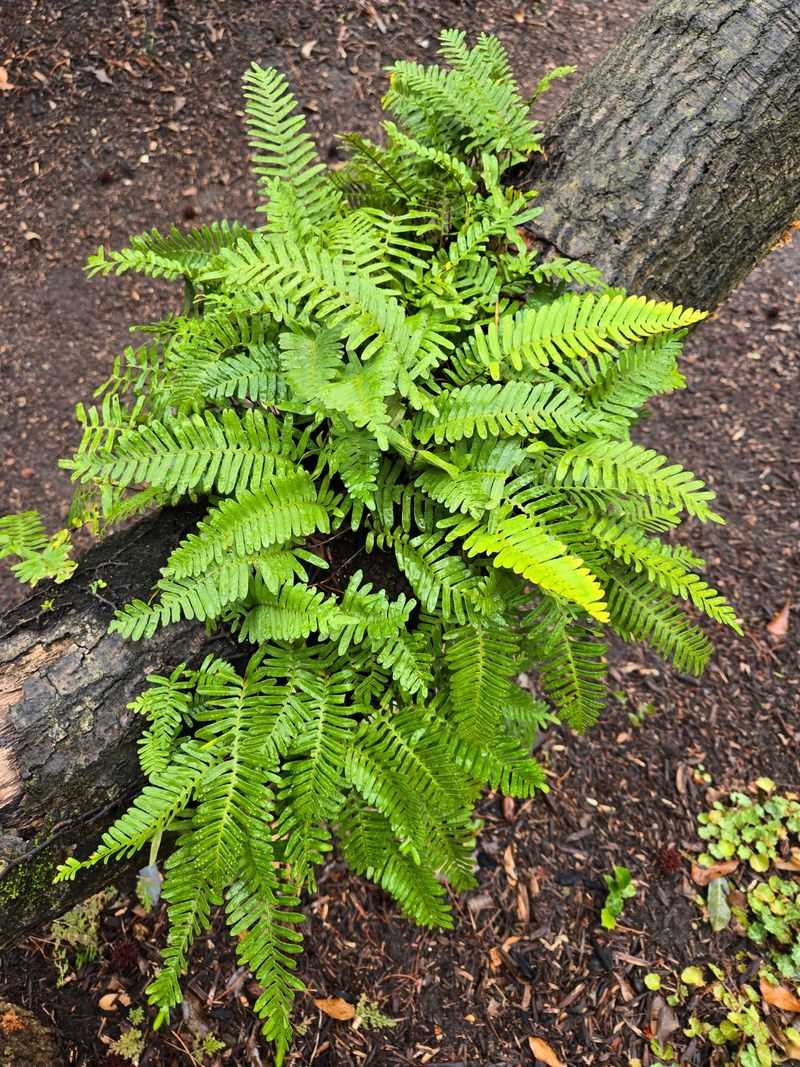
There is something wonderfully reliable about a plant that stays green and beautiful even in the middle of winter, and that is exactly what Christmas Fern delivers. Named because its fronds remain evergreen through the holiday season, Polystichum acrostichoides is a native fern that has been gracing North Carolina woodlands and gardens for centuries.
Its presence in a fairy garden gives the space a timeless, ancient quality that feels genuinely magical.
Christmas Fern grows in graceful arching clumps of deep, glossy green fronds that can reach up to two feet long. It thrives in partial to full shade and prefers moist, well-drained soil with plenty of organic matter, conditions that are easy to replicate in shaded North Carolina garden beds.
Unlike some ferns that can be finicky or invasive, Christmas Fern is well-behaved and stays neatly in its clump without spreading aggressively.
For a fairy garden, Christmas Fern works beautifully as a backdrop plant, creating a lush green wall behind smaller, lower-growing plants. Its arching fronds create natural shelter and shade, which mimics the look of a real forest floor.
Gardeners in the Blue Ridge Mountains and Piedmont areas of North Carolina often use it alongside wildflowers and mosses for a native woodland fairy garden style. New fronds emerge in spring with a bright, fresh green color that gradually deepens through summer, keeping the garden looking vibrant through multiple seasons without much effort at all.
6. Common Blue Violet Bringing Delicate Pops Of Purple
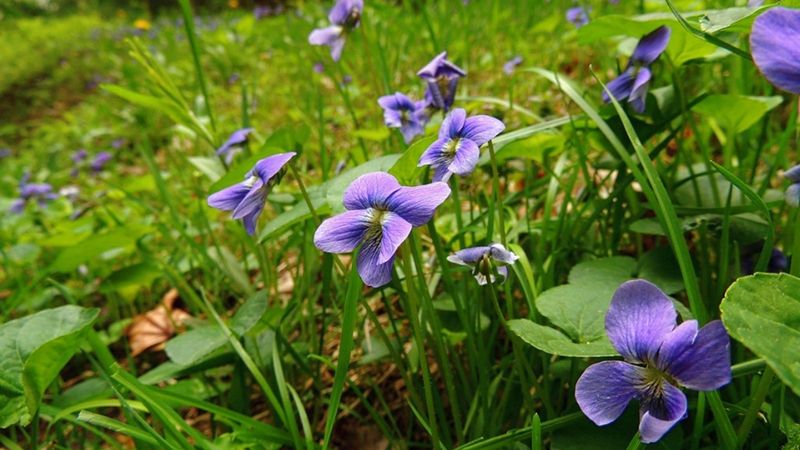
Sweet, cheerful, and wonderfully easy to grow, Common Blue Violet is the kind of plant that makes a fairy garden feel truly alive. Viola sororia is a native wildflower found naturally across North Carolina, producing heart-shaped leaves and charming purple-blue blooms in early spring that look like they were placed there by tiny garden fairies themselves.
Few plants capture the spirit of a magical garden quite so effortlessly.
Common Blue Violet grows best in partial shade with moist, well-drained soil, though it is remarkably adaptable and can handle a range of conditions once established. It tends to self-seed gently over time, gradually spreading to fill in bare spots and creating a natural, unplanned look that suits the whimsical fairy garden aesthetic perfectly.
North Carolina gardeners appreciate how little attention it needs while still delivering such a charming seasonal display.
Beyond their visual appeal, violet flowers are actually edible, with a mildly sweet flavor that has been used in salads and candied decorations for centuries. That little bit of history adds a fun story to share when showing off your fairy garden to friends and family.
The blooms also attract early spring pollinators, including certain native bee species that rely on violets as an important food source. Pairing Common Blue Violet with Foamflower and Christmas Fern creates a beautifully layered, all-native fairy garden scene that feels completely at home in the natural landscape of North Carolina.
7. Barren Strawberry Spreading As A Charming Groundcover
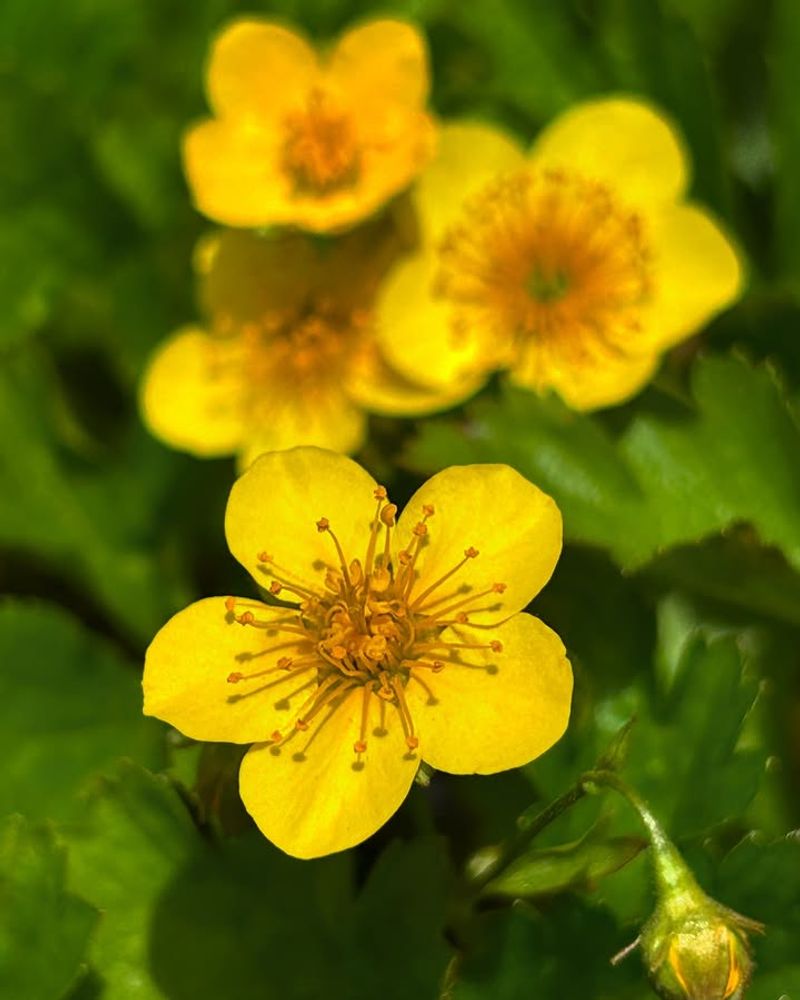
Do not let the name fool you. Barren Strawberry may not produce the fruit you find at the grocery store, but what it lacks in edible berries it more than makes up for in fairy garden charm.
Waldsteinia fragarioides is a semi-evergreen ground cover that spreads in a tidy, low mat of glossy, strawberry-like leaves, creating a lush carpet that looks like it belongs in a miniature enchanted forest clearing.
In spring, Barren Strawberry produces small, bright yellow flowers that pop cheerfully against the deep green foliage. These blooms attract early pollinators and add a warm burst of color to the garden just as the season is waking up.
The plant grows well in partial to full shade and tolerates dry soil conditions better than many other shade-loving ground covers, which makes it a practical choice for North Carolina gardeners dealing with dry shade under mature trees.
One of the standout qualities of Barren Strawberry is its toughness combined with its refined appearance. It does not look rugged or weedy; it looks intentional and polished, like a tiny manicured lawn for a fairy cottage.
It spreads steadily but is not aggressive, so it plays well with neighboring plants in a mixed fairy garden bed. Gardeners in the Triad region of North Carolina, including Greensboro and Winston-Salem, have found it particularly useful for shaded slopes where erosion can be a concern.
It is a genuinely hardworking plant that brings beauty without demanding much in return.
8. Compact Grape Hyacinth Adding Tiny, Storybook Blooms
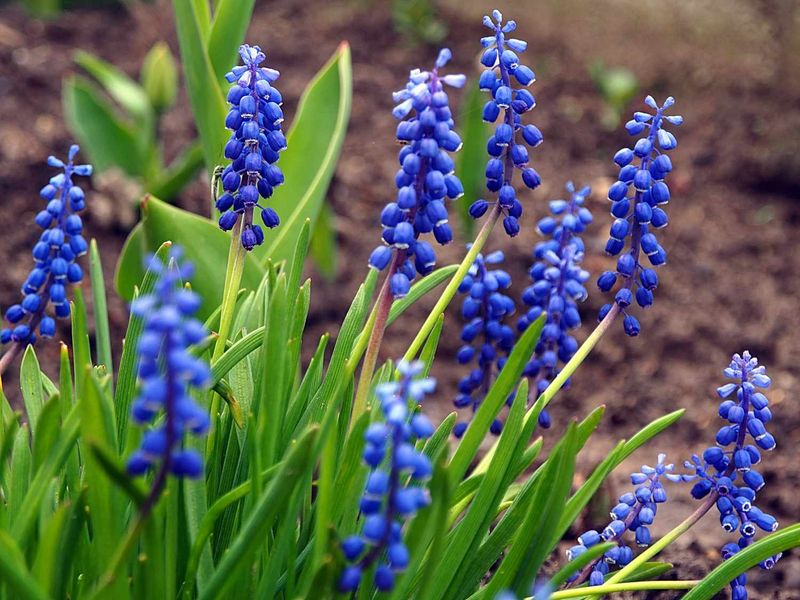
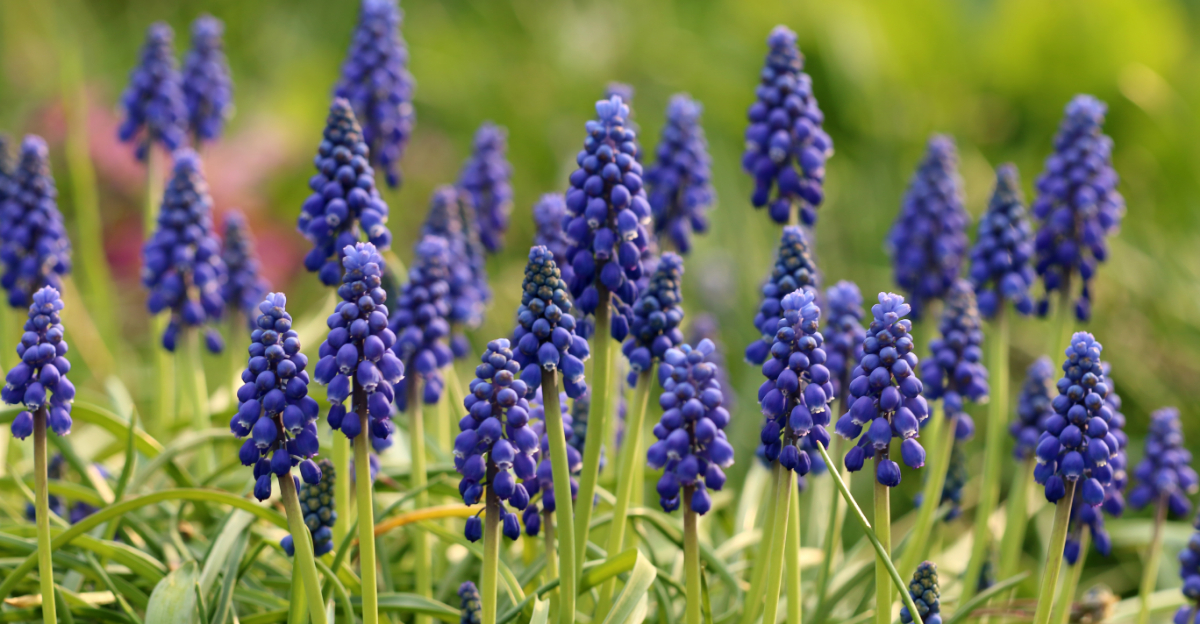
Spring in North Carolina gets a whole lot more magical the moment Compact Grape Hyacinth pushes up through the soil. Muscari is one of those plants that seems almost too beautiful to be real, producing dense spikes of tiny, rounded flowers in the most vivid shades of deep blue and violet-purple imaginable.
For a fairy garden, these little blooms look like miniature clusters of precious jewels tucked among the greenery.
Compact Grape Hyacinth grows from small bulbs planted in fall and emerges reliably each spring, making it a low-effort, high-reward choice for North Carolina gardeners. It prefers full sun to partial shade and well-drained soil, and it naturalizes beautifully over time, meaning the clumps grow larger and more impressive with each passing year.
The compact varieties stay short, usually around four to six inches tall, which keeps them perfectly in scale with the rest of a miniature fairy garden planting.
The fragrance of Grape Hyacinth is another wonderful bonus. A gentle, sweet scent drifts from the blooms on warm spring days, adding an extra sensory layer to the garden experience.
After flowering, the foliage fades back and goes dormant through summer, so pairing Muscari with summer-growing plants like Hostas or ferns helps fill any gaps naturally. North Carolina gardeners from the mountains to the coast can grow Compact Grape Hyacinth with great success, and its rich jewel-toned color palette makes every fairy garden look like something straight out of a fantasy novel.