The Plants That Bring Baltimore Orioles To North Carolina Yards Every Spring
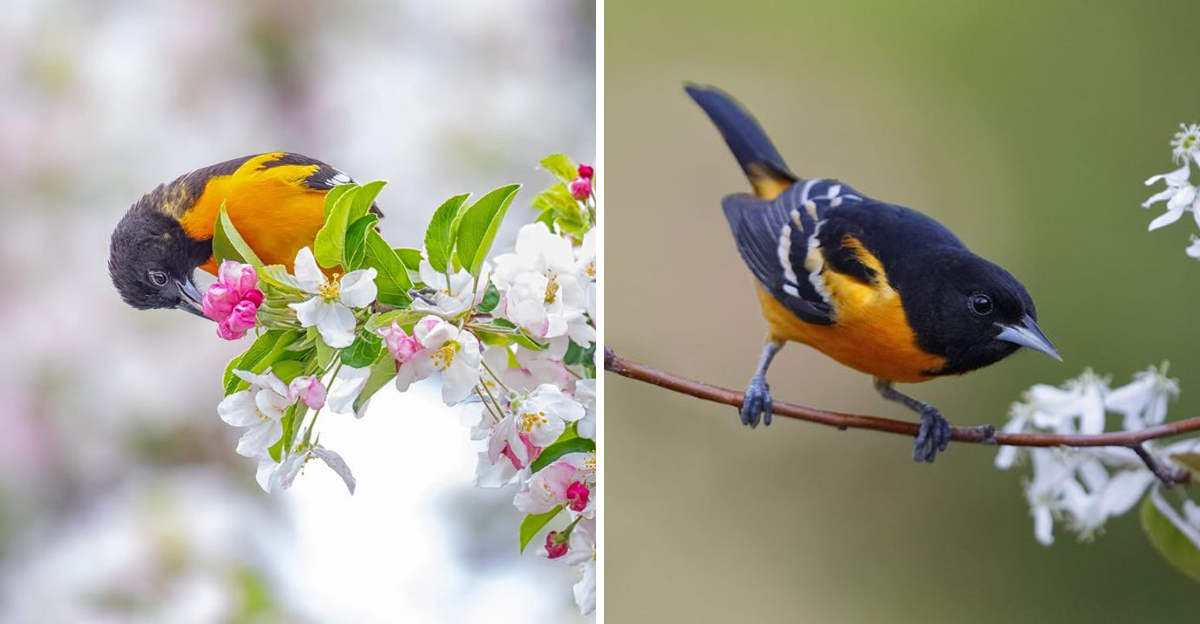
Baltimore Orioles are one of the most visually striking birds that pass through North Carolina each spring, and most yards are completely overlooked by them.
That brilliant orange and black coloring is hard to miss when one finally shows up, but getting them to stop and stay a while takes more than luck.
Orioles are selective about where they spend their time, and the plants surrounding your yard play a bigger role in attracting them than most people realize.
These birds are fueling up during migration and looking for very specific food sources, which means the right native trees, shrubs, and flowering plants can turn your yard into a reliable stop on their route north.
Feeders help, but plants are what create a habitat that feels worth visiting in the first place. North Carolina sits in a sweet spot along the Atlantic flyway, giving yards here a real chance to become a regular oriole destination each spring with the right setup in place.
1. Trumpet Honeysuckle (Lonicera sempervirens)
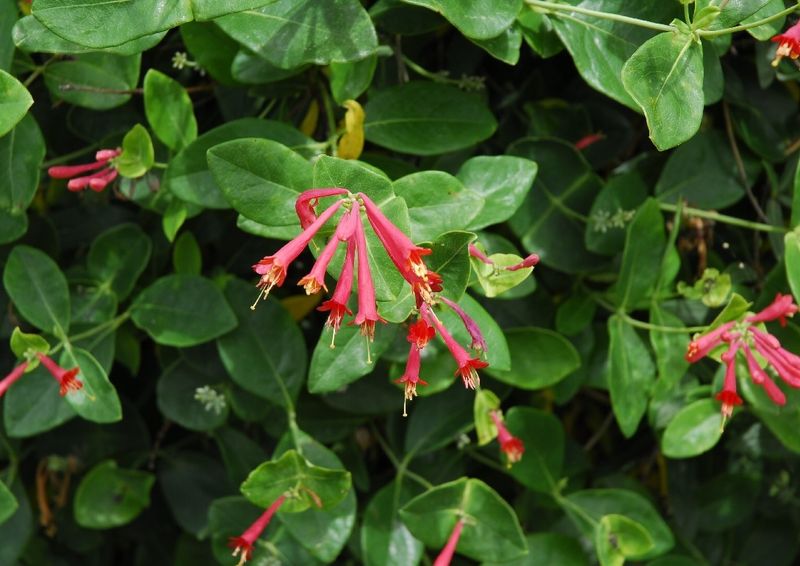
Few vines in North Carolina can match the charm of Trumpet Honeysuckle when it bursts into bloom each spring. Those brilliant red-orange tubular flowers are practically a neon sign for Baltimore Orioles passing through the region.
The flower shape is perfectly designed for long-billed birds, making orioles incredibly efficient at reaching the sweet nectar inside. Once you plant this vine, you will likely notice birds returning to the same spot year after year.
Unlike invasive Japanese honeysuckle, this native version supports the local ecosystem without taking over your garden. It grows beautifully on trellises, fences, or arbors and does not need much fuss once established.
North Carolina gardeners love it because it handles both sun and partial shade with ease. The plant blooms from spring well into summer, giving orioles a long window of reliable food.
Growing Trumpet Honeysuckle is straightforward even for beginners. Plant it in well-drained soil with decent sun exposure, water it regularly during the first season, and let it climb wherever you guide it.
Within two to three seasons, it can cover a fence with stunning color. Birds are not the only ones who will appreciate it, since butterflies and hummingbirds also visit the blooms regularly throughout the season.
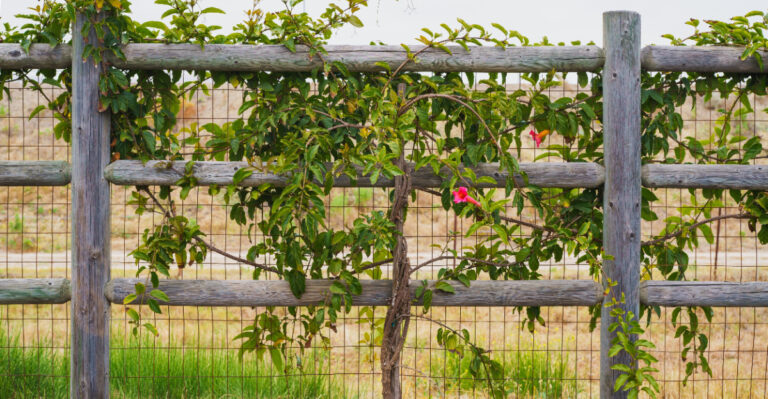
2. Crossvine (Bignonia capreolata)
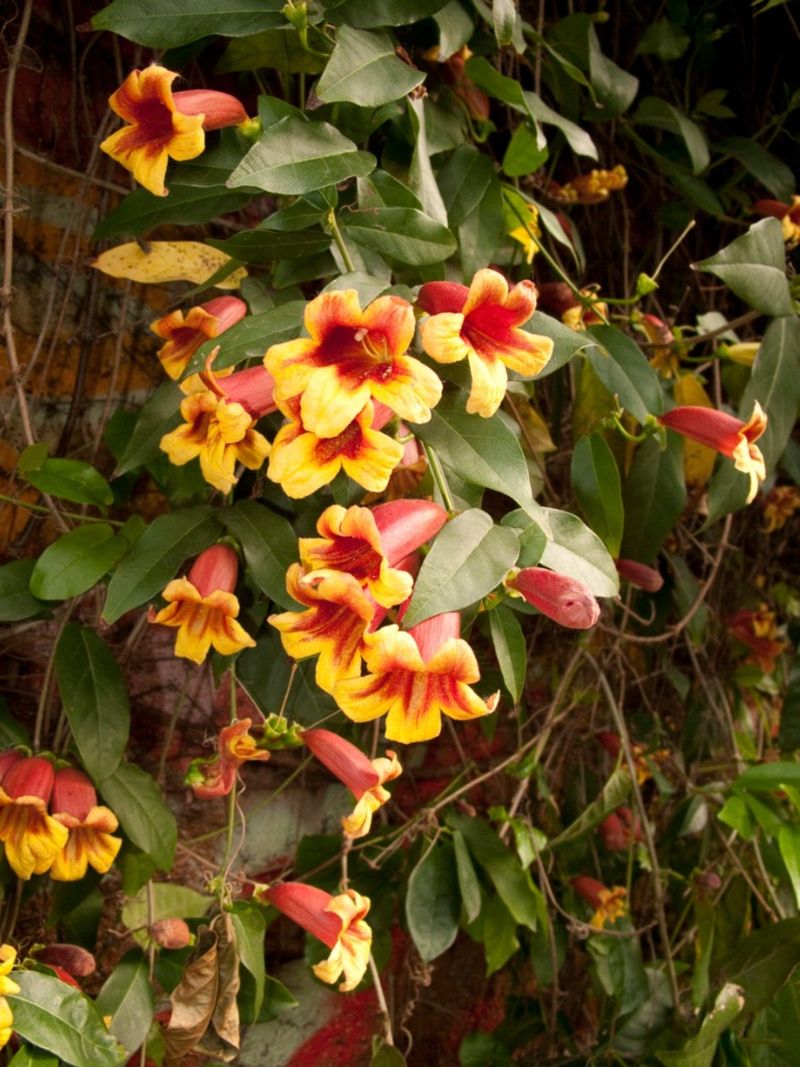
Crossvine is one of those plants that looks almost too good to be real when it covers a fence in full spring bloom.
The bold orange-red trumpet-shaped flowers emerge early in the season, right when Baltimore Orioles are starting to arrive in North Carolina yards after their long migration.
Timing matters enormously for attracting orioles, and Crossvine delivers reliable early-season nectar when birds need it most. That early bloom window makes it a genuinely valuable plant for any bird-friendly garden.
This native vine is a powerhouse of adaptability. It thrives on arbors, fences, and sturdy trellises, and it can handle both full sun and partial shade without complaint.
North Carolina’s climate suits it perfectly, and once it gets established, it spreads with impressive enthusiasm. The flowers attract not just orioles but also ruby-throated hummingbirds, making your yard a popular destination for multiple species at once.
Your North Carolina Garden Changes Every Week. Your Plan Should Too.
Gardening in North Carolina changes quickly throughout the season. Every Friday you’ll receive a simple weekly plan showing exactly what to plant, prune, fertilize, harvest, and protect so you never miss the right timing.
Planting Crossvine is a smart long-term investment in your yard’s wildlife appeal. Give it a strong support structure from the start, since it can get quite heavy over the years.
Water consistently during the first growing season, and after that it becomes surprisingly drought tolerant. One established Crossvine can cover a large section of fence and provide oriole-attracting blooms reliably every single spring for many years to come.
3. Serviceberry (Amelanchier arborea)
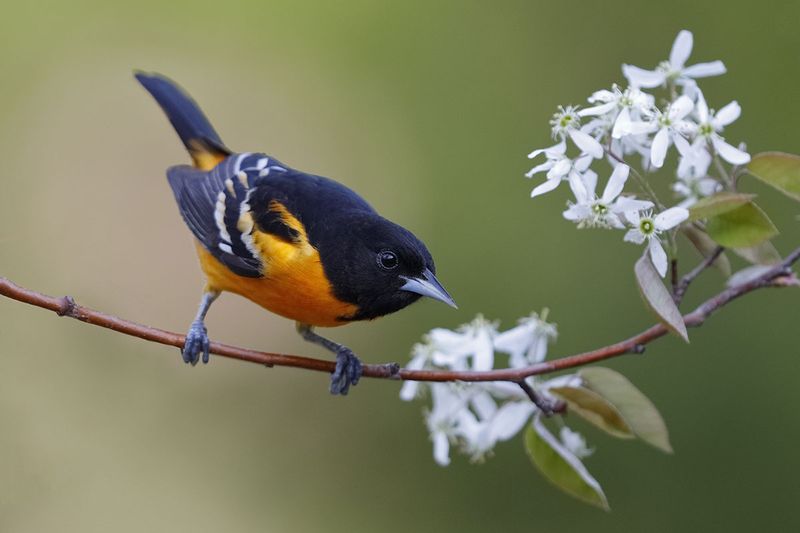
Serviceberry has a special place in the hearts of North Carolina gardeners who want a yard that truly works for wildlife. This native small tree blooms with delicate white flowers very early in spring, often before most other plants have even woken up from winter.
Baltimore Orioles arriving in the region find it at just the right time, and the insect activity buzzing around those early blooms gives birds a protein-rich food source they absolutely need after migration.
It is one of the most well-rounded wildlife trees available for home landscapes. Beyond the flowers, Serviceberry produces small, sweet berries that ripen in early summer and attract an impressive variety of bird species.
Orioles are particularly fond of soft, dark fruits, and Serviceberry delivers exactly that. The tree stays a manageable size, typically reaching between fifteen and twenty-five feet tall, which makes it suitable for average-sized North Carolina yards without overwhelming the space.
Planting a Serviceberry near a window or patio gives you a front-row seat to all the bird activity it generates. It grows well in most soil types and tolerates both sun and partial shade.
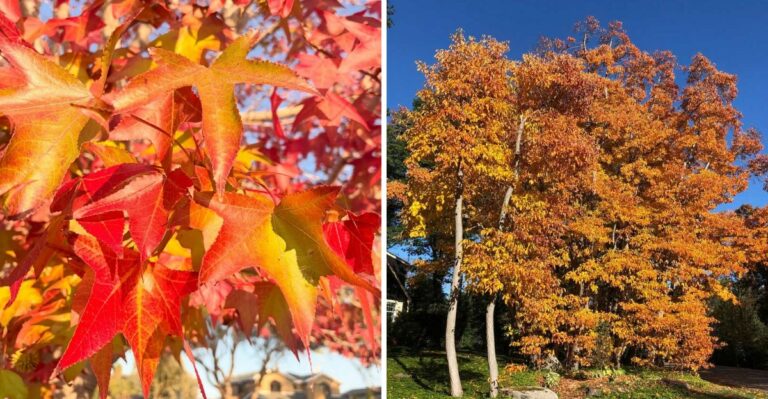
Fall color is an added bonus, with leaves turning shades of orange and red. For gardeners who want a single tree that offers maximum value for birds across multiple seasons, Serviceberry is genuinely hard to beat.
4. Red Mulberry (Morus rubra)
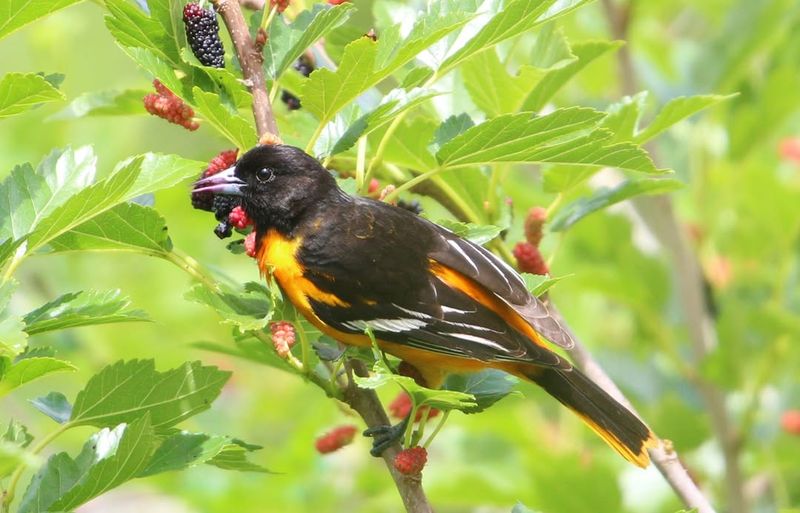
Ask any serious bird watcher in North Carolina which fruiting tree draws the most excitement, and Red Mulberry will almost always come up in conversation.
Baltimore Orioles have a well-documented love of mulberry fruit, and when a Red Mulberry tree starts ripening its dark, juicy berries in late spring, the action in your yard can become absolutely spectacular.
Birds flock to this tree with a kind of enthusiasm you rarely see with feeders or other plants. It is a genuinely magnetic presence in any wildlife-friendly landscape.
Red Mulberry is a native species, which means it supports the broader food web beyond just providing fruit.
The tree hosts a variety of insects and caterpillars throughout the growing season, giving orioles and other birds protein-rich food options alongside the berries.
It grows at a moderate pace and can reach anywhere from twenty to sixty feet depending on conditions, so placement in your yard matters. Give it room to spread and you will be rewarded handsomely.
One thing to keep in mind is that the berries do stain, so avoid planting directly over patios, driveways, or light-colored surfaces. Plant it toward the back of your yard for the best results.
North Carolina’s warm climate suits Red Mulberry very well, and once established, the tree requires minimal maintenance. Few plants offer this level of direct, measurable impact on oriole activity in a home yard.
5. Black Cherry (Prunus serotina)
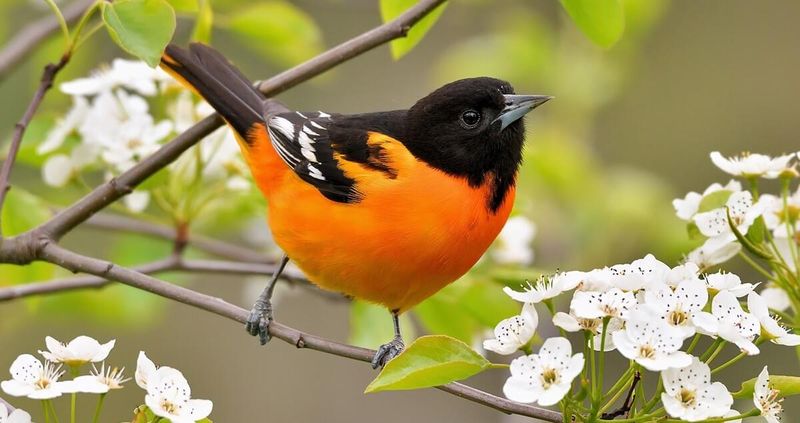
Black Cherry is one of the most ecologically important native trees in all of North Carolina, and Baltimore Orioles benefit from it in ways that go far beyond what most people expect.
While the small dark cherries that ripen later in the season are certainly attractive to birds, the real magic happens in spring when the tree becomes a caterpillar hotspot.
Orioles are insectivores at heart, and they actively search tree canopies for protein-rich caterpillars to feed themselves and their young. Black Cherry hosts more caterpillar species than almost any other native tree in the eastern United States.
Research from entomologist Doug Tallamy has highlighted just how important native trees like Black Cherry are for supporting bird populations across the country.
A single Black Cherry tree can support hundreds of moth and butterfly species in their larval stages, creating an extraordinary food resource that orioles and other songbirds rely on heavily during spring migration and nesting season.
Planting even one of these trees makes a meaningful difference for local wildlife.
Black Cherry grows quickly and can reach impressive heights over time, making it better suited for larger North Carolina yards. It thrives in a range of soil conditions and tolerates some shade, though it prefers full sun for the best growth.
The spring flower clusters are also attractive, adding visual interest before the leaves fully emerge. For serious bird gardeners, this tree is a cornerstone planting worth every bit of space it takes up.
6. Wild Grape (Vitis rotundifolia Or Vitis labrusca)
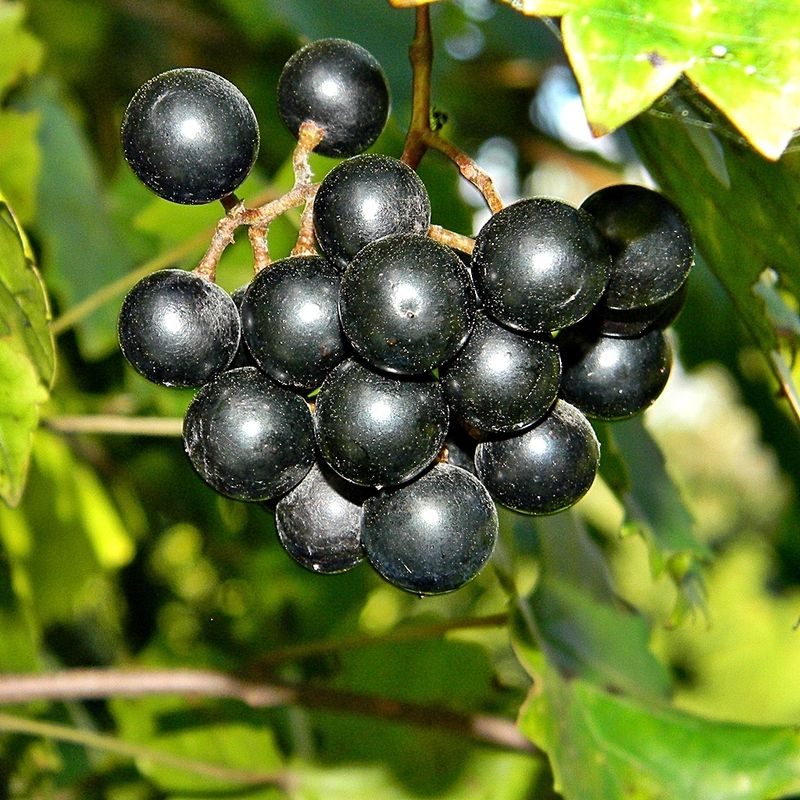
Wild Grape vines are a triple threat in any North Carolina wildlife garden, offering fruit, dense cover, and rich insect habitat all in one vigorous plant. Baltimore Orioles have a well-known preference for dark, ripe fruits, and wild grapes check that box perfectly.
During spring migration, orioles actively search for energy-dense food sources, and a mature grape vine loaded with ripening clusters can stop a traveling bird in its tracks. The vine also provides excellent nesting cover, which encourages birds to linger longer in your yard.
Both Vitis rotundifolia, commonly called Muscadine, and Vitis labrusca grow naturally across North Carolina and are worth considering for home landscapes.
These vines establish quickly and grow with real enthusiasm, so they do need some management to keep them from taking over.
A sturdy fence, pergola, or trellis gives them the support they need while keeping growth organized. With a little guidance, they become a beautiful and productive feature of the yard rather than a tangled mess.
Beyond orioles, wild grapes attract cedar waxwings, gray catbirds, and many other bird species that pass through North Carolina each spring and fall. The dense foliage also shelters insects that insect-eating birds hunt throughout the day.
If you have a back fence or an unused corner of your yard, a wild grape vine is one of the smartest wildlife investments you can make. The payoff in bird activity is consistently impressive season after season.
7. American Crabapple (Malus coronaria)
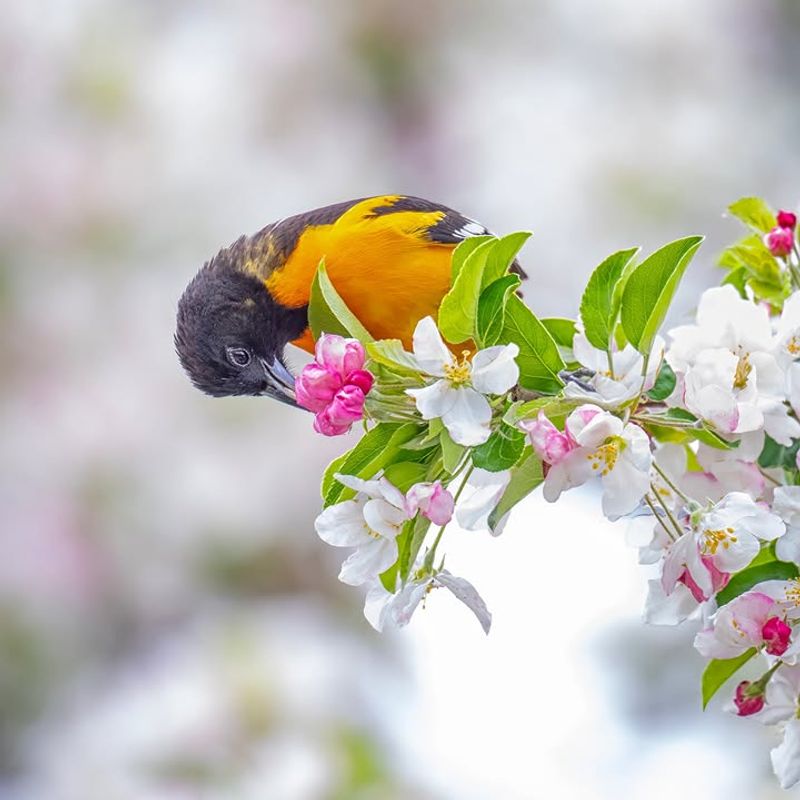
There is something genuinely magical about an American Crabapple in full spring bloom, with its clouds of pink-white blossoms filling the air with fragrance while birds move through the branches searching for insects.
Baltimore Orioles are drawn to crabapples during spring migration because the flowering trees buzz with insect activity, offering a reliable source of the protein-rich bugs that orioles crave after their long journey north.
North Carolina yards with a crabapple in bloom often become a busy hub of bird activity for several weeks straight.
American Crabapple is a native species that supports a broader range of wildlife than most ornamental trees.
The blossoms attract pollinators, the leaves host caterpillars, and the small tart fruits that develop later in the season persist into winter, feeding birds long after other food sources have run out.
For orioles specifically, the combination of spring insect activity and later fruit makes this tree useful across a much longer stretch of the year than single-purpose plants.
Crabapples grow well throughout North Carolina in full sun with decent drainage and reach a manageable size of around fifteen to twenty-five feet. They are relatively low-maintenance once established and do not require much specialized care.
Choosing a native variety like Malus coronaria over a purely ornamental hybrid ensures the tree offers real ecological value rather than just good looks. Plant one near a window and enjoy the spring show that unfolds every single year.
8. Tulip Poplar (Liriodendron tulipifera)
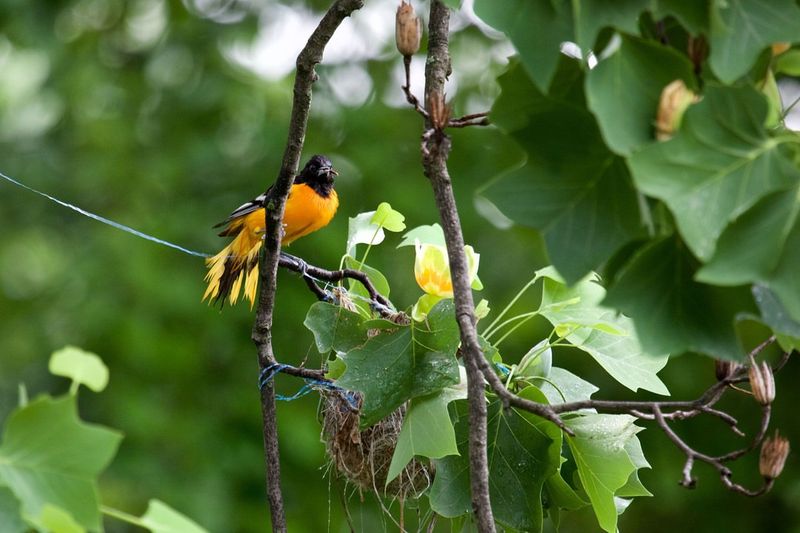
Tulip Poplar holds a kind of grandeur that few other North Carolina native trees can match, and its spring flowers are among the most nectar-rich blooms in the entire eastern forest.
The distinctive tulip-shaped yellow-orange flowers appear high in the canopy each spring, producing generous amounts of nectar that attract pollinators, hummingbirds, and Baltimore Orioles alike.
Orioles are known to forage actively in Tulip Poplar canopies, both for the nectar in the flowers and for the insects that gather around them. Spotting a flash of orange among those high branches is a genuine thrill for any bird enthusiast.
North Carolina is actually within the natural range of Tulip Poplar, and the tree grows with impressive speed under the right conditions. It can reach sixty to ninety feet or more at maturity, making it a true canopy tree rather than a yard-scale planting.
Homes with larger properties or existing mature trees nearby will benefit most from adding a Tulip Poplar to the landscape. The tree also provides outstanding summer shade and striking fall color as added seasonal bonuses.
Beyond the direct benefits to orioles, Tulip Poplar supports a wide community of insects, birds, and other wildlife throughout the year. Planting one is a long-term commitment that pays dividends for decades.
If your yard has space for a large native tree, few choices will do more for local wildlife than a well-placed Tulip Poplar growing strong and tall through every North Carolina spring.