Florida Plants That Can Get Homeowners In Trouble If They Are Not Removed
It is easy to fall for a fast-growing plant that fills in space and looks lush year-round, but in Florida, some of those choices come with strings attached.
A few plants cross the line from ornamental to problematic, spreading beyond your yard, creeping into nearby spaces, and even landing on restricted or nuisance lists.
What starts as a simple landscaping decision can turn into complaints, fines, or a yard that is suddenly harder to manage. Florida takes certain invasive and hazardous plants seriously, and for good reason.
They can crowd out native species, disrupt local ecosystems, and create ongoing headaches for homeowners.
Knowing which plants raise red flags is not just about better gardening, it is about staying on the right side of local rules and keeping your landscape under control before small issues turn into bigger problems.
1. Remove Brazilian Pepper Before It Spreads Out Of Control
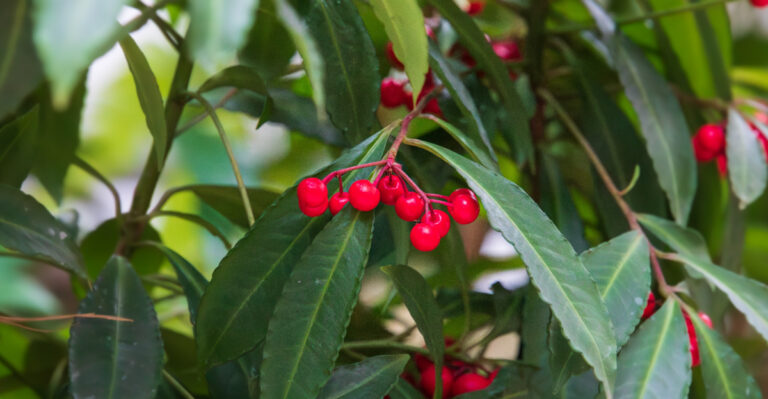
Walk through almost any vacant lot or disturbed area in South or Central Florida and you will likely spot a shrubby tree covered in clusters of small, bright red berries. That is Brazilian pepper, and if it is growing on your property, it deserves serious attention right away.
Identified by its dark green compound leaves, reddish stems, and distinctive spicy smell when leaves are crushed, this plant looks harmless but behaves aggressively.
Brazilian pepper (Schinus terebinthifolia) is regulated by the Florida Department of Agriculture and Consumer Services, which means selling or intentionally planting it is prohibited under Florida law.
Homeowners are not automatically required to remove existing plants in all counties, but local ordinances may impose stricter rules, so checking with your county extension office is a smart move.
The plant spreads rapidly through bird-dispersed seeds and can form dense thickets that crowd out native vegetation. It also produces chemicals that inhibit surrounding plant growth.
Removal typically involves cutting stems and immediately applying an herbicide to the stump to prevent regrowth. For large infestations, hiring a licensed contractor familiar with Florida invasive species management is the most effective approach.
2. Get Rid Of Air Potato Before It Takes Over Trees
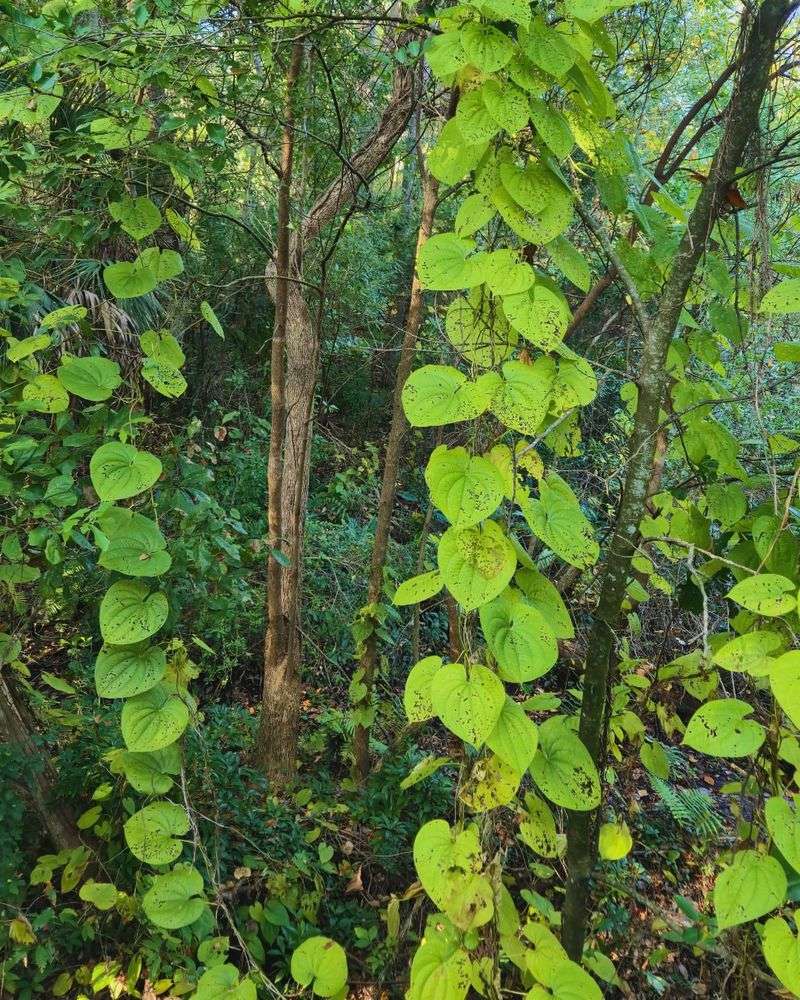
One morning you step outside and notice your oak tree looks like it is being swallowed whole by a fast-moving vine covered in heart-shaped leaves. If you look closely and spot small brown, potato-like bulbs hanging from the stems, you are almost certainly dealing with air potato.
This vine can grow up to eight inches per day during Florida’s rainy season, which means a small patch can turn into a major problem within weeks.
Air potato (Dioscorea bulbifera) is listed among the most invasive plants in Florida by the Florida Exotic Pest Plant Council.
It smothers native trees and shrubs by blocking sunlight, weakening the plants beneath it over time. The hanging bulbils drop to the ground and sprout new vines, making control a continuous effort.
Florida has actually introduced a biological control agent, a leaf-feeding beetle called Lilioceris cheni, to help manage air potato in natural areas. For homeowners, the most practical approach is to collect and bag all bulbils before they touch the ground, then cut vines at the base and apply herbicide to regrowth.
Your Florida Garden Changes Every Week. Your Plan Should Too.
Gardening in Florida changes quickly throughout the season. Every Friday you’ll receive a simple weekly plan showing exactly what to plant, prune, fertilize, harvest, and protect so you never miss the right timing.
Persistence is key because underground tubers can re-sprout after initial removal efforts.
3. Eliminate Cogongrass Before It Becomes A Fire Hazard
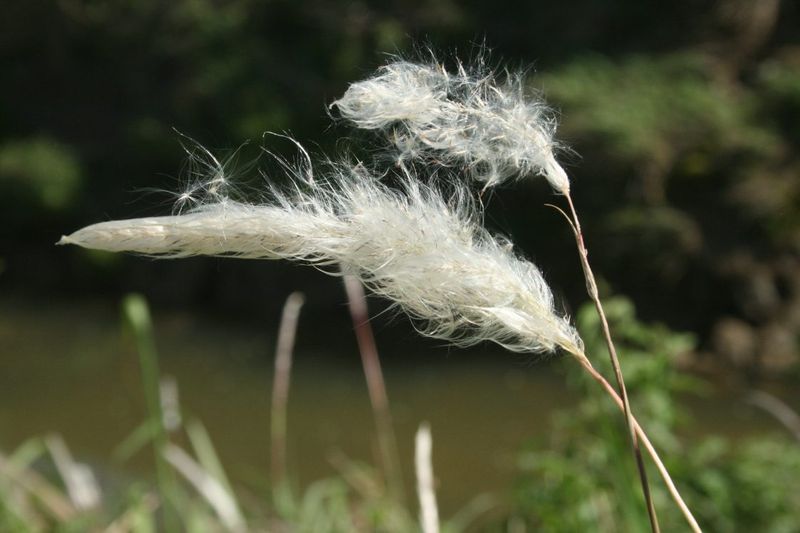
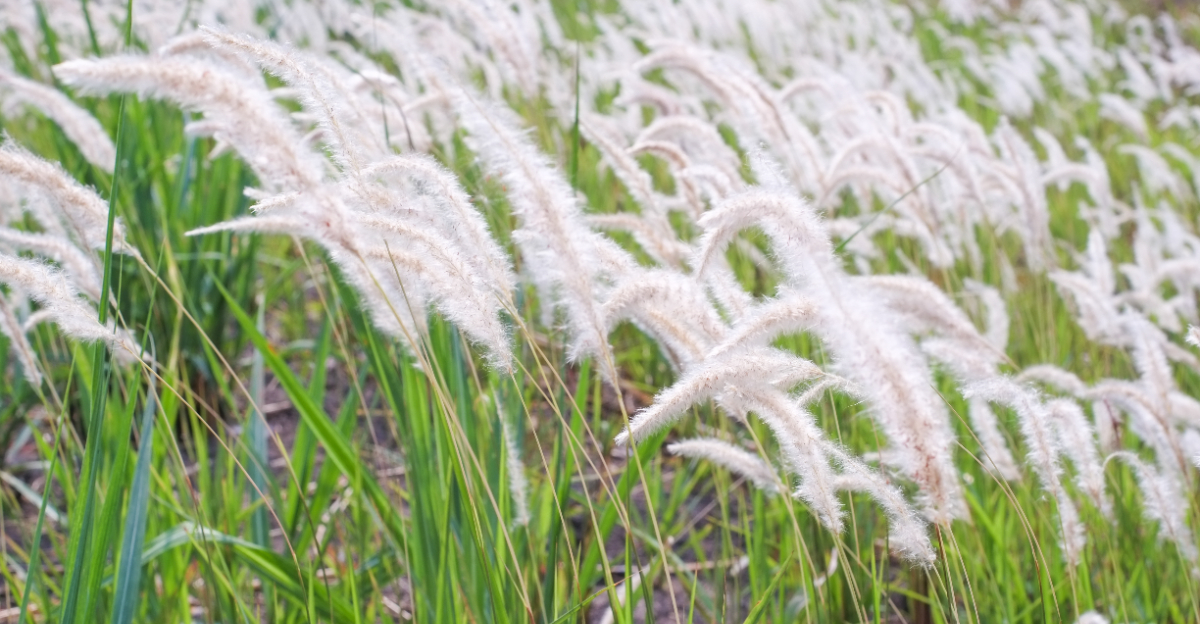
Driving through rural North or Central Florida in late spring, you might notice large patches of grass with fluffy white seed heads catching the breeze along roadsides and open fields.
That silvery plume is one of the telltale signs of cogongrass, and if you spot it near your property line, acting quickly is not just a good idea, it is practically urgent.
Cogongrass blades have a distinctive off-center midrib and sharp, serrated edges that can cut skin.
Cogongrass (Imperata cylindrica) is considered one of the worst invasive weeds in the world and is a federally and state-listed noxious weed in Florida.
Landowners in Florida are required to control cogongrass on their property in certain situations, and failure to do so can result in the state taking action and billing the landowner for control costs.
Beyond regulatory concerns, cogongrass creates serious fire hazards. It burns hotter and faster than most native grasses, and fires fueled by cogongrass can damage property and threaten nearby structures.
It also forms dense mats that eliminate native ground cover. Effective control requires repeated herbicide applications over multiple growing seasons.
University of Florida IFAS Extension recommends consulting a professional for large infestations to ensure proper treatment timing and product selection.
4. Remove Australian Pine Before It Causes Property Damage
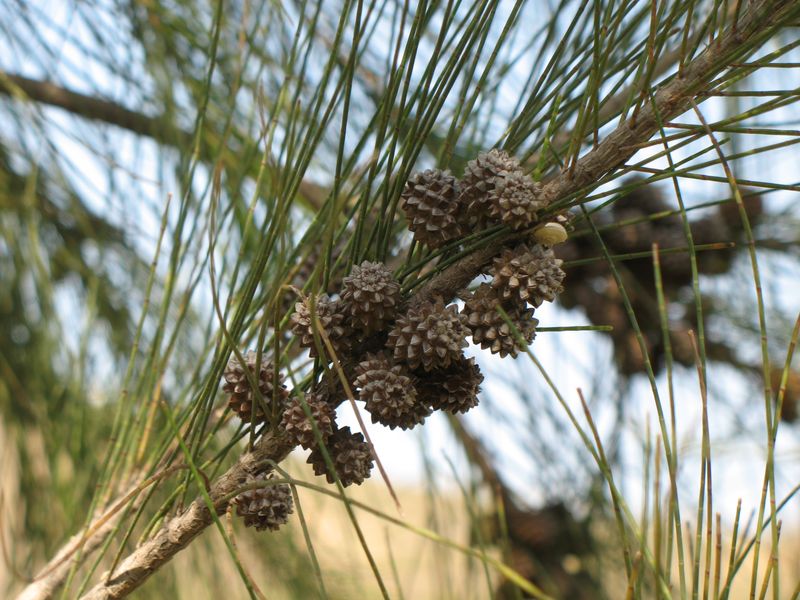
From a distance, Australian pine looks like a graceful, feathery tree swaying in the ocean breeze along Florida’s coastlines. Up close, the reality is a bit less romantic.
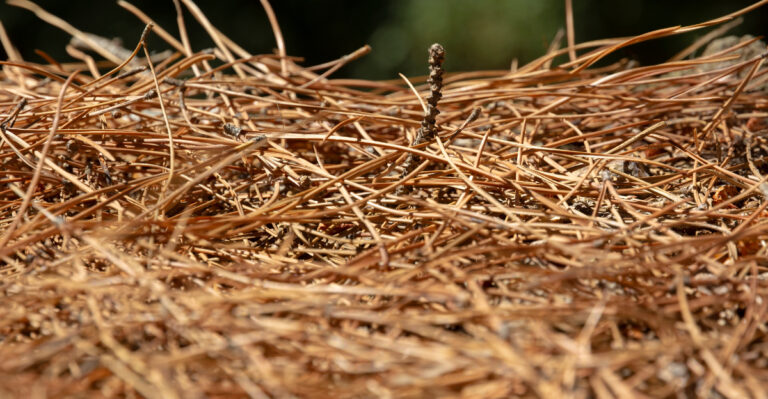
These trees produce a thick mat of needle-like leaves that acidifies the soil beneath them, destroying almost everything else trying to grow there.
Homeowners near beaches or waterways sometimes inherit these trees without realizing the complications that come with them.
Australian pine (Casuarina species) is listed as a Category I invasive species in Florida and is prohibited from being planted in many coastal counties and along protected shorelines under Florida law.
Local regulations vary, so checking with your county before planting or removing these trees is strongly advised.
The shallow, wide-spreading root system is one of the biggest concerns for homeowners. During hurricanes and tropical storms, Australian pines are prone to uprooting entirely, which can cause significant structural damage to homes, fences, and vehicles.
Their shallow roots can also interfere with sidewalks and underground utilities. Removal requires professional tree service in most cases, especially for mature specimens near structures.
After removal, replacing with deep-rooted native coastal species like sea grape or cabbage palm is a much safer long-term choice for Florida landscapes.
5. Get Rid Of Mexican Petunia Before It Escapes Your Yard
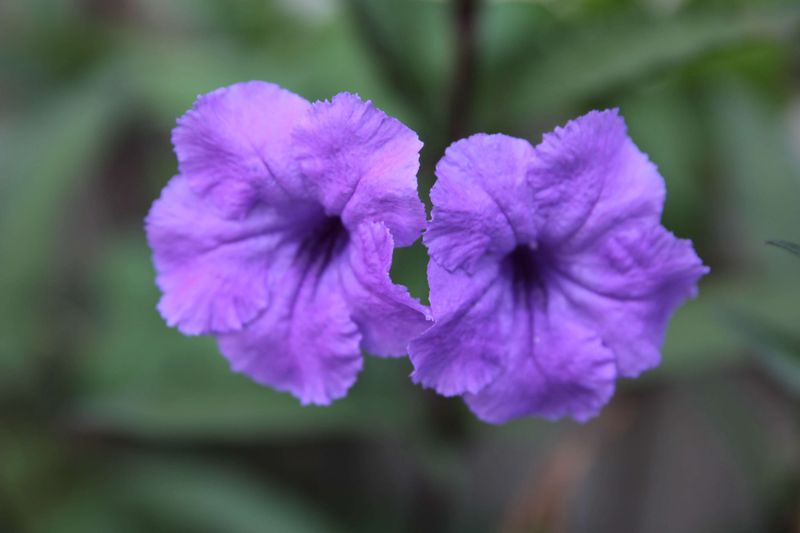
Purple flowers that bloom nearly year-round and require almost zero maintenance sound like a Florida gardener’s dream, and that is exactly why Mexican petunia became so popular in residential landscapes across the state. The problem is that this plant does not stay put.
It spreads aggressively through both seeds and underground rhizomes, and before long, it pops up in places you never intended, including your neighbor’s yard and nearby natural areas.
Mexican petunia (Ruellia simplex) is listed as a Category I invasive species by the Florida Exotic Pest Plant Council due to its ability to escape cultivation and establish in natural areas, wetlands, and disturbed habitats throughout Florida.
University of Florida IFAS Extension recommends replacing the standard variety with sterile cultivars like ‘Purple Showers,’ which produce far fewer viable seeds.
While there are no statewide laws requiring homeowners to remove existing Mexican petunia, its ecological impact on Florida’s wetlands and natural areas is well-documented. Dense stands crowd out native wildflowers and grasses that wildlife depend on.
If you have the original invasive variety, removing it and replanting with a sterile cultivar or native alternative like wild blue phlox is the responsible move. Removing seed pods before they burst open helps limit spread while you work on a full replacement plan.
6. Remove Earleaf Acacia Before It Disrupts Native Areas
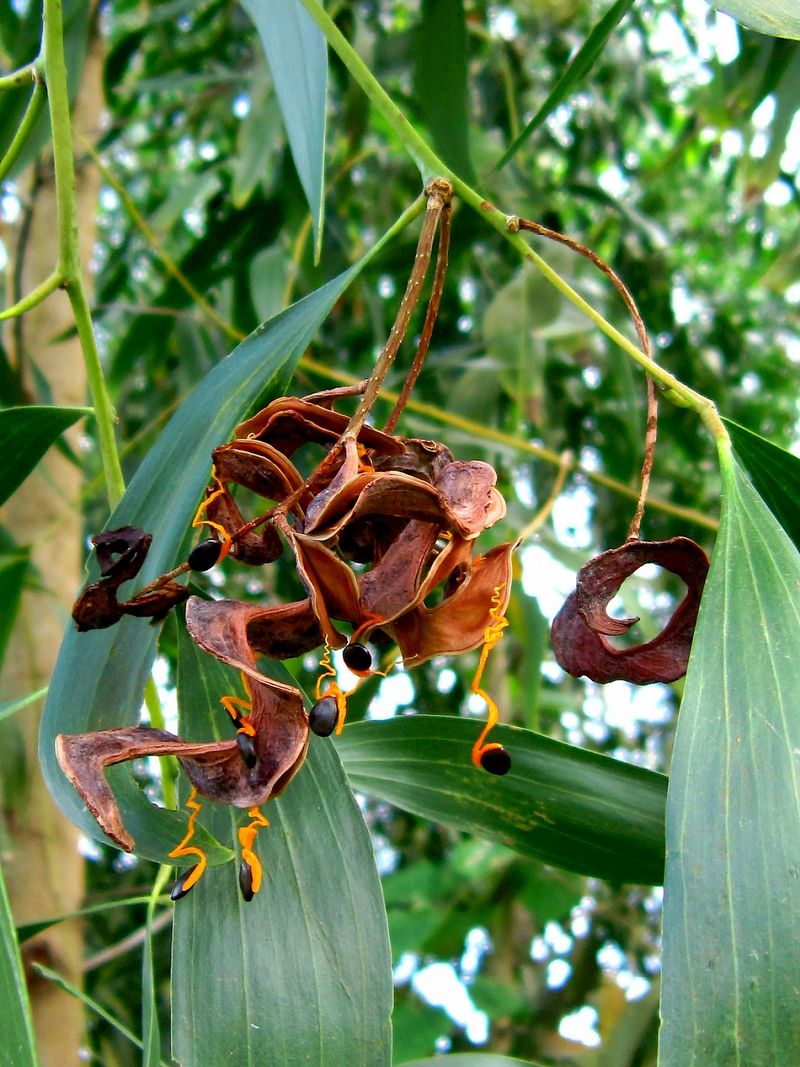
Somewhere along the way, earleaf acacia got planted across Florida as a fast-growing shade tree, and it did exactly what it was supposed to do, grow fast. A little too fast, actually.
This tree can reach 30 to 50 feet tall and spreads aggressively through prolific seed production.
Birds carry those seeds into surrounding natural areas, and the tree establishes quickly in disturbed soils, scrub habitats, and pine flatwoods where native species are already under pressure.
Earleaf acacia (Acacia auriculiformis) is listed as a Category I invasive species in Florida, meaning it has been documented altering native plant communities and disrupting natural processes.
It is not a regulated noxious weed under FDACS, but its ecological impact has prompted many land managers and conservation organizations to actively work on removal programs in natural preserves.
For homeowners, the concern is mainly ecological and practical. The tree drops large quantities of seeds and leaf litter that can smother nearby plants.
Its rapid growth can also shade out garden beds and smaller ornamentals nearby. Identification is straightforward: look for curved, ear-shaped seed pods and bright yellow cylindrical flower spikes.
Removal involves cutting and treating stumps with herbicide promptly, as earleaf acacia resprouts vigorously if stumps are left untreated. Replacing it with a native shade tree like live oak or bald cypress is a long-term improvement for your yard and the surrounding environment.
7. Eliminate Rosary Pea Before It Poses A Safety Risk
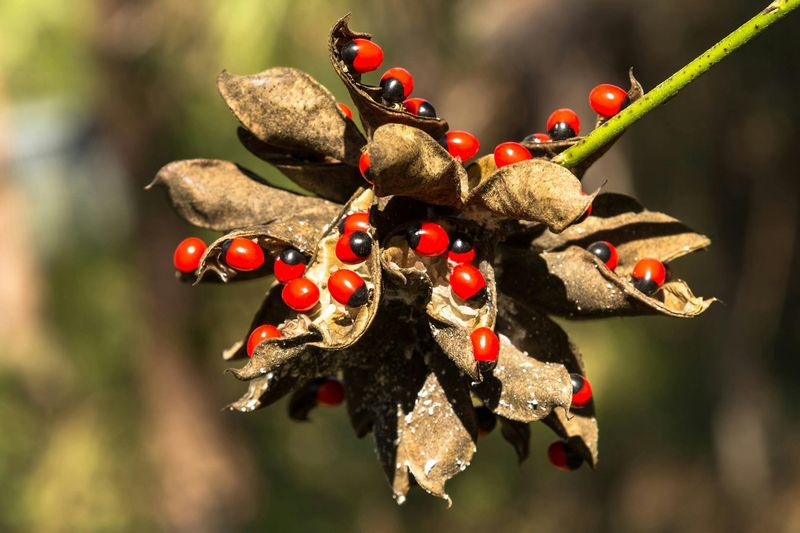
Tucked into a fence line or climbing quietly through a hedge, rosary pea can look almost pretty, with small pink-purple flowers and vines that blend easily into surrounding greenery. What makes this plant genuinely concerning is not its appearance but its seeds.
The bright red seeds with a distinctive black spot are among the most toxic plant materials found in Florida, containing abrin, a compound that can cause serious harm if seeds are cracked open and ingested.
Rosary pea (Abrus precatorius) is a Category I invasive vine in Florida, and its ecological impact includes smothering native understory vegetation in hammocks and disturbed areas.
The safety concern is real but worth keeping in perspective: intact seeds are coated in a hard shell that limits absorption, but broken or chewed seeds present a genuine risk, particularly for young children and pets who might handle them.
Homeowners with rosary pea on their property should remove it carefully, wearing gloves and avoiding contact with the seeds. Bag all plant material, including seed pods, and dispose of it in the trash rather than composting it.
Cut vines at the root and treat regrowth with herbicide.
Because of the toxicity concern and the plant’s invasive classification, removing it sooner rather than later is the responsible choice for any household, especially those with children or animals that spend time outdoors.
8. Remove Skunkvine Before It Invades Nearby Landscapes
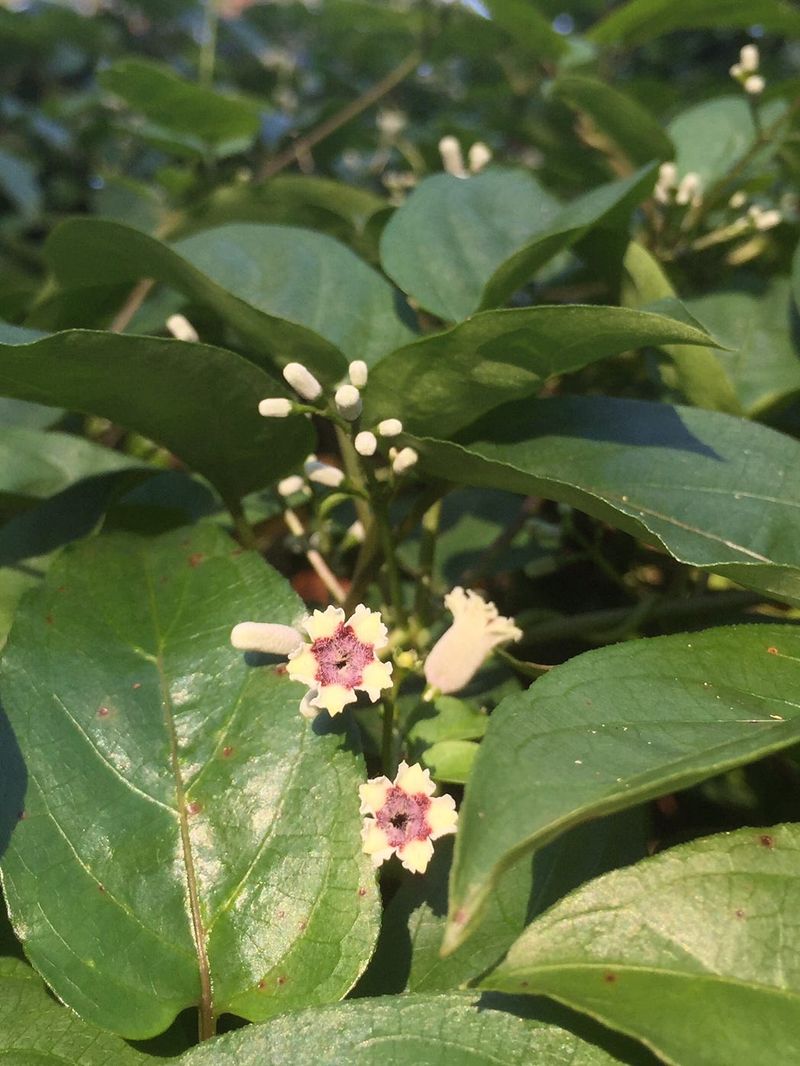
You might not notice skunkvine until you accidentally brush against it and get hit with one of the most unpleasant smells in Florida’s plant world. Crush a leaf and the sulfurous odor is unmistakable, which is exactly how this vine got its name.
Beyond the smell, skunkvine is a relentless grower that winds its way up trees, shrubs, and fences, blanketing everything beneath it and blocking out the sunlight that native plants need to survive.
Skunkvine (Paederia foetida) is listed as a Category I invasive species in Florida and is considered one of the most problematic vines in the state’s natural areas.
It thrives in a wide range of conditions, from moist hammocks to disturbed roadsides, and spreads through both seeds and vegetative fragments. Even small stem pieces left behind during removal can root and start new plants.
Homeowners in Central and North Florida are most likely to encounter skunkvine creeping along fence lines or emerging from wooded edges of their property.
Identification is straightforward: look for heart-shaped leaves, twining stems, and small tubular flowers that are pink-white with a dark center.
Removal requires cutting vines and applying herbicide to regrowth repeatedly over at least two growing seasons. Pulling vines by hand can help reduce biomass, but chemical treatment is usually necessary for full control.
Your local UF IFAS Extension office can provide guidance on appropriate herbicide options for your specific situation.