7 Native Texas Shrubs To Plant Instead Of Azaleas In Full Sun Yards
Azaleas get a lot of love, but in a full sun Texas yard, they are not always the easiest plants to keep happy. When the heat settles in and the sunlight stays strong for hours, those classic shrubs can start to look tired, stressed, and far from their best.
That is why many Texas gardeners start looking for better options that can handle the climate without constant fuss. The good news is that there are plenty of native shrubs that do exactly that while bringing just as much beauty, and in many cases, even more character.
Texas native shrubs are built for local conditions. They are used to the blazing sun, changing weather, and tough soil that can make other plants struggle.
Many also support birds, butterflies, and other pollinators, which adds even more life to your yard.
If you want a landscape that looks vibrant, feels more natural, and asks for less maintenance, swapping azaleas for sun-loving native shrubs can be a smart and satisfying move.
1. Texas Sage
Few plants put on a show quite like Texas Sage after a good rain. Also called cenizo, this iconic Texas native has been lighting up yards and roadsides across the Lone Star State for generations.
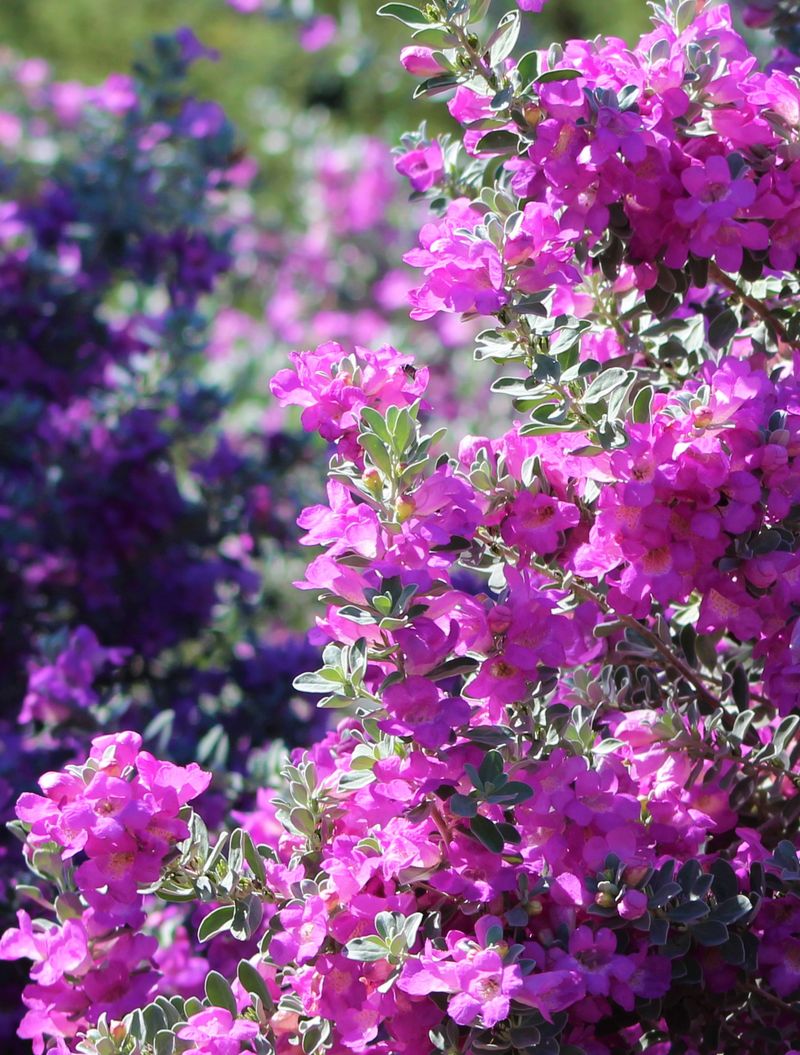
Its silvery-gray leaves catch the sunlight beautifully, and when humidity rises, clusters of bright purple blooms burst open almost overnight. Locals sometimes call it the “barometer bush” because its flowering seems to predict rain.
Texas Sage is one of the most drought-tolerant shrubs you can plant in a full sun yard. Once it gets established, it can go weeks without water and still look great.
It thrives in well-drained, rocky, or sandy soils, which are common across many parts of Texas. Poor soil? No problem. This shrub actually prefers it that way.
Planting Texas Sage is straightforward. Choose a sunny spot with good drainage and avoid overwatering, since soggy roots are its biggest enemy.
It can grow anywhere from two to eight feet tall depending on the variety, making it great for hedges, borders, or as a standalone focal plant. Pruning once or twice a year keeps it tidy.
Pollinators love the purple blooms, and the dense foliage provides shelter for small birds. Compared to azaleas, Texas Sage asks for almost nothing in return for its stunning seasonal displays.
For Texas homeowners who want color, toughness, and native charm all in one package, this shrub truly delivers without the fuss.
2. Flame Acanthus
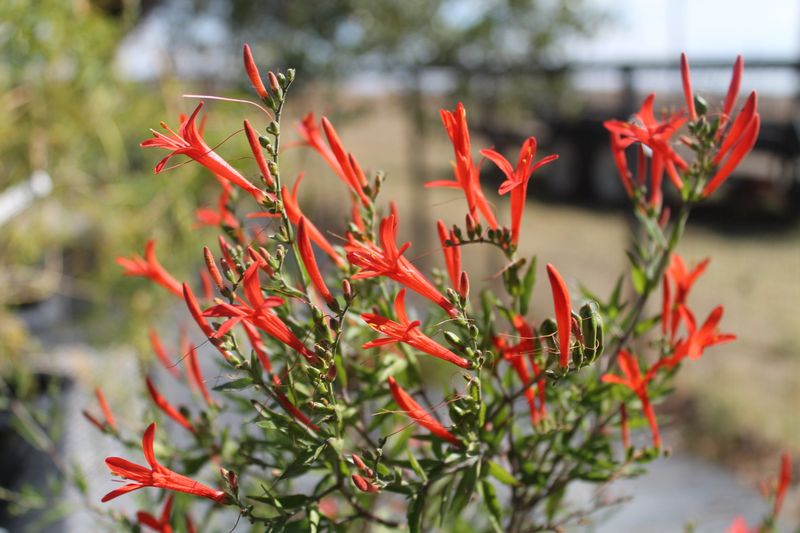
If hummingbirds could vote on their favorite Texas plant, Flame Acanthus would probably win by a landslide. This heat-loving native shrub produces a stunning display of bright red-orange tubular flowers that hummingbirds and butterflies simply cannot resist.
It blooms from mid-summer through fall, which is exactly when many other plants are struggling in the intense Texas heat.
Flame Acanthus handles full sun like a champion. It tolerates poor soils, rocky ground, and dry conditions that would stress out most other flowering shrubs.
In fact, it seems to thrive when conditions get tough. That makes it a smart choice for Texas yards where summer temperatures regularly push past 100 degrees.
Your Texas Garden Changes Every Week. Your Plan Should Too.
Gardening in Texas changes quickly throughout the season. Every Friday you’ll receive a simple weekly plan showing exactly what to plant, prune, fertilize, harvest, and protect so you never miss the right timing.
This shrub is deciduous, meaning it loses its leaves in winter, but it comes back strong each spring. It typically grows three to five feet tall and wide, creating a nice rounded shape in the landscape.
You can cut it back hard in late winter to encourage fresh, vigorous growth and even more blooms the following season.
Compared to azaleas, which need consistent moisture and shade to survive a Texas summer, Flame Acanthus practically thrives on neglect. Plant it in a sunny border, along a fence, or near a patio where you can watch the hummingbirds visit up close.
It pairs beautifully with other native Texas plants and adds a bold splash of warm color to any yard from late July through October.
3. Autumn Sage
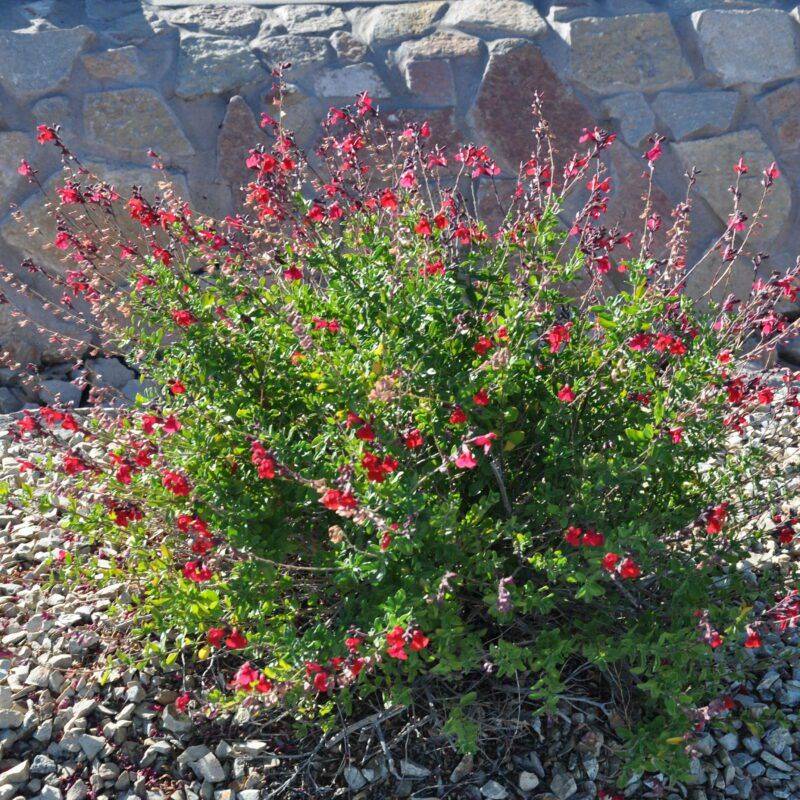
Spring through fall color without constant watering sounds almost too good to be true, but Autumn Sage makes it happen. This compact, cheerful shrub is one of the longest-blooming natives in the Texas landscape.
It produces clusters of tubular flowers in red, pink, coral, or even white, and it keeps on blooming even when summer heat is at its worst. Bees, butterflies, and hummingbirds all show up regularly to enjoy the flowers.
Autumn Sage is an excellent replacement for azaleas in sunny Texas yards because it actually thrives in full sun. While azaleas would struggle and fade in direct afternoon heat, Autumn Sage gets more vibrant.
It is extremely drought-tolerant once established, though it does appreciate a deep watering every couple of weeks during the hottest stretches of summer.
Growing one to three feet tall and wide, it fits neatly into borders, rock gardens, or container plantings. Deadheading spent blooms encourages the plant to keep producing fresh flowers all season long.
A light pruning in late winter helps shape the plant and promotes strong new growth in spring.
One fun fact about Autumn Sage is that it is a parent plant of many popular cultivars sold at nurseries, including the well-known “Hot Lips” salvia with its red and white two-toned flowers.
In Texas, this shrub is widely available at native plant nurseries and fits naturally into almost any sunny landscape design. It is truly one of the easiest and most rewarding natives you can grow.
4. Yaupon Holly
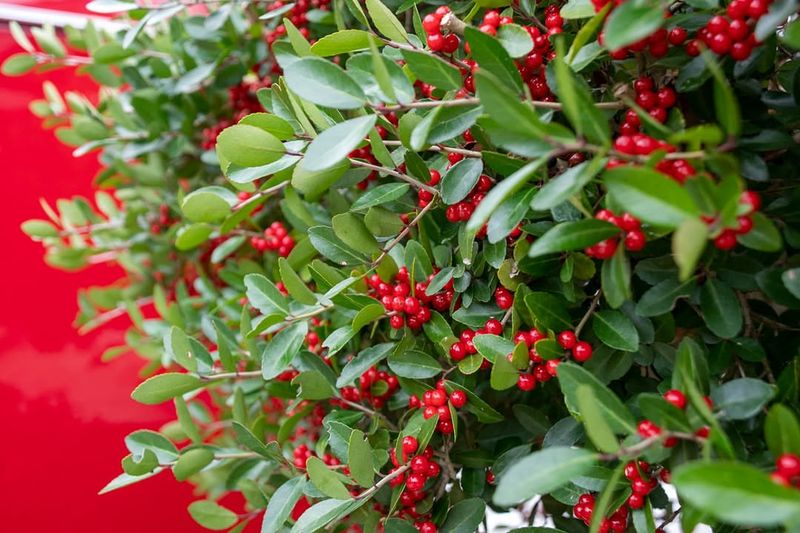
Tough, adaptable, and loaded with wildlife value, Yaupon Holly is one of the most underrated native shrubs in Texas. It is the only caffeinated plant native to North America, and indigenous peoples used its leaves to make tea long before European settlers arrived.
Today, it stands out as a top-choice evergreen shrub for full sun Texas yards that need year-round structure and color.
Female Yaupon Holly plants produce bright red berries in fall and winter that birds absolutely love. Cedar waxwings, mockingbirds, and robins flock to these plants when berries are ripe.
Unlike azaleas, which offer little to local wildlife, Yaupon Holly is a genuine ecological powerhouse. It tolerates full sun, partial shade, drought, clay soils, sandy soils, and even occasional flooding, making it one of the most versatile natives in the state.
Yaupon Holly can be left to grow naturally into a large multi-stemmed shrub, or it can be pruned into a formal hedge, topiary, or small tree. It responds very well to shaping, which is why you often see it used in commercial landscaping across Texas cities.
Dwarf varieties like “Nana” stay compact and work perfectly for low borders or foundation plantings.
For homeowners replacing azaleas in full sun areas, Yaupon Holly is a no-brainer swap. It stays green all year, requires very little supplemental watering once established, and provides food and shelter for birds through the coldest Texas winters.
Few native shrubs offer this much beauty and function with so little effort required from the gardener.
5. American Beautyberry
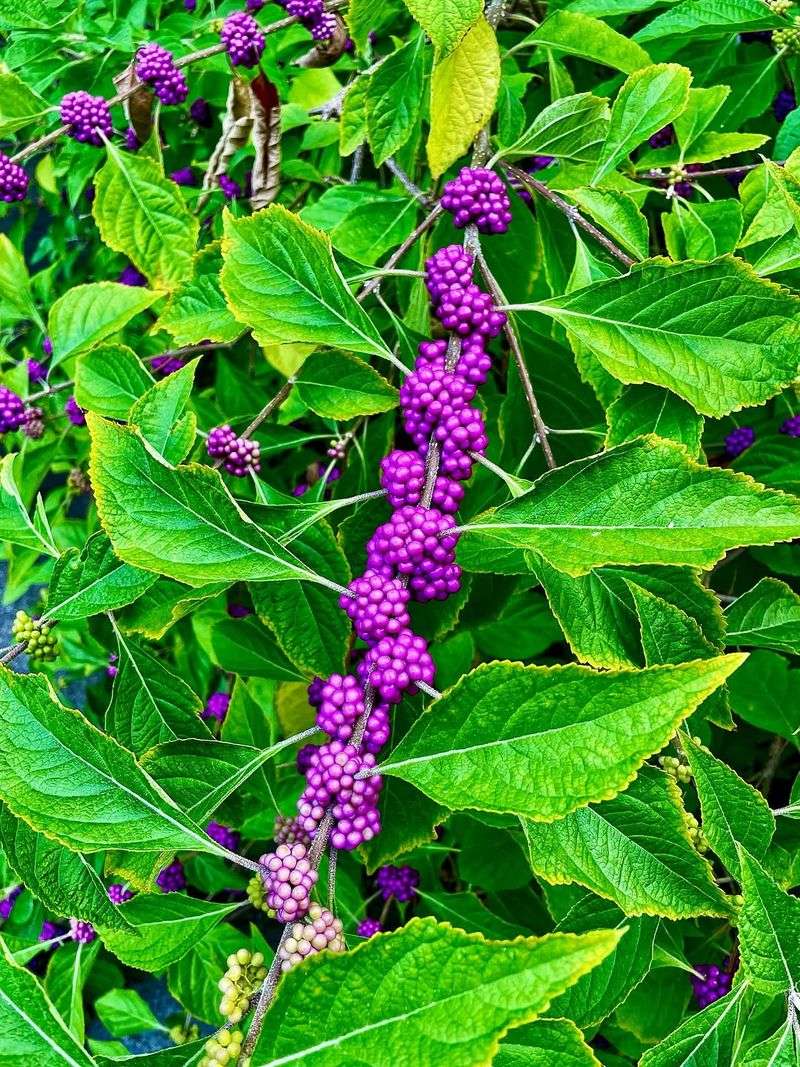
Nothing in the fall Texas garden grabs attention quite like American Beautyberry. The clusters of vivid magenta-purple berries that line its arching stems look almost unreal, like something out of a fantasy garden.
Birds go wild for them, and once you plant one of these shrubs, you will likely spot mockingbirds, thrashers, and catbirds visiting regularly from September through November.
American Beautyberry is a fast-growing native shrub that can reach four to eight feet tall and wide in a single season. It prefers some moisture and does best with occasional deep watering during dry spells, especially in full sun locations.
That said, with proper care and mulching around the base to retain soil moisture, it handles sunny Texas yards surprisingly well and rewards you with a spectacular fall show.
The flowers in spring are small and light pink, not particularly showy, but they attract plenty of pollinators. The real magic comes in late summer when those berry clusters start forming.
By September, the plant is absolutely covered in bright purple berries that make every neighbor stop and stare. It is a true conversation starter in any Texas landscape.
Cut it back hard in late winter, about six to twelve inches from the ground, and it will come back lush and full each spring. This vigorous regrowth habit makes it easy to keep in shape.
American Beautyberry is widely available at Texas native plant sales and nurseries, and it adds a seasonal drama to full sun yards that no azalea can match.
6. Agarita
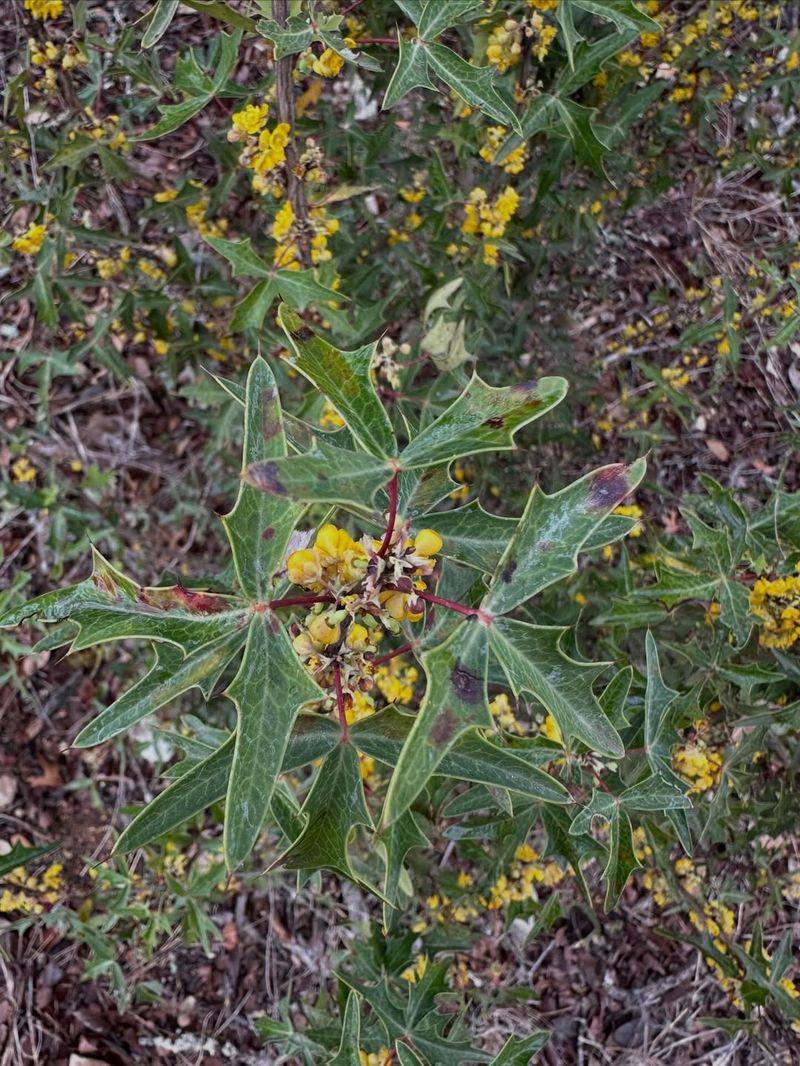
Agarita is the kind of plant that looks delicate but is actually one of the toughest shrubs in all of Texas. Its stiff, holly-like leaves have sharp spines that make it a natural barrier plant, and its blue-gray-green color gives it a striking, almost sculptural look year-round.
In early spring, before most other plants have even woken up, Agarita bursts into small clusters of bright yellow flowers with a sweet, honey-like fragrance that fills the air.
Those yellow flowers turn into small red berries by early summer. The berries are edible and have been used for generations in Texas to make jelly and wine.
Birds love them too, so you will see plenty of wildlife activity around this shrub throughout the growing season. It is a plant that gives back to its ecosystem in multiple ways.
Agarita thrives in full sun and extremely dry conditions. It is native to the Hill Country, Trans-Pecos, and Edwards Plateau regions of Texas, where rocky, thin soils and intense sun are the norm.
That toughness translates perfectly to sunny Texas yards where other shrubs struggle. Once established, it needs virtually no supplemental watering and no fertilizing.
Because of its spiny leaves, Agarita works especially well as a natural fence or security hedge. Plant it under windows or along property lines where you want a natural deterrent.
It grows slowly but steadily, eventually reaching four to eight feet tall. For a low-maintenance, wildlife-friendly shrub in a sunny Texas yard, Agarita is a fantastic and often overlooked choice.
7. Buttonbush
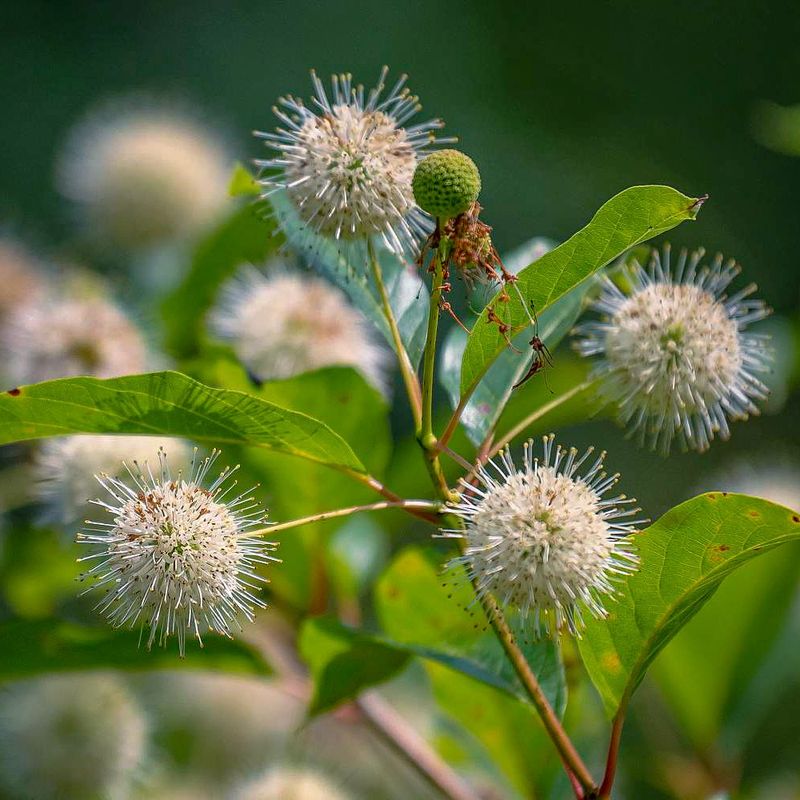
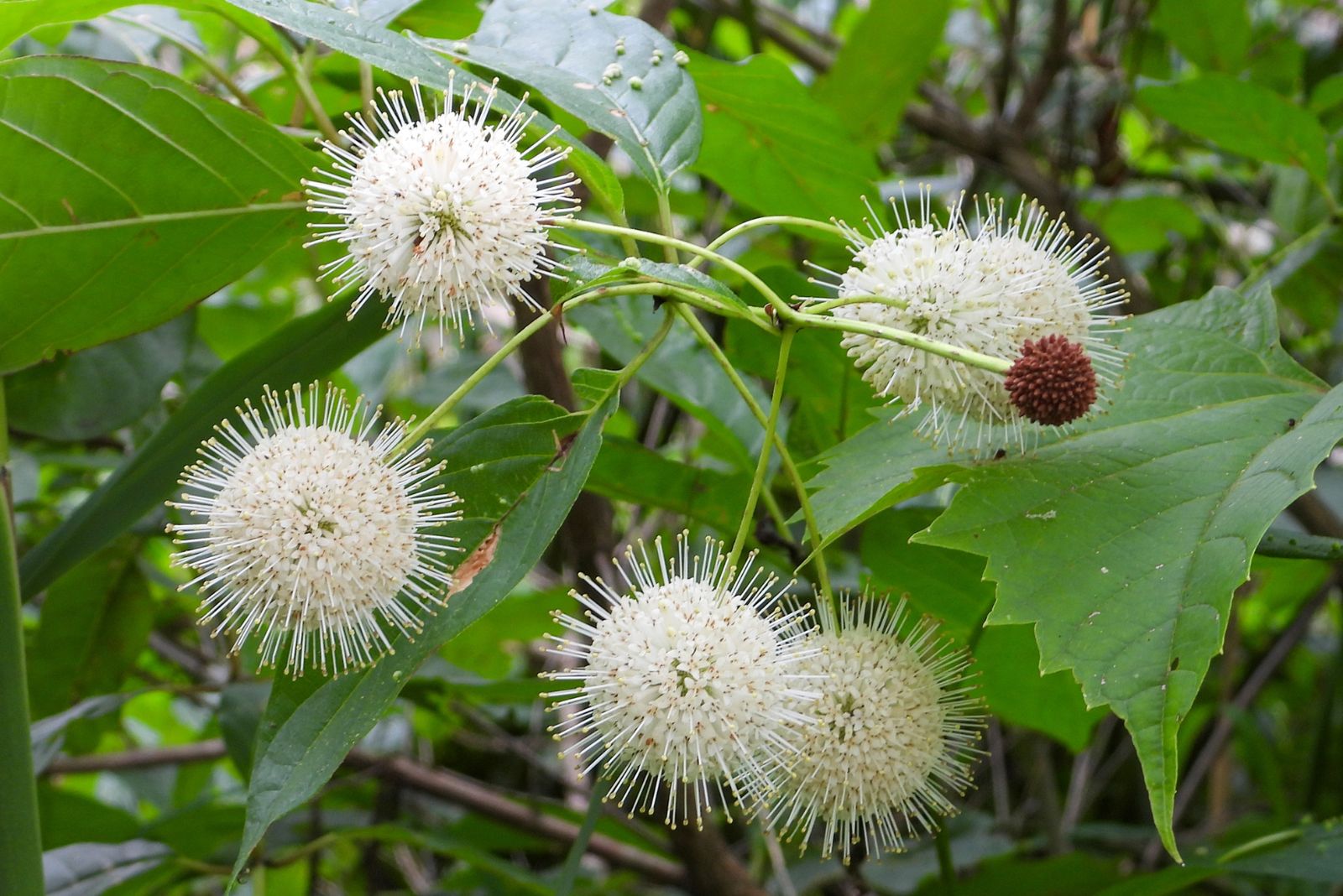
Buttonbush is the quirky, one-of-a-kind native shrub that makes people stop and say, “What is that?” Its round, white globe-shaped flowers look like tiny pincushions or sputnik satellites, and they appear from summer through early fall.
Butterflies, bees, and even hummingbirds are drawn to these unusual blooms, making Buttonbush a lively pollinator hub in any Texas yard.
Unlike most shrubs on this list, Buttonbush actually loves moisture. It is native to creek banks, pond edges, and wet meadows across Texas, so it performs best in sunny spots that stay a little moist or have access to irrigation.
If you have a low-lying area in your yard that collects water, or if you have a pond or rain garden, Buttonbush is an ideal fit. It can even grow with its roots partially submerged in water.
In drier yards, Buttonbush can still thrive with regular deep watering, especially during its first couple of years of establishment. A thick layer of mulch around the base helps retain soil moisture and keeps roots cool during hot Texas summers.
It typically grows six to twelve feet tall, creating a full, rounded shrub with attractive glossy leaves.
Buttonbush is a native that supports an impressive range of wildlife. Its seeds feed waterfowl, its flowers fuel pollinators, and its dense branching provides nesting habitat for songbirds.
For Texas gardeners looking for something truly different from the typical azalea substitute, Buttonbush brings genuine ecological richness and a unique visual personality that stands out in any sunny landscape.