What Florida Gardeners Keep Getting Wrong About Tomatoes In April
April is when a lot of Florida tomato gardens start looking promising, and that is exactly why so many gardeners get lulled into a false sense of security. The plants are up, the weather still feels manageable, and it is easy to think the hard part is over.
Not so fast. This is the stretch where small missteps start snowballing into weak fruit set, stressed plants, and a season that fizzles earlier than expected.
A lot of the trouble comes from habits that seem harmless at first. Extra fertilizer, sloppy watering, late planting, crowding, or ignoring early pest pressure can all come back to bite.
Florida does not give tomatoes much room for error once heat and humidity start bearing down.
That is why April matters so much. It is not just a month for watching plants grow.
It is the moment when the right move can keep tomatoes productive longer, and the wrong one can send the whole patch off the rails.
1. April Heat Changes The Tomato Game Fast
Walk out to your Florida garden on a mid-April morning and the air already feels different than it did in March. That shift is not just uncomfortable for you.
It is a real turning point for your tomato plants. According to UF/IFAS, tomato blossoms drop when daytime temperatures consistently climb above 92 degrees Fahrenheit or nighttime temps stay above 75 degrees.
In Central and South Florida, those thresholds can arrive surprisingly early in April.
What makes this tricky is that the plants may still look lush and green right when the heat is starting to work against them. Gardeners see full foliage and assume everything is fine, but flowering and fruit set are quietly being disrupted.
North Florida gardeners get a slightly longer window, but even there, late April can bring rapid warming that catches people off guard.
The practical move is to pay attention to the forecast, not just the calendar. If your plants were set out in late February or early March, they may already have a good amount of fruit forming.
Your priority in April should be protecting what is already on the vine rather than expecting a big new flush of flowers to succeed. Shade cloth rated for 30 percent light reduction can help buffer plants from the worst of the afternoon heat without starving them of sun.
Adjusting your expectations based on what the thermometer is actually doing is one of the most useful habits a Florida tomato grower can build.
2. More Water Is Not Always The Answer
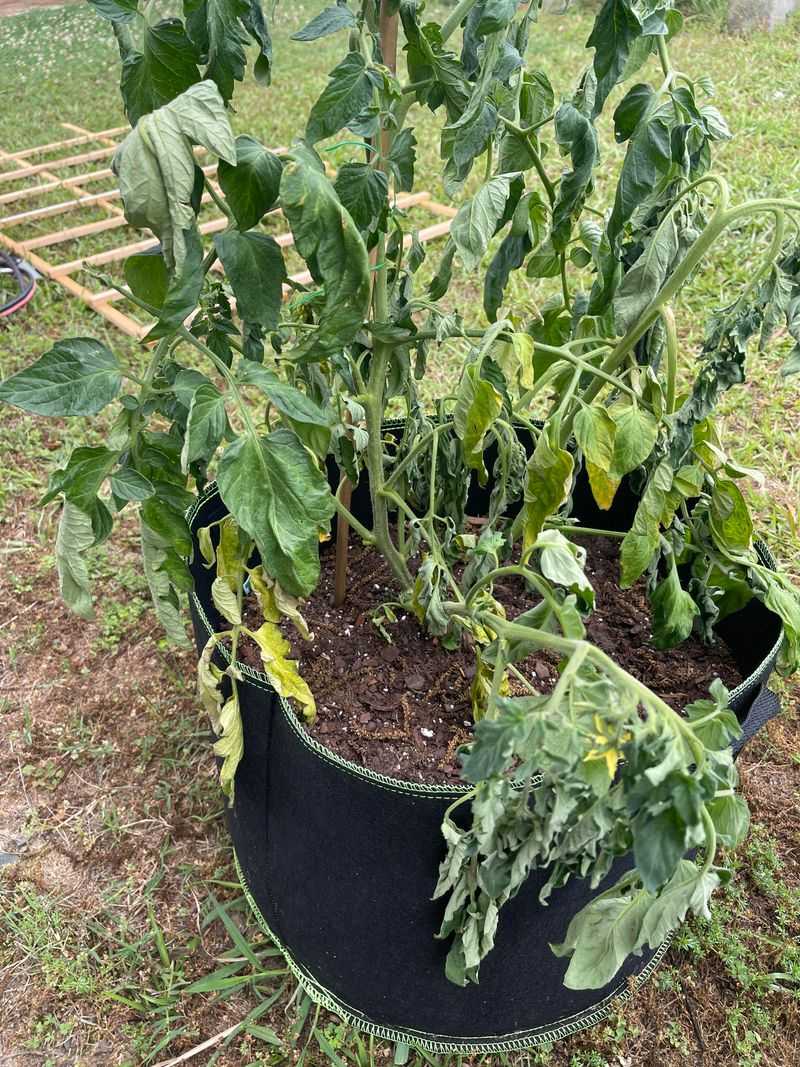
When tomato leaves start to droop on a warm April afternoon, the first instinct is usually to grab the hose. That instinct makes sense, but in Florida’s spring conditions it can make things significantly worse.
Overwatering is one of the most common and least-recognized problems Florida tomato growers face in April, especially as temperatures rise and gardeners try to compensate for heat stress with extra moisture.
The issue is that drooping leaves in the afternoon heat are often a normal stress response, not a sign of dry soil. Florida’s sandy soils drain quickly, but they can still hold enough moisture from a recent watering to meet the plant’s needs.
Your Florida Garden Changes Every Week. Your Plan Should Too.
Gardening in Florida changes quickly throughout the season. Every Friday you’ll receive a simple weekly plan showing exactly what to plant, prune, fertilize, harvest, and protect so you never miss the right timing.
Adding more water on top of adequate moisture creates waterlogged conditions that reduce oxygen around the roots, which actually makes it harder for the plant to take up water and nutrients. That can show up as more wilting, more yellowing, and overall decline.
UF/IFAS recommends consistent, deep watering rather than frequent shallow watering. For most Florida home gardens in April, watering every two to three days depending on rainfall and soil type is a reasonable starting point.
Sticking a finger two inches into the soil before watering is a simple check that saves a lot of trouble.
Mulching around the base of the plant with two to three inches of organic material also helps retain moisture between waterings without creating the soggy conditions that invite root problems.
Steady and intentional beats reactive every time.
3. Afternoon Sun Can Turn Stress Into Setback
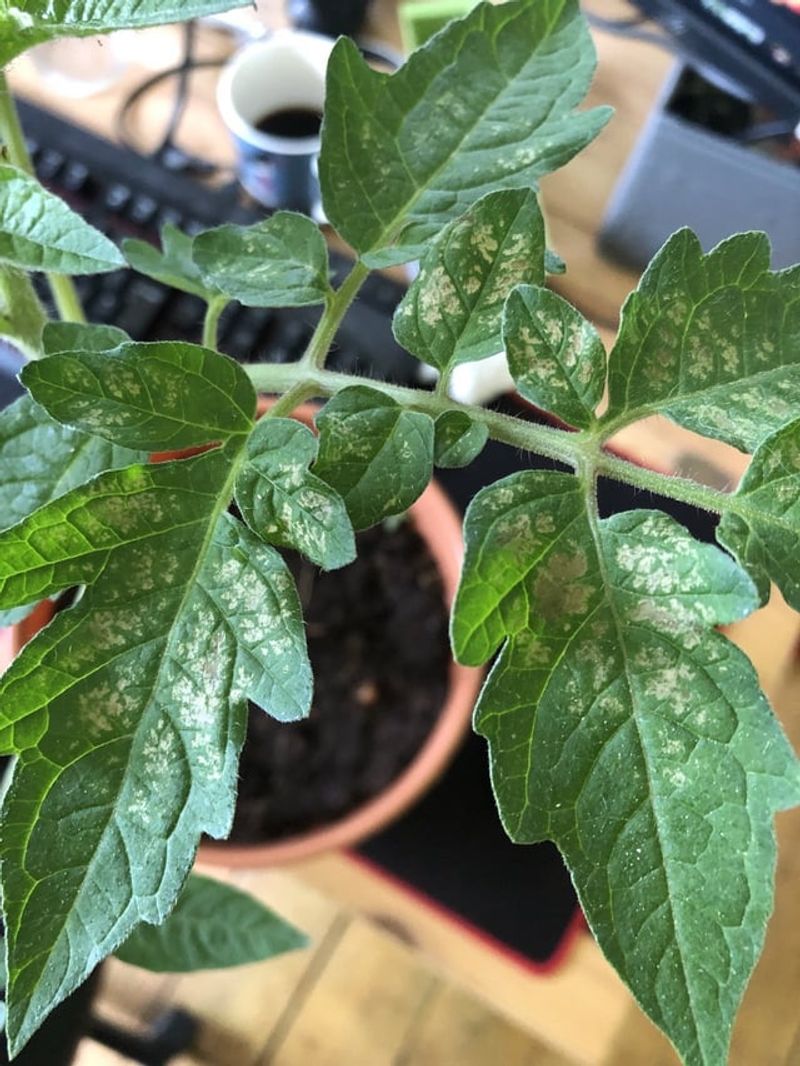
Plenty of sun is usually a good thing for tomatoes, but Florida’s April sun is not the same as January sun. The angle is higher, the intensity is stronger, and the heat reflecting off mulch, fences, soil, and concrete can push temperatures at the plant level well beyond what the air thermometer reads.
Gardeners who chose their planting spots in winter sometimes find those same spots become problem areas by mid-April.
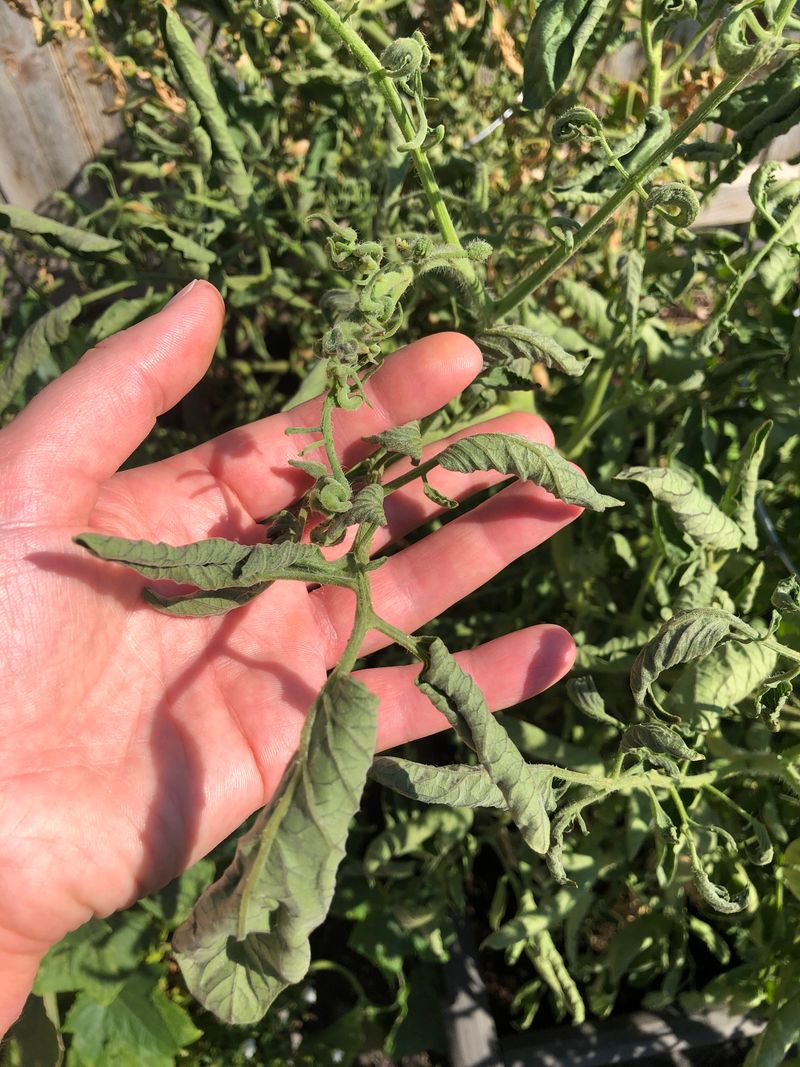
Leaf curl is one of the first signs that afternoon exposure is becoming too intense. Tomato leaves naturally roll inward during heat stress as a way of reducing moisture loss, so a little curl on a hot afternoon is not automatically a crisis.
But if leaves are staying curled well into the evening, or if you are seeing pale, bleached patches on the fruit itself, that is a sign that sun and heat exposure has crossed into territory that affects quality and yield.
Fruit exposed directly to intense afternoon sun can develop a condition called sunscald, which shows up as white or yellow patches on the skin.
One practical fix is to evaluate which direction the afternoon light hits your plants and whether a simple shade cloth setup could buffer the worst of it between about 2 p.m. and 5 p.m. You do not need to block out the sun entirely.
A 30 percent shade cloth gives the plant a meaningful break without limiting the morning light it needs for strong growth. Small adjustments in exposure can preserve fruit quality and reduce overall plant stress through the rest of the month.
4. Big Healthy Leaves Do Not Guarantee Good Fruit
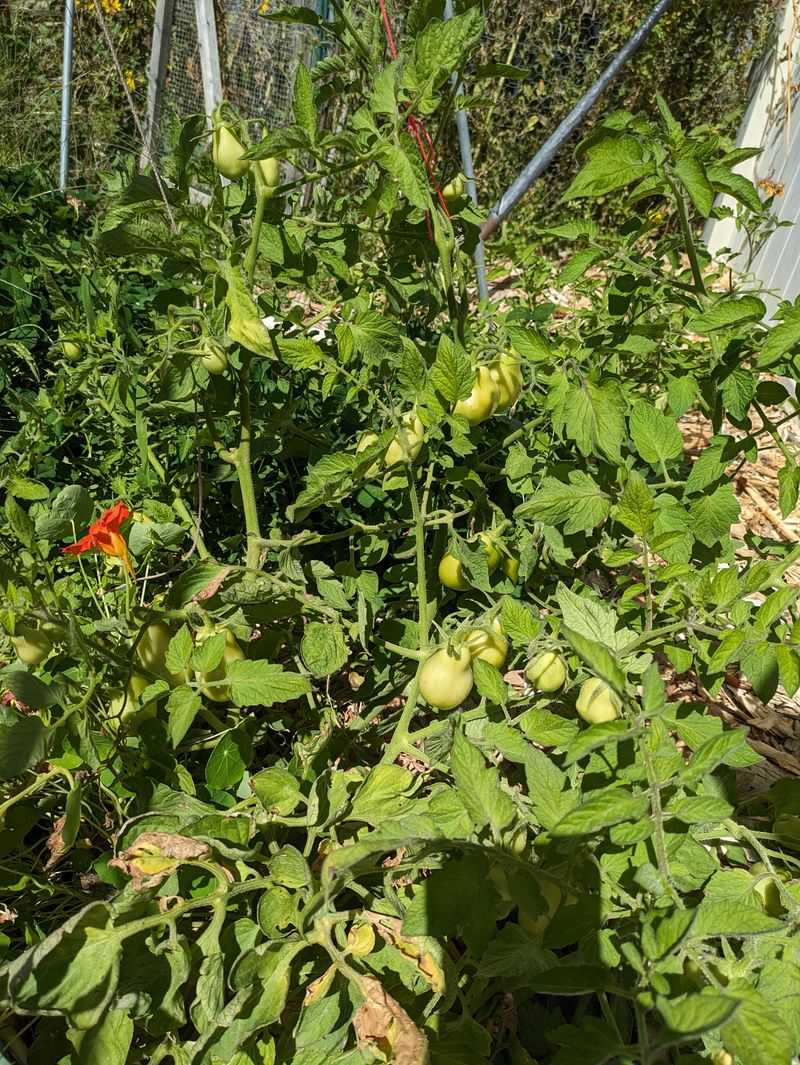
A tomato plant covered in thick, dark green leaves can look like a gardening success story. But lush foliage and a productive harvest are not the same thing, and in April, that gap can widen fast.
When a plant is pushing a lot of vegetative growth, it is often putting its energy into leaves and stems rather than into forming and filling fruit.
That imbalance can sneak up on gardeners who are focused on how full the plant looks rather than what is actually setting on the vine.
Excess nitrogen is one of the most common reasons this happens. If you have been feeding your tomatoes with a high-nitrogen fertilizer or a lawn-type product, the plant may be thriving in a leafy sense while struggling to fruit.
Nitrogen supports green growth, but tomatoes also need phosphorus and potassium to support flowering and fruit development.
UF/IFAS tomato production guidelines emphasize balanced nutrition across the season rather than heavy nitrogen feeding at any single point.
April heat can also push plants toward more vegetative growth as a stress response. When conditions get harder, the plant sometimes invests in leaves rather than fruit as a survival strategy.
Watching the actual number of blossoms and young fruits forming each week gives you a much more honest picture of how the season is going than leaf size alone.
If you see lots of green but very little fruit action, it may be time to reassess your fertilizer type, your watering routine, and whether the plant is getting the environmental cues it needs to shift into productive mode.
5. Late Fertilizer Mistakes Can Backfire Quickly
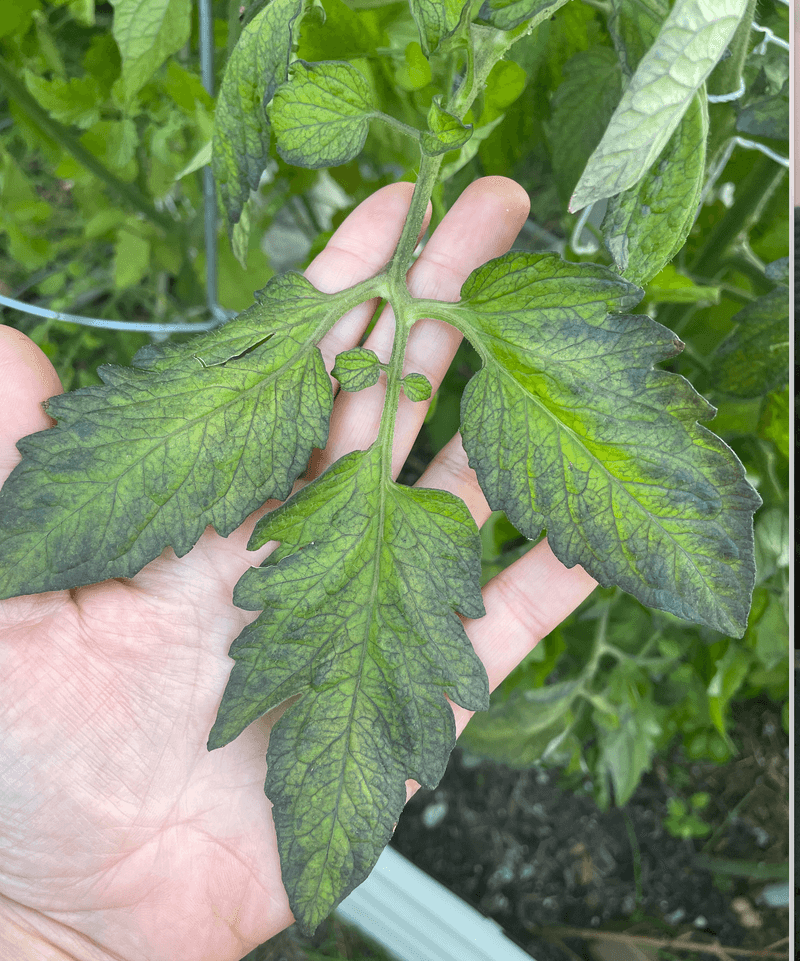
Fertilizing tomatoes in April feels like a straightforward task, but the timing and type of fertilizer you choose in this month can either support your harvest or quietly work against it.
One of the most common mistakes is applying a heavy dose of fertilizer in mid to late April when the plant is already under heat stress.
Pushing new soft growth at that point just creates more tissue that struggles in the heat rather than contributing to fruit production.
According to UF/IFAS, tomatoes in Florida benefit from a consistent fertilizing schedule that starts at transplanting and continues at regular intervals. By April, the focus should shift toward supporting fruit development rather than promoting new vegetative growth.
That means choosing a fertilizer with a balanced or slightly lower nitrogen ratio and making sure phosphorus and potassium levels are adequate.
Overloading plants with nitrogen at this stage is one of the fastest ways to end up with lots of leaves and very little harvest.
Applying fertilizer to dry soil is another April mistake that causes trouble. Fertilizer applied to stressed, dry roots can cause salt burn, which shows up as brown leaf edges and general decline.
Always water your plants before applying dry fertilizer, and make sure the soil has some moisture before feeding.
Slow-release granular fertilizers are often a better choice in April than quick-release products because they deliver nutrients gradually without creating sudden spikes that the plant cannot handle well under rising heat.
Steady feeding through a balanced product keeps the plant supported without pushing it in the wrong direction.
6. Tiny Pest Problems Rarely Stay Tiny For Long
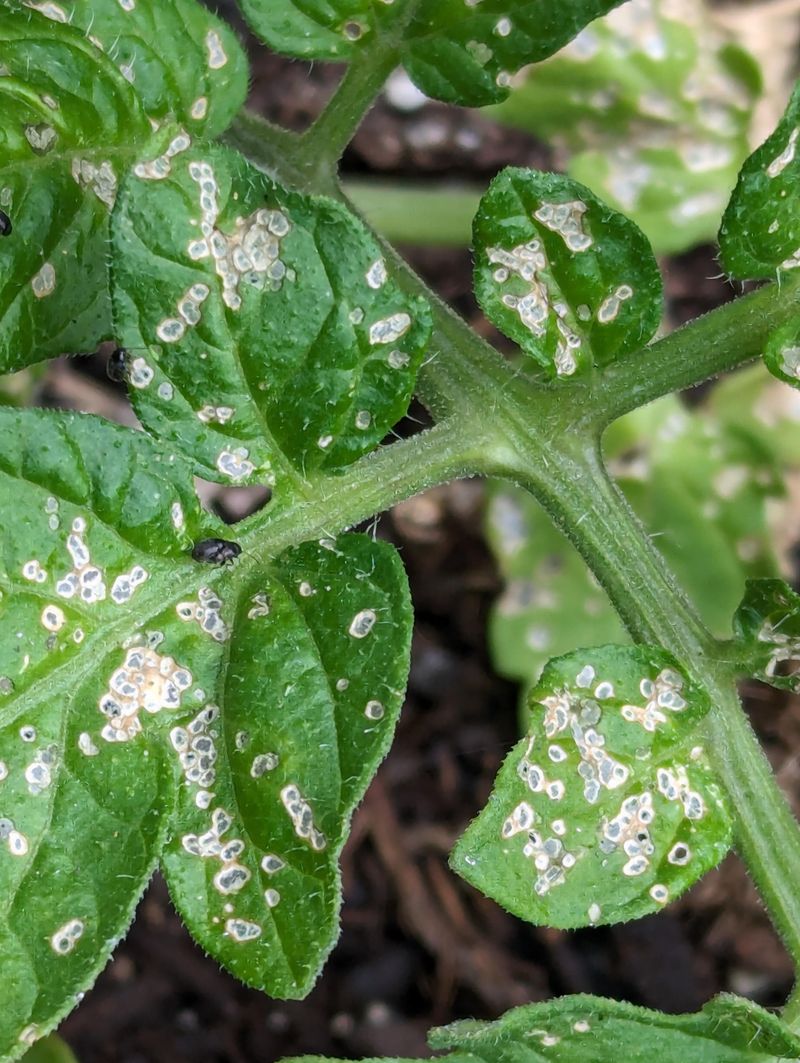
A few insects on a tomato plant in early April might not seem like a reason to worry. By the time the month is half over, that same small problem can look very different.
Florida’s warm spring conditions are ideal for pest populations to build quickly, and tomato plants under heat stress are less equipped to handle that pressure. Catching pest issues early is one of the most useful habits a Florida gardener can develop.
Whiteflies are among the most persistent tomato pests in Florida, and April is when populations often start climbing. They tend to cluster on the undersides of leaves, so flipping a few leaves and checking regularly is a simple habit that pays off.
Aphids, spider mites, and hornworms also become more active as temperatures rise. UF/IFAS notes that hornworm damage can be dramatic and fast, with large sections of foliage disappearing almost overnight once the caterpillars grow large enough.
The key is to scout your plants at least twice a week in April rather than waiting until damage is obvious. Look at both the tops and undersides of leaves, check the stems near the soil line, and pay attention to any unusual spotting, stickiness, or webbing.
Early-stage pest pressure is much easier to manage through physical removal, targeted intervention, and maintaining healthy plant conditions than a full infestation that has had two weeks to establish.
Florida’s pest season does not pause, so your attention should not either.
Staying ahead of the problem is always more effective than responding after the fact.
7. Crowded Plants Invite More Trouble Than Growth
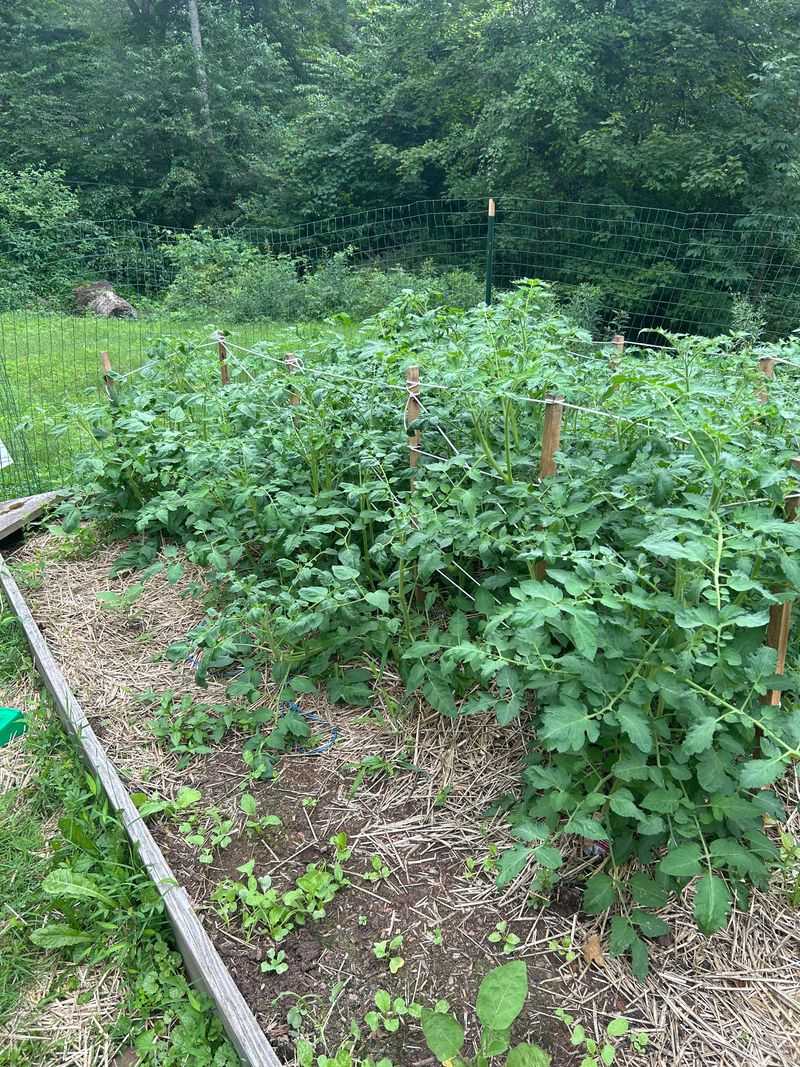
Back in February when the seedlings went in, leaving two feet between plants probably felt like more than enough space.
But tomato plants in Florida can grow aggressively through March and into April, and what looked like generous spacing at transplant time can turn into a crowded tangle by mid-spring.
That crowding creates a set of problems that compound each other as the month goes on.
Poor airflow between plants is one of the first consequences. When leaves and branches overlap, moisture from rain, dew, and irrigation stays trapped against the foliage longer than it should.
That extended leaf wetness is exactly what fungal diseases need to get started. Early blight and gray leaf spot, both common Florida tomato problems, spread much faster in crowded conditions where air cannot move freely through the planting area.
UF/IFAS guidelines for Florida tomato production recommend adequate plant spacing specifically to reduce this kind of disease pressure.
Crowded plants also compete for water, nutrients, and light in ways that push individual plants toward weaker growth. A plant that cannot spread its canopy properly may reach upward and become leggy, which affects its ability to support heavy fruit.
Removing some of the lower leaves and any suckers that are filling in the interior of the plant can help restore airflow without requiring you to uproot anything.
If the spacing issue is severe, redirecting the most crowded branches away from each other with stakes or ties can make a meaningful difference.
Thinning and training in April is far more productive than waiting until disease pressure has already taken hold.
8. Spring Rain Can Create A Bigger Disease Mess
April rain in Florida can feel like a relief after weeks of dry, warming weather. But for tomato plants, that same rain brings a set of conditions that can shift the health of your garden in a matter of days.
Wet foliage, splashing soil, and high humidity create the kind of environment where fungal and bacterial diseases spread with very little encouragement. Gardeners who see rain as purely a positive thing in April often get caught off guard by what follows.
Soil splash is one of the most direct ways disease gets onto tomato plants. When rain or overhead irrigation hits bare soil, it kicks up particles that carry fungal spores from the ground onto the lower leaves of the plant.
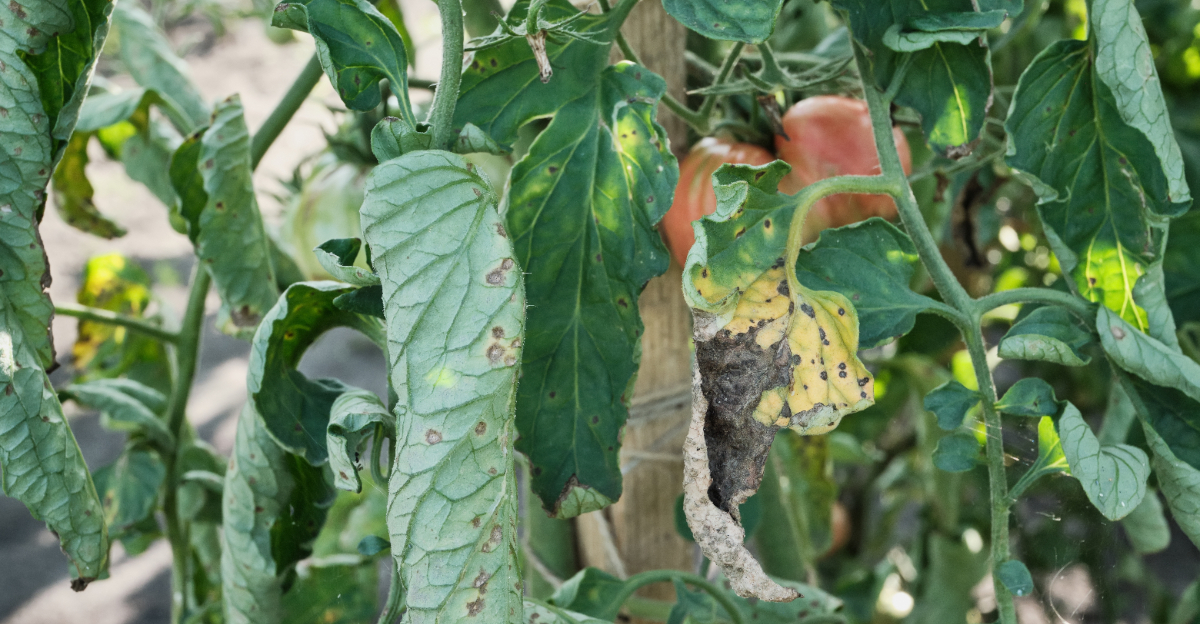
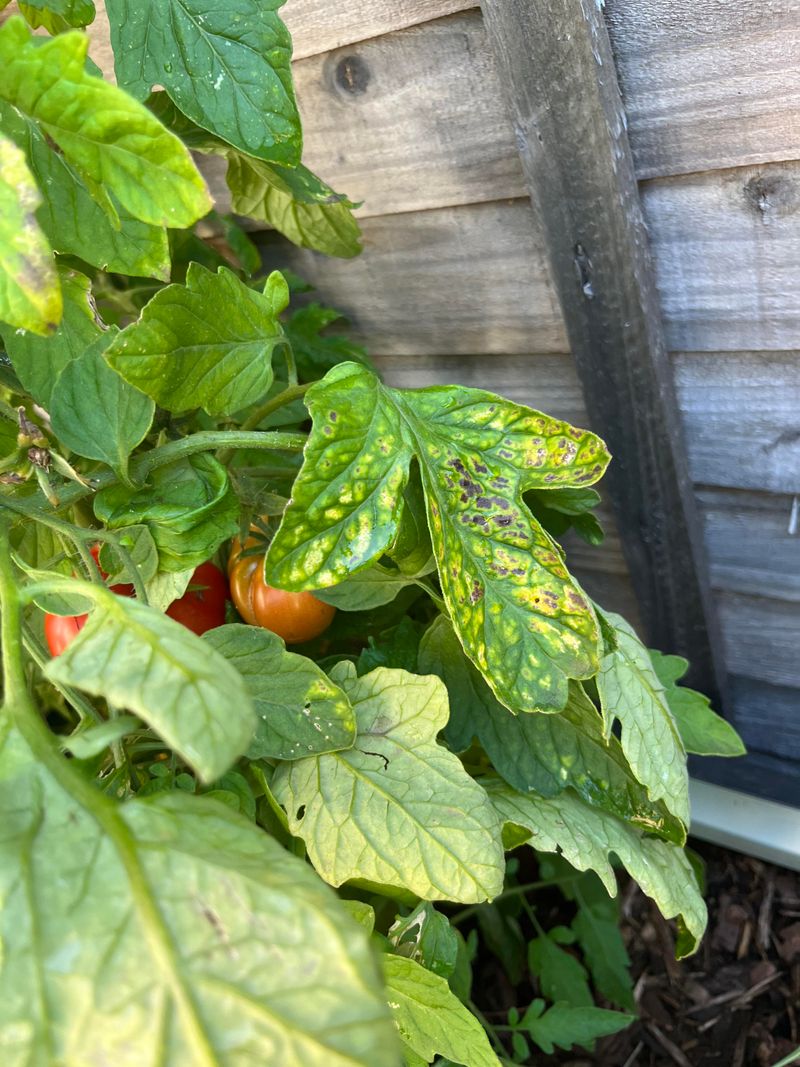
Early blight, caused by the fungus Alternaria solani, often starts exactly this way, showing up as small dark spots with yellow halos on the lower leaves.
According to UF/IFAS, keeping mulch around the base of tomato plants is one of the most practical ways to reduce splash-up and slow the spread of soil-borne pathogens.
Extended periods of leaf wetness after rain also create ideal conditions for gray leaf spot and bacterial speck, both of which are common in Florida.
Avoiding overhead watering whenever possible and watering at the base of the plant instead helps reduce how long leaves stay wet.
Pruning the lower leaves that are closest to the soil and most likely to pick up splash is another step that gives the plant a meaningful advantage. Florida spring weather is going to bring rain.
Preparing for it rather than reacting to it makes a real difference in how your plants come through April.
9. The Wrong Variety Struggles No Matter What
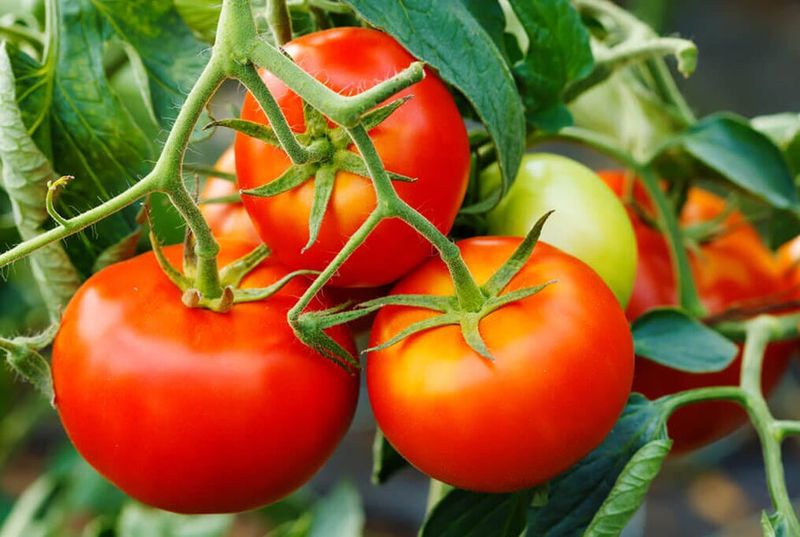
Good soil, consistent watering, and careful attention can take a tomato plant a long way, but none of those things can fully compensate for a variety that was not suited to Florida’s April conditions in the first place.
Variety selection is one of the most important decisions a Florida tomato grower makes, and it is also one of the most overlooked once the plants are already in the ground and looking fine in early spring.
Florida’s combination of high heat, humidity, and disease pressure in April demands varieties that were specifically bred or selected for those conditions.
UF/IFAS has developed and recommends several Florida-adapted varieties including Amelia, Tribute, and Tasti-Lee, all of which carry resistance to common Florida diseases like Fusarium wilt and gray leaf spot.
Many popular tomato varieties sold nationally at big box stores were not developed with Florida’s specific challenges in mind, and they can run into serious trouble as April conditions intensify.
Heat tolerance is particularly important when it comes to fruit set. Some varieties drop blossoms at lower temperatures than others, meaning they stop producing fruit earlier in the season.
A variety with poor heat tolerance may look perfectly healthy in early April but produce almost nothing as the month moves toward May.
Checking the UF/IFAS Florida Vegetable Gardening Guide for recommended varieties before planting next season is a straightforward step that can prevent a lot of disappointment.
If you are already in the ground with a less suitable variety this April, focus on protecting what fruit has already formed rather than hoping for a late surge that may not come.
10. Waiting Too Long Can Cost You The Best Harvest
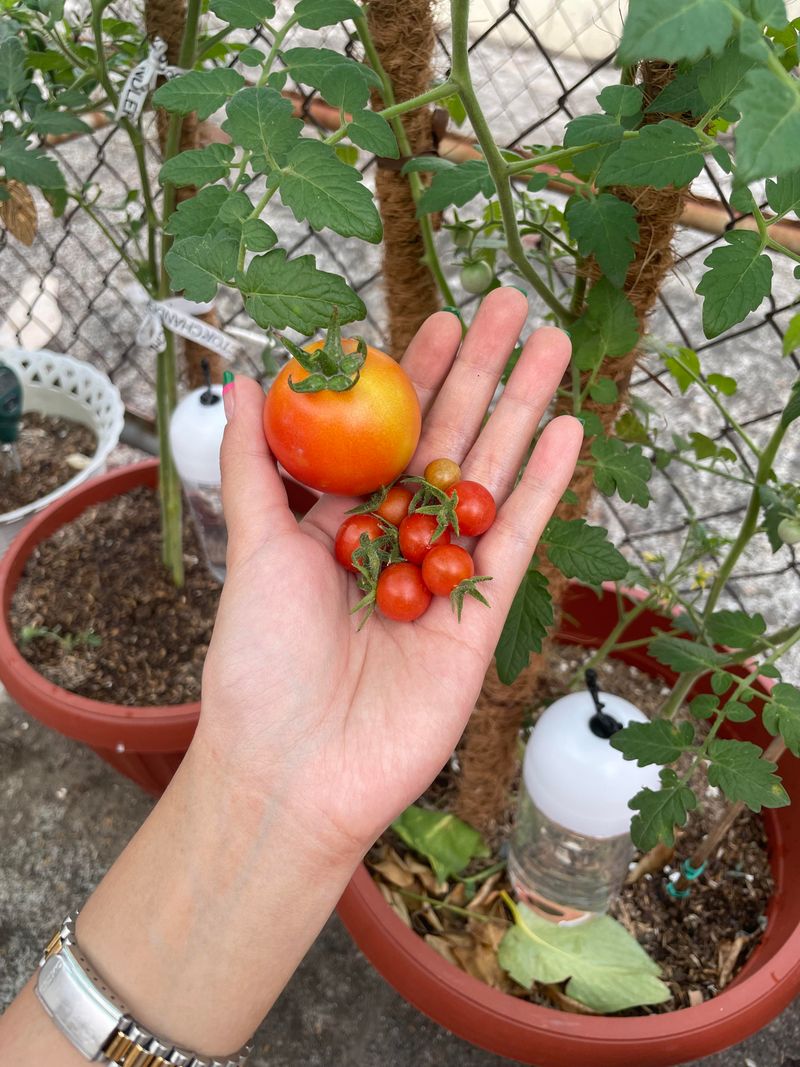
Some of the best tomatoes of the Florida spring season never make it to the kitchen because gardeners wait just a little too long to pick them.
April is often the month when the harvest window is at its narrowest, and the difference between a tomato picked at peak ripeness and one left on the vine a few days too long can be significant.
Heat speeds up the ripening process, and fruit that looks like it needs another three days can turn soft or crack almost overnight when temperatures jump.
Waiting for a tomato to reach full supermarket-red color on the vine in April is usually a mistake.
Fruit that has reached the breaker stage, meaning it has started showing any pink or orange color on the blossom end, can be brought inside to finish ripening at room temperature.
UF/IFAS notes that tomatoes ripen best between 65 and 70 degrees Fahrenheit, which means your kitchen counter in April is actually a better finishing environment than a vine sitting in 90-degree afternoon heat.
Bringing fruit inside at the breaker stage also protects it from sunscald, cracking, and pest damage.
Staying on top of the harvest also encourages the plant to keep producing rather than putting all its energy into ripening fruit already on the vine.
Checking your plants every day or two in April rather than every week gives you a much better shot at catching fruit at the right moment.
Florida’s spring season moves fast, and so does the tomato harvest window. The gardeners who pay close attention in April almost always end up with more to show for their season than those who check in less often and hope for the best.