8 Reasons California Gardeners Are Planting Borage In Their Front Yards
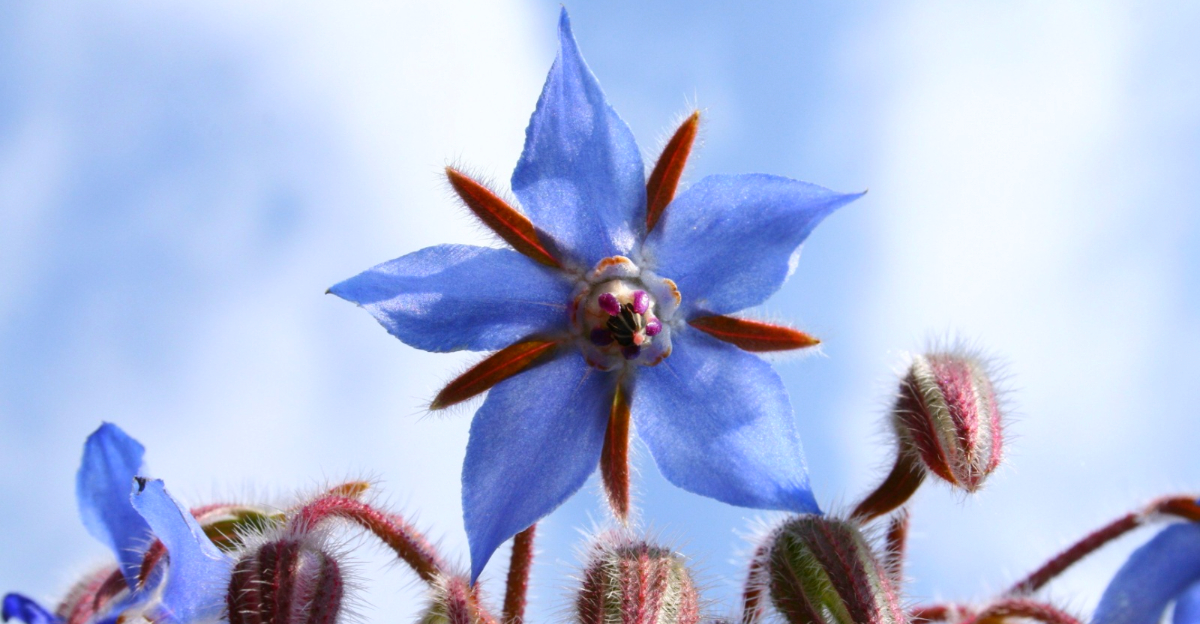
What if the most hard-working member of your California “welcome committee” wasn’t a fancy landscape design, but a burst of brilliant blue stars?
From the breezy San Diego coast to the sun-drenched Central Valley, borage is quickly becoming the ultimate front-yard flex.
This isn’t just a pretty face; it’s a pollinator magnet that brings a literal parade of life to your curb. Imagine a front yard filled with edible, cucumber-scented flowers and a buzzing, healthy ecosystem that greets every passerby.
Whether you’re in Sacramento or a coastal neighborhood, borage offers that rare mix of “set-it-and-forget-it” ease and show-stopping beauty that makes any California home feel like a Mediterranean escape.
1. Attracts Pollinators Close To The Home
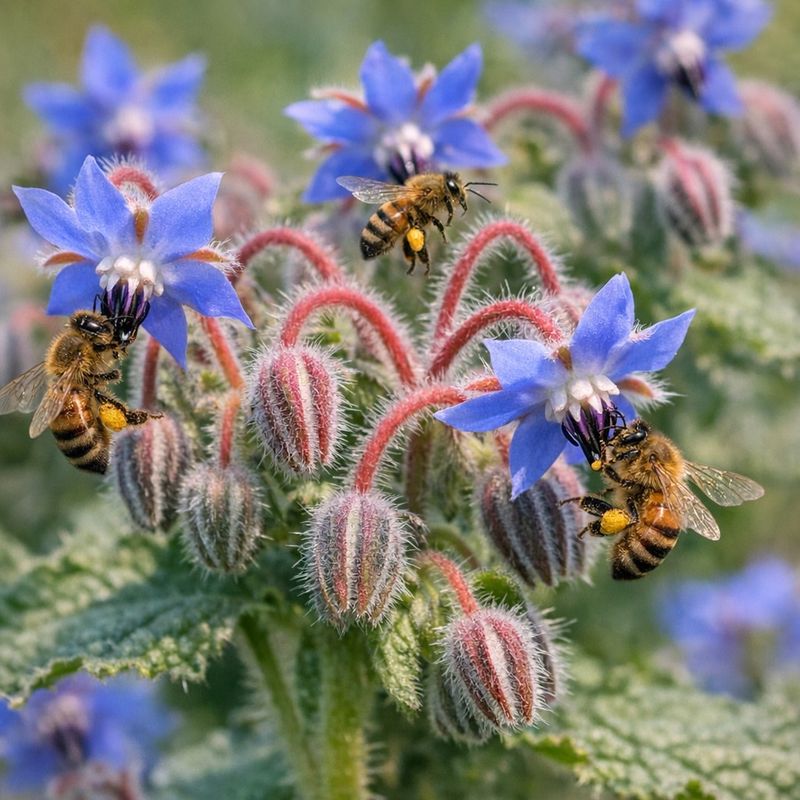
Watching bees work their way through a cluster of borage flowers is one of the small, satisfying joys of California gardening.
Borage produces a steady flow of nectar-rich, star-shaped blue flowers that honeybees, bumblebees, and native bees find nearly irresistible.
Placing it near the entryway means you get a front-row seat to all that buzzing activity every time you step outside.
In California, where native bee populations face increasing pressure from habitat loss, growing pollinator-friendly plants close to the home can make a meaningful difference.
Borage blooms at a time when many other nectar sources are winding down, giving bees a reliable food supply through the warmer months.
Gardeners who grow vegetables, fruit trees, or flowering shrubs nearby often notice improved fruit set when borage is part of the picture.
Positioning borage in your front yard also encourages pollinators to move through the rest of the garden, benefiting plants further from the entryway.
Because borage grows in a relaxed, open habit, bees can access the flowers easily without navigating dense foliage.
Even a single established plant near a pathway can draw a noticeable number of visitors on a warm California afternoon, turning the front yard into a small, lively ecosystem worth pausing to appreciate.
2. Blooms Over A Long Season In California
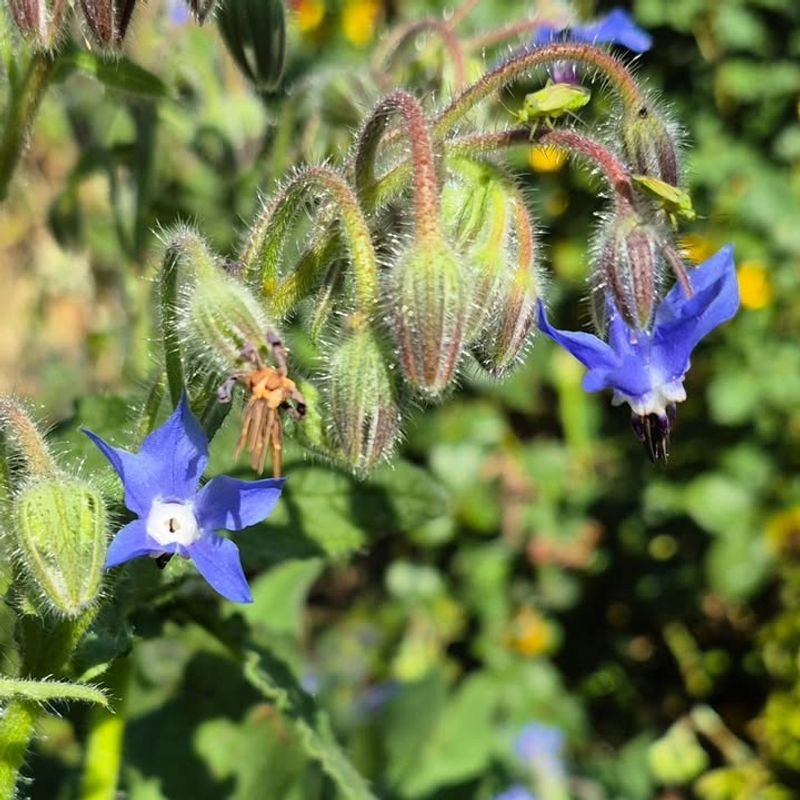
Few annual herbs match borage when it comes to sheer staying power in the garden. In many parts of California, borage begins flowering in late spring and continues producing blooms well into fall, giving gardeners months of color near the front door.
That extended season is one of the reasons it has become such a reliable fixture in California entryway plantings.
California’s varied climate plays a big role in how long borage performs. Along the coast, mild temperatures allow plants to stretch their bloom season even further, sometimes flowering nearly year-round in frost-free zones.
Inland gardeners in hotter regions like the Central Valley may see plants slow down during peak summer heat, but a second flush of growth often follows once temperatures ease in late August or September.
The flowers themselves appear in waves rather than all at once, which keeps the display feeling fresh rather than dramatic and brief.
New buds form continuously along the branching stems, so there is nearly always something in bloom at any given time.
Your California Garden Changes Every Week. Your Plan Should Too.
Gardening in California changes quickly throughout the season. Every Friday you’ll receive a simple weekly plan showing exactly what to plant, prune, fertilize, harvest, and protect so you never miss the right timing.
For gardeners who want a low-effort plant that delivers consistent color without needing deadheading or complicated care, borage fits the bill well.
Its long bloom window also means pollinators have a dependable source of nectar throughout much of the California growing season, adding ecological value alongside the visual appeal.
3. Easy To Grow In A Range Of Conditions
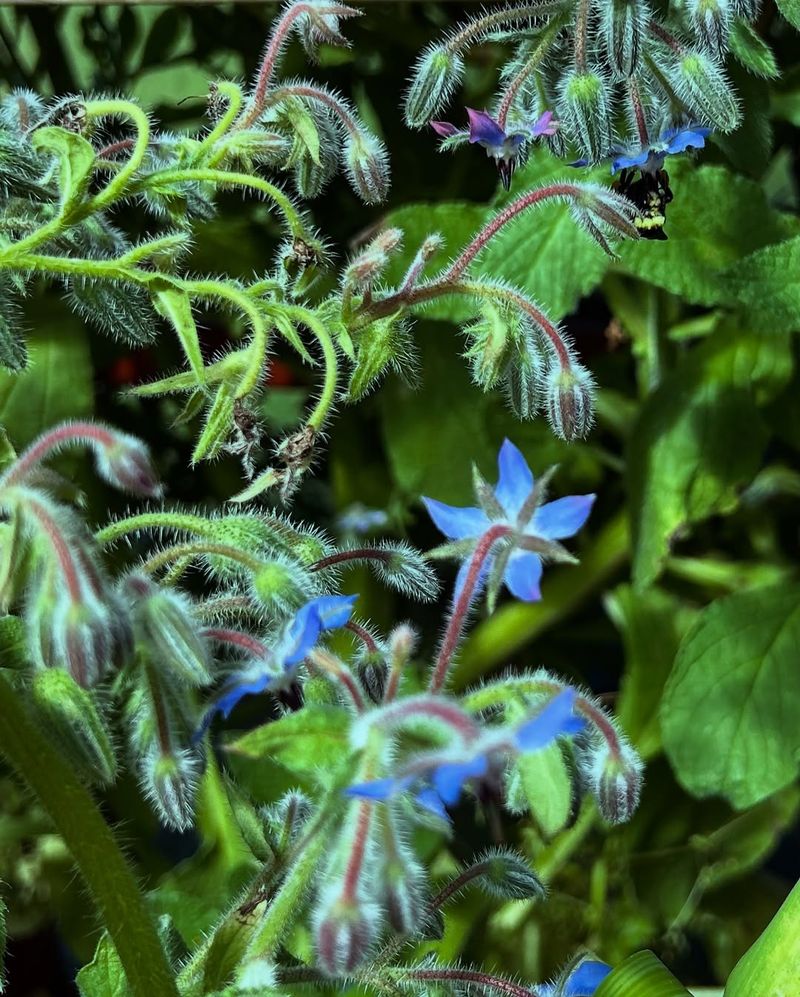
Not every gardener has ideal soil, perfect sun exposure, or hours to spend on plant maintenance, and borage understands that completely.
Starting from seed is straightforward – scatter seeds directly into the soil after the last frost date, water them in, and borage will generally take care of the rest.
It sprouts quickly, establishes without fuss, and does not demand rich or heavily amended soil to perform well.
California gardens span an enormous range of conditions, from heavy clay soils in the Bay Area to sandy, fast-draining ground in Southern California. Borage handles this variability with ease, tolerating poor soil as long as drainage is reasonable.
It grows best in full sun but can manage with partial shade, making it adaptable for front yard spots that do not receive ideal light all day.
Spacing plants about 12 to 18 inches apart gives each one room to branch out without crowding. Borage grows fairly quickly and can reach two to three feet tall and wide, so it fills a space in front yards without needing constant attention.
Overwatering is one of the few things that can cause problems, as borage prefers soil that dries out a little between waterings.
For beginning gardeners across California who want a rewarding, low-maintenance plant that looks impressive without demanding much, borage is a genuinely satisfying choice.
4. Tolerates Dry Periods Once Established
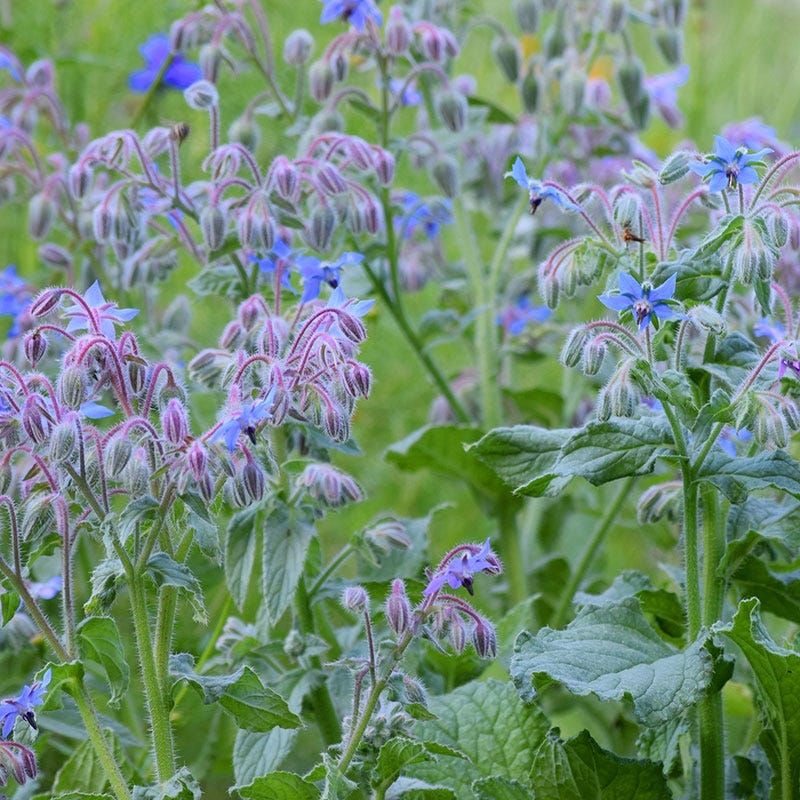
Water-wise gardening has become a priority for homeowners across California, especially in regions where summer drought and water restrictions are a regular reality.
Borage fits naturally into this mindset because, once it has had a few weeks to settle in, it handles dry spells with reasonable resilience.
Young transplants or freshly germinated seedlings do need consistent moisture to get started, but established plants are far less demanding.
The plant develops a deep taproot as it matures, which helps it access moisture held deeper in the soil. This root structure means borage can keep flowering through warm, dry stretches that would stress shallower-rooted annuals.
Gardeners in inland California, where summer temperatures climb high and rainfall is almost nonexistent from June through September, often find that established borage needs watering only once or twice a week during peak heat.
Coastal California gardeners may find they need to water even less frequently, since marine layer moisture and cooler temperatures reduce the plant’s overall water demand.
Mulching around the base of the plant helps retain soil moisture and keeps roots cooler during hot spells.
While borage is not quite as drought-hardy as true California natives like buckwheat or salvia, it performs well alongside water-wise planting schemes.
For front yard gardens where appearances matter and water budgets are tight, borage strikes a useful balance between visual appeal and practical water use.
5. Self Seeding Can Keep It Coming Back
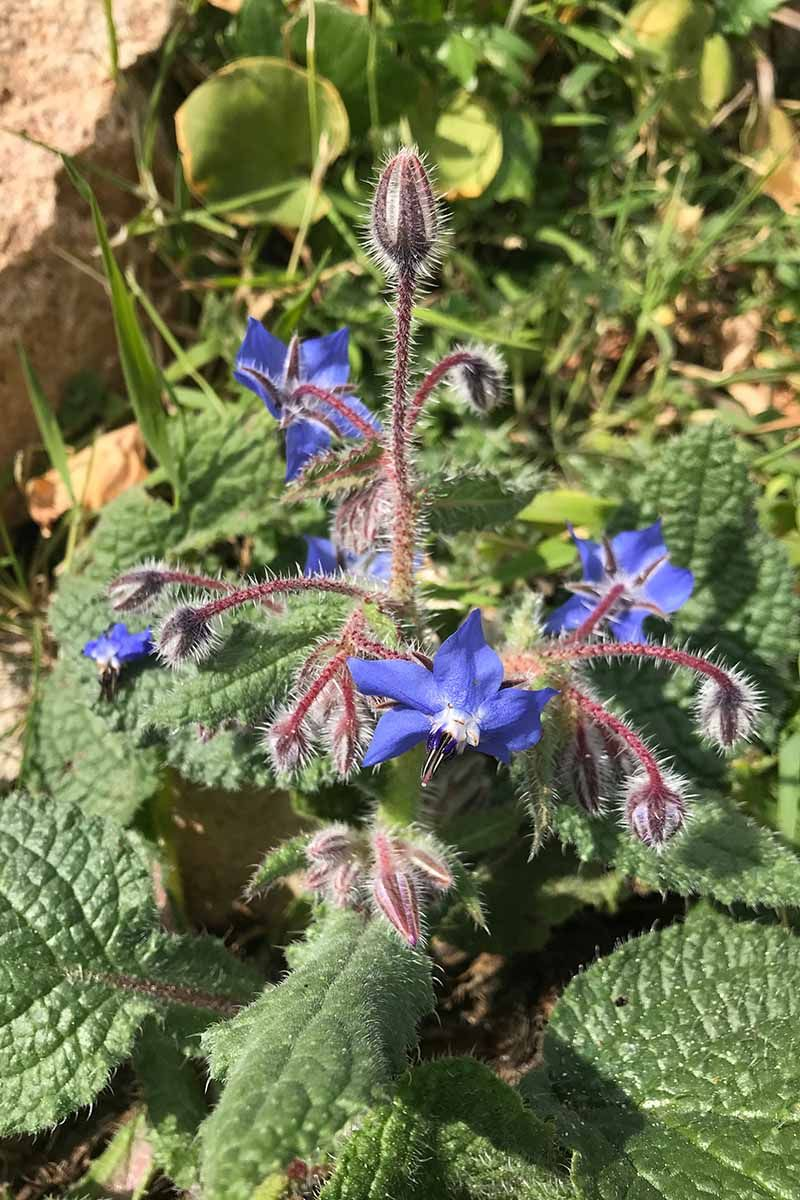
One of borage’s most charming qualities is its willingness to come back year after year without any extra effort from the gardener.
As a self-seeding annual, borage drops its seeds near the parent plant once flowering winds down, and those seeds germinate on their own when conditions are right.
For California gardeners who want a low-effort plant, this habit is genuinely welcome.
The seeds are relatively large and easy to spot, which makes managing self-seeding straightforward. If you want borage to spread into a wider area, simply leave spent flower heads in place and let nature handle the rest.
If you prefer to keep plants contained near the entryway, removing seed heads before they fully mature gives you control without much hassle.
Seedlings that pop up in unexpected spots can be transplanted while they are still small, since borage does not love having its roots disturbed once it is well established.
In mild California climates, self-seeded plants may germinate in fall and overwinter as small rosettes, getting a head start on the following spring season.
This means some gardeners end up with a near-continuous presence of borage across multiple seasons without replanting.
Over time, a self-sustaining patch can develop, filling in around pathways and entryway borders with cheerful blue flowers that return reliably each year, making borage one of the more rewarding plants to establish near the home.
6. Edible Flowers And Leaves
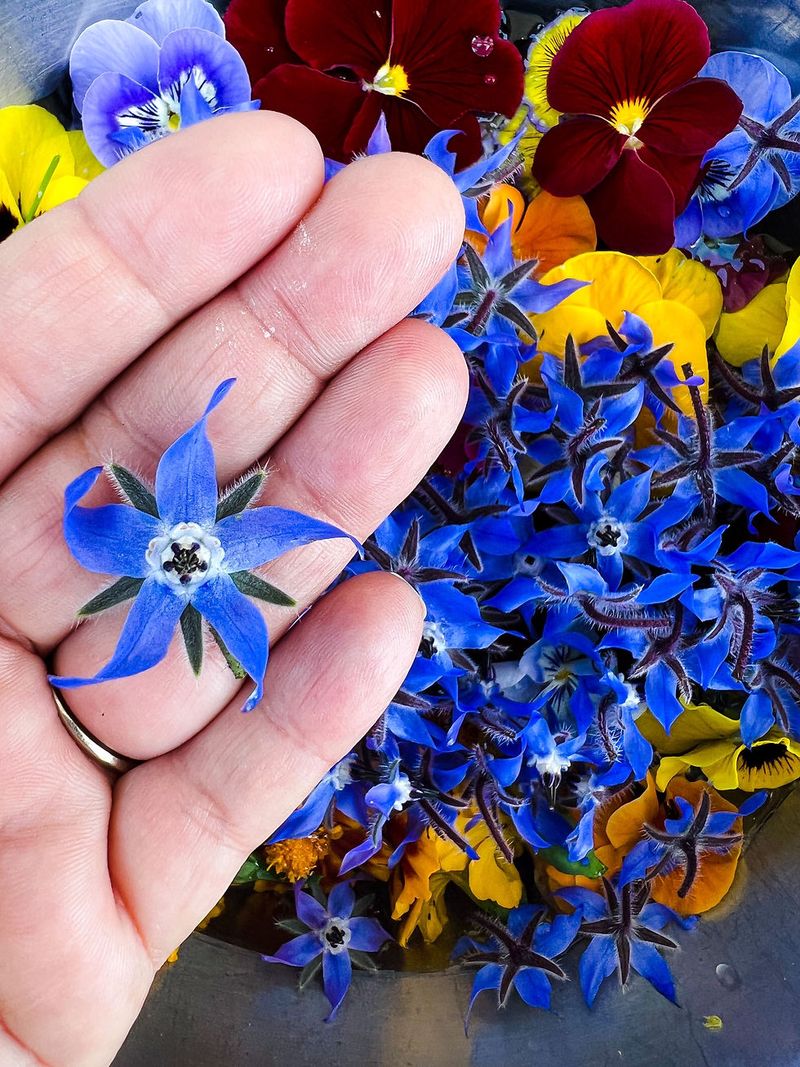
Planting something edible in the front yard is a practical choice that California gardeners have embraced enthusiastically in recent years, and borage delivers on that front in a genuinely delightful way.
The bright blue, star-shaped flowers carry a mild, fresh flavor that is often described as similar to cucumber.
Tossed into a salad, floated in a glass of sparkling water, or frozen into ice cubes for summer drinks, borage flowers add a subtle freshness and a pop of color that feels effortlessly elegant.
The young leaves are also edible, though they have a slightly rough, bristly texture that softens when cooked. Chopped finely and added to soups, dips, or herb butters, the leaves lend a mild herbal note without overpowering other flavors.
Older leaves become more heavily textured and are generally less pleasant to eat raw, so harvesting young growth near the growing tips gives the best results.
Having borage growing just outside the front door makes harvesting a casual, everyday habit rather than a trip to the backyard garden.
Snipping a few flowers before hosting guests or picking a handful of leaves for dinner becomes as simple as stepping outside.
In California, where fresh herbs and edible flowers are a natural part of the culinary culture, borage near the entryway blends seamlessly into a lifestyle that values both beauty and function in equal measure.
7. Supports Beneficial Insects Beyond Pollinators
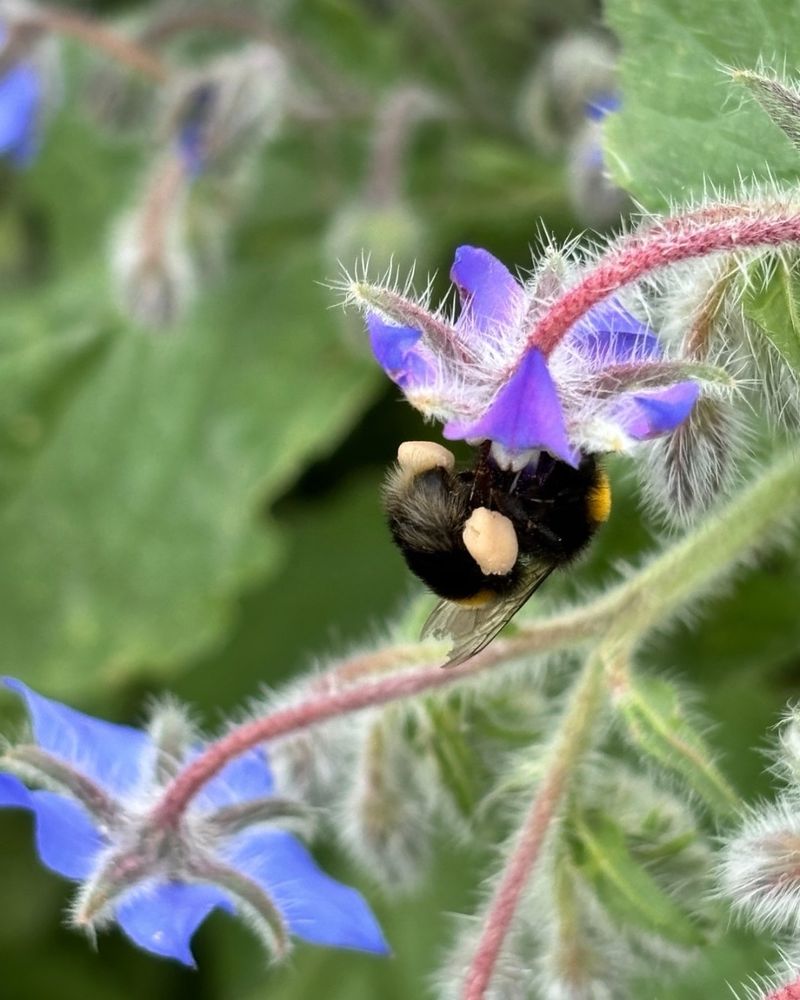
Borage’s relationship with the insect world goes well beyond attracting bees.
The flowers and foliage of borage are known to draw a wide range of beneficial insects, including hoverflies and parasitic wasps, which play important roles in keeping garden pest populations in check.
Planting borage in the front yard essentially invites a team of helpful garden allies to take up residence close to the home.
Hoverflies, which resemble small bees but do not sting, are particularly drawn to borage flowers.
Their larvae feed on aphids and other soft-bodied pests, providing a natural form of pest management that does not require any sprays or interventions.
Similarly, parasitic wasps use borage nectar as an energy source while their larvae target caterpillars and other garden pests. Having these insects active can benefit container plants, window boxes, and nearby garden beds.
California gardeners who prefer organic or low-intervention approaches to pest management often find that a diverse planting anchored by borage helps create a more balanced garden environment.
The key is providing a steady food source for these insects throughout the season, which borage handles well thanks to its long bloom window.
Front yard plantings that include borage alongside other flowering herbs and perennials can build a resilient insect community that supports the broader health of the garden without requiring ongoing chemical inputs or complex management strategies.
8. Adds A Relaxed Cottage Garden Look
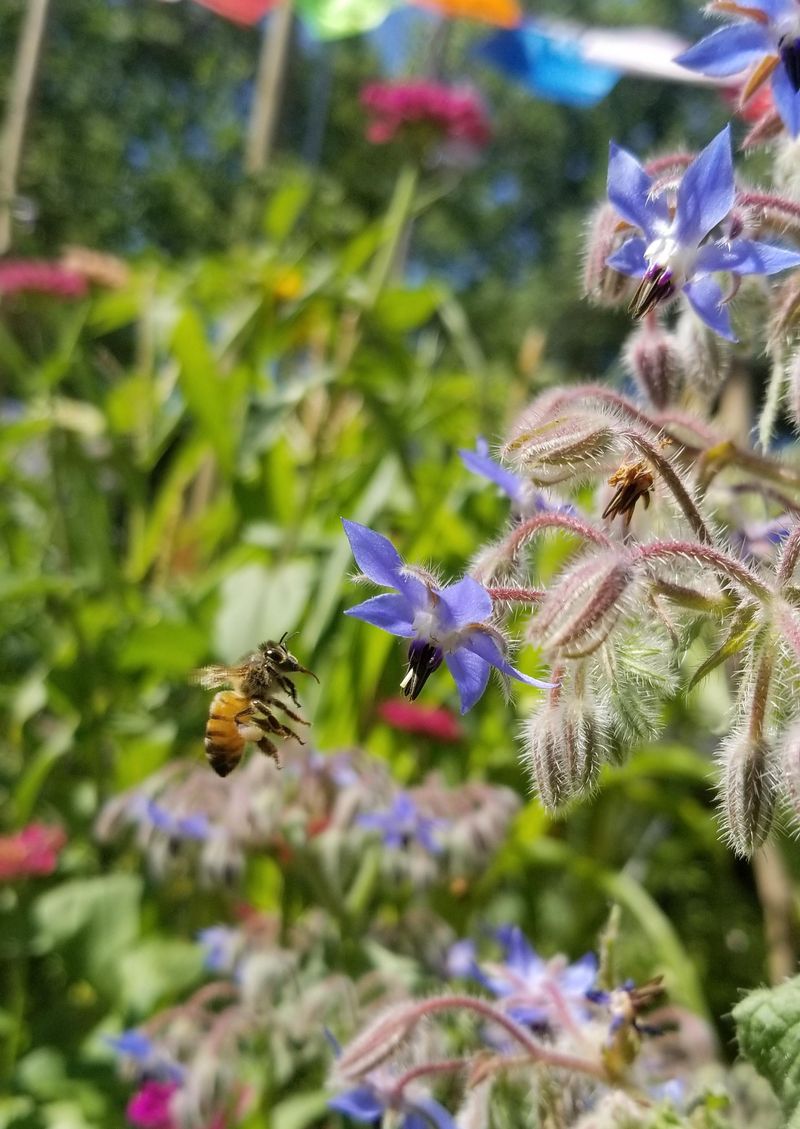
Front yards in California have been moving away from formal, manicured designs toward something softer, more naturalistic, and genuinely inviting. Borage fits this shift beautifully.
With its loose, sprawling growth habit, fuzzy silver-green stems, and clusters of vivid blue flowers, it brings an informal charm to entryway plantings that feels warm and welcoming rather than stiff or overdone.
The cottage garden aesthetic is about layering plants with different heights, textures, and bloom times so the space feels lush and lived-in.
Borage pairs naturally with lavender, rosemary, calendula, and nasturtiums – all of which thrive in California conditions and share a similar easygoing visual style.
Mixed together, these plants create a planting that looks thoughtfully assembled without requiring a landscape designer or a strict planting grid.
Borage’s blue flowers are also relatively uncommon in the typical California front yard palette, which leans heavily on purples, yellows, and oranges.
That touch of true blue adds contrast and visual interest that makes the whole planting feel more dynamic.
The flowers nod gently in a breeze, giving the garden a sense of movement that static, clipped plants cannot match.
For homeowners across California who want a front yard that feels personal, relaxed, and full of life without demanding constant upkeep, adding borage to the entryway planting is a straightforward way to shift the whole mood of the space.