7 Wind-Resistant Plants Perfect For West Texas Landscapes
In West Texas, wind is not just part of the weather. It is part of everyday life. It shows up without warning, dries out the soil, whips through open spaces, and tests just about every plant in the yard.
A landscape might look great after planting day, then struggle once those strong gusts start pushing, bending, and stealing moisture faster than expected.
That is why plant choice matters so much in this part of the state. You need more than good looks.
You need plants that can handle constant movement, tough sun, and dry conditions without falling apart the first time the wind picks up. The right choices can still bring color, texture, and beauty, but they also know how to stand their ground.
A wind-resistant landscape does not have to feel harsh or limited. In fact, some of the best plants for West Texas are the ones that thrive under pressure and keep your yard looking strong, grounded, and full of character even when the weather refuses to cooperate.
1. Desert Willow (Chilopsis Linearis)
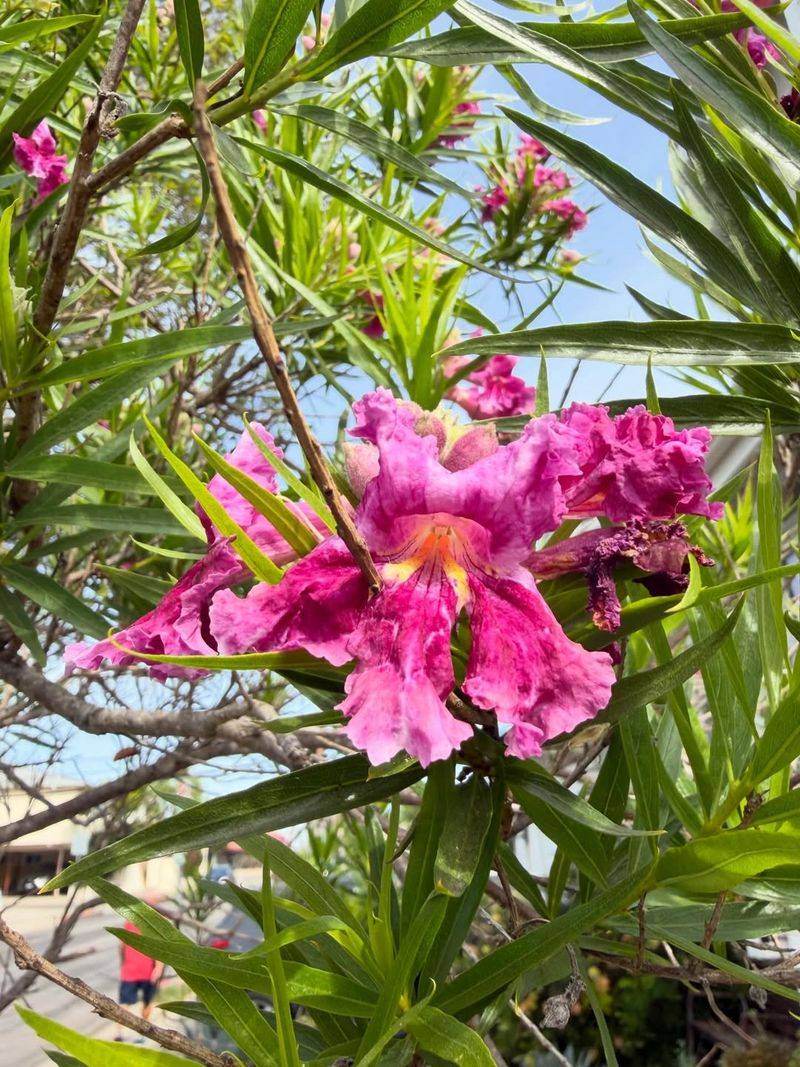
Picture a small tree that bends gracefully in the wind without snapping, blooms with stunning trumpet-shaped flowers, and asks for almost nothing in return. That is the Desert Willow.
Native to the Chihuahuan Desert and well-suited to West Texas, this tough little tree has earned its place in countless landscapes across the region.
Desert Willow grows anywhere from 15 to 25 feet tall, making it a great choice for yards where you want some shade without a massive tree taking over. Its narrow, lance-shaped leaves reduce wind resistance, which is exactly why it handles those fierce West Texas gusts so well.
The branches are flexible and springy, bending rather than breaking when the wind picks up.
From late spring through fall, Desert Willow produces showy pink, purple, or white blooms that look almost tropical. Hummingbirds and bees absolutely love them.
The flowers keep coming back all season long, giving your yard continuous color without much effort on your part.
When it comes to care, Desert Willow is refreshingly low-maintenance. It thrives in full sun and well-drained soil, which is exactly what West Texas naturally provides.
Once established, it needs very little water. Young trees benefit from occasional deep watering during dry stretches, but mature trees are remarkably drought-tolerant.
If you want a plant that looks beautiful, handles wind, attracts wildlife, and does not demand constant attention, Desert Willow is a smart pick for any West Texas yard.
2. Texas Sage (Leucophyllum Frutescens)
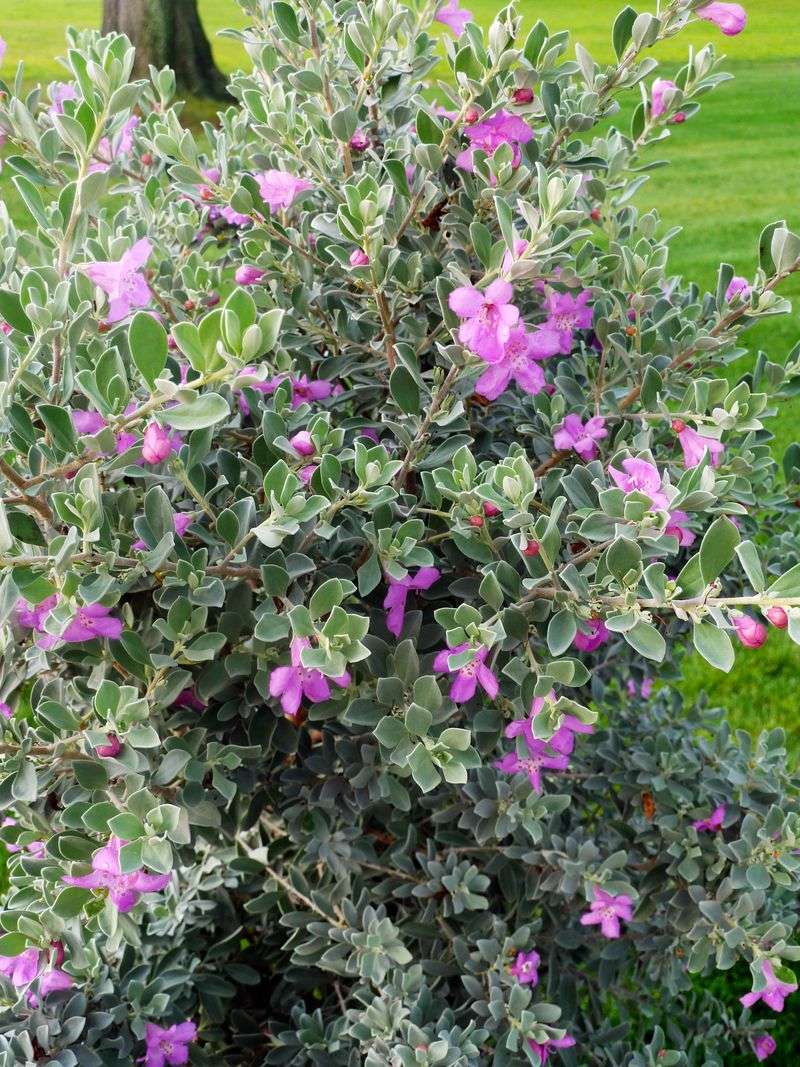
Ask any experienced West Texas gardener which plant they would never go without, and there is a good chance Texas Sage tops the list.
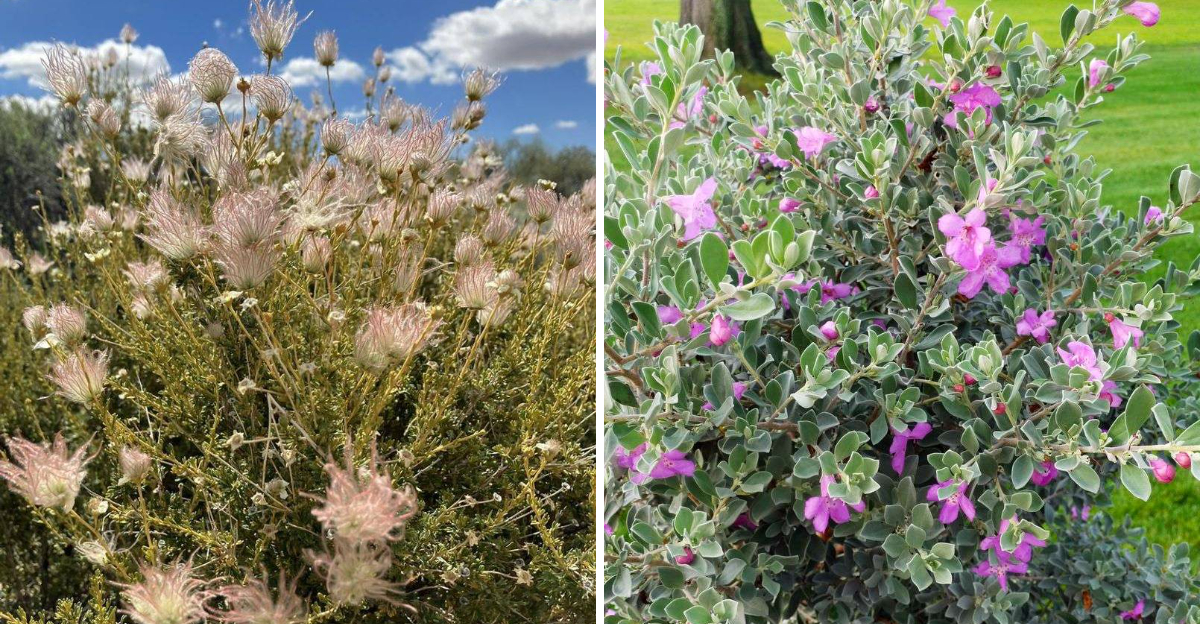
Known locally as the barometer bush, this tough evergreen shrub practically signals rain by bursting into purple blooms right before a storm rolls in. It is one of the most reliable and beloved plants in the entire region.
Texas Sage grows into a dense, rounded shrub that typically reaches 4 to 8 feet tall and wide. Its silvery-gray leaves reflect sunlight and reduce water loss, two features that are incredibly handy in a place like West Texas where the sun is intense and moisture is scarce.
Your Texas Garden Changes Every Week. Your Plan Should Too.
Gardening in Texas changes quickly throughout the season. Every Friday you’ll receive a simple weekly plan showing exactly what to plant, prune, fertilize, harvest, and protect so you never miss the right timing.
The thick, compact growth habit also makes it naturally wind-resistant, holding its shape even during strong gusts.
The purple flowers are a showstopper. They appear multiple times throughout the warm season, especially after rainfall, coating the entire shrub in vibrant color.
Even when not in bloom, the soft silver foliage adds texture and brightness to any landscape design. Care could not be simpler. Texas Sage loves full sun and well-drained soil.
Overwatering is actually the biggest risk with this plant, so in West Texas, the naturally dry conditions work in your favor. Avoid heavy clay soils and skip the frequent irrigation, and your shrub will reward you with decades of beauty.
For windbreaks, borders, or mass plantings across West Texas yards, Texas Sage is an absolute standout performer that rarely lets you down.
3. Fourwing Saltbush (Atriplex Canescens)
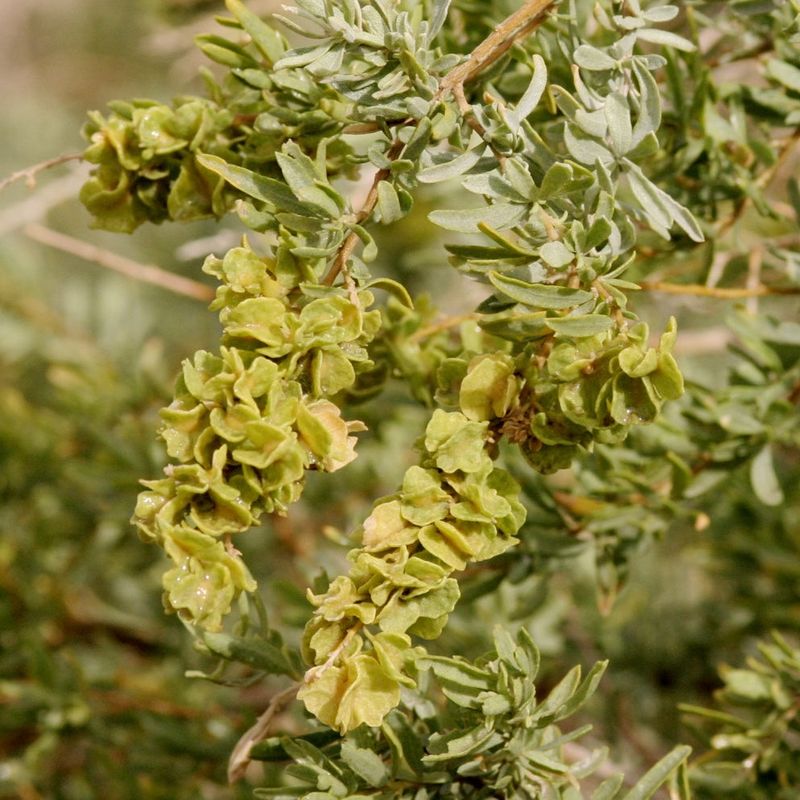
Not every hero looks flashy, and Fourwing Saltbush is proof of that. It may not have the showiest flowers, but when it comes to raw toughness in West Texas, this native shrub is hard to beat.
Ranchers, conservationists, and landscapers have relied on it for generations to hold soil, block wind, and provide wildlife habitat in some of the harshest conditions imaginable.
Fourwing Saltbush gets its name from the four papery wings attached to each seed. The shrub grows 3 to 6 feet tall and spreads into a wide, bushy form that is perfect for windbreaks and erosion control.
Its pale gray-green leaves are small and tough, designed to minimize water loss and hold up against constant wind exposure. In West Texas, where erosion from wind is a real concern, this plant earns its keep every single day.
Wildlife benefits from Fourwing Saltbush in a big way. Deer, quail, and other animals browse on the foliage and seeds throughout the year.
It also provides excellent nesting cover for ground-nesting birds, which is a nice bonus if you enjoy watching wildlife around your property.
From a maintenance standpoint, this shrub is extremely forgiving. It grows in sandy, rocky, or alkaline soils without complaint, and once established, it rarely needs supplemental water.
It handles both drought and cold temperatures with equal toughness, making it one of the most versatile native plants available for West Texas landscapes.
Plant it along fence lines or property borders for a natural, functional windbreak that takes care of itself.
4. Apache Plume (Fallugia Paradoxa)
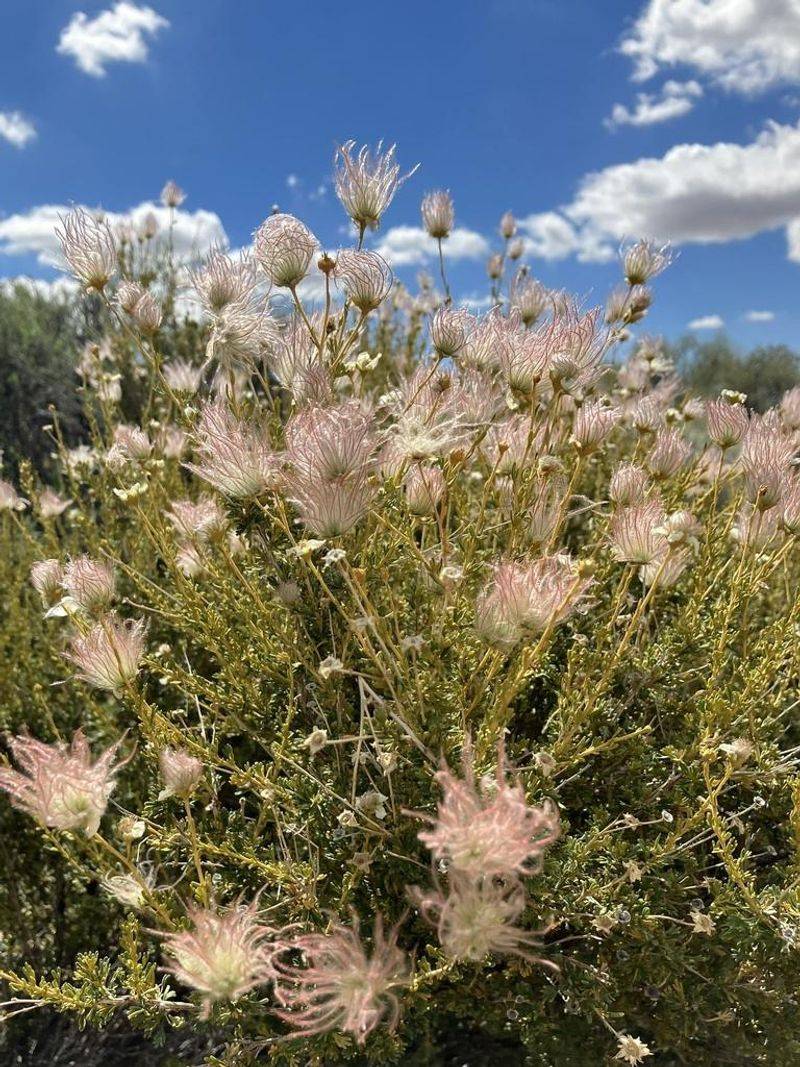
There is something almost magical about Apache Plume. Its white, rose-like flowers and feathery pink-to-silver seed plumes make it look far too delicate for the rugged landscape of West Texas, yet this shrub is one of the toughest plants you will ever come across.
It thrives in conditions that would stress most garden plants into submission. Apache Plume typically grows 3 to 6 feet tall and spreads into an airy, open form. The branches are wiry and flexible, which allows them to move with the wind rather than resist it.
That flexibility is a key reason why this shrub handles the relentless gusts of West Texas so well. The small, lobed leaves are also drought-adapted, staying relatively small to reduce water loss in the dry desert air.
The blooming season stretches from late spring into fall, with waves of white flowers followed by those iconic feathery seed heads that shimmer and sway in the breeze. Watching a mature Apache Plume move in the wind is genuinely beautiful.
It adds a soft, naturalistic quality to landscapes that can sometimes feel harsh and stark. Pollinators love Apache Plume, especially native bees that visit the flowers regularly throughout the blooming season. Birds also use the dense branching for nesting cover.
Plant Apache Plume in rocky or gravelly, well-drained soil in full sun. It needs almost no supplemental water once established and looks best when left to grow naturally without heavy pruning.
For West Texas gardeners who want low effort and high reward, this shrub delivers on both counts.
5. Sotol (Dasylirion Wheeleri)
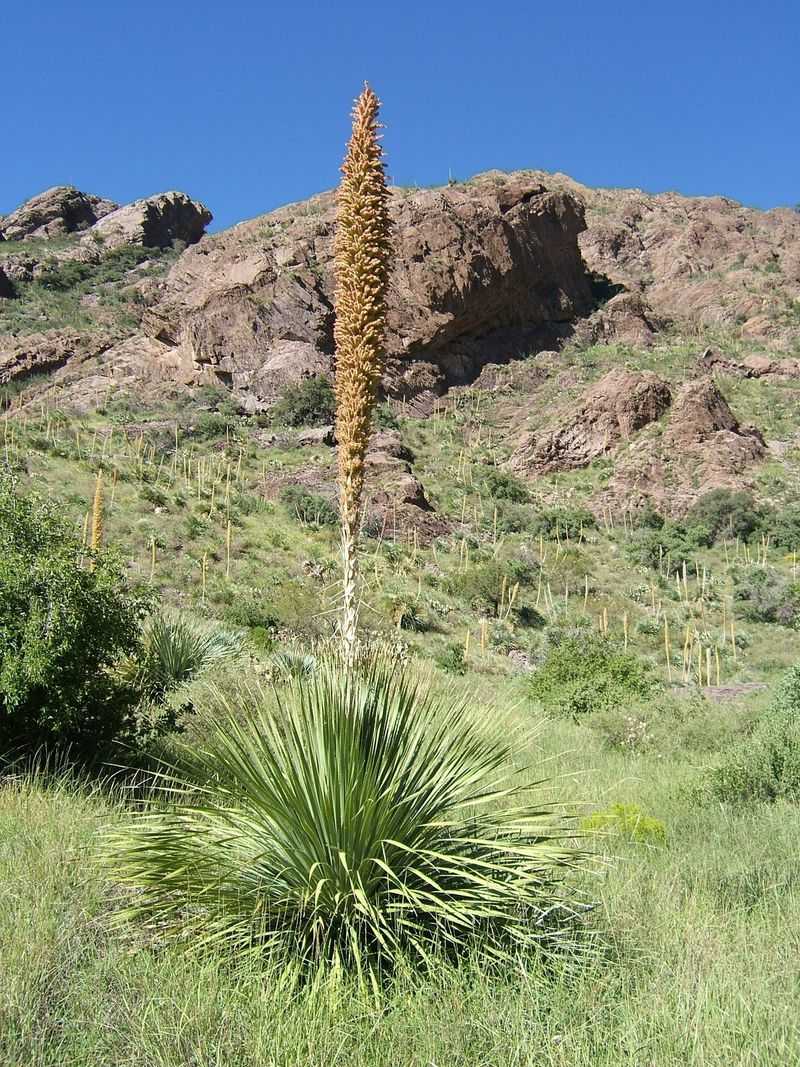
Few plants make a statement quite like Sotol. Walk through any stretch of West Texas desert and you will likely spot its dramatic, spiky rosettes catching the light on a rocky hillside.
It looks like it belongs in a sculpture garden, yet it is entirely at home in the wild, windswept landscapes of the region.
Sotol belongs to the agave family and forms a dense rosette of long, narrow leaves lined with small teeth along the edges. The leaves are tough and leathery, built to handle intense sun, low humidity, and strong winds without flinching.
When a West Texas windstorm rolls through, Sotol simply sheds the air around it, its streamlined leaves offering little resistance.
Once every few years, Sotol sends up a towering flower spike that can reach 10 to 15 feet tall. The spike is covered in tiny cream-colored flowers that attract insects and birds.
After flowering, the stalk can be left standing as a dramatic structural feature in the landscape, which many gardeners choose to do.
Historically, Sotol has deep cultural roots in the region. Indigenous peoples of West Texas used virtually every part of the plant, from the leaves for weaving to the heart for food and a fermented beverage. It is a plant with real history attached to this land.
For modern landscapes, Sotol works beautifully as an accent plant, a focal point, or a naturalistic ground cover on slopes. It needs excellent drainage, full sun, and minimal water. Once settled in, it is practically indestructible in West Texas conditions.
6. Red Yucca (Hesperaloe Parviflora)
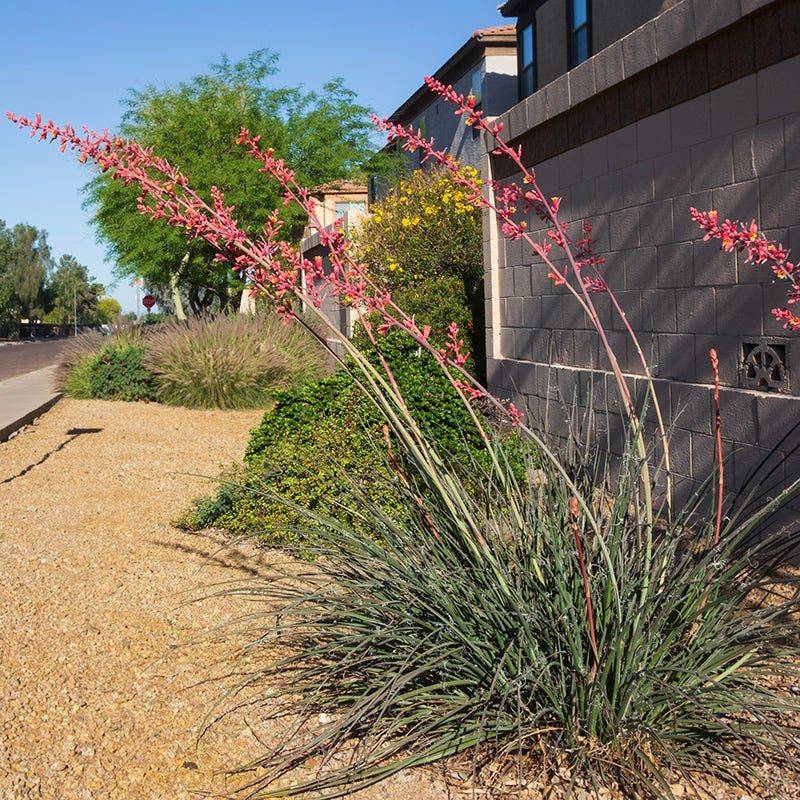
Despite having the word yucca in its name, Red Yucca is not actually a true yucca at all. It belongs to its own genus and has a softer, more graceful look than the stiff, spiky yuccas most people picture.
That said, it is every bit as tough and perfectly suited to the demanding conditions of West Texas.
Red Yucca forms a clump of long, narrow, arching leaves that grow about 2 to 3 feet tall. The leaves are flexible and fibrous, which means they bend in the wind without snapping.
When those famous West Texas gusts kick up, Red Yucca moves fluidly rather than fighting back, and that is exactly what makes it so durable in the landscape.
The real showpiece is the flower. Starting in late spring and continuing through summer, Red Yucca sends up tall, slender stalks covered in tubular coral-red or salmon-pink blooms.
The stalks can reach 4 to 6 feet high, creating a striking vertical element in the garden. Hummingbirds are wild about these flowers and will visit repeatedly throughout the blooming season.
It is genuinely exciting to watch them dart from bloom to bloom right in your own yard. From a care standpoint, Red Yucca is wonderfully undemanding. It grows best in full sun and well-drained soil, and once established, it requires very little supplemental water.
It handles the heat, wind, and dry conditions of West Texas with ease. Plant it in groups for a bold, modern look, or use single plants as accent pieces throughout your landscape design.
7. Little Bluestem (Schizachyrium Scoparium)
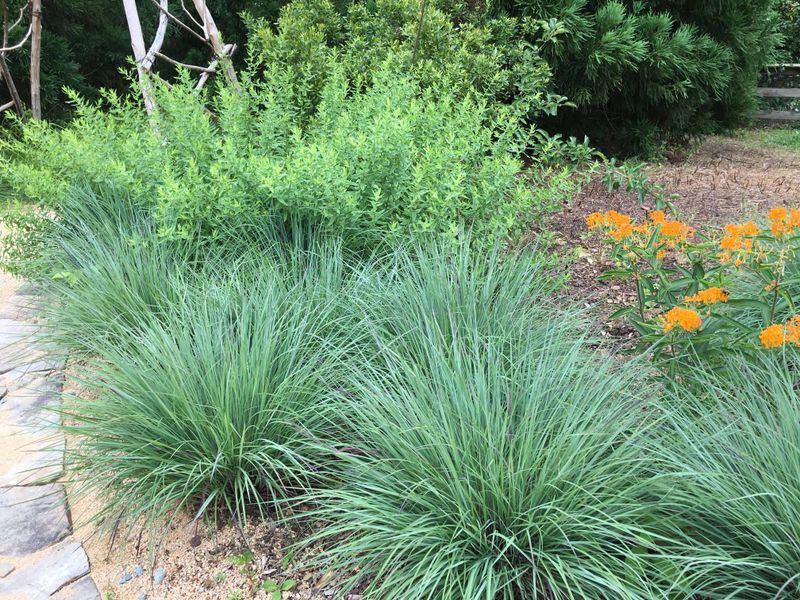
Grasses have a secret weapon when it comes to wind: they move with it. Little Bluestem is a perfect example of a plant that works with nature rather than against it.
Its slender, flexible stems sway and dance in a breeze without snapping, making it one of the most wind-tolerant plants you can grow in West Texas.
Little Bluestem is a native prairie grass that grows in upright clumps about 2 to 4 feet tall. During summer, the foliage is a beautiful blue-green color that gives the plant its name.
As temperatures cool in fall, the leaves shift to warm shades of copper, rust, and orange that glow in the late afternoon sun. It is one of the most striking seasonal transformations in the plant world, and it happens right in your own yard.
The root system is where Little Bluestem really earns its reputation. The roots can grow several feet deep into the soil, anchoring the plant firmly against even strong winds.
Those deep roots also help the plant access water during dry spells, which is a major advantage in the frequently parched conditions of West Texas.
Birds love Little Bluestem too. The feathery seed heads that appear in late summer provide food for sparrows and other small birds well into winter.
Leaving the clumps standing through the cold months adds texture to the winter landscape and gives wildlife a valuable food source.
Little Bluestem grows best in full sun and well-drained soil. It requires almost no fertilizer or extra water once established, making it a truly effortless addition to any West Texas garden.