This Native Florida Shrub Is Replacing Privacy Fences In Florida Yards
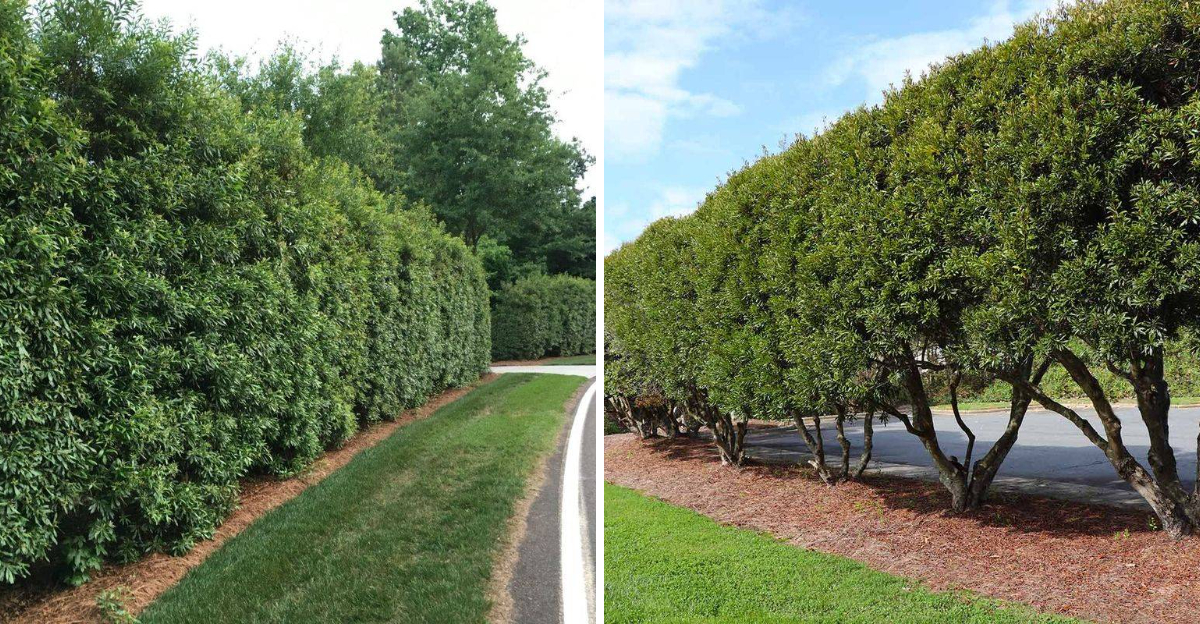
Not every Florida yard needs a tall fence to feel private. Plenty of homeowners are starting to figure out that a living screen can do the job with a whole lot more charm.
A solid shrub border softens the look of a yard, adds greenery all year, and skips that boxed-in feeling fences sometimes bring. It can also offer a little shade, help buffer noise, and make the whole space feel more relaxed and inviting.
In a state where outdoor living is practically part of the lifestyle, that kind of natural privacy goes a long way.
More homeowners want something that looks good from every angle and blends into the landscape instead of chopping it in half.
That is exactly why this native shrub is getting so much attention in Florida yards lately. For homeowners who want privacy without sacrificing beauty, wax myrtle is starting to look like the smarter choice.
1. Wax Myrtle Grows Fast Enough To Fill In Like A Real Barrier
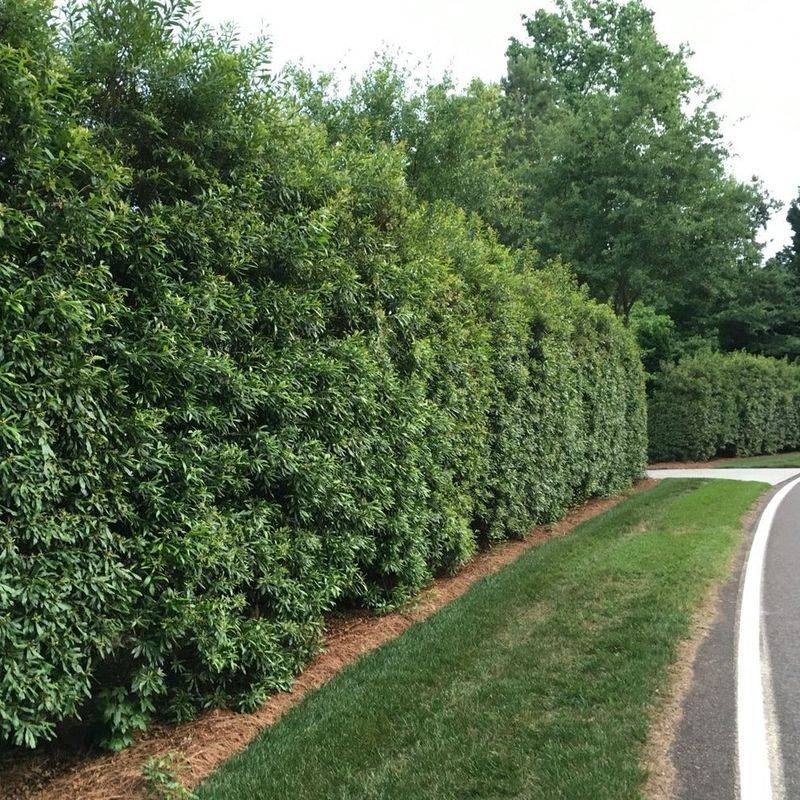
Walk along almost any established Florida neighborhood and you will spot at least one yard where a thick green wall has replaced the old wooden fence line.
That green wall is often wax myrtle, Myrica cerifera, and its growth rate is one of the biggest reasons homeowners keep choosing it.
Under good Florida conditions, it can put on three to five feet of new growth in a single year, which means a young planting starts looking like a real barrier faster than most people expect.
Spacing plays a big role in how quickly the screen fills in. For a solid privacy hedge, most Florida landscapers recommend planting wax myrtle about four to six feet apart.
Set them closer to four feet if you want them to knit together in one or two growing seasons. If you have more room and prefer a looser, more natural look, six feet apart works fine and still gives you solid coverage within a couple of years.
In North Florida, growth may slow slightly during cooler winters, but the plant stays evergreen and picks right back up in spring. Central and South Florida homeowners often see faster establishment because of the longer warm season.
One practical tip: water consistently during the first year to help roots get established, and the plant will reward you with strong, steady growth. After that first year, wax myrtle is remarkably self-sufficient and keeps filling in season after season without much help from you.
2. Stays Thick Without Constant Pruning
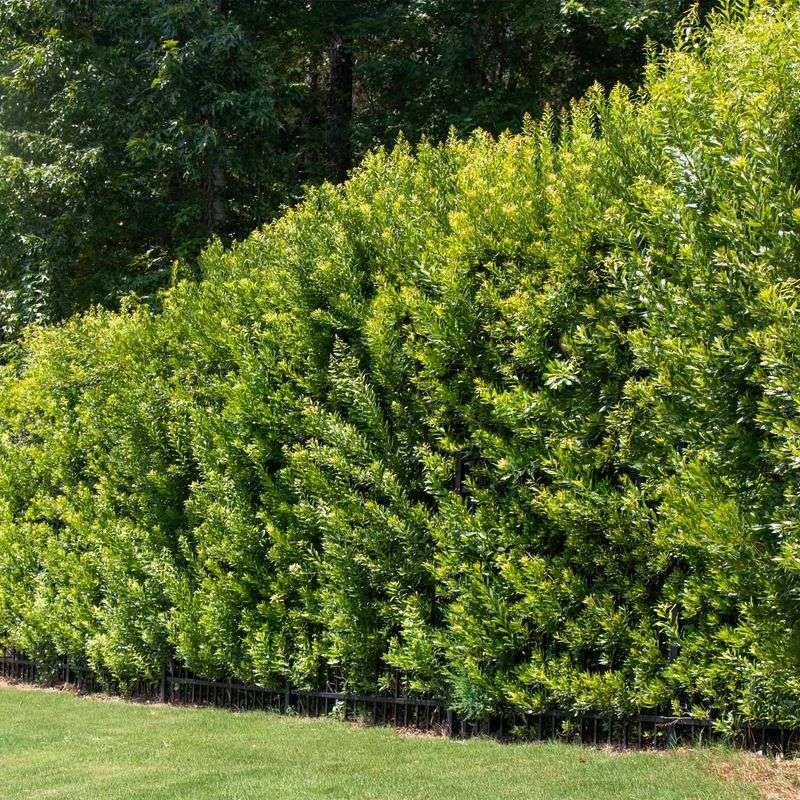
Some hedges look great right after a trim but turn into a scraggly mess within a few weeks. That cycle of constant cutting gets old fast, especially in Florida where plants grow year-round.
Wax myrtle, Myrica cerifera, breaks that pattern because its natural growth habit is already full and bushy. The branches tend to fill outward as well as upward, which means the shrub creates density on its own without needing to be shaped every other month.
Left completely unpruned, wax myrtle can reach fifteen to twenty feet tall and spread into a small multi-trunk tree. That is actually useful in larger yards where homeowners want a canopy effect along a fence line or property edge.
Your Florida Garden Changes Every Week. Your Plan Should Too.
Gardening in Florida changes quickly throughout the season. Every Friday you’ll receive a simple weekly plan showing exactly what to plant, prune, fertilize, harvest, and protect so you never miss the right timing.
For a more controlled hedge that stays between six and ten feet, a light trim once or twice a year is usually enough to keep things tidy. You do not need to be aggressive with the shears to maintain a clean look.
One thing that surprises many new growers is how the plant responds after pruning. Rather than thinning out, it tends to push new growth from multiple points along each branch, which makes it even denser over time.
A helpful tip is to avoid cutting into old woody growth too deeply, since wax myrtle responds best when you trim the newer, greener growth.
If you stay consistent with light seasonal shaping, the hedge holds its form well and keeps looking full from top to bottom throughout the year.
3. Handles Florida Soil Without Fuss
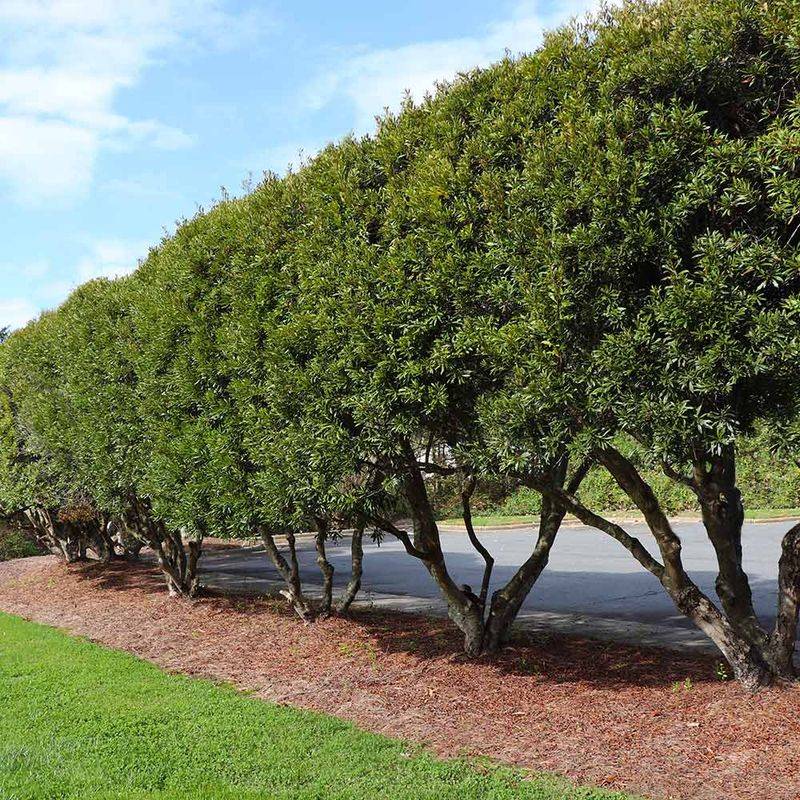
Florida soil has a reputation for being difficult, and honestly, that reputation is earned. Large portions of the state sit on sandy, nutrient-poor ground that drains so fast it barely holds moisture.
Many ornamental shrubs struggle in these conditions and need constant fertilizing, amending, and babying just to survive.
Wax myrtle, Myrica cerifera, is different because it evolved right here in Florida and developed a natural ability to thrive in exactly the kind of soil that frustrates other plants.
One of the most impressive things about this shrub is its relationship with soil nitrogen. Wax myrtle forms a partnership with nitrogen-fixing bacteria in its root zone, which means it can pull nitrogen out of the air and use it to feed itself.
That process makes it far less dependent on added fertilizer than most landscape plants. In many cases, homeowners plant it and simply let it grow without adding anything to the soil at all.
It also handles wet conditions with surprising ease. Florida yards often deal with standing water after heavy rains, and many shrubs respond to that kind of saturation by developing root problems.
Wax myrtle tolerates seasonal flooding and wet clay areas just as well as it tolerates dry sandy spots. This versatility makes it useful across different parts of the state, from the well-drained uplands of Central Florida to the wetter, lower-lying areas closer to the coast.
Planting it is about as close to a sure thing as Florida gardening gets.
4. Bends In Wind Instead Of Breaking
Anyone who has lived through a Florida hurricane season knows the feeling of watching a wooden fence slowly lean and then collapse under wind pressure.
Fence boards crack, posts heave out of the ground, and the whole structure ends up as a pile of debris on the lawn.
That kind of damage is frustrating, expensive, and seems to happen every few years for homeowners in storm-prone parts of the state. A living hedge made of wax myrtle, Myrica cerifera, behaves completely differently when the wind picks up.
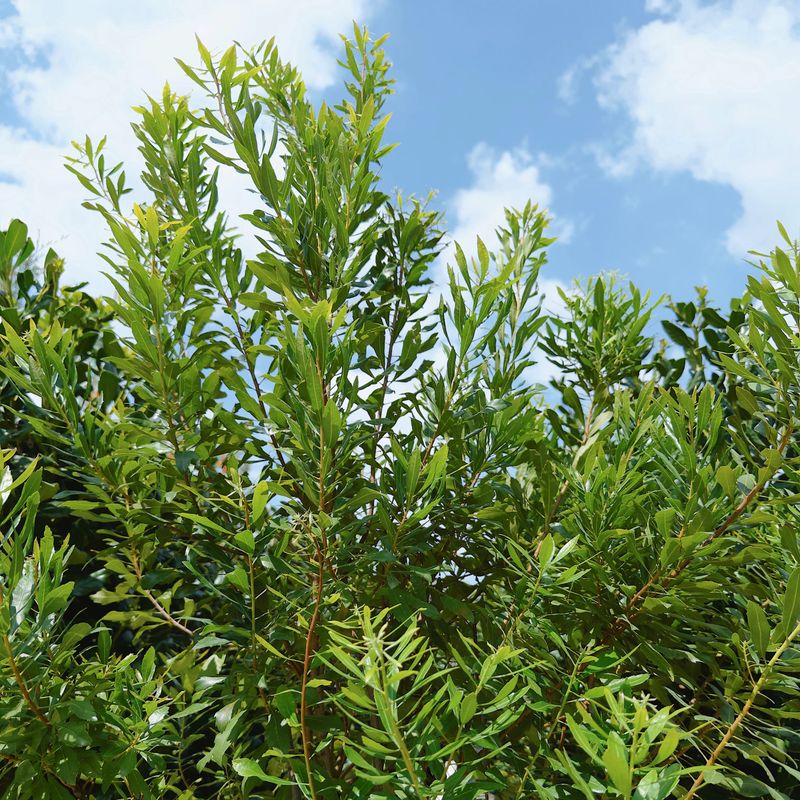
The flexible, multi-stem structure of wax myrtle is one of its greatest physical advantages. Instead of acting like a solid wall that catches wind and resists it, the shrub allows air to move through and around its branches.
The stems bend with gusts and spring back rather than snapping. This is the same principle that allows coastal grasses and palms to survive conditions that topple rigid structures, and wax myrtle benefits from that same natural engineering.
After a storm passes, a well-established wax myrtle hedge typically bounces back quickly. Some leaves may drop and smaller branches may break, but the root system stays anchored and the main structure remains intact.
Compared to the cost of replacing fence sections or repainting storm-damaged boards, the recovery of a living hedge is almost free.
A practical tip for storm preparation is to make sure your hedge is not overgrown to the point of being top-heavy, since a balanced, moderately pruned form handles wind load better than one that has been left to grow unchecked for years.
5. Creates Privacy Without Feeling Closed In
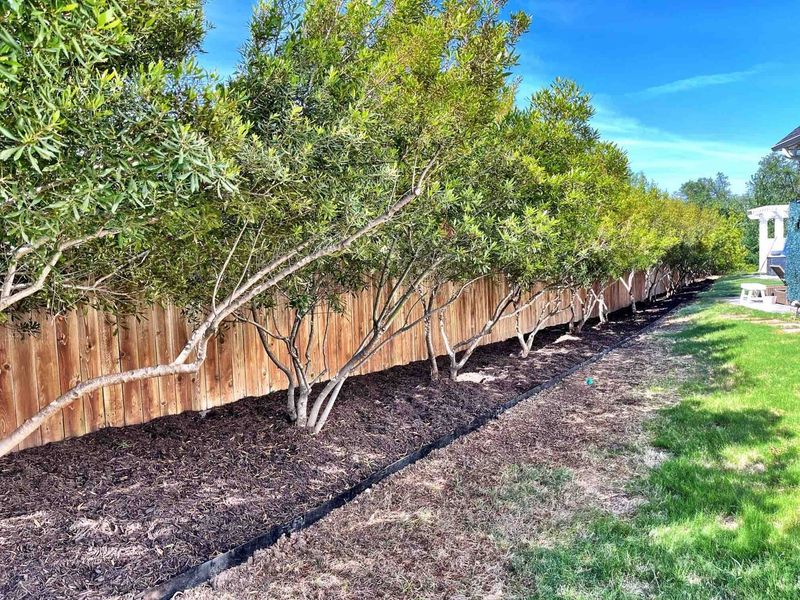
There is a real difference between a backyard that feels private and one that feels like a cage. Solid wooden fences block the view, but they also block the breeze, cut off natural light, and make a yard feel smaller than it actually is.
Many homeowners who install tall privacy fences end up feeling like they are sitting in a box rather than enjoying an outdoor space.
That is one of the reasons wax myrtle, Myrica cerifera, has become such a popular alternative across Florida neighborhoods.
A wax myrtle hedge creates a visual screen without the hard, flat surface of a fence panel. The irregular texture of the leaves and branches softens the boundary line, and the slight movement of the foliage in a breeze gives the yard a sense of life and openness.
Light filters through in a way that feels natural rather than blocked. From inside the yard, the hedge reads as a green backdrop rather than a wall, which makes the space feel larger and more connected to the surrounding landscape.
The aromatic quality of wax myrtle is another sensory detail that fences simply cannot offer. The leaves release a pleasant, slightly spicy fragrance when brushed or when the wind moves through them, which adds a subtle but noticeable quality to the backyard experience.
For homeowners who spend time outdoors in the evening or on weekends, that kind of sensory environment makes a real difference.
A tip worth knowing: plant wax myrtle where foot traffic or breezes will brush the foliage regularly so you get the most out of that natural fragrance.
6. Supports Birds And Brings Life To The Yard
A wooden fence does not feed anything. It does not shelter anything.
It just stands there, weathering in the Florida heat, doing one job and nothing else. Swap that fence line for a row of wax myrtle, Myrica cerifera, and the whole dynamic of your backyard changes.
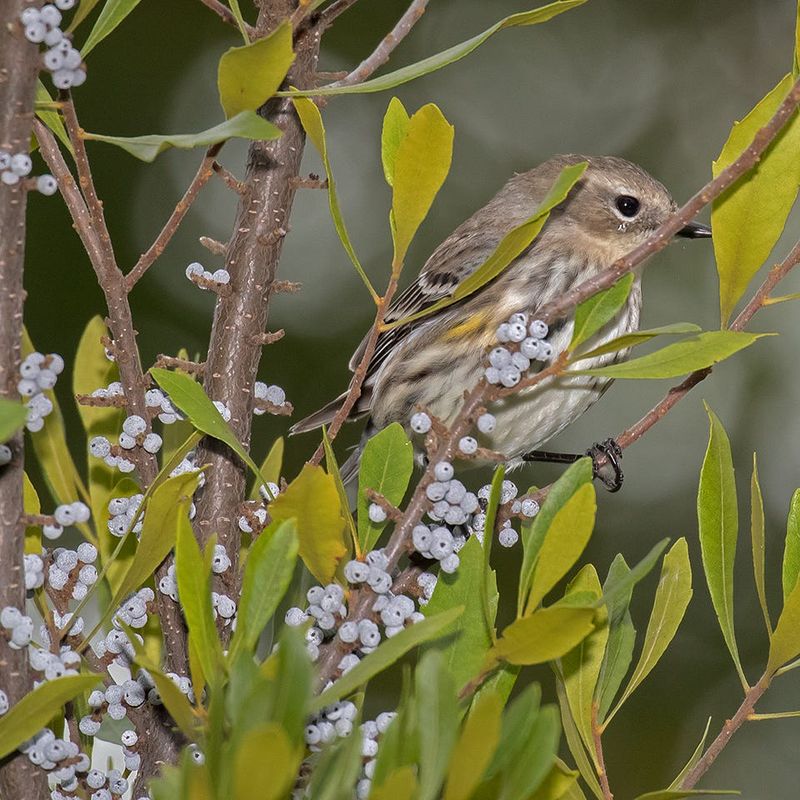
The shrub produces clusters of small, waxy, blue-gray berries that are a major food source for birds, and the effect on local wildlife is almost immediate once the plants mature enough to fruit.
Yellow-rumped warblers are probably the most well-known consumers of wax myrtle berries, and they depend on the plant heavily during their winter migration through Florida.
Tree swallows, Eastern bluebirds, Carolina wrens, and several species of sparrows also visit regularly for the fruit.
The dense branching structure of the shrub also provides excellent nesting cover and shelter from predators, making it useful to birds not just as a food source but as a living space within your yard.
For homeowners who enjoy watching birds or who want to support local wildlife, this is a meaningful benefit that goes well beyond what any fence can offer.
The berries develop in late summer and fall, which lines up perfectly with bird migration season in Florida, creating a natural timing that benefits both the plant and the wildlife that depends on it.
A helpful observation for new growers: female plants produce the berries, so if you are specifically planting for wildlife value, make sure at least some of your plants are female by sourcing them when they are in fruit at a local native plant nursery.
7. Adapts Easily To Different Yard Sizes
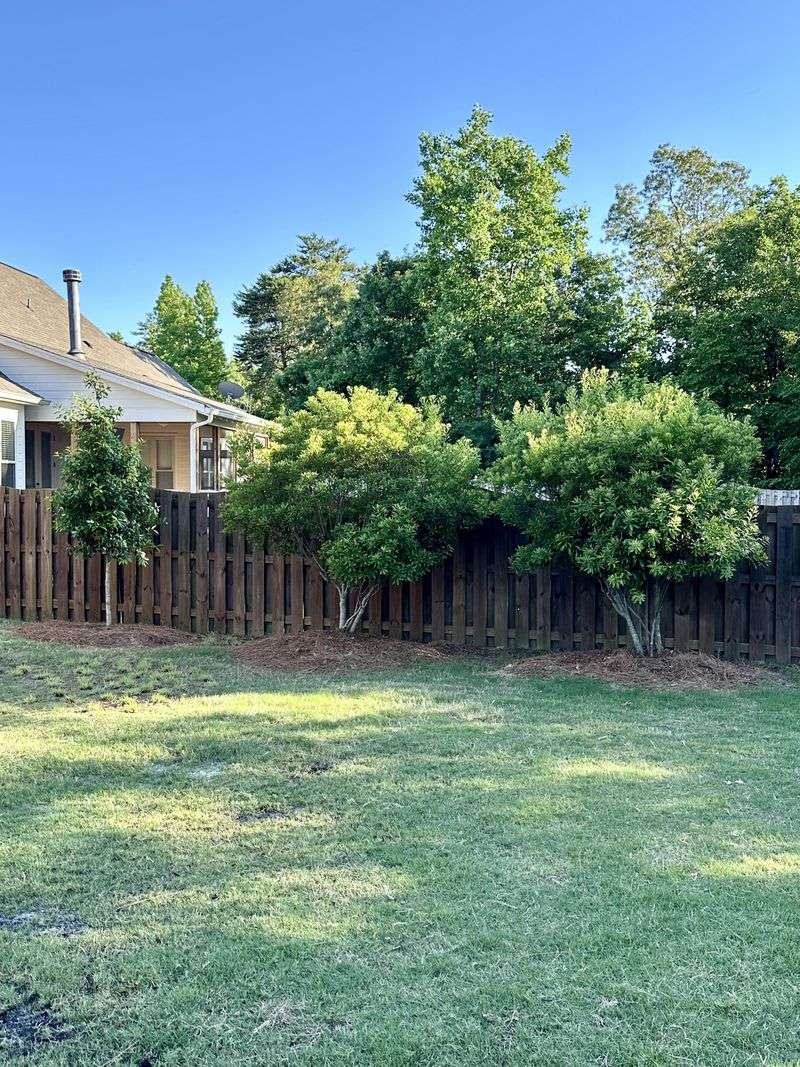
Not every Florida yard has room for a sprawling hedge. Some properties have narrow side yards, tight corners, or limited depth between the house and the property line.
That kind of space challenge stops a lot of homeowners from considering natural screening options because they assume the plants will eventually take over.
Wax myrtle, Myrica cerifera, is actually one of the more flexible choices available because it responds well to size management without losing its density or visual appeal.
In a small yard, a single row of wax myrtle can be maintained as a tidy hedge between five and eight feet tall with two light pruning sessions per year.
The key is starting the shaping process early, before the plants get too tall, so you are always trimming new growth rather than cutting back into thick woody stems.
That approach keeps the hedge compact, full, and easy to manage even in a narrow space. In larger yards, you can let the plants grow more freely and achieve a screen that reaches twelve to fifteen feet with a more natural, informal look.
One creative use that works well on smaller properties is planting wax myrtle in a staggered double row rather than a single straight line.
That arrangement creates depth and fills in faster at the base, which is often where privacy gaps appear first.
Whether your yard is a quarter acre or a half acre, the plant scales to fit the space you have. That kind of flexibility is rare in a single species and makes wax myrtle one of the most practical native plants available to Florida homeowners today.