What Winter Burn Really Looks Like On Arborvitae In Michigan
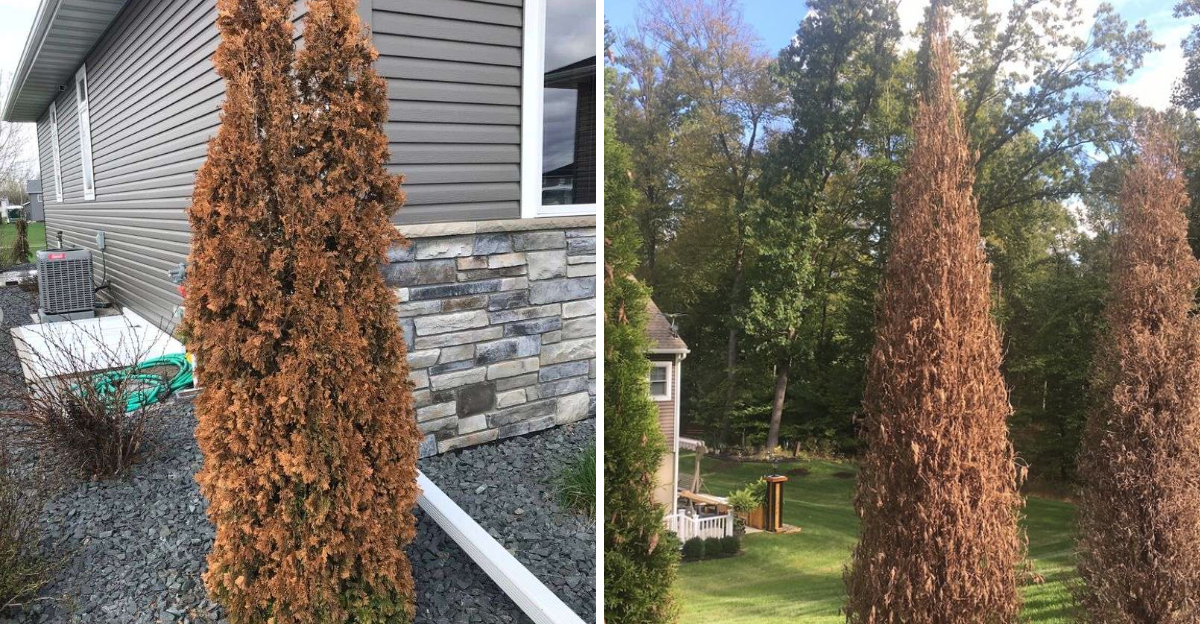
Arborvitae often come through Michigan winters looking a little rough, but not all damage means something is seriously wrong. One of the most common issues homeowners notice in early spring is winter burn.
It can show up suddenly, leaving parts of the plant looking dry, discolored, or faded after months of cold, wind, and sun exposure. At first glance, it can be confusing, especially since the damage may not appear evenly across the shrub.
Some areas may stay green while others turn bronze or brown. Michigan’s harsh winter conditions make this a regular challenge, particularly for plants exposed to wind or bright winter sunlight.
Understanding what winter burn actually looks like can help you tell the difference between seasonal stress and more serious problems. With the right knowledge, you can decide what steps to take and help your arborvitae recover as the weather warms.
1. Browning Starts On The Outer Foliage First
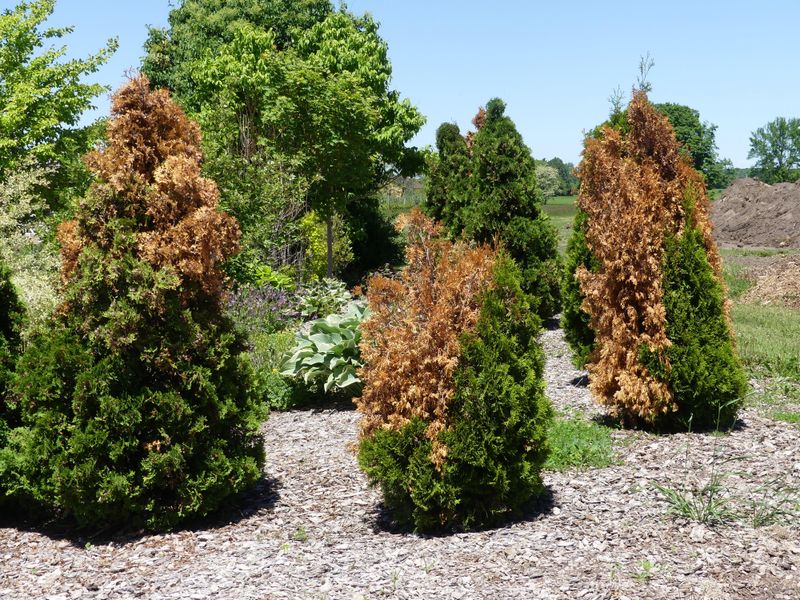
Picture your arborvitae standing tall in a Michigan yard after a long, harsh winter, and the very first thing you notice is that the tips look toasted.
Winter burn almost always starts on the outermost edges of the plant, where the foliage gets the most exposure to cold wind and winter sun. Those outer tips are essentially on the front lines all season long.
The browning usually creeps in from the outside layer, leaving the inner branches looking perfectly fine. It can feel confusing at first because the plant looks healthy on one side and damaged on the other.
The outer foliage acts like a shield, absorbing the worst of Michigan’s brutal winter conditions.
Arborvitae are technically quite tough, but no plant is completely immune to freezing wind and fluctuating temperatures. When moisture evaporates from the foliage faster than the frozen roots can replace it, the outer needles pay the price first.
Spotting this pattern early is actually a helpful clue, because it tells you the damage is environmental rather than caused by a pest or fungal issue.
Knowing that the browning starts outside and works inward helps you make a smarter plan for recovery once spring arrives in Michigan.
2. South And West Sides Show The Most Damage
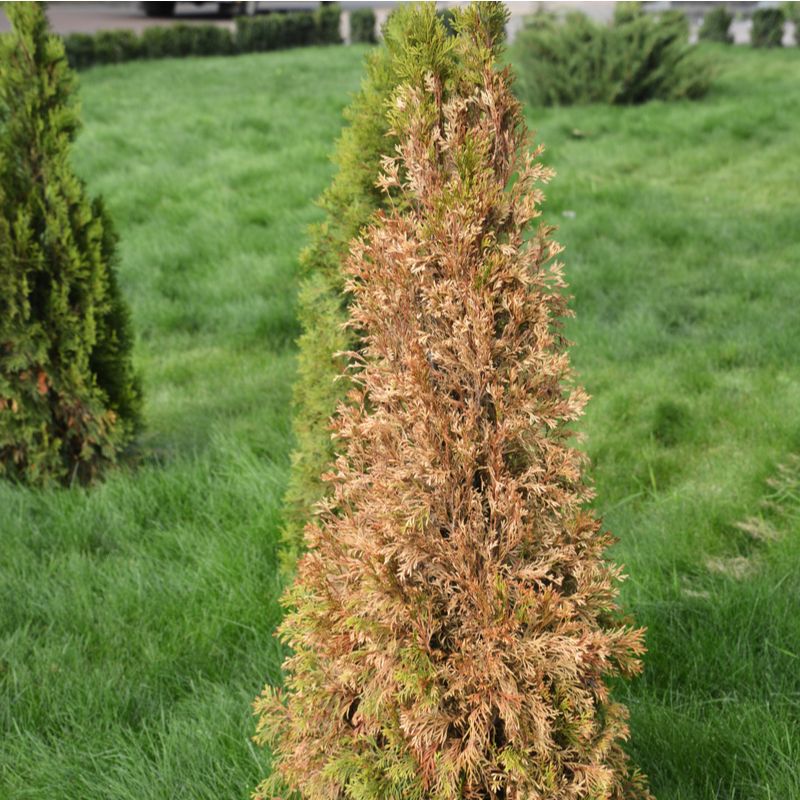
Here is something that surprises a lot of Michigan gardeners: not all sides of an arborvitae suffer equally. The south and west-facing sides of the plant tend to show the most noticeable browning after winter.
This happens because those sides receive the strongest combination of winter sun and prevailing cold winds.
In Michigan, northwest winds are especially common during winter months, and they pull moisture right out of exposed evergreen foliage.
At the same time, winter sunlight hitting the south side warms the needles just enough to trigger transpiration, meaning the plant tries to release moisture even when the ground is frozen solid.
That mismatch between moisture loss and moisture uptake leads to serious dehydration. Walking around your arborvitae in early spring and checking each side individually is a smart habit to develop.
Your Michigan Garden Changes Every Week. Your Plan Should Too.
Gardening in Michigan changes quickly throughout the season. Every Friday you’ll receive a simple weekly plan showing exactly what to plant, prune, fertilize, harvest, and protect so you never miss the right timing.
You might find that the north side looks perfectly lush and green while the south or west side looks noticeably stressed.
This directional damage pattern is one of the clearest signs that you are dealing with winter burn rather than disease or insects.
If you notice this pattern in your Michigan yard, you can start planning protective measures like burlap windbreaks or anti-desiccant sprays for next season. Catching the pattern early puts you ahead of the problem.
3. Damage Often Appears In Late Winter Or Early Spring
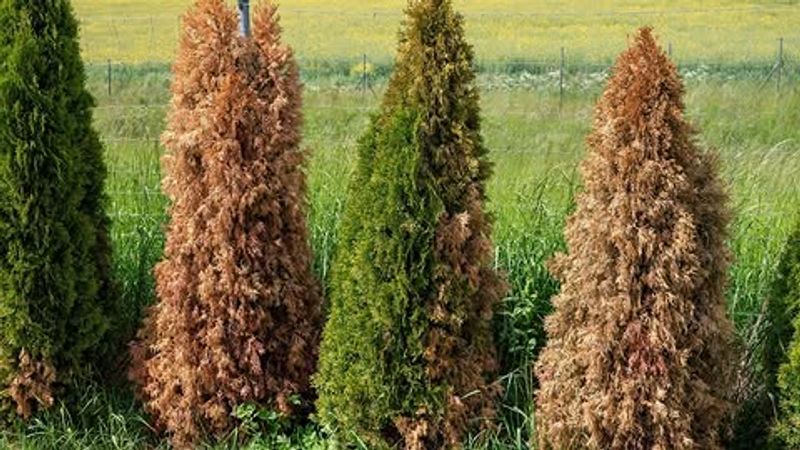
One of the trickiest things about winter burn is that it plays a delayed game. The actual damage happens deep in winter, but most Michigan homeowners do not notice anything wrong until February, March, or even early April when the snow starts to pull back.
That timing gap makes it easy to wonder what went wrong so suddenly. What is really happening is that the foliage was slowly losing moisture throughout the coldest months, but the discoloration was hidden under snow cover or masked by the general grey look of a Michigan winter.
Once the sun gets stronger and temperatures creep up, the browned foliage becomes impossible to miss. It almost seems like the damage happened overnight.
Knowing this timing helps you stay calm when you step outside one spring morning and spot patches of brown on your arborvitae. The plant has not changed overnight.
The damage was building quietly all winter long, and now it is simply becoming visible. This is actually a common experience for Michigan gardeners every single year, especially after winters with low snowfall, which means less natural insulation for the roots and foliage.
Keeping a close eye on your arborvitae from late February onward gives you the best chance to assess the damage early and plan your next steps with confidence.
4. Foliage Looks Dry And Brittle, Not Mushy
Reach out and touch the browned foliage on a winter-burned arborvitae, and you will notice something very specific: it feels dry and almost papery.
That texture is one of the most reliable ways to tell winter burn apart from fungal disease or root rot, which tend to make foliage feel soft, slimy, or mushy when pressed between your fingers.
Winter burn is essentially a dehydration issue. The plant lost more moisture than it could hold onto during Michigan’s cold months, and the foliage dried out as a result.
Think of it like leaving a houseplant without water for too long, except the cause here is frozen ground and harsh weather rather than neglect.
That crispy, brittle feel is actually a reassuring sign in a strange way, because it suggests the damage is physical and environmental rather than infectious.
A disease that spreads through the plant could cause much bigger problems down the line, but dry and brittle winter burn is self-contained. You can gently run your fingers along affected branches to check the texture yourself.
If the brown needles crumble slightly but the branch underneath still feels firm and flexible, there is a solid chance the plant is still alive and capable of pushing out fresh green growth once Michigan’s warmer spring temperatures settle in and roots begin absorbing water again.
5. Interior Growth Often Stays Green
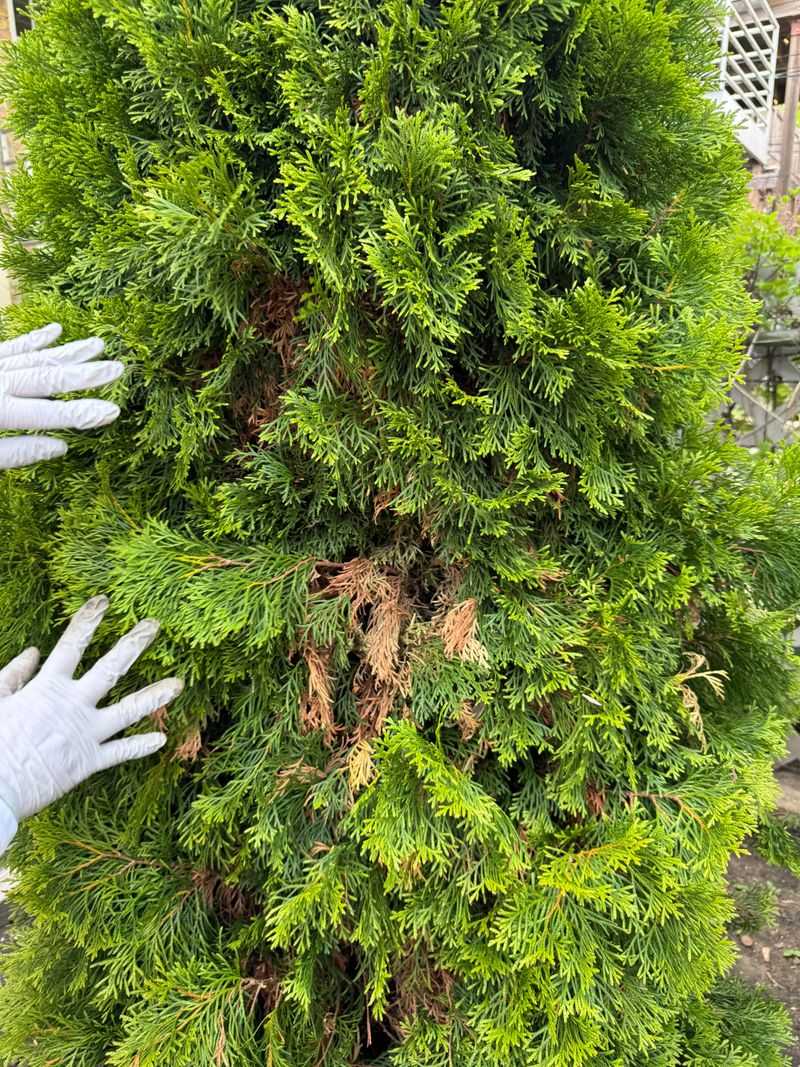
Pull back a browned branch on your arborvitae and peek inside, and you might be pleasantly surprised by what you find. Even when winter burn looks severe from the outside, the interior of the plant is often still lush and deeply green.
That inner green core is a really encouraging sign that the plant has plenty of life left in it. The reason the inside stays protected comes down to layering. The outer foliage acts as a natural buffer, absorbing the worst of the wind, sun, and cold.
By the time those harsh conditions reach the interior branches, they have been significantly softened. It is almost like the outer layer sacrifices itself to protect the heart of the plant.
Michigan gardeners sometimes make the mistake of assuming the whole shrub is beyond saving just from a quick glance at the outside. Before you decide anything, always check the interior growth first.
If you see green in there, the arborvitae is telling you it wants to recover. New growth in spring will often fill in from those healthy interior branches, gradually covering the browned sections over time.
Patience is genuinely your best tool here. Giving the plant a full growing season before making any major decisions is always the right move for arborvitae in Michigan landscapes.
6. Browning Can Be Patchy Or Uneven
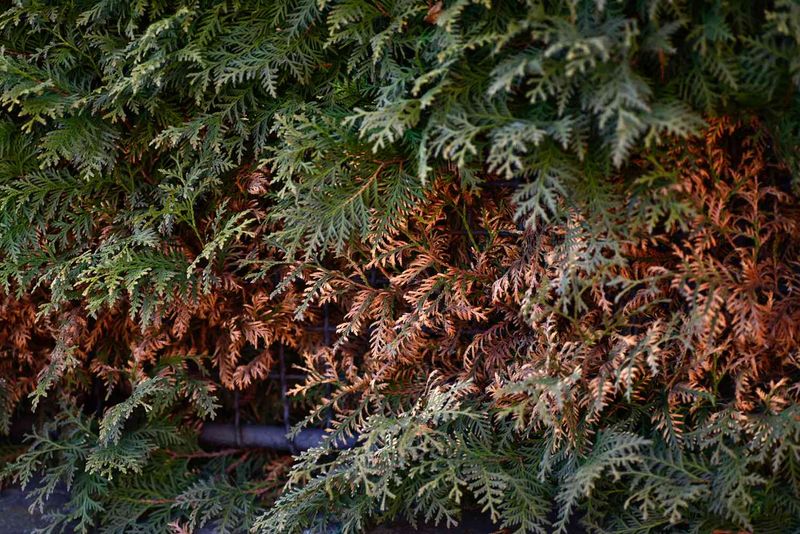
Not every case of winter burn looks the same, and that unpredictability can make it harder to diagnose with confidence.
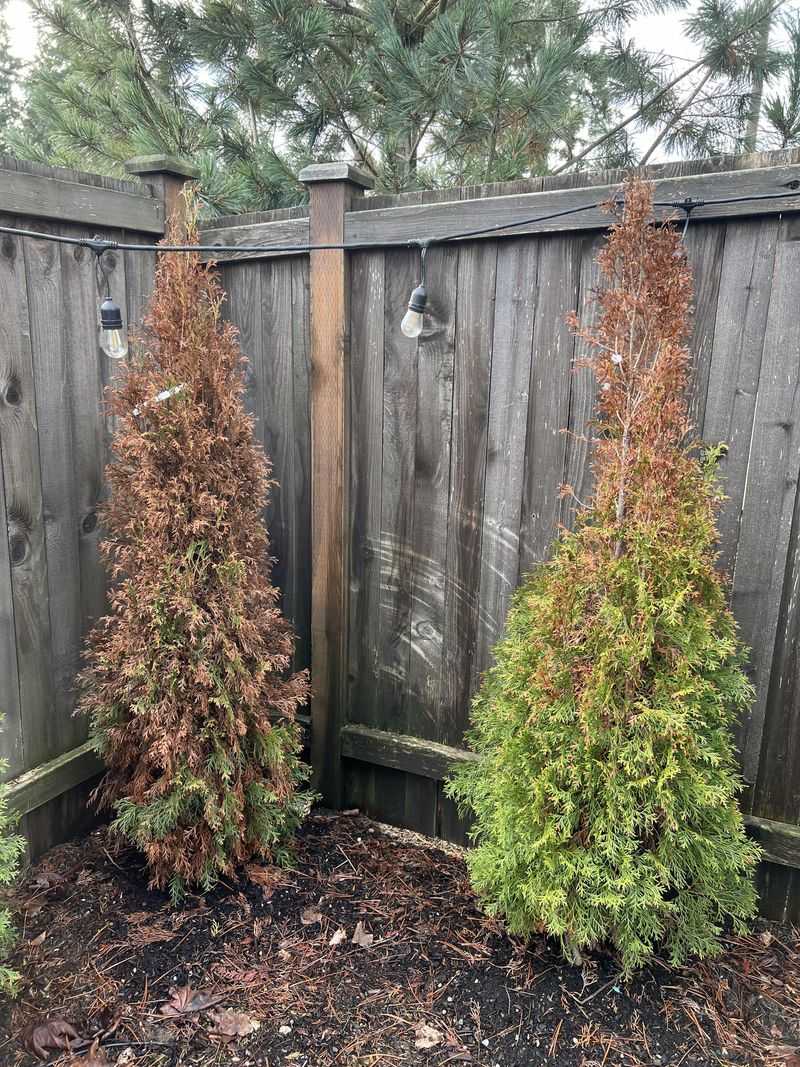
Some arborvitae in Michigan show large solid sections of brown, while others have a scattered, patchy look with random brown spots mixed in among healthy green growth. Both appearances can come from the same cause.
The unevenness usually comes down to differences in wind exposure, snow cover, and proximity to structures.
A branch that was sheltered behind a fence post all winter might stay perfectly green, while the branch just a few inches away took the full force of a northwest wind and turned brown.
Snow drifts can also act as natural insulation for lower sections of the plant, leaving upper sections more exposed and more damaged.
Seeing patchy or uneven browning does not mean something more complicated is going on. It actually reflects the randomness of Michigan’s winter weather patterns, where conditions can shift dramatically from one week to the next.
When you are assessing your arborvitae, take a slow walk around the entire plant and note where the browning is concentrated.
That observation will help you figure out which direction the most damaging wind came from and whether adjusting your landscape setup, like adding a windbreak or repositioning a fence, could reduce the damage in future Michigan winters.
7. Young Or Newly Planted Shrubs Are Hit Hardest
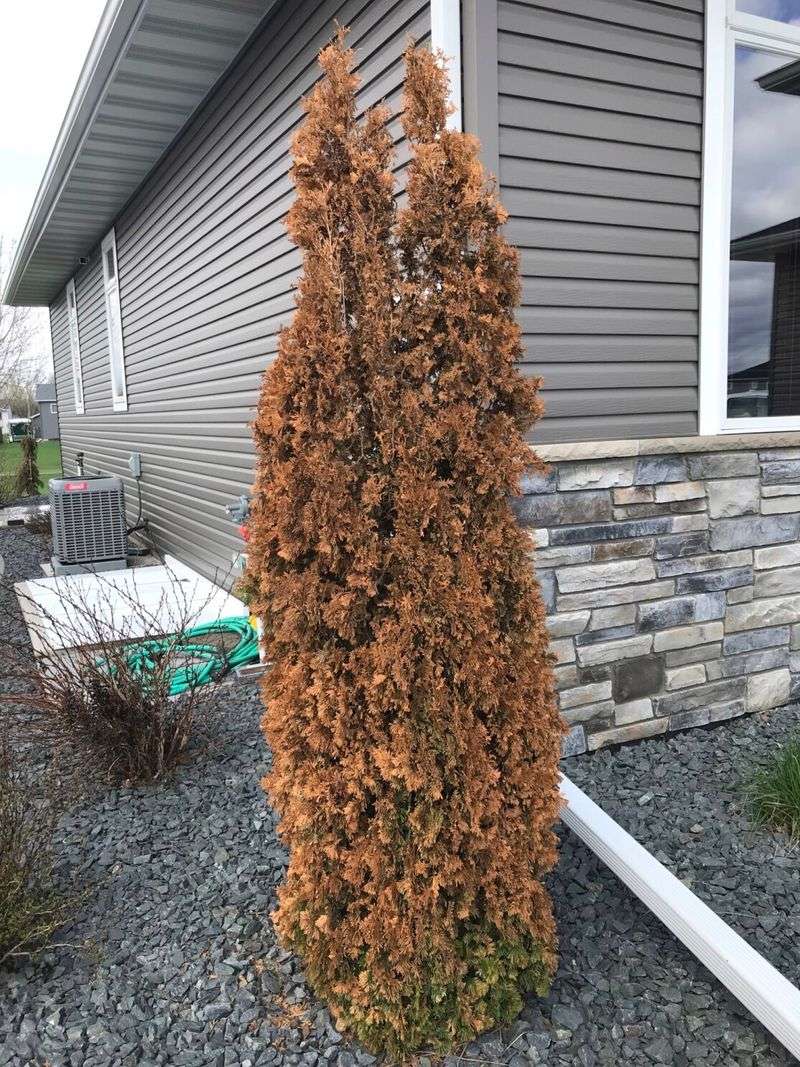
Brand new arborvitae planted in the fall often face a rough first winter in Michigan, and the results can look pretty alarming come spring.
Young shrubs have not had enough time to develop deep, established root systems, which means they struggle much more to pull water from frozen or semi-frozen ground. That water deficit shows up fast as browning across the foliage.
An established arborvitae that has been growing in your yard for several years has roots reaching deeper into the soil, giving it access to moisture even when the surface is frozen solid. A newly planted shrub simply does not have that advantage yet.
The shallow root system makes it significantly more vulnerable to the kind of winter dehydration that causes burn.
If you planted arborvitae in Michigan last fall and are now seeing heavy browning, try not to panic right away. Young plants can and do recover, especially with some extra care in spring.
Watering deeply as soon as the ground thaws, adding a fresh layer of mulch around the base, and holding off on any pruning until new growth appears are all helpful steps.
Going forward, planting arborvitae in spring rather than fall gives them a full growing season to establish roots before facing Michigan’s winter conditions, which dramatically improves their chances of coming through looking great.
8. Winter Burn Is Often Mistaken For Disease Or Serious Injury
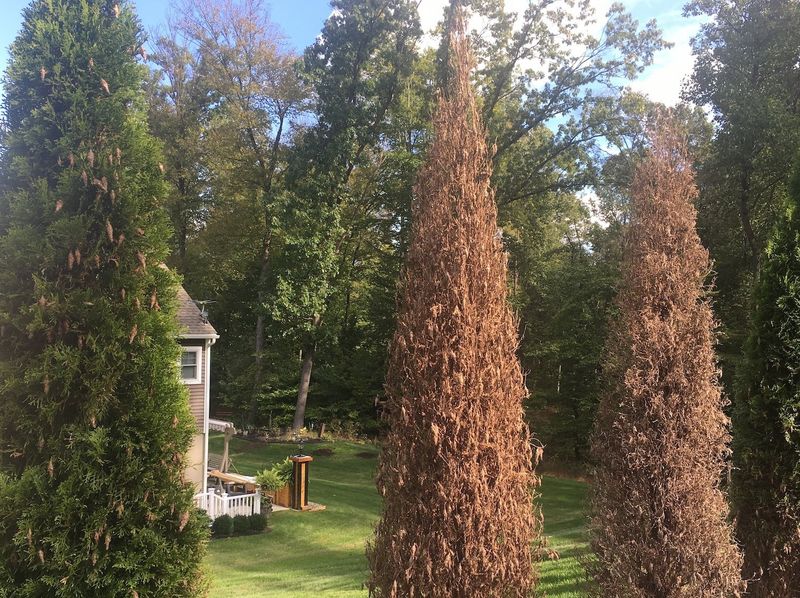
Every spring, Michigan gardeners look at their browned arborvitae and immediately assume the worst. It is completely understandable, because heavy browning can look alarming and make even an experienced gardener second-guess themselves.
The good news is that winter burn is one of the most misread plant conditions out there, and it is far less serious than it looks in most cases.
People often confuse winter burn with fungal diseases like Kabatina tip blight or Pestalotiopsis, both of which can cause browning on arborvitae.
The key difference is that disease-related damage tends to spread progressively through the growing season, while winter burn stays fairly stable and often improves on its own as temperatures warm up.
Checking whether new green growth is emerging from the affected branches is one of the clearest ways to tell the two apart.
Before reaching for any treatments or making decisions about removing shrubs, give your Michigan arborvitae a few weeks into spring to show you what it can do. New growth often begins pushing through by late April or May, filling in the browned areas with fresh, healthy green foliage.
Pruning out the most heavily damaged branches after new growth appears can also help the plant look fuller faster. Winter burn is a setback, not a sentence, and with a little patience and the right care, most arborvitae bounce back beautifully in Michigan’s warm growing season.