What To Do With Your Banana Trees In Florida Before Summer Hits
Banana trees can go from lush and happy to ragged and stressed in no time once a Florida summer cranks up the heat.
One minute they are pushing out big tropical leaves like they own the place, and the next they are dealing with pounding rain, heavy humidity, thirsty roots, and winds that love to tear fresh growth to shreds.
That is why late spring is the perfect time to get ahead of the chaos. A few smart moves now can help your banana trees look better, grow stronger, and handle the wild summer stretch with a lot less trouble.
Florida gardeners who wait until the heat is in full swing are often already playing catch-up. Before summer barges in and starts calling the shots, it pays to give your banana trees a little attention.
A small bit of prep now can make a big difference once the season turns hot, wet, and relentless.
1. Remove Winter-Damaged Leaves To Encourage Fresh Growth
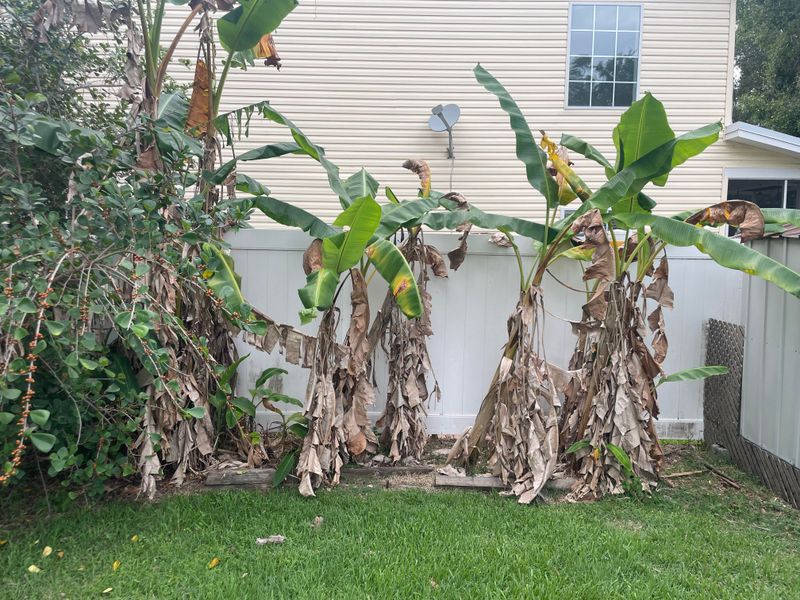
Walking out to your banana plants after a Florida winter and spotting those brown, tattered leaves hanging off the sides is a familiar sight for most home gardeners.
Even in Central and South Florida, where freezes are rare, cooler temperatures and dry winter air leave behind leaf damage that does not fix itself on its own.
North Florida gardeners often see even more significant cold damage, sometimes with entire outer leaves that look completely spent.
The right move is to remove those damaged leaves before summer growth kicks into high gear. Use clean, sharp pruning shears or a machete and cut the leaf at the base where it meets the pseudostem.
Leaving damaged leaves on the plant wastes energy and can create hiding spots for insects and fungal problems that love Florida’s humid conditions.
Timing matters here. Late April through May is ideal in most parts of Florida, just as soil temperatures are warming and the plant starts actively pushing new growth from its center.
You will often see a tight, bright green roll of leaf emerging from the middle, which is a clear signal the plant is ready to grow fast.
One common mistake is cutting too aggressively into the pseudostem itself, which is actually made up of tightly wrapped leaf bases. Trim only the damaged leaf blades and their stalks, leaving the main stem structure intact.
Keeping the plant tidy at this point sets it up to channel all its energy into producing strong, healthy leaves through the summer months ahead.
2. Cut Back Old Stems That Have Already Produced Fruit
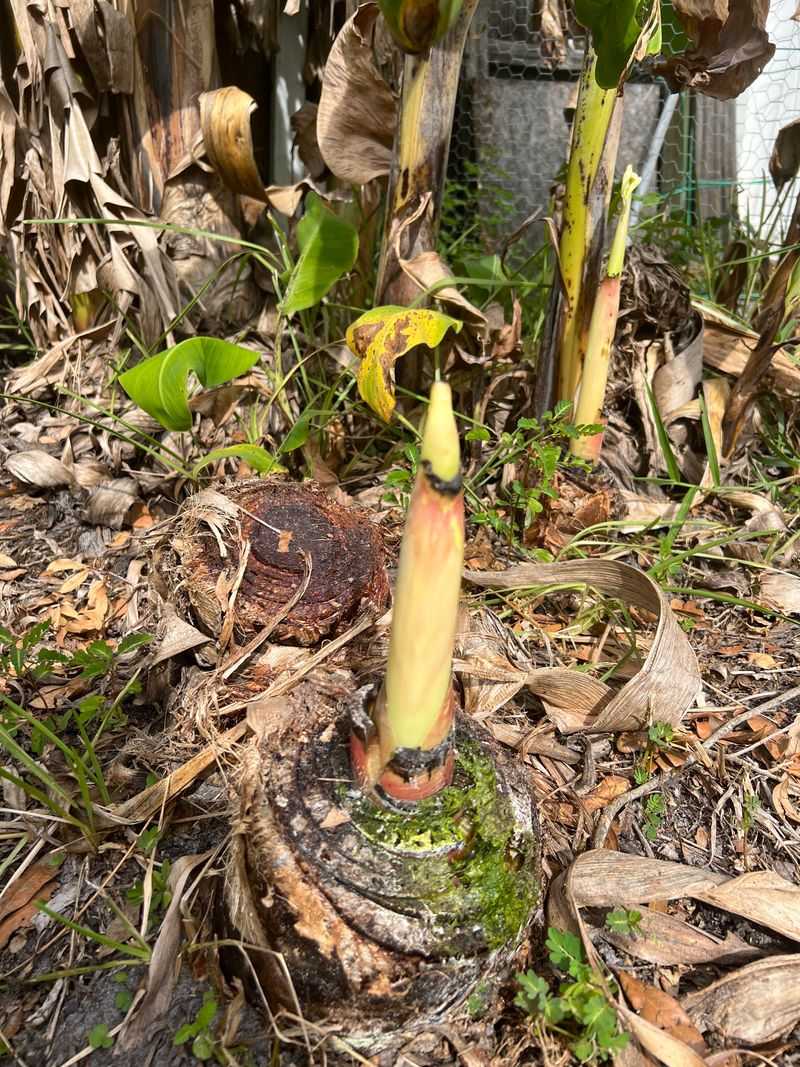
Most gardeners are surprised to learn that a banana stem only fruits once. After that bunch of bananas finishes ripening, the pseudostem that produced it has done its job and will not fruit again.
Leaving it standing takes up space, blocks light, and pulls moisture away from the younger, more productive shoots growing at its base.
Cutting back spent pseudostems before summer is one of the most impactful things you can do for your banana planting. Once a stem has produced fruit and you have harvested it, cut the pseudostem down to about a foot or two above ground level.
Your Florida Garden Changes Every Week. Your Plan Should Too.
Gardening in Florida changes quickly throughout the season. Every Friday you’ll receive a simple weekly plan showing exactly what to plant, prune, fertilize, harvest, and protect so you never miss the right timing.
Let it dry out for a week or two, then cut it down to ground level. This two-stage approach prevents the sudden moisture loss that can sometimes stress neighboring shoots.
In Florida, this task often lines up naturally with late spring cleanup. If you had plants produce fruit over the fall or winter months, spring is the perfect window to clear those old stems before the heat accelerates growth on your remaining shoots.
Younger replacement shoots, often called ratoons, will benefit immediately from the extra space, light, and nutrients.
A helpful tip to keep in mind: chop the removed pseudostem into smaller sections and let it decompose right there around the base of your planting. It breaks down quickly in Florida’s heat and adds organic matter back to the soil.
Just make sure it does not pile up directly against the base of your living stems, as that can invite rot in a wet summer.
3. Feed Banana Plants Heavily Before Growth Speeds Up
Few plants in Florida eat as much as a banana.
These are genuinely heavy feeders, and if you have ever watched a well-fertilized banana plant push out a new leaf every week or two during summer, you understand why getting nutrients into the soil before that growth surge starts is so valuable.
Spring fertilizing sets the foundation that summer growth builds on.
A balanced fertilizer with a higher potassium content works well for bananas. Many Florida gardeners rely on an 8-3-9 or similar ratio, applying it monthly during the growing season.
Potassium supports fruit development and helps the plant handle heat stress, which is especially relevant once Florida summers hit full force.
Before summer arrives, a generous application in late April or early May gives the soil time to absorb nutrients before the plant enters its fastest growth phase.
Spread the fertilizer evenly around the base of the plant, extending out to about the drip line of the leaves, and water it in thoroughly afterward. Avoid piling fertilizer directly against the pseudostem, as this can cause surface burn.
For gardeners who prefer organic options, well-composted manure or a thick layer of aged compost worked into the soil surface is a great complement to granular fertilizer.
One mistake to sidestep is skipping fertilizer during dry spring spells and assuming rain will handle it later. Nutrients need moisture to move into the root zone, so if your area is dry, water before and after applying.
Consistent feeding from spring through early fall gives Florida banana plants the steady supply they need to grow strong and fruit reliably.
4. Check Soil Moisture As Temperatures Start Rising
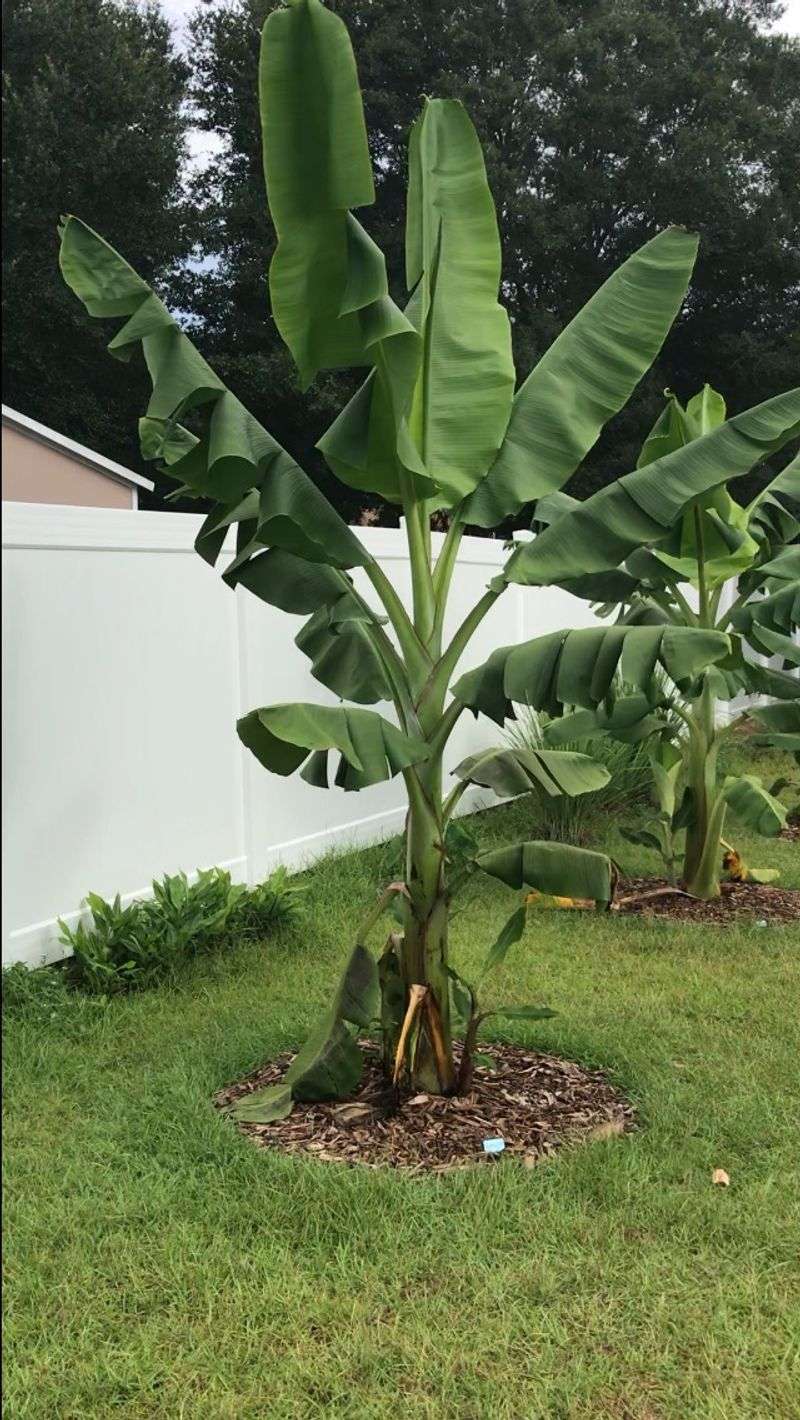
Spring in Florida can be deceptively dry before the summer rainy season kicks in.
Many gardeners are caught off guard by how quickly banana plants go from looking fine to showing signs of drought stress, with leaf edges curling or entire leaves rolling inward to reduce moisture loss.
Once you see those signs, the plant is already behind.
Banana plants have a very high water demand, especially as temperatures climb through May and June. A general guideline from UF/IFAS suggests aiming for about one to one and a half inches of water per week during the growing season.
In the weeks before summer storms begin arriving regularly, that moisture has to come from your irrigation or hose, not from rainfall.
Check your soil moisture by pressing a finger two to three inches into the ground near the base of the plant. It should feel consistently moist but not soggy.
Sandy soils, which are common across much of Florida, drain quickly and may need watering every two to three days during dry spring stretches. If you have added compost or organic matter to your soil, it holds moisture longer and reduces how often you need to water.
Overwatering is a real concern too, especially in low-lying areas where water pools after irrigation. Root rot can develop fast in waterlogged conditions, and once it sets in, recovery is difficult.
The goal is steady, even moisture without standing water. Setting up a simple drip irrigation line or soaker hose around your banana planting is one of the easiest ways to keep moisture consistent as temperatures rise heading into summer.
5. Add Fresh Mulch To Lock In Moisture And Nutrients
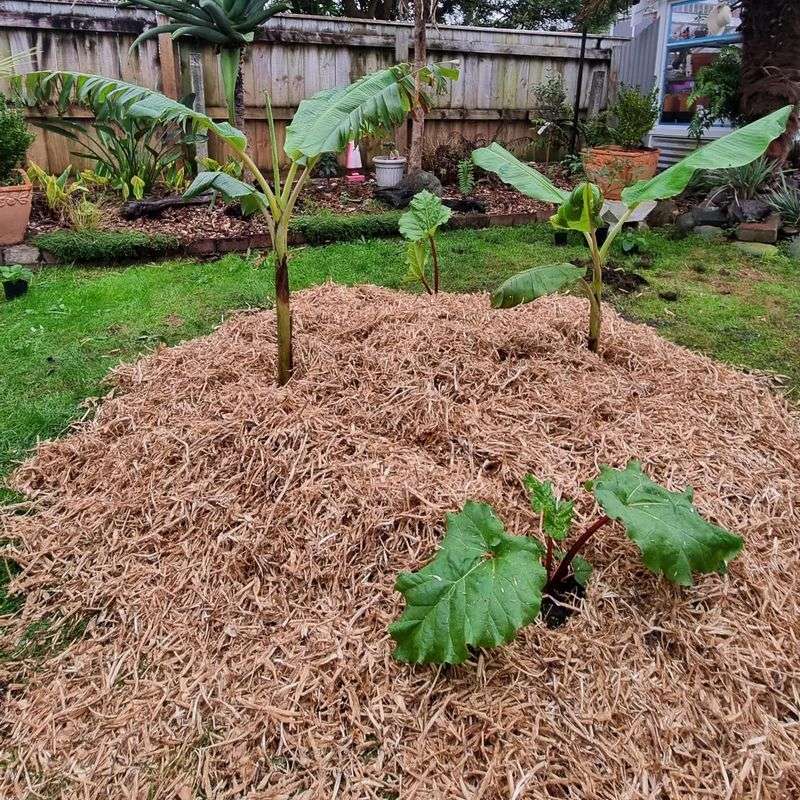
Right around the time you are doing your spring cleanup, adding a fresh layer of mulch around your banana plants is one of those small moves that pays off all season long.
Florida’s sandy soils lose moisture fast, and once summer heat arrives, that evaporation rate goes up even more.
A good mulch layer acts like a buffer, slowing moisture loss and keeping the root zone cooler during the hottest parts of the day.
Wood chips, straw, or shredded leaves all work well around banana plants. Apply a layer that is three to four inches deep, spreading it out to cover the area beneath the canopy of the leaves.
Keep the mulch a few inches away from the base of the pseudostem to allow air circulation and reduce the chance of rot forming at the plant’s base. This is especially important heading into Florida’s humid summer months.
Beyond moisture retention, mulch also slowly breaks down and adds organic matter to the soil, which is a bonus for plants like bananas that thrive in rich, fertile ground. In Florida’s intense heat, organic mulch can break down faster than in cooler climates, so checking and refreshing it partway through summer is a good habit to build.
A common oversight is applying mulch too thinly, which does not provide enough insulation to make a real difference. Aim for that three to four inch depth and you will notice the soil beneath staying moist for noticeably longer between waterings.
That saved moisture adds up quickly once the heat of June and July arrives across the state.
6. Watch For Pests As New Growth Begins
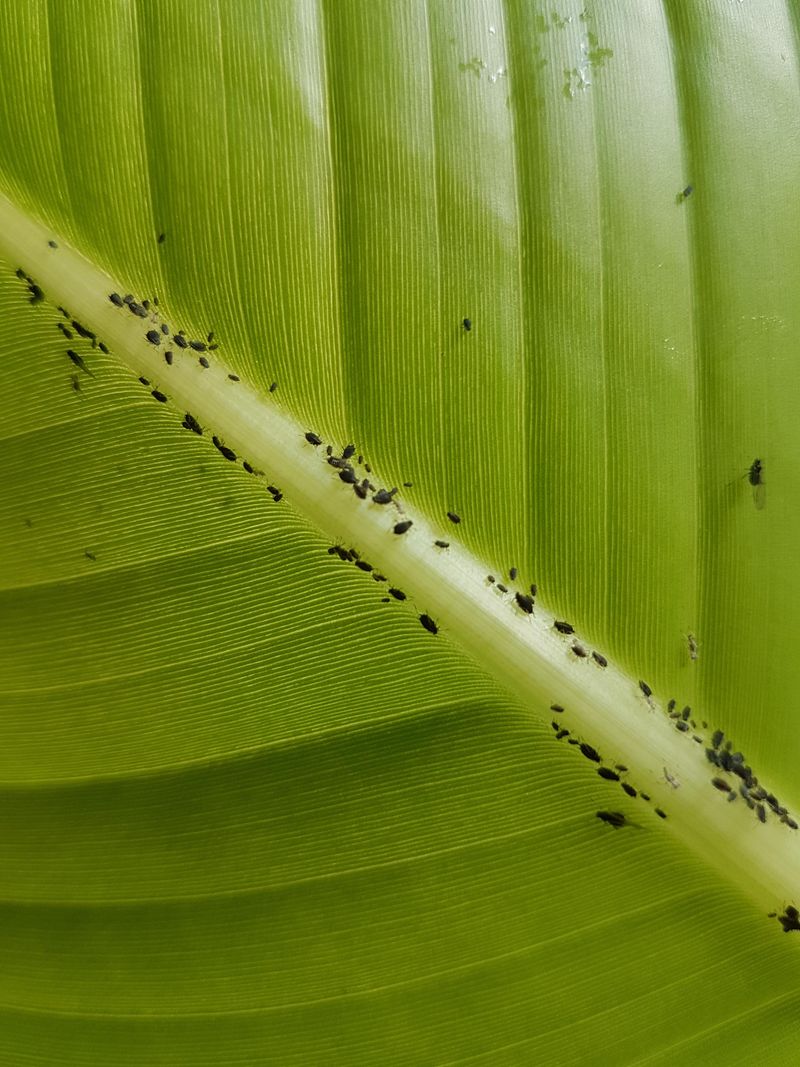
New growth on banana plants is tender, and tender growth attracts pests. As temperatures warm up in late spring, several insects that were less active during cooler months start showing up in force.
Catching problems early, before summer heat accelerates both plant growth and pest reproduction, makes management much simpler.
Spider mites are among the most common issues in Florida banana plantings, especially during dry spring weather before the rainy season begins. They tend to cluster on the undersides of leaves and leave a faint yellowing or stippled pattern on the leaf surface.
Aphids can also gather on new shoots and flower clusters, sucking sap and sometimes introducing plant diseases. The banana weevil is a more serious pest that attacks the pseudostem itself, and its presence is often signaled by soft, discolored areas near the base of the plant.
A quick visual inspection every week or two goes a long way. Flip leaves over, look at the base of new shoots, and check the soil surface around the pseudostem for signs of weevil activity.
Removing any heavily infested leaves right away slows the spread and reduces the pest population before it gets out of hand.
For most common pests, a strong spray of water or a neem oil solution handles early infestations without harsh chemicals.
Keeping good air circulation around your plants by thinning out crowded shoots also reduces the humid, sheltered conditions that many pests prefer.
Florida’s summer humidity creates ideal conditions for pest buildup, so starting with a clean, well-monitored planting in spring makes a real difference through the season.
7. Thin Out Extra Shoots To Focus Energy
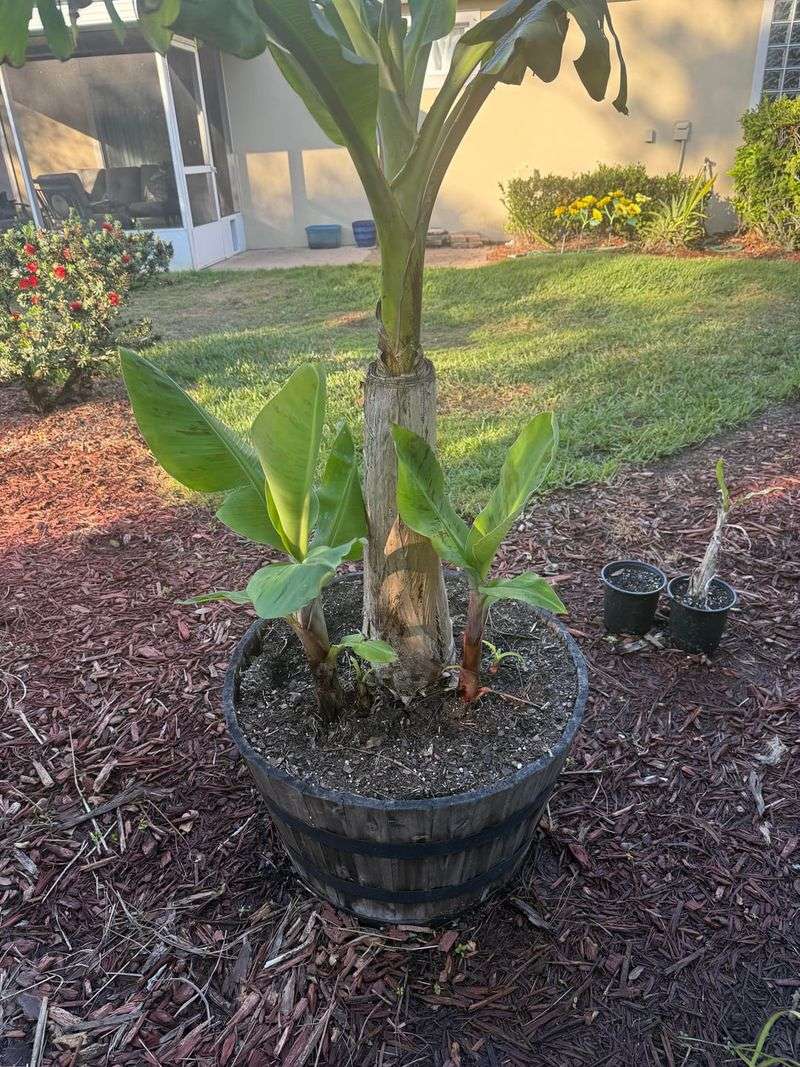
By late spring, the base of a well-established banana plant can start looking like a small jungle of its own. Suckers, sometimes called pups, push up around the main stem and compete for the same water, nutrients, and root space.
Left unchecked, a heavily suckered clump spreads energy so thin that none of the individual plants produce fruit well or grow to their full potential.
The general recommendation for home gardeners is to keep two to three suckers of different ages alongside the main fruiting stem.
This gives you a rotation of plants at different stages, so when the main stem finishes its cycle, a younger replacement is already well-established and ready to take over.
Any shoots beyond that should be removed before summer growth kicks in.
To remove a sucker, use a sharp spade or machete to cut it off at soil level, angling the cut toward the corm to damage the growing point and reduce regrowth.
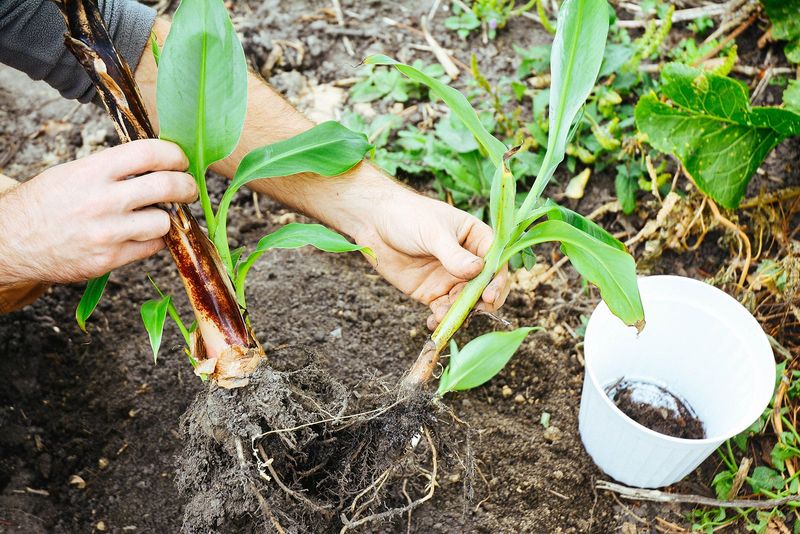
For suckers you want to save and transplant elsewhere, dig carefully around the base to preserve as much root as possible before lifting.
Florida’s warm spring soil makes transplanting suckers easier than in cooler seasons.
One thing worth noting is the difference between a sword sucker and a water sucker. Sword suckers have narrow, upright leaves and a strong root connection to the mother plant, making them the better choice to keep.
Water suckers have broad, flat leaves early on and a weaker root system, so they are typically the ones to remove first. Choosing the right suckers to keep leads to healthier, more productive plants through the summer and into fall.
8. Support Heavy Growth Before Summer Storms Arrive
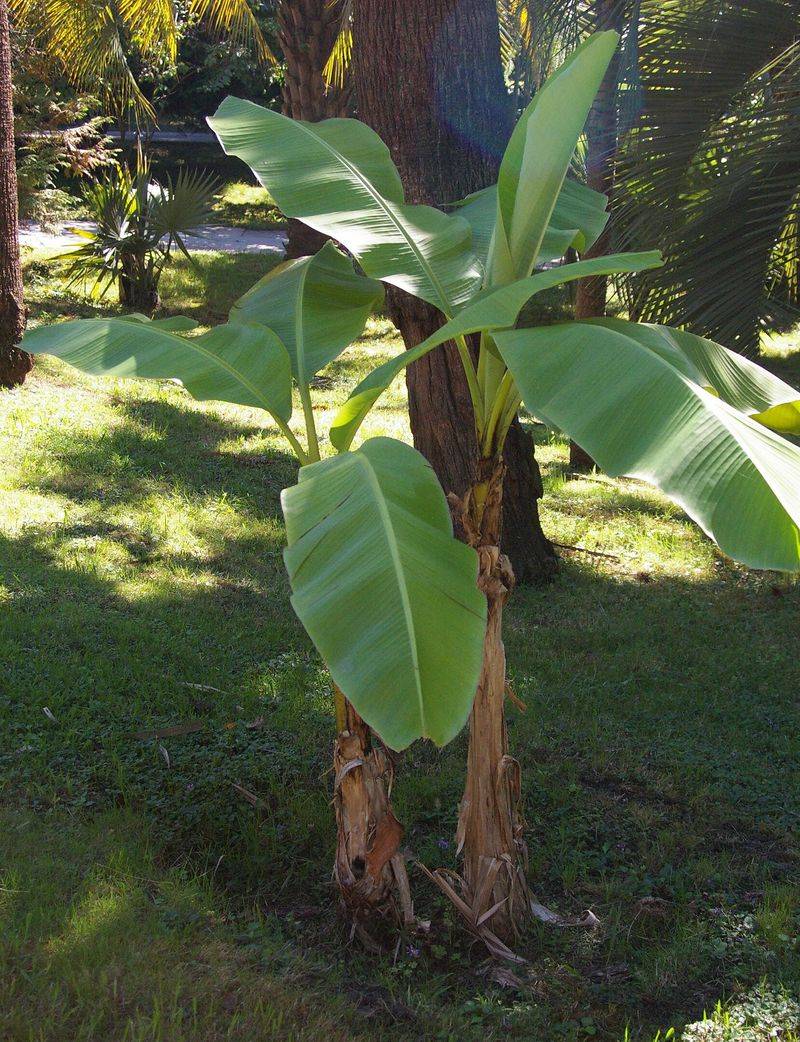
Florida summer storms are not gentle. Between June and September, the state sees regular thunderstorms, tropical systems, and sustained winds that can snap or topple banana plants that have grown tall and top-heavy.
Getting ahead of this before storm season starts in earnest is one of the most practical things a Florida gardener can do.
Banana plants that are fruiting or carrying a large flower stalk are especially vulnerable. The weight of a developing bunch, combined with a broad canopy of leaves catching wind, creates a lot of leverage on the pseudostem.
Even without a major storm, a strong afternoon thunderstorm can knock a plant sideways or cause the pseudostem to lean badly, which stresses the root system and disrupts fruiting.
Staking is the most straightforward solution. Drive a sturdy wooden or metal post into the ground a few inches away from the pseudostem and use a soft tie or strip of cloth to secure the plant loosely.
The goal is to give support without cutting into the soft stem tissue. For very tall plants in exposed locations, two stakes on opposite sides provide better stability than one.
Positioning matters too. If you are planting new banana starts this spring, choosing a spot with a fence, wall, or dense hedge on the windward side reduces wind exposure significantly.
In South Florida, where hurricane risk is higher, gardeners sometimes cut back the tallest leaves before major storms to reduce the plant’s wind resistance temporarily.
Taking these steps before the first big storm of the season arrives puts your plants in a much stronger position to handle whatever summer brings.