Native Trees That Can Give Texas Front Yards Better Four-Season Interest
A lot of front yards look great for one part of the year and then fade into the background the rest of the time. Maybe they burst with color in spring, then feel flat in summer, bare in winter, and easy to ignore in between.
That is where the right tree can do a lot more than people expect. In Texas, a well-chosen native tree can bring shape, color, texture, shade, and movement across all four seasons without feeling fussy or out of place.
That matters even more in a front yard, where every plant has to work a little harder. You want something that boosts curb appeal, fits the space, and still holds up to Texas heat, changing weather, and local soil conditions.
Native trees have a strong advantage because they already belong here. Once established, many can offer lasting beauty with fewer headaches than trees that struggle to adapt.
If your yard feels like it is missing something, the answer may not be more flowers or extra decor. It may be a tree that keeps giving your landscape something to say all year long.
1. Texas Redbud
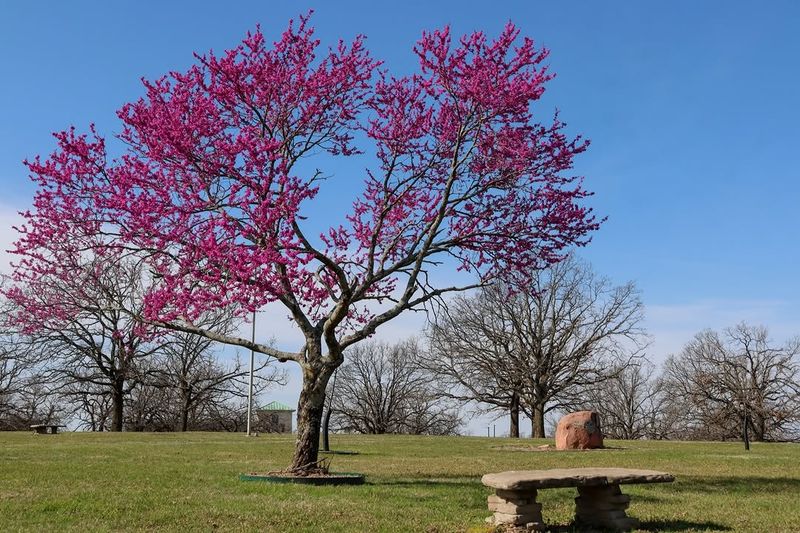
Before a single leaf appears, the Texas Redbud puts on one of the most breathtaking shows of the entire year.
Clusters of bright pink-purple flowers coat every bare branch in early spring, turning the whole tree into a cloud of color. Neighbors will stop and stare, guaranteed.
Native to Texas and well-adapted to the state’s rocky soils and hot summers, this tree is a true overachiever across all four seasons. Once the blooms fade, heart-shaped blue-green leaves fill in the canopy and offer cooling shade through the long summer months.
The leaves have a soft, almost velvety look that gives the yard a lush, welcoming feel. Come fall, those same leaves shift to a warm golden-yellow before dropping. Even in winter, the Texas Redbud earns its place in the yard.
Its graceful, zigzagging branch structure creates a beautiful silhouette against the sky, especially on crisp Texas mornings.
Growing between 12 and 15 feet tall, this tree fits perfectly in smaller front yards without crowding the house or blocking windows.
It handles both full sun and partial shade well, making it flexible for different yard layouts. Once established, it is notably drought-tolerant, which is a huge bonus in Texas.
Planting a Texas Redbud near a walkway or driveway creates a dramatic entrance that changes with every season. Birds love the seeds it produces, adding even more life to your yard. Few trees offer this much personality in such a compact, manageable size.
2. Cedar Elm
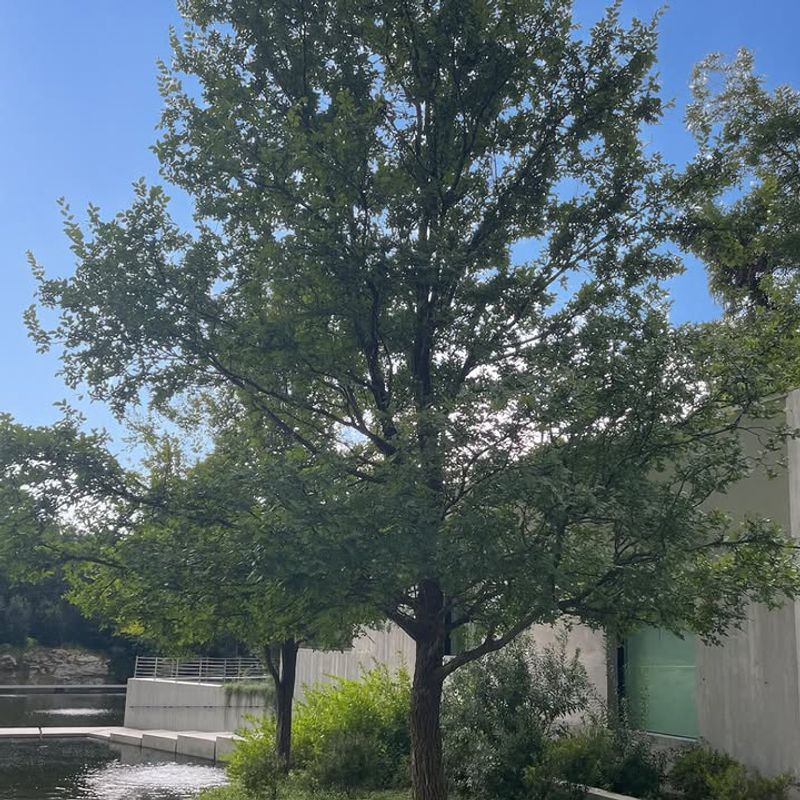
Tough, reliable, and deeply rooted in Texas landscapes, the Cedar Elm is the kind of tree that quietly does everything right. It grows across much of the state, from the blackland prairies to the Hill Country, thriving in soils that would challenge most other trees.
Gardeners who want a dependable shade tree without a lot of maintenance often turn to this one first.
In spring and summer, the Cedar Elm fills in with a dense, rounded canopy of small, dark green leaves.
Your Texas Garden Changes Every Week. Your Plan Should Too.
Gardening in Texas changes quickly throughout the season. Every Friday you’ll receive a simple weekly plan showing exactly what to plant, prune, fertilize, harvest, and protect so you never miss the right timing.
That thick coverage creates real shade, the kind that actually cools down a front porch or walkway during a brutal Texas afternoon. The leaves have a slightly rough texture that gives them a rugged, earthy look.
Fall brings a noticeable color change, with foliage shifting to shades of yellow and orange before the leaves drop. It is one of the few native Texas trees that offers reliable fall color, which makes it stand out in neighborhoods where most trees stay green or just go brown.
Winter reveals the tree’s strong, upright branching structure and deeply furrowed bark, both of which add visual interest to an otherwise bare yard. The bark has a cork-like texture that catches light in interesting ways on sunny winter days.
Cedar Elms can grow 50 to 70 feet tall over time, so they work best in yards with enough open space. Planted along a street or near the edge of a property, they create impressive, long-lasting curb appeal in any Texas neighborhood.
3. Mexican Plum
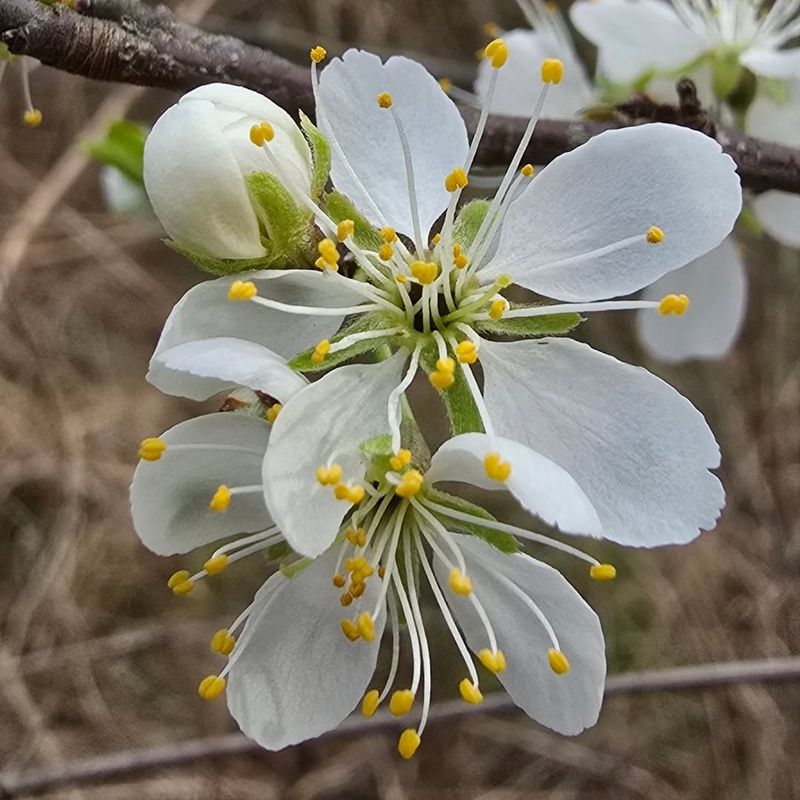
Walk past a Mexican Plum tree in late winter and you might catch a sweet, almost honey-like fragrance drifting through the air before you even see the flowers.
White blooms appear on bare branches as early as February in Texas, making this one of the first native trees to signal that spring is on its way. That early show is hard to beat.
After the flowers fade, small heart-shaped leaves emerge and fill in the canopy with a fresh, bright green. By late summer, the tree produces small reddish-purple plums that are actually edible.
They have a wild, tart flavor that works wonderfully in jams and jellies, and birds absolutely flock to them.
Fall turns the leaves a cheerful yellow, adding a warm pop of color to the front yard just as the season starts to cool down.
Then, as the leaves drop, the tree reveals what many consider its most striking feature: smooth, silvery-gray bark with a polished look that almost seems too elegant for a wild native tree.
Mexican Plum typically grows 15 to 25 feet tall, making it a great mid-sized option for Texas front yards that need something with presence but not overwhelming size.
It adapts well to a wide range of soil types, including the rocky, alkaline soils common across central and north Texas.
Planting one near a front window lets you enjoy the fragrant spring blooms from inside the house. Few native trees offer this combination of beauty, fragrance, food, and wildlife value all in one package.
4. Desert Willow
If your Texas front yard gets blasted with heat and rarely sees much rain, the Desert Willow might just be your best friend.
This tree was practically made for the dry, sun-scorched landscapes of west and central Texas, and it handles drought conditions with ease. The best part? It blooms like crazy all summer long.
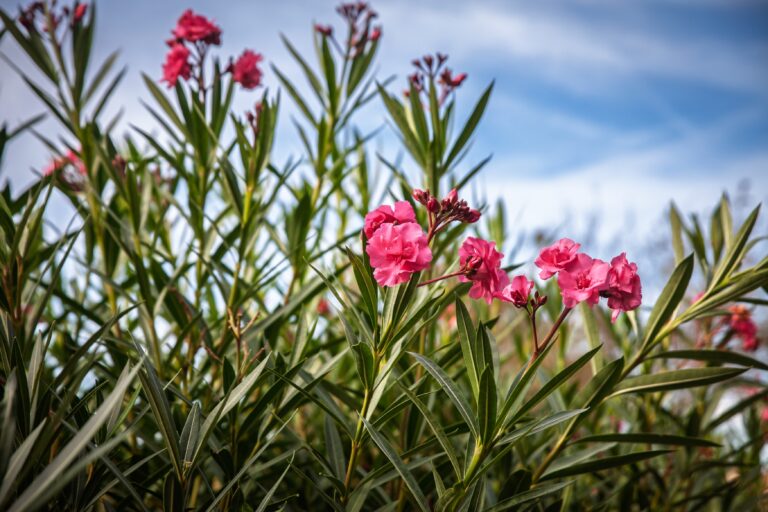
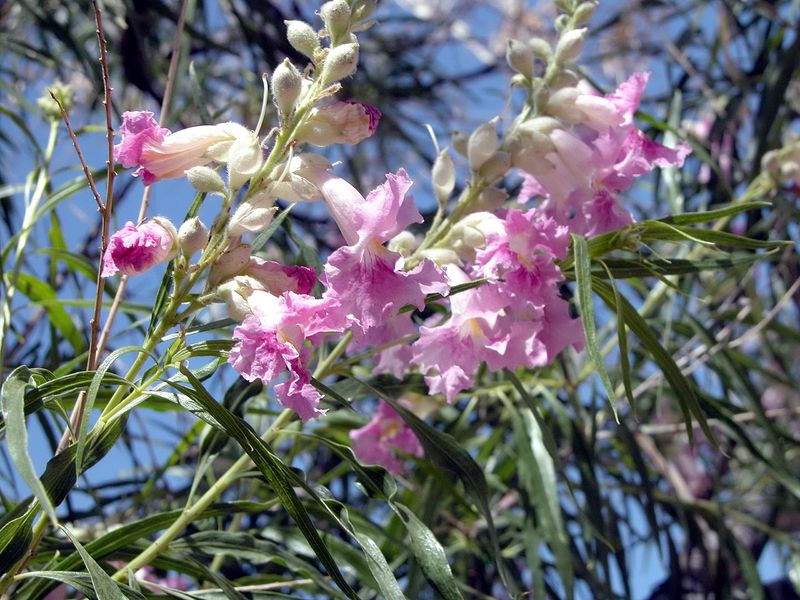
Starting in late spring, trumpet-shaped flowers in shades of pink, lavender, and white open up along the branches and keep coming well into summer. The blooms have a light, sweet fragrance and attract hummingbirds and butterflies like a magnet.
Watching those visitors dart around the flowers on a hot Texas afternoon is genuinely delightful.
The foliage is long, narrow, and airy, similar to a weeping willow but without the need for water. It gives the tree a soft, flowing look that contrasts beautifully with the bold flower color. The overall effect is elegant and relaxed at the same time.
As fall arrives, long seed pods form along the branches and add an interesting textural element to the tree’s appearance.
Even after the leaves drop in winter, the Desert Willow holds its own with a graceful, sculptural branching pattern that looks striking in a front yard.
Growing 15 to 25 feet tall, this tree fits well in medium-sized Texas yards. It needs full sun and well-drained soil to perform its best, so avoid planting it in low spots where water tends to collect.
With the right placement, it delivers nonstop seasonal interest from late spring all the way through winter.
5. American Smoke Tree
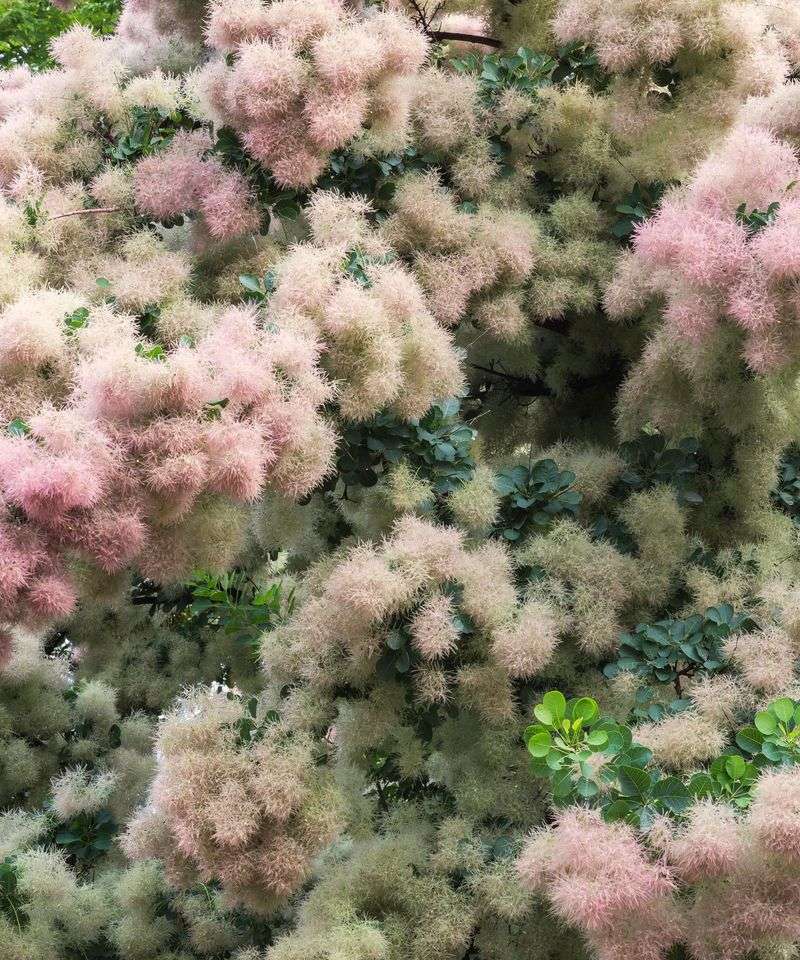
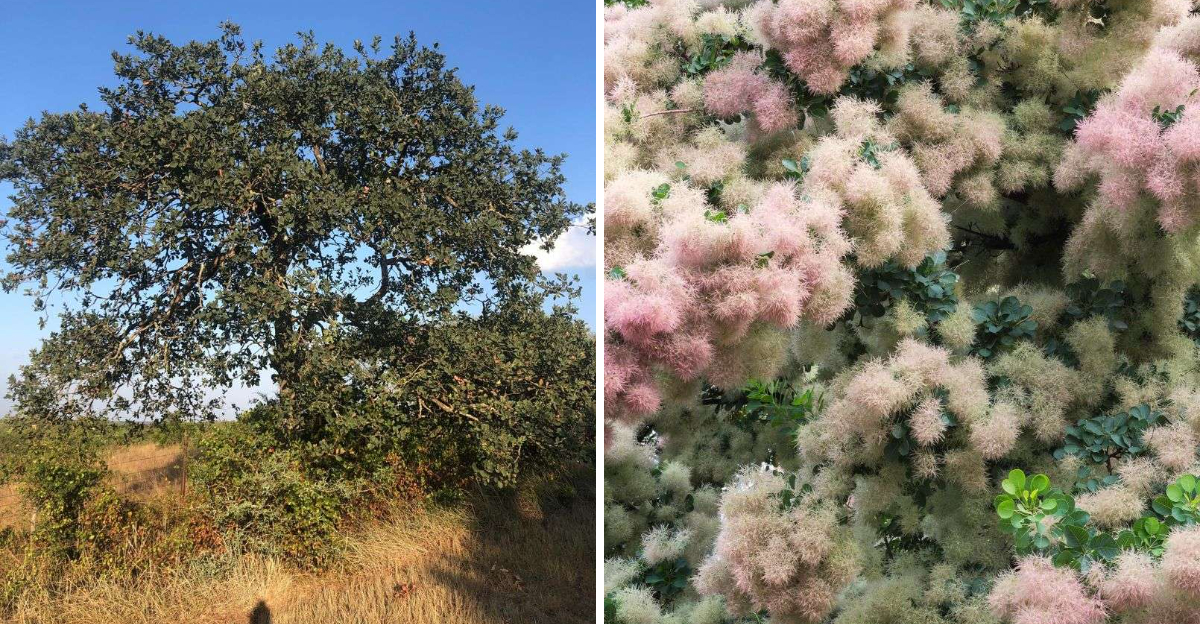
There is no other native Texas tree quite like the American Smoke Tree. In late spring, it produces feathery, cloud-like flower clusters that give the whole tree a soft, hazy appearance, almost like wisps of smoke drifting through the canopy.
That unusual look is what earns it a spot on every list of standout native ornamentals. Summer brings blue-green foliage that holds up well through the heat. The leaves are rounded and smooth, with a slightly waxy surface that catches sunlight in a pleasing way.
The tree has a relaxed, multi-stemmed form that feels more artistic than formal, which works really well in front yards that lean toward a naturalistic or cottage-style design.
Fall is when the American Smoke Tree truly steals the show. The foliage turns a spectacular mix of orange, red, and deep purple, easily rivaling the fall color displays you might see in cooler parts of the country.
In Texas, where dramatic fall color is not always guaranteed, this tree is a genuine standout. Winter reveals an interesting network of branches that adds structure to the yard even after the leaves are gone.
The bark has a fine texture and a slightly grayish tone that looks clean and refined in the cooler months.
Growing 20 to 30 feet tall, the American Smoke Tree works best in yards with some open space. It thrives in full sun and well-drained soil, both of which are easy to find across much of Texas.
Plant one where it can be seen from the street for maximum visual impact all year long.
6. Lacey Oak
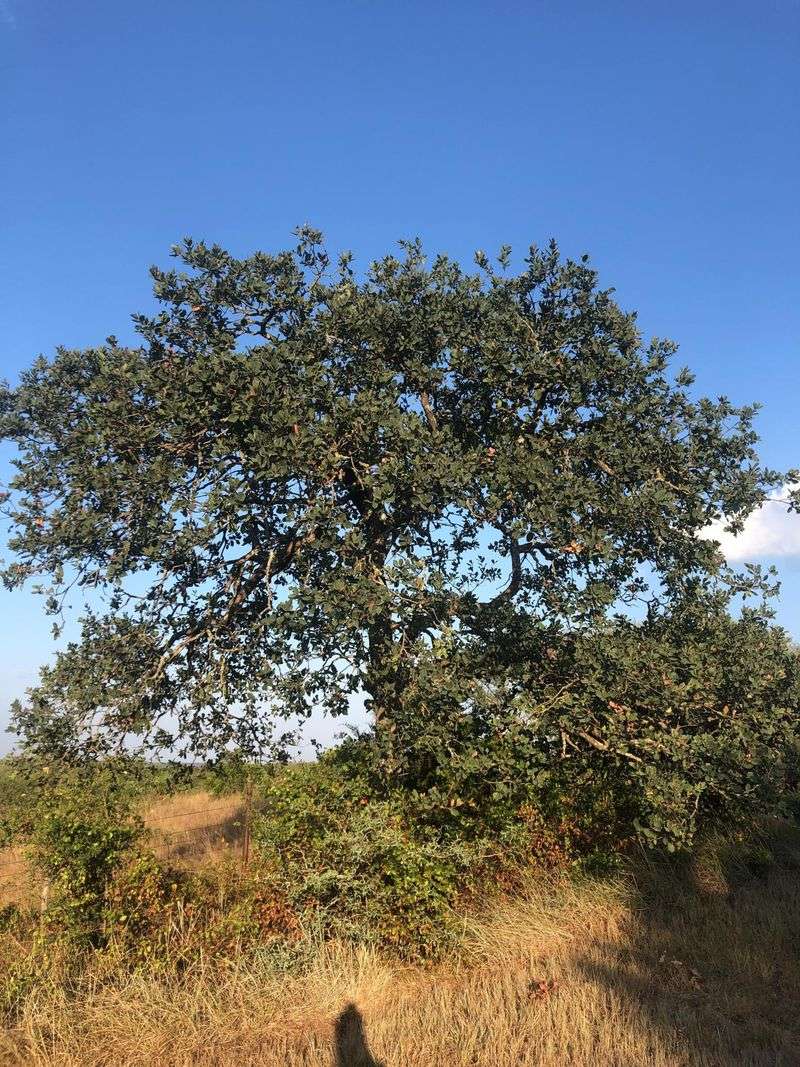
Not all oaks are giants that take over a yard, and the Lacey Oak is proof of that. Native to the Texas Hill Country and the Edwards Plateau, this compact, well-behaved oak tops out at around 25 to 35 feet, making it a smart choice for front yards that need a refined, medium-sized shade tree.
It has a polished, almost sculptural look that feels right at home in both traditional and modern Texas landscapes.
Spring growth is one of the most charming parts of this tree’s seasonal cycle. Fresh new leaves emerge with a soft blue-green color that has a slightly powdery, almost dusty quality to it.
That cool-toned foliage continues through summer as silvery-green leaves create a calming, elegant canopy overhead.
Fall color on the Lacey Oak is subtle but lovely. The leaves shift to soft shades of yellow and tan before dropping, giving the yard a warm, understated glow.
It is not the most explosive fall color you will ever see, but it has a quiet beauty that suits a front yard perfectly.
Winter shows off the tree’s real structural strength. Pale gray bark with interesting ridges and grooves adds texture and visual interest to the yard even when the branches are bare.
The branching pattern is open and balanced, which makes the winter silhouette genuinely attractive.
Lacey Oak is highly drought-tolerant once established, which makes it extremely well-suited to central and west Texas conditions. Plant it in full sun with good drainage and it will reward you with decades of four-season beauty.
7. Texas Persimmon
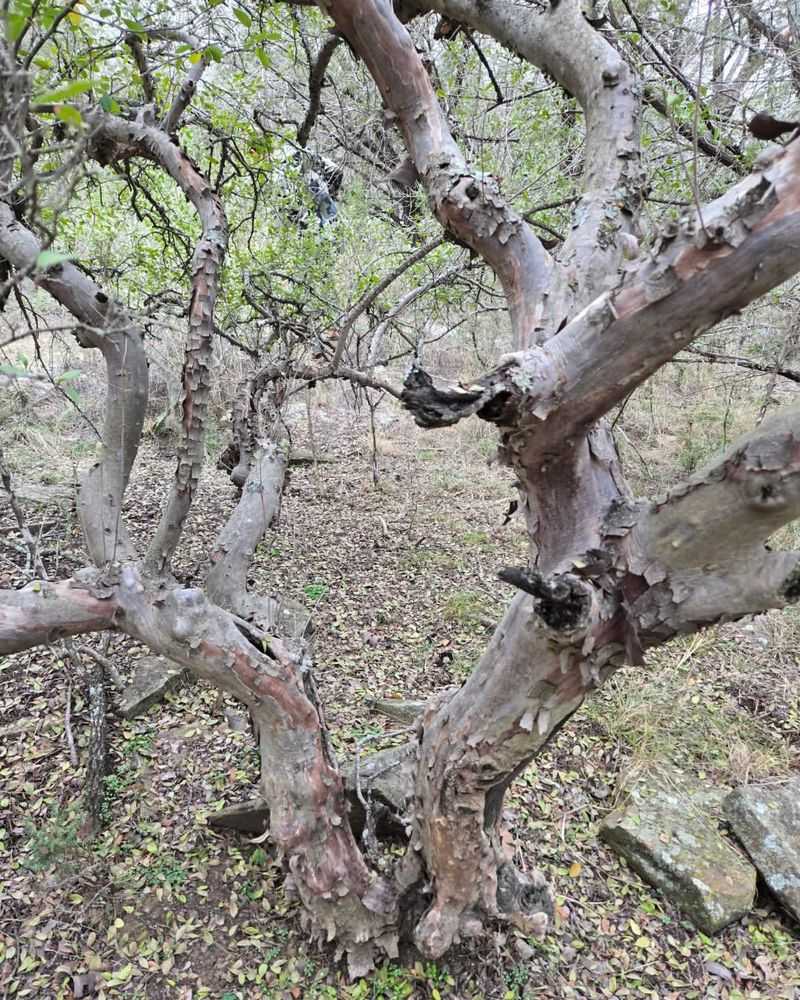
Most people walk right past a Texas Persimmon without realizing just how special it is. Look closely at the trunk and you will see smooth, peeling bark in shades of gray, white, and pale tan that almost looks hand-painted.
That bark is genuinely one of the most striking features of any native Texas tree, and it looks good every single month of the year.
Spring brings small, bell-shaped flowers that are subtle but charming. They are not showy in the way that redbuds or plums are, but they have a quiet elegance that fits this tree’s overall personality. Pollinators appreciate them even if most people do not notice them right away.
By late summer, the branches fill with small, dark fruits that ripen to a deep black-purple. Birds, foxes, and other wildlife eagerly seek them out, turning the tree into a lively hub of activity.
In warmer parts of Texas, the dark green foliage stays on the tree well into winter, giving it a semi-evergreen quality that keeps the yard looking full and green.
Winter is when the peeling gray bark really becomes the star of the show. Without leaves competing for attention, the trunk and branches display their beautiful, smooth texture in full.
The tree glows on sunny winter days, especially when the light hits the pale patches of exposed wood.
Growing 10 to 20 feet tall, Texas Persimmon fits comfortably in smaller front yards. It thrives in rocky, well-drained soils and handles drought with ease, making it ideal for low-maintenance Texas landscapes that still want year-round visual interest.