If You See This Vine Growing In Your Pennsylvania Yard, Remove It Immediately
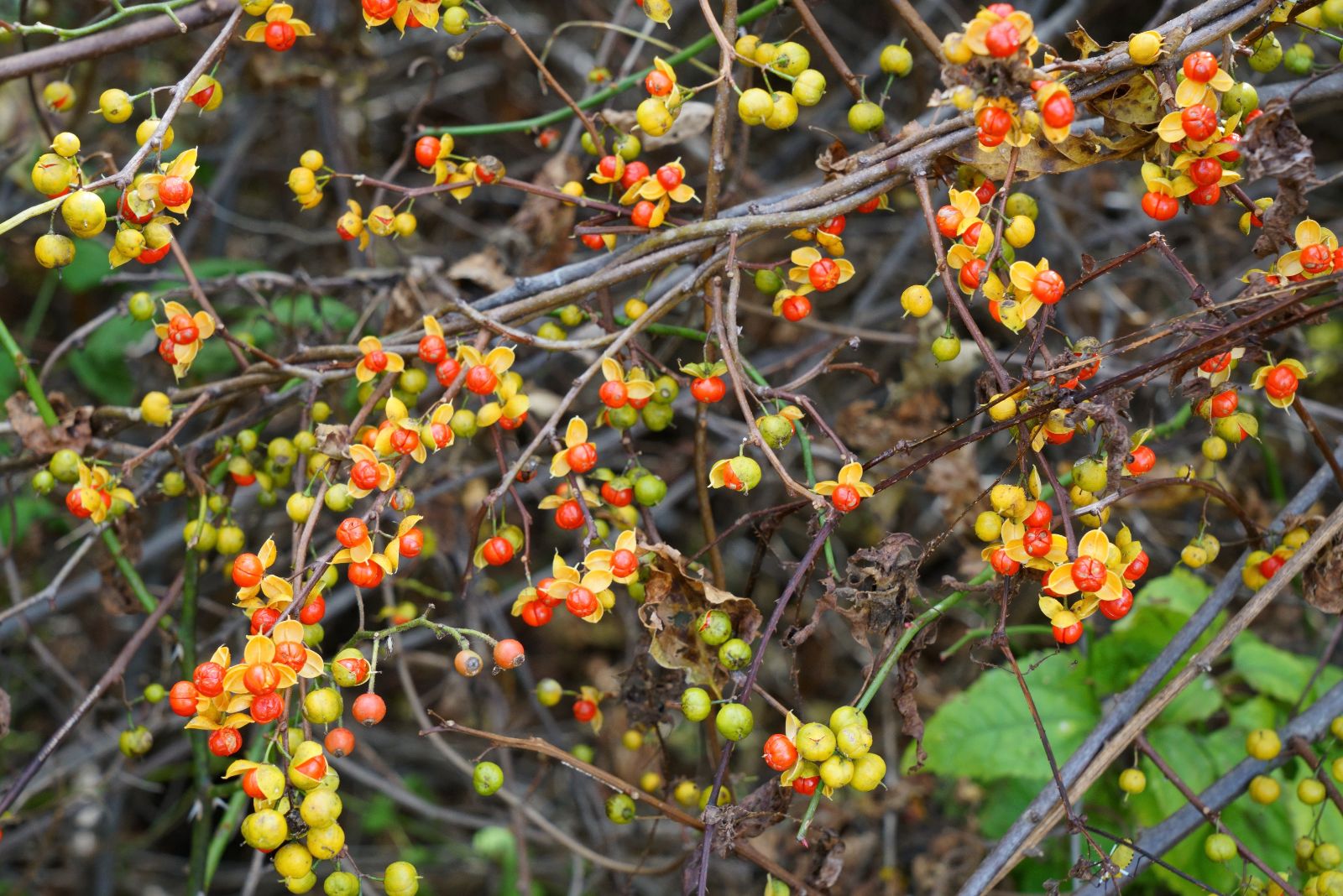
At first glance, it can look harmless. Maybe even charming. A fast-growing vine twisting through a fence or climbing a tree can seem like one of those wild backyard plants that showed up on its own and decided to stay.
In Pennsylvania, though, that kind of surprise growth is not always something you want to ignore.
Some vines spread so aggressively that they do far more than make a yard look overgrown. They can smother shrubs, pull down branches, choke out native plants, and turn into a much bigger problem before many homeowners realize what they are dealing with.
One of the worst offenders is oriental bittersweet, a vine that has caused serious trouble in landscapes and natural areas across the region. It grows fast, climbs hard, and takes advantage of almost any chance to spread.
What makes it especially tricky is that some people do not notice the danger until it is already wrapped around trees or pushing through multiple parts of the yard.
If you spot it, waiting is usually the mistake. The sooner it is identified and removed, the better chance you have of preventing a stubborn mess.
1. What This Vine Is (And Why It’s A Problem)
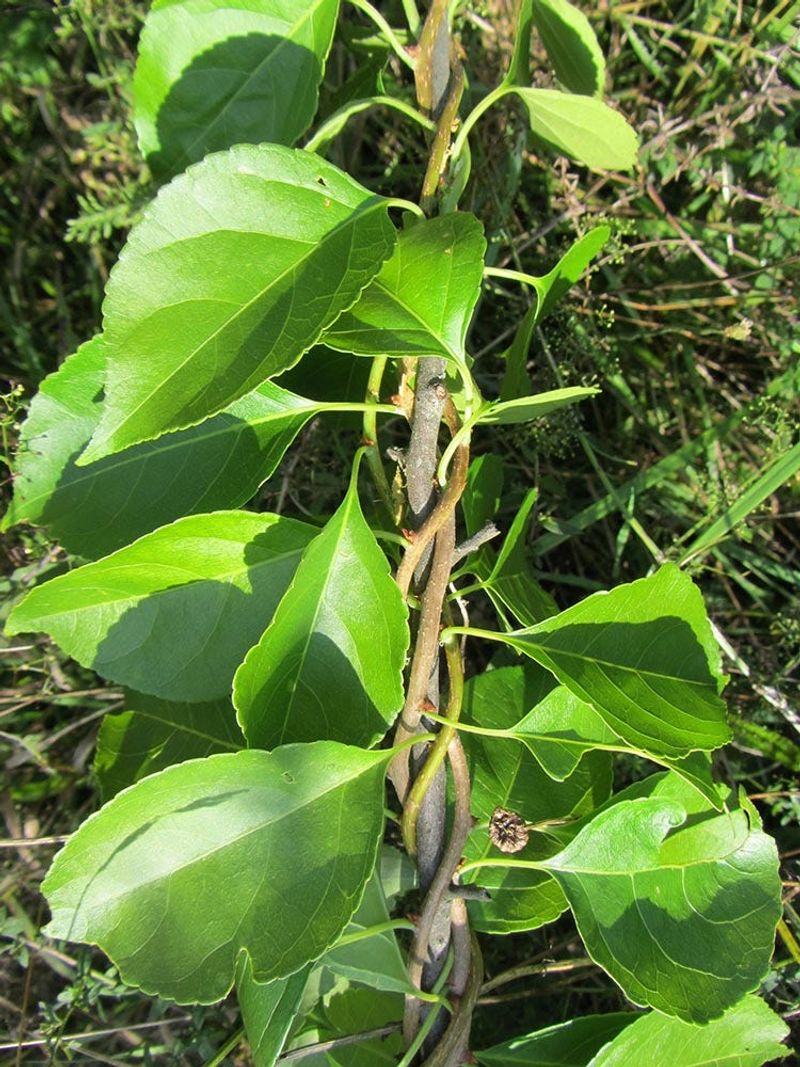
Most people who see Oriental bittersweet in their yard have no idea what they are looking at. It looks harmless at first, maybe even pretty in the fall when its colorful berries appear.
But do not let those bright colors fool you. Oriental bittersweet, known by its scientific name Celastrus orbiculatus, is one of the most aggressive invasive plants spreading across Pennsylvania right now.
Originally from China, Japan, and Korea, this vine was brought to the United States in the 1860s as an ornamental plant for gardens. People loved how it looked in fall wreaths and decorations.
The problem is, it escaped into the wild and never stopped spreading. Today it shows up in Pennsylvania yards, woods, roadsides, and fence lines everywhere.
What makes it such a big problem is how fast and aggressively it grows. Unlike plants that belong here, Oriental bittersweet did not grow up alongside Pennsylvania’s native trees and wildlife.
There are no natural checks to slow it down. It climbs over everything, blocks sunlight, and takes over space that native plants need to survive.
Pennsylvania’s Department of Conservation and Natural Resources (DCNR) lists it as an invasive species. That means it is not just a nuisance for your yard.
It is an active threat to the state’s forests and natural areas. Homeowners who spot it early and remove it are doing their yard and their community a real favor. The sooner you act, the easier the job will be.
2. How To Identify It Quickly
Spotting Oriental bittersweet before it takes over is the key to managing it. Luckily, once you know what to look for, it is not too hard to recognize.
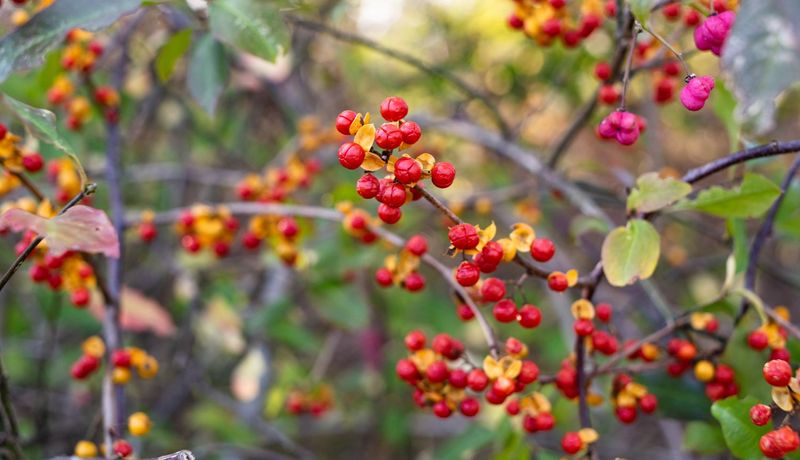
The leaves are round to oval-shaped, glossy green, and finely toothed around the edges. They are arranged alternately along the stem, meaning they do not grow directly across from each other.
Your Pennsylvania Garden Changes Every Week. Your Plan Should Too.
Gardening in Pennsylvania changes quickly throughout the season. Every Friday you’ll receive a simple weekly plan showing exactly what to plant, prune, fertilize, harvest, and protect so you never miss the right timing.
The vine itself is woody and twining, meaning it wraps tightly around whatever it climbs. You might see it coiling around tree trunks, fence posts, shrubs, or even utility poles.
Young vines are thin and flexible, but older ones can grow thick and tough, sometimes as wide as a few inches across. The vine’s bark tends to be light brown or grayish.
Fall is actually the easiest time to identify Oriental bittersweet in Pennsylvania. That is when the plant puts on its most recognizable show.
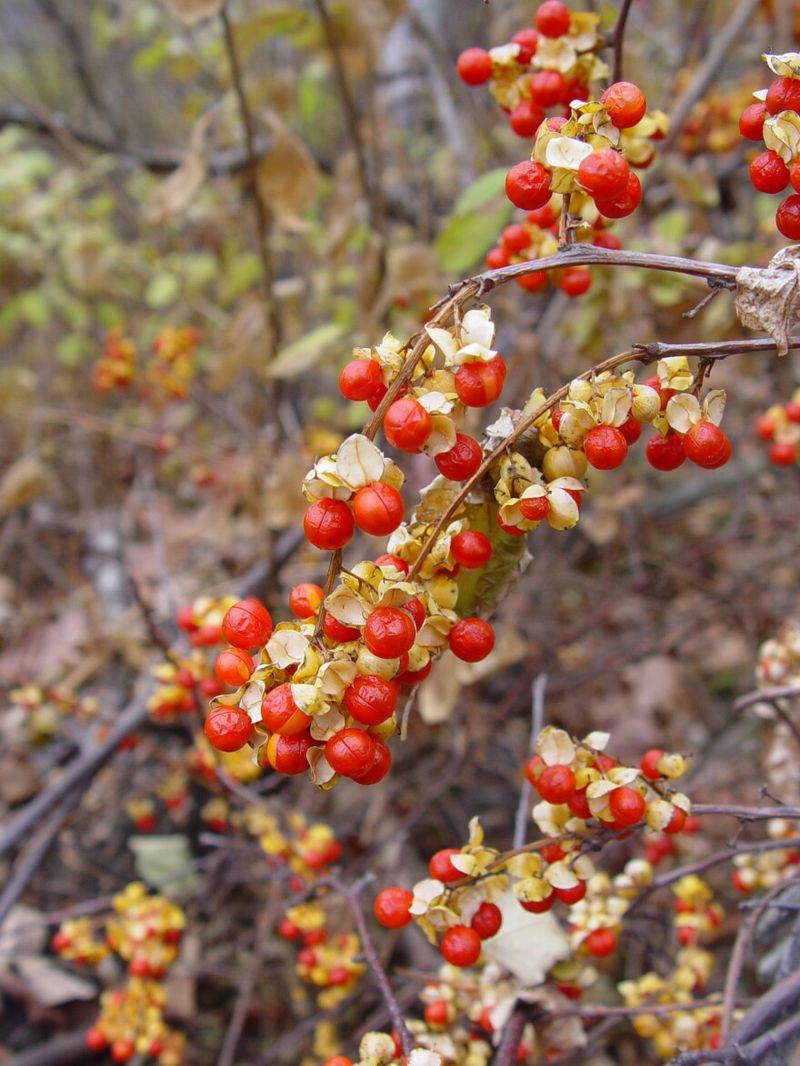
Small, round capsules appear all along the stems. These capsules start out yellow or orange and then split open to reveal bright red berries inside.
This colorful combination is eye-catching, and unfortunately, it is also how the plant tricks birds into spreading its seeds everywhere.
One quick ID tip: look at where the berries grow on the vine. On Oriental bittersweet, the berries appear all along the length of the stem, not just at the tips.
This detail will become very important in section six when we talk about telling it apart from the native American bittersweet. If you see berries scattered along the whole vine, you are almost certainly looking at the invasive species.
3. Why It’s So Dangerous To Your Yard
Here is something that surprises a lot of Pennsylvania homeowners: a vine can actually bring down a full-grown tree. Oriental bittersweet does this in a few different ways, and none of them are good.
Once it starts climbing, it wraps so tightly around a tree trunk that it cuts off the flow of water and nutrients through the bark. Over time, the tree weakens and becomes much more likely to fall during storms.
Beyond girdling trees, the vine also races up into the canopy and spreads its leaves wide. Those leaves block sunlight from reaching the tree’s own leaves below.
Without enough sunlight, the tree cannot make the food it needs to stay strong. Meanwhile, the added weight of a thick vine puts extra stress on branches, making them more likely to snap in wind or ice storms.
This is a real safety concern for Pennsylvania homeowners with large trees near their homes.
The damage does not stop at trees. Oriental bittersweet forms dense, tangled thickets along fence lines and at the edges of gardens.
These thickets smother low-growing native plants and shrubs, leaving nothing else able to grow. Once a thicket forms, it is genuinely hard to clear out without serious effort.
Fences and garden structures are also at risk. The vine’s strong, twining stems can warp wooden fence boards, pull apart trellises, and even push into gaps in stone walls over time.
What starts as a small vine creeping along a fence can turn into a structural headache within just a few growing seasons if left unchecked in a Pennsylvania yard.
4. How It Spreads So Fast
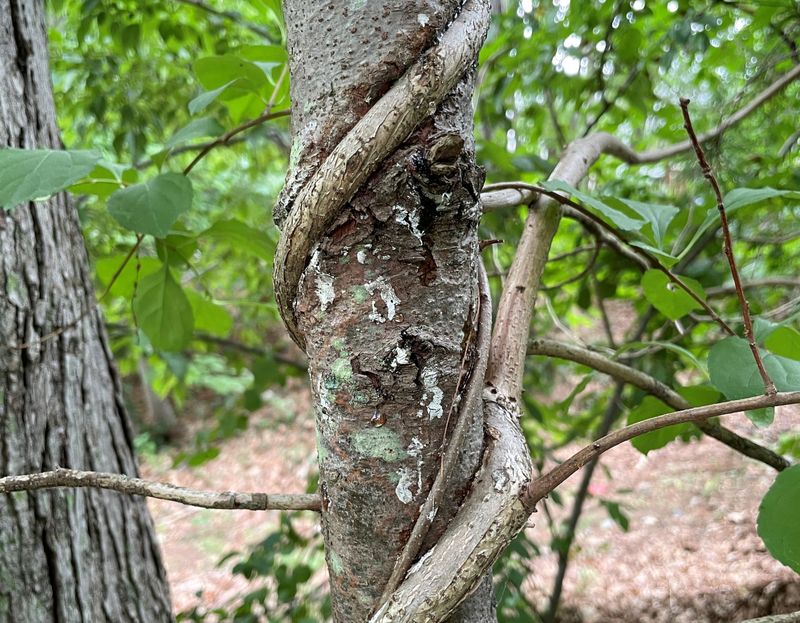
Ever wonder how a plant can go from one small vine to covering an entire yard in just a couple of seasons? With Oriental bittersweet, the answer starts with birds.
Those bright red berries are incredibly attractive to robins, starlings, cedar waxwings, and other birds common across Pennsylvania. The birds eat the berries, fly off to a new location, and then deposit the seeds somewhere else through their droppings.
One bird can spread seeds across a wide area in a single day. Seeds are just one part of the problem. The underground root system of Oriental bittersweet is just as aggressive as the vine above ground.
Even if you cut the vine down, the roots can send up new shoots quickly. The plant stores a lot of energy in its roots, which is why it bounces back so stubbornly after being cut.
This is what makes partial removal efforts so frustrating for Pennsylvania homeowners. Oriental bittersweet is also remarkably adaptable. Most invasive plants have preferences, but this one thrives in full sun and deep shade alike.
It does not care much about soil type either. Disturbed areas, like roadsides, construction sites, and the edges of mowed lawns, are especially vulnerable because the soil has been turned up and competing plants have been removed.
Once Oriental bittersweet gets established in a Pennsylvania neighborhood, it can spread quickly from yard to yard. A vine on one property drops berries, birds carry those seeds to the next yard, and before long the whole street has a problem.
That is why early removal is so much more effective than waiting until the infestation grows large.
5. How To Remove It Properly
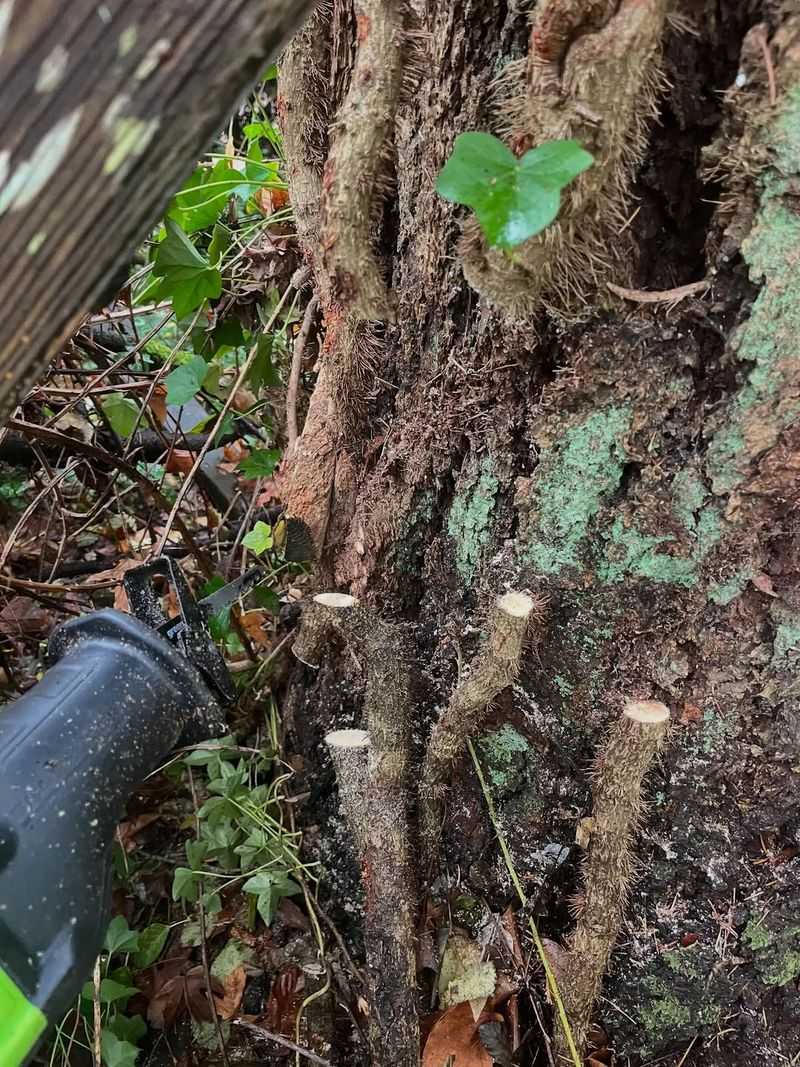
Getting rid of Oriental bittersweet is not a one-and-done job, but it is absolutely doable if you are consistent. Start by suiting up properly.
Wear gloves, long sleeves, and long pants. While Oriental bittersweet itself is not as irritating as poison ivy, you may encounter other plants while you work, and protecting your skin is always a smart move when clearing vegetation in Pennsylvania yards.
For young plants and small vines, hand-pulling is your best bet. Grab the stem as close to the ground as possible and pull slowly and steadily to get as much of the root system out as you can.
Loose, moist soil makes this easier, so try pulling after a good rain. Place pulled plants in a trash bag right away. Do not compost them, because the berries can still sprout in a compost pile.
Mature vines need a different approach. Use pruning shears or loppers to cut the vine at the base, as close to the ground as possible.
For large, established vines climbing trees, cut through the vine at chest height and again near the ground, then remove that middle section. Leave the upper portion of the vine on the tree.
It will dry out on its own without harming the tree further, and pulling it down could damage the bark.
Check treated areas every few weeks throughout the growing season. New shoots will likely sprout from remaining roots, especially in the first year.
Pull those shoots as soon as you see them. With persistence, you can exhaust the plant’s root reserves over one to two growing seasons and reclaim your Pennsylvania yard for good.
6. Common Mistake: Confusing It With Native Bittersweet
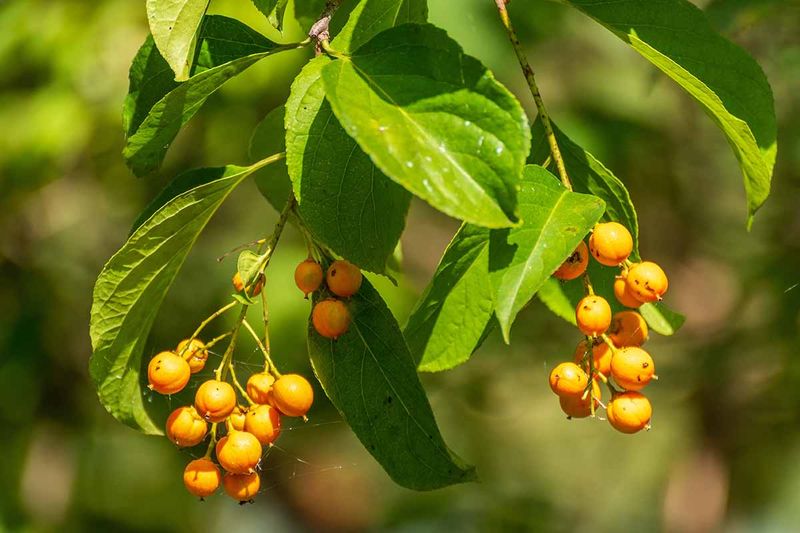
Here is a mistake that trips up even experienced gardeners in Pennsylvania: confusing Oriental bittersweet with American bittersweet. American bittersweet (Celastrus scandens) is a native vine that actually belongs here.
It supports local wildlife, provides food for birds, and does not aggressively push out other plants. Mistaking the invasive species for the native one and leaving it alone is one of the most common errors people make when managing their yards.
So how do you tell them apart? The single most reliable clue is where the berries grow on the vine.
On Oriental bittersweet, the berries and seed capsules appear all the way up and down the stems, scattered throughout the entire plant. On American bittersweet, the colorful berries only appear at the very tips of the branches.
If you see berries spread along the whole length of the vine, that is your signal you are dealing with the invasive Oriental species.
Leaf shape can also offer a hint. Oriental bittersweet tends to have rounder leaves, while American bittersweet has leaves that are longer and more oval-shaped with a pointed tip.
However, leaves can vary quite a bit depending on growing conditions, so the berry placement is still the most dependable way to make a correct identification.
Getting the identification right really matters. American bittersweet is actually a species of conservation concern in Pennsylvania because it is being crowded out by its invasive cousin.
If you find the native version in your yard, protect it. If you find the invasive one, remove it promptly.
Knowing the difference helps you make the right call and support Pennsylvania’s native plant communities at the same time.