Native Michigan Trees To Plant Instead Of Overused Landscape Favorites
Some trees show up in Michigan landscapes so often that they barely stand out anymore. While familiar favorites may be easy to find, they are not always the best choice for a yard that feels unique, resilient, and connected to the local environment.
Native Michigan trees offer something better. They are adapted to the state’s weather, soil, and seasons, which often means fewer problems and stronger long term growth.
Many also bring more value to birds, pollinators, and other wildlife than the usual overplanted options. Some shine with spring flowers, others with rich fall color, textured bark, or a shape that adds real character to the landscape.
If you are ready to move beyond the same old choices, native trees can make your yard feel fresh in a way that still feels right at home. These standout picks prove local beauty is anything but ordinary.
1. Serviceberry (Amelanchier arborea)
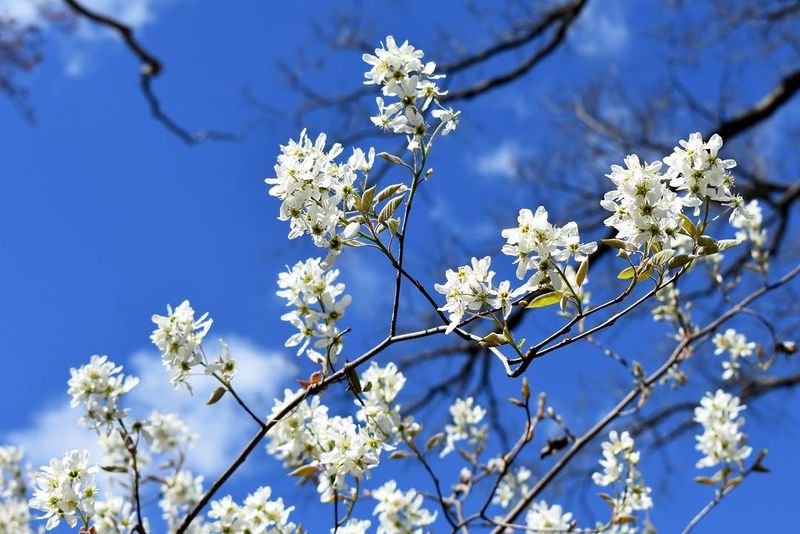
Few trees put on a spring show quite like serviceberry, and most Michigan homeowners are still sleeping on it. While ornamental pear trees have long been a go-to for white spring blooms, they come with serious invasive baggage.
Serviceberry gives you all the same early-season beauty without the headaches that come with Callery pear spreading into natural areas across the Midwest.
This small, graceful tree typically grows between 15 and 25 feet tall, making it a perfect fit for front yards, corners, or garden edges across Michigan.
The white blossoms arrive in early spring before the leaves even open, giving your yard a clean, elegant look right when the season is waking up.
As summer arrives, the tree produces small, sweet berries that birds absolutely cannot resist.
Beyond the wildlife value, serviceberry delivers stunning orange and red fall color that rivals any imported ornamental. It handles Michigan’s variable soils well and thrives in both full sun and partial shade.
Nurseries across the state carry it regularly, so finding one should not be a challenge. Plant it near a window or patio where you can enjoy the birds it attracts all season long.
Serviceberry is truly one of Michigan’s most underappreciated native gems, and once you plant one, you will wonder why you waited so long.
2. Eastern Redbud (Cercis canadensis)
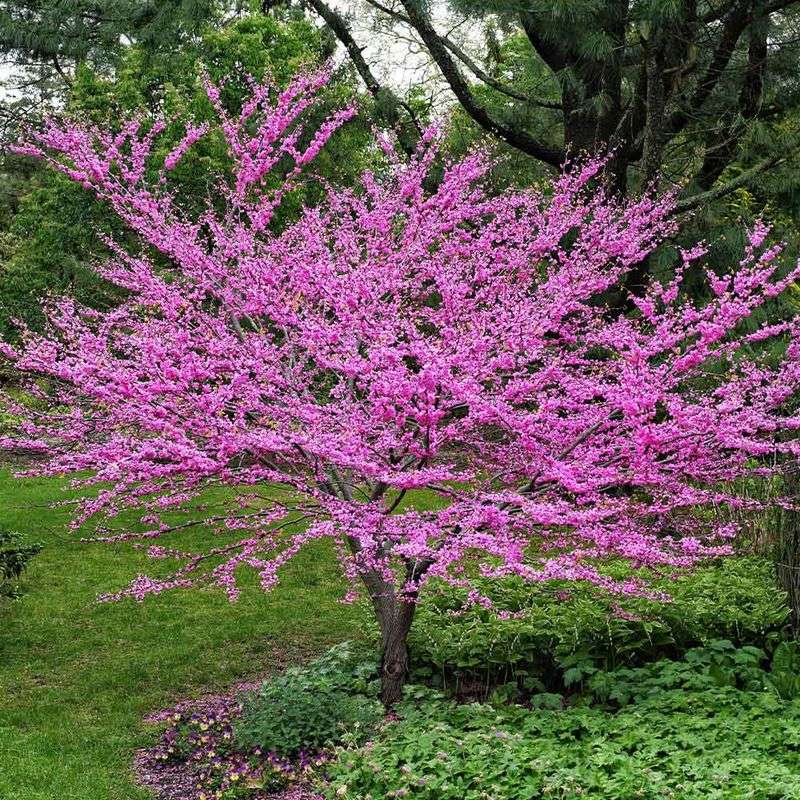
If you have ever driven past a yard with a flowering cherry tree and felt a little envious of those soft pink blooms, eastern redbud is about to become your new favorite tree.
It delivers the same jaw-dropping spring color, but it actually belongs here in Michigan, making it a far smarter long-term choice for your landscape.
Eastern redbud bursts into vivid magenta-pink flowers in early spring, covering its bare branches before a single leaf appears. The effect is bold, cheerful, and genuinely hard to miss from the street.
After the flowers fade, heart-shaped leaves fill in beautifully, giving the tree a lush, rounded canopy through summer. Come fall, those leaves shift to a warm yellow before dropping cleanly.
This native tree typically reaches 20 to 30 feet tall and wide, fitting nicely into yards of almost any size. It prefers well-drained soil and does well in partial shade, which makes it versatile for many Michigan planting situations.
Your Michigan Garden Changes Every Week. Your Plan Should Too.
Gardening in Michigan changes quickly throughout the season. Every Friday you’ll receive a simple weekly plan showing exactly what to plant, prune, fertilize, harvest, and protect so you never miss the right timing.
Unlike flowering cherry, eastern redbud rarely suffers from the disease problems that plague non-native ornamentals in the region. Pollinators, including native bees, flock to the early blooms when little else is flowering, giving local insects a much-needed boost.
Plant eastern redbud where it gets morning sun and some afternoon shade for the best results in Michigan gardens.
3. American Hornbeam (Carpinus caroliniana)
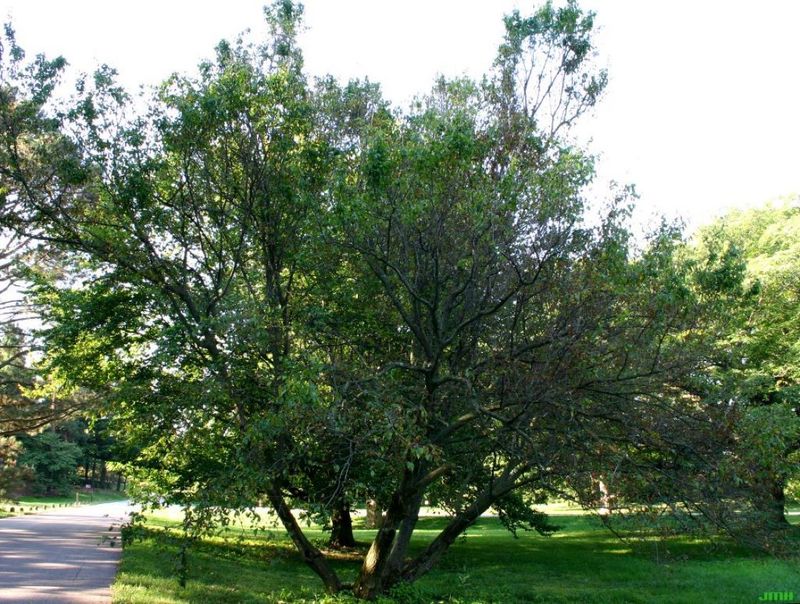
Walk up to an American hornbeam and the first thing you notice is the bark. It is smooth, blue-gray, and rippled with muscle-like ridges that make the trunk look almost sculptural.
This is why the tree earned its nickname musclewood, and it is one of the most visually interesting native trees you can plant in a shady Michigan garden.
Many Michigan homeowners reach for Japanese maple when they want a small, elegant tree for a shadier spot. American hornbeam fills that same role beautifully, but it is native, better adapted to local conditions, and far more valuable to the wildlife that calls Michigan home.
It grows slowly to around 20 to 35 feet tall, forming a graceful, multi-stemmed or single-trunk shape depending on how it is trained.
The foliage is rich green through summer and turns orange, red, and yellow in autumn, offering real seasonal interest without any fuss. American hornbeam thrives along stream edges, woodland borders, and shaded yards where other trees struggle to establish.
It tolerates moist soil and part to full shade better than almost any other native tree option in Michigan. Caterpillars and other insects use it heavily, making it a strong ecological choice for yards focused on supporting birds and pollinators.
If your yard has a shady, slightly wet corner, this tree was practically made for it.
4. Hophornbeam (Ostrya virginiana)
Hophornbeam is one of those native Michigan trees that rarely gets the spotlight, but it absolutely deserves more attention from homeowners looking for a tough, no-drama small tree.
While ornamental crabapples have long been the default choice for compact yards, they often come with scab, rust, and fire blight issues that require constant management. Hophornbeam sidesteps most of those problems entirely.
This tree grows slowly to around 25 to 40 feet tall with a rounded, layered canopy that looks refined and polished without any pruning theatrics. The bark is shaggy and textured in an appealing way, adding winter interest when the leaves are gone.
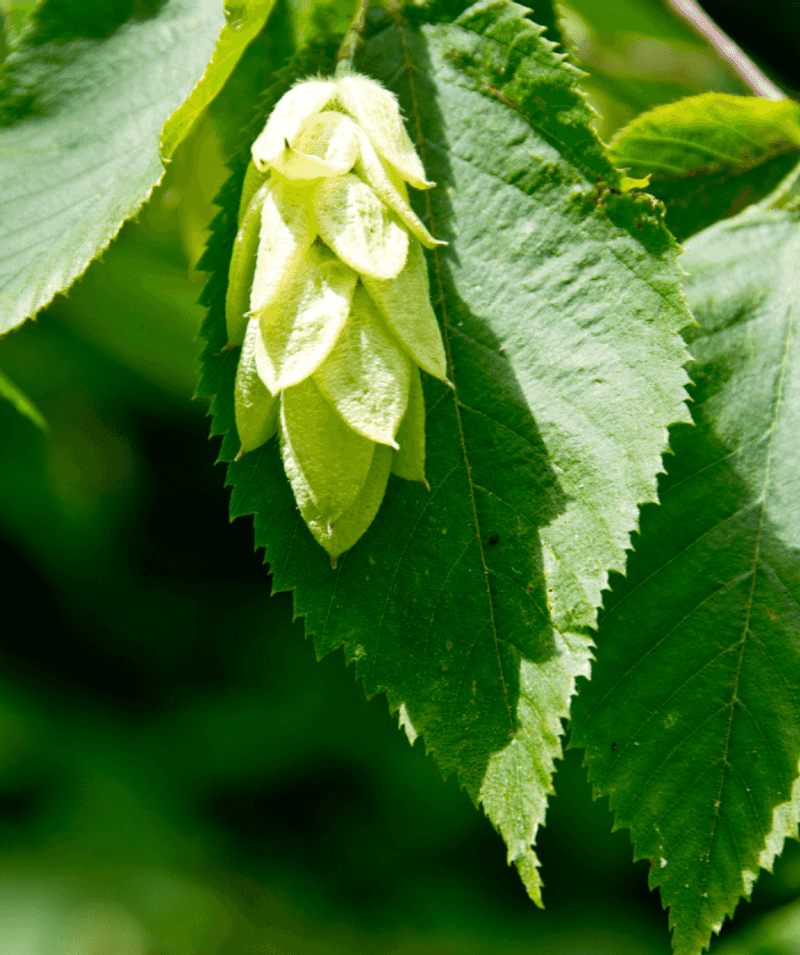
In late spring, the tree produces hop-like seed clusters that dangle from the branches and give it a quirky, charming look that catches people off guard.
Hophornbeam is remarkably adaptable across Michigan landscapes. It handles dry, rocky, or poor soils where other trees would struggle, making it a genuinely practical option for challenging planting sites.
Full sun to partial shade both work well for this species, giving you flexibility in where you place it. Birds and small mammals feed on the seeds through fall and winter, adding real wildlife value to your yard.
For Michigan gardeners who want a tree that works hard without demanding constant attention, hophornbeam is a hidden gem worth seeking out at your local native plant nursery.
5. Black Gum (Nyssa sylvatica)
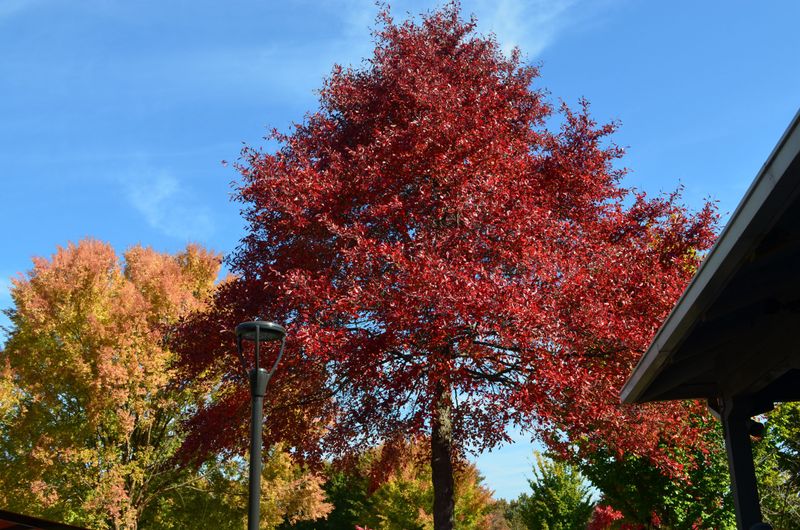
If fall color is what you are after, black gum might be the most spectacular native tree in all of Michigan.
Before almost any other tree turns, black gum ignites in shades of scarlet, orange, and deep burgundy, turning an ordinary yard into something that looks like a painting.
Norway maple is often planted for shade and seasonal interest, but it has become invasive across Michigan and much of the eastern United States.
Black gum replaces Norway maple beautifully. It grows 30 to 50 feet tall with a straight, upright form and horizontal branching that gives it a strong architectural presence in any landscape.
The glossy dark green leaves through summer are attractive on their own, and the tree transitions through seasons with genuine elegance. Small blue-black fruits appear in fall, and birds, especially bluebirds and robins, eagerly eat them.
One of the most impressive things about black gum is its tolerance for wet or poorly drained soils, which are common across many Michigan yards. It also handles urban conditions reasonably well once established, making it a practical street tree or lawn specimen.
Unlike Norway maple, it will not send seedlings popping up all over your garden beds or into nearby natural areas.
Black gum is a four-season tree that earns its place in Michigan landscapes through sheer beauty, ecological value, and long-term reliability that non-native alternatives simply cannot match.
6. Kentucky Coffeetree (Gymnocladus dioicus)
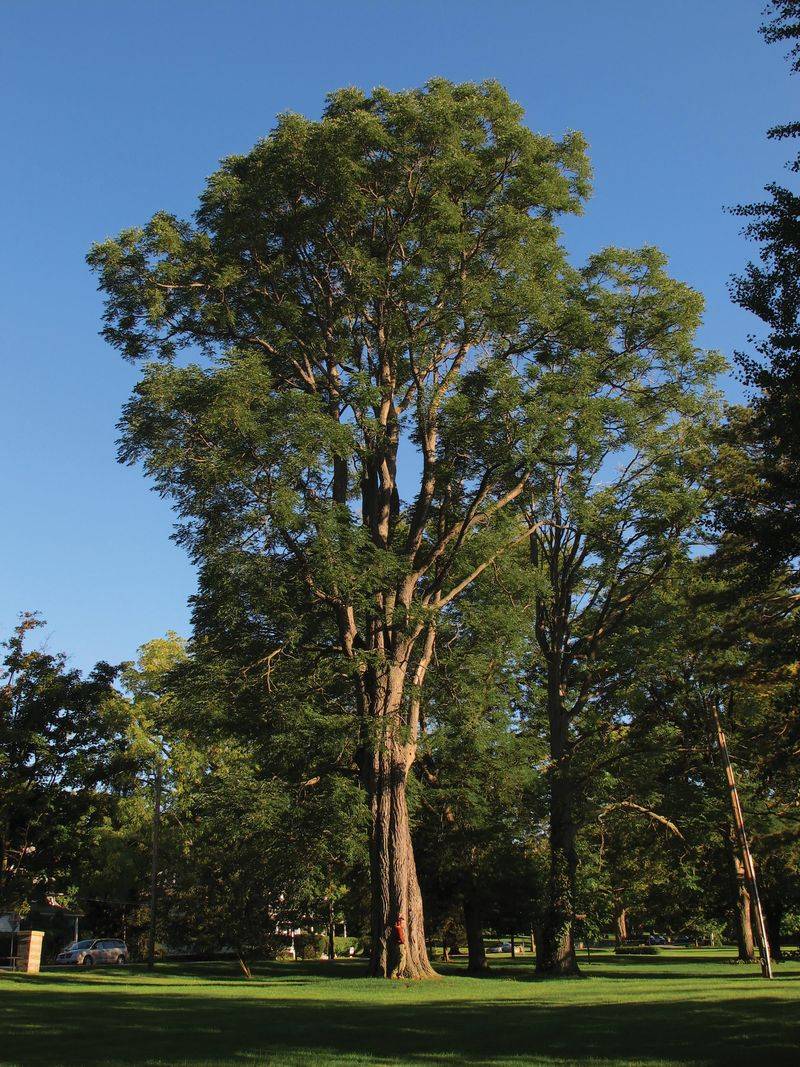
Kentucky coffeetree has a personality that is hard to ignore. Its branches are thick, bold, and dramatically architectural in winter, creating a silhouette that looks almost like something out of a storybook.
Many Michigan landscapes default to honey locust for a tough shade tree, but coffeetree offers something more visually striking while keeping things native and ecologically sound.
The compound leaves on this tree are enormous, sometimes reaching three feet long, and they give the canopy a coarse, tropical texture that feels unexpected for a Midwestern native.
In summer, the leafy canopy casts dappled shade rather than dense shadow, which means grass and understory plants can still thrive beneath it.
Female trees produce large, leathery seed pods in fall that persist through winter and add interesting texture to the landscape.
Kentucky coffeetree grows 60 to 75 feet tall at maturity and is impressively adaptable once established in Michigan. It tolerates drought, clay soils, and urban pollution better than many other shade trees, making it a strong candidate for street-side or large lawn plantings.
Pest and disease problems are virtually unheard of with this species, which is a welcome change from the maintenance headaches that come with honey locust in many Michigan yards.
If you want a shade tree with real character and staying power, Kentucky coffeetree delivers on every level without asking much in return.
7. Swamp White Oak (Quercus bicolor)
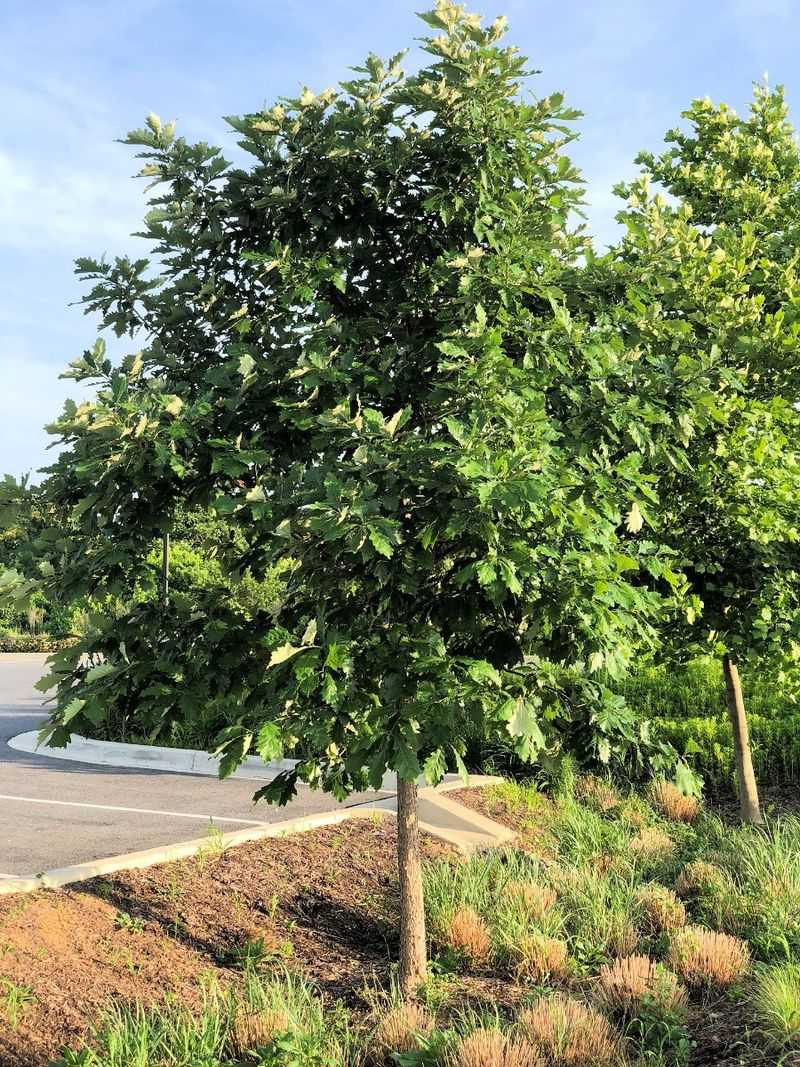
Oaks are the backbone of Michigan’s native forest, and swamp white oak is one of the most garden-worthy species you can choose for a residential landscape.
Pin oak has been planted across Michigan neighborhoods for decades, but it comes with a frustrating problem: it develops chlorosis in high-pH soils, turning leaves yellow and requiring ongoing treatment to look healthy.
Swamp white oak handles those same conditions with far less drama. Swamp white oak grows into a broad, majestic tree reaching 50 to 60 feet tall and wide over time.
The bark on older trees peels away in curling strips along the upper branches, creating a distinctive look that makes the tree instantly recognizable once you know what to look for.
Acorns are produced in good quantities, supporting deer, turkeys, squirrels, and a wide range of bird species across Michigan.
Despite its name, swamp white oak is not limited to wet sites. It adapts well to average yard conditions and handles both moist and moderately dry soils across Michigan landscapes.
It is also more tolerant of urban stresses like compacted soil and air pollution than many other oak species, giving it real practical value in suburban settings.
Planting a swamp white oak is an investment in your yard’s future, because this tree only grows more impressive and more valuable to wildlife with every passing decade. It is a legacy tree in the best possible sense.
8. American Basswood (Tilia americana)
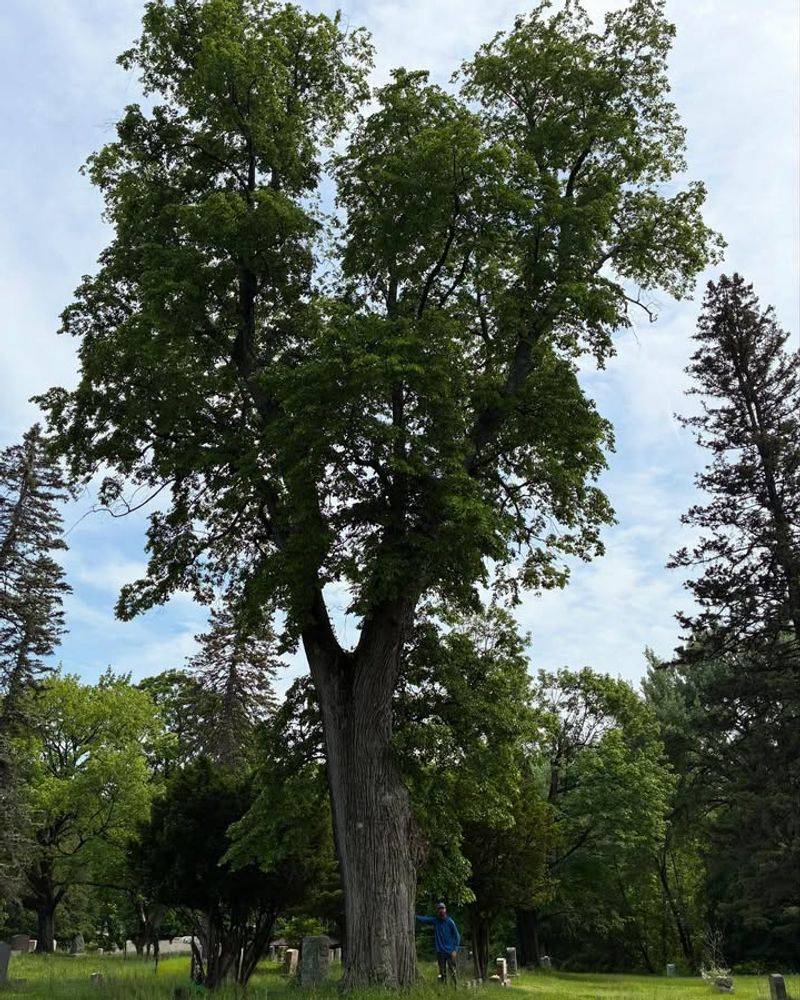
On a warm summer evening, stand near a blooming American basswood and you will understand why beekeepers across Michigan have always loved this tree.
The fragrant cream-colored flowers that appear in early summer draw pollinators in numbers that are genuinely impressive, filling the air with a soft, sweet scent that makes the whole yard feel alive.
Littleleaf linden is a popular substitute in many Michigan landscapes, but it is a European species that simply cannot compete with basswood on an ecological level.
American basswood grows into a large, rounded shade tree reaching 60 to 80 feet tall at full maturity. The heart-shaped leaves are big and bold, casting deep shade that keeps yards noticeably cooler on hot Michigan summer afternoons.
The canopy is dense and attractive, giving the tree a classic, stately presence that suits both older neighborhoods and newer developments equally well.
Native bees, honey bees, and a wide variety of other pollinators rely on basswood flowers as one of their most important early summer food sources. The tree also supports dozens of caterpillar species, which in turn feed nesting birds throughout the season.
American basswood prefers moist, fertile soils and grows best in full sun to light shade, making it well suited to many Michigan yard conditions.
For anyone serious about supporting pollinators while also getting outstanding shade, this native tree checks every box with room to spare.
9. Hackberry (Celtis occidentalis)
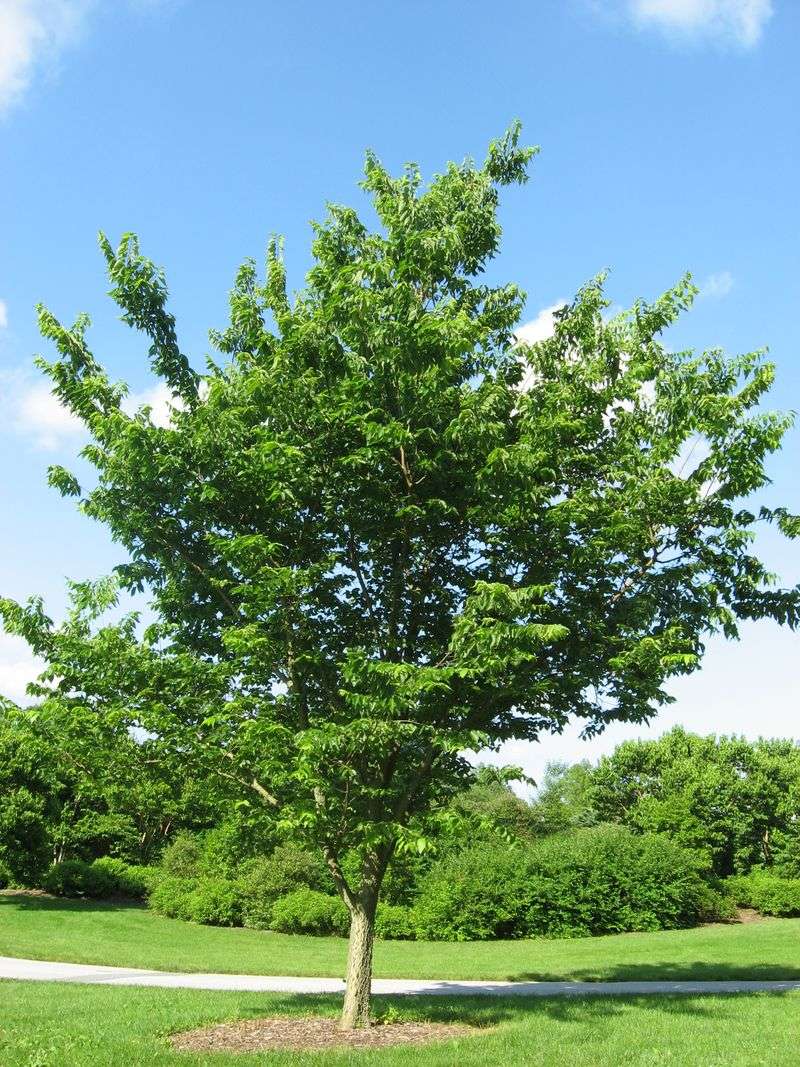
Hackberry does not get nearly enough credit for how tough and useful it really is.
While Bradford pear and other overused ornamental street trees have dominated Michigan neighborhoods for years, hackberry has quietly proven itself to be one of the most adaptable and wildlife-friendly native trees available for urban and suburban planting.
It handles conditions that would stress most other trees without missing a beat. The bark on a mature hackberry is one of its most recognizable features, covered in distinctive corky ridges and warts that give it a rugged, interesting texture year-round.
The canopy is open and airy, letting filtered light reach the ground below, which makes it easier to grow lawn grass or groundcovers underneath.
Small, dark purple berries ripen in fall and are a favorite food source for cedar waxwings, robins, and many other Michigan bird species.
Hackberry grows 40 to 60 feet tall and tolerates clay soil, drought, flooding, wind, and urban pollution with impressive resilience.
It is one of the few native trees that genuinely thrives in tough city conditions, making it a top recommendation for street tree plantings across Michigan communities.
Butterfly enthusiasts will also appreciate that hackberry is the host plant for several native butterfly species, including the hackberry emperor and tawny emperor.
For a low-maintenance, high-impact native tree that works just as well on a city street as it does in a backyard, hackberry is hard to beat.
10. Alternate-Leaf Dogwood (Cornus alternifolia)
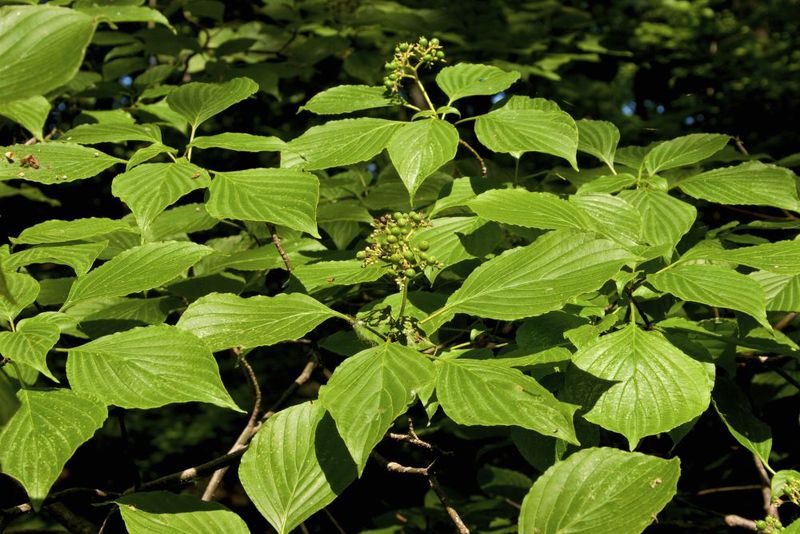
Alternate-leaf dogwood grows in a way that feels almost intentional, like a landscape architect designed every branch placement.
Its horizontal layers spread out in graceful, tiered shelves that create a strikingly beautiful form, especially in spring when clusters of creamy white flowers cover each layer.
While invasive burning bush and other overused accent shrubs continue to crowd Michigan nurseries, this native dogwood offers something far more interesting and ecologically responsible.
This small native tree or large shrub typically reaches 15 to 25 feet tall and wide, fitting naturally into woodland edges, garden borders, and shaded corners of Michigan yards.
The flowers attract native bees and other pollinators in late spring, and the small blue-black berries that follow are quickly claimed by migrating birds passing through the state in late summer and fall.
Few plants do more to support Michigan wildlife in such a compact, manageable package. Alternate-leaf dogwood earns its alternate-leaf name because, unlike most dogwoods, its leaves are arranged alternately on the stem rather than in opposite pairs.
Fall color ranges from red to purple, adding another season of visual interest before the leaves drop to reveal that gorgeous layered branch structure through winter.
It grows best in partial shade with moist, well-drained soil, conditions that are easy to find in many Michigan gardens. Replacing a tired accent shrub with this native dogwood is one of the most rewarding planting decisions you can make for both beauty and biodiversity.