6 Privacy Hedge Ideas For Florida Yards With A Neat HOA-Friendly Look
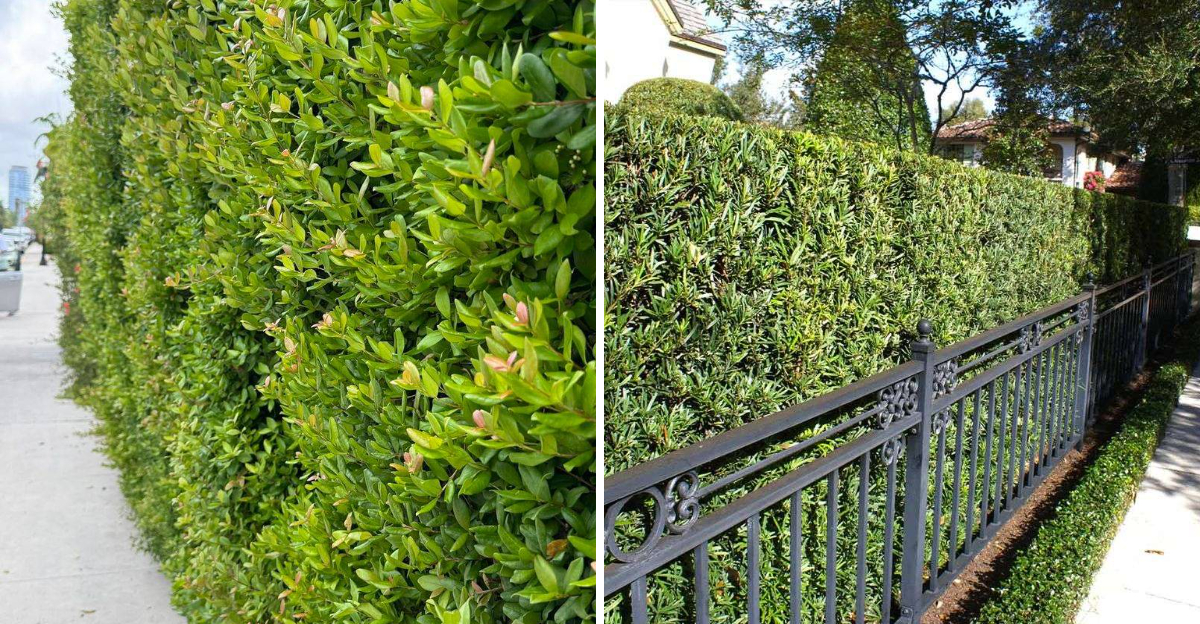
Privacy matters, but in plenty of Florida neighborhoods, a wild, overgrown hedge is not going to win anyone over, especially the HOA. The sweet spot comes down to plants that create a clean screen without making your yard look unruly or boxed in.
That is why more homeowners are leaning toward hedges that stay tidy, grow dense, and bring a polished look to the landscape at the same time.
The right choice can soften a fence line, block unwanted views, and give your yard a more finished feel without stirring up complaints.
In Florida, that balance matters even more, since fast growth can turn neat landscaping into a mess before you know it. A well chosen hedge keeps things private, structured, and easy on the eyes, which is exactly what most homeowners want.
These ideas strike that balance and prove you do not need to sacrifice style to get a little peace and quiet.
1. Keep It Neat With Simpson’s Stopper
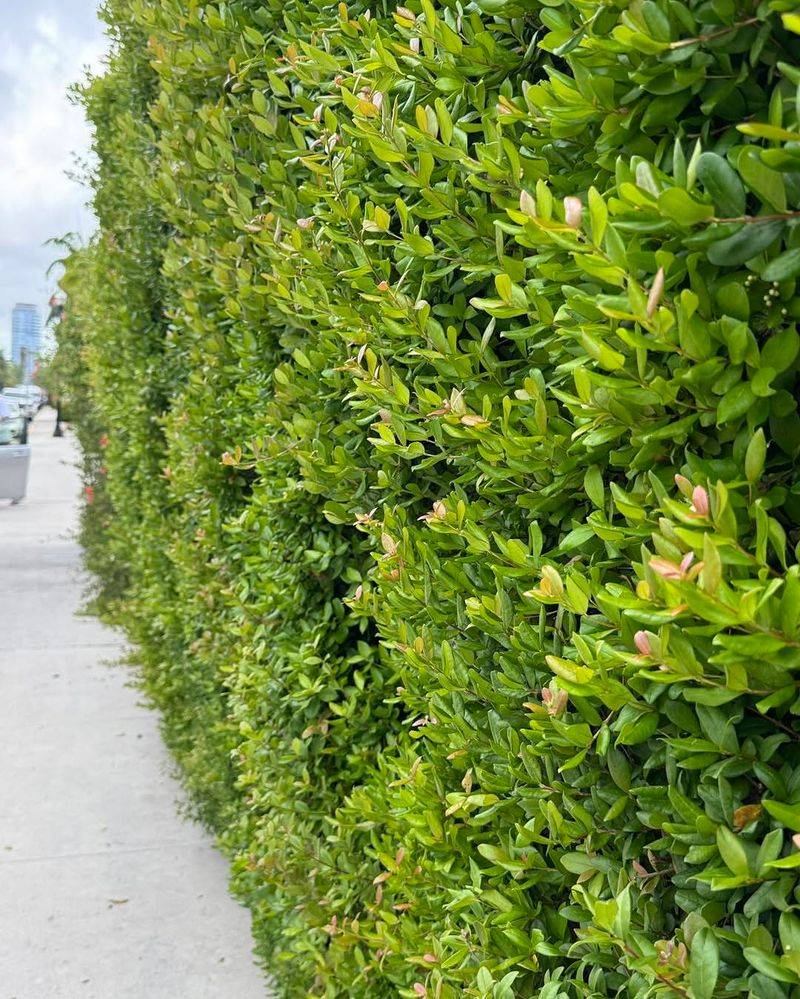
Florida gardeners who want both beauty and privacy in the same plant often end up falling for Simpson’s stopper.
This native Florida shrub, known botanically as Myrcianthes fragrans, produces dense, dark green foliage that can be shaped into a tidy, upright hedge without much effort.
The leaves are small and aromatic, giving the plant a refined, almost manicured quality even when it has not been recently trimmed.
What sets Simpson’s stopper apart from other native shrubs is its ornamental appeal. Fragrant white flowers bloom in clusters throughout the year, and small orange-red berries follow, attracting mockingbirds, waxwings, and other native wildlife.
For homeowners who want a hedge that looks intentional rather than wild, this plant delivers that polished look naturally.
It performs best in full sun to partial shade and grows well across Central and South Florida. North Florida gardeners can grow it too, though it may need some protection from hard freezes.
It handles a range of soil types, including sandy Florida soils, and once established, it has solid drought tolerance. Mature plants can reach 8 to 15 feet tall, so regular shaping is important if your HOA has height restrictions.
Simpson’s stopper is native to Florida, which is a meaningful advantage. Native plants are generally better adapted to local rainfall patterns, resist pests more naturally, and support local ecosystems without becoming invasive concerns.
The University of Florida IFAS recognizes it as a valuable Florida-friendly landscape plant with real screening potential.
For homeowners in HOA communities, the key is consistent maintenance. Trimmed a few times per year, Simpson’s stopper maintains a clean, attractive profile that reads as carefully planned rather than casually planted.
Always confirm your HOA’s rules on hedge height and placement before installing any new planting along property lines.
2. Frame The Yard With Clean Green Cocoplum
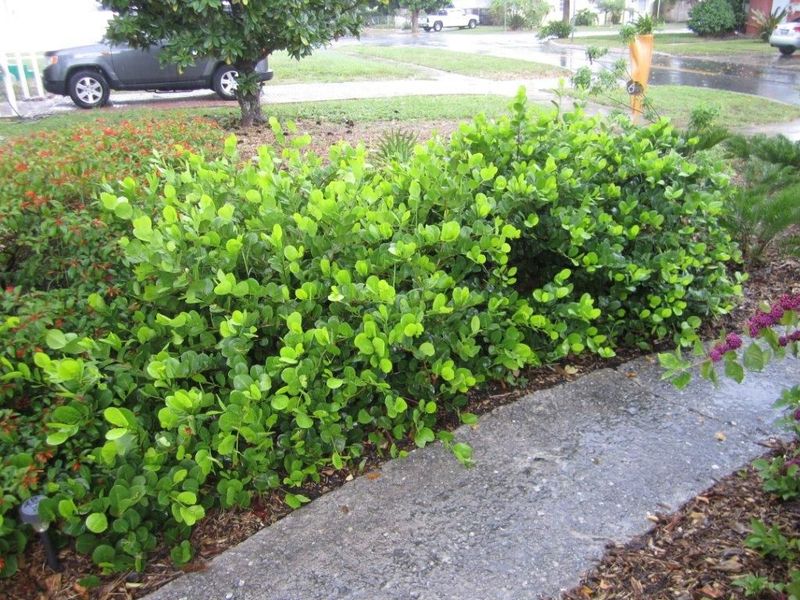
Cocoplum is one of those plants that looks like it belongs in a carefully designed Florida landscape.
With its rounded, glossy leaves and naturally dense branching habit, this evergreen shrub creates a rich green wall that can serve as both a privacy screen and a polished yard border.
Your Florida Garden Changes Every Week. Your Plan Should Too.
Gardening in Florida changes quickly throughout the season. Every Friday you’ll receive a simple weekly plan showing exactly what to plant, prune, fertilize, harvest, and protect so you never miss the right timing.
It has a clean, tropical look that feels at home in South and Central Florida neighborhoods without appearing unkempt or overly wild.
Known scientifically as Chrysobalanus icaco, cocoplum is a Florida native found naturally along coastal areas, wetland edges, and hammock margins.
It tolerates salt spray well, making it a smart pick for homeowners near the coast who struggle to find hedging plants that hold up in salty air.
Inland yards in warmer parts of Florida also benefit from its toughness and adaptability to sandy or moist soils.
Growth rate is moderate, which is actually an advantage for HOA-minded homeowners. Faster-growing hedges can quickly exceed height limits or spill beyond setback boundaries, requiring more frequent correction.
Cocoplum grows at a pace that is easier to manage, and it responds well to shearing, allowing you to maintain a flat-topped or rounded profile with regular trimming.
Mature plants can reach 6 to 15 feet depending on the variety and growing conditions. The red-tipped variety, Chrysobalanus icaco var. pellocarpus, tends to stay more compact and is commonly used in residential landscapes.
Creamy white flowers appear periodically, and edible plum-like fruits follow, adding mild ornamental interest beyond the foliage alone.
For HOA landscapes, cocoplum works best when planted with enough space to fill in properly and trimmed at least two to three times per year.
Confirm height and placement rules with your community before planting, and ask your local UF IFAS extension office about the best variety for your specific location.
3. Soften The Fence Line With Walter’s Viburnum
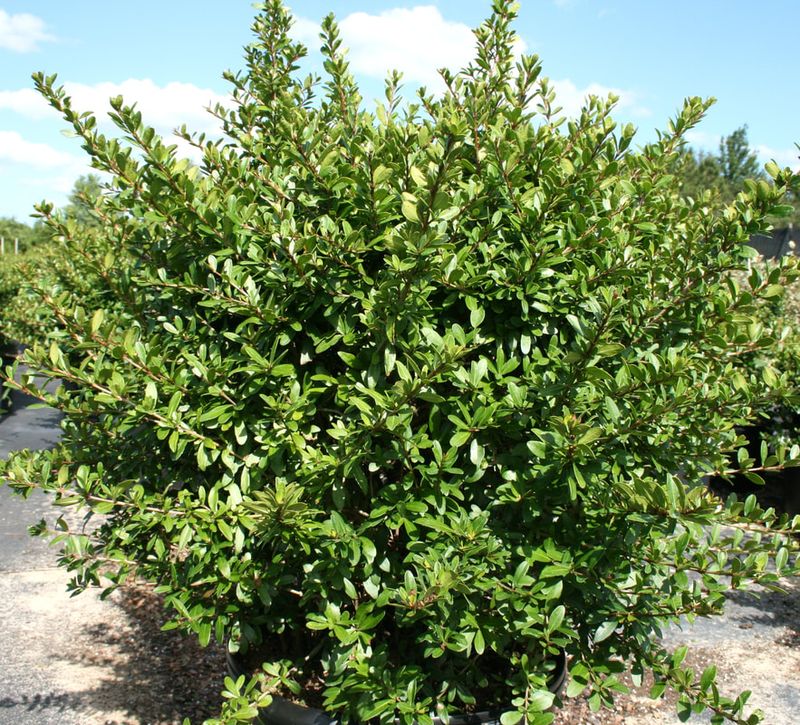
Not every homeowner wants a hedge that looks stiff and architectural. Some prefer something that feels a little more natural while still appearing neat, full, and clearly maintained.
Walter’s viburnum hits that balance almost perfectly. It has fine-textured, dark green foliage that fills in densely without looking rigid, giving a fence line a softer but still polished appearance.
Viburnum obovatum, commonly called Walter’s viburnum, is a Florida native shrub that grows naturally in moist areas across North and Central Florida.
It produces small white flowers in late winter or early spring that cover the plant in a way that genuinely stops people in their tracks.
The bloom display is brief but striking, and it adds seasonal interest that most purely structural hedges cannot match.
Growth habit is upright and fairly compact, especially in cultivated varieties like ‘Mrs. Schiller’s Delight’ and ‘Whorled Class,’ which stay smaller and work well in tighter spaces or under height restrictions.
The standard species can reach 10 to 15 feet at full maturity, so selecting the right cultivar matters if your HOA has specific height limits.
Regular trimming keeps it dense and tidy.
Walter’s viburnum performs well in full sun to partial shade and tolerates a range of Florida soil types, including those that stay moist periodically. It is cold-hardy enough for North Florida, which gives it a broader range than many other hedge options.
Once established, it is relatively low-maintenance and drought-tolerant.
For homeowners who want privacy without the formal, clipped look of a boxwood-style hedge, Walter’s viburnum offers a genuinely attractive alternative. It reads as intentional and cared-for without looking stiff or overly manicured.
Check your HOA’s guidelines on mature plant height and spacing before committing to a full hedge installation.
4. Add Order And Privacy With Yaupon Holly
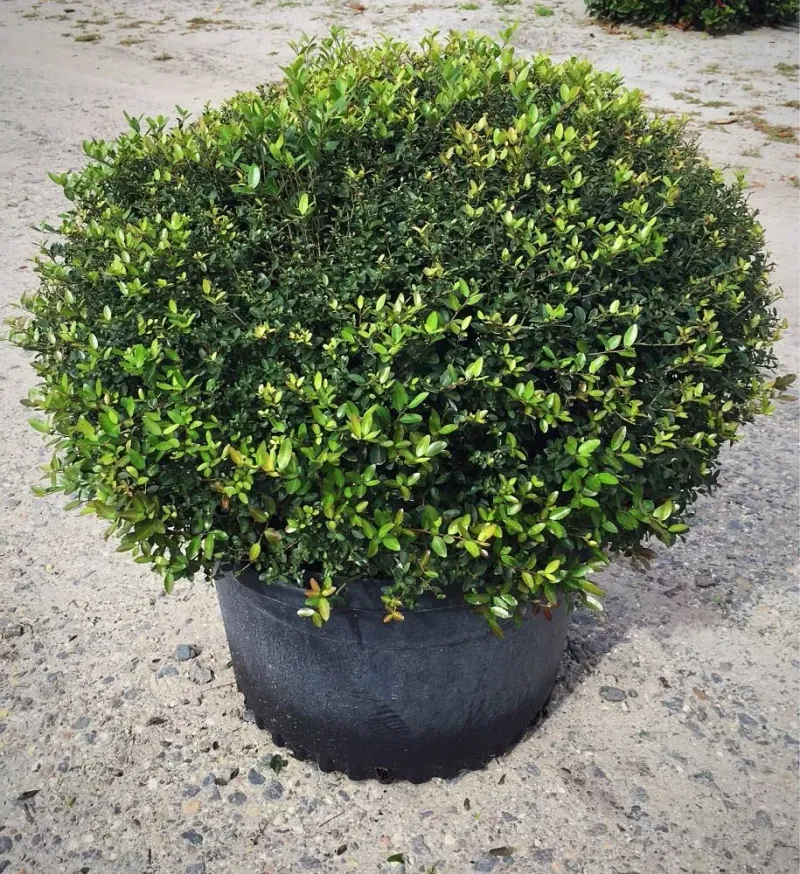
Yaupon holly has a reputation for toughness that most Florida homeowners eventually come to appreciate.
Ilex vomitoria is one of the most adaptable native shrubs in the Southeast, tolerating drought, flooding, sandy soil, clay soil, full sun, and even partial shade without missing a beat.
That kind of resilience is exactly what you want from a privacy hedge that needs to look good year after year with minimal coaxing.
The foliage is small, dense, and a rich dark green that holds its color through every season. Yaupon holly is evergreen, so it never drops its leaves and leaves your fence line exposed during cooler months.
Female plants produce clusters of bright red berries in fall and winter that add genuine ornamental appeal and attract birds, including cedar waxwings and American robins, to your yard.
Standard yaupon holly can grow quite large, reaching 15 to 20 feet or more at full maturity. For HOA settings where height is a concern, dwarf cultivars like ‘Schilling’s Dwarf’ or ‘Nana’ are worth serious consideration.
These compact forms stay much smaller, typically under 5 feet, and maintain a naturally rounded, tidy shape that requires minimal trimming to look polished. They are particularly well suited to front yard borders or low-profile screening situations.
Yaupon holly is native to Florida and found naturally across the state from the Panhandle through Central Florida.
It handles coastal conditions reasonably well and is not known to become invasive in Florida landscapes, which makes it a responsible choice alongside its practical appeal.
For a hedge that looks structured and maintained without demanding constant attention, yaupon holly is a strong contender.
Confirm with your HOA which cultivar height and form would best suit your community’s standards before planting along shared boundaries or in visible front-yard locations.
5. Use Podocarpus For A Narrow Polished Screen
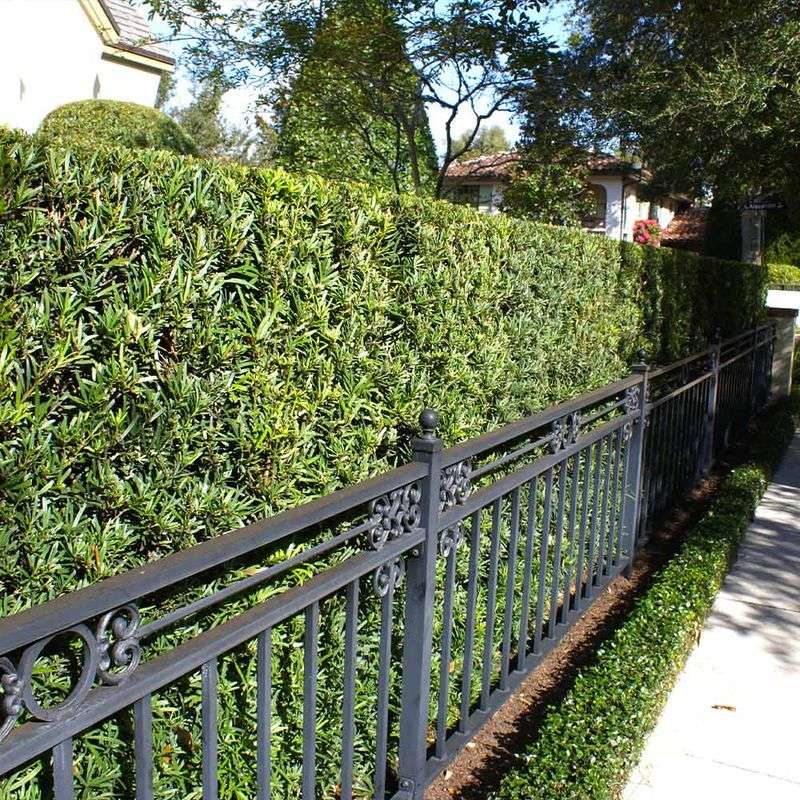
Space is a real constraint in many Florida neighborhoods, especially in newer subdivisions where lots are narrower and houses sit closer together.
Podocarpus macrophyllus, commonly called Japanese yew or Buddhist pine, is one of the best solutions for homeowners who need a privacy screen but simply do not have the yard width to support a sprawling hedge.
Its naturally upright, columnar growth habit lets it climb tall without spreading wide, making it a smart fit for tight side yards and narrow fence lines.
The foliage is dense, dark green, and needle-like in texture, giving the plant a refined, almost formal appearance that reads as polished rather than casual. It holds its shape well between pruning sessions, which means less frequent maintenance while still looking clean and intentional.
Podocarpus tolerates shearing extremely well, and with regular trimming, it can be kept at a consistent height and width for years.
It grows in full sun to partial shade and performs reliably across much of Florida. South Florida gardeners in particular have used podocarpus as a go-to hedge plant for decades because of its tolerance for warm temperatures and its ability to fill in densely without becoming unruly.
It is not a Florida native, having originated in Asia, but it is a well-established and widely used landscape plant in Florida with no significant invasive concerns documented by Florida authorities.
Mature height can reach 20 to 40 feet if left unpruned, but regular maintenance keeps it at whatever height suits your yard and HOA requirements. For a slimmer hedge that still delivers solid privacy, podocarpus is hard to beat.
Spacing plants about 3 to 5 feet apart encourages them to merge into a continuous screen relatively quickly.
Always review your HOA’s height and setback rules before planting along fences or property lines. Your local UF IFAS extension office can also offer region-specific advice on care and spacing.
6. Brighten Shadier Spaces With Florida Anise
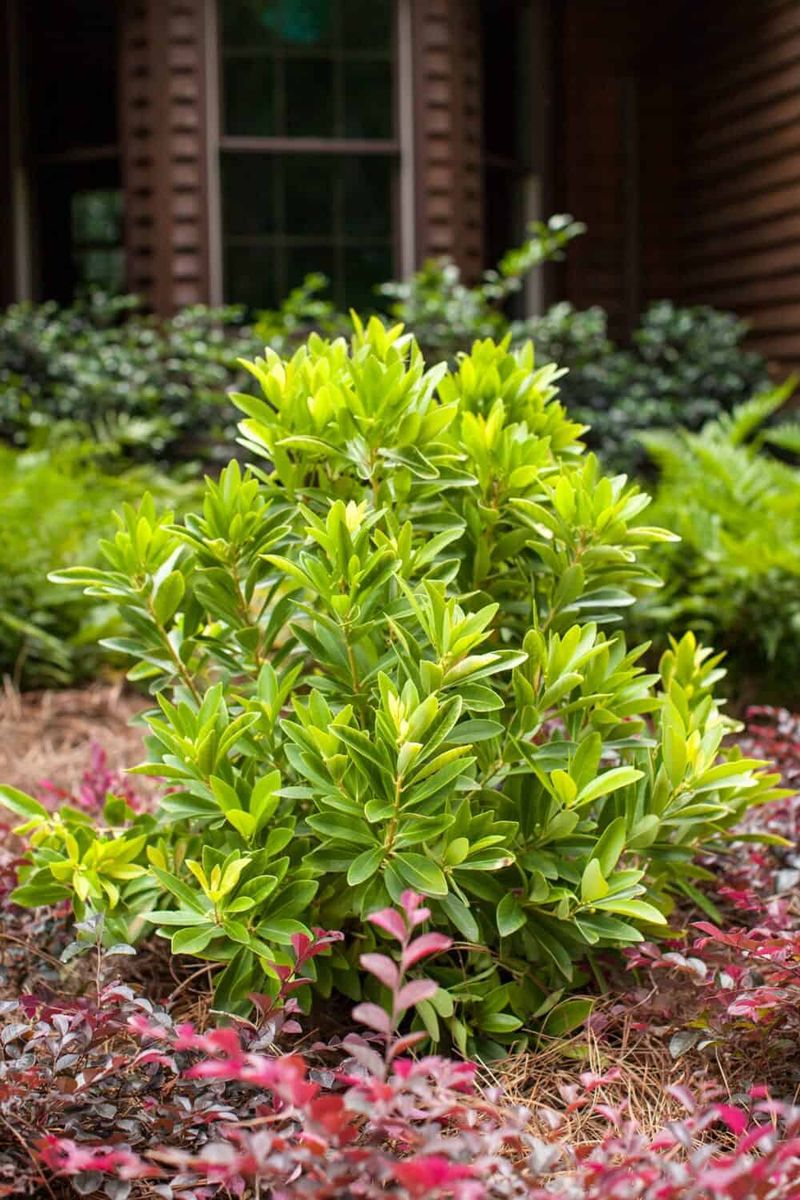
Most privacy hedge conversations focus on plants that love full Florida sun, but not every yard offers that. Shaded side yards, areas under large oaks, or north-facing fence lines often get far less direct light, and most popular hedging plants struggle in those spots.
Florida anise, known scientifically as Illicium floridanum, is one of the few native shrubs that genuinely thrives in shade and still grows dense enough to function as a real privacy screen.
The foliage is large, broad, and a deep glossy green that fills space quickly and effectively. Florida anise has a naturally full, rounded growth habit that creates a lush visual barrier without needing to be coaxed into shape.
In shadier conditions, it tends to grow at a manageable pace, which can actually work in your favor if you are trying to maintain a consistent hedge height over time.
The plant also produces unusual reddish-maroon flowers in spring that add unexpected color interest in spots where most ornamental plants would simply refuse to perform.
Florida anise is native to the Panhandle and North Florida, where it grows naturally along shaded stream banks and in moist woodland understories.
It prefers moist, well-drained, acidic soil and does not handle drought or prolonged flooding as gracefully as some other Florida natives.
Gardeners in Central Florida can grow it with some attention to soil moisture and shade protection, but it is not the best fit for South Florida’s climate.
One important caution worth knowing: all parts of Florida anise are toxic if ingested. This is a meaningful consideration for households with pets or small children who spend time in the yard.
That said, it poses no contact hazard and functions perfectly well as an ornamental hedge plant in appropriate settings.
For shaded spaces where privacy is still needed, Florida anise delivers a polished, full screen that looks intentional and lush. Check your HOA guidelines on plant placement and mature height before installing it along fence lines or property boundaries.