The Best Fragrant Flowers For Pots That Thrive In Texas Summer
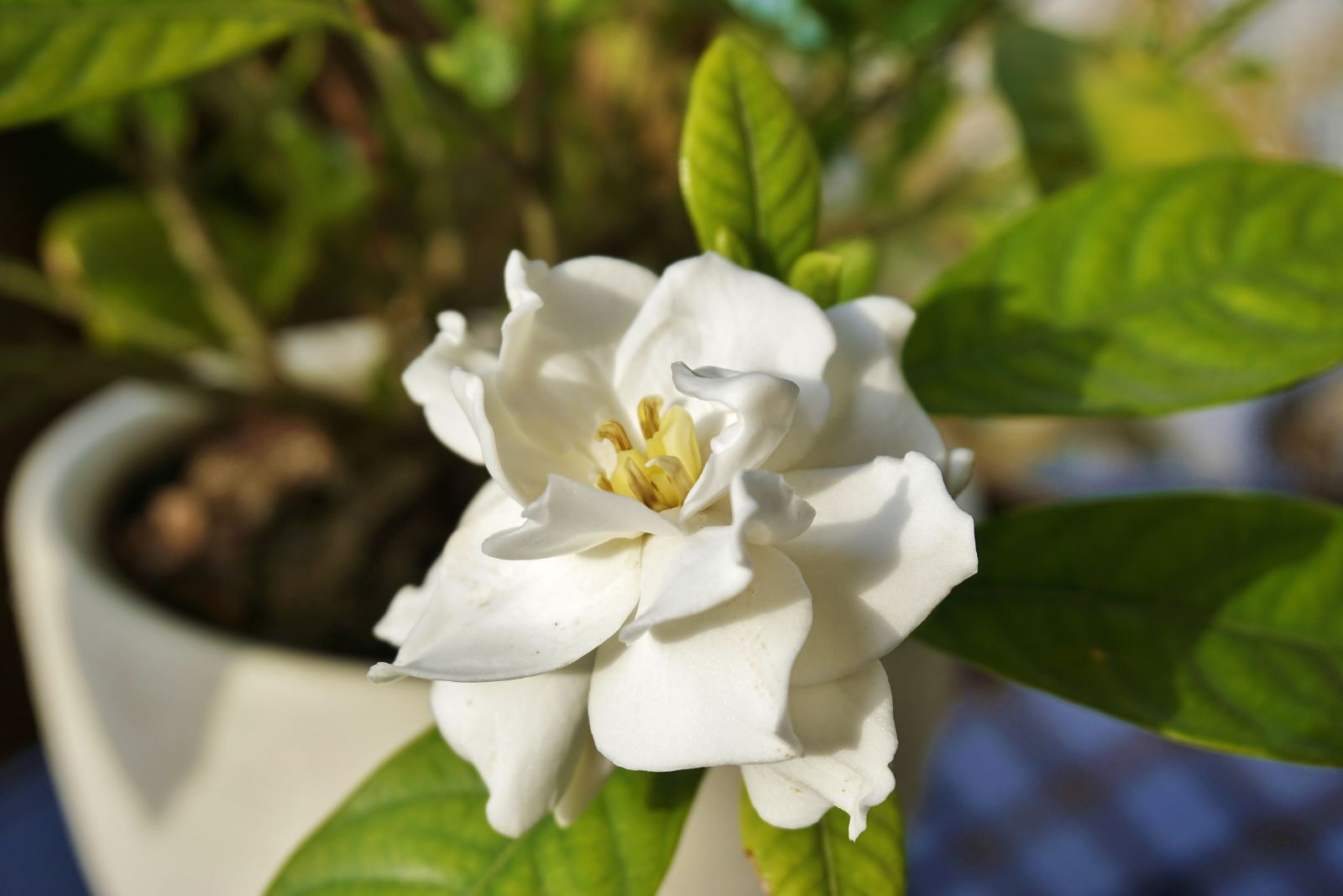
A pot of flowers can do a lot more than add color to a patio or porch. In the right spot, it can completely change the feel of the space the second you walk by.
That is especially true when the flowers smell as good as they look. In Texas, where summer has a way of turning outdoor spaces into a real test for plants, finding fragrant flowers that can handle the heat is a win on every level.
The best choices do more than survive in a container. They keep blooming through long hot stretches, bring real scent instead of just pretty petals, and make everyday spaces feel a little more inviting.
A front porch, back deck, balcony, or poolside corner instantly feels more alive when a warm breeze carries a soft floral scent through the air.
That is what makes fragrant potted flowers so appealing in Texas. They add beauty, personality, and that extra sensory detail many plants cannot offer.
When you pick the right ones, even the hottest part of summer can feel a little more lush, cheerful, and enjoyable.
1. Star Jasmine (Trachelospermum Jasminoides)
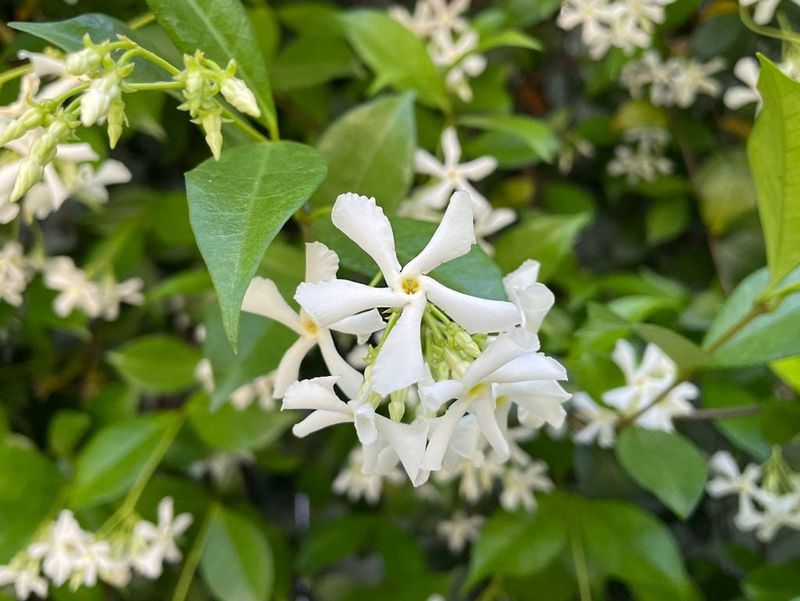
If you have ever walked past a porch on a warm Texas evening and caught a wave of sweet perfume in the air, there is a good chance star jasmine was nearby.
This evergreen climber is one of the most popular fragrant plants for pots and patios across Texas, and it earns that reputation every single summer.
Star jasmine produces clusters of small, white, star-shaped flowers that release a rich, honeyed scent. The fragrance is strongest in the evening, making it a perfect companion for outdoor seating areas where you love to relax after a long day.
Plant it in a large pot and give it a trellis or support to climb, and it will reward you generously.
One of the biggest reasons Texas gardeners love this plant is its toughness. Once established, star jasmine handles the heat really well.
It grows in full sun to partial shade, which gives you flexibility on where to place your pots. It is also drought-tolerant once its roots settle in, meaning you will not need to water it constantly during those scorching July afternoons.
For best results in Texas, use a well-draining potting mix and water deeply but allow the soil to dry slightly between waterings. Feed it with a balanced fertilizer every few weeks during the growing season.
With a little care, star jasmine will fill your outdoor space with one of the most beautiful and recognizable fragrances of the Texas summer season.
2. Arabian Jasmine (Jasminum Sambac)
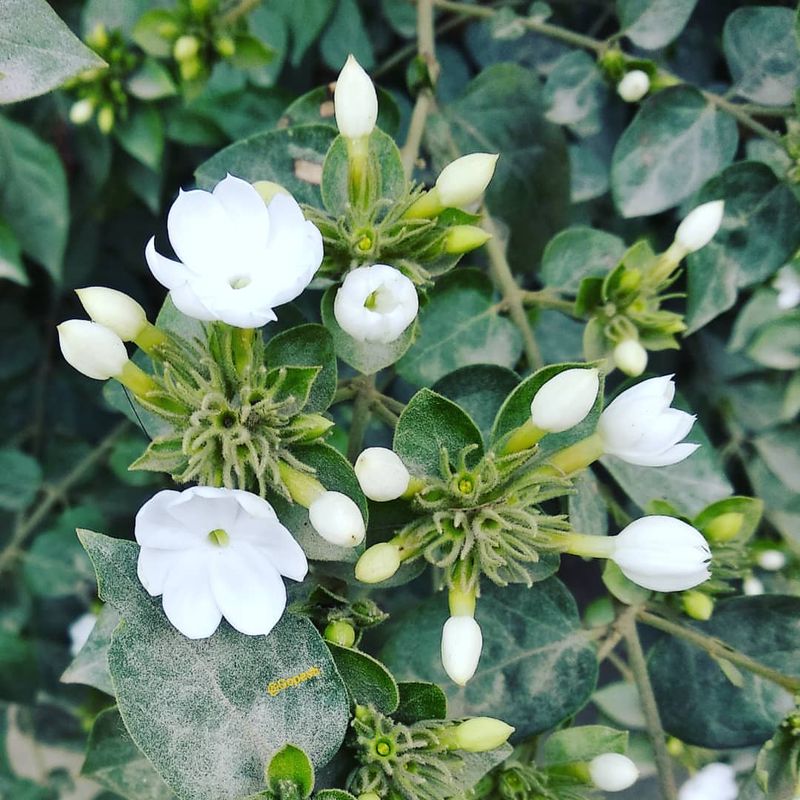
Arabian jasmine is the flower used to make jasmine tea and some of the world’s most beloved perfumes.
So when you grow it in a pot on your Texas porch, you are bringing home one of the most intensely scented flowers on the planet. The fragrance is warm, rich, and almost intoxicating in the best possible way.
Unlike some finicky plants that struggle in Texas heat, Arabian jasmine absolutely loves warm weather. It is a tropical plant at heart, which means the blazing Texas summer feels like home to it.
Your Texas Garden Changes Every Week. Your Plan Should Too.
Gardening in Texas changes quickly throughout the season. Every Friday you’ll receive a simple weekly plan showing exactly what to plant, prune, fertilize, harvest, and protect so you never miss the right timing.
Place it in a sunny spot on your patio or near a south-facing wall, and it will thrive from late spring all the way through fall.
The blooms are small and white, but what they lack in size they more than make up for in scent. Flowers appear in clusters and open gradually, so you get a steady stream of fragrance over several weeks.
Pinching back spent blooms encourages the plant to push out even more flowers throughout the season.
Arabian jasmine grows beautifully in medium to large containers with good drainage. Use a rich potting mix and keep the soil consistently moist but never waterlogged.
Fertilize every two to three weeks with a bloom-boosting formula to keep flowers coming strong.
In Houston, San Antonio, and other warmer Texas cities, this plant can even overwinter outdoors with minimal protection, making it a truly rewarding long-term investment for your container garden.
3. Mandevilla (Mandevilla Spp.)
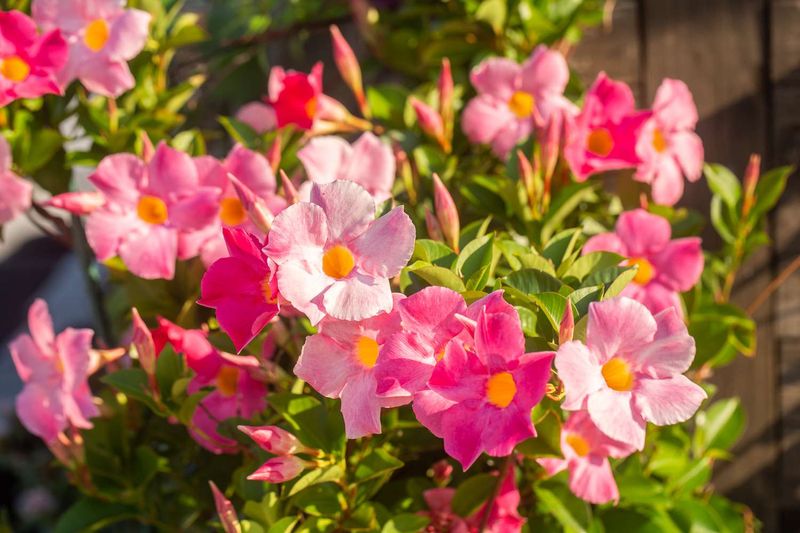
Bold, tropical, and absolutely stunning, mandevilla is one of those plants that stops people in their tracks. The large, trumpet-shaped flowers come in shades of pink, red, and white, and they keep blooming all summer long without much fuss.
For Texas gardeners who want serious visual impact in a pot, this is a top pick. Mandevilla was practically made for Texas summers. It thrives in full sun and high heat, which means the conditions that stress out other plants are exactly what mandevilla loves.
Place it in a tall pot near a trellis, fence, or porch railing and watch it climb and bloom with impressive energy from May through October.
The scent of mandevilla is light and sweet, not overpowering, which makes it a great choice if you prefer subtle fragrance alongside show-stopping color. The blooms are large and glossy, giving your patio a resort-like, tropical feel that is hard to achieve with most other plants.
It pairs beautifully with other potted tropicals like plumeria or hibiscus for a lush container display.
Care is straightforward. Water mandevilla regularly, especially during peak summer heat in Texas, but make sure the pot drains well.
Soggy roots are the main thing to avoid. Feed it with a high-phosphorus fertilizer to encourage continuous blooming.
Bring it indoors if temperatures drop below 50 degrees Fahrenheit in winter. With minimal effort, mandevilla delivers maximum tropical beauty to any Texas outdoor space all season long.
4. Plumeria (Plumeria Spp.)
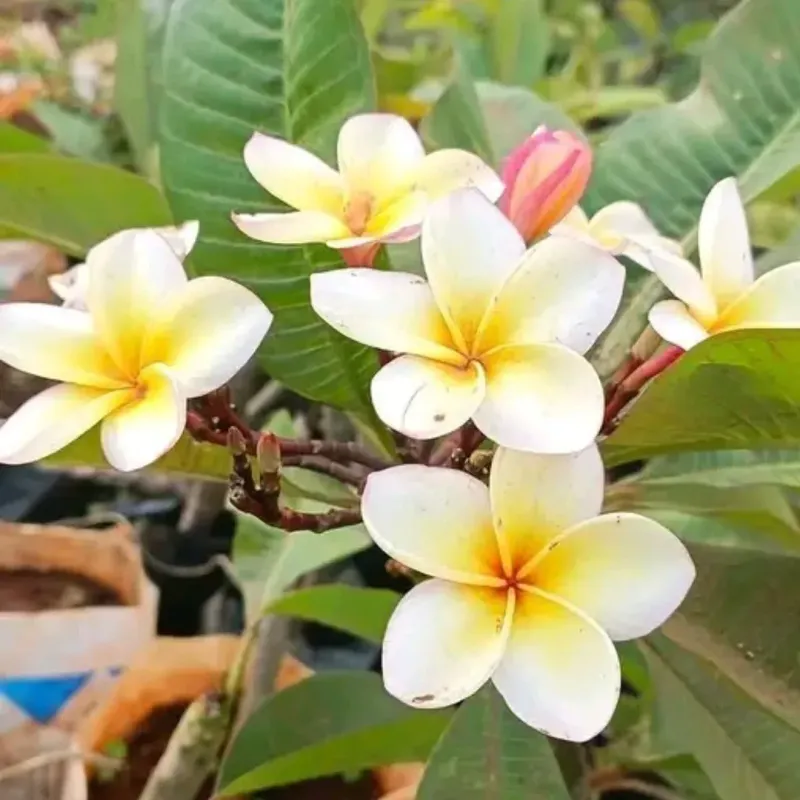
Close your eyes and imagine the smell of a Hawaiian lei. That sweet, fruity, floral scent is plumeria, and the good news is you can grow it right on your Texas patio in a pot.
This tropical showstopper is one of the most fragrant flowers you can find, and it absolutely thrives in hot, sunny conditions.
Plumeria loves everything about a Texas summer: the heat, the sun, and the long warm days. It actually needs heat to bloom well, so Texas gardeners have a real advantage.
The large, waxy flowers come in white, yellow, pink, and red, and they carry a rich, exotic fragrance that can fill your entire outdoor space on a warm afternoon.
Growing plumeria in containers is actually the preferred method in Texas because it allows you to bring the plant indoors during any rare cold snaps in winter. Use a fast-draining cactus or sandy potting mix, as plumeria roots hate sitting in wet soil.
Water it deeply during active growth but let the soil dry out between waterings. Overwatering is the most common mistake new plumeria growers make.
Fertilize regularly with a bloom formula that is high in phosphorus to encourage those gorgeous flowers. Full sun is a must, so place your pot in the sunniest spot on your patio or deck.
In cities like San Antonio and Corpus Christi, plumeria can grow into an impressive statement plant that becomes the centerpiece of your entire container garden every summer season.
5. Gardenia (Gardenia Jasminoides)
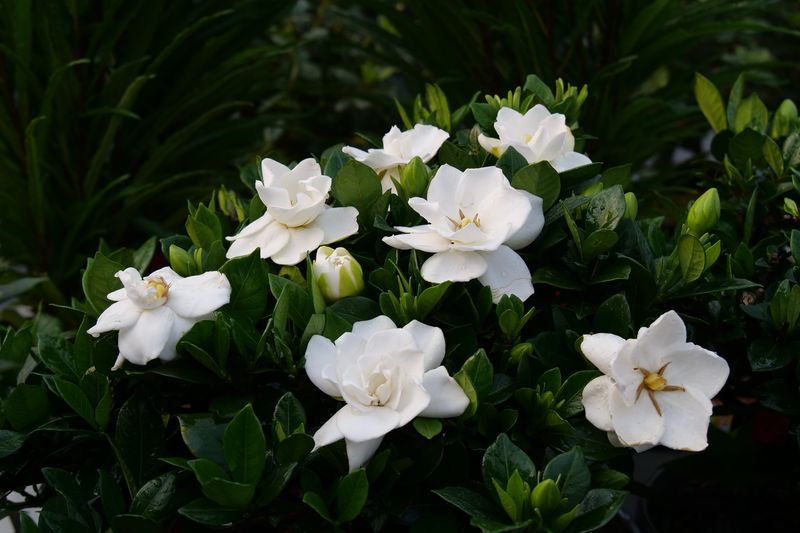
Few flowers carry the same emotional weight as a gardenia in full bloom. The scent is rich, creamy, and unmistakably luxurious, the kind that reminds people of summer weddings, grandmothers gardens, and warm Southern evenings.
In Texas, gardenias have a long history as a beloved porch and patio plant, and for good reason.
Gardenias grow beautifully in containers when you give them the right conditions. They prefer bright light but benefit from some protection during the harshest late-afternoon sun in Texas, especially in July and August when temperatures regularly climb above 100 degrees.
A spot that gets morning sun and afternoon shade is ideal for keeping your gardenia happy and blooming.
Soil management is key with gardenias. They need acidic, well-draining potting mix with a pH between 5.0 and 6.0.
If your gardenia starts showing yellowing leaves, it often means the soil pH is off. Use an acidic fertilizer formulated for gardenias or camellias, and feed regularly during the growing season to support both leaf health and flower production.
Watering needs to be consistent but never excessive. Gardenias dislike both drought and waterlogged roots.
Keep the soil evenly moist and mist the leaves occasionally to raise humidity, which these plants naturally love. With proper care, a gardenia in a large pot can bloom multiple times during the Texas growing season.
The reward for your effort is one of the most stunning and sweetly scented flowers you will ever bring home to your patio.
6. Four O’Clocks (Mirabilis Jalapa)
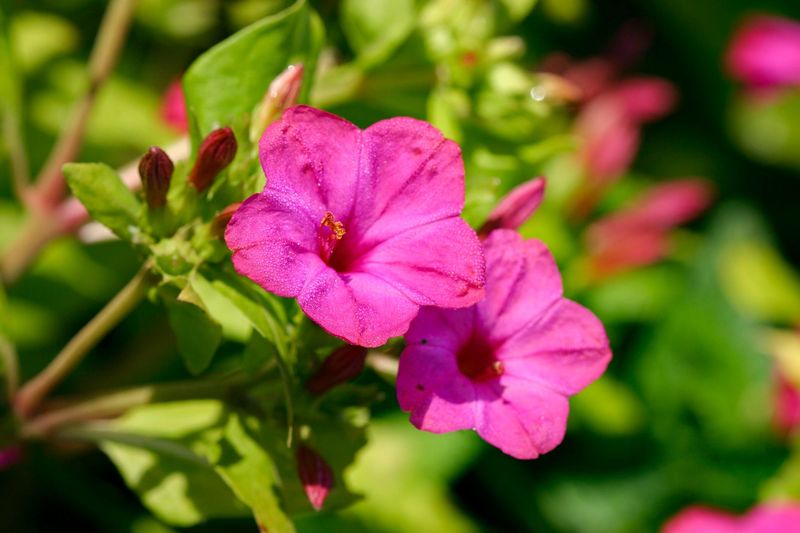
Here is a flower that has been growing in Texas gardens for generations, and somehow it never gets the credit it deserves. Four o’clocks are old-fashioned, cheerful, and incredibly tough.
They handle Texas summer heat far better than most people expect, and they bring a sweet, light fragrance that drifts through the air every afternoon and evening.
The name comes from the flowers habit of opening in the late afternoon, usually around four o’clock, and staying open through the night. This makes them especially wonderful for people who spend their evenings outdoors on a patio or deck.
The blooms come in a wild mix of colors including pink, magenta, yellow, white, and even striped varieties, so no two plants look exactly alike.
Four o’clocks grow easily in large containers with a good potting mix. They form a thick tuberous root system that stores water, which is one reason they handle Texas heat and occasional dry spells so well.
Water them regularly but do not stress if you miss a day or two. These plants are survivors, and they bounce back quickly.
A fun fact about four o’clocks: the same plant can produce flowers in multiple colors at the same time, which is something that surprises new gardeners every single season. They reseed readily too, so you may find bonus seedlings popping up around your patio next spring.
Start them from seed or transplant, fertilize lightly, and enjoy one of the most effortless fragrant flowers in any Texas container garden.
7. Moonflower (Ipomoea Alba)
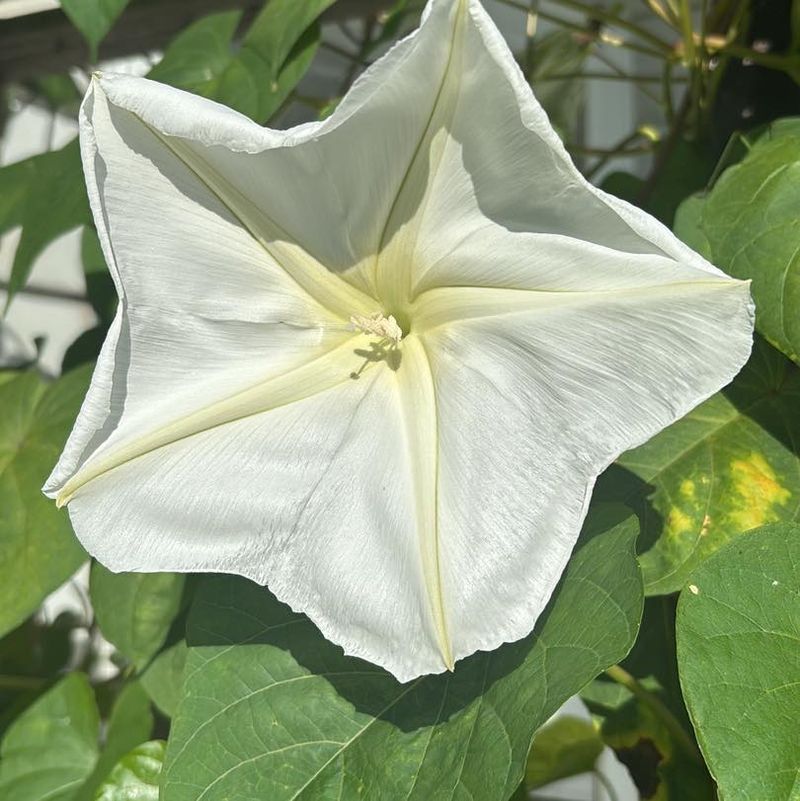
When the sun goes down in Texas and the heat finally starts to ease, moonflower puts on its show. This stunning vine opens its large, pure white, trumpet-shaped blooms at dusk and fills the evening air with a sweet, clean fragrance that feels almost magical.
If you love spending summer nights outdoors, moonflower is the plant you have been waiting for.
Moonflower is a warm-season vine that thrives in Texas heat and humidity. It grows fast, sometimes several feet in a single week during peak summer, so it needs a trellis or some kind of vertical support in your pot.
Place it near a porch post, fence, or garden obelisk and it will climb enthusiastically all season long, producing dozens of blooms from midsummer through fall.
The flowers themselves are genuinely impressive. Each bloom can reach five to six inches across, and they glow almost luminously in the moonlight or under patio lighting.
They close again by morning, but new buds open each evening, giving you a fresh display every night. The fragrance is sweet and slightly spicy, making your outdoor space feel like a private garden retreat.
Plant moonflower seeds directly into a large pot with well-draining potting mix after the last frost, which comes early in most parts of Texas. Soak the seeds overnight before planting to speed up germination.
Water consistently and fertilize every two to three weeks. In warm Texas cities like Laredo or McAllen, moonflower can grow almost year-round, making it one of the most rewarding fragrant vines for container gardening anywhere in the state.