7 Important Lavender Care Jobs Arizona Gardeners Should Do Right Now For Strong Growth
Arizona spring is officially here, and while the mornings are glorious, the afternoon sun is already starting to flex its muscles. If you are growing lavender, you have probably noticed the soil drying out faster than a spilled soda on a hot sidewalk.
This specific window of time is absolutely critical for your garden. Our local heat rises so quickly that your plants need a little extra love before the weather goes full “blowtorch” mode.
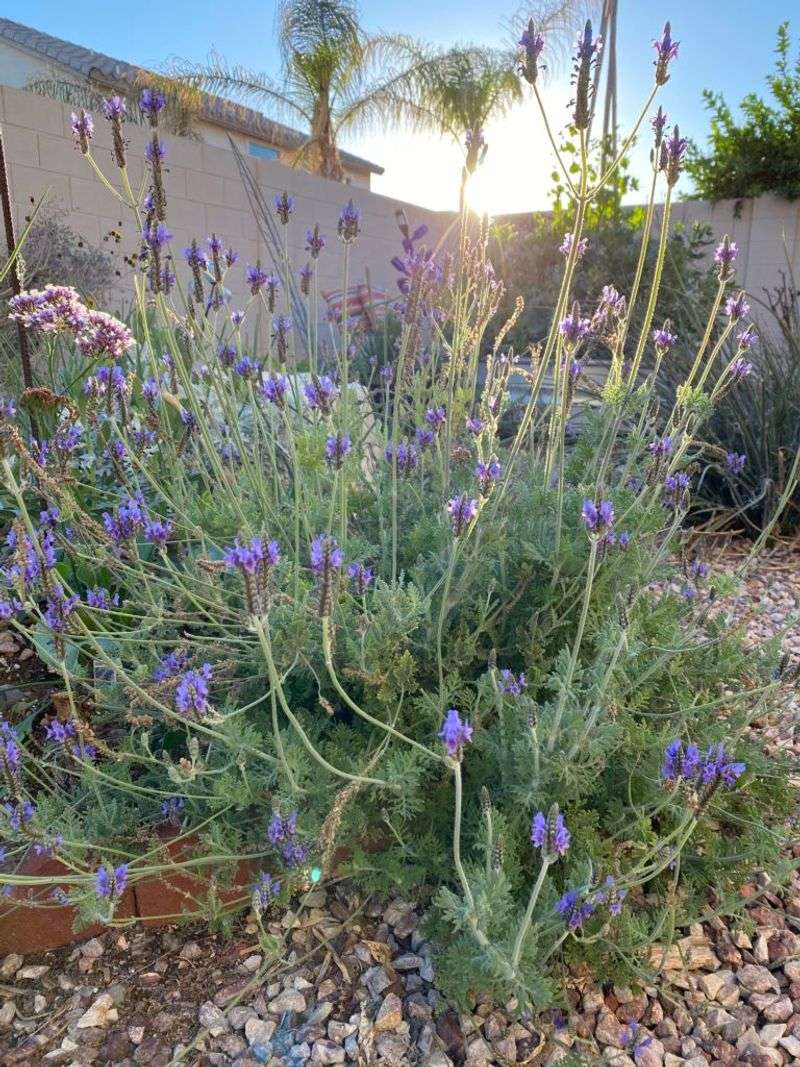
Your lavender might be chilling in a raised bed, hanging out in a patio pot, or nestled in a gravel-mulched yard. Each of those spots reacts differently as the thermostat climbs.
Staying on top of a few simple chores right now ensures your fragrant favorites actually thrive instead of turning into brittle sticks.
Taking these small steps today helps your lavender bloom beautifully and builds the strength it needs to survive the legendary Arizona summer.
1. Check Drainage Before Summer Heat Builds
Standing water around lavender roots is one of the fastest ways to run into trouble, especially in Arizona where summer heat turns soggy soil into a hostile environment for plants.
Lavender naturally thrives in well-drained, slightly dry conditions, and poor drainage can lead to root rot before many gardeners even notice something is wrong.
Before temperatures really climb, take a close look at where your lavender is planted. Press your fingers a few inches into the soil and check whether moisture is sitting too long after watering or recent rain.
In Arizona, heavy clay soil and compacted desert ground can hold water in ways that sandy or amended soil would not.
For in-ground plants, consider working some coarse sand or gravel into the surrounding soil to help water move through more freely. If you have lavender in containers, make sure each pot has drainage holes that are clear and not blocked by roots or debris.
Raised beds with a gravel base layer tend to perform well in Arizona landscapes because they mimic the rocky, fast-draining hillside conditions where lavender naturally grows.
Checking drainage now, before intense heat settles in, gives your plants a much stronger foundation heading into summer and helps prevent stress during the hottest months of the year.
2. Water Deeply Instead Of Lightly Every Day
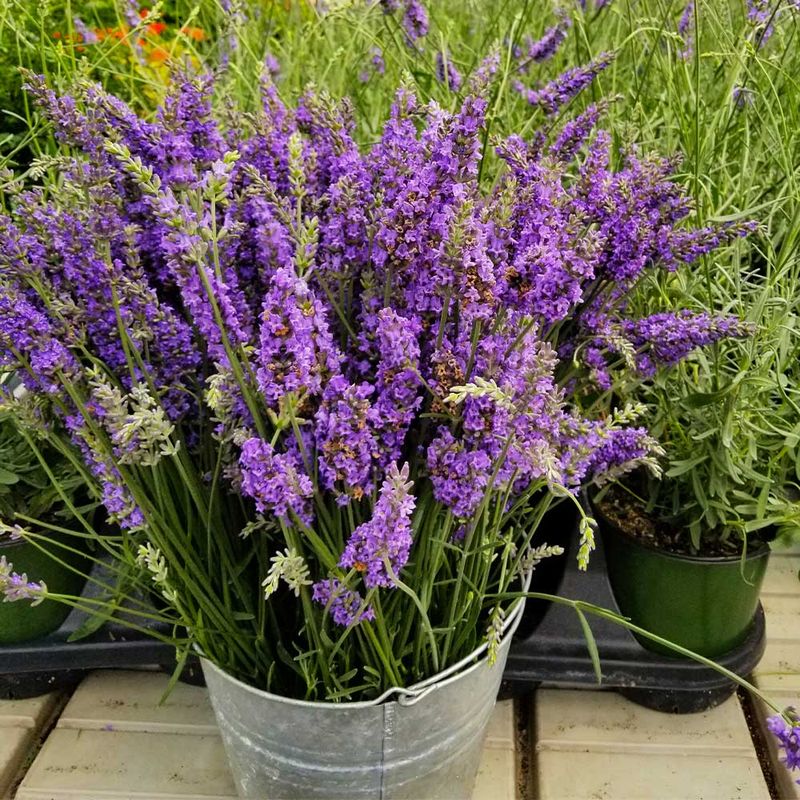
Frequent shallow watering is a habit that sounds helpful but can actually work against lavender in Arizona. When water only reaches the top inch or two of soil, roots stay close to the surface where they face the most heat stress as summer temperatures rise.
Deep, infrequent watering encourages roots to grow downward where the soil stays cooler and holds moisture longer.
In Arizona, this approach makes a real difference because the desert sun evaporates surface moisture quickly, sometimes within hours of watering.
Giving lavender a thorough soak every seven to ten days, depending on your soil type and current temperatures, tends to produce stronger, more resilient plants than daily light sprinkles.
For container lavender on Arizona patios, check the soil moisture by pressing your finger two inches into the mix. Water when the top layer feels dry rather than on a fixed schedule, since container soil can dry out faster than in-ground beds.
Your Arizona Garden Changes Every Week. Your Plan Should Too.
Gardening in Arizona changes quickly throughout the season. Every Friday you’ll receive a simple weekly plan showing exactly what to plant, prune, fertilize, harvest, and protect so you never miss the right timing.
Early morning is the best time to water because it gives leaves and stems a chance to dry before the hottest part of the day.
Drip irrigation works well for in-ground lavender in Arizona landscapes because it delivers water directly to the root zone without wetting the foliage, which can reduce the risk of fungal issues in humid monsoon conditions.
3. Adjust Container Placement Before Extreme Heat
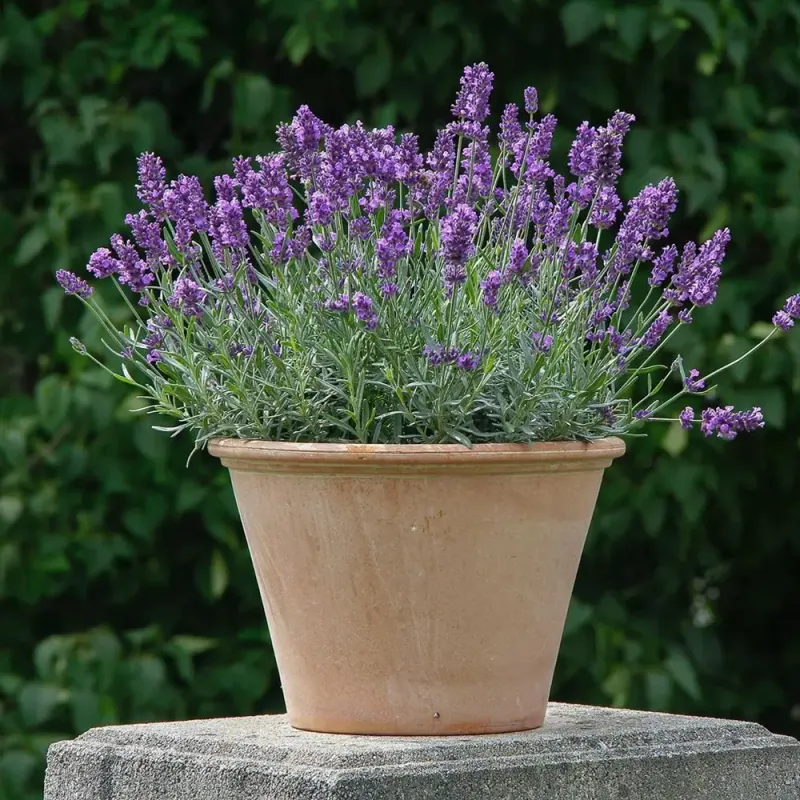
Container lavender gives Arizona gardeners a real advantage when it comes to managing heat, because pots can be moved while in-ground plants cannot.
As temperatures push past 100 degrees Fahrenheit, which happens regularly across much of Arizona from late spring onward, the sides of dark containers can heat up dramatically and stress roots even when the plant looks fine from above.
Moving containers to a spot that receives morning sun and afternoon shade can extend the comfort zone for lavender significantly. Eastern-facing walls, covered patios, and shaded courtyards all offer good options for repositioning pots as the season shifts.
Light-colored or ceramic pots also absorb less heat than dark plastic ones, so swapping containers before summer arrives is worth considering for Arizona gardeners.
Even lavender that has been thriving in full sun through spring may benefit from some afternoon protection once daytime highs become extreme.
Watch for signs that your plants are struggling, such as wilting during peak afternoon hours, bleached or pale foliage, or stems that feel dry and brittle near the soil surface.
These are signals that the current placement may be too intense for the coming months.
Adjusting placement now, rather than waiting until the plant shows real stress, gives lavender the best chance to keep producing healthy new growth and strong flower spikes through the Arizona summer season.
4. Avoid Heavy Fertilizer During Active Growth
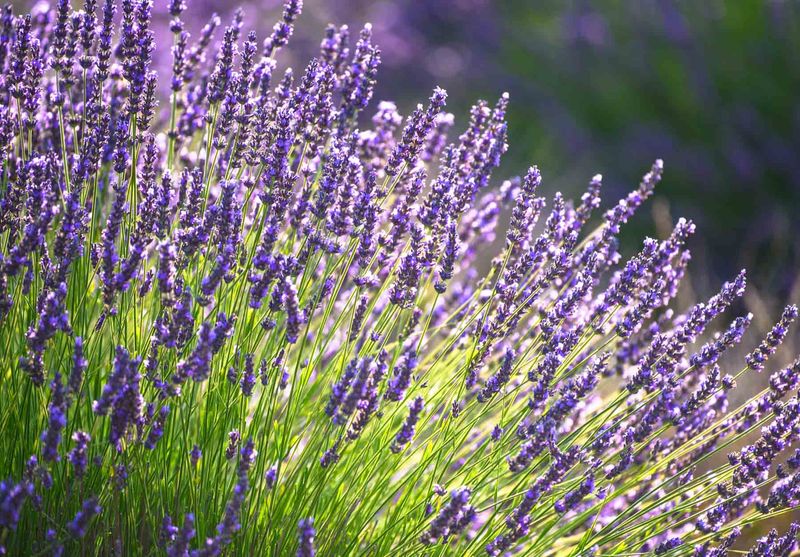
Lavender growing in Arizona during late spring is often pushing out new stems and fresh foliage as days get longer and warmer.
Reaching for a bag of fertilizer at this point might feel like a good way to support that energy, but heavy feeding can actually create problems rather than solve them.
Too much nitrogen encourages a lot of soft, leafy growth that looks lush at first but tends to be more vulnerable to heat and drought stress.
In Arizona, where summer temperatures can be extreme, this kind of weak growth may struggle once the real heat arrives.
Lavender is naturally adapted to lean, low-nutrient soils, and it tends to perform better when not pushed with heavy fertilization.
If your lavender is planted in genuinely poor soil with no organic matter at all, a light application of a balanced, slow-release fertilizer in early spring can be beneficial.
However, by the time late spring arrives in Arizona, it is generally better to hold off and let the plant use what nutrients are already available.
Container lavender may benefit from occasional light feeding since nutrients can flush out with regular watering, but even then, a diluted solution used sparingly is a more measured approach.
Letting lavender grow at its own pace during this period supports stronger stems and better bloom quality heading into the warmer months ahead.
5. Trim Lightly Where New Growth Appears
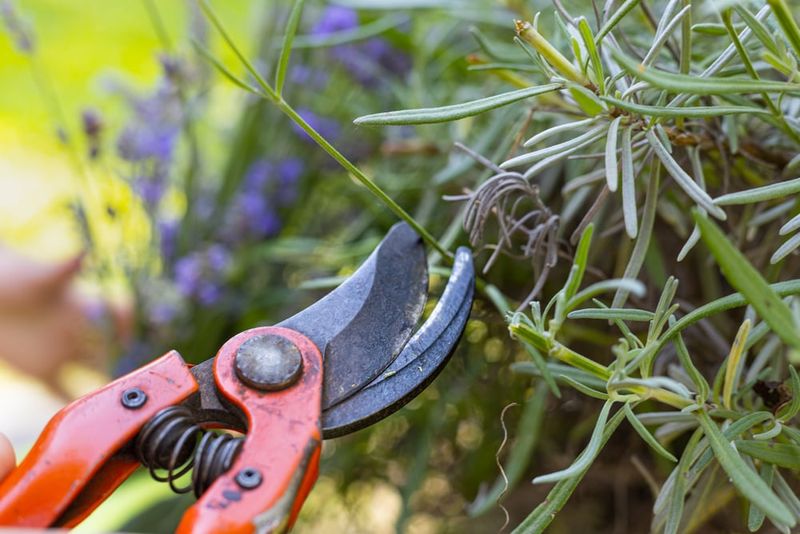
Spotting fresh green growth pushing out along lavender stems is one of the more satisfying signs that your plant is healthy and responding well to the season.
Late spring in Arizona is a good time to do light trimming that encourages bushier, more compact growth without putting too much stress on the plant.
The goal with this kind of trim is not to cut hard into old woody stems but to snip just above where new growth is emerging. Removing the tips of young stems encourages the plant to branch out and fill in rather than growing long and leggy.
This results in a fuller plant with more potential flowering sites as summer approaches.
Arizona gardeners sometimes skip pruning out of caution, but light trimming at this stage is generally well-tolerated by lavender and can make a noticeable difference in plant shape over time.
Use clean, sharp pruning shears and make cuts just above a set of leaves or a visible bud.
Avoid cutting into sections of stem that show no green growth at all, as woody sections without active buds may not recover easily.
Trimming in the cooler morning hours is a practical habit in Arizona, since both you and your plants benefit from avoiding the heat of midday.
A little light shaping now sets the plant up for a more productive and attractive growing season.
6. Clear Weeds Around The Base Of Plants
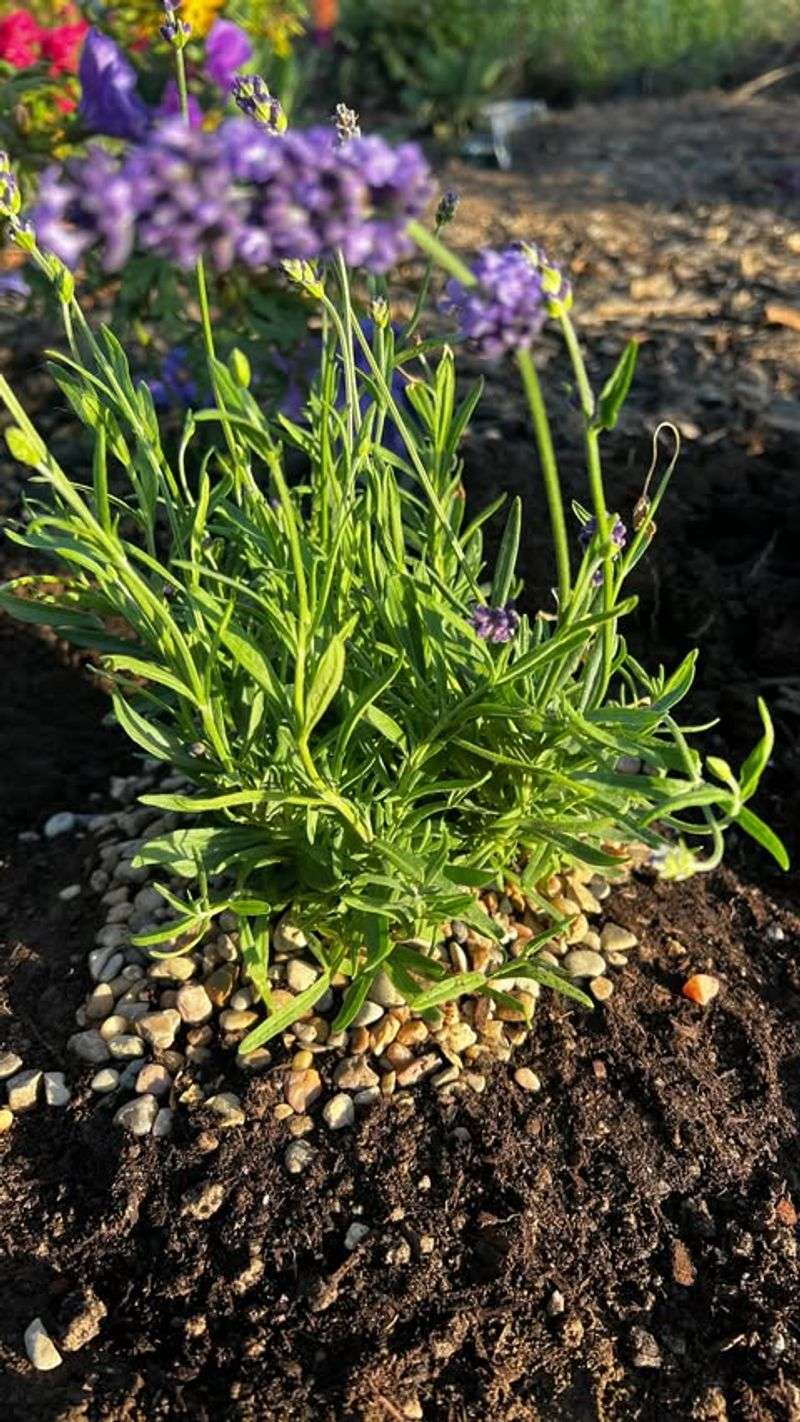
Weeds growing close to lavender may seem like a minor issue, but they compete for water, nutrients, and airflow in ways that matter more as temperatures rise.
In Arizona, where water is already a limited resource and summer heat can be relentless, giving lavender the best possible access to moisture without competition is a practical and worthwhile task.
Some of the most common weeds in Arizona gardens, including spurge, puncturevine, and various grasses, can establish quickly in spring and become much harder to manage once they mature.
Pulling weeds while they are still small is far easier than dealing with deep-rooted plants later in the season.
Clearing the area around lavender also improves air circulation at the base of the plant, which is helpful during Arizona’s monsoon season when humidity briefly spikes.
After weeding, consider refreshing a layer of gravel or decomposed granite mulch around the base of each plant. A two to three inch layer helps suppress future weed growth, moderates soil temperature, and slows moisture evaporation.
Avoid piling mulch directly against the lavender stems, since that can trap moisture and create conditions that promote rot.
In Arizona landscapes where gravel mulch is already common, topping it off around lavender after a weeding session keeps the garden looking tidy while also giving the plants a practical advantage heading into the hottest part of the year.
7. Harvest Flower Stems At The Right Time
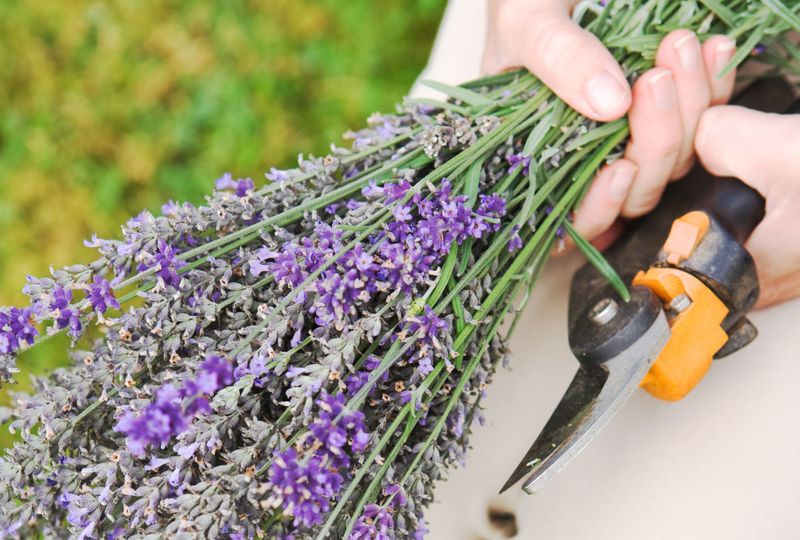
Watching lavender bloom in an Arizona garden is genuinely rewarding, and knowing when to harvest flower stems can make a real difference in both the quality of what you collect and the future performance of the plant.
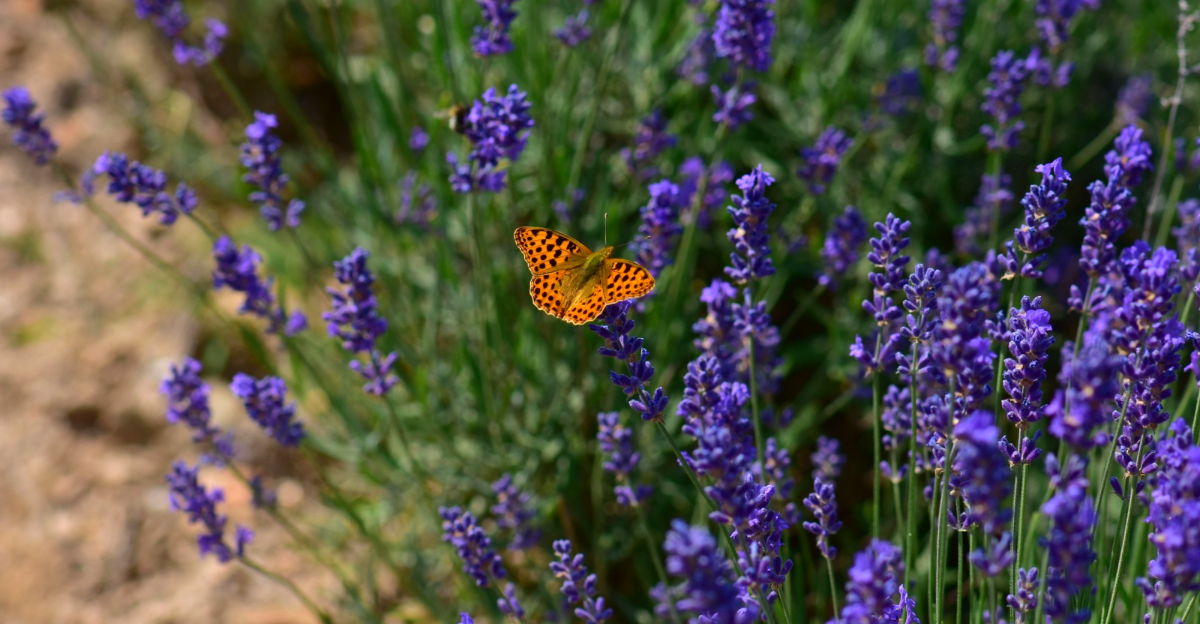
The best time to cut lavender stems for drying or use is when about half the buds on each spike have opened, with the rest still closed.
Cutting at this stage gives you stems with the most fragrance and the longest-lasting blooms after drying.
If you wait until the flowers are fully open and beginning to drop petals, the stems tend to be less fragrant and do not hold their color as well once dried.
In Arizona, where heat can accelerate the bloom cycle, keeping a close eye on your plants during peak flowering is worthwhile.
Harvesting also benefits the plant itself. Cutting flower stems encourages lavender to produce additional growth and, in some cases, a second flush of blooms later in the season.
Use clean, sharp scissors or pruning shears and cut stems back to just above the lowest set of leaves on each spike. Avoid cutting into bare woody sections.
Harvesting in the morning after any dew has dried but before midday heat sets in works well in Arizona, keeping both the stems and the gardener comfortable.
Tying cut stems in small bundles and hanging them upside down in a cool, dry space produces excellent dried lavender.