Florida Perennials For Pots And Containers That Keep Coming Back, Year After Year
Florida patios work hard. One week brings blazing sun, the next brings a cold snap, then summer rain shows up like it owns the place.
No wonder so many container plants tap out fast. The trick is not chasing fussy flowers that need constant rescue.
The trick is choosing perennials with real Florida backbone. Give them drainage, the right light, and a little protection during rough weather, and many can return season after season without a full patio reset.
Some bring hummingbirds to the porch. Some spill over pot edges like sunshine.
Others keep planters neat with bold foliage long after bloom time passes. A good container garden should not feel like a part-time job.
It should feel like a smart shortcut. These Florida-friendly perennials can help pots look alive, colorful, and ready for another round.
1. Pentas Keep Patio Pots Blooming Through The Heat
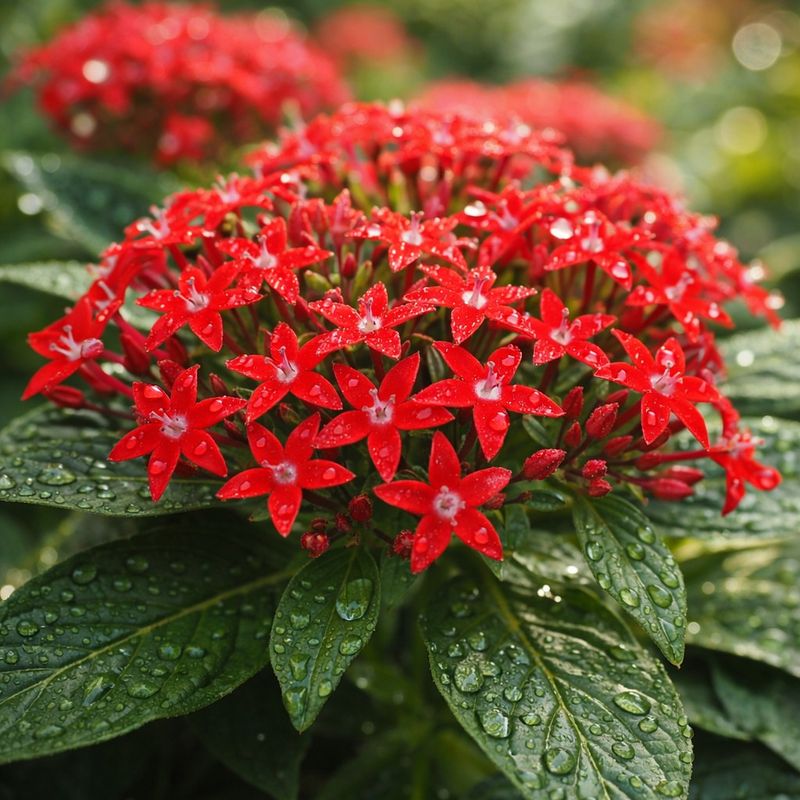
Few flowering plants hold up to a Florida summer the way pentas does.
UF/IFAS recommends pentas for Florida landscapes and containers, and it earns that endorsement by blooming steadily through months of intense heat and humidity that would exhaust most other flowers.
Butterflies absolutely swarm these star-shaped clusters, making a pot of pentas one of the most active spots on any Florida patio.
For containers, pentas needs full sun to light shade and a well-drained potting mix. Water regularly during dry spells, but let the soil dry out a bit between waterings to avoid root rot.
Trimming back leggy stems every few weeks keeps plants full, bushy, and producing fresh blooms instead of going to seed too quickly.
Pentas grows as a perennial in Central and South Florida, where mild winters allow plants to bounce back year after year.
North Florida gardeners should keep pots in a protected spot or near a warm wall during cold snaps, since freezing temperatures can set plants back significantly.
Pot size matters too. A container at least twelve inches wide gives roots enough room to support steady growth and a long bloom season that stretches from spring well into fall.
2. Scarlet Salvia Brings Hummingbirds Back To Your Containers
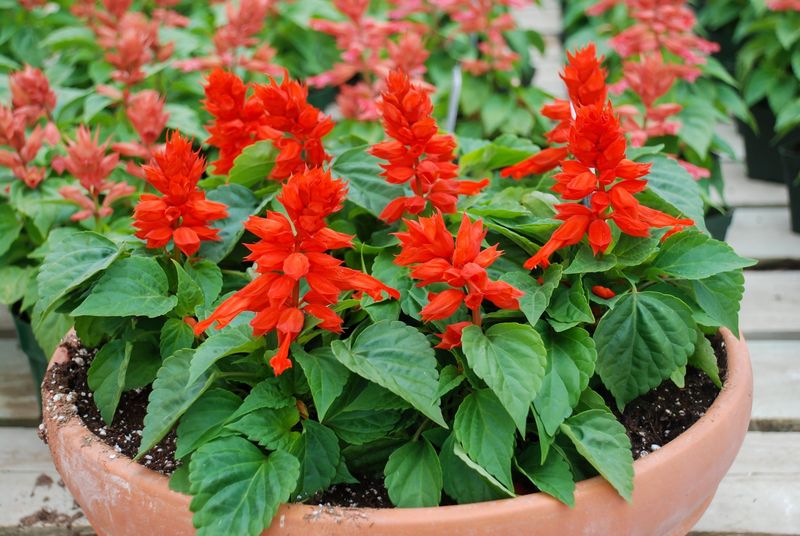
Hummingbirds remember good food sources, and a pot of scarlet salvia will have them returning to your patio reliably.
UF/IFAS supports scarlet salvia as a Florida-Friendly perennial that can be planted in any part of the state, which makes it one of the most dependable flowering options available to Florida container gardeners.
The bright red flower spikes are hard to miss and bloom over a very long season.
Full sun to partial shade works well, and scarlet salvia handles Florida heat with minimal fuss. Use a well-draining potting mix, water moderately, and avoid keeping the soil constantly wet.
When flower stems start looking tired or spent, cutting them back to a set of healthy leaves encourages a fresh flush of new growth and keeps the plant looking sharp rather than scraggly.
One thing that sets scarlet salvia apart from fussier flowering plants is its ability to reseed in suitable conditions, meaning new plants may appear in nearby pots or garden beds on their own.
Your Florida Garden Changes Every Week. Your Plan Should Too.
Gardening in Florida changes quickly throughout the season. Every Friday you’ll receive a simple weekly plan showing exactly what to plant, prune, fertilize, harvest, and protect so you never miss the right timing.
Compared to high-maintenance bloomers that need constant coddling, scarlet salvia just gets on with the job.
North Florida gardeners may see some cold damage in hard winters, but plants typically recover well once warm weather returns in spring.
3. Beach Sunflower Spills Over Pots With Florida Sunshine
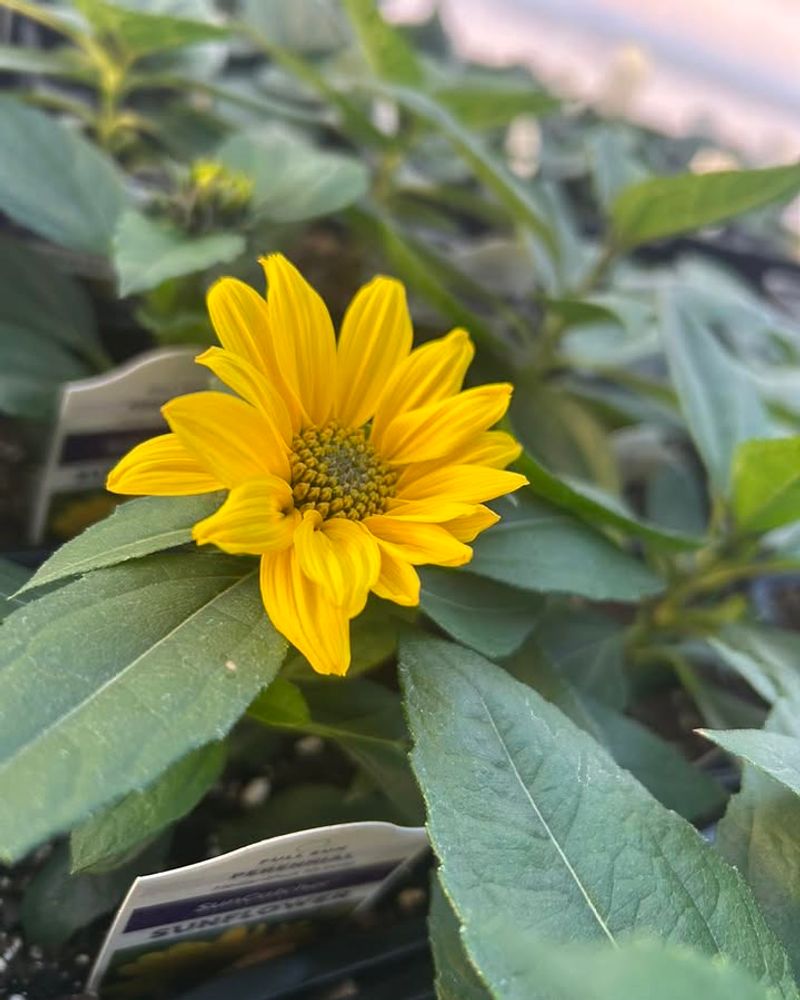
On a hot, sunny Florida patio, beach sunflower looks completely at home. A Florida native perennial, it thrives in the kind of sandy, dry, sun-drenched conditions that many plants simply cannot handle.
What makes it especially fun in containers is the way its stems spill and trail over the edges of pots, creating a cheerful, relaxed look that suits coastal gardens and sunny patios equally well.
Drainage is non-negotiable with beach sunflower. Soggy soil is one of the fastest ways to run into trouble, so choose a well-draining potting mix and make sure the container has good drainage holes.
Larger pots work better because beach sunflower likes to spread. Full sun brings out the best flowering, and established plants handle dry spells without much help once they settle in.
Beach sunflower is especially well suited to Central and South Florida and coastal areas throughout the state, where it can behave as a reliable perennial in containers year after year.
North Florida gardeners should be aware that cold snaps can set plants back, so moving pots to a sheltered spot during freezes is a smart precaution.
Pollinators, including native bees and butterflies, visit the yellow blooms regularly, adding extra life to any sunny outdoor space.
4. Black-Eyed Susan Packs Long-Lasting Color Into Pots
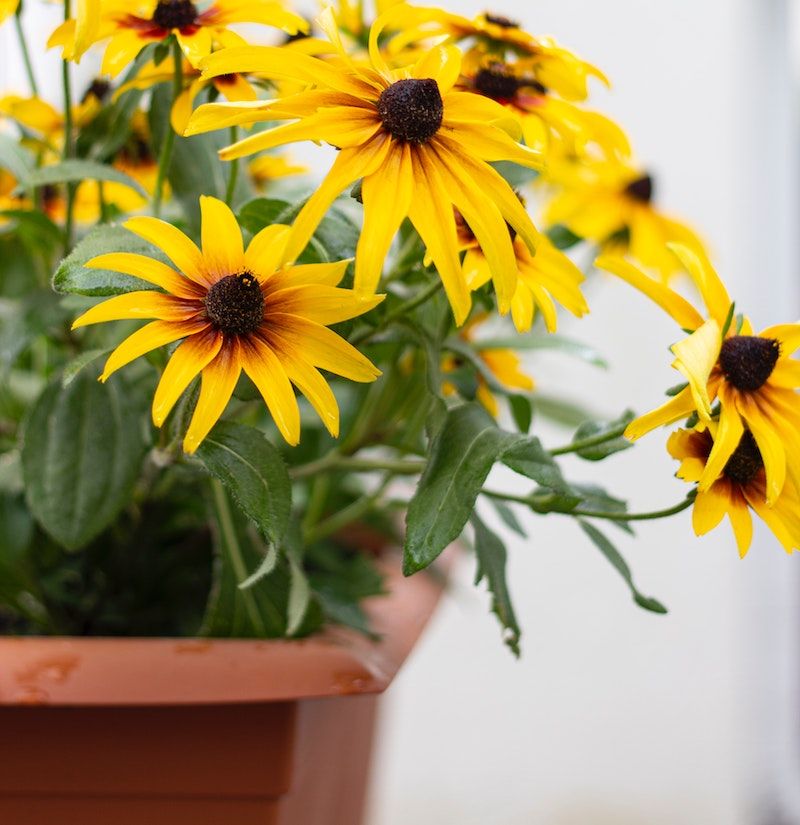
Cheerful, golden, and reliably attractive to pollinators, black-eyed Susan has a lot going for it as a container plant in Florida. The key is choosing the right type.
Rudbeckia fulgida is a perennial form well suited to Florida conditions, and UF/IFAS recognizes the garden value of rudbeckia in Florida landscapes.
The Florida Native Plant Society also highlights native rudbeckia species for their ecological value, particularly for native bees and butterflies that depend on them.
Full sun and well-drained soil are the starting points for healthy container performance.
Deadheading spent blooms, meaning removing the faded flowers before they go fully to seed, keeps plants tidy and encourages continued flowering through the season.
When clumps start to look crowded in the pot, dividing them gives plants fresh room to grow and gives you extra plants to move into new containers.
Not every black-eyed Susan sold at garden centers behaves the same way in Florida.
Annual types sold as bedding plants will not return the following year, so reading the plant tag or asking a nursery staff member whether a specific variety is a true perennial matters before buying.
Choosing a Florida-appropriate perennial type means you get the long-term container investment you are actually looking for rather than a one-season show.
5. Society Garlic Gives Containers Flowers And Tough Foliage
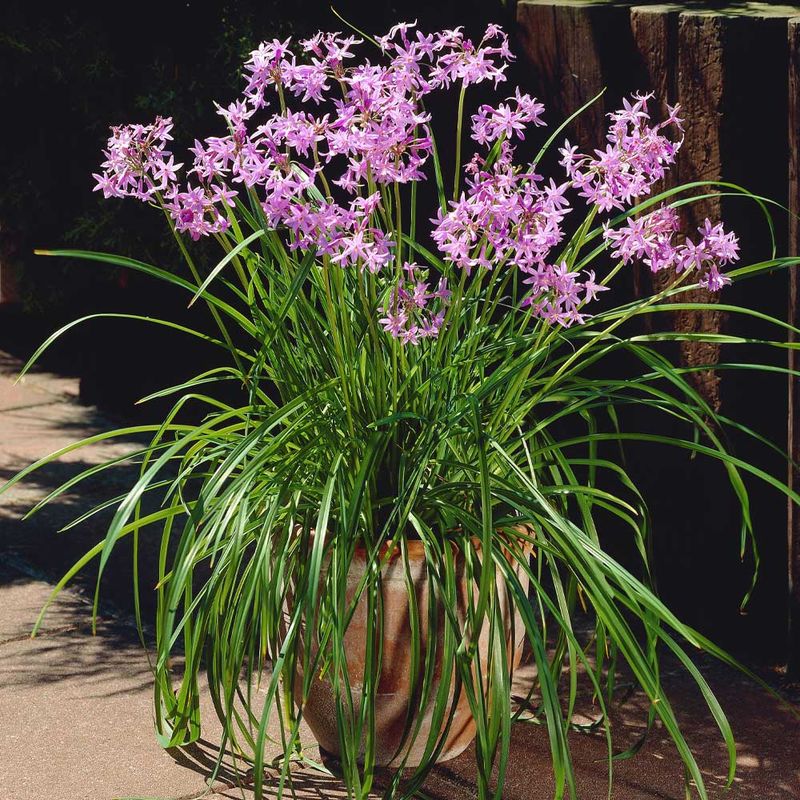
Some plants earn their place in the garden by being almost impossible to neglect into failure. Society garlic is one of them.
UF/IFAS supports society garlic for Florida landscapes as a tough, clump-forming perennial, and it translates that toughness directly into container life.
The slender, strappy foliage stays attractive even when the plant is not in bloom, and the clusters of soft purple flowers that appear above the leaves are a bonus that pollinators appreciate.
Full sun brings out the most flowers, so place containers in the sunniest spot available. A sandy or well-drained potting mix suits society garlic well, and overwatering is one of the few things that can cause problems.
Let the soil dry out between waterings and the plant will reward you by asking for very little in return. Drought tolerance once established makes it a strong choice for gardeners who travel or simply want reliable plants without constant upkeep.
When a pot of society garlic starts looking crowded and the clump pushes against the container walls, it is time to divide. Splitting the clump gives each section more room and often triggers a fresh round of flowering.
Unlike some fussier perennials, society garlic does not need much fuss to keep performing in Florida containers year after year across most of the state.
6. Crossandra Makes Shady Florida Pots Feel Tropical
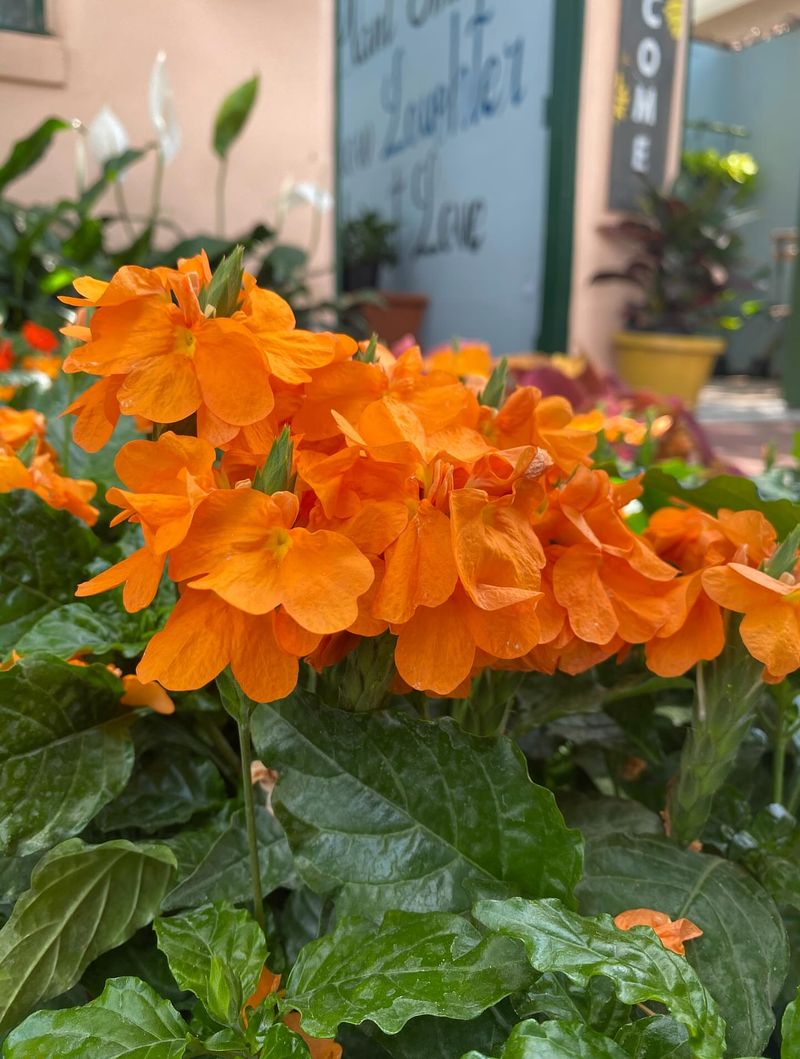
Bright shade is one of the trickier situations in a Florida container garden. Too much sun scorches sensitive plants, but too little light leaves most flowering plants struggling to bloom.
Crossandra sits right in that useful middle ground. UF/IFAS supports crossandra for Florida landscapes and containers, and its glossy foliage and vivid salmon-orange blooms give shaded patios a genuinely tropical feel without requiring direct sun all day.
Rich, well-drained potting mix works best, and crossandra appreciates steady moisture without ever sitting in soggy soil. Filtered light or bright shade is the sweet spot.
Harsh afternoon sun in very hot spots can stress the foliage, so positioning containers where they get morning light and afternoon shade tends to produce the best results during the peak summer months.
Perennial performance with crossandra is regional. In Central and South Florida, it behaves as a reliable returning perennial in containers and landscapes.
North Florida gardeners face a different reality, since cold temperatures can damage or set back plants significantly.
Moving pots indoors or to a sheltered spot during cold snaps is the practical solution for gardeners in colder parts of the state who want to keep their crossandra coming back rather than starting fresh each spring.
The blooms are worth the extra effort.
7. Gerbera Daisy Turns Containers Into Bright Florida Showpieces
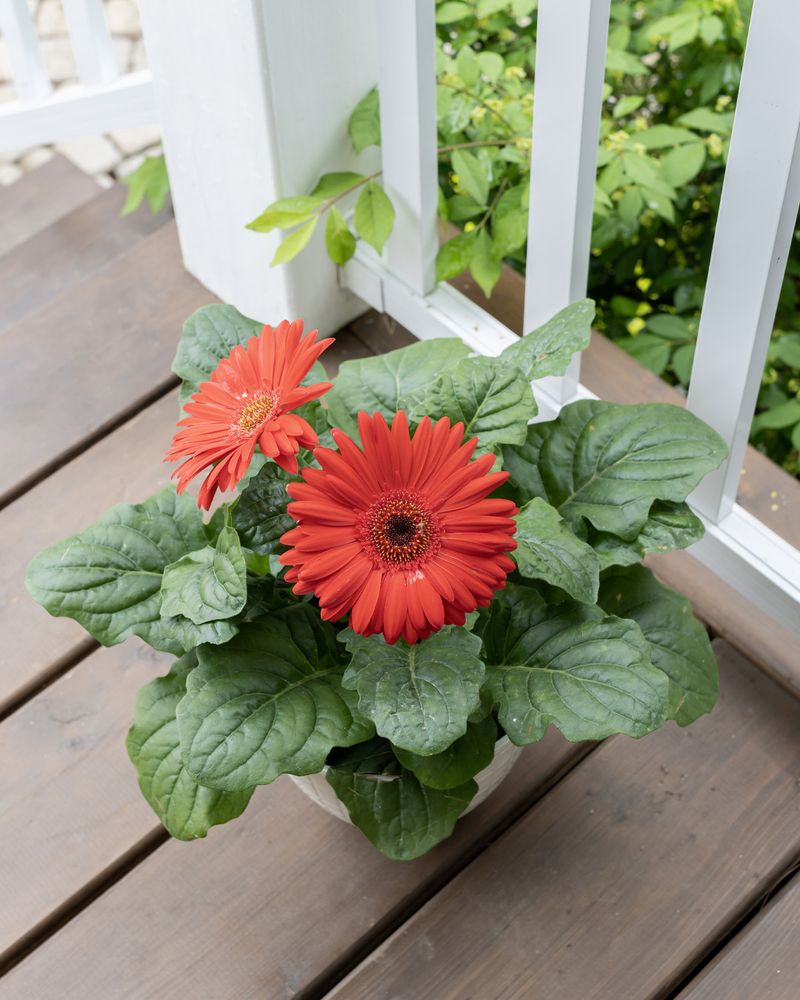
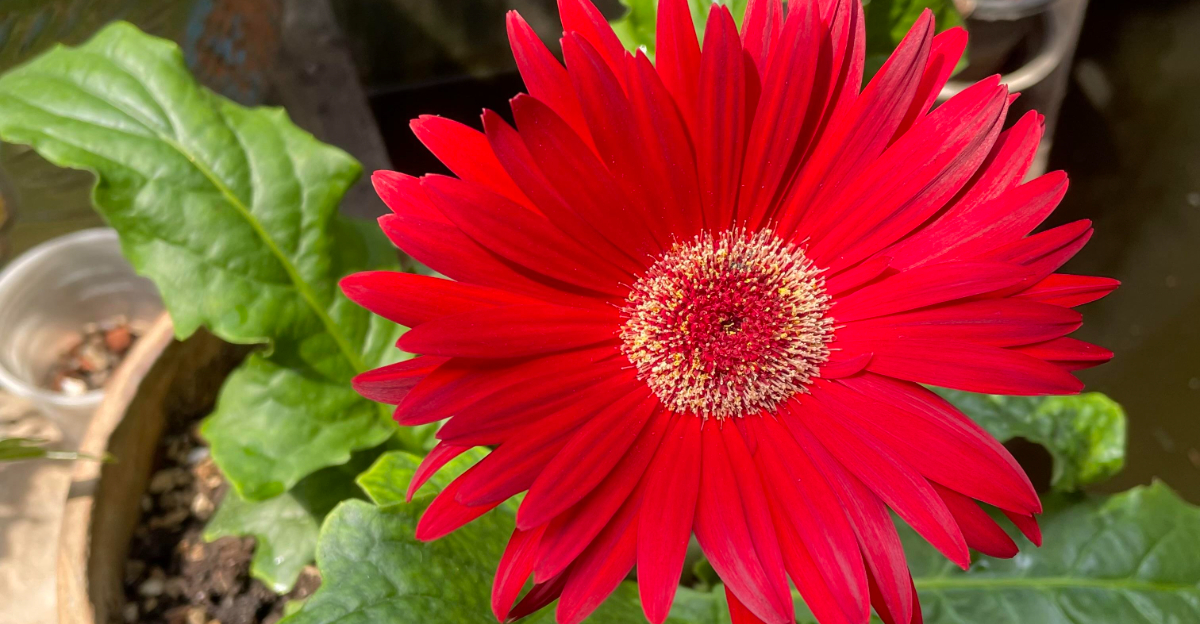
Walk past a patio pot of gerbera daisies in full bloom and it is nearly impossible not to stop and look. The flowers are large, bold, and come in colors that genuinely stand out against green foliage and neutral patio surfaces.
UF/IFAS supports gerbera daisies for containers and as perennial bedding plants, particularly in Central and South Florida where winters are mild enough to let plants return year after year.
Good drainage is absolutely essential. Gerbera daisies are prone to crown rot when water sits around the base of the plant, so using a clean, well-draining potting mix and a container with solid drainage holes is non-negotiable.
Morning sun or bright indirect light works better than harsh afternoon exposure, especially during the most intense summer months. Removing spent blooms keeps the plant focused on producing new flowers rather than setting seed.
North Florida gardeners should be realistic about cold exposure. Prolonged freezes can damage gerbera daisies in containers, so protecting pots during cold nights or moving them to a sheltered area is important for anyone hoping to keep plants alive through winter.
Spacing plants with enough room for air to move around them helps prevent fungal problems, which are a real concern in Florida’s humid conditions. South Florida gardeners tend to have the most consistent year-round results.
8. Flax Lily Keeps Pots Looking Fresh Between Blooms
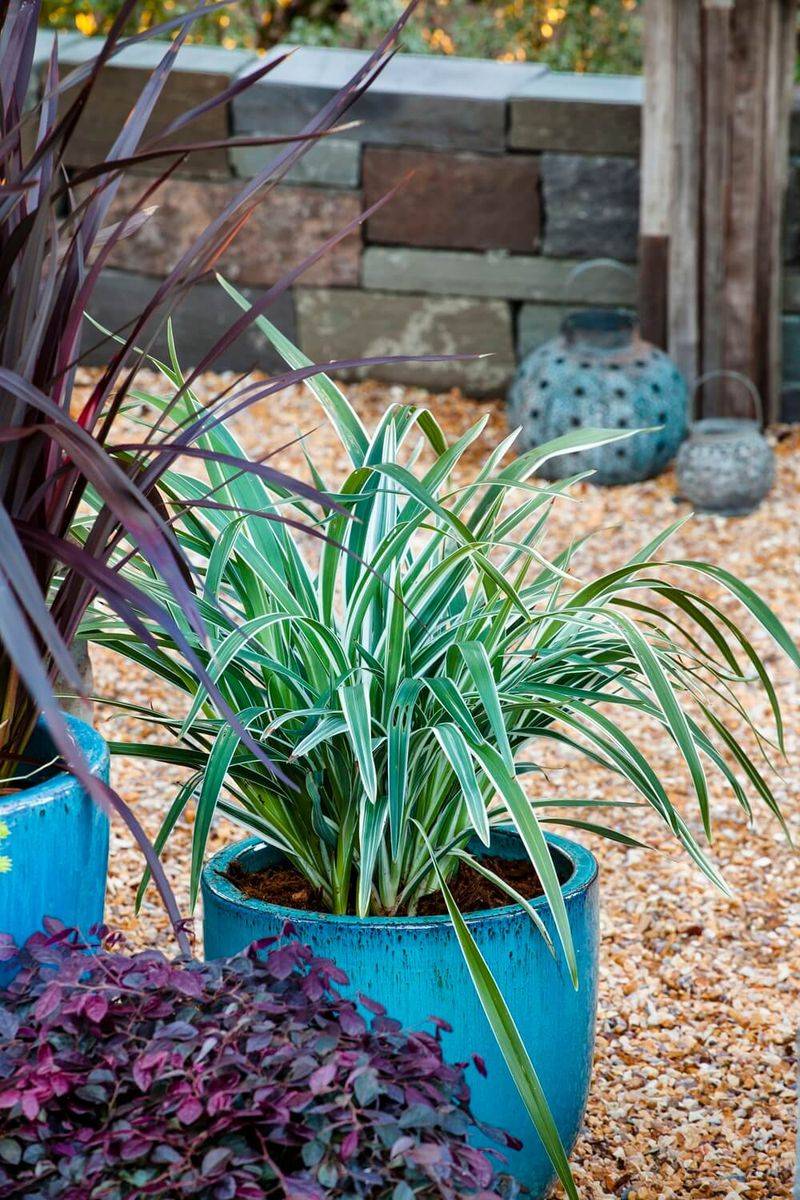
Not every great container plant needs to be covered in flowers to earn its spot on the patio. Flax lily is proof of that.
UF/IFAS supports flax lily for Florida landscapes, and its strappy, architectural foliage holds containers together visually through the stretches between flowering seasons when other plants look tired or sparse.
The variegated forms, with their striped green and cream or purple-tinted leaves, are especially striking in mixed planters.
Partial sun to shade suits flax lily well, making it useful in spots where flowering plants struggle to perform. A well-drained potting mix keeps roots healthy, and established plants handle dry periods with reasonable tolerance once they settle in.
Trimming off any damaged or brown leaf tips keeps the plant looking neat without requiring a full cutback. The occasional small purple flower clusters are a pleasant surprise rather than the main event.
Dividing clumps when they outgrow the container is straightforward and gives you new plants ready for additional pots. Flax lily is perennial across most of Florida, and UF/IFAS notes its usefulness as a durable landscape plant statewide.
In containers, it provides structure, texture, and reliable greenery that makes surrounding flowering plants look even better by contrast. Gardeners who use it as a filler or anchor in mixed pots quickly realize how much it contributes to the overall look.
9. Firespike Brings Big Red Blooms Back For Hummingbirds
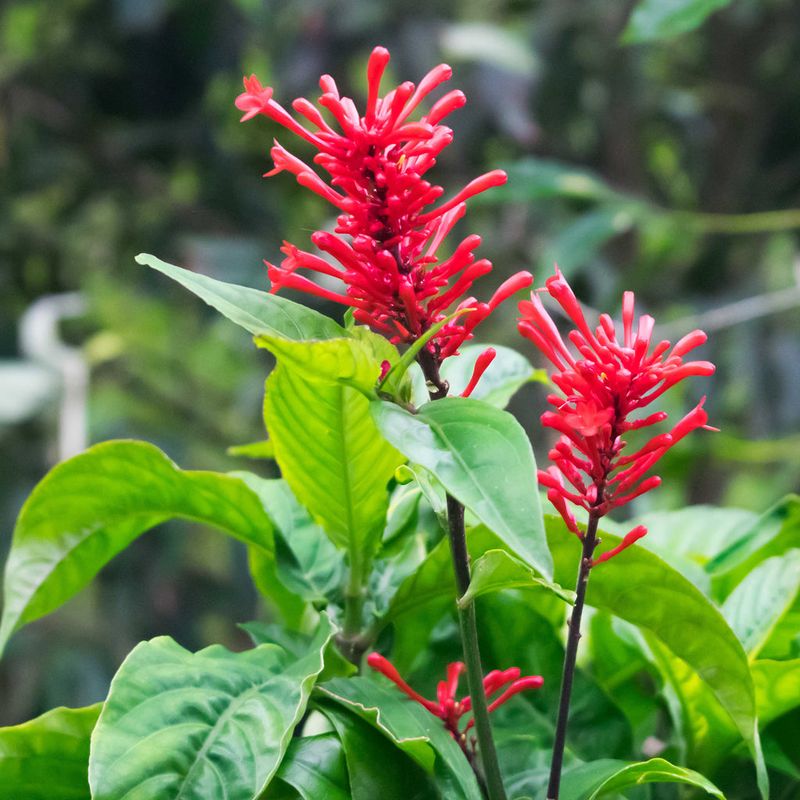
Hummingbirds that find a firespike in bloom will be back. The long, tubular red flower spikes are practically designed for hummingbird feeding, and UF/IFAS supports firespike as a Florida plant with strong wildlife value for both hummingbirds and butterflies.
The bold tropical appearance of the blooms makes it one of the most visually striking options for a large container on a Florida patio.
Firespike behaves a bit differently depending on where in Florida you are growing it. In South Florida, it can grow into a sizeable shrub-like plant.
In Central and North Florida, it tends to act more like a clumping herbaceous perennial, going dormant in cold weather and returning from the roots when temperatures warm up again.
Containers in colder parts of the state should be moved to a sheltered location during freezes to protect the root system.
Part shade to filtered sun works best for firespike in containers, since harsh afternoon sun can stress the foliage during the hottest months. Choose a large container because the plant needs room to grow and fill out properly.
Regular moisture keeps it performing well, and pruning to manage size is important in containers where space is limited.
The payoff is a plant that delivers impressive red flower spikes, especially year-round in South Florida and in fall and winter farther north, with plenty of hummingbird and butterfly appeal.
10. Ornamental Sweet Potato Trails From Pots Year After Year
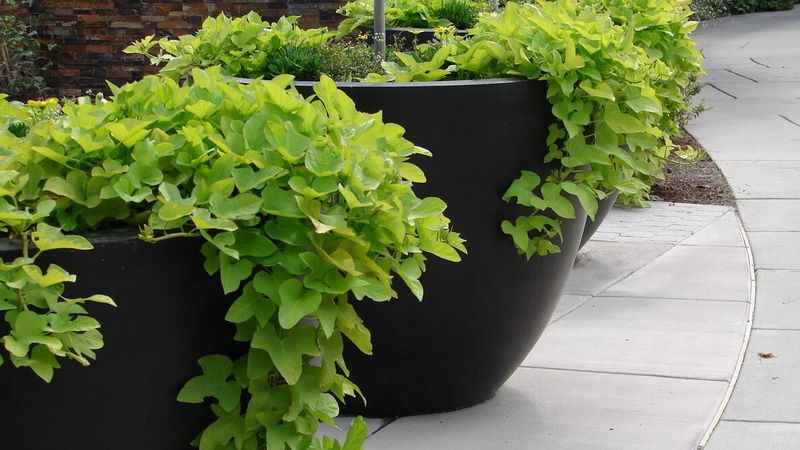
Bold, fast, and almost unstoppable, ornamental sweet potato vine is the container plant that keeps gardeners on their toes in the best possible way.
UF/IFAS describes ornamental sweet potato as growing as a perennial in Florida, and anyone who has grown it in a pot knows exactly how enthusiastically it takes that role seriously.
The trailing stems cascade over container edges in waves of deep purple, bright chartreuse, or bronze foliage, depending on the variety chosen.
Full sun to partial shade both work, though brighter light tends to bring out the richest foliage color. Large containers, hanging baskets, and mixed pots with plenty of room to trail are the ideal situations for this plant.
Regular watering keeps growth moving at the pace it prefers, and trimming back stems that get too long is a normal part of managing the plant rather than a sign of trouble.
In colder parts of Florida, containers should be protected during cold snaps since the foliage is frost-sensitive. The tubers underground can sometimes survive mild freezes and resprout, but keeping pots sheltered is a safer approach in North Florida.
Ornamental sweet potato is grown primarily for its foliage rather than its flowers, which are small and easy to miss. The real value is the fast, dramatic coverage it brings to any container arrangement throughout the Florida growing season.