How To Grow Plumeria In Pots In Texas For Healthy Summer Growth
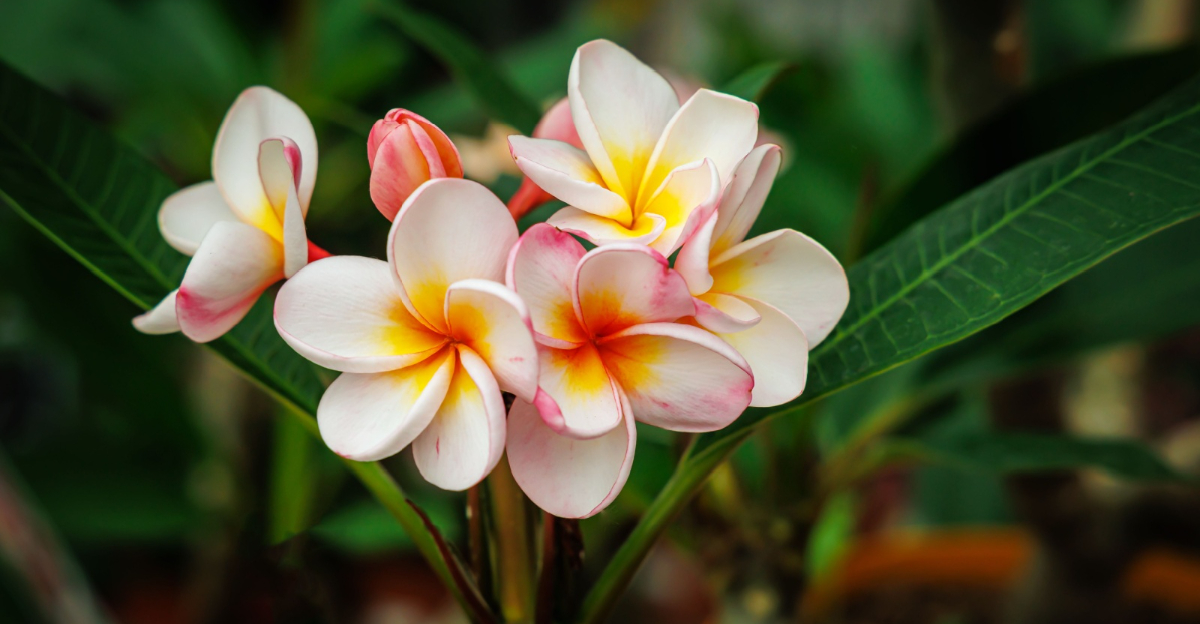
Texas and plumeria are a pretty exciting match, especially when pots are part of the plan. Give these tropical stunners plenty of sunshine, warm weather, and sharp drainage, and they can put on quite a show.
Honestly, few things make a patio feel more like a little getaway than a healthy plumeria loaded with lush leaves and those famous fragrant blooms. Container growing makes the whole process even better in Texas.
You get more control over soil, moisture, and placement, which is a huge help once summer heat starts flexing. And when cooler weather shows up, you can move your plumeria to a safer spot instead of crossing your fingers and hoping for the best.
That alone makes pots a smart choice. With the right setup, plumeria can grow beautifully through the Texas heat and stay in great shape for the next warm season too.
Not bad for a plant that brings serious vacation energy to your porch.
1. Full Sun Helps Plumeria Bloom Better In Texas
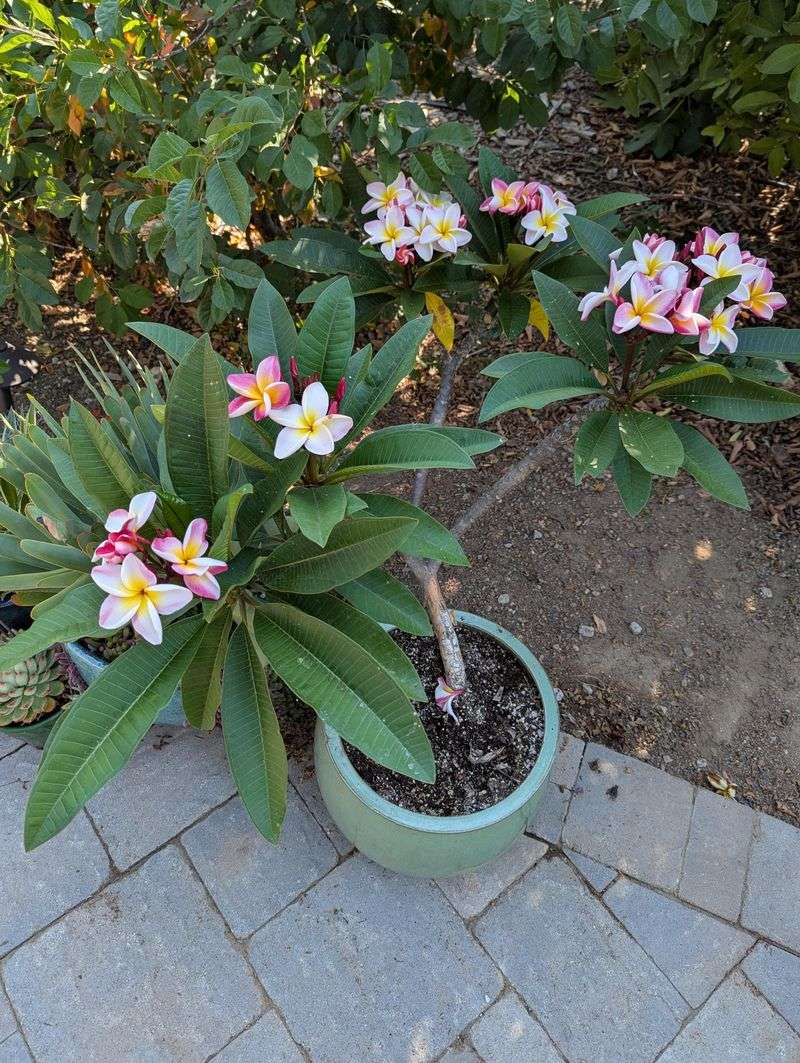
Hot Texas patios are some of the best spots you can find for growing plumeria in containers. These plants are native to tropical regions and genuinely love being bathed in direct sunlight for long stretches of the day.
In Texas, where summer sun is strong and daylight hours are long, plumeria can soak up the energy they need to push out those fragrant, colorful blooms that make them so popular.
Plumeria generally need at least six hours of direct sun each day, and in many parts of Texas, they can easily get eight to ten hours during peak summer months.
More sunlight usually means more flowering, stronger stem growth, and a healthier overall appearance.
Spots like south-facing patios, open decks, or sunny driveways tend to work well for container-grown plumeria.
Shade from trees, fences, or buildings can slow blooming and weaken the plant over time. If your plumeria is not flowering as expected, moving the pot to a brighter location is often the first adjustment worth trying.
One of the great advantages of growing in pots across Texas is how easily you can reposition your plant to chase the best light as the season changes.
Keeping plumeria in full sun from spring through early fall gives them the best possible foundation for healthy summer growth.
2. Fast-Draining Potting Mix Protects Plumeria Roots
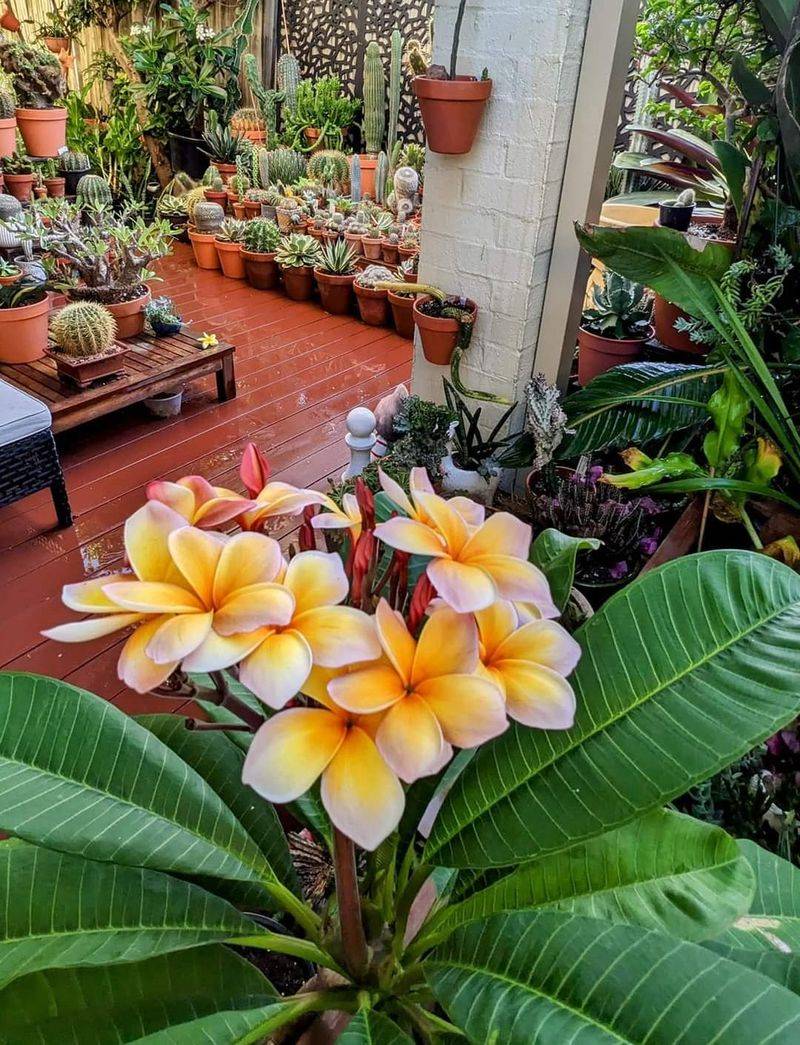
Soggy roots are one of the most common problems people run into when growing plumeria in containers, and the fix almost always starts with the soil. Plumeria roots need air and moisture to move through the growing medium quickly.
A mix that holds too much water can lead to root rot, which weakens the plant and reduces its ability to produce blooms during the Texas summer.
A well-draining potting mix made for cacti or succulents works well as a base for plumeria. Many Texas gardeners improve drainage even further by mixing in extra perlite, coarse sand, or small bark chips.
This creates a loose, gritty texture that lets water flow through freely while still holding just enough moisture to support healthy roots between waterings.
Your Texas Garden Changes Every Week. Your Plan Should Too.
Gardening in Texas changes quickly throughout the season. Every Friday you’ll receive a simple weekly plan showing exactly what to plant, prune, fertilize, harvest, and protect so you never miss the right timing.
Choosing the right mix matters even more in Texas because summer heat causes pots to dry out faster than in cooler climates.
A fast-draining mix combined with a pot that has good drainage holes gives the roots a healthy environment to grow in.
When repotting, avoid packing the mix down too tightly, since loose soil encourages better root development.
Getting the soil right from the start saves a lot of trouble later and gives your potted plumeria a strong foundation for healthy, active summer growth in Texas.
3. Deep Watering Supports Healthy Summer Growth
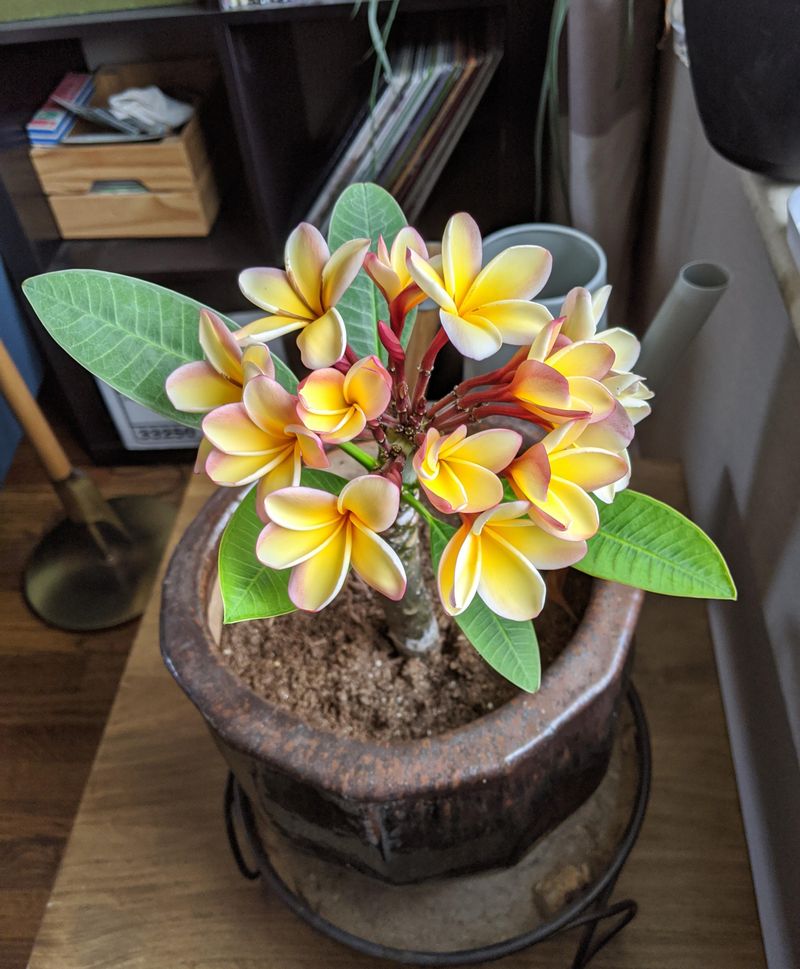
Summer in Texas is no joke, and the intense heat means container plants can dry out much faster than you might expect.
Plumeria in pots need consistent, deep watering during the active growing season to stay healthy and keep producing new growth and flowers.
Shallow, frequent watering tends to encourage weak, surface-level roots, while deep watering pushes moisture further down and encourages roots to grow stronger and deeper into the pot.
A good approach is to water thoroughly until moisture runs freely from the drainage holes, then wait until the top inch or two of soil feels dry before watering again.
During peak Texas summer heat, that might mean watering every few days depending on pot size, sun exposure, and how hot and dry conditions have been.
Larger pots tend to hold moisture a bit longer than smaller ones.
Overwatering is just as much of a concern as underwatering. If the soil stays wet for too long between waterings, roots can struggle in the low-oxygen environment.
Checking the soil before watering rather than following a rigid schedule helps you respond to actual conditions rather than guessing.
Morning watering is often a good choice in Texas because it gives the plant moisture before the hottest part of the day while allowing excess surface moisture to evaporate before evening.
4. Warm Weather Helps Plumeria Grow Well In Pots
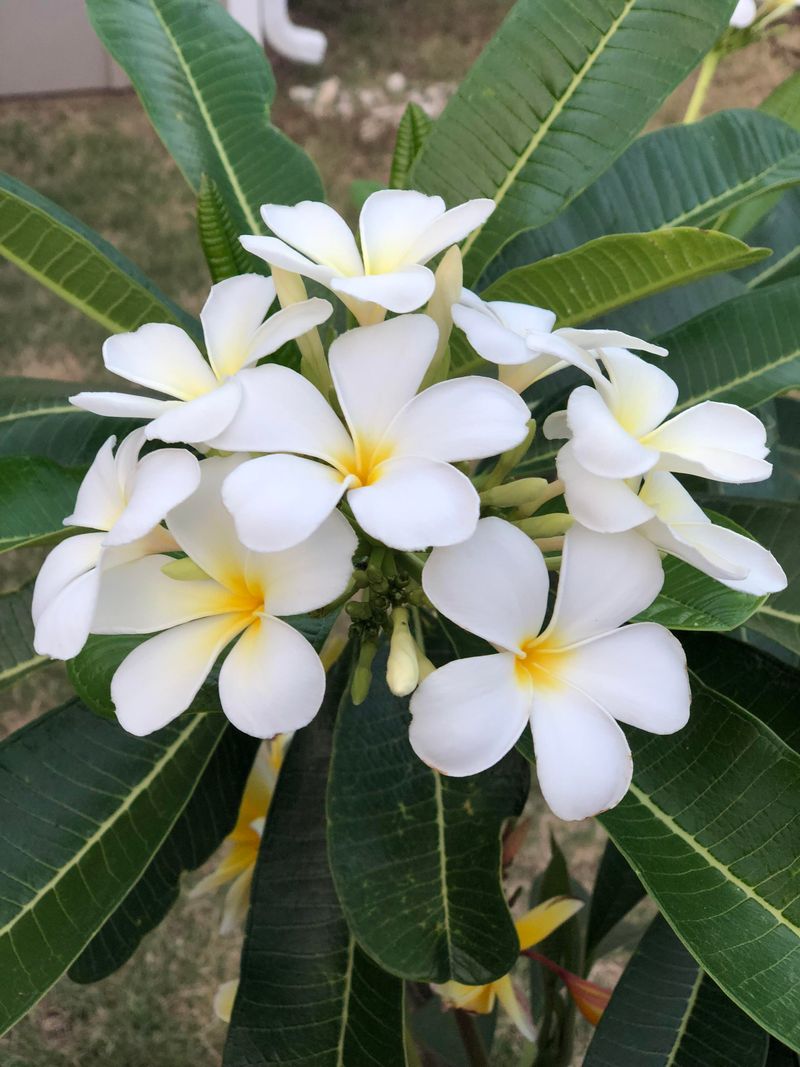
Few tropical plants respond to warmth quite like plumeria. Once temperatures settle in the upper 60s and beyond, plumeria in containers begin pushing out new leaves and flower clusters with impressive energy.
In Texas, the long warm season from late spring through early fall gives potted plumeria an extended window of active growth that many other regions simply cannot match.
Plumeria grow most vigorously when daytime temperatures are consistently in the 80s and 90s Fahrenheit, which is exactly what most of Texas delivers through the summer months.
The combination of heat and strong sunlight signals the plant to stay in its active growing phase, directing energy into new stem tips, fresh leaves, and those beautiful blooms the plant is known for.
Container growing works especially well in Texas because pots heat up quickly in the sun, warming the root zone and encouraging even faster growth. Placing pots on a sunny concrete patio or deck can give the roots a bit of extra warmth that helps plumeria thrive.
While very intense heat above 100 degrees can occasionally cause some stress, plumeria are generally well-suited to hot Texas summers.
Keeping plants well-watered and in a spot with good air circulation helps them handle the heat comfortably during the most intense weeks of the season.
5. Sturdy Pots Help Manage Top-Heavy Growth
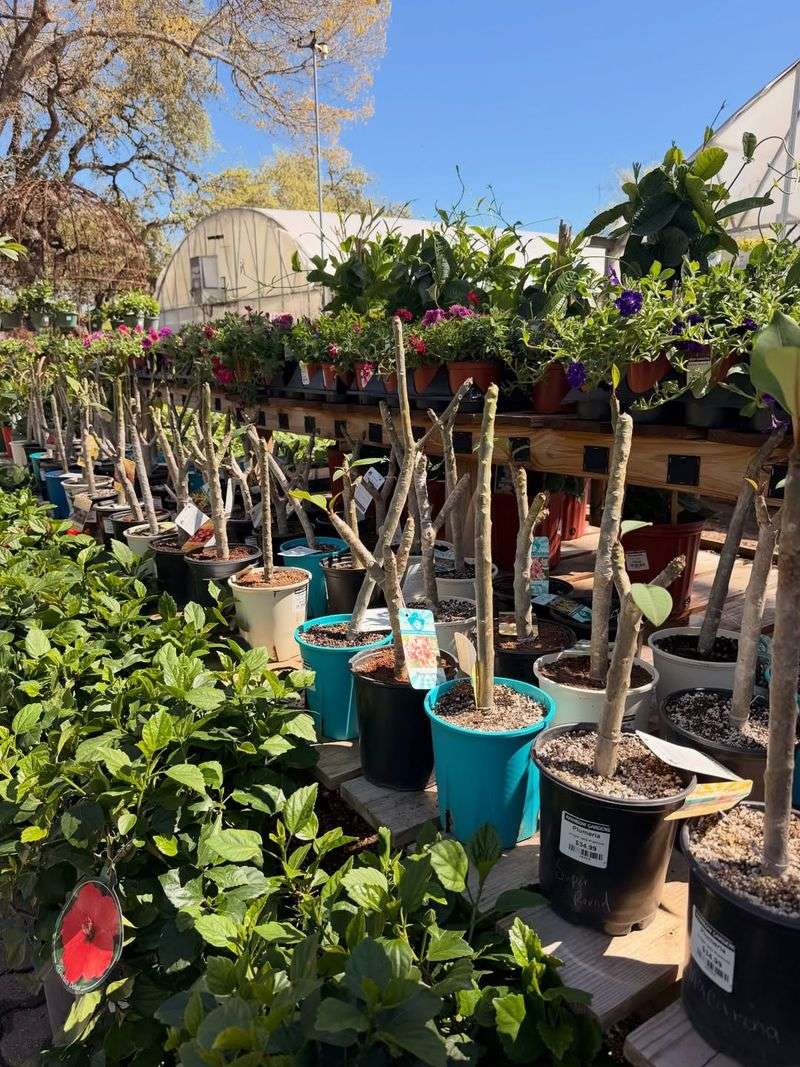
Plumeria can grow surprisingly large in Texas, especially when they have been in a container for several seasons.
Thick, branching stems and a dense canopy of leaves can make these plants quite top-heavy, which means the pot they grow in needs to be solid and stable enough to keep them upright on a breezy patio or deck.
Heavier pots made from terracotta or thick-walled resin tend to work better than lightweight plastic containers for mature plumeria.
The added weight at the base helps counterbalance the plant above and reduces the chance of the whole thing tipping over during afternoon thunderstorms, which are common across Texas in summer.
A container that is at least 15 to 20 inches wide and deep gives the root system room to spread and anchors the plant more securely.
Drainage holes are non-negotiable regardless of what material you choose. Without proper drainage, even the best potting mix will eventually become waterlogged.
Some Texas gardeners place heavy pots on wheeled caddies so they can still move them when cold weather approaches without the strain of lifting.
Repotting into a slightly larger container every few years keeps the root system healthy and gives the plant fresh growing space, which often results in stronger stem development and more blooms during the active Texas growing season.
6. Feeding Supports Better Growth In Active Season
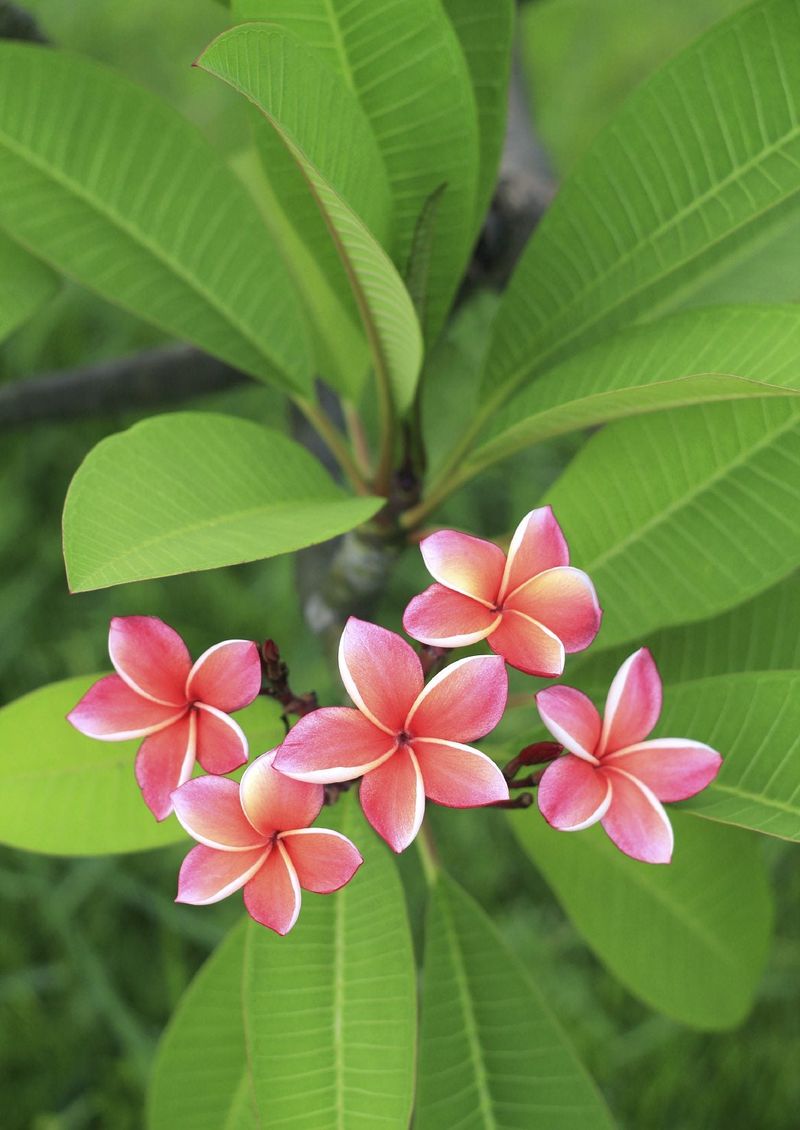
Plumeria are heavy feeders when they are actively growing, and a well-fed plant in Texas summer looks noticeably different from one that has been left to fend for itself.
Fertilizing during the warm growing season encourages stronger stem growth, more flower clusters, and deeper green foliage.
Container plants especially benefit from regular feeding because nutrients in potting mix get used up or washed out over time with repeated watering.
A fertilizer with a higher middle number, which represents phosphorus, is generally recommended for plumeria because phosphorus supports flower development.
Many gardeners use a slow-release granular fertilizer applied every few weeks during the active season, while others prefer a water-soluble option applied more frequently at a diluted rate.
Either approach can work well as long as feeding is consistent through the growing season.
Starting fertilization in spring as new growth emerges and tapering off in late summer or early fall gives the plant time to slow down naturally before dormancy.
Feeding too late in the season can push tender new growth that may not handle cooler Texas fall nights well.
Avoid over-fertilizing with high-nitrogen products, as this tends to encourage leafy growth at the expense of flowers.
Matching your feeding routine to the plant’s active growing phase in Texas makes a noticeable difference in how well your potted plumeria performs each summer.
7. Dormancy Changes Plumeria Care In Texas
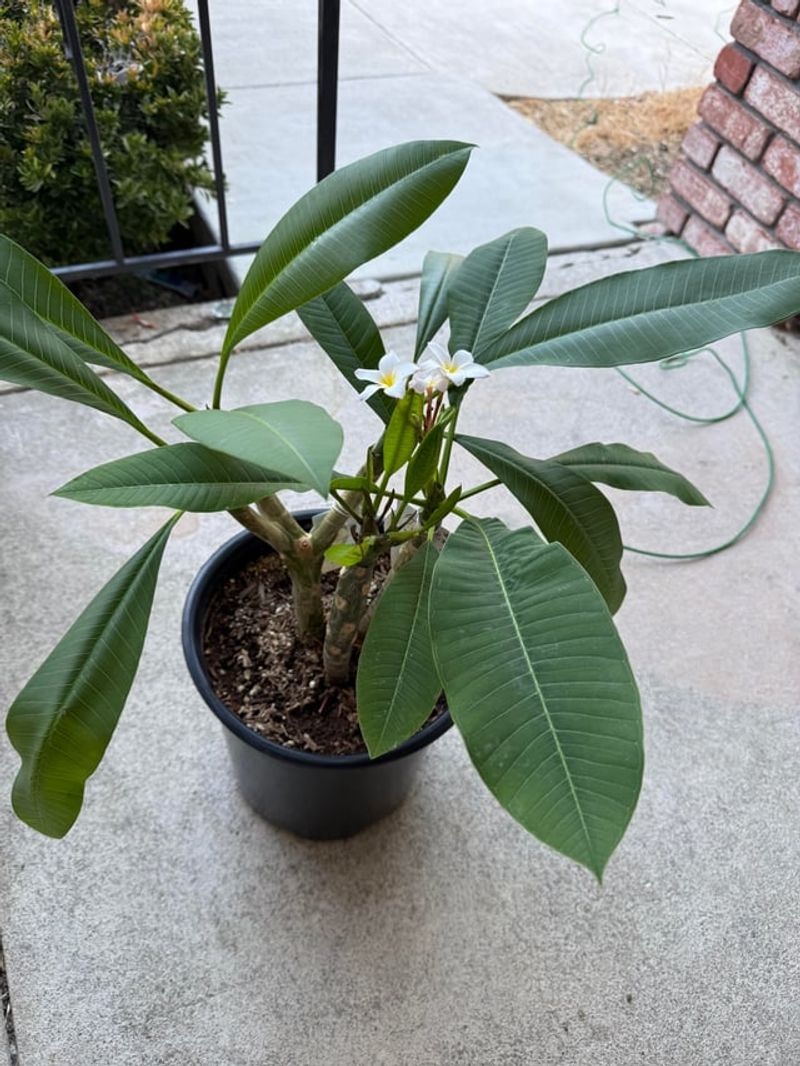
As Texas days grow shorter and temperatures begin dropping in late fall, plumeria naturally shift into a resting phase known as dormancy. Leaves yellow and drop, growth slows to a stop, and the plant redirects its energy inward.
This is a completely normal part of the plumeria cycle, not a sign that something has gone wrong, and understanding it helps you adjust your care routine accordingly.
Once dormancy begins, watering should be reduced significantly. The plant is no longer actively growing and does not need the same moisture levels it required during summer.
Watering just enough to keep the thick stems from shriveling is usually sufficient during this rest period.
In many parts of Texas, dormancy lasts from roughly November through February or March, depending on local temperatures and how quickly spring warmth returns.
Fertilizing should be paused during dormancy since the plant is not using nutrients actively. Continuing to feed a dormant plumeria can cause more harm than benefit.
Container growing makes this transition easier in Texas because you can simply stop watering as frequently and move the pot to a sheltered spot as the season changes.
Checking on dormant plants occasionally to make sure the stems remain firm and healthy gives you peace of mind through the cooler months and helps you spot any issues before spring growth begins.
8. Winter Protection Helps Potted Plumeria Stay Healthy
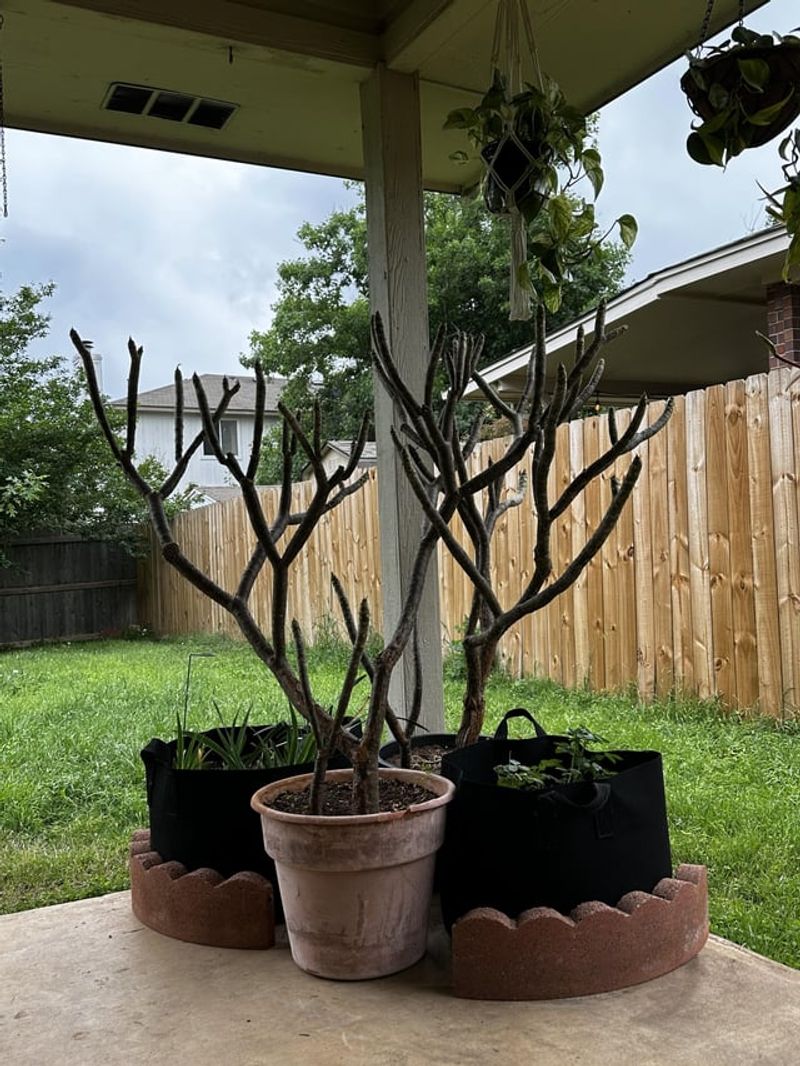
One of the biggest reasons Texas gardeners choose containers over in-ground planting for plumeria is the ability to move plants out of the cold when temperatures drop.
Plumeria are sensitive to frost, and even a brief freeze can damage stems and set the plant back significantly.
In Texas, where winter weather can shift quickly and unexpectedly, having a portable container makes all the difference.
When nighttime temperatures are expected to drop below 40 degrees Fahrenheit, moving potted plumeria to a sheltered location is a smart precaution. A garage, covered porch, or indoor room with some light works well for overwintering dormant plants.
Since plumeria drop their leaves in dormancy, they do not need as much light during this period, but they do need protection from freezing temperatures.
Checking weather forecasts regularly through late fall and winter helps you respond before a cold snap causes harm. In South Texas, winters are mild enough that plumeria may only need occasional protection during the coldest nights.
In Central and North Texas, longer cold stretches may require keeping plants sheltered for weeks at a time. Wrapping pots in burlap or frost cloth can offer some extra insulation during brief cold events.
Getting your plumeria safely through the Texas winter sets the stage for a strong, healthy return to growth when warm weather comes back around in spring.