These Arizona Plants Create A Dense Privacy Screen Along Fences Faster Than You’d Think
Privacy in a backyard makes such a big difference in how much you actually enjoy spending time outside. Without it, even a beautiful outdoor space can feel exposed and uncomfortable, especially in neighborhoods where homes sit close together.
Planting along a fence line is one of the most natural ways to solve that problem, but most people assume it takes years before anything fills in enough to matter. That assumption stops a lot of Arizona homeowners from ever getting started.
What many gardeners don’t know is that certain plants perform remarkably well in Arizona’s climate and grow dense and full much faster than expected.
Some of them are low maintenance, heat tolerant, and tough enough to handle everything Arizona throws at them while still looking great along a fence line.
Choosing the right plants from the beginning is what makes the difference between waiting forever and actually having the private, lush outdoor space you pictured when you first moved in.
1. Hopbush Grows Quickly And Stays Dense Year Round
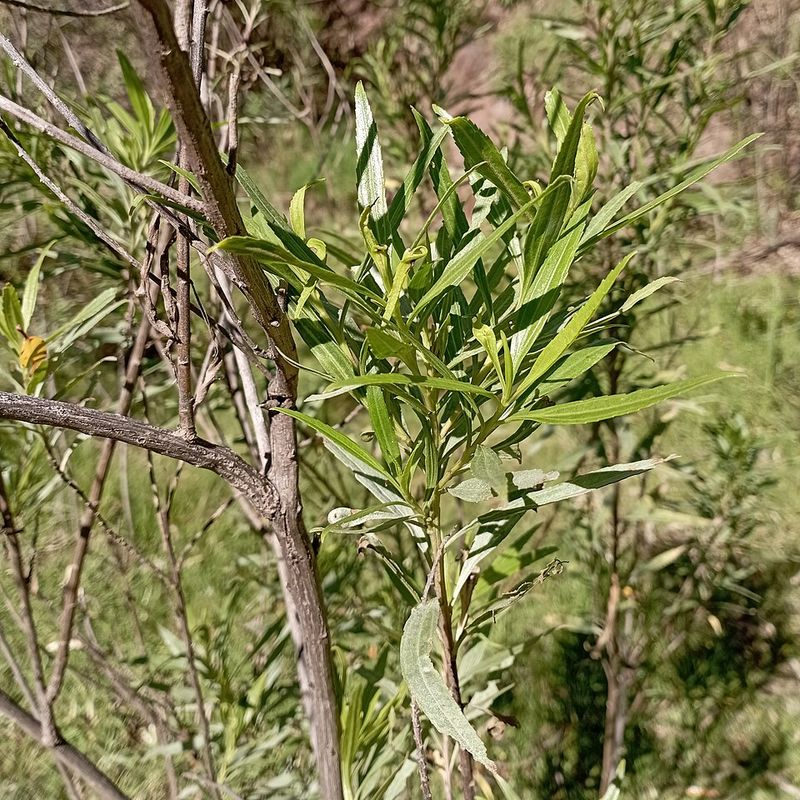
Hopbush is one of those plants that quietly earns its place along the fence without needing much from you. Native to Arizona and the broader Southwest, it puts on real growth once it settles in, often reaching six to ten feet tall with branches that fill out sideways just as fast.
That horizontal spread is exactly what you want when you’re trying to block a neighbor’s view.
Planted in a row along a fence, hopbush creates a layered, almost wall-like effect. Each shrub overlaps the next, closing gaps that other plants might leave open.
The papery seed pods add some visual interest, and the evergreen leaves stay on through winter, so your screen doesn’t disappear when temperatures drop in Tucson or Scottsdale.
Water it regularly during the first year to help roots go deep, then cut back to occasional deep watering once established. Full sun is ideal, and hopbush handles reflected heat from block walls better than most shrubs.
Sandy or rocky soil is totally fine. Pruning isn’t required, but a light trim in late winter keeps the shape tidy without sacrificing density.
If you want a reliable, low-maintenance screen that works year-round across Arizona, hopbush is one of the smartest choices on this list.
Just give each plant enough spacing at the start so they have room to fill in without crowding too tightly.
With time, they knit together into a dense screen that holds its shape with very little effort.
2. Texas Ranger Thickens Up And Handles Heat With Ease
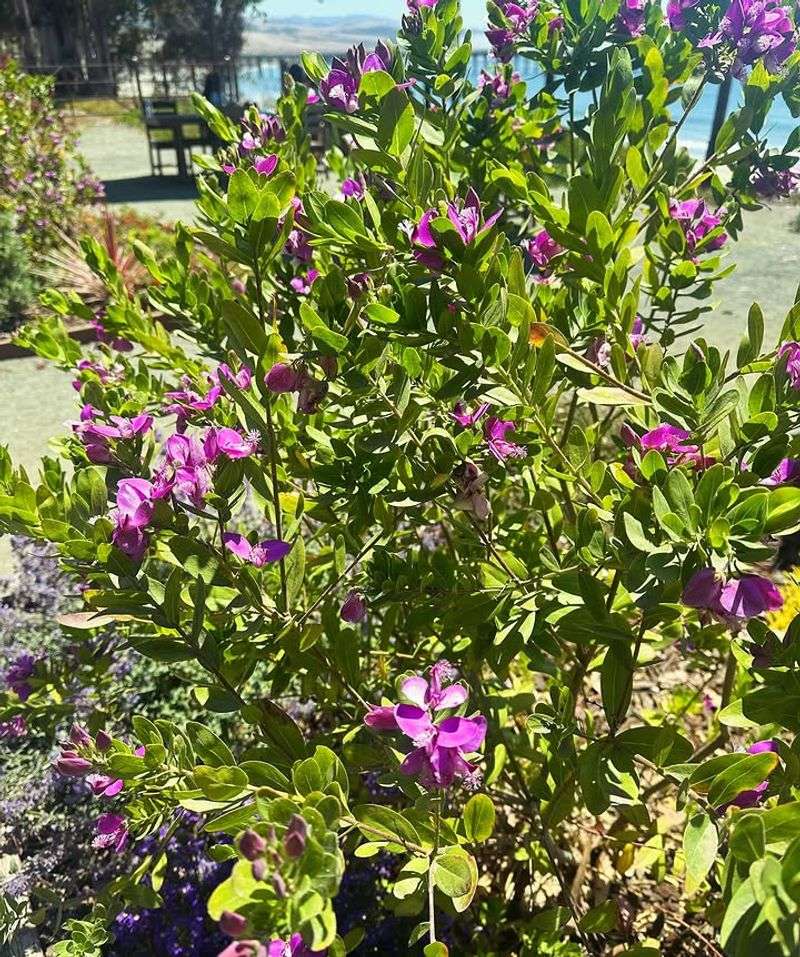
Few plants in Arizona can match the Texas Ranger when it comes to sheer toughness paired with real visual appeal. Also called purple sage or Texas sage, this shrub thrives in the same scorching conditions that send other plants into stress.
In Phoenix summers, when ground temperatures near walls can climb well past 100 degrees, Texas Ranger just keeps growing.
What makes it stand out as a privacy plant is how full it gets. Left unpruned, it naturally rounds out into a dense mound reaching five to eight feet tall and nearly as wide.
Your Arizona Garden Changes Every Week. Your Plan Should Too.
Gardening in Arizona changes quickly throughout the season. Every Friday you’ll receive a simple weekly plan showing exactly what to plant, prune, fertilize, harvest, and protect so you never miss the right timing.
Planted three to four feet apart along a fence, a row of Texas Rangers closes in surprisingly fast. The silvery-green leaves reflect heat and stay on year-round, giving you consistent coverage even in dry spells.
After monsoon rains roll through, the entire shrub bursts into vivid purple flowers that stop people in their tracks. It’s one of the best-looking privacy screens you can grow in Arizona without any complicated care routine.
Established plants need almost no supplemental water once roots are set, usually after the first full growing season. Avoid overwatering, as soggy soil causes root problems faster than drought ever would.
Plant in full sun, skip the fertilizer, and let the desert climate do the work for you.
3. Bottlebrush Grows Tall And Fills Space Along Fences
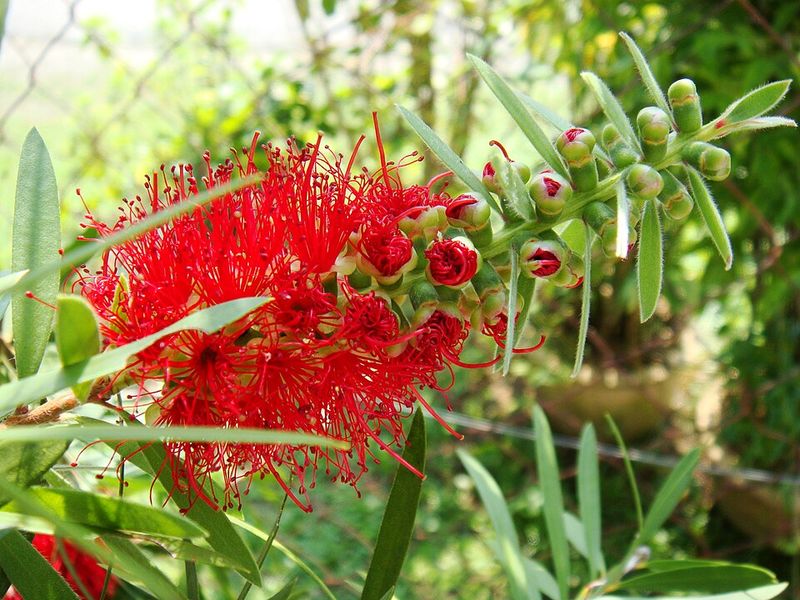
Bright red flowers shaped like actual bottle brushes make this plant one of the most recognizable in Arizona yards, but it’s the sheer size and density that make it a standout privacy option.
Bottlebrush, or Callistemon, can grow anywhere from eight to fifteen feet tall depending on the variety, and it fills in thick enough to block views completely when planted along a fence line.
Growth rate is one of its biggest advantages. In warm Arizona conditions with regular watering, bottlebrush can put on two to three feet of new growth in a single season.
That kind of speed is hard to find in plants that also stay dense and attractive. The deep green, narrow leaves stay on year-round, and the red blooms appear multiple times a year, especially after watering cycles.
Hummingbirds absolutely love this plant, which is a nice bonus if you enjoy backyard wildlife. Plant it in full sun with well-draining soil, and water it consistently during the first two years.
After that, it handles Arizona heat with only occasional deep watering. One thing to keep in mind is that bottlebrush can get wide, so give each plant at least four to five feet of space from the fence.
Regular pruning after blooming helps maintain shape and encourages denser branching over time.
4. Yellow Bells Grow Fast And Add Height In One Season
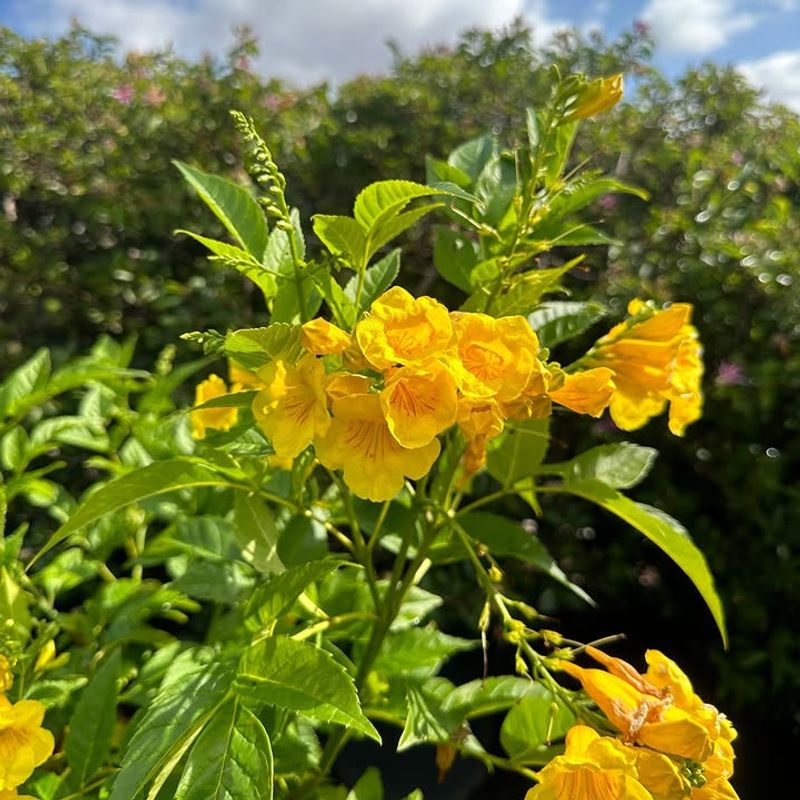
Yellow Bells, known botanically as Tecoma stans, is the kind of plant that makes you do a double take at how fast a bare fence line can transform. Under Arizona’s long growing season, a young plant can shoot up four to six feet in a single summer when watered well.
That kind of speed is almost unmatched among shrubs that also look this good.
Clusters of bright yellow, trumpet-shaped flowers cover the plant from late spring straight through fall. Beyond the color, the real value for privacy is how full and upright it grows.
Stems push up and out simultaneously, creating a dense column of green and gold that blocks sightlines effectively. In Tucson and Phoenix landscapes, it’s commonly used exactly this way along walls and fences.
Yellow Bells handles reflected heat and full sun without complaint. It’s drought-tolerant once established, though regular watering during the first season dramatically speeds up growth and density.
In frost-prone areas of northern Arizona, stems may get knocked back in winter, but roots survive and plants resprout vigorously in spring. Cutting frost-damaged stems to the base in late winter actually encourages stronger, bushier regrowth.
Fertilizing once in spring with a balanced granular fertilizer gives it an extra push. For fast results along a fence, few plants in Arizona outperform Yellow Bells.
5. Natal Plum Forms A Compact And Dense Barrier
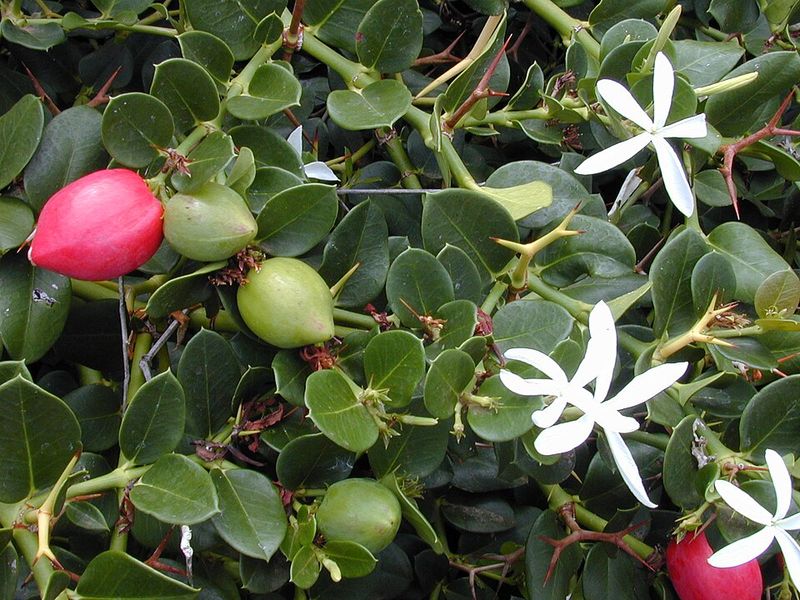
Not every privacy plant needs to be tall to be effective. Natal Plum, or Carissa macrocarpa, proves that a compact, tightly packed shrub can block views just as well as a towering one, especially when you want something that stays below window height.
Reaching four to seven feet tall, it forms a thick, impenetrable wall of glossy leaves that nothing gets through easily.
What gives Natal Plum an extra edge as a privacy barrier are the sharp thorns hidden among its branches. Nothing is getting through that hedge uninvited.
Paired with fragrant white star-shaped flowers and edible red fruit, it’s one of the more rewarding plants you can put along an Arizona fence. It thrives in coastal-style climates but adapts well to lower desert zones, particularly in Phoenix and the East Valley where winters stay mild.
Plant it in full sun to partial shade with well-draining soil. Water regularly during the establishment period, then taper off as roots deepen.
Natal Plum is sensitive to hard freezes, so if your area of Arizona sees regular frost, consider planting it near a south-facing wall for protection. Pruning twice a year keeps it dense rather than leggy.
Space plants about three feet apart along the fence for a tight, continuous screen that fills in within one to two growing seasons.
6. Arizona Rosewood Builds A Strong And Lasting Screen
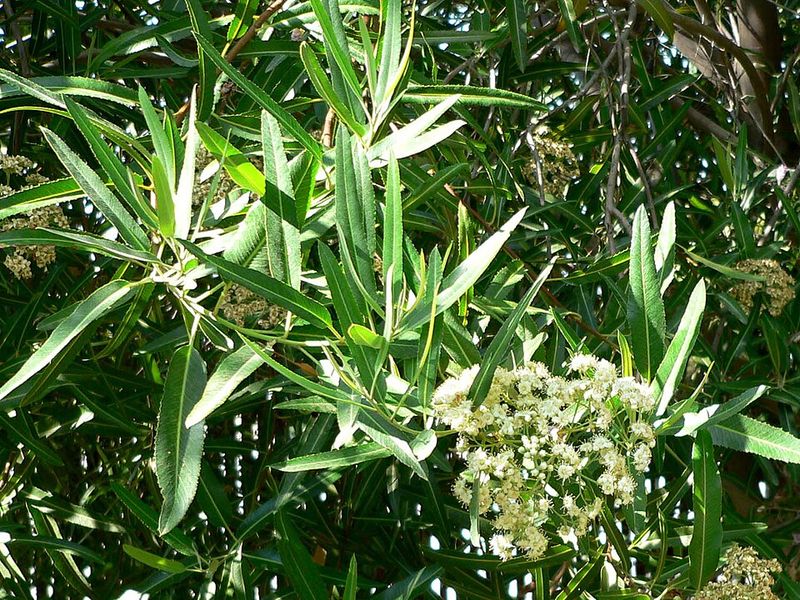
Arizona Rosewood, or Vauquelinia californica, is a native that doesn’t get nearly enough credit as a privacy plant. Walk past one in the wild near Tucson or in the foothills outside Phoenix and you’ll immediately notice how full and upright it grows without any help at all.
That same quality makes it exceptional along a fence line where you want something that stays dense without constant trimming.
Unlike faster-growing options, Arizona Rosewood builds its screen more gradually, but what it builds lasts. Growth is steady rather than explosive, averaging one to two feet per year under decent conditions.
After three to four years, you have a screen that looks permanent, because it practically is. Plants are long-lived, evergreen, and remarkably tough once established in native or well-draining soil.
Fine-textured, dark green leaves give it a refined look that works in both formal and naturalistic landscapes. Clusters of small white flowers appear in late spring and attract pollinators without creating a mess.
Full sun is preferred, and supplemental water during summer helps speed up early establishment. Once roots are deep, Arizona Rosewood survives on rainfall alone in most parts of the state.
It handles cold better than many desert shrubs, making it a solid choice in higher-elevation Arizona towns like Prescott or Flagstaff where other privacy plants struggle through winter.
7. Littleleaf Cordia Forms A Dense And Manageable Hedge
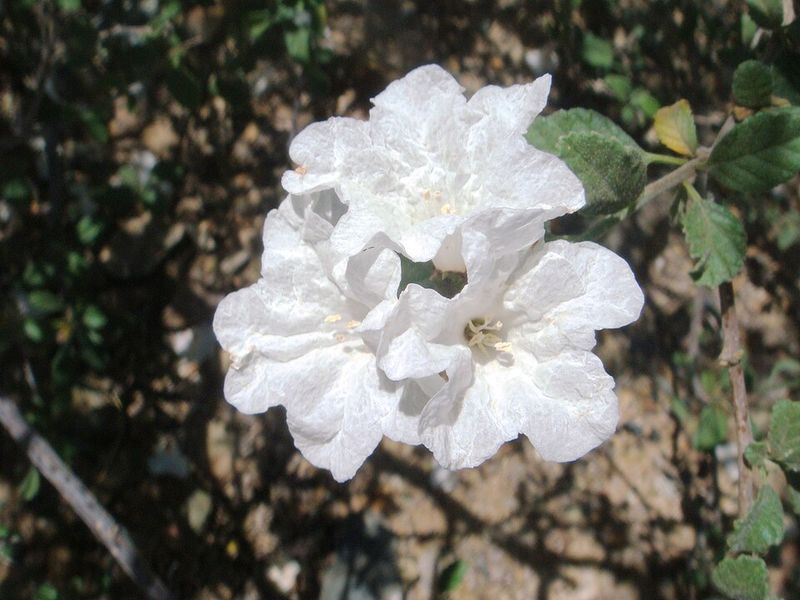
Compact, tidy, and surprisingly tough, Littleleaf Cordia is a desert shrub that earns real respect once you see how well it performs along a fence. Native to the Sonoran Desert region, it’s perfectly adapted to Arizona conditions without needing any special treatment.
Plants reach four to eight feet tall and branch densely from the base up, which is exactly the growth habit you want in a privacy hedge.
Clusters of small white flowers appear in spring and after summer monsoons, drawing in bees and butterflies without creating any kind of mess or litter problem.
The small, rough-textured leaves stay on through most of the year in lower desert areas like Phoenix and Tucson, giving you consistent coverage.
During unusually cold winters, some leaf drop may occur, but plants leaf back out quickly once temperatures rise.
Spacing plants three to four feet apart along a fence gives them room to fill out while still overlapping enough to close visual gaps within two seasons. Full sun is best, and Littleleaf Cordia handles reflected heat from block walls without any visible stress.
Water regularly during the first growing season, then shift to deep, infrequent watering once established. Light pruning after flowering helps maintain a uniform hedge shape.
If you want a native Arizona option that stays manageable without losing density, Littleleaf Cordia fits that role cleanly.
8. Feathery Cassia Grows Fast And Fills In Open Space
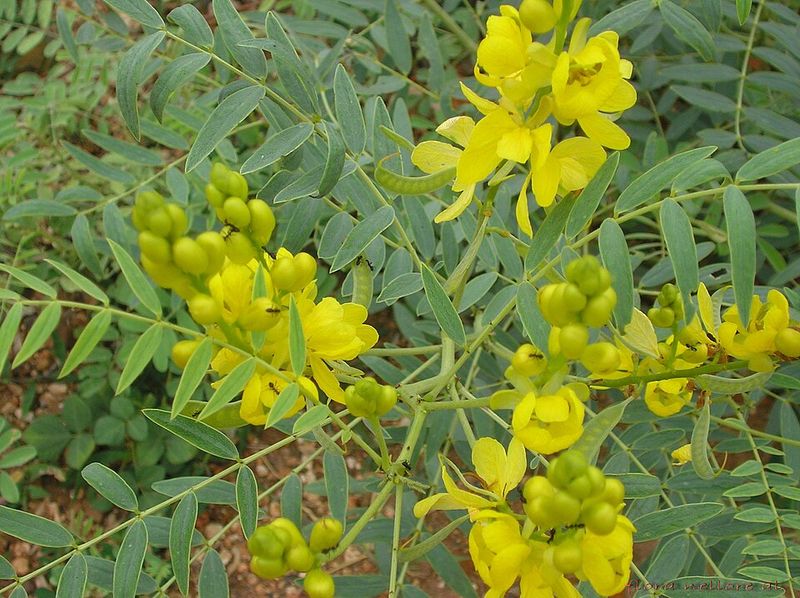
Feathery Cassia brings something different to the fence line: a soft, almost airy texture paired with explosive growth speed.
Botanical name Senna artemisioides, this Australian native has naturalized beautifully across Arizona and performs like it was born in the desert.
Plants can reach four to six feet tall and equally wide within just one to two growing seasons under Arizona conditions.
The fine, silvery-blue foliage creates a feathery cloud effect that looks intentional and designed, not wild or unkempt. Bright yellow flowers cover the entire plant in late winter and early spring, giving you a bold color display right when most other shrubs are still waking up.
After flowering, the plant keeps its shape and density through the heat of summer without much fuss.
Feathery Cassia is drought-tolerant to an impressive degree once roots are established, usually after the first year. Overwatering is actually more of a concern than underwatering in heavy or clay-heavy soils.
Plant in full sun with good drainage and water lightly but consistently during establishment. In Tucson and Phoenix landscapes, it’s often used in mass plantings along walls and fences for exactly this reason.
Prune lightly after the spring bloom to keep growth compact and encourage fresh branching. Give plants three to four feet of space and let them do what they do naturally, which is fill in fast and stay full.