Where To Plant Bird Of Paradise For The Best Tropical Look In Florida
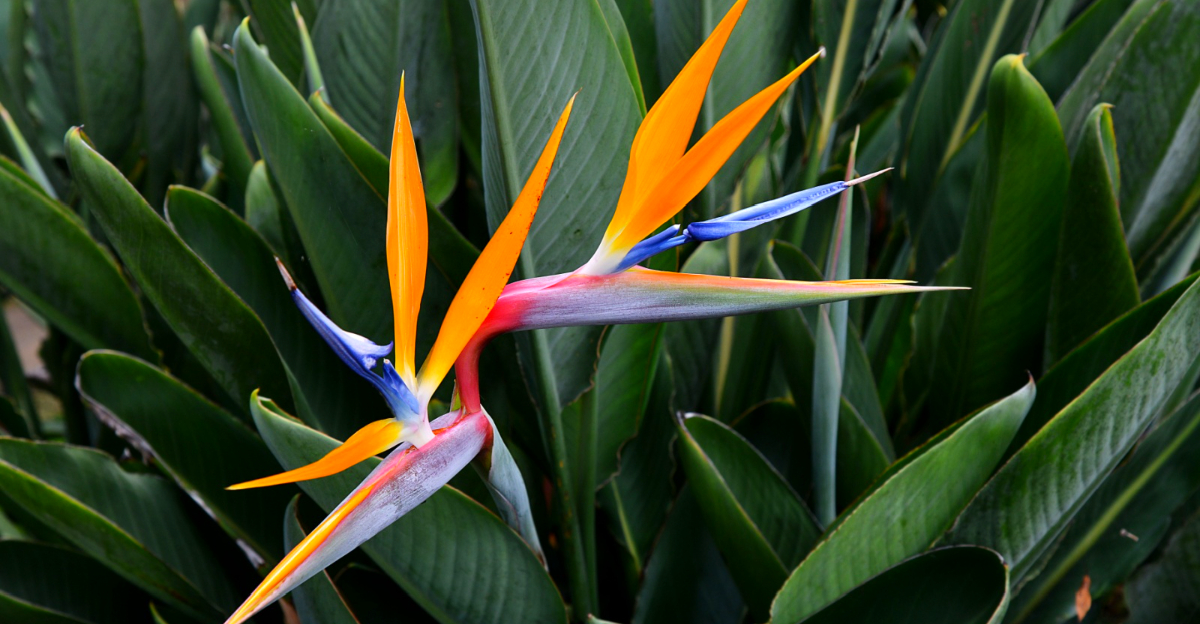
If you want your Florida yard to feel less like a suburban lawn and more like a five-star Caribbean resort, the bird of paradise is your absolute best friend.
This plant is a total showstopper, rocking bold, architectural leaves and those iconic blooms that look exactly like a tropical bird taking flight.
Seriously, it is like nature decided to show off a little too much.
Because Florida is basically a giant greenhouse with humidity, we have the perfect setup to grow these beauties into massive, healthy icons that will make your neighbors green with envy.
Just dropping one in the dirt and hoping for the best isn’t quite enough, though. You have to consider things like salt spray if you are near the coast or how much room that giant white variety actually needs before it tries to take over your driveway.
Picking the right spot with the perfect amount of sun is the secret to getting those legendary flowers.
1. Best Overall: A Bright, Sheltered Spot With Morning Sun
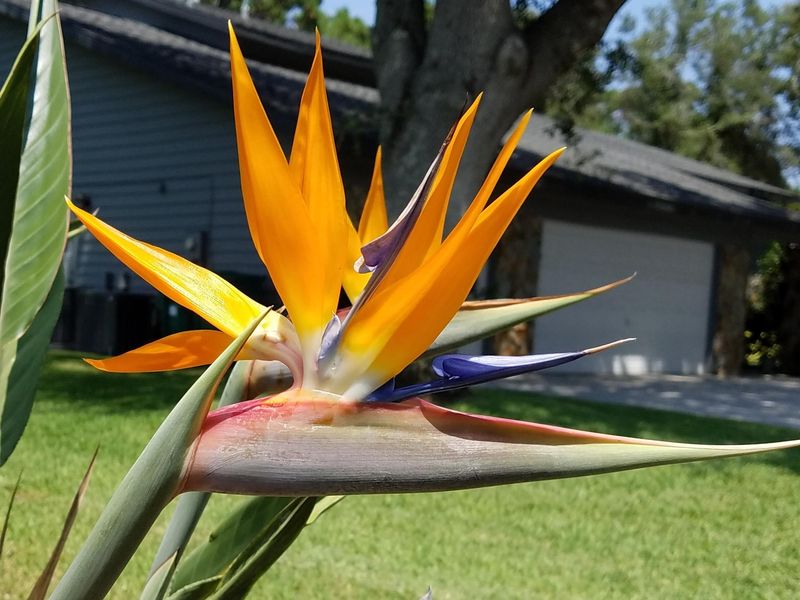
Morning sun and afternoon shade might be the sweet spot that most Florida gardeners overlook when placing bird of paradise in their landscapes.
A location that catches several hours of direct sun early in the day, then transitions to dappled or filtered shade by early afternoon, gives the plant the light it craves without exposing it to the most intense heat of the day.
In Florida, summer afternoons can be brutal, and even sun-loving plants can show stress when baked for hours without relief.
A sheltered spot near a wall, large tree canopy, or structure that blocks the harshest western sun often produces fuller, more vibrant foliage and more consistent blooming over time.
Orange bird of paradise tends to thrive in full to partial sun and typically tops out around five to six feet, making it a manageable choice for most residential yards.
White bird of paradise can grow considerably taller, sometimes reaching twenty feet or more, so it needs more open space.
Fertile, well-drained soil with added organic matter helps both species establish quickly. A sheltered morning-sun location in a Florida yard is genuinely hard to beat as a starting point for this tropical showstopper.
2. By The Pool For A Resort-Style Look
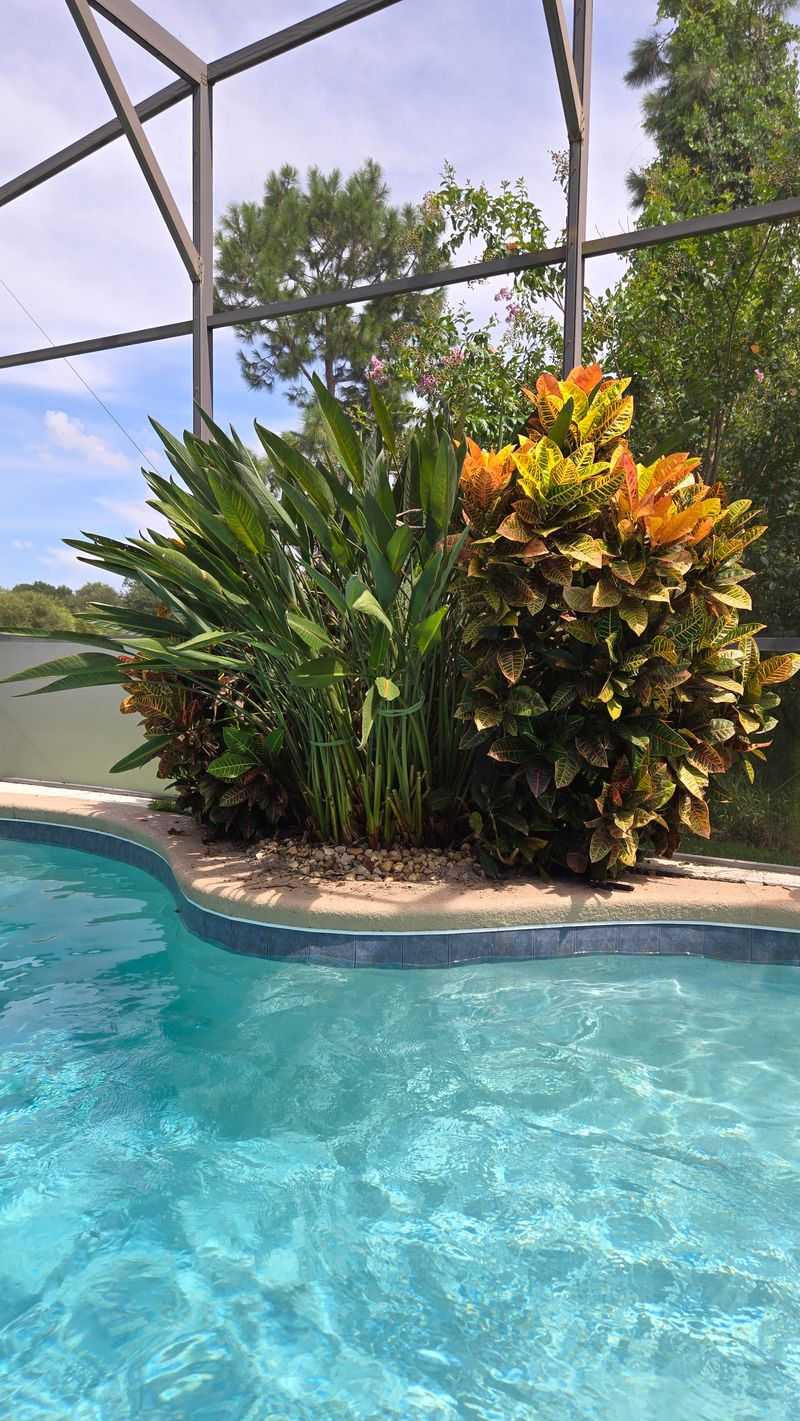
Poolside planting in Florida is practically its own design category, and bird of paradise fits the aesthetic like it was made for it.
The broad, arching leaves and vivid blooms bring an unmistakable tropical energy to any pool area, creating the kind of lush, layered look that makes a backyard feel like a private retreat.
Placement near a pool does come with a few considerations worth thinking through before you dig.
Orange bird of paradise stays compact enough to tuck into a border without overwhelming the space, while white bird of paradise makes a bold architectural statement when used as a focal point or corner anchor.
Both species do reasonably well in Florida’s reflected heat near pool decking, though they appreciate some shelter from strong, drying winds.
Your Florida Garden Changes Every Week. Your Plan Should Too.
Gardening in Florida changes quickly throughout the season. Every Friday you’ll receive a simple weekly plan showing exactly what to plant, prune, fertilize, harvest, and protect so you never miss the right timing.
Root systems are generally not aggressive, but it helps to give the plant a few feet of clearance from the pool edge so roots have room to spread into good soil rather than compacted hardscape fill.
Well-drained, organically enriched soil near pool surrounds gives the plant a solid foundation.
Regular watering during establishment helps it settle in, and once it finds its footing, it adds genuine resort-style drama to any Florida backyard pool setting.
3. Near A Patio Or Lanai For Lush Tropical Foliage
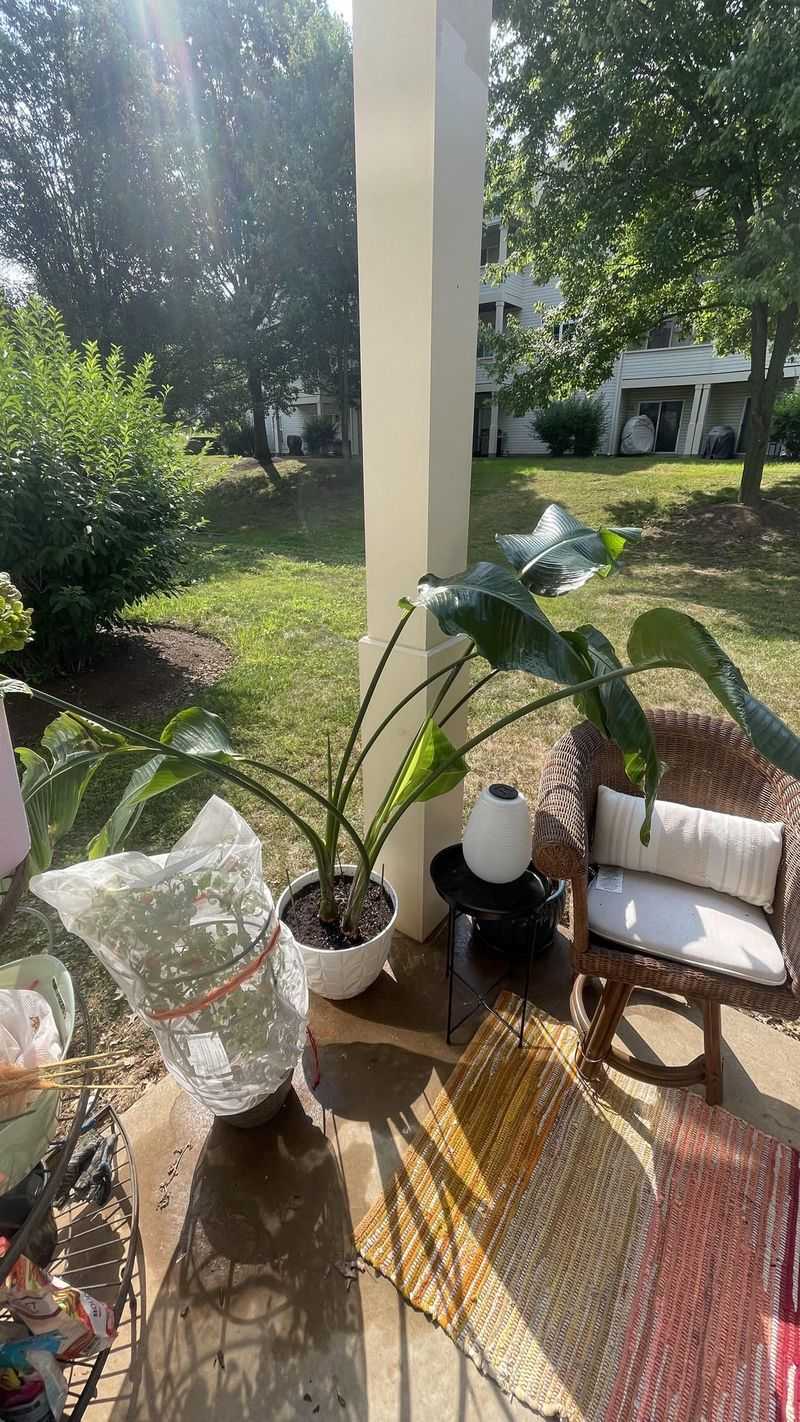
Planting bird of paradise near a patio or lanai is one of the smartest moves a Florida homeowner can make for instant tropical ambiance.
The big, leathery leaves create a living backdrop that softens the hard edges of concrete, tile, or screen enclosures and makes the entire outdoor living area feel more inviting and immersed in nature.
A lanai-adjacent planting also benefits from a bit of structural shelter. Overhanging rooflines or nearby walls can protect the plant from occasional cold snaps that pass through northern and central Florida during winter months.
This added protection can make a meaningful difference for white bird of paradise, which is somewhat more sensitive to cold than the orange species.
For patios that get partial shade throughout the day, orange bird of paradise tends to handle lower light reasonably well, though it may bloom less freely than when grown in a sunnier spot.
Keep in mind that bird of paradise planted too close to a patio edge can eventually spread and crowd the space, so giving it at least three to four feet of clearance from foot traffic areas is a smart call.
Rich, well-drained soil and consistent moisture during the first growing season help it establish into a lush, full specimen that frames any Florida outdoor living space beautifully.
4. Along A Fence For A Bold Green Backdrop
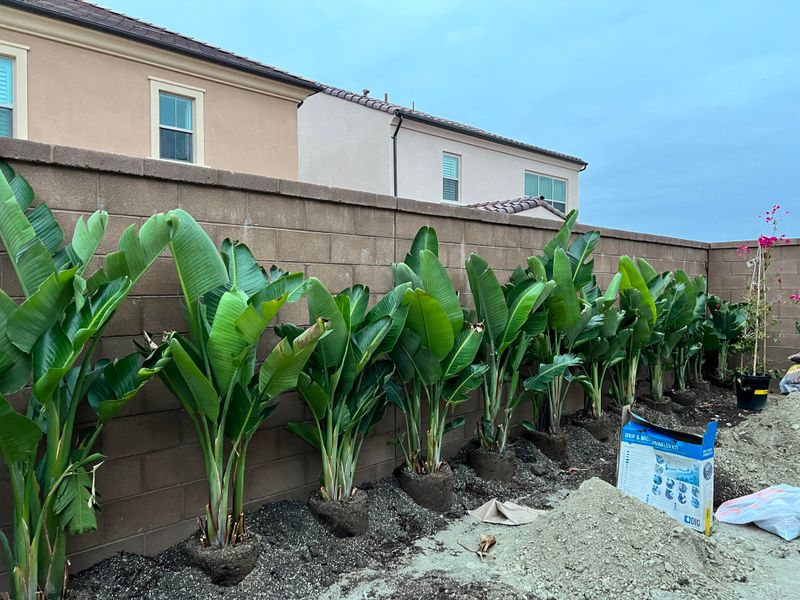
Running a row of bird of paradise along a fence line is one of those landscape choices that looks effortlessly intentional and delivers big visual impact with relatively low maintenance.
The broad, upright leaves create a layered green wall effect that softens the look of plain fencing and adds serious tropical character to any Florida yard.
White bird of paradise works especially well along fence lines where height is welcome, since its tall, dramatic form can eventually reach well above a standard six-foot fence.
Orange bird of paradise is a better fit for shorter fences or situations where you want a tidier, more contained border plant that stays within a predictable size range.
Spacing matters when planting along a fence. Crowding plants too close together can lead to poor air circulation and competition for nutrients, while spacing them too far apart leaves gaps that take years to fill in.
A general rule of thumb is to space orange bird of paradise about three to five feet apart and white bird of paradise six feet or more, depending on the look you want.
Florida’s sandy soils benefit from soil amendment before planting, and a fence-line location that receives consistent sun throughout the day tends to produce the most robust and visually striking results.
5. As A Privacy Plant With The Right Species
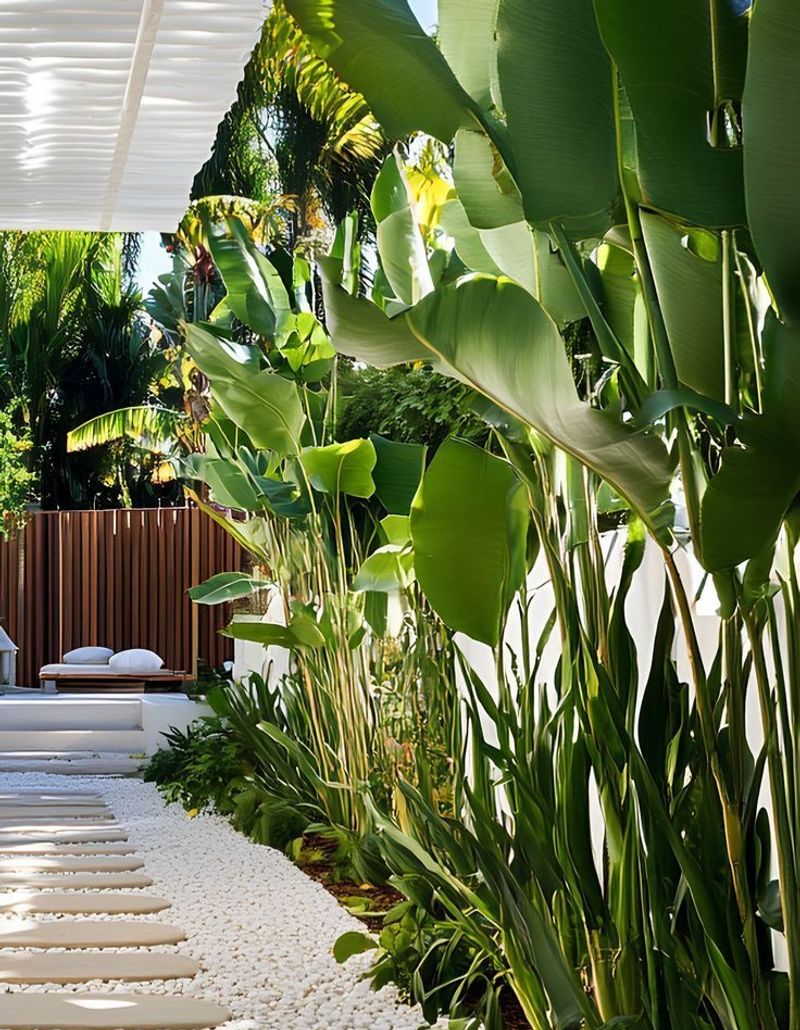
When neighbors are a little too close for comfort, white bird of paradise offers a naturally elegant solution that looks far more appealing than a solid fence.
At maturity, white bird of paradise can reach fifteen to twenty feet tall with a broad, multi-stemmed canopy that creates a surprisingly effective visual screen without feeling heavy or oppressive in the landscape.
The key to using bird of paradise as a privacy plant in Florida is choosing the right species and giving it enough room to reach its full potential.
White bird of paradise, known botanically as Strelitzia nicolai, is the go-to choice for screening because of its significant height and dense clumping habit.
Orange bird of paradise stays much shorter and works better as a low border or accent rather than a true privacy screen.
Planting white bird of paradise in a line with appropriate spacing, typically six to eight feet apart, allows the plants to fill in gradually while still maintaining good airflow between stems.
Florida gardeners in coastal areas should note that bird of paradise has moderate salt tolerance, so it can work in yards with some salt air exposure, though it tends to perform better when positioned away from direct ocean-front wind.
Rich, well-drained soil and regular water during establishment set the stage for a healthy, full-growing privacy planting.
6. Near An Entryway For A Tropical Welcome
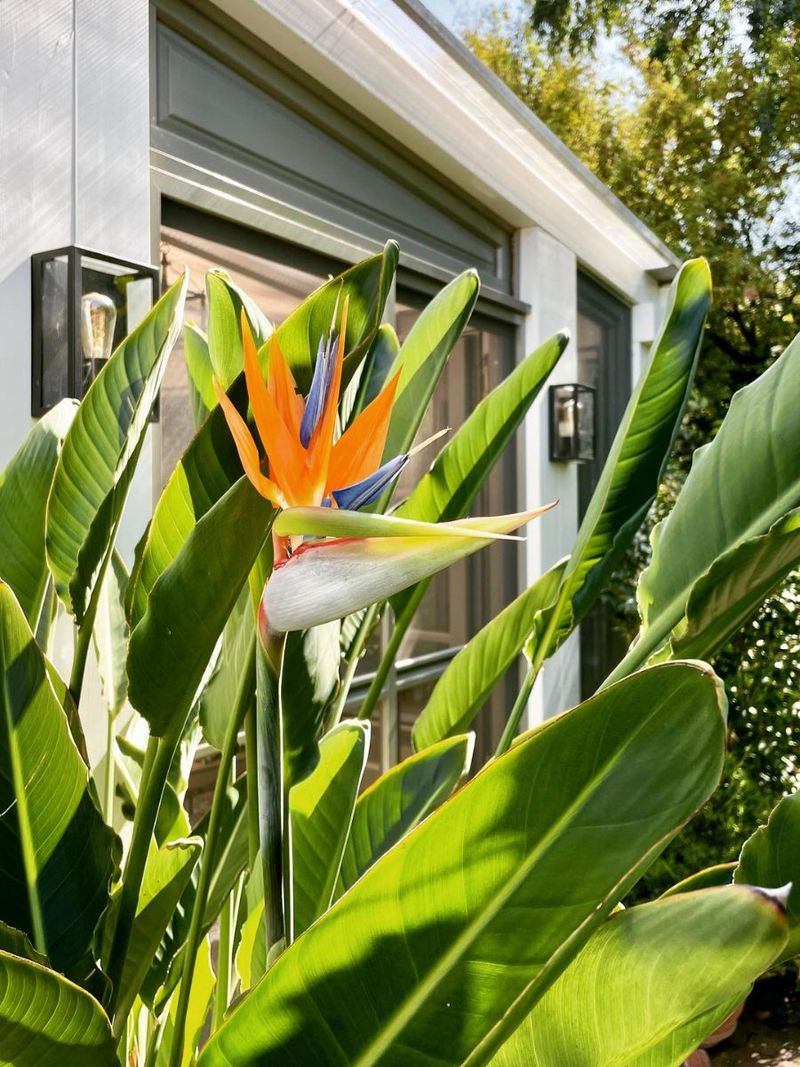
First impressions matter, and a well-placed bird of paradise near a front door or entry walkway sends a clear message that the homeowner has great taste in tropical plants.
The combination of bold foliage and vivid blooms creates an eye-catching focal point that draws visitors in and gives the whole front of the house a polished, intentional look.
Orange bird of paradise is often the smarter pick for entryway planting because its more compact size fits neatly beside a walkway or door without eventually overwhelming the space.
White bird of paradise can work near larger entryways or on either side of a wide front path, but its eventual height and spread require more room to look graceful rather than cramped.
Florida homeowners planting near an entryway should think about foot traffic, overhead clearance, and proximity to the foundation.
Giving the plant enough space from the foundation wall, at least three to four feet, allows air circulation and prevents moisture buildup against the structure.
Well-drained soil is especially important near foundations where drainage can sometimes be compromised by compacted fill.
A spot that receives morning sun near the entry tends to produce the best blooms and the fullest foliage, giving any Florida home a genuinely tropical and welcoming curb appeal that stands out on the street.
7. In A Mixed Border For Big Leafy Drama
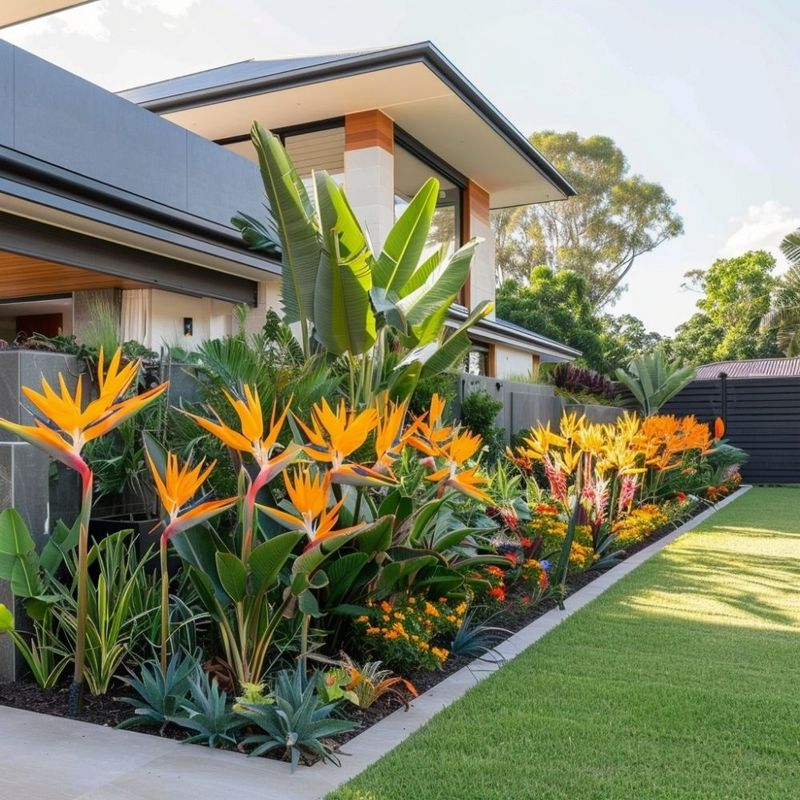
Tucking bird of paradise into a mixed tropical border is one of the most rewarding ways to use it in a Florida landscape.
The oversized leaves provide a bold textural contrast against finer-leafed companions like ornamental grasses, dwarf palms, crotons, or ti plants, and the overall effect is layered, lush, and genuinely tropical in feel.
Orange bird of paradise works well as a mid-border plant, positioned behind lower growers and in front of taller anchor plants like palms or large heliconias. Its upright, clumping form creates a strong vertical element without dominating the entire bed.
White bird of paradise, with its significantly larger scale, tends to work better at the back of a wide border or as a standalone anchor with smaller plants arranged around its base.
Mixed borders in Florida benefit from plants with similar water and light needs grouped together, and bird of paradise fits naturally with most tropical and subtropical companions that prefer full to partial sun and well-drained soil.
Adding compost or organic matter to Florida’s often sandy soil before planting gives the entire border a better nutritional foundation.
A mixed border that includes bird of paradise as a structural centerpiece has the kind of layered, resort-quality drama that makes a Florida yard feel genuinely lush and intentionally designed rather than randomly assembled.
8. In A Large Container For Flexible Placement
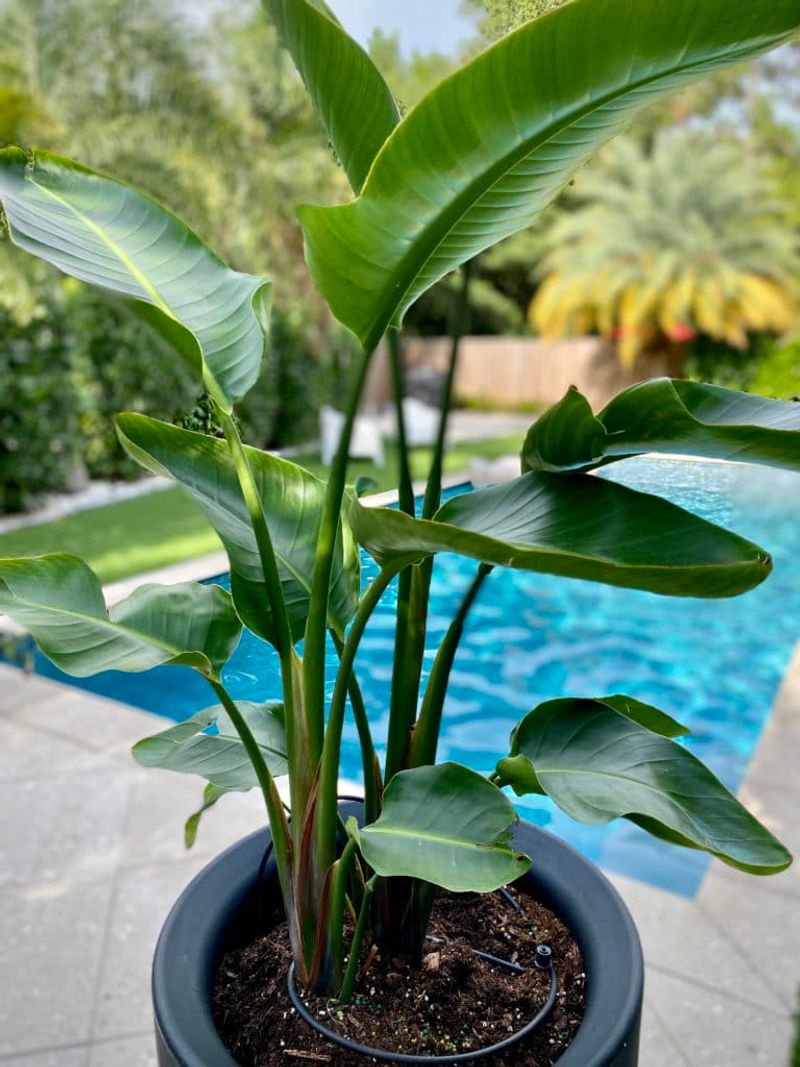
Container growing opens up a whole new range of possibilities for bird of paradise in Florida, especially for gardeners who want the tropical look without committing to a permanent planting spot.
A large pot gives you the flexibility to move the plant around a patio, pool deck, or lanai based on how the space is being used or how the seasons are shifting.
Choosing the right container size is critical. Bird of paradise has a substantial root system, and a pot that is too small will restrict growth and lead to a root-bound plant that struggles to thrive.
A container at least eighteen to twenty-four inches in diameter with excellent drainage holes gives the roots enough room to spread and helps prevent waterlogging, which can be a real issue in Florida’s rainy season.
Use a high-quality potting mix with good drainage, and consider blending in some perlite or coarse sand to improve aeration.
Container-grown bird of paradise in Florida will need more frequent watering than in-ground plants since pots dry out faster, especially in summer heat.
Fertilizing a few times a year with a balanced, slow-release fertilizer supports healthy growth.
The added benefit of container growing is the ability to bring the plant under shelter during an unexpected cold snap, giving it a bit of extra protection during cooler Florida winters.
9. Indoors Near A Bright Window
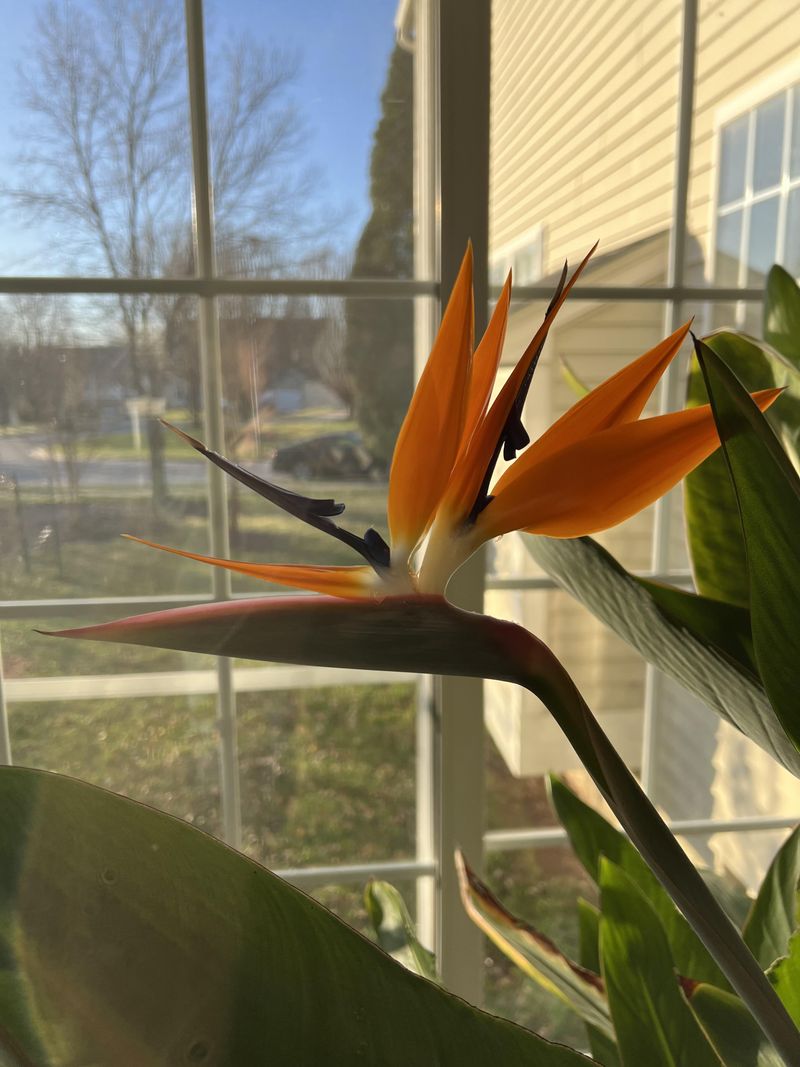
Growing bird of paradise indoors is a popular choice for Florida homeowners who want tropical foliage inside their living spaces, and the plant can genuinely thrive when placed near a large, bright window.
South- or east-facing windows that let in several hours of direct or bright indirect light each day tend to produce the healthiest indoor specimens.
Indoor bird of paradise in Florida is less likely to bloom than its outdoor counterparts, since it needs significant light intensity to trigger flowering.
However, even without blooms, the large, glossy leaves make a striking statement in any room and give interior spaces a bold, tropical character that few other houseplants can match at a comparable scale.
Watering is one of the most common challenges with indoor bird of paradise. The plant prefers soil that stays consistently moist during the growing season but should not sit in standing water.
In Florida, indoor humidity levels are often naturally higher than in other parts of the country, which the plant tends to appreciate. Wiping the leaves occasionally with a damp cloth keeps them clean and allows them to absorb light more efficiently.
A well-lit spot indoors near a window, combined with appropriate watering and occasional fertilizing, can keep an indoor bird of paradise looking lush and healthy year-round in a Florida home.
10. How To Treat Bird Of Paradise In Florida
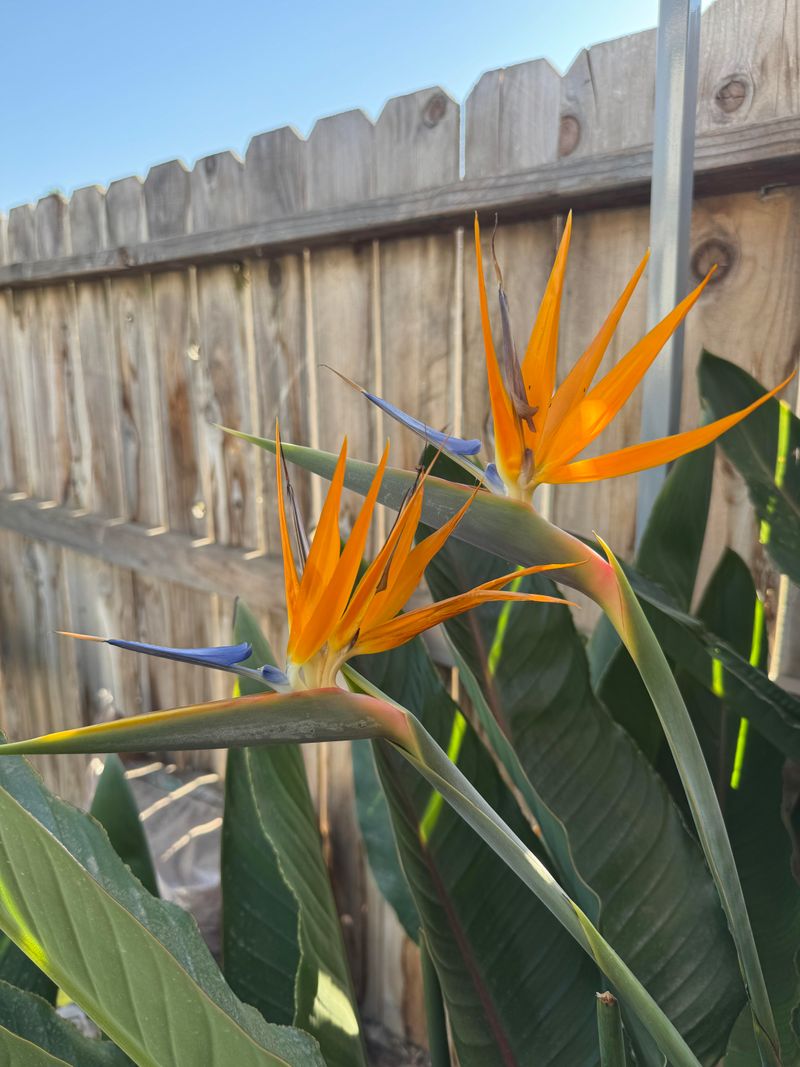
Caring for bird of paradise in Florida is fairly straightforward once the plant is established, but a few key practices make a real difference in how lush and vibrant it looks over time. Soil preparation is the foundation of success.
Florida’s sandy soils drain quickly but often lack the organic matter and nutrients that bird of paradise needs to grow robustly, so amending the planting area with compost before going in the ground is a genuinely worthwhile step.
Watering consistently during the first year of growth helps the plant establish a strong root system. Once settled, bird of paradise becomes more drought-tolerant, though it still benefits from regular watering during dry spells.
Applying a two- to three-inch layer of mulch around the base helps retain soil moisture, moderate soil temperature, and reduce weed competition, all of which support healthier growth in Florida’s climate.
Fertilizing two to three times a year with a balanced, slow-release fertilizer formulated for tropical plants supports steady growth and can encourage more frequent blooming in mature plants.
Removing older, tattered leaves as they age keeps the plant looking tidy without requiring heavy pruning.
Florida gardeners in frost-prone areas of the state should be aware that a light frost can damage foliage, and protecting young plants during cold events helps them bounce back more quickly in spring.