The 8 Plants More Ohio Gardeners Are Growing To Help Keep Japanese Beetles Away
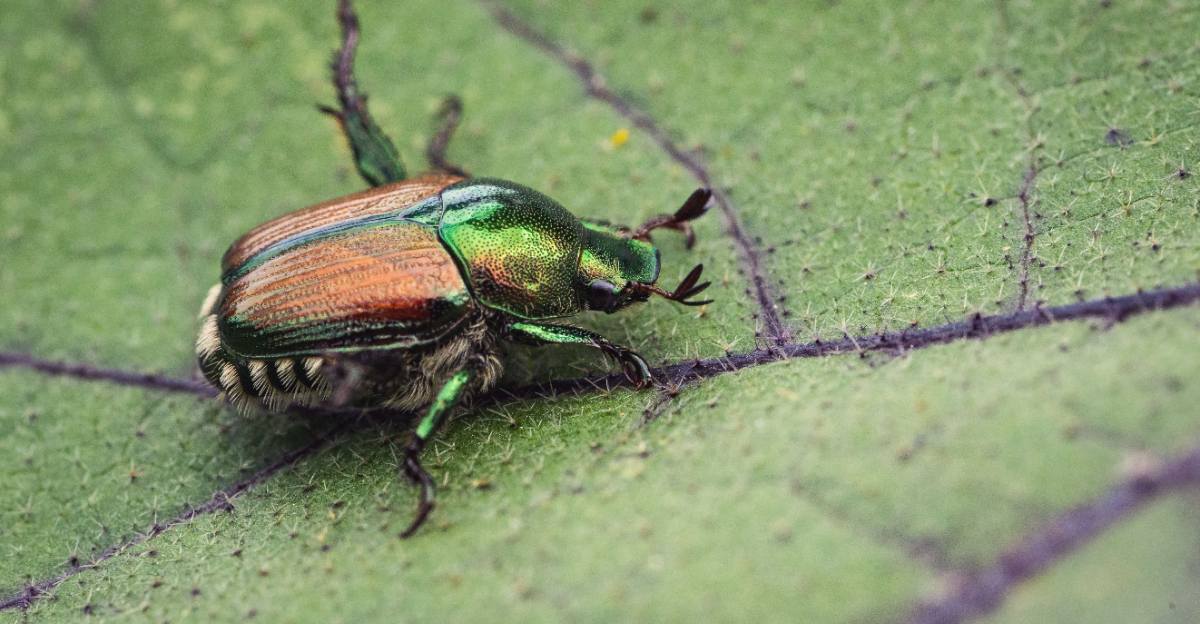
Japanese beetles don’t negotiate. They show up, they eat, and they move through a garden with a confidence that’s honestly frustrating to witness.
Sprays are only one tool, and many Ohio gardeners prefer to use them carefully or avoid them when possible. The beetles come back, the damage accumulates, and the cycle repeats itself every single summer without fail.
A smarter long-term play is changing some of what you grow. Certain plants may be less appealing, while others are used by gardeners as part of a broader beetle strategy.
No dramatic scent warfare, no miracle chemistry, just plants that may be less attractive, add scent diversity, or fit into a more resilient planting plan.
Ohio gardeners who figured this out early have been quietly shifting their plant selections for years, building landscapes that look beautiful while giving Japanese beetles fewer reasons to stick around.
Some of these plants are familiar, some are flying completely under the radar, but all of them can play a role in a garden that is trying to become a little less inviting to one of summer’s most stubborn visitors.
1. Garlic Adds Strong Scent To Beetle-Prone Beds
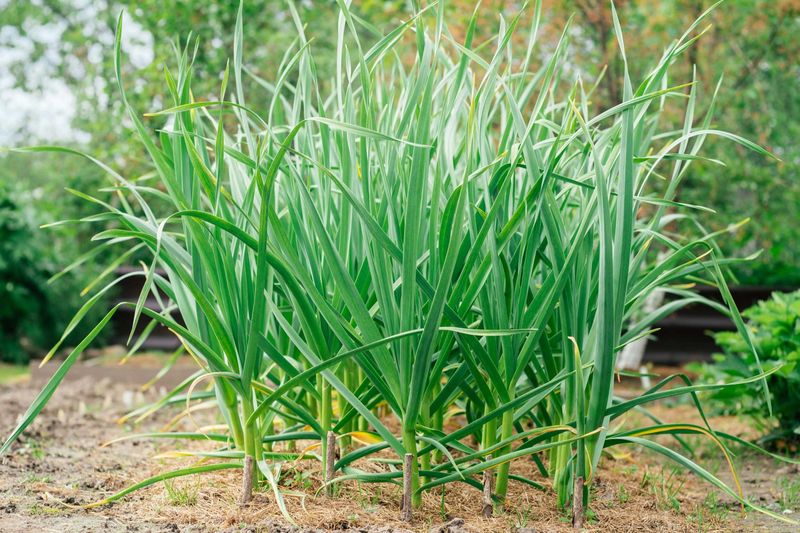
Few smells in the garden are as unmistakable as garlic, and that powerful aroma is exactly why so many Ohio gardeners tuck it into beds alongside roses, tomatoes, and ornamentals.
The idea behind using garlic as a companion plant is straightforward: its pungent sulfur compounds may make the surrounding area less appealing to certain insects.
Whether that effect meaningfully discourages Japanese beetles in a real garden setting is harder to prove, and most evidence stays anecdotal.
Ohio State University Extension notes that Japanese beetles are strong fliers capable of traveling a mile or more to find favored food sources. A few garlic plants will not create an invisible force field around your garden.
Still, garlic earns its spot in a mixed planting strategy because it contributes scent diversity, and diverse plantings are generally harder for pests to navigate than monocultures.
Central Ohio gardeners dealing with peak midsummer beetle pressure often combine garlic with hand-picking, which remains one of the most reliable removal methods available.
Drop beetles into soapy water in the morning when they move slowly in cooler temperatures.
Garlic also produces edible bulbs, so even if the beetle-deterrence results stay modest, your kitchen wins either way.
2. Chives Bring Sharp Aroma To Vegetable Gardens
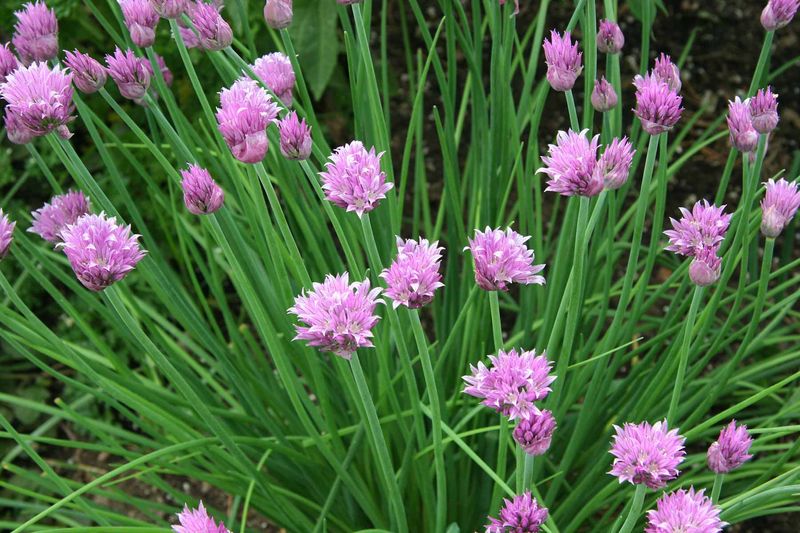
Compact, low-maintenance, and surprisingly tough, chives are one of those plants that pull double duty in an Ohio garden.
Their onion-like scent makes them a popular choice in mixed vegetable beds, and many gardeners position them near squash, peppers, and carrots as part of a layered companion-planting approach.
The sharp aroma may contribute to a more complex scent environment that some insects find less straightforward to navigate.
Chives are not a guaranteed solution against Japanese beetles, and gardeners in southern Ohio who deal with earlier emergence and longer feeding seasons should expect beetles to show up regardless of what is planted nearby.
Your Ohio Garden Changes Every Week. Your Plan Should Too.
Gardening in Ohio changes quickly throughout the season. Every Friday you’ll receive a simple weekly plan showing exactly what to plant, prune, fertilize, harvest, and protect so you never miss the right timing.
Removing beetles by hand in the morning, before temperatures climb and the insects become more active, remains a practical first line of defense no matter what companion plants surround a bed.
One genuinely useful bonus chives offer is pollinator support. When allowed to flower, chive blossoms attract bees and beneficial insects that contribute to overall garden health.
A garden buzzing with pollinators and natural predators tends to be more resilient across the board. Chives are easy to divide and spread around the garden, making them an affordable and versatile addition to any Ohio planting plan this summer.
3. Catnip Compounds Have Shown Repellent Potential In Studies
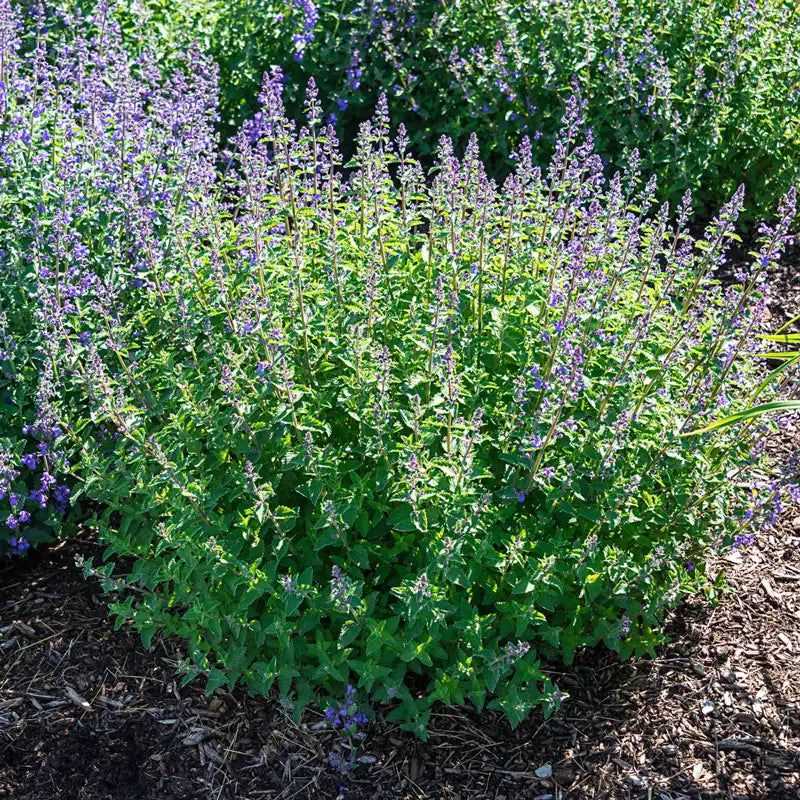
Research published through Iowa State University and other institutions has explored nepetalactone, the active compound in catnip, for its potential to repel certain insects.
Some laboratory and controlled studies found measurable repellent effects, which sparked interest among home gardeners looking for natural pest-management tools.
The jump from lab results to real Ohio garden conditions is significant, though, and catnip should not be planted with the expectation that it will keep Japanese beetles at bay on its own.
Japanese beetles are persistent, mobile, and attracted by both plant volatiles and the feeding damage already present in a garden.
A patch of catnip contributes one scent layer among many, and its practical effect in a yard with heavy beetle pressure may be modest at best.
Rural Ohio gardens near turfgrass, orchards, or open fields tend to face higher beetle populations because grubs develop in those grassy areas before emerging as adults.
Catnip spreads aggressively through self-seeding and root expansion, so planting it in a container or a clearly defined bed edge is a smart move. Containing the plant keeps the garden tidy and prevents it from crowding out neighboring flowers.
Hand-picking beetles from favored plants nearby and checking roses or grapes in the early morning hours remains the most dependable part of any management routine.
4. Rue Is Often Mentioned In Beetle Discussions
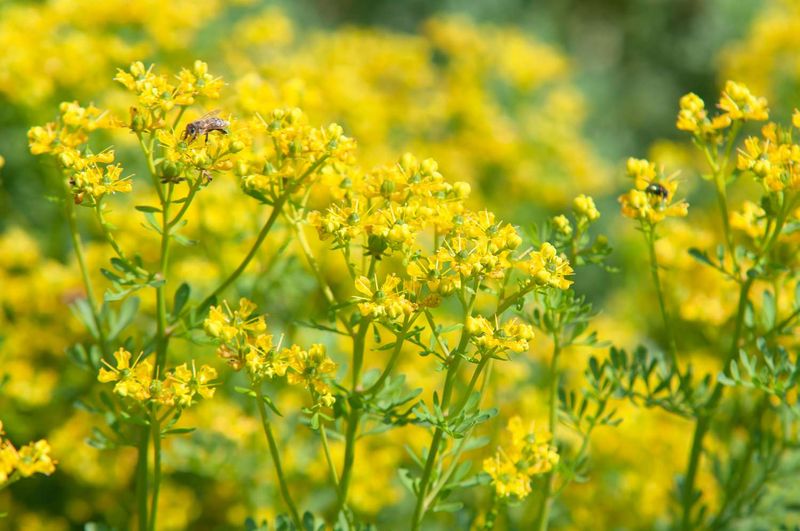
Rue has been part of companion-planting conversations for centuries, and its name still comes up regularly when gardeners swap tips about Japanese beetles.
The plant produces a strong, bitter scent from its essential oils, and tradition holds that certain insects find it off-putting.
Modern evidence for rue specifically discouraging Japanese beetles in home gardens is mostly anecdotal, and university extension sources consistently note that companion planting results are mixed and difficult to replicate reliably across different yards.
One thing about rue that deserves honest attention is its skin-irritation potential. Rue contains furanocoumarins, compounds that can cause a phototoxic reaction when the plant’s sap contacts skin exposed to sunlight.
Blistering and redness are possible, especially during warm Ohio summers when gardeners work in short sleeves. Wearing gloves and long sleeves when handling rue is a practical precaution worth taking seriously.
Despite the caveats, rue does add interesting texture and a blue-green color to garden borders, which has value on its own terms. Planting rue as one element in a diverse bed rather than relying on it as a beetle solution keeps expectations realistic.
Morning beetle removal from nearby roses or beans, combined with thoughtful plant diversity, will always outperform any single companion plant used in isolation throughout the Ohio growing season.
5. Tansy Comes With Pollinator And Toxicity Caveats
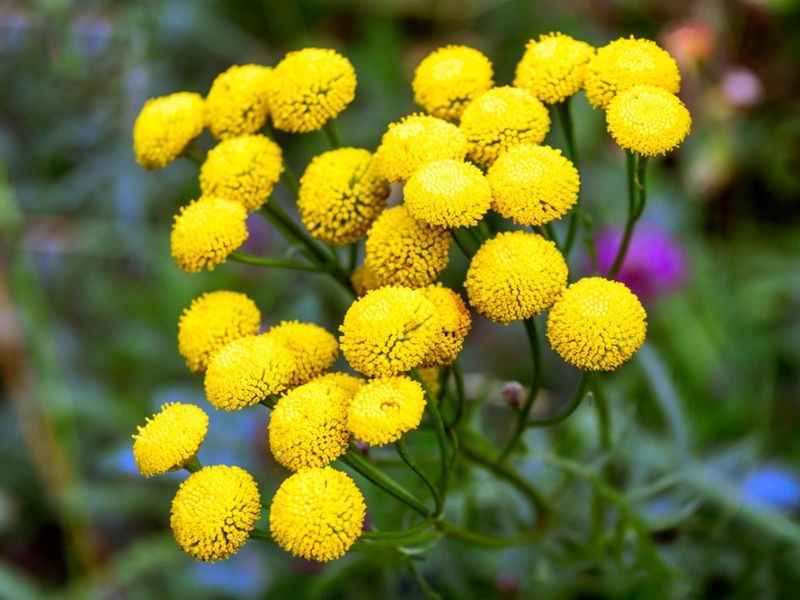
Old pest-control traditions from European and early American gardens often included tansy, a strongly aromatic herb with distinctive yellow button flowers.
Its sharp, camphor-like scent led generations of gardeners to believe it could discourage insects from nearby plants.
Tansy still appears in companion-planting discussions today, but modern horticulture takes a more cautious view of the claims made on its behalf, especially regarding Japanese beetles.
Tansy contains thujone, a compound that is toxic to people and animals if consumed in meaningful quantities. Ohio gardeners with children, pets, or livestock nearby should factor that toxicity into any planting decision.
Beyond the safety concern, tansy spreads aggressively through both rhizomes and seeds, and it can become difficult to manage once established in a garden bed. Pulling unwanted plants before they set seed each season helps keep spread under control.
On the pollinator side, tansy flowers do attract certain beneficial insects, which adds some ecological value to the plant.
Still, gardeners expecting tansy to act as a beetle barrier will likely be disappointed during peak feeding periods in central Ohio’s hot midsummer stretches.
If tansy is used at all, pair it with hand-picking routines and protection for plants Japanese beetles favor most, like roses and lindens. That gives Ohio gardeners a more complete and realistic management plan.
6. Marigolds Fit Better Into Mixed Pest Strategies
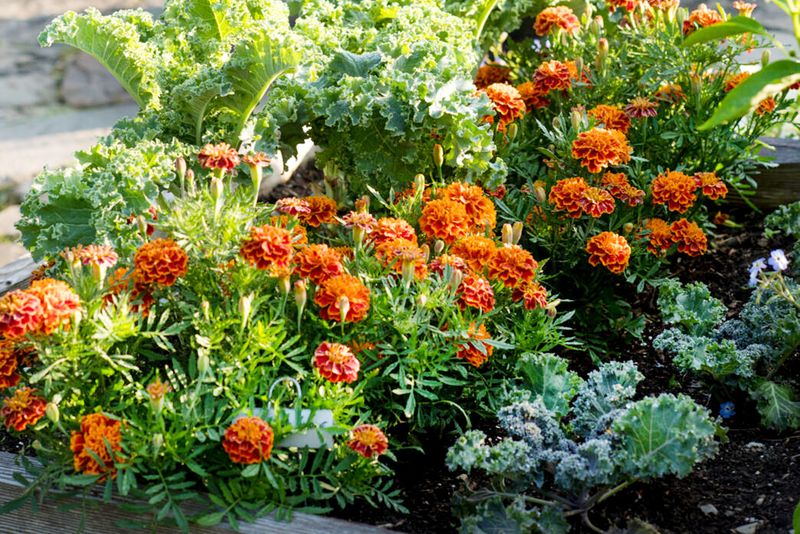
Marigolds are probably the most widely planted companion flower in American vegetable gardens, and their cheerful blooms show up in Ohio beds from late May through the first frost. Their reputation as a pest deterrent is partly earned and partly overstated.
Marigolds genuinely help suppress certain soil nematodes and may contribute to a more diverse garden environment that is slightly harder for pests to exploit. Their role specifically against Japanese beetles is much less clear-cut.
Some Ohio gardeners report that beetles occasionally feed on marigold flowers, particularly during high-pressure summers when beetle populations are large.
Expecting marigolds to protect a rose bed or a grapevine from beetle feeding would be setting the bar too high.
What marigolds do well is add color, attract pollinators, and contribute to the kind of diverse planting mix that tends to support overall garden health across the season.
For gardeners in northern Ohio, where beetle activity may arrive a bit later due to cooler spring conditions, marigolds can be well established before peak feeding begins.
Planting them throughout a vegetable or ornamental bed rather than in a single isolated clump gives their aromatic foliage more presence across the growing space.
Combine marigolds with morning hand-picking of beetles and you have a more complete, realistic approach to managing pressure this summer.
7. Nasturtiums May Work Better As Sacrificial Plants
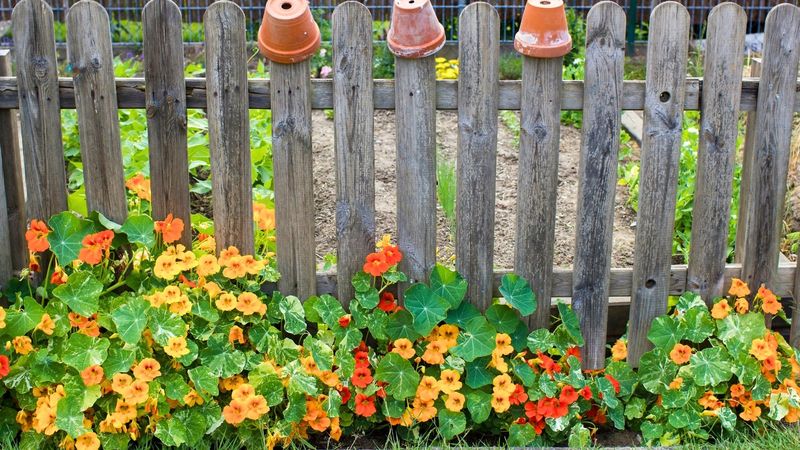
Trap planting is a strategy where a gardener deliberately grows a plant that pests find attractive, hoping to draw feeding away from more prized specimens nearby.
Nasturtiums sometimes play that role in Ohio gardens, pulling aphids and certain other insects toward their bright, easy-to-spot flowers.
Whether they reliably attract Japanese beetles away from roses, beans, or grapes depends heavily on local beetle pressure and what else is growing in the yard.
Results with nasturtium trap planting vary considerably from one garden to the next. In a yard with light beetle pressure, the strategy might seem to work well.
In a rural Ohio garden near turfgrass or orchards where beetle populations are dense, nasturtiums alone will not redirect enough feeding to make a noticeable difference.
Gardeners should still plan to remove beetles by hand from favored plants, especially in the morning when beetles are sluggish and easier to collect into a container of soapy water.
Nasturtiums do offer genuine garden value beyond any pest-management role. Their flowers and leaves are edible, they grow quickly from seed, and they tolerate Ohio summers reasonably well in sunny spots with decent drainage.
Planting nasturtiums at the edges of beds where beetles tend to land first gives the trap-plant idea its best possible chance while keeping the rest of the garden looking its best through the season.
8. Larkspur Is Less Appealing To Japanese Beetles
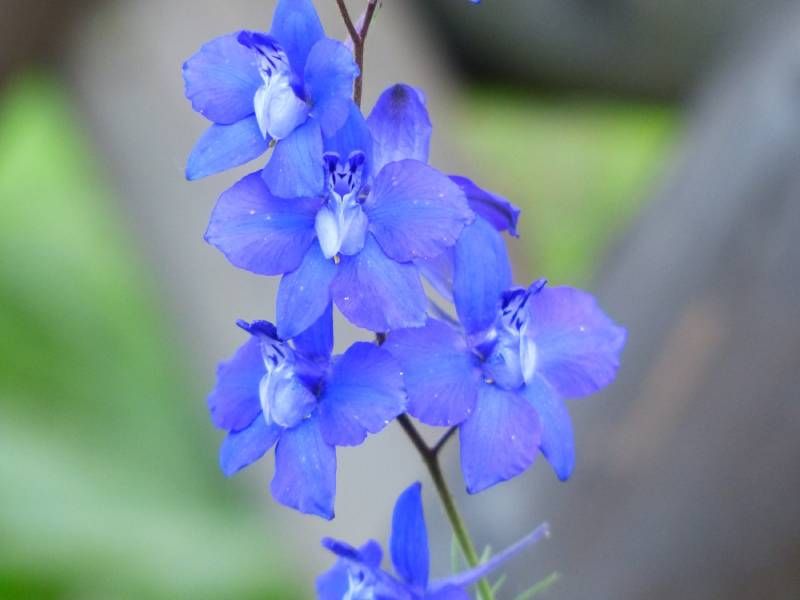
Not every plant in the garden gets equal attention from Japanese beetles, and larkspur is often discussed as a less-favored choice compared with beetle magnets like roses, grapes, and lindens.
Plant preference lists and field observations often note that Japanese beetles favor plants like roses, grapes, linden, and hibiscus far more strongly than larkspur.
Choosing some plants that beetles find less appealing is one useful strategy for Ohio gardeners who want to reduce feeding pressure where possible.
Less appealing does not mean completely ignored. During peak beetle season in central Ohio’s hottest midsummer weeks, a large enough beetle population will feed on a wider range of plants simply because competition for preferred food sources increases.
Larkspur planted near more favored ornamentals may still experience some feeding, especially if beetle pressure is high in a given year.
One detail about larkspur that every gardener should know is that the seeds and plant parts contain toxic alkaloids that are harmful if eaten by people or animals. Planting larkspur away from areas where children or pets spend time is a reasonable precaution.
On the garden design side, larkspur’s tall spikes of blue, purple, and white flowers add elegant vertical interest to cottage-style Ohio gardens, making it a plant worth growing for its beauty alone, with the reduced beetle interest serving as a welcome bonus.