The Plants That Bring Hummingbirds To Michigan Yards Every Single Summer
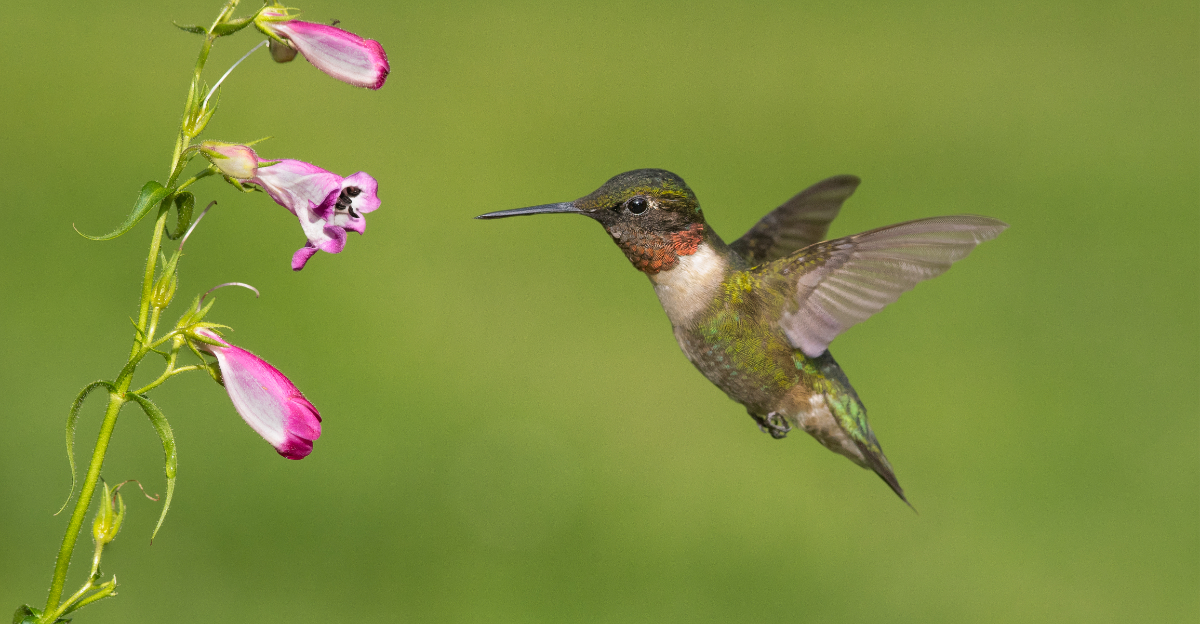
Hummingbirds are one of the most anticipated summer visitors in Michigan, and the yards they keep returning to are almost always built around the right plants rather than feeders alone.
Ruby throated hummingbirds migrate through Michigan each summer in consistent numbers, and what they find in your yard on the first pass determines whether they stick around and whether they remember it the following year.
These birds are driven by instinct toward specific flower shapes, colors, and bloom timing, and understanding that makes attracting them far more reliable than hanging a feeder and hoping for the best.
Michigan’s growing season lines up well with hummingbird activity when the right plants are in place, creating a yard that offers exactly what these birds need during their most active summer months.
Native species lead the way, but several well chosen non natives earn their place in a hummingbird garden too. These are the plants that consistently bring them in and keep them coming back.
1. Wild Columbine (Aquilegia canadensis)
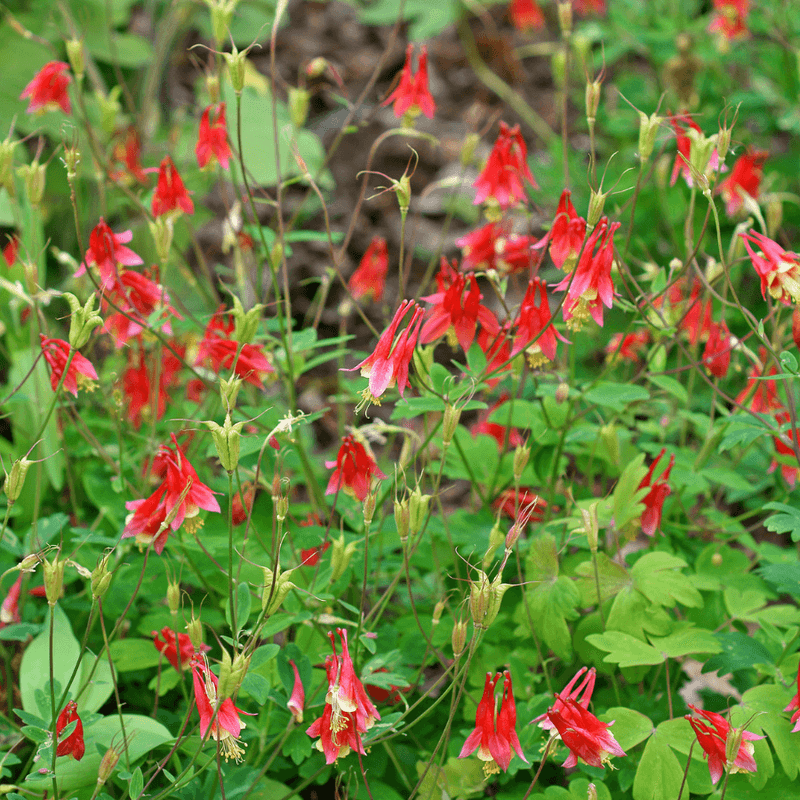
Few plants in Michigan are as perfectly timed as Wild Columbine. Its red and yellow tubular flowers open just as ruby-throated hummingbirds begin arriving in the state each spring, making it one of the most valuable early-season plants you can grow.
That timing is not a coincidence. Over thousands of years, this native plant and the hummingbird evolved together, and the flower shape fits a hummingbird’s beak almost perfectly.
Wild Columbine thrives in part shade and woodland edges, which makes it a fantastic choice for yards that do not get full sun all day. Plant it along a fence line, under a tree, or near the edge of a garden bed where light filters through.
It grows well in average soil and does not need a lot of extra watering once it settles in. Michigan gardeners love how low-maintenance it is compared to many other flowering plants.
Each spring, expect the blooms to last several weeks, giving hummingbirds a reliable early food source right when they need it most. Wild Columbine also reseeds itself naturally, so your patch will grow bigger over time without much effort on your part.
If you want hummingbirds to visit Michigan yards early in the season, this native gem is the perfect place to start your garden.
2. Bee Balm (Monarda didyma)
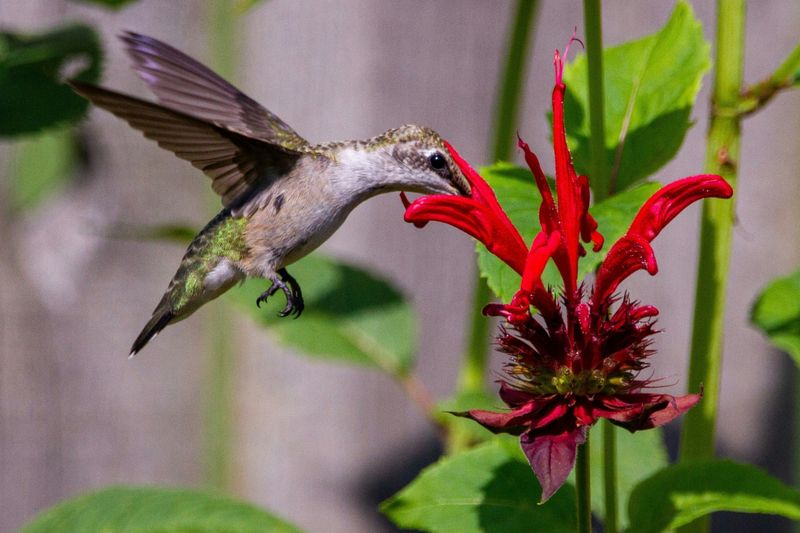
Walk past a patch of Bee Balm in full bloom and you will understand immediately why hummingbirds cannot resist it.
The bold, shaggy red flower heads practically glow in the summer sun, and they produce an impressive amount of nectar that keeps hummingbirds coming back day after day.
This native perennial is one of the most reliable mid-summer attractors in Michigan gardens, and it has been a gardener favorite for generations.
Bee Balm performs best in full sun with good air circulation around the plants. Michigan’s humid summers can sometimes encourage powdery mildew on the leaves, but choosing mildew-resistant varieties like ‘Jacob Cline’ or ‘Raspberry Wine’ solves that problem easily.
Plant it in a spot where it gets at least six hours of direct sunlight and space the plants about eighteen inches apart to keep air moving through the stems.
Your Michigan Garden Changes Every Week. Your Plan Should Too.
Gardening in Michigan changes quickly throughout the season. Every Friday you’ll receive a simple weekly plan showing exactly what to plant, prune, fertilize, harvest, and protect so you never miss the right timing.
One thing gardeners really appreciate about Bee Balm is how quickly it spreads. Within a couple of seasons, a small starter plant can become a full, lush clump that fills a garden bed beautifully.
Divide the clumps every few years to keep them healthy and blooming strong. Beyond hummingbirds, you will also notice butterflies and bees visiting regularly, turning your Michigan yard into a buzzing, colorful wildlife haven all summer long.
It is truly a plant that gives back in every direction.
3. Trumpet Honeysuckle (Lonicera sempervirens)
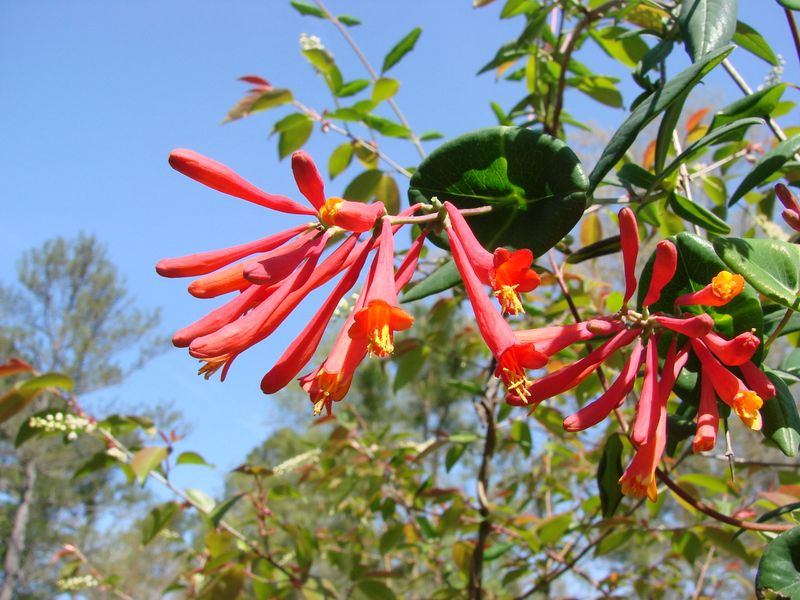
If you have a fence, a trellis, or an arbor in your Michigan yard, Trumpet Honeysuckle might be the best plant you ever train to climb it.
Unlike its invasive Japanese cousin that takes over roadsides and forest edges, this native vine is well-behaved, beautiful, and absolutely irresistible to hummingbirds.
The long, tubular red and orange flowers are shaped as if nature designed them specifically as a hummingbird feeding station, and in many ways, it did.
Trumpet Honeysuckle blooms over a remarkably long season, often from late spring all the way through early fall in Michigan.
That extended bloom window gives hummingbirds a consistent food source across multiple months, which encourages them to make your yard a regular stop on their daily feeding routes.
Plant it in full sun for the best flowering, though it will tolerate part shade and still produce plenty of blooms to keep the birds happy.
Growing this vine is straightforward and rewarding. It establishes quickly, requires minimal pruning to stay tidy, and handles Michigan winters without any special protection.
Give it a sturdy support structure and it will reward you with cascading clusters of color every single season. Pair it with other native plants on this list to create a layered hummingbird habitat that covers early spring through late summer.
Trumpet Honeysuckle is a true standout for Michigan gardeners who want beauty and wildlife value in one plant.
4. Phlox (Phlox paniculata)
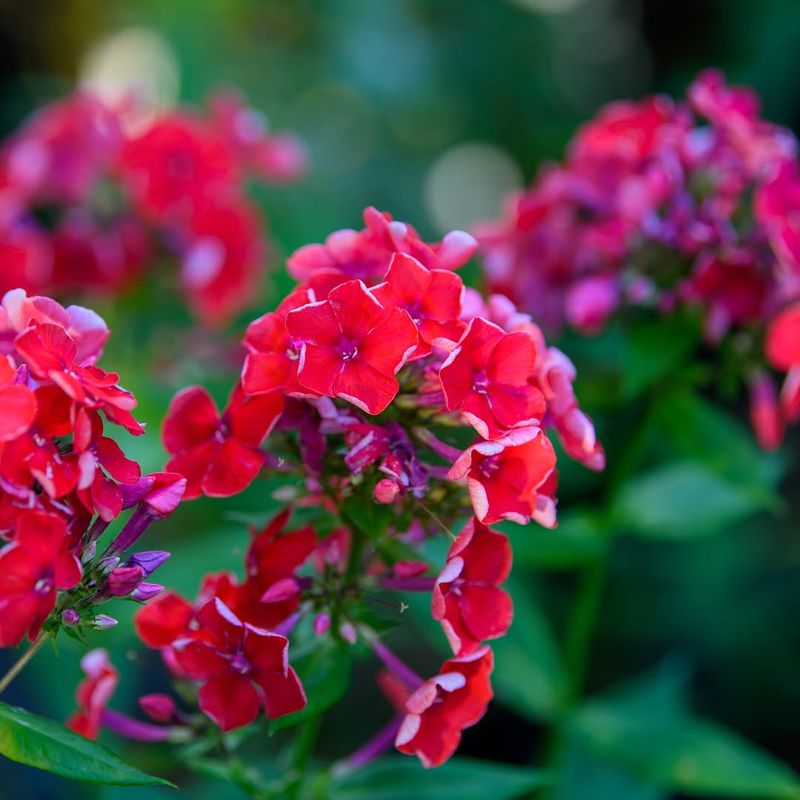
Garden Phlox brings a cottage-garden charm to Michigan yards that is hard to match. The large, fragrant flower clusters come in shades of red, pink, purple, and white, and they bloom right in the heart of summer when hummingbirds are most active in the state.
While bees and butterflies swarm the blooms for their sweet nectar, hummingbirds zero in on the tubular individual florets that make up each cluster. It is one of the most reliable multi-visitor plants you can grow.
Michigan’s summer humidity can sometimes cause powdery mildew on Phlox leaves, but the solution is simple. Choose mildew-resistant varieties like ‘David,’ ‘Robert Poore,’ or ‘Laura’ when shopping at your local nursery.
These selections maintain clean, healthy foliage all season long and still produce the same generous blooms that attract wildlife. Spacing plants properly and planting in an area with good airflow makes a big difference too.
Phlox grows best in full sun with consistently moist, well-drained soil. In Michigan, it typically reaches three to four feet tall and creates a bold, colorful presence in the garden from July into August.
Deadheading spent blooms encourages the plant to keep producing new flowers, extending the season a bit longer. Over several years, established clumps become fuller and more floriferous, rewarding patient gardeners with bigger and better displays each summer.
A row of Phlox along a garden border is genuinely one of the prettiest sights a Michigan yard can offer.
5. Cardinal Flower (Lobelia cardinalis)
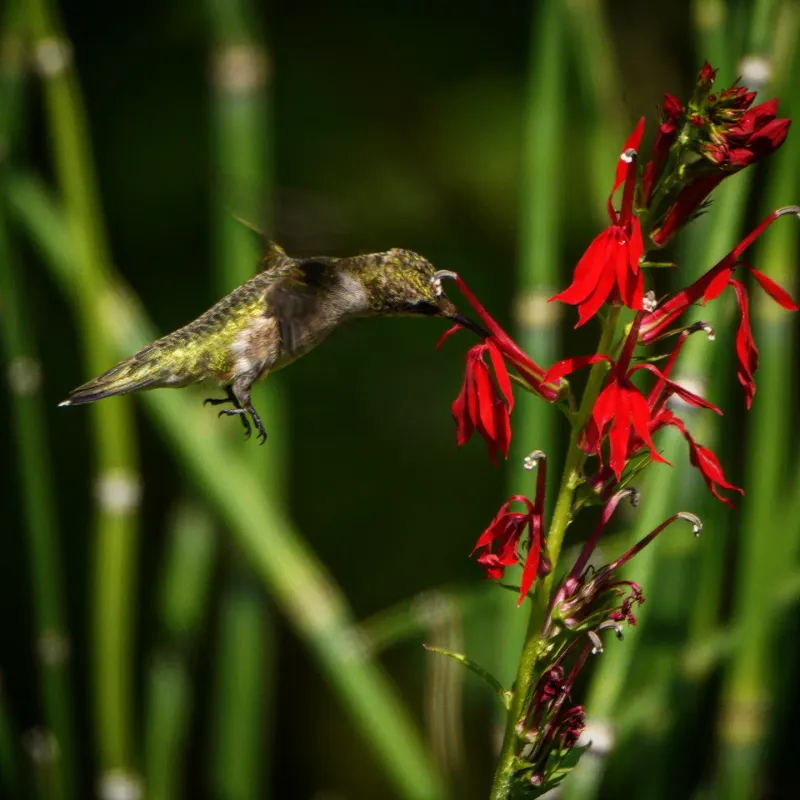
There is something almost electric about Cardinal Flower. The intense, fire-engine red of its tall spikes stops people in their tracks, and hummingbirds react the same way.
In Michigan, this native perennial is widely considered one of the single best plants for attracting ruby-throated hummingbirds during the mid to late summer months.
When the blooms open, the birds show up almost immediately, hovering and feeding with impressive enthusiasm.
Cardinal Flower has one key requirement that sets it apart from many other plants on this list: it loves moisture. Plant it in areas where the soil stays consistently damp, such as near a rain garden, along a stream, or in a low spot in your yard that collects water after rain.
Michigan has plenty of naturally moist areas that are perfect for this plant. If your soil dries out quickly, regular watering will be necessary to keep it thriving through the summer heat.
Growing to heights of two to four feet, Cardinal Flower makes a strong visual statement in any garden. It works beautifully as a back-of-border plant or grouped in clusters near a water feature.
Pollinators beyond hummingbirds also visit the blooms, adding even more life to your outdoor space. Over time, the plants self-seed and naturalize, slowly expanding your patch.
For Michigan gardeners wanting a reliable, stunning late-summer hummingbird magnet, Cardinal Flower delivers every single year without fail.
6. Penstemon (Penstemon digitalis)
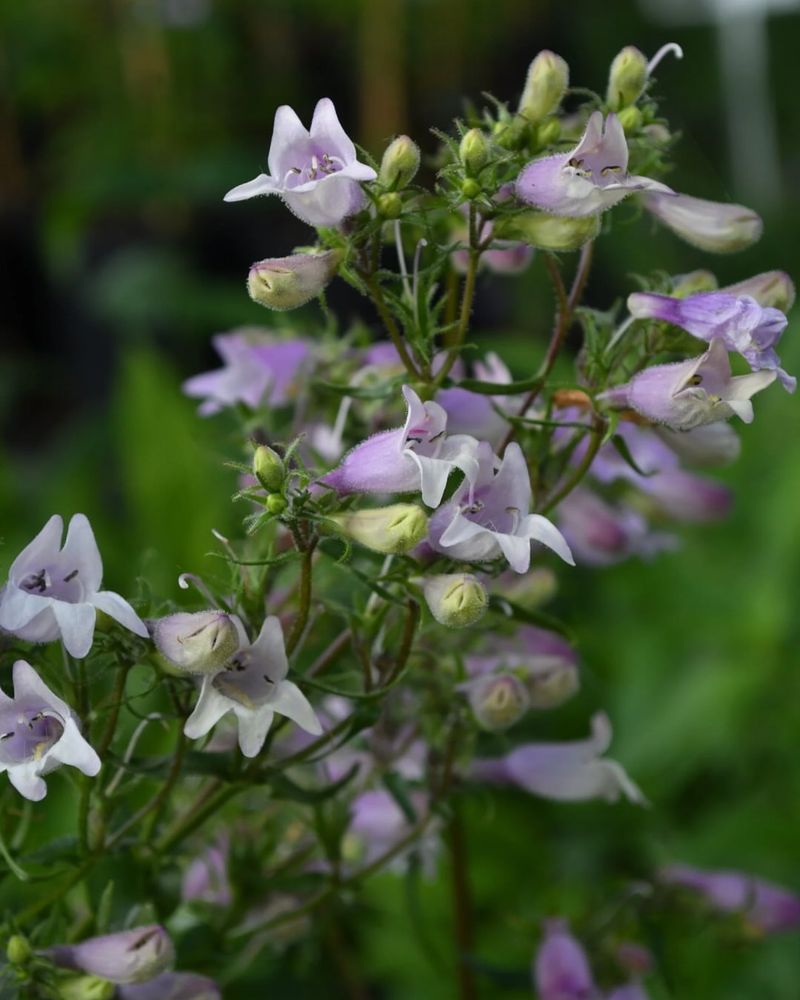
Penstemon digitalis, commonly called Foxglove Beardtongue, is one of those plants that Michigan gardeners often overlook, and that is a real shame.
The upright stems covered in tubular flowers are an open invitation to hummingbirds passing through in late spring and early summer, right when many other plants have not yet started blooming.
Filling that gap in the garden calendar is one of Penstemon’s greatest gifts to Michigan wildlife gardeners.
This tough native perennial thrives in full sun to part shade and handles a wide range of soil conditions, including dry and clay-heavy soils that challenge many other plants.
Once established, it is remarkably drought-tolerant, which makes it a smart choice for Michigan gardeners who want beautiful results without constant watering.
The white to pale lavender flowers may look delicate, but the plant itself is genuinely hardy through Michigan winters.
Growing Penstemon in groups of three or more creates a more impactful display that hummingbirds will notice from a distance. Plant it near the front or middle of a border where its upright form adds structure and visual interest.
After blooming, the seed heads are attractive and provide food for birds through the fall and winter months. Beyond hummingbirds, native bees absolutely adore Penstemon flowers, making it a double win for Michigan pollinator gardens.
If you want a no-fuss native that works hard from the moment spring arrives, Penstemon earns its spot in any yard.
7. Jewelweed (Impatiens capensis)
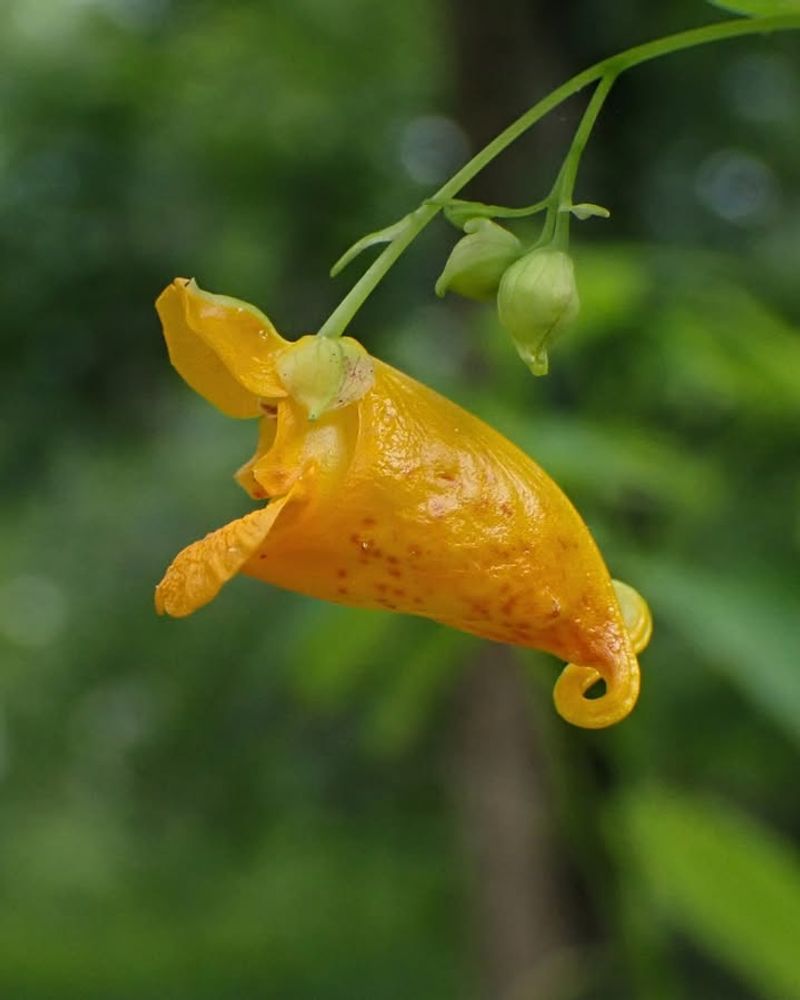
Jewelweed has a secret that most Michigan gardeners do not know about.
If you have ever walked along a shaded stream bank or a wet woodland path in summer and noticed clusters of small orange trumpet-shaped flowers hanging like tiny lanterns, you have already seen this plant in action.
Hummingbirds are drawn to those bright orange blooms like magnets, and in moist, shaded corners of Michigan yards, Jewelweed creates one of the most natural and charming wildlife habitats imaginable.
As a native annual, Jewelweed completes its full life cycle in a single growing season, but it reseeds so prolifically that once you plant it, it comes back reliably every year. That self-sustaining quality makes it incredibly easy to maintain.
It prefers consistently moist soil and shaded to partially shaded conditions, thriving in spots where many other plants struggle to survive. Michigan yards with wet, low-lying areas or shaded spots near downspouts are perfect locations for Jewelweed.
The blooms appear from mid to late summer, bridging a gap in the garden when some earlier plants have finished flowering. Hummingbirds actively seek out Jewelweed patches, sometimes visiting dozens of flowers in a single feeding session.
Beyond hummingbirds, the plant also supports native bees and provides shelter for small insects. Jewelweed grows quickly and can reach four feet tall in ideal conditions, creating a lush, layered look that adds real depth to naturalistic Michigan gardens.
It is one of the most underrated native plants in the entire state.
8. Salvia (Salvia splendens and Hardy Hybrids)
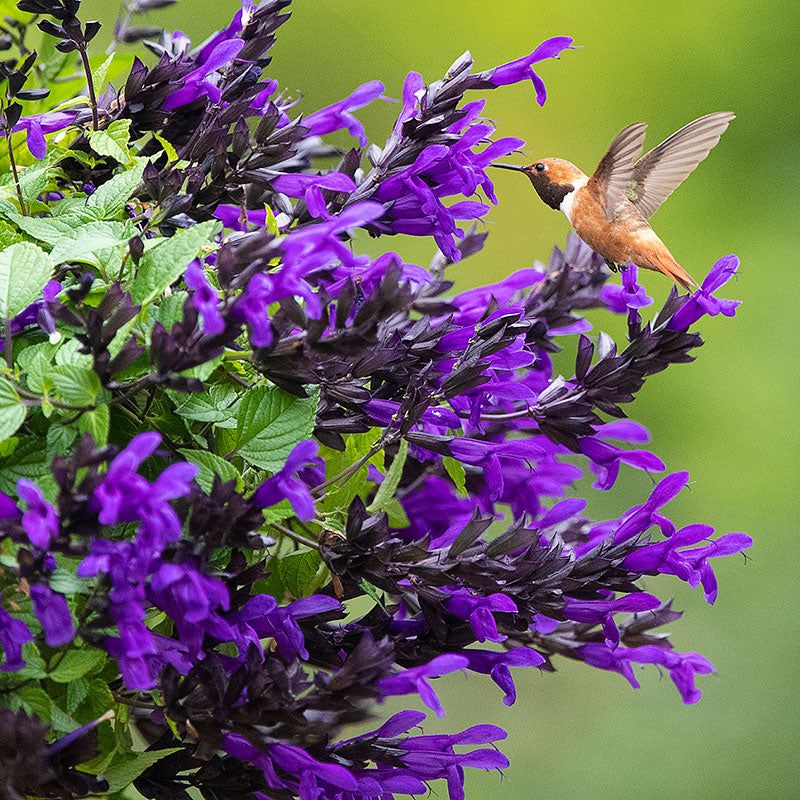
Salvia is one of those plants that earns its place in the garden by being almost effortlessly effective.
The upright spikes of tubular red flowers are exactly the shape and color that hummingbirds key in on, and in Michigan summers, a well-planted bed of Salvia can draw in multiple birds throughout the day.
While Salvia splendens is technically a tropical annual in Michigan’s climate, it grows vigorously all season long and blooms continuously from planting time right through the first frost.
For gardeners who want a bit more cold tolerance, hardy Salvia hybrids like ‘Black and Blue’ or ‘Mystic Spires Blue’ offer extended performance and even more nectar production.
These hybrids push into perennial territory in milder winters, though most Michigan gardeners treat them as reliable annuals and replant each spring.
Either way, the payoff in hummingbird activity is absolutely worth it. Plant Salvia in full sun for the strongest blooms and most consistent nectar output throughout the season.
One of the best things about Salvia is how well it pairs with other plants on this list. Mix it with Bee Balm or Cardinal Flower in a border bed and you create a hummingbird feeding station that operates from early summer through fall.
Salvia also requires very little fuss once it is established. Regular watering and occasional deadheading keep it blooming strong.
For Michigan yards that want bold color and steady hummingbird visits, Salvia delivers reliably every single summer without question.