Why This Native Sage Belongs In Every Florida Backyard
Florida backyards are brutal proving grounds. The summer heat index climbs past absurd, the afternoon storms roll in like clockwork and dump three inches in twenty minutes, and the humidity never really lets up from June straight through October.
Most gardeners spend good money chasing color through those months and end up with brown stalks and a lot of regret by August.
There’s a better conversation to have, and it starts with understanding what Florida’s soil, heat, and rain cycles actually reward.
Not every native plant rises to the top of that list. But one does, consistently, across every region of the state, in full sun and partial shade, in sandy soil and clay, through drought stretches and monsoon weeks alike.
Pollinators can’t stay away from it. Hummingbirds treat it like a fast food drive-through.
Gardeners who discover it rarely plant a summer without it. That plant is scarlet sage, and it’s long overdue in your backyard.
1. Scarlet Salvia Brings Hummingbirds Fast
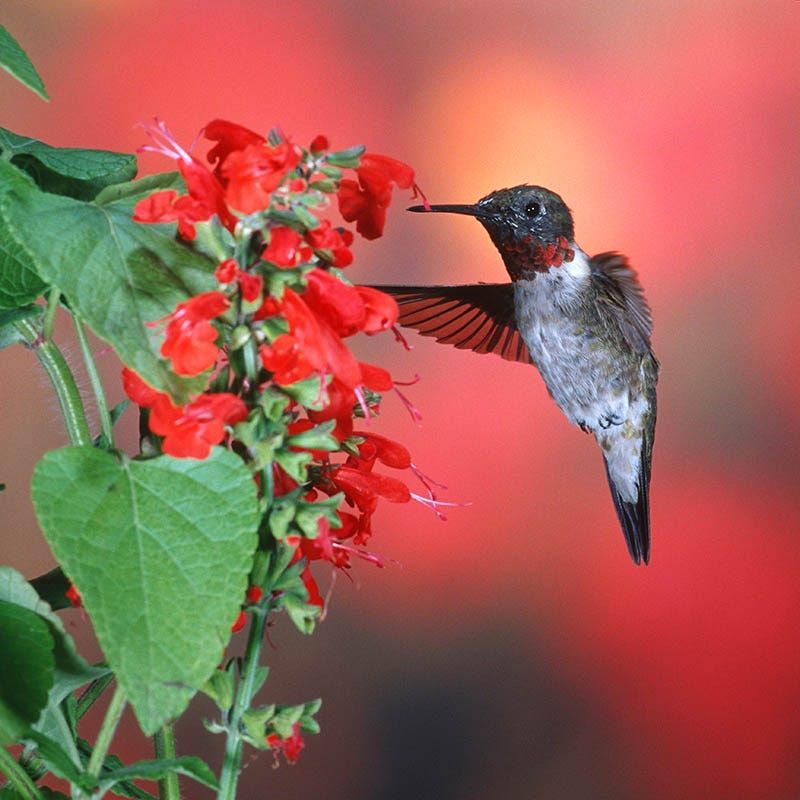
Few sights stop a Florida gardener mid-stride faster than a hummingbird hovering two feet away. Scarlet sage, Salvia coccinea, earns that moment more reliably than most flowering plants because its long red tubes are almost perfectly shaped for hummingbird feeding.
The birds insert their bills into the narrow bloom, brush past the anthers, and carry pollen from flower to flower without even trying. That relationship is not accidental.
Red, tubular flowers with nectar hidden deep inside are a classic signal to hummingbirds, which have strong color vision and a preference for red blooms.
Ruby-throated hummingbirds are the most common visitors in Florida, especially during spring and fall migration when they are actively refueling. Resident birds may also appear in South Florida through winter months.
Planting a cluster of scarlet salvia near a patio or window gives you a front-row seat without needing a feeder. Butterflies, including swallowtails and sulphurs, also stop at the blooms for nectar, so the activity around a healthy plant can be surprisingly lively.
To attract the most hummingbird visits, place Salvia coccinea in a spot with morning sun and good airflow. Avoid dense plantings of tall shrubs directly behind it that could make approach difficult.
A few plants grouped together create a more visible target than a single stem, and that cluster effect pays off quickly once the right visitors find it.
2. Blooms Keep Coming In Warm Weather
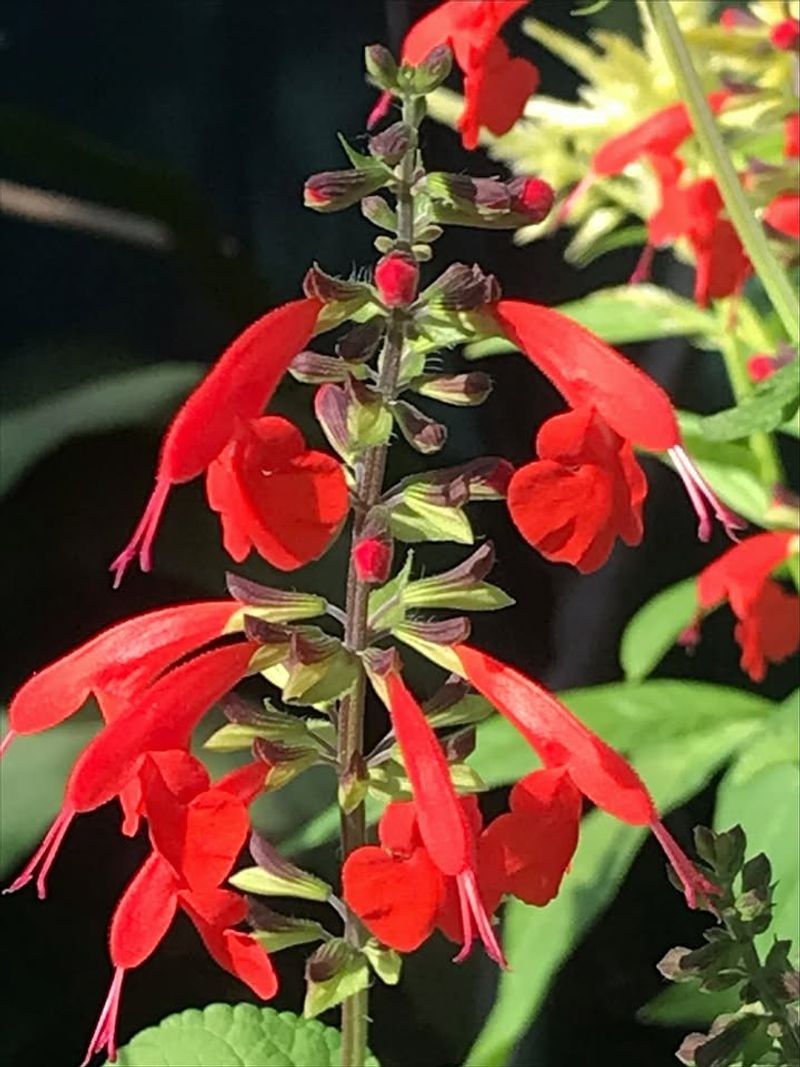
Scarlet sage has a bloom season that matches Florida’s long warm stretches better than almost any annual bedding plant you can buy at a big-box store.
Salvia coccinea typically begins flowering in spring, keeps going through the heat of summer, and often continues well into fall before cooler nights finally slow things down.
In South Florida, some plants push blooms even longer. That kind of staying power matters when you want color from April through October without constant replanting.
Bloom timing can shift depending on where you are in the state, how much rain falls, and whether the plant has good drainage. North Florida gardens may see a shorter season than those in Central or South Florida, but even there the window is generous.
Your Florida Garden Changes Every Week. Your Plan Should Too.
Gardening in Florida changes quickly throughout the season. Every Friday you’ll receive a simple weekly plan showing exactly what to plant, prune, fertilize, harvest, and protect so you never miss the right timing.
Removing spent flower spikes occasionally can encourage fresh growth, though scarlet salvia is not the type of plant that collapses if you skip a round of deadheading. Light trimming is enough to keep things tidy.
One practical tip: if the plant looks stretched and tired by midsummer, a gentle cutback of the top third can refresh it and trigger a new flush of blooms within a few weeks.
This approach works especially well in Central Florida where summer rains provide enough moisture to support quick regrowth.
Consistent moisture during the regrowth window helps the plant bounce back faster and produce stronger flower spikes into the fall season.
3. Sun And Lean Soil Suit It Well
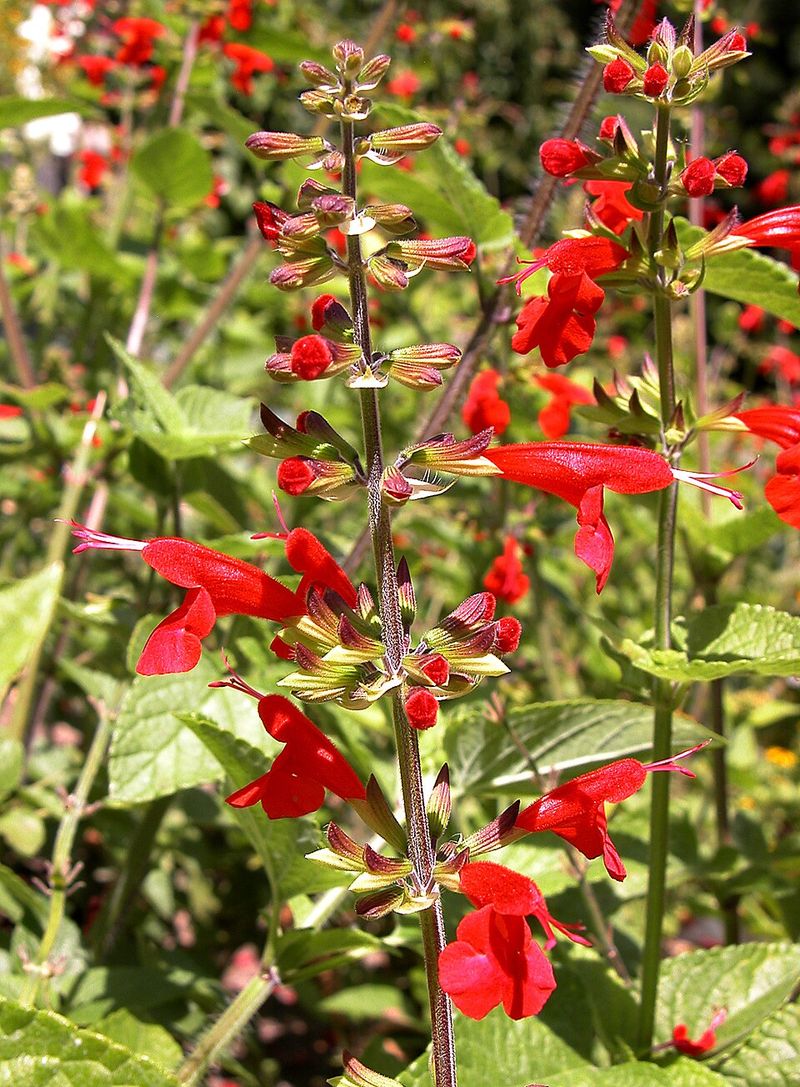
Sandy, well-drained soil and plenty of sun are the two things scarlet sage asks for most, and Florida happens to have both in abundance.
Salvia coccinea performs well in full sun and tolerates partial shade, though plants grown in too much shade tend to stretch toward the light and produce fewer blooms.
A spot that gets at least five to six hours of direct sun daily gives the plant enough energy to flower consistently through warm months.
Florida’s native soils, especially the sandy loams common across much of the peninsula, actually suit scarlet salvia well. The plant is adapted to lean conditions and does not need heavy amendments or rich potting mixes worked into the ground.
Overfertilizing is one of the most common mistakes gardeners make with this species. Too much nitrogen pushes soft, floppy stems that flop over or become more vulnerable to pests, while the flower count often drops rather than rises.
Young transplants need regular watering while their roots settle in, usually for the first four to six weeks.
Once established, scarlet sage handles Florida’s dry spells with reasonable tolerance, though extended drought during the hottest months can stress even well-rooted plants.
A thin layer of mulch around the base helps hold soil moisture without burying the crown. Keep mulch a couple of inches away from the main stem to allow good airflow and reduce the chance of rot at the base.
4. Reseeding Helps It Return Naturally
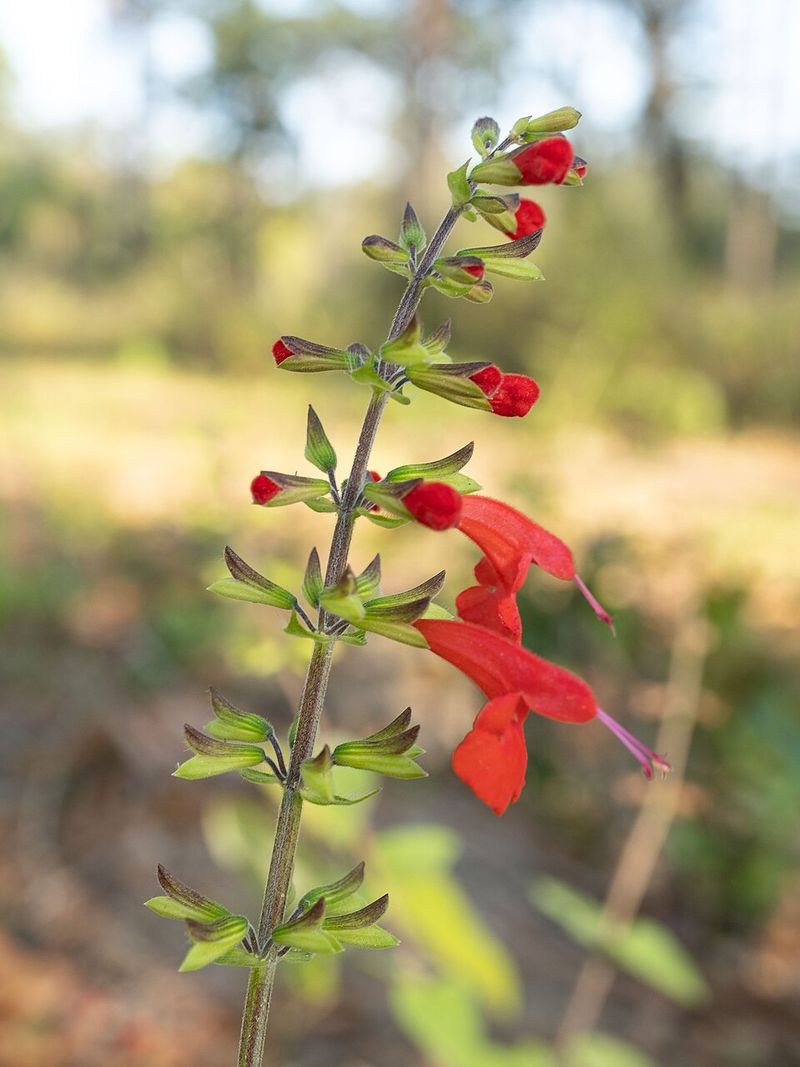
One of the most practical things about growing Salvia coccinea in a Florida yard is that you often do not have to replant it. When conditions are right, scarlet sage drops seed at the end of the season, and new seedlings appear nearby the following year.
This reseeding habit is one reason the species shows up naturally along roadsides, woodland edges, and disturbed areas across much of Florida.
In a home garden setting, it means the plant can maintain a presence year after year with minimal effort from the gardener.
Seedlings tend to pop up close to the parent plant and can be thinned, transplanted to another spot, or simply left where they land. If you are working with a more naturalistic bed design, letting them spread on their own is a reasonable approach.
In a formal or tightly designed space, a bit of light management keeps things from getting crowded. Pulling unwanted seedlings while they are small is much simpler than dealing with established plants that have rooted deeply into the bed.
To encourage reseeding, allow at least some flower spikes to finish their cycle and drop seed rather than deadheading everything.
Birds, including goldfinches and other small seed-eaters, sometimes feed on the mature seeds before they reach the ground, so leaving a few spikes standing has double value.
The key is finding a balance that fits your garden style without letting the plant spread into areas where it is not wanted.
5. Tall Stems Fit Behind Lower Flowers
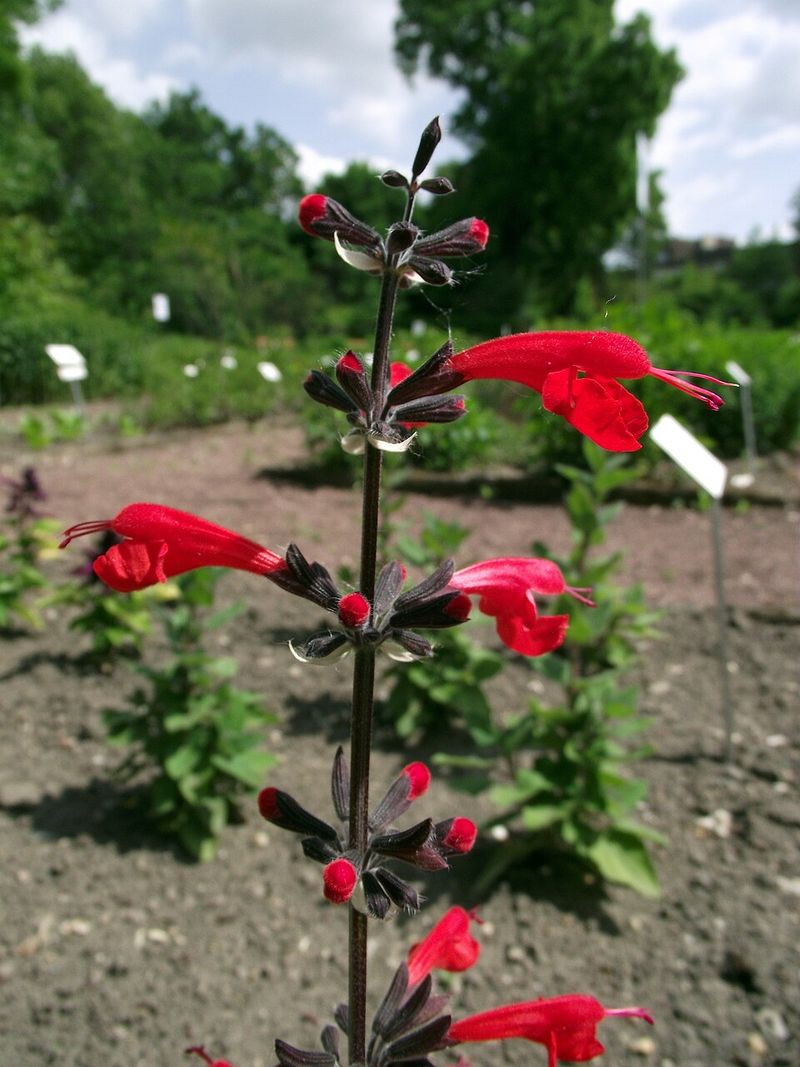
Scarlet sage grows upright, often reaching two to four feet tall depending on growing conditions and how much sun it receives.
That height makes it a natural candidate for the middle or back of a planting bed, where it can rise above shorter groundcovers and low-growing native wildflowers without crowding them out.
The vertical line of the flower spikes adds structure to a bed that might otherwise look flat and uninteresting from a distance.
Spacing matters more than many gardeners expect. Planting individual stems too far apart leaves gaps that look unfinished, while planting too close creates a wall of foliage that limits airflow.
A spacing of about eighteen to twenty-four inches between plants gives each one room to branch slightly and fill in naturally.
Small clusters of three to five plants repeated at intervals throughout a bed create a more cohesive look than a single row lined up along a fence.
Keep tall scarlet salvia away from spots where the stems could block sightlines, cover low address numbers, or lean over a path after a heavy rain. In windy coastal yards, a sheltered location helps prevent the taller stems from flopping before they have a chance to harden.
If stems do lean, a simple bamboo stake pushed into the soil next to the plant and tied loosely with soft garden twine is enough to keep things upright without damaging the stem or root zone.
6. Red Blooms Stand Out From Across The Yard
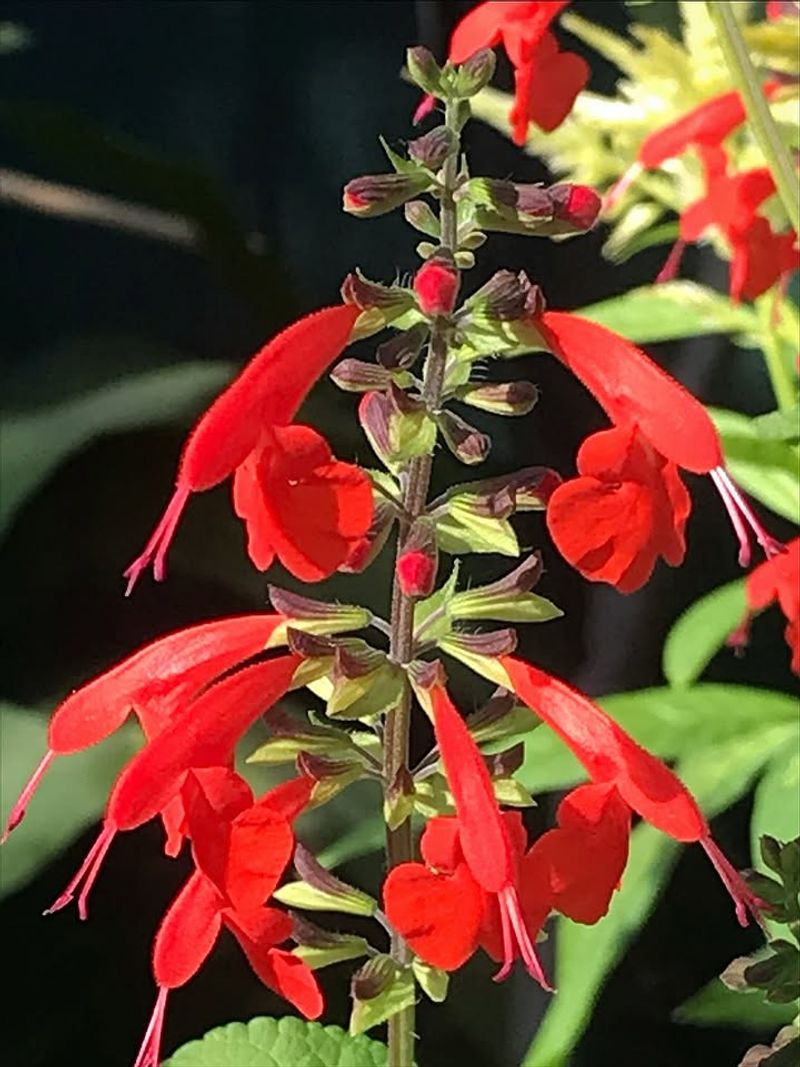
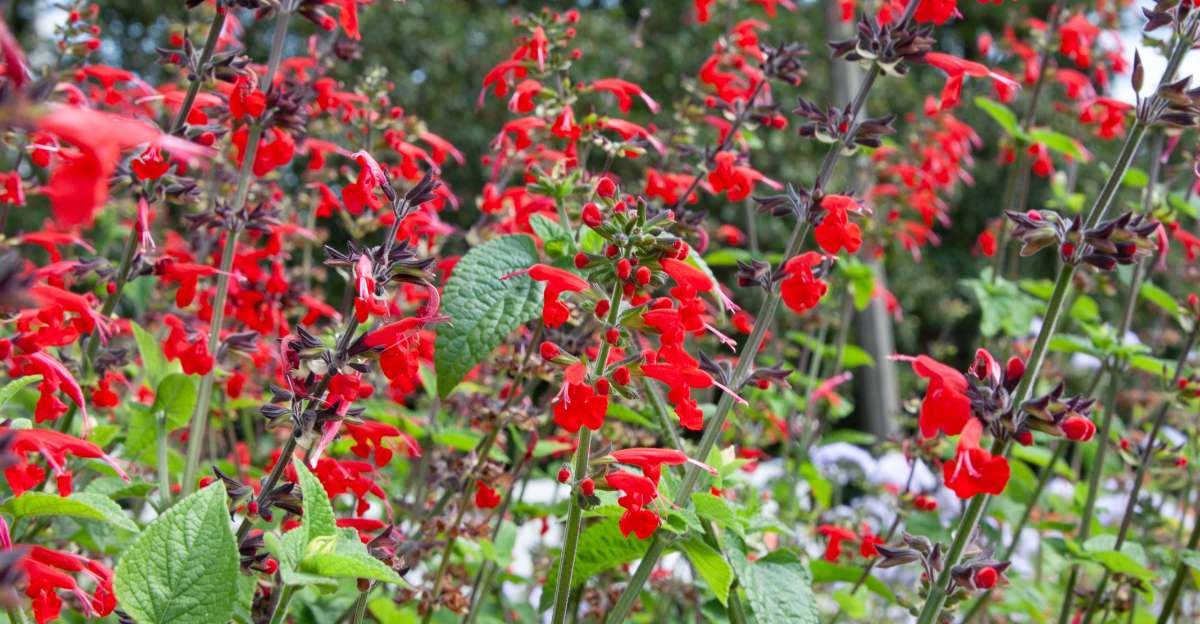
Red is one of the easiest colors to spot from a distance, and scarlet sage uses that to its advantage. The flower spikes of Salvia coccinea rise above the foliage and catch the eye from across the yard, from a patio chair, or through a kitchen window in a way that small pale blooms simply cannot manage.
That visual reach makes scarlet salvia genuinely useful in larger Florida backyards where you want a planting to read from thirty or forty feet away.
The contrast between the red spikes and the plant’s medium-green leaves is part of what makes it so readable at a distance. Placing scarlet sage in front of a dark fence, a hedge, or a grouping of green native grasses amplifies that contrast even further.
Pairing it with yellow wildflowers like tickseed (Coreopsis) or soft ornamental grasses creates a warm combination that feels natural rather than forced, and both plants share similar sun and drainage preferences in Florida soils.
Avoid tucking scarlet salvia into a corner where surrounding plants will quickly overtop it.
The blooms need open sky around them to be visible and to remain accessible to hummingbirds and butterflies approaching from above.
Positioning a cluster near a seating area or along a path that people walk daily means the flowering season becomes something you notice and enjoy regularly rather than something you only glimpse on the way to the car.
7. Native Salvia Supports Florida Pollinators
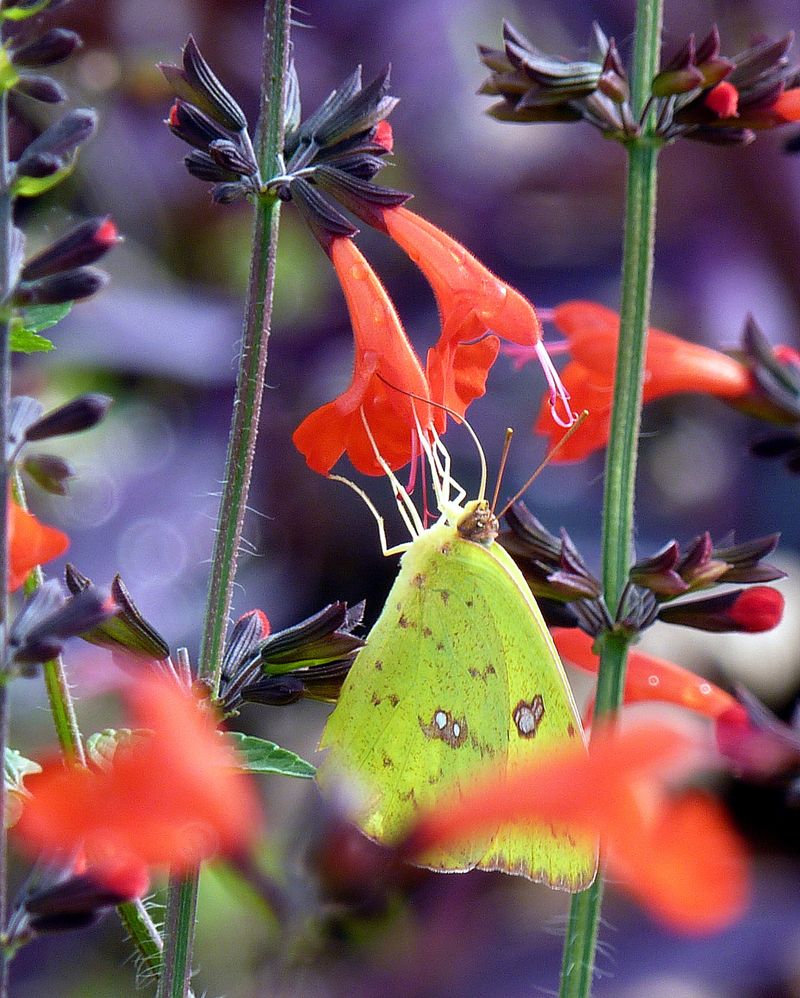
Salvia coccinea is listed as a Florida native wildflower by the Florida Wildflower Foundation and is recognized by UF/IFAS as a species with strong pollinator value in Florida landscapes.
That native status matters because plants that evolved in Florida’s ecosystems tend to have established relationships with local wildlife that non-native species simply do not replicate as effectively.
Hummingbirds, swallowtail butterflies, native bees, and other nectar-seeking insects all make use of the blooms at different times of day.
Bees tend to work the flowers in the morning when nectar production is highest, while butterflies may visit through midday. Hummingbirds can appear at any hour but are often most active in early morning and late afternoon.
Watching a single plant over the course of a warm day reveals how much ecological activity a well-placed native wildflower can generate without any extra effort from the gardener.
To protect these visitors, avoid spraying any pesticides, including systemic insecticides, on or near flowering scarlet salvia. Even products labeled as safe for bees can affect other pollinators or linger in nectar.
If pest pressure is a concern in the garden, target specific problem areas away from flowering plants and use the most targeted approach available.
Keeping scarlet sage as a pesticide-free zone in the yard costs nothing and preserves the ecological benefit that makes growing a Florida-native species worthwhile in the first place.
8. Fussy Annuals Cannot Match Its Staying Power
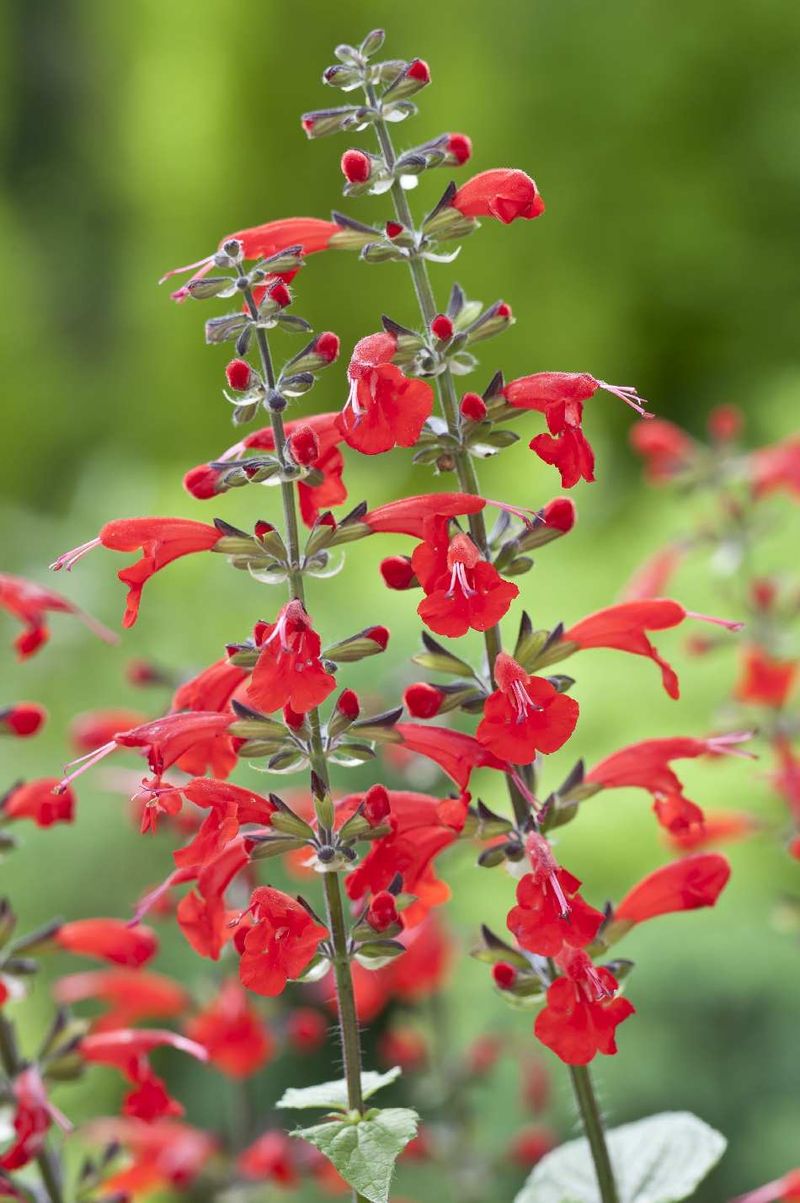
Walk through any Florida garden center in April and you will find rows of annual bedding plants bred for looks rather than heat tolerance. Many of those options struggle once temperatures climb past ninety degrees and summer rains arrive in force.
Scarlet sage, Salvia coccinea, was not bred for a display shelf. It grew up in Florida’s heat, humidity, and sandy soils, which is exactly why it keeps performing when those imported annuals fade out by July.
The reseeding habit adds another layer of long-term value that most bedding annuals cannot offer. Instead of buying flats of replacement plants every season, a well-established scarlet salvia patch can renew itself year after year with minimal cost.
The savings in time, money, and resources add up quickly over a few seasons, especially in a yard where the goal is a low-input, wildlife-friendly space rather than a high-maintenance showpiece.
That said, scarlet sage is not the right choice for every situation. Deep shade, heavy clay soil, or extremely formal bed designs may not suit it well.
The goal is matching the right plant to the right spot, and when the site fits, Salvia coccinea delivers a long bloom season, wildlife activity, and natural renewal that most short-lived annuals simply cannot replicate.
For Florida gardeners who want a flowering plant that works with the climate rather than against it, scarlet sage is hard to beat on a practical level.