The One Tree That Truly Thrives In California Heat
Most trees in a California garden need something. Regular water. Protection from the afternoon sun. A little extra attention during a heat dome.
There’s always a trade-off somewhere. Birch-Leaf Mountain Mahogany is the rare exception that breaks that pattern almost completely, and somehow it’s still one of the least talked about trees in California landscaping despite being genuinely exceptional.
This is a tree that was shaped by harsh conditions over thousands of years. Thin soils, blazing heat, minimal rainfall, steep slopes with zero irrigation.
Birch-Leaf Mountain Mahogany didn’t just survive those conditions. It evolved to prefer them.
Plant it in a comfortable, well-watered California garden and it actually performs worse than it does left mostly alone in the toughest spot in your yard. That kind of resilience is rare.
For gardeners tired of babying trees through summer and watching water bills climb, this one is worth paying serious attention to.
It Handles Brutal Summer Heat
When California summer hits hard, most trees start showing signs of stress. Leaves curl, branches droop, and gardeners scramble to keep things alive.
Birch-Leaf Mountain Mahogany barely flinches.
This tree evolved in some of California’s toughest growing conditions. It naturally grows across sun-baked foothills, rocky ridges, and exposed slopes throughout the state.
Those environments get seriously hot, often exceeding 100 degrees Fahrenheit for weeks at a time. The tree is built for exactly that kind of punishment.
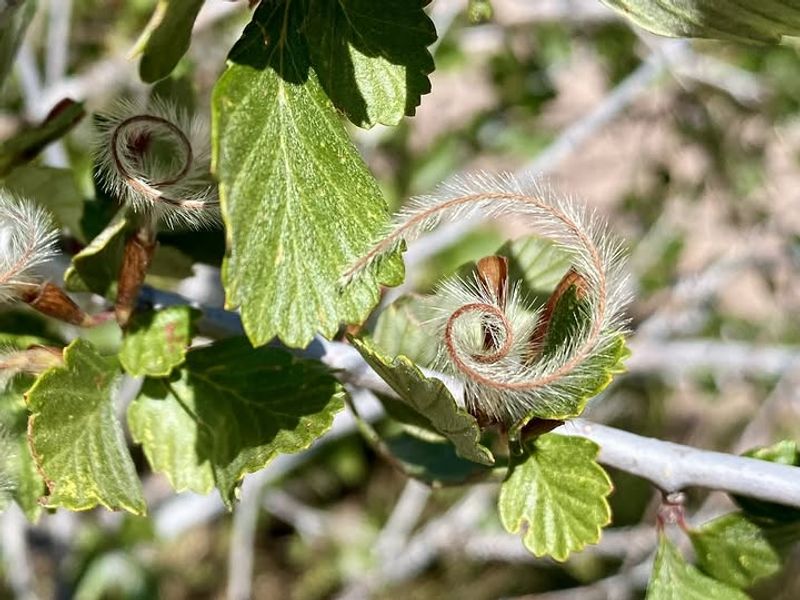
Its leaves are small and thick, which helps reduce water loss during the hottest parts of the day. The root system reaches deep into the soil, pulling moisture from layers that shallow-rooted plants simply cannot access.
That combination makes it remarkably stable even during California’s longest and hottest dry seasons.
Gardeners in the Central Valley, the Inland Empire, and the foothills east of Sacramento have all had great success with this tree. It does not need shade cloth or extra protection during heat waves.
Planting it in a sunny, open spot is actually ideal. The more sun it gets, the more it thrives.
For California landscapes where summer heat is simply unavoidable, Birch-Leaf Mountain Mahogany is a genuinely reliable choice.
It Thrives In Dry Soil
Rocky, sandy, nutrient-poor soil is where Birch-Leaf Mountain Mahogany feels right at home. Most ornamental trees need rich, well-amended garden soil to perform well.
This one actually prefers the opposite.
In California, especially in areas like the Mojave foothills, the San Gabriel Mountains, and the dry eastern slopes of the Coast Ranges, the soil is often thin and rocky. Few trees handle those conditions gracefully.
Birch-Leaf Mountain Mahogany does it naturally, because that is the environment where it evolved over thousands of years.
Adding too much compost or fertilizer can actually work against this tree. Rich soil encourages fast, weak growth that makes the plant less stable and less drought-resistant over time.
Planting it in lean, well-drained soil and leaving it mostly alone produces the strongest, healthiest results.
For homeowners dealing with sloped yards, gravelly patches, or compacted ground that other plants refuse to tolerate, this tree offers a real solution. It stabilizes soil with its deep root system, which also helps prevent erosion on hillsides.
Your California Garden Changes Every Week. Your Plan Should Too.
Gardening in California changes quickly throughout the season. Every Friday you’ll receive a simple weekly plan showing exactly what to plant, prune, fertilize, harvest, and protect so you never miss the right timing.
Sandy or clay-heavy soils both work reasonably well as long as drainage is decent. Birch-Leaf Mountain Mahogany proves that struggling soil does not have to mean a bare, unattractive yard.
It Fits Smaller Backyards
Not every California homeowner has acres of space to work with. Smaller lots, tight side yards, and compact patios are common across the state.
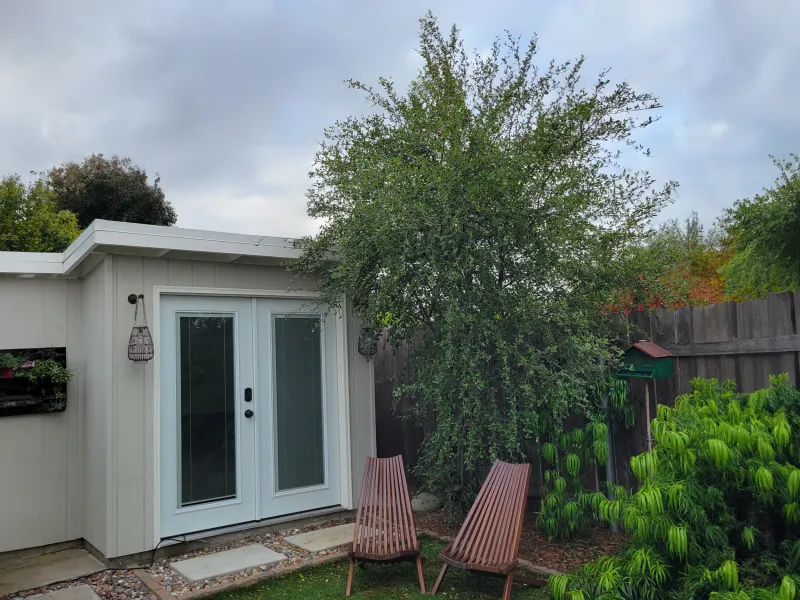
Finding a tree that fits those spaces without eventually taking over is a real challenge. Birch-Leaf Mountain Mahogany grows slowly and stays relatively compact.
Most mature specimens reach somewhere between 10 and 20 feet tall, depending on the site and growing conditions. That size is manageable for most residential properties without requiring constant pruning or structural intervention.
Its natural shape is tidy and upright, often with an attractive multi-stem form that looks intentional rather than scraggly. It does not produce invasive surface roots that crack driveways or lift up sidewalks, which is a common complaint with faster-growing trees.
That makes it a genuinely neighborly choice for urban and suburban California yards.
Planted near a patio, along a fence line, or as a small specimen tree in a front yard, it adds year-round structure without overwhelming the space. Homeowners in places like Pasadena, Riverside, and Folsom have used it successfully in tight urban lots.
If you want a tree that behaves itself and stays proportionate to your space, Birch-Leaf Mountain Mahogany fits the bill beautifully.
Evergreen Leaves Stay Tidy
One of the best things about Birch-Leaf Mountain Mahogany is that it keeps its leaves all year long. Deciduous trees drop their foliage every fall, leaving you with piles of raking and cleanup work.
This tree skips all of that.
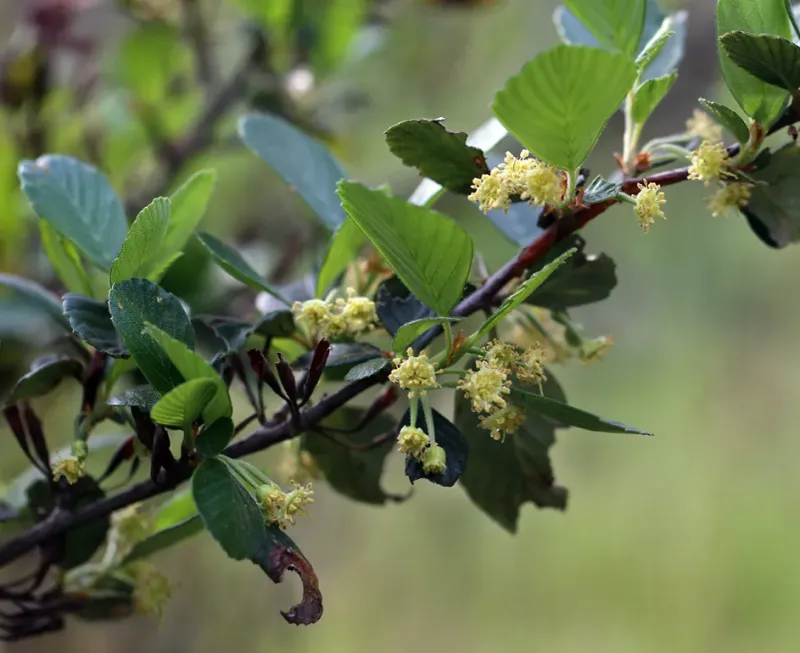
Its small, oval leaves are dark green on top and slightly lighter underneath. They stay on the branches through California’s mild winters without looking ratty or worn out.
Come spring, fresh new growth fills in seamlessly, keeping the canopy looking full and healthy.
Because the leaves are small, any natural leaf drop that does happen is minimal and barely noticeable. You are not going to come outside to a yard buried under a thick layer of fallen foliage.
That low-maintenance quality is a genuine bonus for busy homeowners who want a good-looking yard without spending every weekend doing yard work.
The tree also does not produce messy fruit, sticky sap, or seed pods that create cleanup headaches. Aside from the decorative silvery seeds it produces in late summer, the overall litter level is very low.
For California homeowners in places like San Diego, Fresno, or the East Bay who want a clean, attractive yard with minimal effort, the evergreen nature of this tree is a serious selling point.
Silvery Seeds Add Interest
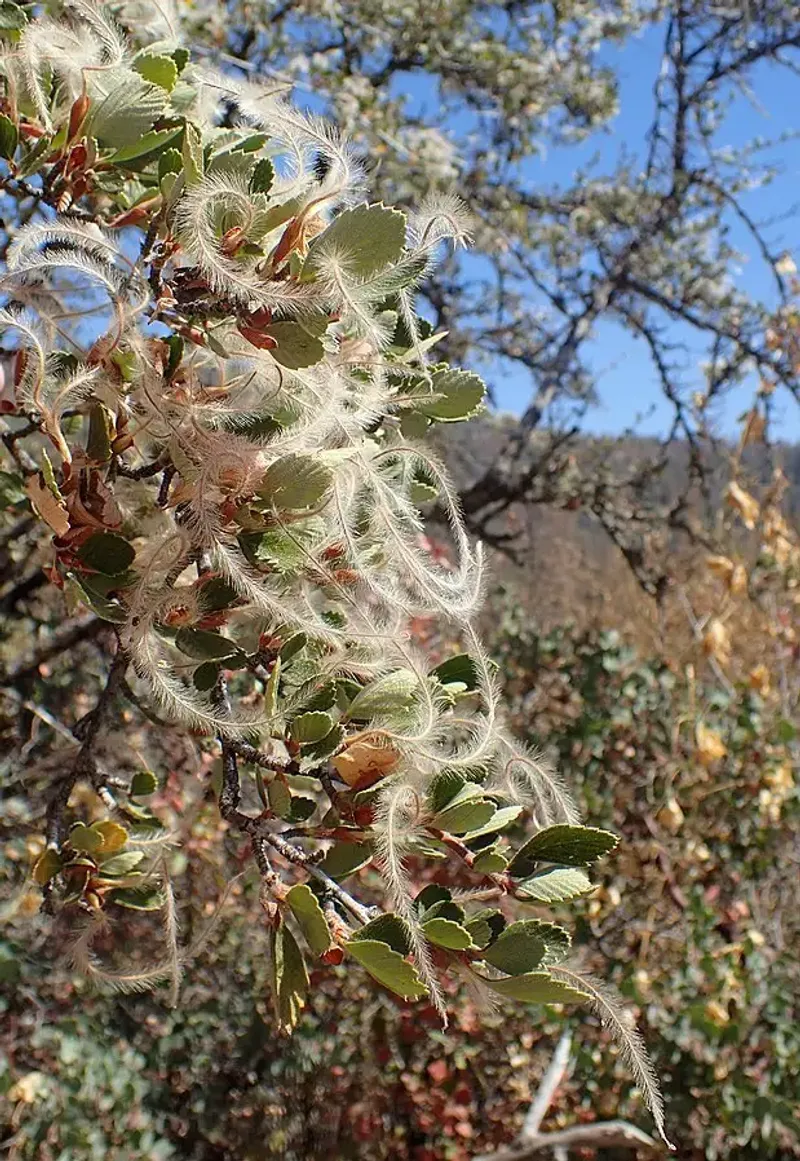
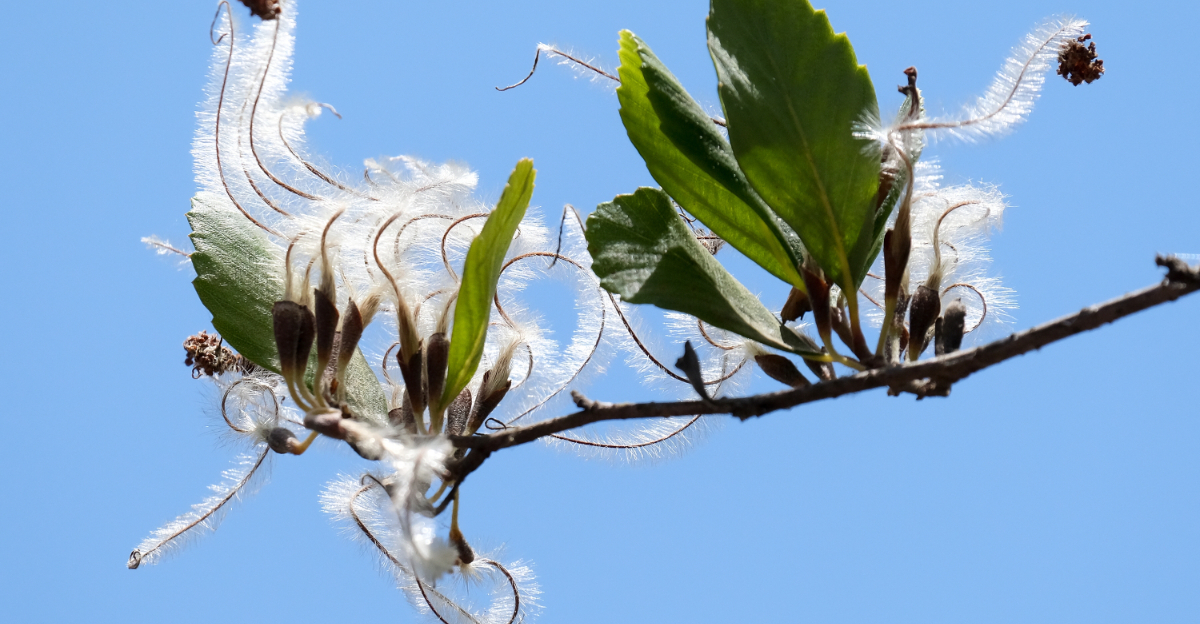
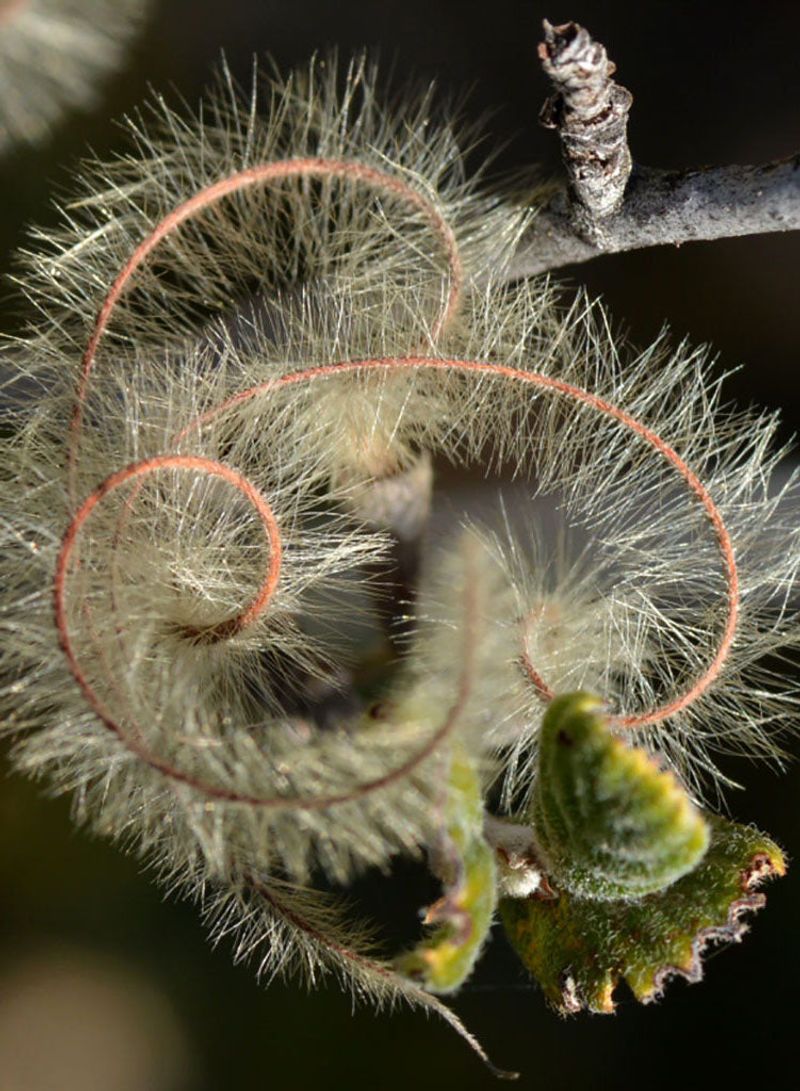
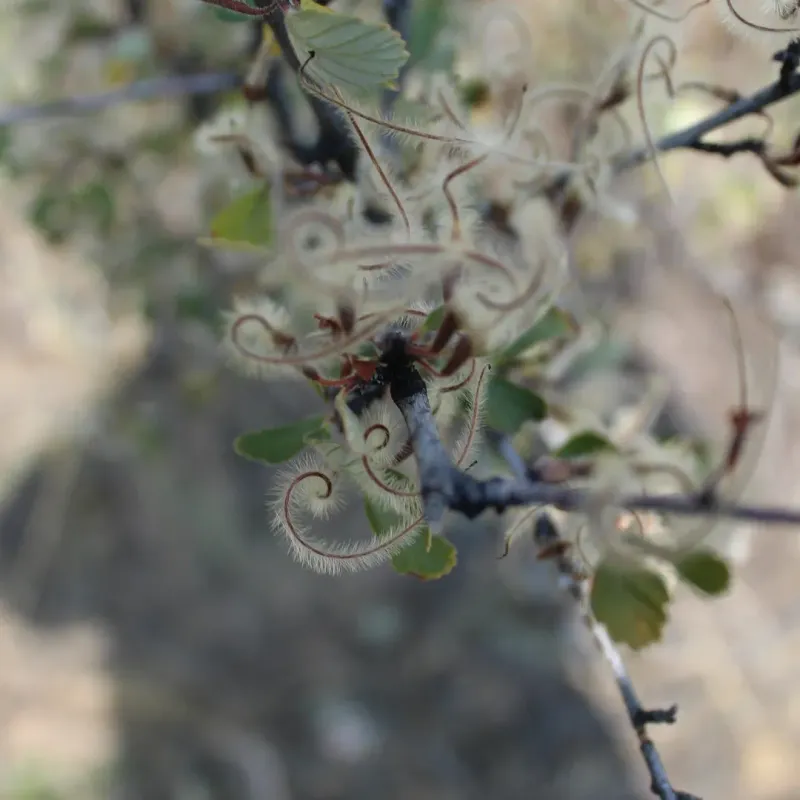
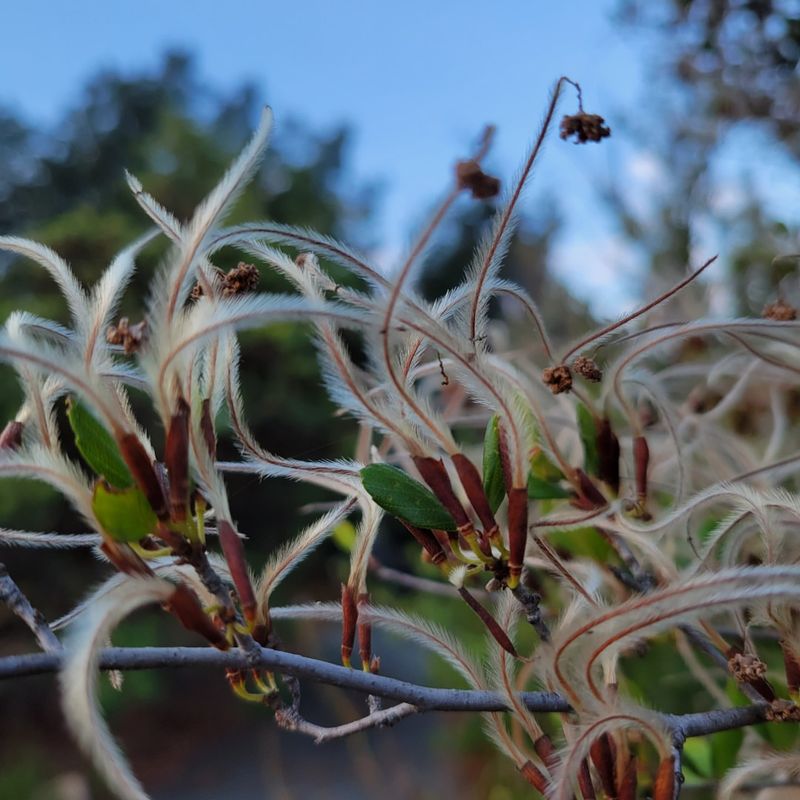
Toward the end of summer, Birch-Leaf Mountain Mahogany does something that genuinely surprises first-time growers. The tree produces clusters of long, feathery, silvery-white seed plumes that catch sunlight and shimmer in the breeze.
These twisted, spiral-shaped seeds are called achenes, and they are built for wind dispersal. Each seed has a long, silky tail that can reach several inches in length.
When the afternoon wind picks up across California’s foothills, those seeds spin and drift through the air in a way that is almost mesmerizing to watch.
From a design standpoint, the silvery plumes add real seasonal interest to a landscape that might otherwise look flat and one-dimensional during the dry summer months. They contrast beautifully against the dark green leaves and the warm tones of California’s dry hills.
Photographers and garden enthusiasts often find them irresistible subjects for close-up shots.
Beyond looks, the seeds also play an important ecological role. Birds and small mammals collect and eat them, helping spread the tree across the landscape naturally.
So while they look ornamental, they are doing real ecological work at the same time. If you want a tree that brings seasonal drama and wildlife activity to your California yard, this one delivers it in a subtle and elegant way.
Wildlife Gets Year-Round Shelter
A yard full of wildlife activity is something many California homeowners genuinely enjoy. Birch-Leaf Mountain Mahogany makes that happen naturally, without any extra effort on your part.
The dense branching structure of this tree provides excellent cover for birds throughout every season. Sparrows, towhees, and thrashers are commonly spotted nesting and sheltering inside its canopy.
In areas near the Sierra Nevada foothills or the coastal mountains, even larger birds like quail use the lower branches for protection from predators.
Deer are also well-known browsers of Birch-Leaf Mountain Mahogany. They eat the foliage and young stems, especially during dry months when other food sources become scarce.
While heavy deer pressure can slow growth, established trees bounce back quickly. That resilience makes it a dependable food source in California’s wildland-urban interface zones.
Small mammals like rabbits and ground squirrels find cover among the lower branches and roots. Insects are attracted to the flowers in spring, which in turn draws insectivorous birds that add even more life to the yard.
The tree functions like a small habitat hub, supporting multiple species at once. For homeowners in foothill communities across California who want to encourage native wildlife, planting this tree is one of the most effective and low-effort steps they can take.
Once Established, It Needs Little Water
Water conservation is not just a good idea in California. In many parts of the state, it is a necessity.
Drought years, water restrictions, and rising utility costs make low-water landscaping more important than ever. Birch-Leaf Mountain Mahogany is one of the most water-efficient trees available for California gardens.
Once it has been in the ground for two to three years and established a strong root system, it can survive almost entirely on natural rainfall. In most California foothill and valley climates, that means little to no supplemental irrigation during the summer months.
Getting through that first establishment period does require some attention. Watering deeply but infrequently during the first two summers encourages the roots to grow downward rather than staying near the surface.
Once those deep roots are in place, the tree becomes remarkably self-sufficient.
Homeowners in drought-prone areas like the Antelope Valley, the Sacramento foothills, and the inland valleys of Southern California have found this tree to be one of the most reliable plants in their low-water landscapes. It pairs well with other California natives like manzanita, toyon, and ceanothus in a water-wise garden design.
Choosing plants that work with California’s natural dry season instead of fighting against it is smart gardening, and this tree makes that choice easy.